
 100% FREE ACCESS
10th Standard Syllabus & Materials
10th Standard
TN 10th English Prose - 4 - The Attic Important Questions And Answers Study Material - QB365 Set A
NEW10th Standard
TN 10th English Supplementary - 3 - The Story of Mulan Important Questions And Answers Study Material - QB365 Set A
NEW10th Standard
TN 10th English Poem - 3 - I am Every Woman Important Questions And Answers Study Material - QB365 Set A
NEW10th Standard
TN 10th English Prose - 3 - Empowered Women Navigating The World Important Questions And Answers Study Material - QB365 Set A
NEW10th Standard
TN 10th English Supplementary - 2 - Zigzag Important Questions And Answers Study Material - QB365 Set A
NEW10th Standard
TN 10th English Poem - 2 - The Grumble Family Important Questions And Answers Study Material - QB365 Set A

Published on: 06/02/2020
10th Standard Social Science Book Back and Creative Important Question - I - 2019-2020
Download Tamil Nadu 10th Standard Social Science question papers, model tests, one-mark questions, important questions, and public exam papers in PDF format. Free study materials and answer keys for TN State Board students.
Questions + Answers key
Take MCQ Social Science Test
1.
East-west and north south corridors intersect at_________
Jhansi
Indore
Bhopal
Nagpur
2.
East-west corridor connects______in Assam to_________in Gujarat.
Guwahati, Baroda
Silchar, Porbandar
Dispur, Ahemadabad
Digboi, Surat
3.
_________is the largest producer of silk in India.
Karnataka
West Bengal
Jammu and Kashmir
Tamil Nadu
4.
The India Coal Limited under Government of India has its headquarters at_______
Ranchi
Andhra pradesh
Kolkata
Assam
5.
The historical background of globalization can be discussed on________ stages.
one
two
four
three
6.
Indian Government was introduced New Economic Policy in________
1956
1948
1991
1986
7.
CPI Stands for
Consumer Price Index
Consumption Product Index
Consumer Product Index
Consumption Price Index
8.
__________sector is known as primary sector
Agriculture
Industry
Service
Manufacture
9.
GNP is measure of
Total value of money
Total value of producer goods
Total value of goods and services produced and income received from abroad
Total value of goods and services
10.
The number of judges for each High Court is determined by the_________
Governor
Prime Minister
Chief Minister
President
11.
Article ___________ deals with the creation or abolition of Legislative council in a state.
169
171
164
177
12.
The size of the legislative council cannot be more than _________the membership of the Legislative Assembly.
One-fourth
One-fifth
One-sixth
One-third
13.
The Lok Sabha enjoys a term of________years from the date of its first session
3
6
5
4
14.
The President shall hold office for a term of__________
Three years
Four years
Five years
Six years
15.
Elementary Education was made a fundamental right under_______
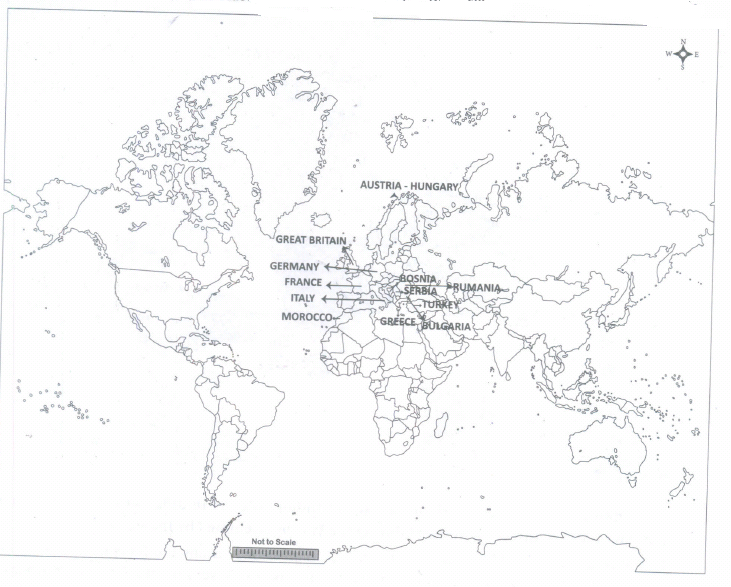
Article 21A
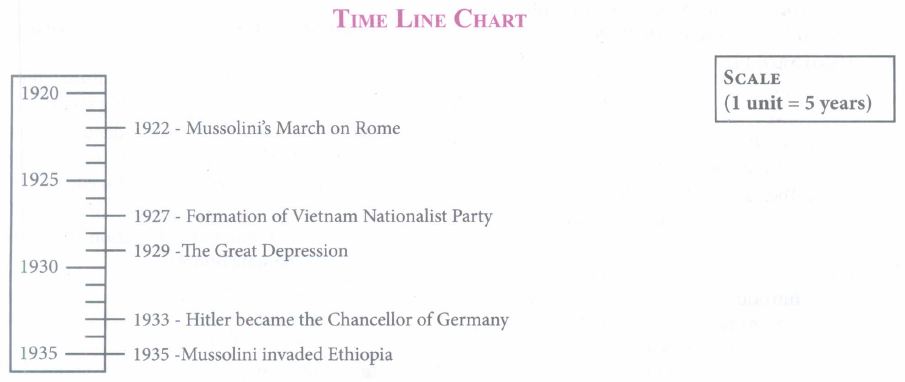
Article 352
Article 32
Article 36
16.
The drafted constitution came into force on_______
26th January 1947
15th August 1947
30th January 1950
26th January 1950
17.
Watering of plants through artificial means _____________.
Soil erosion
Soil conservation
Irrigation
None of these
18.
Dihang is a gorge in __________
Assam
Meghalaya
Nagaland
Arunachal Pradesh
19.
The ____________ river divides the plateau region of India broadly into two parts.
Kaveri
Narmada
Tapti
Mahanadi
20.
The total length of the coastline in India including the islands is ____________ km.
7516.6 km
7625.6 km
7526.6 km
7626.6 km
21.
Vaikunda Swami was respectfully called __________ by his followers.
Sir
Swami
Anna
Ayya
22.
The ___________ Samaj started a number of Dayanand Anglo-Vedic schools and colleges.
Brahmo
Prarthana
Arya
Adi Brahmo
23.
____________ was greatly influenced by Christianity believing in its spirit but not in the person of its founder.
Rajaram Mohan Roy
Vivekananda
Keshab Chandra Sen
M.G. Ranade
24.
_______________ was executed by a firing squad in December 1989, under the command of his own generals.
Nicolae Ceausescu
Klaus Lohannis
Petru Groza
Chivu Stoica
25.
The emergence of ___________ as a united and independent nation was a historic event.
Japan
Italy
China
Vietnam
26.
The ____________ refused to recognize the People's Republic of China for more than two decades.
UK
Russia
United States
Germany
27.
The _____________ party promised to undertake steps to look after the people "from the cradle to the grave" in Britain.
Labour
Democratic
Communist
Congress
28.
A Major outcome of the Holocaust was the creation of the state of ______________ as a homeland for the Jews.
Rome
Israel
Britain
Turkey
29.
In 1937, Japan invaded _____________ and seized Beijing.
Turkey
Russia
Germany
China
30.
At the dawn of the 20th Century__________ had occupied Cuba and Puerto Rico
The United Kingdom
The United States
Germany
Italy
31.
Between 1871 and 1914,________ had risen to dizzy heights of economic, political and cultural accomplishments.
India
Germany
Italy
Britain
32.
Devaluation led to a world-wide credit______________
expansion
upheaval
growth
contraction
33.
In December 1939 Russia was expelled from the League of Nations for her attack on ___________
Germany
Italy
Austria
Finland
34.
In March 1918, the Treaty of__________ was signed.
Versailles
Sevres
Brest - Litovsk
London
35.
__________of Russia suggested to the powers that they meet together to bring about an era of universal peace.
Tsar Nicholas II
Michael
Peter the Great
Alexander I
36.
How many countries were membership in WTO at present?
159
164
148
128
37.
Indian economy is
Developing Economy
Emerging Economy
Dual Economy
All the above
38.
Who can nominate one representative of the Anglo-Indian Community to the State Legislative Assembly?
The President
The Governor
The Chief Minister
The Speaker of State legislature
39.
Dispute between States of India comes to the Supreme Court under:
Appellate Jurisdiction
Original Jurisdiction
Advisory Jurisdiction
None of these
40.
How can the Fundamental Rights be suspended?
If the Supreme Court so desires
If the Prime Minister orders to this effect
If the President orders it during the national emergency
All of the above
41.
Find the odd one out.
Right to Equality
Right against Exploitation
Right to Property
Cultural and Educational Rights
42.
The state with highest literacy rate as per 2011 census is _________.
Tamil nadu
Karnataka
Kerala
Uttarpradesh
43.
The city which is called as the Manchester of South India is _____________.
Chennai
Salem
Madurai
Coimbatore
44.
The leading producer of rice in India is ________.
Punjab
Maharashtra
Uttar Pradesh
West Bengal
45.
_________ forests are found above 2400m Himalayas.
Deciduous forests
Alpine forests
Mangrove forests
Tidal forests
46.
Pulicat Lake is located between the states of
West Bengal and Odisha
Karnataka and Kerala
Odisha and Andhra Pradesh
Tamil Nadu and Andhra Pradesh
47.
Who was Swami Shradhananda?
a disciple of Swami Vivekananda
one who caused a split in the Brahmo Samaj of India
one who caused a split in the Arya Samaj
founder of Samathuva Samajam.
48.
When was the Charter of the UN signed?
June 26, 1942
June 26, 1945
January 1, 1942
January 1, 1945
49.
Which quickened the process of liberation in South America?
Support of US
Napoleonic Invasion
Simon Boliver’s involvement
French Revolution
50.
What were the three major empires shattered by the end of First World War?
Germany, Austria Hungary, and the Ottomans
Germany, Austria-Hungary, and Russia
Spain, Portugal and Italy
Germany, Austria-Hungary, Italy
51.
Name the major ship yards of India
52.
Write about population in India
53.
What are the main sources of irrigation in India?
54.
What are the uses of Mica?
55.
Write about European traders in South India
56.
What is Economic Growth?
57.
What is Gross National Product?
58.
Name the writs that can be issued by the High Court.
59.
How does the state cabinet work?
60.
Explain the privileges of the Governor.
61.
Write a note on Universal Adult Franchise.
62.
Write any four qualifications to become a member of the Rajya Sabha
63.
State the ways in which the constitution can be amended
64.
Why did Dr. B.R. Ambedkar describe Directive ' principles as 'novel features' of the Indian Constitution?
65.
How are directive principles classified on the basis of content and direction?
66.
Write a note on Convention on Biological Diversity.
67.
Write a note on Delta plains.
68.
What did Vaikunda Swamikal Criticise?
69.
Write a note on Suddhi.
70.
Name the member countries of SEATO.
71.
Who were the founder members of the Arab League?
72.
What were the two superpowers that emerged after the World War II?
73.
Why was Germany army unable to resist the Soviet force completely?
74.
Why are the 'World Wars' called so?
75.
Name the countries that were accorded Dominion Status prior to 1939.
76.
Write a short note on Fascism.
77.
What heightened the tension between Germany and Britain?
78.
What is a Trust?
79.
What is Fair trade?
80.
Write the sector wise Indian GDP composition in 2017.
81.
What are the qualifications for the appointment of Governor?
82.
What is the importance of the Governor of a state?
83.
Write short note: Money Bill.
84.
What is national emergency?
85.
What are the classical languages in India?
86.
What is Human Development?
87.
Mention the major areas of jute production in India.
88.
Define Agriculture.
89.
Name the areas which receive heavy rainfall.
90.
State the west following rivers of India.
91.
What was the impact of Swami Vivekananda’s activist ideology?
92.
What are the objectives of IMF?
93.
How did Great Depression impact on Indian agriculture?
94.
What were the three militant forms of nationalism in Europe?
95.
Tank irrigation is popular in Peninsular India.
96.
Explain the importance of mass communications systems in India.
97.
Describe the major challenges of Indian industries.
98.
Write the goals of World Trade Organisation
99.
Explain the limitations of GDP
100.
Explain in detail about the Vietnam War.
101.
What were the causes for the failure of the League of Nations?
102.
Give an account of Boer Wars.
103.
Write a note on the fall out of the First World War.
104.
Explain any three Jurisdiction of the Supreme Court of India.
105.
Mark the following countries on the world map.
1. Italy
2. Morocco
3. Turkey
4. Serbia
5. Bosnia
6. Greece
7. Austria-Hungary
8. Bulgaria
9. Rumania
106.
Mark the following incidents 1920 - 1940
1.
(a)
Jhansi
2.
(b)
Silchar, Porbandar
3.
(a)
Karnataka
4.
(c)
Kolkata
5.
(d)
three
6.
(c)
1991
7.
(a)
Consumer Price Index
8.
(a)
Agriculture
9.
(c)
Total value of goods and services produced and income received from abroad
10.
(d)
President
11.
(a)
169
12.
(d)
One-third
13.
(c)
5
14.
(c)
Five years
15.
(a)
Article 21A
16.
(d)
26th January 1950
17.
(c)
Irrigation
18.
(d)
Arunachal Pradesh
19.
(b)
Narmada
20.
(a)
7516.6 km
21.
(d)
Ayya
22.
(c)
Arya
23.
(c)
Keshab Chandra Sen
24.
(a)
Nicolae Ceausescu
25.
(d)
Vietnam
26.
(c)
United States
27.
(a)
Labour
28.
(b)
Israel
29.
(d)
China
30.
(b)
The United States
31.
(b)
Germany
32.
(d)
contraction
33.
(d)
Finland
34.
(c)
Brest - Litovsk
35.
(a)
Tsar Nicholas II
36.
(b)
164
37.
(a)
Developing Economy
38.
(b)
The Governor
39.
(b)
Original Jurisdiction
40.
(c)
If the President orders it during the national emergency
41.
(c)
Right to Property
42.
(c)
Kerala
43.
(d)
Coimbatore
44.
(d)
West Bengal
45.
(b)
Alpine forests
46.
(d)
Tamil Nadu and Andhra Pradesh
47.
(c)
one who caused a split in the Arya Samaj
48.
(b)
June 26, 1945
49.
(b)
Napoleonic Invasion
50.
(a)
Germany, Austria Hungary, and the Ottomans
51.
India has four major shipyards. Hindustan shipyard in Vishakhapatnam, Garden Reach: workshop in Kolkata, Mazagaon Dock in Mumbai, Kochi Shipyard in Kochi. India is the second largest ship owning country in Asia and ranks 16th in the World.
52.
India is the second most populous country in the world next only to china. India covers only 2.4 percent of the land area of the world, but is the home of about 17.5 percent of the world's population.
53.
The main sources of irrigation used in different parts of the country are
(i) Canal irrigation
(ii) Well irrigation and
(iii) Tank irrigation
54.
i) Mica is used in making insulating properties.
ii) It is used in electrical goods.
iii) lt is used in making of lubricants, medicines, paints and varnishes.
55.
(i) European companies which came to trade with India.
(ii) The discovery of a new all-sea route from Europe to India via cape of Good Hope by Vasco da Gama.
(Iii) Vasco da Gama had far-reaching repercussions on the civilized world.
56.
(i) Economic growth is the quantitative measure which considers the rise in the output produced in an economy or nation in a particular period in its monetary value.
(ii) GDP and GNP which helps in measuring the actual size of an economy.
57.
(i) Gross National Product is the total value of (goods and services) produced and income received in a year by domestic residents of a country.
(ii) It includes profit earned from capital invested abroad.
(iii) GNP = C + I + G + (X - M) + NFIA
58.
Habeas Corpus, Mandamus, Prohibition, Quo Warranto, Certiorari
59.
The cabinet works through various committees called cabinet committees. They are of two types standing and ad hoc. The former are of a permanent nature while the latter are of a temporary nature
60.
(i) The Governor of a State, is not be answerable to any court for the exercise and performance of the powers and duties of his office or for any act done or purporting to be done by him in the exercise and performance of those powers and duties.
(ii) No criminal proceedings whatsoever shall be instituted or continued against the Governor of a State, in any court during his term of office.
(iii) No process for the arrest or imprisonment of the Governor of a State, shall issue from any court during his term of office.
(Iv) No civil proceedings in which relief is claimed against the Governor of a State
61.
"Universal Adult Franchise" is followed while electing the members of the Lok Sabha. All Indian Citizens above 18 years of age who are registered as voters will vote for their representatives.
62.
(f) He should be a citizen of India.
(ii) He should not be less than 30 years of age.
(iii) He should not hold any office of profit under any Government.
(iv) He should be a person with sound mind and monetarily solvent
63.
The Constitution can be amended in three ways:
(i) Amendment by simple majority of the Parliament
(ii) Amendment by special majority of the Parliament
(iii) Amendment by special majority of the Parliament and the ratification of half of the state legislatures.
64.
(i) Directive Principles are not enforceable by the courts. But they are fundamental for the governance of the country.
(ii) The Government is duty-bound to apply these principles while making laws.
(iii) They aim at promoting the Social Welfare of the people.
(iv) Dr. B.R. Ambedkar described these principles as 'novel features' of the Indian Constitution.
65.
On the basis of their content and direction, directive principles they can be classified into three broad categories, viz, socialistic, Gandhian and liberal-intellectual.
66.
(i) The Indian Board for Wildlife (IBWL) was constituted in 1952 to suggest means of protection, conservation, and management of wildlife to the government.
(ii) The government of India enacted Wildlife (Protection) Act in 1972 with the objective of effectively protecting the wildlife of the country and to control poaching, smuggling and illegal trade in wildlife and its diversities.
(iii) United Nations Convention on Biological Diversity( CBD) in 1992 recognizes the sovereign rights of states to use their own Biological Resources.
67.
(i) The deltaic plain is an extension of the Khadar land. It covers about 1.9 lakh sq.km in the lower reaches of the Ganga River.
(ii) It is an area of deposition as the river flows in this tract sluggishly.
(iii) The deltaic plain consists mainly of old mud, new mud, and marsh.
(iv) In the delta region, the uplands are called 'Chars' while the marshy areas are called 'Bils'.
68.
Vaikunda Swamikal criticized the rule of the British and the rule of Rajah of Travancore as the rule of White devils and Black devils respectively.
69.
(i) Arya Samaj attempted to check the incidence of religious conversion in British India.
(ii) One of its main objectives was counter conversion, prescribing a purificatory ceremony called suddhi, directed at Hindus who had converted to Islam and Christianity.
70.
US, France, England, New Zealand, Australia, the Philippines, Thailand, and Pakistan.
71.
Its founder members were Egypt, Iraq, Syria, Lebanon, Saudi Arabia, Jordan, and Yemen.
72.
The US and the USSR.
73.
(i) The German strategy of lightning strikes was initially successful and the army penetrated 1000 miles into Russian territory very soon.
(ii) The German army then marched on Moscow. But ultimately, the resistance by the Soviet army and the fierce Russian winter defeated the German army.
74.
While the world at large had experienced many wars, these two wars are referred to as "World wars" because of the extended areas of the conflict and the very high death toll of civilians as well as armed combatants. Both wars were fought on several fronts across Europe, Asia, and Africa.
75.
Canada, New Zealand, the Union of South Africa and Ireland.
76.
Fascism is a form of radical authoritarian ultra-nationalism, characterized by dictatorial power, forcible suppression of opposition and strong regimentation of society and of the economy, which came to prominence in early 20th-century Europe.
77.
(i) Kaiser proclaimed that Germany would be the leader of the world. The German navy was expanded.
(ii) Germany's aggressive diplomacy and rapid building of naval bases convinced Britain that a German navy could be directed only against her. Therefore, Britain embarked on a naval race, which heightened the tension between the two powers.
78.
A trust is an industrial organization engaged in the production or distribution of any commodity. The trust would possess adequate control over the supply and price of that commodity to its own advantage.
79.
Fair trade is the way of doing business that ultimately aims to keep small farmers an active part of the world market place. It aims to empower consumer to make purchases that support their values.
80.
\(\begin{array}{|c|c|c|c|} \hline \text { Year } & \text { Agriculture (%) } & \text { Industry (%) } & \text { Service (%) } \\ \hline 2017 & 17.09 & 29.03 & 52.08 \\ \hline 2018 & 17.01 & 29.01 & 53.09 \\ \hline \end{array}\)
81.
a) He should be a citizen of India.
b) He must have completed 35 years of age.
c) He should not be a Member of Parliament or of any State Legislature. If he is a member of any of the Legislatures, he automatically vacates his seat on assuming the office.
d) He should not hold any other profitable occupation.
82.
a) The Governor is the Constitutional head of the State Executive.
b) The executive powers of the state are vested in the Governor.
c) Every Bill passed by the State Legislature will become law only after his signature.
d) He can dismiss the Council of Ministers when it is unable to prove the confidence of the Legislative Assembly.
e) He may recommend to the president to impose the President's rule in the state.
83.
a) A bill which covers income and expenditure of the government is called Money Bill.
b) Bills connected with tax policy of the government is also called Money Bill.
c) Lok Sabha can only introduce Money bill and once it is approved by the Lok Sabha, it is passed to Rajya Sabha for its approval.
84.
i) Under Article 352, the President can declare emergency if he is satisfied that India's security is threatened due to war, external aggression or armed rebellion or if there is an imminent danger or threat.
ii) When a national emergency is declared on the ground of war or external aggression it is known as external emergency.
iii) When it is declared on the ground of armed rebellion it is known as internal emergency.
85.
i) Six languages are granted the classical language status.
ii) They are Tamil, Sanskrit, Telugu, Kannada, Malayalam and Odia.
86.
Dr. Mahabub-ul-haq defined as "It is a process of enlarging the range of people's choice, increasing their opportunities for education, health care, income, and empowerment. It covers the full range of human choices from a sound physical environment to economic, social and political freedom".
87.
a) The major jute producing areas are in West Bengal and is concentrated along the Hooghly river.
b) Andhra Pradesh, Bihar, Uttar Pradesh, Assam, Chhattisgarh and Odisha are the other Jute goods producing areas.
88.
Agriculture is the process of producing food for people, fodder for cattle, fiber and many other desired products by the cultivation of certain plants and the raising of domesticated animals livestock.
89.
The western coast, Assam, South Meghalaya, Tripura, Nagaland and Arunachal Pradesh are the heavy rainfall areas.
90.
Narmada, Tapti, Mahi and Sabarmathi are the west following rivers of India.
91.
Vivekananda's activist ideology rekindled the desire for political change among many western education young Bengalis. Many of the youths who were involved in the militant nationalist struggle during the Swadeshi movement following the Partition of Bengal were inspired by Vivekananda.
92.
i) The primary objective of IMF is to ensure financial stability and development across the world.
ii) The objectives of the IMF are "to foster global monetary cooperation, secure financial stability, facilitate international trade, promote high employment and sustainable economic growth and reduce poverty around the world".
93.
a) The 'Great Depression' dealt a death blow to Indian agriculture and the indigenous manufacturing sector.
b) The value of farm produce, declined by half. But the land rent to be paid by the peasant remained unchanged. In terms of prices of agricultural commodities, the obligation of the farmers to the state doubled.
c) The great fall in prices prompted Indian nationalists to demand protection for the internal economy.
94.
The three militant forms of nationalism in Europe:
i) England's jingoism
ii) France's chauvinism
iii) Germany's Kultur.
95.
A tank is a natural or man-made hollow on the surface developed by constructing a small bund around it across a stream. It is used to collect and store water for irrigation and other purposes. Irrigation by tanks is a very old system in India. It also includes irrigation from lakes and ponds. The tank irrigation is popular in the peninsular India due to the following reasons:
(i) The undulating relief and hard rocks make difficult to dig canals and wells.
(ii) Natural depressions serve as reservoirs.
(iii) Absence of perennial rivers.
(iv) Impermeable rock structure which do not permit percolation.
(v) The scattered nature of population and agricultural fields
96.
Electronic Media:
(i) Mass Communication enables millions of people to get the information at the same time.
(ii) It is a great way to provide education as well as entertainment.
(iii) It helps in creating awareness among the people regarding various national policies and programmes.
(iv) The Mass Communication Systems can provide the information to people in two methods.
Electronic Media:
(i) Radio broadcasting in India was started in 1923 by the Radio club of Bombay.
(ii) It was named as All India Radio (AIR) in 1936 and again it was renamed as Akashwani in 1957.
(iii) It broadcasts a variety of programs related to information, education and entertainment.
Print Media:
(i) Newspapers are the most common but powerful means of communication come under print media.
(ii) India has many newspapers which carry information on local, national and international events to the people
97.
Major challenges of Indian Industries:
i) Industries in India face many problems. Some major problems are listed below.
ii) Shortage and fluctuation in Power Supply.
ii) Non- availability of large blocks of land.
iv) Poor access to credit.
v) High rate of interest for borrowed loan.
vi) Non - availability of cheap labourers.
vii) Lack of technical and vocational training for employees.
viii) Inappropriate living conditions nearby industrial estates.
98.
Goals of WTO:
(i) Raising and stabilizing the incomes of small scale farmers, farm workers and artisans.
(ii) More equitably distributing the economic gains, opportunities and risks associated with the production and sale of these goods.
(iii) Increasing the organisational and commercial capacities of producer groups.
(iv) Promoting labour rights and the right workers to organize.
(v) Promoting safe and sustainable farming methods and working conditions
99.
a) Several important goods are services left out of the GDP:
i) The GDP includes only the goods and services sold in the market.
ii) The services provided by the parents to their children is very important but it is not included in the GDP because it is not sold in the market.
iii) Likewise clean air, which is vital for a healthy life, has no market value and is left out of the GDP.
b) GDP measures only quantity but not quality :
i) In the 1970s schools and banks did not permit the use of ballpoint pens.
ii) This is because, the ones available in India were of very poor quality.
iii) Since then, not only has there been a substantial increase in the quantity of ballpoint pens produced in India but their quality has also improved a lot.
iv) The improvement in quality of goods is very important but it is not captured by the GDP.
c) GDP does not tell us about the way income is described in the country:
The GDP of a country may be growing rapidly but income may be distributed so unequally that only a small percentage of people may be benefitting from it.
d) The GDP does not tell us about the kind of life people are living:
A high level of per capita real GDP can go hand - in - hand with very low health condition of people, an undemocratic political system, high pollution and high suicide rate.
100.
(i) By the end of Second World War Viet Minh controlled the northern half of Vietnam. Viet Minh formed a government led by Ho Chi Minh in Hanoi.
(ii) This Viet Minh government quickly occupied the southern half of Vietnam. However, the Allied Powers decided at Potsdam that the British in the south and the Chinese in the north should defend Indo-China from the Japanese.
(iii) In March the two governments (French and Viet Minh) reached an agreement by which North Vietnam was to be a free state, within an Indo-Chinese Federation. But the new French constitution included all overseas colonies in a French Union.
(iv) In 1949 the French attempted to secure the support of the population by declaring Vietnam, Laos, and Cambodia independent within the French Union, retaining only foreign affairs and defense under French control. However, the problem of Indo- China soon became involved in the Cold War.
(v) While the French were receiving considerable financial aid from America, the Viet Minh were helped by the new Chinese communist government. The French troops were eventually defeated.
(vi) South Vietnam, approximately of the same size and population, was ruled by Ngo Dinh Diem.
(vii) Diem refused to hold the elections to decide on a united Vietnam.
(viii) However, by 1962, it was clear that Diem was incapable of controlling the situation. This led to the posting of more US armed forces in the area.
(ix) The US bombed both North and South in the hope that it could force the liberation forces to abandon the struggle.
(x) The fighters of North Vietnam, trained in guerilla warfare, had grown out of spontaneous struggles against a repressive regime.
(xi) The American troops also used bacteriological weapons.
(xii) Incendiary bombs such as napalm and Agent Orange (to defoliate the forest cover) were used.
(xiii) Escalation of the total military outlay caused the US big business to protest. The youths rebelled against the conscription and the horrors of war.
(xiv) Anti-Vietnam War protests rocked universities and colleges across the US and in Europe and became part of the 1960s counterculture.
(xv) No other single issue united millions of people all over the world as the war of Vietnam.
101.
(i) The Treaty also set up the League of Nations, on the initiative of President Woodrow Wilson of the United States.
(ii) The League was expected to mediate between countries and take action against countries which indulged in military aggression.
(iii) However, the United States was not interested in playing a global role or any role in European politics.
(iv) The popular mood favoured the traditional isolationist approach, and therefore the United States did not become a member of the League.
(v) The other Allied nations were also determined to maintain a noninterventionist attitude and, in consequence, the League remained an ineffectual international body.
102.
(i) The relations between the two British colonies of Natal and Cape Colony and the two independent Boer states of Transvaal and the Orange Free State had long been unfriendly.
(ii) The discovery of gold in Transvaal, in 1886, led to large numbers of British miners settling in and around Johannesburg.
(iii) The Boers hated these people whom they referred to as Uitlanders (foreigners). The Boers taxed them heavily and denied political rights to them.
(iv) So the question was whether the British or the Boers were to be supreme in South Africa.
(v) Fearing attacks from the British, the Boers armed themselves and decided to attack.
(vi) The Boer War lasted for three years, from 1899 to 1902. Initially, the Boers were successful.
(vii) But by the first half of 1900, the Boer army was defeated. Pretoria was occupied.
(viii) In retaliation, the British destroyed farms and crops. They set up internment camps for Boer women and children.
(ix) Shortage of food, medical and sanitary facilities caused the death of 26,000 people.
(x) The British annexed the two Boer states. Boers were however promised self-government in due course.
(xi) In 1907 full responsible government was given to the Transvaal and the Orange Free State.
(xii) The four states formed into a union and the South Africa Act passed by the British parliament in 1909 provided for a Union Parliament at Cape Town.
(xiii) In May 1910 the Union of South Africa came into being.
103.
(i) The First World War left a deep impact on European society and polity.
(ii) The outcome, in all countries, was imbalance between the sexes-a shortage of men.
(iii) Soldiers came to be placed above civilians.
(iv) Aggressive war propaganda and national honour occupied centre stage in the public sphere.
(v) Popular support grew in favour of dictatorship in state governance.
(vi) The most striking of all has been the rise and consolidation of the Soviet Union.
(vii) The most notable advances made there was in the fields of education and industry.
(viii) Another outstanding event of this period was the full awakening of the colonies and their aggressive attempts to gain freedom.
(ix) All the struggles for freedom in Asia and Africa illustrated how the new spirit abroad was affecting the minds of men and women in distant countries of the East simultaneously.
104.
Original Jurisdiction:
The cases which are brought directly in-the first instance to the Supreme Court come original under jurisdiction.
These may be
(i) dispute between the Government of India and one or more states
(ii) Dispute between two or more states
(iii) The writs are issued by the Supreme Court for the enforcement of the fundamental rights.
Appellate jurisdiction:
i) The Supreme Court is the final appellate court in the country.
ii) The Supreme Court hears appeals against the decision of High Courts.
iii) Such a case can be brought before the Supreme Court only if the High Court certifies that the case invites a substantial of law as to the interpretation of the Constitution.
Advisory Jurisdiction:
The Constitution confers on the President the power to refer to the Supreme Court any question of law or fact which in his opinion is of public importance.
Miscellaneous jurisdiction:
i) The law declared by Supreme Court is binding on all courts within the territory of India.
ii) The Supreme Court is authorized to make rules for regulating, generally the practice and procedure of the court with the approval of the President.
Judicial Review:
a) The power of the Judiciary to declare a law as unconstitutional is known as Judicial Review'.
b) The Supreme Court of India has Individual Review Power with regard to:
i) Dispute between the Centre and State.
ii) Protecting the Fundamental Rights.
105.
106.

10th Standard Syllabus & Materials
10th Standard
TN 10th English Prose - 2 - The Night the Ghost Got in Important Questions And Answers Study Material - QB365 Set A
NEW10th Standard
TN 10th English Supplementary - 1 - The Tempest Important Questions And Answers Study Material - QB365 Set A
NEW10th Standard
TN 10th English Poem - 1 - Life Important Questions And Answers Study Material - QB365 Set A
NEW10th Standard
TN 10th English Prose - 1 - His First Flight Important Questions And Answers Study Material - QB365 Set A



Tamilnadu Stateboard 10th Standard Subjects
Tamilnadu Stateboard Standards




