
 100% FREE ACCESS
10th Standard Syllabus & Materials
10th Standard
TN 10th English Prose - 4 - The Attic Important Questions And Answers Study Material - QB365 Set A
NEW10th Standard
TN 10th English Supplementary - 3 - The Story of Mulan Important Questions And Answers Study Material - QB365 Set A
NEW10th Standard
TN 10th English Poem - 3 - I am Every Woman Important Questions And Answers Study Material - QB365 Set A
NEW10th Standard
TN 10th English Prose - 3 - Empowered Women Navigating The World Important Questions And Answers Study Material - QB365 Set A
NEW10th Standard
TN 10th English Supplementary - 2 - Zigzag Important Questions And Answers Study Material - QB365 Set A
NEW10th Standard
TN 10th English Poem - 2 - The Grumble Family Important Questions And Answers Study Material - QB365 Set A

Published on: 05/07/2021
QB365 provides detailed and simple solution for every
Creative Questions in class 10 Science Subject. It will helps to get more idea about question pattern in everyCreative questions with solution.
Download Tamil Nadu 10th Standard Science question papers, model tests, one-mark questions, important questions, and public exam papers in PDF format. Free study materials and answer keys for TN State Board students.
Questions + Answers key
Take MCQ Science Test1.
Explain power of Accommodation of the human eye.
2.
Write the advantages and disadvantages of Telescopes.
3.
Explain about Telescope and its types.
4.
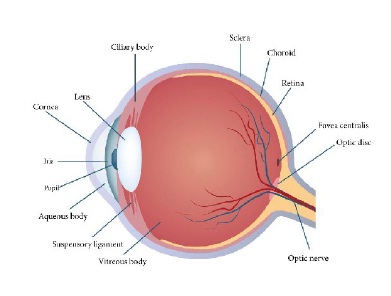
Describe the structure and working of the human eye.
5.
Write short notes about sign—convention (cartesian).
1.
(i) The ability of the eye lens to focus nearby as well as the distant objects is called power of accommodation of the eye.
(ii) This is achieved by changing the focal length of the eye lens with the help of ciliary muscles.
(iii) Eye lens is made of a flexible, jelly-like material.
(iv) By relaxing and contracting the ciliary muscle, the curvature and hence the focal length of he eye lens can be altered.
(v) When we see distant objects the ciliary muscle relaxes and makes the eye lens thinner
(vi) This increases the focal length of the eye lens. Hence, the distant object can be clearly seen.
(vii) On the other hand, when we look at a closer object, the focal length of the eye lens is decreased by the contraction of ciliary muscle.
(viii) Thus, the image of the closer object is clearly formed on the retina.
2.
Advantages :
(i) Elaborate view of the Galaxies, Planets, stars and other heavenly bodies is possible.
(ii) Camera can be attached for taking photograph for the celestial objects.
(iii) Telescope can be viewed even with the low intensity of light.
Disadvantages :
(i) Frequent maintenance needed.
(ii) It is not easily portable one.
3.
Telescope is an optical instrument to see the distant object.
Types of telescope: According to optical property, it is classified into 2 groups (i) Refracting telescope (ii) Reflecting telescope.
Refracting Telescope :
Lenses are used. Galilean telescope, Keplerian telescope, Achromatic refractors, are some refracting telescopes.
Reflecting Telescope :
Parabolic mirrors are used Gregorian, Newtonian, Cassegrain telescope are some Reflecting telescopes. According to the things which are observed, Astronomical Telescope and Terrestrial Telescopes are the two major types of telescope.
Astronomical Telescope :
An astronomical telescope is used to view heavenly bodies like stars, planets galaxies and satellites.
Terrestrial Telescope :
The image in an astronomical telescope is inverted. So, it is not suitable for viewing objects on the surface of the Earth. Therefore, a terrestrial telescope is used. It provides an erect image. The major difference between astronomical and terrestrial telescope is erecting the final image with respect to the object with the help of correcting lens.
4.
The human eyes are most valuable and sensitive organs responsible for vision. They are the gateway to the wonderful world.
(i) Structure of the eye:
(i) The eye ball is approximately spherical in shape with a diameter of about 2.3 cm. It consists of a tough membrane called sclera, which protects the internal parts of the eye.
(ii) Cornea:
(i) This is the thin and transparent layer on the front surface of the eyeball.
(ii) It is the main refracting surface.
(iii) When light enters through the cornea, it refracts or bends the light on to the lens
(iii) Iris:
(i) It is the coloured part of the eye.
(ii) It may be blue, brown or green in colour.
(iii) Every person has a unique colour, pattern and texture.
(iv) Iris controls amount of light entering into the pupil like camera aperture.
(iv) Pupil:
(i) It is the centre part of the Iris. It is the pathway for the light to retina.
(v) Retina:
(i) This is the back surface of the eye.
(ii) It is the most sensitive part of human eye, on which real and inverted image of objects is formed.
(v) Ciliary muscles :
(i) Eye lens is fixed between the ciliary muscles
(ii) It helps to change the focal length of the eye lens according to the position of the object.
(vi) Eye lens:
(i) It is the important part of human eye.
(ii) It is convex in nature.
5.
Cartesian sign conversions are used for measuring the various distances in the ray diagrams of spherical lenses. According to Cartesian sign convention,
(i) The object is always placed on the left side of the lens.
(ii) All the distances are measured from the optical centre of the lens.
(iii) The distances measured in the same direction as that of incident light are taken as positive.
(iv) The distances measured against the direction of incident light are taken as negative.
(v) The distances measured upward and perpendicular to the principal axis is taken as positive.
(vi) The distances measured downward and perpendicular to the principal axis is taken as negative.

10th Standard Syllabus & Materials
10th Standard
TN 10th English Prose - 2 - The Night the Ghost Got in Important Questions And Answers Study Material - QB365 Set A
NEW10th Standard
TN 10th English Supplementary - 1 - The Tempest Important Questions And Answers Study Material - QB365 Set A
NEW10th Standard
TN 10th English Poem - 1 - Life Important Questions And Answers Study Material - QB365 Set A
NEW10th Standard
TN 10th English Prose - 1 - His First Flight Important Questions And Answers Study Material - QB365 Set A



Tamilnadu Stateboard 10th Standard Subjects
Tamilnadu Stateboard Standards





