
 100% FREE ACCESS
10th Standard Syllabus & Materials
10th Standard
TN 10th English Prose - 4 - The Attic Important Questions And Answers Study Material - QB365 Set A
NEW10th Standard
TN 10th English Supplementary - 3 - The Story of Mulan Important Questions And Answers Study Material - QB365 Set A
NEW10th Standard
TN 10th English Poem - 3 - I am Every Woman Important Questions And Answers Study Material - QB365 Set A
NEW10th Standard
TN 10th English Prose - 3 - Empowered Women Navigating The World Important Questions And Answers Study Material - QB365 Set A
NEW10th Standard
TN 10th English Supplementary - 2 - Zigzag Important Questions And Answers Study Material - QB365 Set A
NEW10th Standard
TN 10th English Poem - 2 - The Grumble Family Important Questions And Answers Study Material - QB365 Set A

Published on: 04/07/2021
QB365 provides detailed and simple solution for every
Creative Questions in class 10 Science Subject. It will helps to get more idea about question pattern in
every Creative questions with solution.
Download Tamil Nadu 10th Standard Science question papers, model tests, one-mark questions, important questions, and public exam papers in PDF format. Free study materials and answer keys for TN State Board students.
Questions + Answers key
Take MCQ Science Test1.
Describe the structure of the brain of rabbit.
2.
Describe the structure of heart of rabbit.
3.
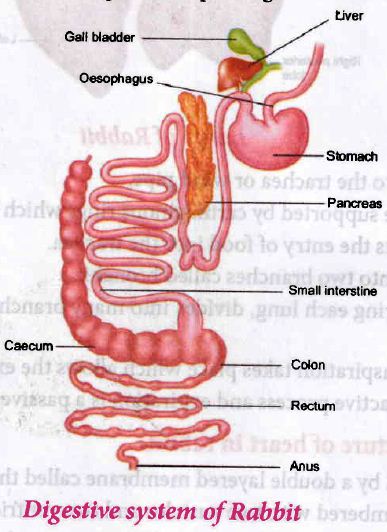
Describe the digestive system of rabbit.
4.
Describe the female reproductive system of leech.
5.
Explain the Nervous System of leech.
1.
Brain is situated in the cranial cavity and covered by three membranes called,
i) Outer duramater,
ii) Inner piamater and
iii) Middle arachnoid membrane.
The brain is divided into forebrain (prosencephalon), midbrain (mesencephalon) and hindbrain (rhombencephalon).
(a) Forebrain : Forebrain consists of a pair of olfactory lobes, cerebral hemispheres and diencephalon. The right and left cerebral hemispheres are connected by transverse band of nerve tissue called corpus callosum.
(b) Midbrain : The midbrain includes the optic lobes.
(c) Hindbrain : The hindbrain consists of the cerebellum, pons varolii and medulla oblongata.
2.
(i) The heart is pear shaped and lies in the thoracic cavity in between the lungs.
(ii) It is enclosed by pericardium, a double layered membrane.
(iii) The heart is four chambered with two auricles and two ventricles.
(iv) The right and left auricles are separated by interauricular septum, similarly right and left ventricles are separated by interventricular septum.
(v) The right auricle opens into the right ventricle by right auriculoventricular aperture, guarded by a tricuspid valve. The left auricle opens into the left ventricle by left auriculoventricular aperture guarded by a bicuspid valve or mitral valve.
(vi) The opening of the pulmonary artery and aorta are guarded by three semilunar valves.
(vii) The right auricle receives deoxygenated blood through two precaval (superior vena cava) and one postcaval (inferior vena cava) veins from all parts of the body.
(viii) The left auricle receives oxygenated blood from the pulmonary veins from the lungs.
(ix) From the right ventricle arises pulmonary trunk which carries the deoxygenated blood to the lungs and from the left ventricle arises the systemic arch (aorta) which supplies oxygenated blood to all parts of the body.
3.
(i) The digestive system includes the alimentary canal and the associated digestive glands.
(ii) The alimentary canal consists of the mouth, buccal cavity, pharynx, oesophagus, stomach, small intestine, caecum, large intestine and anus.
(iii) Mouth leads to the buccal cavity.
(iv) Through the pharynx it reaches oesophagus.
(v) Oesophagus opens into the stomach followed by small intestine.
(vi) Caecum is present in between the small intestine and large intestine
(vii) Caecum contains bacteria that helps in the digestion of cellulose.
(viii) Large intestine has colon and rectum.
(ix) It finally opens into the anus.
(x) The digestive glands are salivary glands, gastric glands, liver, pancreas and intestinal glands. The secretion of digestive glands help in digestion of food.
4.
(i) Leech is hermaphrodite because both the male and female reproductive organs are present in the same animal.
(ii) It consists of ovaries, oviducts and vagina.
(iii) There is a single pair of ovary in the 11th segment on the ventral side.
(iv) Each ovary is a coiled ribbon-shaped structure.
(v) The ova are budded off from the ovary.
(vi) From each ovary runs a short oviduct.
(vii) The oviducts of the two sides joins together, to form a common oviduct.
(viii) The common oviduct opens into a pear-shaped vagina which lies mid-ventrally in the posterior part of the 11th segment.
5.
a) The central nervous system of leech consists of a nerve ring and a paired ventral nerve cord.
b) The nerve ring surrounds the pharynx.
c) The nerve ring is formed of
i) Suprapharyngeal ganglion (brain),
ii) Circumpharyngeal connective and
iii) Subpharyngeal ganglion
d) The subpharyngeal ganglion lies below the pharynx and is formed by the fusion of four pairs of ganglia.

10th Standard Syllabus & Materials
10th Standard
TN 10th English Prose - 2 - The Night the Ghost Got in Important Questions And Answers Study Material - QB365 Set A
NEW10th Standard
TN 10th English Supplementary - 1 - The Tempest Important Questions And Answers Study Material - QB365 Set A
NEW10th Standard
TN 10th English Poem - 1 - Life Important Questions And Answers Study Material - QB365 Set A
NEW10th Standard
TN 10th English Prose - 1 - His First Flight Important Questions And Answers Study Material - QB365 Set A



Tamilnadu Stateboard 10th Standard Subjects
Tamilnadu Stateboard Standards





