
 100% FREE ACCESS
10th Standard Syllabus & Materials
10th Standard
TN 10th English Prose - 4 - The Attic Important Questions And Answers Study Material - QB365 Set A
NEW10th Standard
TN 10th English Supplementary - 3 - The Story of Mulan Important Questions And Answers Study Material - QB365 Set A
NEW10th Standard
TN 10th English Poem - 3 - I am Every Woman Important Questions And Answers Study Material - QB365 Set A
NEW10th Standard
TN 10th English Prose - 3 - Empowered Women Navigating The World Important Questions And Answers Study Material - QB365 Set A
NEW10th Standard
TN 10th English Supplementary - 2 - Zigzag Important Questions And Answers Study Material - QB365 Set A
NEW10th Standard
TN 10th English Poem - 2 - The Grumble Family Important Questions And Answers Study Material - QB365 Set A

Published on: 05/07/2021
QB365 provides detailed and simple solution for every Creative Questions in class 10 Social Science Subject. It will helps to get more idea about question pattern in every Creative questions with solution.
Download Tamil Nadu 10th Standard Social Science question papers, model tests, one-mark questions, important questions, and public exam papers in PDF format. Free study materials and answer keys for TN State Board students.
Questions + Answers key
Take MCQ Social Science Test
1.
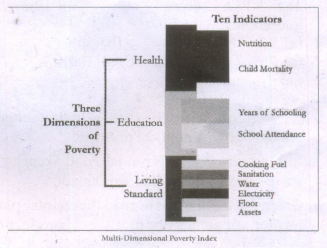
Explain the Multi-dimensional poverty index 2018 in Tamil Nadu.
2.
Explain the important ongoing schemes in Tamil Nadu.
3.
Briefly explain any five major industrial dusters and their specialisation in Tamil Nadu.
4.
Explain Industrialisation in the colonical period?
5.
Give an account of Dheeran Chinnamalai's confrontations with the British.
6.
Write about Cement and Automobile Industry.
7.
Write about leather and Paper Industry.
8.
Write about the organization at the district level that manage disasters in the state of Tamil nadu.
9.
Explain how the Congress Ministry functioned after they won the elections in 1937?
10.
Write about Earthquakes and Risk Reduction Measures.
11.
Write about Forest Fire and Risk Reduction Measures .
12.
Describe Tamil Nadu floods of 2015. What will you do before, during and after landslides.
13.
Briefly explain the role of government in development policies.
14.
Briefly explain the name of the global grouping and their objectives.
15.
Describe about India and Nepal relationship.
16.
Write about India and its neighbours.
17.
Explain the course of Munda Rebellion under Birsa Munda.
18.
Major issues faced by farmers in India.
19.
Explain the importance of mass communications systems in India.
20.
Describe the major challenges of Indian industries.
21.
Write the goals of World Trade Organisation
22.
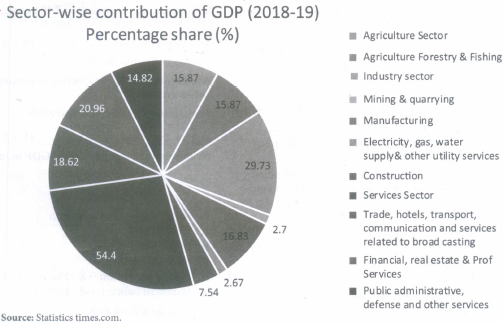
Draw the pie chart for sector wise Contribution of GDP Growth in India for the year 2018 - 2019
23.
Write the classification of different sectors contribution in GDP.
24.
Explain the List of fundamental duties.
25.
Iron & Steel and Software industries.
1.
(i) Over the last decades, Tamil Nadu has made a Significant progress in poverty reduction.
(ii) The districts in Tamil Nadu are classified into three categories, namely high-poverty districts (more than 40% of the population living below poverty line), moderately poor districts (30% to 40%) and low level poverty districts (below 30%).
(iii) After 1994, poverty has declined steadily in both rural and urban areas of Tamil Nadu and the state has a smaller share of India's poor relative to its population.
(iv) After 2005, the poverty reduction in this state has been faster than in many other states in India.
(v) Tamil Nadu leads in the poverty alleviation programmes during 2014-2017.
(vi) Government of India is implementing many policies and programmes to eradicate poverty.
(vii) These policies and programmes, if continued, will completely eradicate the poverty in the state. In future, Tamil Nadu can become a model of development in india.
2.
Important ongoing Schemes in Tamil Nadu:
(i) Under Dr. Muthulakshmi Reddy Maternity Benefit Scheme, financial assistance to the tune of Rs.12,000 is being disbursed to poor pregnant women.
(ii) The Chief Minister's Comprehensive Health Insurance Scheme was launched in the state in 2011-12 with the aim to provide Universal Healthcare to All by providing free medical and surgical treatment.
(iii) Tamil Nadu Health Systems Projects (TNHSP) has launched ambulance services free of cost (The 108 Emergency Ambulance Service).
(iv) The School Health Programme emphasises on providing comprehensive healthcare services to all students studying in Government and Government-aided schools
(v) The National Leprosy Eradication' programme is being implemented in the state with the aim to detect and to provide sustained regular treatment to all leprosy patients.
3.
(i) Chennai is nicknamed "The Detroit of Asia" because of its large auto industry base. Chennai is home to a large number of auto assembly and component-making firms.
(ii) While there were a few domestic firms like TVS, TI Cycles, Ashok Leyland, and Standard Motors earlier, in the post-reform period, several MNC firms like Hyundai, Ford, Daimler-Benz, and Renault-Nissan ' I have opened factories in the region'.
Truck and Bus Body Building Industry Clusters :
(i) The Namakkal- Tiruchengode belt in western Tamil Nadu is known for its truck body building industry.
(ii) Karur is another major hub with more than 50 units. Many entrepreneurs were previous employees in a big firm involved in body building who came out to set up their own units.
Textile Clusters:
(i) Tamil Nadu is home to the largest textiles sector in the country. Because of the development of the cotton textile industry since the colonial period, Coimbatore is often referred to as the "Manchester of South India':
(ii) Power loom is however more widespread with Erode and Salem region too having a large number of power loom units.
(iii) Tiruppur is famous for clustering a large number of firms producing cotton knitwear.
Leather and Leather Goods Clusters:
(i) Tamil Nadu accounts for 60 percent of leather tanning capacity in India and 38 percent of all leather footwear, garments, and components.
(ii) The Vellore district is the top exporter of finished leather goods in the country.
Fireworks, Matches and Printing Cluster:
(i) Sivakasi region, once famous for its match industry has now become a major center for printing and fireworks in the country.
(ii) It is believed to contribute to 90% of India's fireworks production, 80% of safety matches, and 60% of offset printing solutions.
4.
Industrialisation in the colonical period:
(i) There are two sets of factors that have contributed to the process.
(ii) The introduction of cotton cultivation in western and southern Tamil Nadu by the colonial government led to the emergence of a large-scale textile sector in these parts.
(iii) Second, increase in trade during this period led to industrial development around two of the most active ports in the region, Chennai and Tuticorin.
(iv) Match factories too emerged during the colonial period in the Sivakasi region, which later on became a major centre for fireworks production and printing.
(v) Port-related activity too contributed to the growth of the region. Leather production was also taking place in Dindigul, Vellore and Ambur areas.
(vi) In Western Tamil Nadu, the emergence of textiles industries also led to demand and starting of textile machinery industry in the region.
(vii) This textile machinery industry in turn led to the rise of a number of small workshops for repair and producers of machinery components.
(viii) Another major development in the western region is the introduction of electricity from hydro-electric power in 1930s.
(ix) Availability of electricity allowed for use of oil engines for drawing ground water.
(x) This led to both expansion of agriculture as well as increase in demand for oil engines.
(xi) In turn, it led to emergence of workshops for servicing engines and also for addressing the demand for spare parts.
(xii) Foundries began to be set up and agricultural machinery began to be produced.
5.
(i) Chinnamalai was involved in resolving family and land disputes in the Kongu region.
(ii) As this region was under the control of the Mysore Sultan, tax was collected by Tipu's Diwan Mohammed Ali.
(iii) Once, when the Diwan was returning to Mysore with the tax money, Theerthagiri blocked his way and confiscated all the tax money.
(iv) He let Mohammed Ali go by instructing him to tell his Sultan that "Chinnamalai", who is between Sivamalai and Chennimalai, was the one who took away taxes. Thus he gained the name "Dheeran Chinnamalai"
(v) The offended Diwan sent a contingent to attack Chinnamalai and both the forces met and fought at the Noyyal river bed. Chinnamalai emerged victorious.
(vi) After Tipus death Dheeran Chinnamalai built a fort and fought the British without leaving the place. Hence the place is called Odanilai. He launched guerrilla attacks t and evaded capture.
(vii) Finally the English captured him and his brothers and kept them in prison in Sankagiri.
(viii) When they were asked to accept the rule of the British, they refused. So they were hanged at the top of the Sankagiri Fort on 31 July 1805.
6.
Cement Industry:
(i) Cement production and consumption continue to grow despite the general recession in the economy. India is one of the largest cement producers and ranked second in the world with an annual. production capacity of 181 million tons.
(ii) Tamil Nadu Cements Corporation Limited (TANCEM) is one among the major cement producers in Tamil Nadu operating two cement units: one at Ariyalur and another at Alangulam.
(iii) Asbestos cement sheet plant at Alangulam and stoneware pipe unit at Virudhachalam are the other units of TANCEM. Sankar Cement, Zuari Cement, Ultratech Cement, Madras Cement and Dalmia Cement are the major private cement brands produced in Tamil Nadu.
Automobile Industries:
(i) Automobile industry plays a crucial role in the state's economy and has been one of the key driving factors.
(ii) Tamil Nadu accounts for about 21% of passenger cars, 33% of commercial vehicles and 35% of automobile components produced in India.
(iii) Major automobile manufacturers like Ford, Hyundai, HM -Mitsubishi, Ashok Leyland, and TAFE have their manufacturing base in Tamil Nadu.
7.
Leather Industry:
(i) Tamil Nadu accounts for 60% of leather tanning processes of India and 38% of all leather footwear, garments and components.
(ii) Hundreds of leather tanneries are located around Vellore and nearby towns, such as Ranipet, Ambur and Vaniyambadi. The Vellore district is the top exporter of finished leather goods in the country.
(iii) Central Leather Research Institute (CLRI), a CSIR research laboratory, is located in Chennai.
Paper Industry:
(i) Tamil Nadu Newsprint and Papers Limited (TNPL) is a government of Tamil Nadu enterprise producing newsprint and printing and writing paper at its mill located at Kagithapuram in Karur district.
(ii) TNPL is one of the most accomplished mills in the world, producing different varieties paper of acceptable' quality primarily from bagasse and pulpwood.
(iii) Other paper mills of the state are found in Pukkathurai of Kancheepuram district, Bhavanisagar, Pallipalayam, Paramathi Vellore, Coimbatore, Udamalaipet, Thoppampatti, Nilakkotai and Cheranmahadevi.
8.
The Organizations at District Level:
(i) District Magistrate (Chairman- District Collector)
(ii) Revenue Department
(iii) Civil Administration
(iv) Local Police
(v) Civil Defence
(vi) Fire & Emergency Services
(vii) Home Guards (also Local Community, Non-Governmental Organisations Voluntary Agencies) etc.
9.
(i) The Congress Ministries functioned as a popular government and responded to the needs of the people.
(ii) The salaries of ministers were reduced from Rs. 2000 to Rs. 500 per month. Earlier action taken against nationalists were rescinded.
(iii) They repealed the Acts which vested emergency powers in the government, lifted the ban imposed on political organisations except the Communist Party, and removed the restrictions on the nationalist press.
(iv) Police powers were curbed and reporting by the CID on political speeches discontinued.
(v) Legislative measures were adopted for reducing' indebtedness of the peasantry and improving the working conditions of the industrial labour.
(vi) Temple entry legislation was passed. Special attention was paid to education and public health.
10.
Earthquakes: India is a vast country which experiences many earthquakes at different periods. Generally high risk zones of the country are located in the north and central parts. The state of Tamil Nadu is located in the moderately low risk zone.
Risk Reduction Measures:
(i) During: Take cover under a strong table or any other piece of furniture and remain under cover until the shaking stops.
(ii) After: Proceed cautiously once the earthquake has stopped and always avoid roads, bridges that might have been damaged by the earthquake.
11.
Forest Fire: Tamil Nadu is a tropical state. The high temperature during summer leads to occasional forest fire in deciduous and thorn forests. Risk Reduction Measures:
(i) Before: Create defensible space to separate your home from flammable vegetation and materials (30 feet); follow all local fire and building codes; keep all trees and shrubs trimmed. Use approved fire resistant materials; make evacuation plans with family members which include several options with an outside meeting place.
(ii) During: Listen to radio; watch tv; read newspapers for updates; if adequate water are available fill buckets with water. turn a light on a room in case of smoke; turn off gas and electrical appliances and be ready to evacuate all family members.
(iii) After: Check with fire officials before attempting to return to your home; use caution when re-entering a burned area - flare ups can occur; check grounds for hot spots and check the roof and exterior areas for sparks and embers.
12.
Flood is a common one in the coastal districts of Tamil Nadu during northeast monsoon. The recent flood occurred in the state was in 2015.
Risk Reduction Measures:
(i) Before: Know about relief centres and evacuation routes keep emergency phone numbers and important information fold and roll up things on to higher ground.
(ii) During: Be quick, keep safe and ensure that children and elderly are safe by leaving the house to a higher ground turn off all electrical appliances and gas leave the area before its get too late do not drive through the water stay away from power lines or broken power transmission cables and try to keep away from flood water.
(iii) After: Make sure to get back inside your house, keep all power and electrical appliances off before it is okay to put them on and wear appropriate dress before cleaning house which is necessary to clean the contamination.
13.
In India, the three levels of governments namely, Union, state and local, have been carrying out various functions for the benefit of people and society at large. These roles are divided into seven categories for easy understanding.
(i) Defence:
(a) This is an essential security function to protect our nation from our enemies.
(b) The Union government is responsible for creating and maintaining defence forces.
(ii) Foreign policy:
(a) We need to maintain friendly relationships with all the other countries in the world.
(b) We should also maintain cordial economic relationships through exports and imports, sending and receiving investments and labour.
(c) This service is also provided by the Union government.
(iii) Conduct of periodic elections :
(a) We elect our representatives to Parliament and state assemblies.
(b) Similarly the state governments conduct elections to local bodies within the state.
(iv) Law arid order:
(a) Both the Union and state governments enact numerous laws to protect our rights, properties and to regulate our economy and society.
(b) To settle disputes, the Union government has a vibrant Judicial system., State governments take the responsibility for administering the police force in respective states.
(v) Public administration and provision of public goods:
(a) The government generally administers the economy and society through various departments, for example, revenue department, schools, hospitals, rural development and urban development.
(b) The local governments provide public goods like local roads, drainage, drinking water and waste collection and disposal.
(vi) Redistribution of income and poverty alleviation:
(a) The government also spend money such that the poor are given some basic necessities of life like food,shelter, clothing, education, health care and monthly income to the very poor persons.
(b) Thus collecting taxes and spending for the poor reduces poverty.
(vii) Regulate the economy :
(a) The Union government through the Reserve Bank of India, controls money supply and controls the interest rate, inflation and foreign exchange rate.
(b) The main objective is to remove too much of fluctuation in these rates.
14.
| Name of the global groupings | Name of the member countries | Objectives |
|---|---|---|
| IBSA | India, Brazil, South Africa | To focus on agriculture, education, energy, trade, culture and defence among others |
| BCIM | Bangladesh, China, India Myanmar | To respond to threats such as natural disasters and data breaches and protect business interests |
| MGC (Mekong Ganga Cooperation) | India, Cambodia, Laos PDR Myanmar, Thailand Vietnam | To create necessary infrastructural facilities in the Ganga-Mekong basin |
| BlMTEC (Bay of Bengal Initiative for Multi-Sectoral Technical and Economic Cooperation) | Bangladesh, India Myanmar, Sri Lanka, Thailand, Bhutan and Nepal | To strengthen and improve the technological economic cooperation, international trade and foreign direct investment cooperation |
| RCEP (Regional Comprehensive Economic Partnership) | Australia, Brunei, Cambodia, China, India Indonesia, Japan, Korea Laos, Malaysia, Myanmar Singapore, Thailand Vietnam | To achieve modern high-quality and mutually beneficial agreement that covers trade in goods trade in service, investments, technical cooperation dispute settlement and other issues |
| EAS (East Asia Summit) | 10 ASEAN nations + 8 strategic partners including US, China, India, Japan | To promote peace and stability |
| GCC (Gulf Cooperation Council) | Bahrain, Kuwait, Oman Qatar, Saudi Arabia, United | To achieve unity based on their common objectives and their similar political and cultural identities |
| BBIN | Bangladesh, Bhutan, India Nepal | For energy development |
| SCO (Shanghai cooperation organization) | India, Kazakhstan, China Kyrgyzstan, Pakistan Russia, Tajikistan and Uzbekistan | For security-related concerns, resolving border issues, intelligence sharing and countering terrorism |
15.
(i) Nepal is a natural buffer between India and China. Being a small landlocked country, Nepal depends on India for economic support and transit facilities.
(ii) India shares borders in five indian states Sikkim, West Bengal, Bihar, Uttar Pradesh and Uttarakhand - with Nepal.
(iii) People residing in the border districts on both sides share deeper cultural bonds. Indian real firms are the biggest investors in Nepal.
(iv) India provides substantial financial and technical development assistance with the focus on infrastructure, irrigation,health energy projects and community development.India built the 204-kilometre long Mahendra Raj Marg to link Kathmandu and India.
(v) Nepal is endowed with fast-flowing rivers and its terrain is ideal for hydroelectric power generation.
(vi) Nepali and Indian people visit each other's country for religious pilgrimage.
(vii) Pashupati and janakpur are traditional centres in Nepal whereas Varnasi and the four Dhaams (Badrinath, Puri, Dwaraka and Rameshwaram are important pilgrimage destunations in India.
(viii) The bond of friendship further increased when India included Nepalese language in the VIII schedule of the Constitution.
(ix) A joint hydropower project is being built on the Sharda River.This power plant helps both India and Nepal with respect to electricity production and irrigation facilities.
(x) The governments of India and Nepal have signed three sister-city agreements for twinning of Kathmandu -Varanasi, Lumbini Bodhgaya and Janakpur-Ayodhya.
16.
India's position is unique in its neighbourhood. India's neighbours had been a part of a homogenous culture prevailing in the Indian subcontinent for last five thousand years.
(i) India is a vast country with Pakistan and Afghanistan to the north-west
(ii) China, Nepal, Bhutan to the north
(iii) Bangladesh to the east
(iv) Myanmar to the far east Sri Lanka (from south-east) and Maldives (from south-west) are two countries that lie close to India separated by the Indian Ocean. India has cordial historical, religious, economic, ethnic and linguistic relationship with all of these countries.
17.
(i) The movement received an impetus when Birsa Munda declared himself as the messenger of God.
(ii) Birsa claimed that he had a prophecy and promised supernatural solutions to the problem of Munda people and the establishment of Birsaite Raj.
(iii) The Munda leaders utilised the cult of Birsa Munda to recruit more people to their cause. A series of night meetings were held and a revolt was planned.
(Iv) On the Christmas day of 1889, they resorted to violence. Buildings were burnt down and arrows were shot at the Christian missionaries and Munda Christian converts.
(v) Soon police stations and government officials were attacked. Similar attacks were carried out over the next few months.
(vi) Finally the resistance was crushed and Birsa Munda was arrested in February 1900 who later died in jail. Birsa Munda became a folk hero who is to this day celebrated in many folk songs.
(vii) The Munda rebellion prompted the British to formulate a policy on Tribal land. The Chotanagpur Tenancy Act (1908), restricted the entry of non-tribal people into the tribal land.
18.
Indian agriculture and Indian farmers are plagued by several problems; some of them are natural and some others are manmade.
(i) Small and fragmented land-holdings: The problem of small and fragmented holdings is more serious in densely populated and intensively cultivated states in India.
(ii) High Costs of Inputs: Seed is a critical and basic input for attaining higher crop yields and sustained growth in agricultural production.
(iii) Infertile Soil: Indian soils have been used for growing crops over thousands of years without caring much for replenishing. This has led to depletion and exhaustion of soils resulting low productivity.
(iv) Lack of Irrigation: Only one- third of the cropped area falls under irrigated area. To make agriculture reliable, irrigation facility has to be developed.
(v) Soil erosion: Large tracts of fertile land suffer from soil erosion by wind and water. Such kind of areas must be properly treated and restored to its original fertility.
(vi) Agricultural marketing: In rural India, agricultural marketing continues in bad shape. Due to the absence of sound marketing facility, the farmers have to depend on local traders and middlemen for the disposal of their farm products which is sold at a low price.
(vii) Inadequate storage facilities: Storage facilities in the rural areas are either totally absent or grossly inadequate. Under such conditions, the farmers are compelled to sell their products immediately after the harvest irrespective of the condition of market.
19.
Electronic Media:
(i) Mass Communication enables millions of people to get the information at the same time.
(ii) It is a great way to provide education as well as entertainment.
(iii) It helps in creating awareness among the people regarding various national policies and programmes.
(iv) The Mass Communication Systems can provide the information to people in two methods.
Electronic Media:
(i) Radio broadcasting in India was started in 1923 by the Radio club of Bombay.
(ii) It was named as All India Radio (AIR) in 1936 and again it was renamed as Akashwani in 1957.
(iii) It broadcasts a variety of programs related to information, education and entertainment.
Print Media:
(i) Newspapers are the most common but powerful means of communication come under print media.
(ii) India has many newspapers which carry information on local, national and international events to the people
20.
Major challenges of Indian Industries:
i) Industries in India face many problems. Some major problems are listed below.
ii) Shortage and fluctuation in Power Supply.
ii) Non- availability of large blocks of land.
iv) Poor access to credit.
v) High rate of interest for borrowed loan.
vi) Non - availability of cheap labourers.
vii) Lack of technical and vocational training for employees.
viii) Inappropriate living conditions nearby industrial estates.
21.
Goals of WTO:
(i) Raising and stabilizing the incomes of small scale farmers, farm workers and artisans.
(ii) More equitably distributing the economic gains, opportunities and risks associated with the production and sale of these goods.
(iii) Increasing the organisational and commercial capacities of producer groups.
(iv) Promoting labour rights and the right workers to organize.
(v) Promoting safe and sustainable farming methods and working conditions
22.
23.
Contribution of different sectors GD P in India:
i) Gross Value Added (GVA) at current prices for services sector is estimated at 92.6 lakh crore in 2018 - 19.
ii) Services sector accounts for 54.40% of total India's (GVA) of 169.61 lakh crore Indian Rupees.
iii) With GVA of Rs. 50.43 lakh crore, Industry sector contributes 29.73%.
iv) Agriculture and allied sector shares 15.87%.
v) At 2011-12 prices, composition of Agriculture &allied, Industry and services sectors are 14.39%, 31.46% and 54.15% respectively.
vi) The share of primary like agriculture, forestry, fishing and mining and quarrying.
vii) Secondary (Industry) like, manufacturing, electricity, gas, water supply, utility services and construction, tertiary (services) like, trade, hotels, transport, communication etc. have been estimated as 18.57%, 27.03%, 54.40%.
viii) According to sector wise India GDP composition in 2017 are Agriculture (15.4%), Industry (23%) and services (61.5%).
ix) India is 2nd largest producer of agriculture product.
x) India accounts for 7.39% of total global agricultural output.
xi) In Industry sector, India world rank is 6.
xii) In service sector, India world rank is 8.
xiii) Contribution of Agriculture sector in Indian economy is much higher than world's average 6.4%.
xiv) Contribution of Industry and services sector is lower than world's average 30% for Industry sector and 63% for services sector.
xv) At previous methodology, composition of Agriculture & allied, Industry and services sector was 51.81%, 14.16% and 33.25% respectively at current prices in 1950-51.
(xvi) Share of Agriculture & allied sector has declined at 18.20% in 2013 - 14.
xvii) Share of services sector has improved to 57.03%.
xviii) Share of Industry sector has also increased to 24.77%.
24.
List of Fundamental Duties:
Article 51A declares it to be the duty of every citizen of India.
(i) To abide by the constitution and respect its ideals and institutions, the National Flag and the National Anthem.
(ii) To cherish and follow the noble ideals which inspired the national struggle for freedom.
(iii) To uphold and protect the sovereignty, unity and integrity of India.
(iv) To defend the country and render national service when called upon to do so.
(v) To value and preserve the rich heritage of our composite culture.
(vii) To protect and improve the natural environment including forests, lakes, rivers and wildlife, and to have compassion for living creatures.
(viii) To develop scientific temper, humanism and the spirit of inquiry and reform.
(ix) To safeguard public property and to abjure violence
25.
| S.No |
Iron and Steel |
Software |
|---|---|---|
| (1) | Mineral-based | Human-based |
| (2) | Iron and steel industries of India are concentrated in the Chota Nagpur plateau region | TCS, Infosys Accenture, Wipro are important software companies. |
| (3) | Ex: Durgapur Bokaro, Rourkela, Jamshedpur. | The IT parks are located in Chennai, Mumbai Pune, Bengaluru, Hyderabad, Mysore, Thiruvananthapuram, etc. |

10th Standard Syllabus & Materials
10th Standard
TN 10th English Prose - 2 - The Night the Ghost Got in Important Questions And Answers Study Material - QB365 Set A
NEW10th Standard
TN 10th English Supplementary - 1 - The Tempest Important Questions And Answers Study Material - QB365 Set A
NEW10th Standard
TN 10th English Poem - 1 - Life Important Questions And Answers Study Material - QB365 Set A
NEW10th Standard
TN 10th English Prose - 1 - His First Flight Important Questions And Answers Study Material - QB365 Set A



Tamilnadu Stateboard 10th Standard Subjects
Tamilnadu Stateboard Standards




