
 100% FREE ACCESS
10th Standard Syllabus & Materials
10th Standard
TN 10th English Prose - 4 - The Attic Important Questions And Answers Study Material - QB365 Set A
NEW10th Standard
TN 10th English Supplementary - 3 - The Story of Mulan Important Questions And Answers Study Material - QB365 Set A
NEW10th Standard
TN 10th English Poem - 3 - I am Every Woman Important Questions And Answers Study Material - QB365 Set A
NEW10th Standard
TN 10th English Prose - 3 - Empowered Women Navigating The World Important Questions And Answers Study Material - QB365 Set A
NEW10th Standard
TN 10th English Supplementary - 2 - Zigzag Important Questions And Answers Study Material - QB365 Set A
NEW10th Standard
TN 10th English Poem - 2 - The Grumble Family Important Questions And Answers Study Material - QB365 Set A

Published on: 13/03/2020
10th Standard Mathematics English Medium All Chapter Book Back and Creative Two Marks Questions 2020
Download Tamil Nadu 10th Standard Maths question papers, model tests, one-mark questions, important questions, and public exam papers in PDF format. Free study materials and answer keys for TN State Board students.
Questions + Answers key
Take MCQ Maths Test1.
Prove that sec A (1 - sin A) (sec A + tan A) = 1.
2.
Find the depth of a cylindrical tank of radius 28 m, if its capacity is equal to that of a rectangular tank of size 28 m x 16 m x 11 m.
3.
If the radii of the circular ends of a conical bucket which is 45 cm high are 28 cm and 7 cm, find the capacity of the bucket. (Use π = \(\frac{22}{7}\))
4.
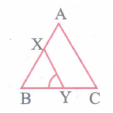
In figure the line segment XY is parallel to side AC of \(\Delta ABC\) and it divides the triangle into two parts of equal areas. Find the ratio \(\cfrac { AX }{ AB } \)
5.
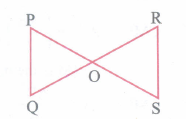
In figure if PQ || RS Prove that \(\Delta POQ\sim \Delta SOQ\)
6.
The marks scored by 5 students in a test for 50 marks are 20, 25, 30, 35, 40. Find the S.D for the marks. If the marks are converted for 100 marks, find the S.D. for newly obtained marks.
7.
Find the standard deviation for the following data. 5, 10, 15, 20, 25. And also find the new S.D. if three is added to each value.
8.
Let A = {0, 1, 2, 3} and B = {1, 3, 5, 7, 9} be two sets. Let f: A \(\rightarrow\)B be a function given by f(x) = 2x + 1. Represent this function as a table.
9.
Using quadratic formula solve the following equations.9x2-9(a+b)x+(2a2+5ab+2b2)=0
10.
Using quadratic formula solve the following equations.
p2x2 + (P2 -q2) X - q2 = 0
11.
Prove that \(\sqrt { 3 } \) is irrational
12.
Use Euclid's algorithm to find the HCF of 4052 and 12756.
13.
Show that the points (1, 7), (4, 2), (-1,-1) and (-4,4) are the vertices of a square.
14.
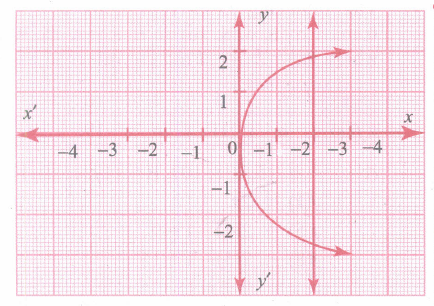
State whether the graph represent a function. Use vertical line test.
15.
Find a relation between x and y such that the point (x, y) is equidistant from the points (7, 1) and (3, 5).
16.
calculate \(\angle \)BAC in the given triangles ( tan 69.4° = 2.6604 )
.JPG)
17.
Find the sum of the following series
51 + 52 + 53 + ....... + 92
18.
Simplify
\(\frac { { x }^{ 3 } }{ x-y } +\frac { { y }^{ 3 } }{ y-x } \)
19.
Find the next three terms of the sequences.
1, 0.1, 0.01,...
20.
If the standard deviation of a data is 4.5 and if each value of the data is decreased by 5, then find the new standard deviation.
21.
A road is flanked on either side by continuous rows of houses of height \( 4\sqrt { 3 } \)m with no space in between them. A pedestrian is standing on the median of the road facing a row house. The angle of elevation from the pedestrian to the top of the house is 30°. Find the width of the road.
22.
Find the slope of the following straight lines 5y − 3 = 0
23.
Find the value of ‘a’, if the line through (–2, 3) and (8, 5) is perpendicular to y = ax + 2
24.
The range of a set of data is 13.67 and the largest value is 70.08. Find the smallest value.
25.
Let A = {9, 10, 11, 12, 13, 14, 15, 16, 17} and let f: A ⟶ N be defined f(n) = the highest prime factor of n \(\in \) A. Write f as a set of ordered pairs and find the range of f.
26.
In electrical circuit theory, a circuit C(t) is called a linear circuit if it satisfies the superposition principle given by C(at1+ bt2) = aC(t1) + bC(t2) where a, b are constants. Show that the circuit C(t) = 3t is linear.
27.
The external radius and the length of a hollow wooden log are 16 cm and 13 cm respectively. If its thickness is 4 cm then find its T.S.A.
28.
Find the LCM and GCD for the following and verify that f(x) x g(x) = LCM x GCD
21x2y, 35 xy2
29.
D and E are respectively the points on the sides AB and AC of a \(\triangle\)ABC such that AB = 5.6 cm, AD = 1.4 cm, AC = 7.2 cm and AE = 1.8 cm, show that DE || BC
30.
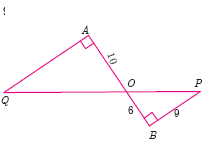
QA and PB are perpendiculars to AB. If AO = 10 cm, BO = 6 cm and PB = 9 cm. Find AQ.
31.
A cone of height 24 cm is made up of modeling clay. A child reshapes it in the form of a cylinder of same radius as cone. Find the height of the cylinder.
1.
LHS = sec A (1 - sin A) (sec A + tan A)
= \(\left[ \frac { 1 }{ cosA } \right] (1-sinA)\left[ \frac { 1 }{ cosA } +\frac { sinA }{ cosA } \right] \)
= \(\frac { (1-sinA)(1+cosA) }{ { cos }^{ 2 }A } \)
= \(\frac { 1-{ sin }^{ 2 }A }{ { cos }^{ 2 }A } \)
= \(\frac { { cos }^{ 2 }A }{ { cos }^{ 2 }A } \) = 1 = RHS
2.
Volume of the cylindrical tank = Volume of the rectangle tank
πr2h = 28 x 16 x 11 m3

\(h=\frac { 16\times 11 }{ 88 } =2m\)
3.
Clearly bucket forms frustum of a cone such that the radii of its circular ends are r1 = 28 cm, r2 = 7 cm, h = 45 cm
Capacity of the bucket = volume of the frustum
\(\Rightarrow \frac { 1 }{ 3 } \times \pi h[{ r }_{ 1 }^{ 2 }+{ r }_{ 2 }^{ 2 }+{ r }_{ 1 }{ r }_{ 2 }]\)
\(\Rightarrow \frac { 1 }{ 3 } \times \frac { 22 }{ 7 } \times 45[{ 28 }^{ 2 }+{ 7 }^{ 2 }+28\times 7)]\)
= 22 x 15 x (28 x 4 + 7 + 28)
\(\Rightarrow 330\times 147{ cm }^{ 2 }\Rightarrow 48510{ cm }^{ 2 }\)
4.
Given XY IIA C
So,
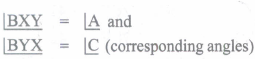
\(\therefore \Delta ABC\sim \Delta XbY\) (AAA similarity criterion)
So, \(\cfrac { ar(ABC) }{ ar(XBY) } =\left( \cfrac { AB }{ XB } \right) ^{ 2 }\) ...(1)
ar(ABC) = 2ar(XBY)
\(\cfrac { ar(ABC) }{ ar(ABC) } =\cfrac { 2 }{ 1 } \) ...(2)
From (1) and (2),
\(\left( \cfrac { AB }{ XB } \right) ^{ 2 }=\cfrac { 2 }{ 1 } i.e.,\cfrac { AB }{ XB } =\cfrac { \sqrt { 2 } }{ 1 } \)
\(\cfrac { XB }{ AB } =\cfrac { 1 }{ \sqrt { 2 } } \)
\(1-\frac{X B}{A B}=1-\frac{1}{\sqrt{2}}\)
\(\cfrac { AB-XB }{ AB } =\cfrac { \sqrt { 2 } -1 }{ \sqrt { 2 } } \)
\(\cfrac { AX }{ AB } =\cfrac { \sqrt { 2 } -1 }{ \sqrt { 2 } } =\cfrac { 2-\sqrt { 2 } }{ 2 } \)
5.
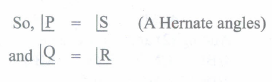
PQ II RS
Also

\(\angle \therefore \Delta POQ\sim \Delta SOR\) (AAA similarity criterion)
6.
Let assumed mean A = 30
C = 5
| x | d' = \(\frac { x-30 }{ 5 } \) | d'2 |
| 20 | -2 | 4 |
| 25 | -1 | 1 |
| 30 | 0 | 0 |
| 35 | 1 | 1 |
| 40 | 2 | 4 |
| Σd' = 0 | Σd'2 = 10 |
σ =\(\sqrt { \left( \frac { \Sigma d'^{ 2 } }{ n } \right) -\left( \frac { \Sigma d' }{ n } \right) ^{ 2 } } \) x c
=\(\sqrt { \frac { 10 }{ 5 } -0 } \) x 5
=\(\sqrt { 2 } \) x 5
= 5\(\sqrt { 2 } \)
To convert the values for 100, all the values will be multiplied by 2. Therefore the new values are 40, 50, 60, 70, 80.
Let A = 60, C = 10
| x | d' = \(\frac { x-60 }{ 10 } \) | d'2 |
| 40 | -2 | 4 |
| 50 | -1 | 1 |
| 60 | 0 | 0 |
| 70 | 1 | 1 |
| 80 | 2 | 4 |
σ =\(\sqrt { \left( \frac { \Sigma d'^{ 2 } }{ n } \right) -\left( \frac { \Sigma d' }{ n } \right) ^{ 2 } } \) x c
=\(\sqrt { \frac { 10 }{ 5 } -0 } \) x 10
=\(\sqrt { 2 } \) x 10
= 10\(\sqrt { 2 } \)
S.D. also be multiplied by 2. It is also true for the division also.
7.
| x | d' = \(\frac { x-15 }{ 5 } \) | d'2 |
| 5 | -2 | 4 |
| 10 | -1 | 1 |
| 15 | 0 | 0 |
| 20 | 1 | 1 |
| 25 | 2 | 4 |
| Σd = 0 | Σd'2 = 10 |
\(\bar { x } =\frac { \Sigma x }{ n } =\frac { 75 }{ 5 } \)=15
d'=\(\frac { x-\bar { x } }{ c } =\frac { x-A }{ c } \)
A is assumed mean c is common factor.
Here A= 15, C = 5
σ =\(\sqrt { \left( \frac { \Sigma d'^{ 2 } }{ n } \right) -\left( \frac { \Sigma d' }{ n } \right) ^{ 2 } } \) x c
=\(\sqrt { \frac { 10 }{ 5 } -0 } \) x c
=\(\sqrt { 2 } \) x 5
= 5\(\sqrt { 2 } \)
If 3 is added to each value, we get 8, 13, 18,23, 28 as new values.
| x | d' = \(\frac { x-18 }{ 5 } \) | d'2 |
| 8 | -2 | 4 |
| 13 | -1 | 1 |
| 18 | 0 | 0 |
| 23 | 1 | 1 |
| 28 | 2 | 4 |
| Σd' = 10 | Σd'2 = 10 |
∴ σ =\(\sqrt { \left( \frac { \Sigma d'^{ 2 } }{ n } \right) -\left( \frac { \Sigma d' }{ n } \right) ^{ 2 } } \) x c
=\(\sqrt { \frac { 10 }{ 5 } -0 } \) x 5
=\(\sqrt { 2 } \) x 5
= 5\(\sqrt { 2 } \)
S.D. doesn't change when a number is added or subtracted to the values.
8.
A table
| x | 0 | 1 | 2 | 3 |
|---|---|---|---|---|
| f(x) | 1 | 3 | 5 | 7 |
9.
9x2-9(a+b)x+(2a2+5ab+2b2)=0
Comparing this with ax2 + bx + c = O.
a =9
b = -9(a + b)
c = (2a2 + 5ab + 2b2)
∴ ∆=B2-4AC
⇒ 81(a+b)2-36(2a2+5ab+2b2)
⇒ 9a2 + 9b2 - 18ab
⇒ 9(a - b)2> 0
∴ the roots are real and given by
\(\beta =\frac { -B-\sqrt { D } }{ 2A } =\frac { 9(a+b)+3(a-b) }{ 18 } \)
\(=\frac { 12a+6b }{ 18 } =\frac { 2a+b }{ 3 } \)
\(\beta =\frac { -B-\sqrt { D } }{ 2A } =\frac { 9(a+b)+3(a-b) }{ 18 } \)
\(=\frac { 6a+12b }{ 18 } =\frac { a+2b }{ 3 } \)
10.
p2x2 + (P2 -Comparing this with ax' + bx + c = 0, we have
a=p2
b=p2-q2
c =-q2
D = b2-4ac
= (P2-q2)-4xp2x-q2
= (P2-q2)2+ 4p2 q2
= (P2+q2)2>0
So, the given equation has real roots given by
\(\alpha =\frac { -b-\sqrt { D } }{ 2a } =\frac { -({ p }^{ 2 }-{ q }^{ 2 })+({ p }^{ 2 }+{ q }^{ 2 }) }{ { 2p }^{ 2 } } \)
\(=\frac { { q }^{ 2 } }{ { p }^{ 2 } } \)
\(\beta =\frac { -b-\sqrt { D } }{ 2a } =\frac { -({ p }^{ 2 }-{ q }^{ 2 })+({ p }^{ 2 }+{ q }^{ 2 }) }{ { 2p }^{ 2 } } \)
=-1
11.
Let us assume the opposite, (1) \(\sqrt { 3 } \) is irrational.
Hence \(\sqrt { 3 } =\frac { p }{ q } \)
Where p and q (q ≠ 0) are co-prime (no common factor other than 1)
Hence, \(\sqrt { 3 } =\frac { p }{ q } \)
\(\sqrt { 3 } \)q = p
Squaring both side
\({ (\sqrt { 3 }q ) }^{ 2 }={ p }^{ 2 }\)
3q2 = p2
\({ q }^{ 2 }=\frac { p }{ 3 } \)
Hence, 3 divides p2 So 3 divides p also .....(1)
Hence we can say
\(\frac{p}{3}\) = c where c is some integer
s, p =p2
Putting p = 3c
3q2 = (3c)2
3q2 = 9c2
q2 = \(\frac13\) x 9c2
q2 = 3c2
\(\frac{9^2}{3}\) = c2
Hence 3 divides q2
So, 3 divides q also ...(2)
By (1) and (2) 3 divides both p and q
By contradiction \(\sqrt { 3 } \) is irrational.
12.
Since 12576 > 4052 we apply the division lemma to 12576 and 4052, to get
12576 = 4052 x 3 + 420.
Since the remainder 420 ≠ 0, we apply the division lemma to 4052
4052 = 420 x 9 + 272.
We consider the new divisor 420 and the new remainder 272 and apply the division lemma to get
420 = 272 x 1 + 148, 148 ≠ 0
∴ Again by division lemma
272 = 148 x 1 + 124, here 124 ≠ 0
∴ Again by division lemma
148 = 124 x 1 + 24, Here 24 ≠ 0
∴ Again by division lemma
124 = 24 x 5 + 4, Here 4 ≠ 0
∴ Again by division lemma
24 = 4 x 6 + 0.
The remainder has now become zero. So our procedure stops. Since the divisor at this stage is 4.
∴ The HCF of 12576 and 4052 is 4.
13.
Let A(1, 7), B(4, 2), C(-1, -1) and D(-4, 4) be the given paints. One way at showing that ABCD is a square is to use the property that all its sides should be equal and both its diagonals should be equal.
Now,
AB = \(\sqrt { (1-4)^{ 2 }+(7-4)^{ 2 } } =\sqrt { 9+25 } =\sqrt { 34 } \)
BC = \(\\ \sqrt { (4+1)^{ 2 }+(2+1)^{ 2 } } =\sqrt { 25+9 } =\sqrt { 34 } \)
CD = \(\sqrt { (-1+4)^{ 2 }+(-1-4)^{ 2 } } =\sqrt { 9+25 } =\sqrt { 34 } \)
DA =\(\sqrt { (1+4)^{ 2 }+(7-4)^{ 2 } } =\sqrt { 25+9 } =\sqrt { 34 } \)
AC = \(\sqrt { (1+1)^{ 2 }+(7+1)^{ 2 } } =\sqrt { 4+64 } =\sqrt { 68 } \)
BD = \(\\ \sqrt { (4+4)^{ 2 }+(2-4)^{ 2 } } =\sqrt { 64+4 } =\sqrt { 68 } \)
Since, AB = BC = CD = DA and AC = BD, all the four sides at the quadrilateral ABCD are equal and its diagonals AC and BD are also equal. Therefore, ABCD is a square.
14.
It is not a function as the vertical line PQ cuts the graph at two points
15.
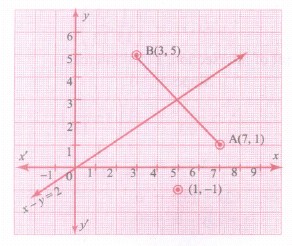
Let P(x, y) be equidistant from the points A (7, 1) and B (3, 5).
We are given that AP = BP. So, AP2 = BP2
(x - 7)2 + (y - 1)2 = (x - 3)2 + (y - 5)2
x2- 14x + 49 + y - 2y + 1 = x2- 6x + 9 + y -10y + 25
x - y = 2
Which is the required relation.
16.
in right triangle ABC [see fig.(b)]
tan\(\theta \) =\(\frac { 8 }{ 3 } \)
= tan-1(2.66)
\(\theta \) = \(69.4°\)(since tan \(69.4°\)=2.6604)
\(\angle \)BAC = \(69.4°\)
17.
1 + 2 + 3 +...+ n = \(\frac{n(n+1)}{2}\)
51 + 52 + 53 + ... + 92: (1 + 2 + 3 + ...+ 92) - (1 + 2 +...+ 50)
\(=\frac{92 \times(92+1)}{2}-\frac{50 \times(50+1)}{2}
\)
\(=\frac{92 \times 93}{2}-\frac{50 \times 51}{2}
\)
= 4278 - 1275 = 3003
51 + 52 + 53 +...+ 92 = 3003
18.
\(\frac { { x }^{ 3 } }{ x-y } +\frac { { y }^{ 3 } }{ y-x } =\frac { { x }^{ 3 } }{ x-y } -\frac { { y }^{ 3 } }{ y-x } =\frac { { x }^{ 3 }-{ y }^{ 3 } }{ (x-y) } \)
\(=\frac { (x-y)\left( { x }^{ 2 }+xy+{ y }^{ 2 } \right) }{ x-y } \)
x2 + xy + y2
19.
.JPG)
Here each term is divided by 10. Hence , the next three terms are
\({ a }_{ 4 }=\frac { 0.01 }{ 10 } =0.001\)
\({ a }_{ 5 }=\frac { 0.001 }{ 10 } =0.0001\)
\({ a }_{ 6 }=\frac { 0.0001 }{ 10 } =0.00001\)
20.
The standard deviation of a given data is 4.5. If we subtract some fixed constant from all the data, the standard deviation will not change.
Each value of the data decreased by 5, the new standard deviation will not change.
New standard deviation = 4.5
21.
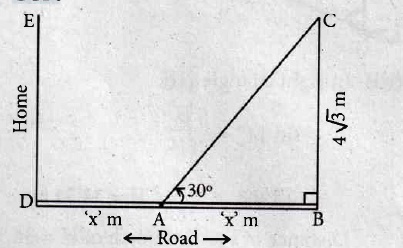
Let AB = x be the distance between foot of the house and the observer at the median of the road.
DB = 2x is the width of the road.
Height of the house BC = \(4 \sqrt{3} m\)
From the right triangle \(\triangle\) ABC
\(
\therefore \tan 30^{\circ} =\frac{B C}{A B}
\)
\(\frac{1}{\sqrt{3}}=\frac{4 \sqrt{3}}{x}
\)
\(x =4 \sqrt{3} \times \sqrt{3}=4 \times 3=12 \mathrm{~m}
\)
\(\text { Width of the road } =2 \times x=2 \times 12=24 \mathrm{~m}\)
Width of the road = 24 m.
22.
\(y=\frac { 3 }{ 5 } \)
\(y=0x+\frac { 3 }{ 5 } \therefore Slope\quad m=0\)
(or) Comparing with ax + by + c = 0
\(\text { Slope } =-\frac{a}{b} \)
\(=-\frac{0}{5}=0 \)
23.
Slope of a line passing through (- 2,3) and (8, 5) is
\(\frac{y_{1}-y_{2}}{x_{1}-x_{2}}=\frac{3-5}{-2-8}=\frac{-2}{-10}=\frac{1}{5}=m_{1}\)
Slope of the line y = ax + 2 is 'a' = m2
Given that the lines are perpendicular
\(m_{1} \times m_{2} =-1 \)
\(\frac{1}{5} \times a =-1 \)
a = -5
24.
Range R = 13.67
Largest value L = 70.08
Range R = L - S
13.67 = 70.08-S
S = 70.08 - 13.67 = 56.41
Therefore, the smallest value is 56.41
25.
A = {9, 10, 11, 12, 13, 14, 15, 16, 17}
f:A \(\longrightarrow \)N f(n) = the highest prime factor of n \(\in \) A
f(9) = 3 , f(10) = 5, f(11) = 11
f(12) = 3, f(13) = 3, f(14) = 7
f(15) = 5, f(16) = 2, f(17) = 7
Set of ordered pairs
f = {(9, 3), (10, 5), (11,11), (12, 3),(13, 13), (14, 7), (15, 5), (16, 2),(17, 17)}
Range = {2, 3, 5, 7, 11, 13, 17}
26.
Given C(t) = 3t
To prove that C(t) is linear
Now, C(at1) = 3at1 and C(bt2) = 3bt2
C(at1) +C(bt2) = 3at1 + 3bt2= a(3t1) +b(3t2)
= aC(t1) + bC(t2)
Superposition principle is satisfied
Hence C(t) = 3t is linear.
27.
External radius of hollow cylinder R = 16 cm
length h = 13 cm
Thickness R - r = 4
16 - r = 4
r = 12 cm
Total surface area of hollow cylinder \(=2 \pi(\mathrm{R}+\mathrm{r})(\mathrm{R}-\mathrm{r}+\mathrm{h}) \text { sq. units }\)
\(=2 \times \frac{22}{7} \times(16+12)(4+13) \)
\(=2 \times \frac{22}{7} \times 28 \times 17 \)
= 2992 sq. cm
28.
Let f(x) = 21x2y
g(x) = 35 xy2
GCD = 7 xy
LCM of 21, 35 = 105
LCM of x2y, xy2 = x2y2
LCM = 105 x2y2
Now, f(x) x g(x) = (21 x2y) (35 xy2)
= 735 x3 y3
LCM x GCD = (105 x2y2) (7 xy)
= 735 x3 y3
f(x) x g(x) = LCM x GCD
Hence verified
29.
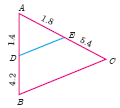
We have AB = 56.cm, AD = 14. cm, AC = 72. cm and AE = 18.cm.
BD = AB - AD = 5.6 –1.4 = 4.2 cm
and EC = AC – AE = 7.2–1.8 = 5.4 cm
\(\frac { AD }{ DB } =\frac { 1.4 }{ 4.2 } =\frac { 1 }{ 3 } \) and \(\frac { AE }{ EC } =\frac { 1.8 }{ 5.4 } =\frac { 1 }{ 3 } \)
\(\frac { AD }{ DB } =\frac { AE }{ EC } \)
Therefore, by converse of Basic Proportionality Theorem, we have DE is parallel to BC. Hence proved.
30.
\(\Delta AOQ\) and \(\Delta BOP,\angle OAQ=\angle OBP=90^{ 0 } \)
\(\angle AOQ=\angle BOP\) (Vertically opposite angles)
Therefore, by AA Criterion of similarity,
\(\Delta AOQ\sim \Delta BOP\)
\(\frac { AO }{ BO } =\frac { OQ }{ OP } =\frac { AQ }{ BP } \)
\(\frac { 10 }{ 6 } =\frac { AQ }{ 9 } \) gives \(AQ=\frac { 10\times 9 }{ 6 } =15cm\)
31.
Let h1 and h2 be the heights of a cone and cylinder respectively.
Also, let r be the radius of the cone.
Given that, height of the cone h1 = 24 cm; radius of the cone and cylinder r = 6 cm
Since, Volume of cylinder = Volume of cone
\({ \pi r }^{ 2 }=\frac { 1 }{ 3 } { \pi r }^{ 2 }{ h }_{ 1 }\)
\({ h }_{ 2 }=\frac { 1 }{ 3 } \times { h }_{ 1 }\quad gives\quad { h }_{ 2 }=\frac { 1 }{ 3 } \times 24=8\)
Therefore, height of cylinder is 8 cm

10th Standard Syllabus & Materials
10th Standard
TN 10th English Prose - 2 - The Night the Ghost Got in Important Questions And Answers Study Material - QB365 Set A
NEW10th Standard
TN 10th English Supplementary - 1 - The Tempest Important Questions And Answers Study Material - QB365 Set A
NEW10th Standard
TN 10th English Poem - 1 - Life Important Questions And Answers Study Material - QB365 Set A
NEW10th Standard
TN 10th English Prose - 1 - His First Flight Important Questions And Answers Study Material - QB365 Set A



Tamilnadu Stateboard 10th Standard Subjects
Tamilnadu Stateboard Standards





