
 100% FREE ACCESS
10th Standard Syllabus & Materials
10th Standard
TN 10th English Prose - 4 - The Attic Important Questions And Answers Study Material - QB365 Set A
NEW10th Standard
TN 10th English Supplementary - 3 - The Story of Mulan Important Questions And Answers Study Material - QB365 Set A
NEW10th Standard
TN 10th English Poem - 3 - I am Every Woman Important Questions And Answers Study Material - QB365 Set A
NEW10th Standard
TN 10th English Prose - 3 - Empowered Women Navigating The World Important Questions And Answers Study Material - QB365 Set A
NEW10th Standard
TN 10th English Supplementary - 2 - Zigzag Important Questions And Answers Study Material - QB365 Set A
NEW10th Standard
TN 10th English Poem - 2 - The Grumble Family Important Questions And Answers Study Material - QB365 Set A

Published on: 07/02/2020
10th Standard Science All Chapter Creative Questions-II-2019-2020
Download Tamil Nadu 10th Standard Science question papers, model tests, one-mark questions, important questions, and public exam papers in PDF format. Free study materials and answer keys for TN State Board students.
Questions + Answers key
Take MCQ Science Test1.
Choose the non-renewable energy resource
Solar energy
Water
Minerals
Wind
2.
To create animations, cartoons and games easily we can use_________
Paint
Notepad
LINUX
Scratch
3.
Obesity is not a risk factor for ___________
AIDS
diabetes
arthritis
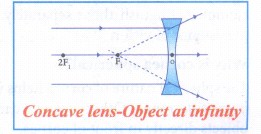
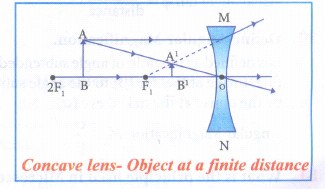
CHD
4.
_________ is a hybrid of wheat and rye
Triticale
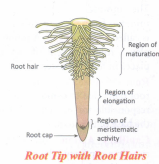
Raphano bras sica
Bananas
Water melons
5.
The deficiency of insulin causes ______
diabetes mellitus
tetany
thyroid dysfunction
cretinism
6.
When ethanol reacts with acidified K2Cr2O7 the orange color of K2Cr2O7 changes to _____________
yellow
red
purple
green
7.
Biogenetic law or Recapitulation theory was given by__________
Leonardo da vinci
Ernst Haeckel
Oparin
Haldane
8.
Sneezing, yawning etc are examples of _______
voluntary actions
involuntary actions
reflex actions
planned actions
9.
Which among the following factors affect the rate of a reaction?
Surface area of reactants
Pressure
Temperature
all the above
10.
Temperature is a property which determines
amount of heat a body contains
total absolute energy a body has
direction of flow of heat
thermal energy
11.
Which of the following is used to detect the presence of block in blood vessels.
15P31
15P32
26Fe59
11Na24
12.
The solubility of gases in liquid increases with ____________
increased volume
increased pressure
decreased pressure
none of these
13.
Convex lenses are used in
camera
magnifying lens
microscope
all the above
14.
Loudness of sound varies directly with vibrating body's
intensity
amplitude
pitch
quality
15.
V shaped chromosomes are called _______.
metacentric
acrocentric
submetacentric
telocentric
16.
Which among the following are periodic properties.
Ionisation energy
atomic radius
electronegativity
all the above
17.
An oocyte is alive for about________ after it is released from the follicle
24 hours
12 hours
15 hours
20 hours
18.
Plasma is slightly alkaline, containing noncellular substances which constitutes about ___________ of the blood.
55%
44%
35%
50%
19.
The number of molecules of CO2 present in 44 g of CO2 is:
6.023 x 10²³
3 x 10²³
12 x 1023
3 x 10¹⁰
20.
The_______ glands are modified glands of the skin
perineal
mammary
gastric
salivary
21.
In which one of the following heating effect the current is undesirable?
electric iron
electric motor
fuse wire
electric bulb
22.
23.
What is anaerobic respiration?
24.
List out the advantages of tidal energy.
25.
What are carcinogens? Mention their types.
26.
Give the importance of Stem cell therapy?
27.
What are hard and soft soap?
28.
Why is cortisol known as life saving hormone?
29.
Give some examples of vestigial organs in man.
30.
What is Myelin sheath?
31.
32.
What is meant by chain reaction?
33.
What is meant by real expansion?
34.
Define dissolution.
35.
Draw images formation due to refraction through a concave lens.
36.
Give appropriate reasons for alloying.
37.
What is nucleolar organizer?
38.
Define pollination.
39.
Draw Root tip with Root hairs and label the parts
40.
Write about LED television.
41.
What is equilibrium?
42.
Write a note on the feeding habit & digestion in leech.
43.
Why is a dicot leaf described as dorsiventral?
44.
Explain the waste water treatment process.
45.
Write a note on Obesity.
46.
Write a note an selection.
47.
Explain in detail the uses and main parts of the 'SCRATCH' animation software.
48.
What are the advantages of detergents over soaps?
49.
In botanical gardens and tea gardens the gardeners trim the plants regularly so that they remain bushy. Write the scientific explanation of this practice.
50.
Explain Use and Disuse theory.
51.
Tabulate the different parts of the brain and their functions.
52.
Explain the classification based on the direction of the reaction.
53.
Explain the principle & structure of atom bomb.
54.
With an illustration, explain the method of Calculation for areal expansion of an object.
55.
Write some solubility substances in water at 25°C.
56.
Explain the refraction of light through a glass prism.
57.
Write the applications of Doppler effect.
58.
How is zinc blende concentrated? Explain it with a neat diagram
59.
Mala had a huge scar on her cheek after she met with fire accident during her college days. She is worried if her baby would inherit the scar she had acquired. She clarified with her doctor, she need not worry about it, as her scar is an acquired trait.
(i) What are acquired traits?
(ii) How is it different from inherited traits?
60.
Write a note on agents of pollination.
61.
Give examples for Newton's third law.
62.
Write a note an ABO blood grouping.
63.
Water boils in an electric kettle in 15 mins after switching on. If the length of the heating wire is decreased to \(\frac{1}{3}\) of its initial value, then in how much time will the same amount of water boil with the same supply voltage?
64.
Give the applications of Avogadro's hypothesis.
65.
Explain the Digestive System of Rabbit.
66.
Convert 1Bq into curie.
67.
A metal scale is graduated at 0°C so what would be original length of the object when measured at 25°C, reads 50 Cm? For a metal, the coefficient of linear expansion is 18 x 10-6/ °C.
68.
When an object is placed at 25 cm from a concave lens, a virtual image is produced at a distance of 10 cm. Calculate the magnification produced by the lens.
69.
An observer approaches a stationary sound source 1000 Hz at twice the speed of sound. What frequency does the observer hear?
70.
Force of 50 N acts perpendicular on a body, which is fixed at a point O. The distance of point of action of force from O is 5 cm. Find the moment of force.
71.
A 110 V light bulb takes 0.9 A current and operates 12h / day. Determine the energy consumed by the bulb for 30 days.
72.
Find the mass of 2.5 mole of oxygen atom.
73.
Which is important - Hardware or Software?
74.
Why longitudinal waves are called pressure waves?
75.
In magnesium sulphide, the ratio by mass of Mg and S is 3 : 4. What is the ratio of the number of Mg and S atoms?
1.
(c)
Minerals
2.
(d)
Scratch
3.
(a)
AIDS
4.
(a)
Triticale
5.
(a)
diabetes mellitus
6.
(d)
green
7.
(b)
Ernst Haeckel
8.
(c)
reflex actions
9.
(d)
all the above
10.
(c)
direction of flow of heat
11.
(d)
11Na24
12.
(b)
increased pressure
13.
(d)
all the above
14.
(b)
amplitude
15.
(a)
metacentric
16.
(d)
all the above
17.
(a)
24 hours
18.
(a)
55%
19.
(a)
6.023 x 10²³
20.
(b)
mammary
21.
(b)
electric motor
22.
(a)
23.
Anaerobic respiration takes place without oxygen. Glucose is converted into ethanol (in plants) or lactate (in some bacteria).
C6H12O6 ⟶ 2CO2 + 2 C2H5OH + Energy (ATP)
24.
(i) Tidal energy does not produce any pollution.
(ii) It does not use any fuel and does not produce any waste.
(iii) Tides are predictable, so tidal energy can be produced at any time.
(iv) water is denser than air and therefore can generate electricity at lower speeds than wind turbines.
25.
Cancer causing agents are called carcinogens. They are physical, chemical agents, ionizing radiations and biological agents.
26.
(i) Sometimes cells, tissues and organs in the body may be permanently damaged or lost due to genetic condition or disease or injury.
(ii) In such situations stem cells are used for the treatment of diseases which is called Stemcell therapy.
(iii) In treating neuro degenerative disorders like Parkinson's disease and Alzheimer's disease neuronal stem cells can be used to replace the damaged or lost neurons.
27.
Sodium salts of fatty acids are known as hard soaps and potassium salts of fatty acids are known as soft soaps.
28.
The cortisol hormones of adrenal cortex serves to maintain the body in living condition and recover it from the severe effects of stress reactions. Thus an increased output of cortisol is "life saving" in "shock conditions': It is also known as life-saving hormone.
29.
Vermiform appendix, Nictitating membrane, Caudal Vertebra and Coccyx.
30.
The axon may be covered by a protective sheath called myelin sheath.
31.
32.
A chain reaction is a self propagating power in which the number of neutrons goes on multiplying rapidly almost in a geometrical progression.
33.
If a liquid is heated directly without using any container, then the expansion that we observe is termed as "real expansion" of the liquid.
34.
The process of uniform distribution of solute into solvent is called dissolution.
35.
(i) Object at Infinity: When an object is placed at infinity, a virtual image is formed at the focus. The size of the image is much smaller than that of the object.
(ii) Object anywhere on the principal axis at a finite distance: When an object is placed at a finite distance from the lens, a virtual image is formed between pole and focus of the convex lens. The size of the image is smaller than that of the object.
36.
Reasons for alloying:
(i) To modify appearance and colour
(ii) To modify chemical activity.
(iii) To lower the melting point.
(iv) To increase hardness and tensile strength.
(v) To increase resistance to electricity.
37.
(i) Some chromosomes possess secondary constriction at any point of the chromosome.
(ii) They are known as the nuclear zone or nucleolar organizer (formation of nucleolus in the nucleus).
38.
The transfer of pollen grains from anther to stigma of a flower is called as pollination.
39.
40.
(i) LED Television is one of the most important applications of Light Emitting Diodes.
(ii) An LED TV is actually an LCD TV (Liquid Crystal Display) with LED display.
(iii) An LED display uses LEDs for back light and an array of LEDs act as pixels.
(iv) LEDs emitting white light are used in monochrome (black and white) TV; Red, Green and Blue (RGB) LEDs are used in colour television.
41.
(i) The system can be brought to equilibrium by applying another force which is equal to the resultant force in magnitude but opposite in direction.
(ii) Such a force is called as "Equilibrant".
42.
(i) The leech is sangivorous in habit, sucking the blood of cattle and other domestic animals.
(ii) During feeding the leech attaches itself to its victim strongly by the posterior sucker. The leech makes a triradiate or Y shaped incision in the skin of the host by the jaws protruded through the mouth.
(iii) The blood is sucked by muscular pharynx. The salivary secretion is poured.
(iv) The ingested blood is stored in crop chambers and its diverticulum.
(v) The blood passes from crop into stomach.
(vi) Digestion takes place in stomach by the action of proteolytic enzyme.
(vii) The digested blood is then absorbed slowly by the intestine.
(viii) Undigested food is stored in rectum and egested through anus.
(ix) Leeches prevent blood clotting by secreting a protein called hirudin. They also inject an anaestetic substance that prevents the host from feeling their bite.
43.
(i) The dorsal and ventral surfaces of a dicot leaf can be clearly distinguished
(ii) The dorsal surface is darker is appearance and the ventral surface is lighter.
(iii) This is due to distribution of palisade parenchyma below the upper epidermis which as rich in chloroplasts.
(iv) Hence the dicot left is described as dorsiventral.
44.
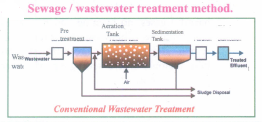
The conventional water treatment:
i) Pre-screening
ii) Aeration
iii) Sludge Management and Water Reuse.
(i) Pre-screening: Screening of waste water to remove soil and solid particulates.
(ii) Aeration: Screened wastewater is pumped to an aeration tank. Microbial contaminants are removed by the biological degradation that occurs in the presence of air.
(iii) Sedimentation process: The solid particles in suspension form are allowed to settle under the effect of gravity. The particles that settle out from the suspension is known as sludge.
(iv) Sludge removal: The sludge generated by the degradation process is transferred periodically from the tank for safe disposal.
(v) Disinfection: Chlorination and Ultra Violet (UV) radiation of treated water to remove any microorganism contamination.
(vi) Water recycling: The water will then be supplied for domestic or industrial purposes.
45.
(i) Obesity is the state in which there is an accumulation of excess body fat with an abnormal increase in body weight.
(ii) Obesity occurs if intake of calories is more than the expenditure of energy.
(iii) Overweight and obesity are conditions where the body weight is greater than the mean standard weight for age and height of an individual.
(iv) Body Mass Index (BMI) is an estimate of body fat and health risk. BMI = Weight (kg) / Height (m)2
Causes and risk factors :
(i) Obesity is due to genetic factors, physical inactivity, eating habits (overeating) and endocrine factors.
(ii) Obesity is a positive risk factor in development of hypertension, diabetes, gall bladder disease, coronary heart disease, and arthritis.
Prevention and Control of Obesity :
(i) Diet Management: Low calorie, normal protein, vitamins and mineral, restricted carbohydrate and fat, high fiber diet can prevent overweight.
(ii) Physical exercise: A low calorie diet accompanied by moderate exercise will be effective in causing weight loss. Meditation, yoga and physical activity can also reduce stress related to overeating.
46.
Selection is one of the oldest methods of plant breeding in which individual plants or groups of plants are sorted out from a mixed population based on the morphological characters.
Methods of selection:
There are three methods of selection. They are
a) Mass selection
b) Pure line selection
c) Clonal selection
a) Mass selection:
(i) Seeds of best plants showing desired characters are collected from a mixed population.
(ii) The collected seeds are allowed to raise the second generation. This process is carried out for seven or eight generations.
(iii) At the end, they will be multiplied and distributed to the farmers for cultivation. Eg: Groundnut varieties like TMV-2 and AK-10.
b) Pureline selection :
(i) Pureline is "the progeny of a single individual obtained by self breeding":
(ii) This is also called as individual plant selection. In pureline selection large numbers of plants are selected from a self pollinated crop and harvested individually.
(iii) Individual plant progenies from them are evaluated separately. The best one is released as a pureline variety.
(iv) Progeny is similar both genotypically and phenotypically.
c) Clonal selection:
(i) A group of plants produced from a single plant through vegetative or asexual reproduction are called clones.
(ii) All the plants of a clone are similar both in genotype and phenotype.
(iii) Selection of desirable clones from the mixed population of vegetatively propagated crop is called clonal selection.
47.
'Scratch' is a software used to create animations, cartoons and games easily. Scratch, on the other hand, is a Visual Programming Language. It was developed in the Massachusetts Institute of Technology (MIT) Media Lab to make programming easier and more fun to learn.
Scratch Environment Editor:
(i) The Scratch editor has three main parts: They are Stage, Sprite and Script editor.
(ii) Stage: Stage is the background appearing when we open the scratch window. The background will most often be white. You can change the background colour as you like.
(iii) Sprite: The characters on the background of a Scratch window are known as Sprite. Usually a cat appears as a sprite when the Scratch window is opened. The software provides facilities to make alternations in sprite.
(iv) Script editor / Costume editor: Where you edit your programs or your sprite's pictures.
The script editor has three main parts :
(a) Script area: Where you build scripts.
(b) Block menu: Where you choose the category of blocks (programming statements) to use.
(c) Block palette: Where you choose the block to use.
48.
Detergents are better than soaps because they,
(i) can be used in both hard and soft water and can clean more effectively in hard water than soap.
(ii) can also be used in saline and acidic water.
(iii) do not leave any soap scum on the tub or clothes.
(iv) dissolve freely even in cool water and rinse freely in hard water.
(v) can be used for washing woollen garments, where as soap cannot be used.
(vi) have a linear hydrocarbon chain, which is biodegradable.
(vii) are active emulsifiers of motor grease.
(viii) do an effective and safe cleansing, keeping even synthetic fabrics brighter and whiter.
49.
When the plants are trimmed, their apical are cut off and the apical bud is removed. Thus in the absence of apical dominance, the lateral buds show active growth and produce more branches making the plant bushy.
50.
Use and disuse theory
(i) Lamarck's Use and Disuse theory states that if an organ is used constantly, the organ develops well and gets strengthened.
(ii) When an organ is not used for a long time, it gradually degenerates.
(iii) The ancestors of Giraffe were provided with short neck and short forelimbs.
(iv) Due to shortage of grass, they were forced to feed on leaves from trees. The continuous stretching of their neck and forelimbs resulted in the development of long neck and long forelimbs which is an example for constant use of an organ.
(v) The degenerated wing of Kiwi is an example for organ of disuse.
51.
| Structure | Functions |
| Cerebral cortex | Sensory perception, control of voluntary functions, language, thinking, memory, decision making, creativity. |
| Thalamus | Acts as relay station. |
| Hypothalamus | Temperature control, thirst, hunger, urination, important link between nervous system and endocrine glands. |
| Cerebellum | Maintenance of posture and balance, coordinate voluntary muscle activity. |
| Pons and medulla | Role in sleep-awake cycle, cardiovascular, respiratory and digestive control centers. |
52.
Reversible Reactions: A reversible reaction is a reaction that can be reversed, i.e., the products can be converted back to the reactants. A reversible reaction is represented by a double arrow with their heads in the direction opposite to each other. Thus, a reversible reaction can be kept

Explanation: The compound 'AB' undergoes decomposition to form the products 'A' and 'B'. It is the forward reaction. As soon as the products are formed, they combine together to form 'AB': It is the backward reaction
PCl5(g) ⇌ PCl3(g) + CI2(g)
Irreversible Reactions: The reaction that cannot be reversed is called irreversible reaction. Consider the combustion of coal into carbon dioxide and water.
C(s) + O2(g) ⟶ CO2(g)+ Heat
Coal oxygen Carbon dioxide
In this reaction, solid coal burns with oxygen and gets converted into carbon dioxide gas and water. As the product is a gas, as soon as it is formed it escapes out of the reaction container. It is hard to decompose a gas into a solid. Thus, the backward reaction is not possible in this case. So, it is an irreversible reaction
53.
(i) Atom bomb is based on the principle of uncontrolled chain reaction.
(ii) In an uncontrolled chain reaction, the number of neutrons and the number of fission reactions multiply almost in a geometrical progression.
(iii) This releases a huge amount of energy in a very small time interval and leads to explosion.
Structure:
(i) An atom bomb consists of a piece of fissile material whose mass is sub critical.
(ii) This piece has a cylindrical void. It has a cylindrical fissile material which can fit into this void and its mass is also sub critical.
(iii) When the bomb has to be exploded, this cylinder is injected into the void using a conventional explosive.
(iv) Now, the two pieces of fissile material add up to form super critical mass which leads to an explosion.
(v) During this explosion tremendous amount of energy in the form of heat, light and radiation is released.
(vi) A very high temperature and pressure are experienced in fraction of second along with hazardous radiation like ૪ rays which adversely affect the living creatures.
54.
(i) If there is an increase in the area of a solid object due to heating, then the expansion is called superficial or areal expansion.
(ii) Superficial expansion is determined in terms of coefficient of superficial expansion. The ratio of increase in area of the body, per degree rise in temperature to its unit area is called coefficient of superficial expansion. Coefficient of superficial expansion is different for different materials. Its SI unit is also per Kelvin.
(iii) The equation relating to the change in area to the change in temperature is given below:
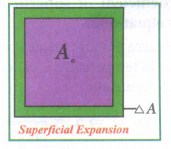
\(\frac { \triangle A }{ { A }_{ 0 } } \) =αA ΔT
ΔA - Change in area
A0 - Original area
ΔT - Change in area
αA - Coefficient of superficial expansion
55.
| Name of the solute | Formula of the solute | Solubility g/100 g water |
|---|---|---|
| Calcium carbonate | CaCO3(s) | 0.0013 |
| Sodium chloride | NaCI (s) | 36 |
| Ammonia | NH3(g) | 48 |
| Sodium hydroxide | NaOH(s) | 80 |
| Glucose | C6H12O6(s) | 91 |
| Sodium bromide | NaBr(s) | 95 |
| Sodium iodide | NaI(s) | 184 |
56.
(i) When a beam of white light or composite light is refracted through any transparent media such as glass or water, it is split into its component colours.
(ii) This phenomenon is called as 'dispersion of light'.
(iii) The band of colours is termed as spectrum. This spectrum consists of following colours: Violet, Indigo, Blue, Green, Yellow, Orange, and Red. These colours are represented by the acronym "VIBGYOR".
(iv ) When white light is refracted by a transparent medium. Different coloured lights are bent through different angles. That is the angle of refraction is different for different colours.
(v) Angle of refraction is the smallest for red and the highest for violet.
(vi) From Snell's law, we know that the angle of refraction is determined in terms of the refractive index of the medium.
(vii) Hence, the refractive index of the medium is different for different coloured lights.
57.
a) To measure the speed of an automobile:
(i) An electromagnetic wave is emitted by a source attached to a police car. The wave is reflected by a moving vehicle, which acts as a moving source.
(ii) There is a shift in the frequency of the reflected wave.
(iii) From the frequency shift, the speed of the car can be determined. This helps to track the over speeding vehicles.
b) Tracking a satellite:
(i) The frequency of radio waves emitted by a satellite decreases as the satellite passes away from the earth.
(ii) By measuring the change in the frequency of radio waves, the location of satellites is studied.
c) RADAR (Radio Detection And Ranging):
(i) In RADAR, radio waves are sent, and the reflected waves are detected by the receiver of the RADAR station.
(ii) From the frequency change, the speed and location of aeroplanes and aircrafts are tracked.
(d) SONAR: In SONAR, by measuring the Q change in the frequency between the sent signal and received signal, the speed of marine animals and submarines can be determined.
58.
Froth floatation:
(i) Principle: This process depends on the preferential wettability of the ore with oil (pine oil) and the gangue particles by water. Lighter ores, such as sulphide ores, are concentrated by this method. E.g. Zinc blende ZnS
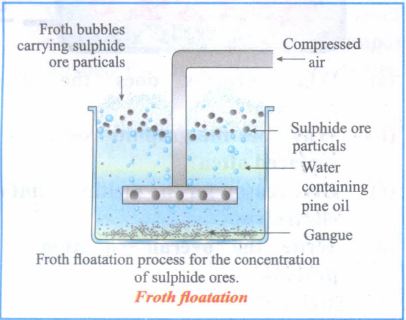
(ii) Method: The crushed ore is taken in a large tank containing oil and water and agitated with a current of compressed air. The ore is wetted by the oil and gets separated from the gangue in the form of froth. Since the 4 ore is lighter, it comes on the surface with the froth and impurities are left behind
59.
(i) Acquired traits are the characters that cannot be passed from one generation to the next generation.
(ii) Characters which are inherited by the offspring from the parents and carried from one generation to another generation are called Inherited traits.
60.
Cross pollination takes place through the agency of animals, insects, wind and water.
Pollination by wind (Anemophily):
(i) The pollination with the help of wind is called anemophily.
(ii) The anemophilous flowers produce enormous amount of pollen grains.
(iii) The pollen grains are small, smooth, dry and light in weight.
(iv) The stigmas are comparatively large, protruding and sometimes hairy, to trap the pollen grains. E.g: Grasses and some cacti.
Pollination by insects (Entomophily):
(i) Pollination with the help of insects like honey bees, flies are called entomophily.
(ii) To attract insects these flowers are brightly coloured, have smell and nectar
(iii) The pollen grains are larger in size, the exine is pitted, spiny etc., so they can be adhered firmly on the sticky stigma. Approximately, 80% of the pollination done by the insects is carried by honey bees.
Pollination by Water: The pollination with the help of water is called hydrophily. This takes place in aquatic plants.
(i) Pollen grains are produced in large numbers.
(ii) Pollen grains float on surface of water till they land on the stigma of female flowers. E.g:Hydrilla, Vallisneria. Pollination by Animals :
(i) When pollination takes place with the help of animals, it is called Zoophily.
(ii) Flowers of such plants attract animals by their bright color, size, scent etc. E.g: Sun bird pollinates flowers of Canna, Gladioli etc., Squirrels pollinate flowers of silk cotton tree.
61.
(i) When birds fly they push the air downwards by their wings (Action).
(ii) The air pushes the bird upwards (Reaction).
(iii) When a person swims he pushes the water using hands backwards (Action), the water pushes the swimmer in forward direction (Reaction).
(iv) Rockets expel gas at high velocity (Action). The downward moving gas pushes the rocket in upward direction (Reaction).
(v) When we fire a bullet, the gun recoils back, Bullet is moving forward (action). The gun equalise this forward action by moving backward (reaction).
62.
Blood Groups
(i) The concept of blood grouping was discovered by Karl Landsteiner. He identified blood groups A, B and O. AB blood group was recognized by Decastello and Steini.
(ii) Human blood contains certain specific substances called agglutinogens or antigens (Ag) and agglutinins or antibodies (Ab). Antigens are found on the membrane surface of RBC. Antibodies are present in blood plasma. Based on the presence or absence of antigen and antibodies human blood group is classified into four groups called A, B, AB, and O. An individual has one of the four blood groups.
(iii) 'A' group individuals: Antigen 'A' is present on the surface of RBC and antibody b (anti-b) is present in the plasma.
(iv) 'B' group individuals: Antigen 'B' is present on the surface of RBC and antibody an (anti-a) is present in the plasma.
(v) 'AB' group individuals: Antigens A and B are present on the surface of RBC and antibodies are absent in the plasma.
(vi) 'O' group individuals: No antigen A or B are absent on the surface of RBC. However, the plasma contains both antibodies 'a' and 'b' (anti a and b).
Blood donation :
(i) In blood transfusion one must consider the antigen and antibody compatibility (matching) between the donor and the person receiving blood (recipient). When an individual receives a mismatched blood group from the donor agglutination (clumping) of blood occurs in the body which leads to death.
63.
Supply Voltage is same
Amount of heat produced is also same
Time taken to heat water t = 15 min.
\(H=\frac { { V }^{ 2 } }{ R } .t\quad [H={ I }^{ 2 }Rt\Rightarrow (V=IR)\therefore I=\frac { V }{ R } ]\)
\(\therefore \frac { { R }_{ 1 } }{ { R }_{ 2 } } =\frac { { t }_{ 1 } }{ { t }_{ 2 } } \quad ...(1)\)
\(R\alpha l\quad \quad \quad [R=\rho \frac { l }{ A } ]\)
\(\frac { { R }_{ 1 } }{ { R }_{ 2 } } =\frac { { l }_{ 1 } }{ { l }_{ 2 } } \quad \quad \quad ...(2)\)
From (i) and (2)
\(\frac { { l }_{ 1 } }{ { l }_{ 2 } } =\frac { { t }_{ 1 } }{ { t }_{ 2 } } =\frac { 15 }{ { t }_{ 2 } } \quad \quad ....(iii)\)
\({ l }_{ 2 }=\frac { 1 }{ 3 } { l }_{ 1 }\Rightarrow \frac { { l }_{ 1 } }{ { l }_{ 2 } } =3\)
Sub in (iii) \(3=\frac { 15 }{ { t }_{ 2 } } \)
\(\therefore { t }_{ 2 }=\frac { 15 }{ 3 } =5min\)
Time taken to heat \(\frac{1}{3}\) length of the wire = 5 min
64.
Applications of Avogadro's hypothesis
(i) It explains Gay-Lussac's law.
(ii) It helps in the determination of atomicity of gases.
(iii) Molecular formula of gases can be derived using Avogadro's law.
(iv) It determines the relation between molecular mass and vapour density.
(v) It helps to determine Gram molar volume of all gases (i.e. 22.4 lit at S.T.P)
65.
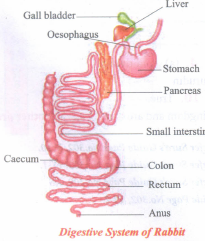
i) The digestive system includes the alimentary canal and the associated digestive glands.
ii) The alimentary canal consists of mouth, buccal cavity, pharynx, oesophagus, stomach, small intestine, caecum, large intestine and anus.
iii) Mouth leads to the buccal cavity.
iv) Through the pharynx it reaches oesopbagus.
v) Oesophagus opens into the stomach followed by smallintestine.
vi) Caecum ispresent in between the snnall intestine and large intestine.
vii) Caecunm contains bacteria that helps in the digestion of cellulose.
viii) Large intestine has colon and rectum.
ix) It finally opens in to the anus.
x) The digestive glands are salivary glands, gastric glands, liver, pancreas and intestinal glands. The secretion of digestive glands help in digestion of food in the alimentary canal.
66.
1 Bq = one disintegration per second
1 curie = 3.7 x 10¹⁰ disintegration per second
(Bq)
\(\therefore 1Bq=\frac { 1 }{ 3.7\times { 10 }^{ 10 } } \)Curie
= 2.703 x 10⁻¹¹ci
67.
Initial temperature, t1 = 0°C
Final temperature, t2 = 25°C
Coefficient of linear expansion of metal,
α1 =18 x 10-6 C-1
Measured length, l1 = 50 cm
To find: True (or) Actual length l2 = ?
\(\frac { \triangle l }{ l\triangle T } =\frac { ({ l }_{ 2 }-{ l }_{ 1 }) }{ { l }_{ 1 }(t_{ 2 }-{ t }_{ 1 }) } \)
l2 = I1 (1 + α (t2 - t1)
∴ l2 = 50 x (1 + 18 x 10 -6 x (25 - 0)
= 50 x (1 + 450 x 10-6)
= 50 x (1 + 0.00045)
∴ l2 = 50.225 cm
The true length of the object at 00C =50.225 cm.
68.
Object distance, u =25 cm
virtual image distance, v =-10 cm
To find: Magnification, m = ?
m = \(\frac{\text { Distance of the image }}{\text { Distance of the object }}=\frac{v}{u}\)
= \(\frac { -10 }{ 25 } \) = -0.4
Magnification,
m = -0.4
69.
Given
Frequency of the source, n = 1000 Hz
Speed of observer, vL = 2 v
To find: Observer approaches the source
apparent frequency n' =?
Solution
\(n'=\left( \frac { v+{ v }_{ L } }{ v } \right) n\)
\(=\left( \frac { v+2v }{ v } \right) \times 1000\)
\(=\frac { 3b }{ v } \times 1000\)
Apparent frequency n' = 3000 Hz
70.
Force, F = 50 N
Distance, d = 5 cm
To find: Momentum of force= F x d
Momentum of force, 50 x 5 x 10-2
= 250 x 10-2
= 2.5 Nm
71.
Given :
Potential V = 110 V
Current passing through bulb, I = 0.9 A
Time, t = 12h / day
For 30 days, time t = 12 x 30
= 360h
To find: Energy consumed, E = ?
Solution
E = VIt
= 0.9 x 110 x 12 x 30
= 35.64 kwh
Energy, E = 35.64 kwh
72.
Number of moles = \(\frac{Mass}{Atomic \ mass}\)
∴ Mass = Number of moles x Atomic mass
= 0.5 x 16
= 8g.
73.
Both are integral part of the computer and dependent to each other
74.
Longitudinal waves travels in a medium as a series of alternate compression and rarefactions i.e., they travel as variations in pressure. So they are called pressure waves.
75.
Formula of magnesium sulphide = MgS
Ratio by mass of Mg and S = 3:4
Number of atoms in 3 g of Mg = \(\frac { { N }_{ A } }{ 24 } \times 3=\frac { { N }_{ 4 } }{ 8 } \)
Number of atoms in 4 g of S = \(\frac { { N }_{ A } }{ 32 } \times 4=\frac { { N }_{ 4 } }{ 8 } \)
ஃ Ratio of the number of Mg and S is \(\frac { { N }_{ A } }{ 8 } :\frac { { N }_{ 4 } }{ 8 } \) or 1:1

10th Standard Syllabus & Materials
10th Standard
TN 10th English Prose - 2 - The Night the Ghost Got in Important Questions And Answers Study Material - QB365 Set A
NEW10th Standard
TN 10th English Supplementary - 1 - The Tempest Important Questions And Answers Study Material - QB365 Set A
NEW10th Standard
TN 10th English Poem - 1 - Life Important Questions And Answers Study Material - QB365 Set A
NEW10th Standard
TN 10th English Prose - 1 - His First Flight Important Questions And Answers Study Material - QB365 Set A



Tamilnadu Stateboard 10th Standard Subjects
Tamilnadu Stateboard Standards





