
 100% FREE ACCESS
10th Standard Syllabus & Materials
10th Standard
TN 10th English Prose - 4 - The Attic Important Questions And Answers Study Material - QB365 Set A
NEW10th Standard
TN 10th English Supplementary - 3 - The Story of Mulan Important Questions And Answers Study Material - QB365 Set A
NEW10th Standard
TN 10th English Poem - 3 - I am Every Woman Important Questions And Answers Study Material - QB365 Set A
NEW10th Standard
TN 10th English Prose - 3 - Empowered Women Navigating The World Important Questions And Answers Study Material - QB365 Set A
NEW10th Standard
TN 10th English Supplementary - 2 - Zigzag Important Questions And Answers Study Material - QB365 Set A
NEW10th Standard
TN 10th English Poem - 2 - The Grumble Family Important Questions And Answers Study Material - QB365 Set A

Published on: 07/02/2020
10th Standard Science All Chapter Important Creative Questions-II- 2019-2020
Download Tamil Nadu 10th Standard Science question papers, model tests, one-mark questions, important questions, and public exam papers in PDF format. Free study materials and answer keys for TN State Board students.
Questions + Answers key
Take MCQ Science Test1.
__________is not obtained from petroleum.
Biogas
Diesel
Gasoline
LPG
2.
Leucoplasts are __________ plastids.
colourless
yellow
orange
red
3.
Which button is presses to run the script?
Green flag
Red flag
Blue flag
Yellow flag
4.
______________ is not related to NIDDM.
Insulin administration
Controlled by medicine
Obese
Insulin action impaired
5.
In human beings, _________ of the DNA base sequences are the same and this is called as bulk genomic DNA.
99%
50%
90%
70%
6.
_____ is a gaseous plant hormone.
Auxin
Ethylene
Cytokinin
Abscisic Acid
7.
Ethanol is used as ______________
a preservative for biological specimen
an antifreeze
an antiseptic
all the above
8.
9.
Sneezing, yawning etc are examples of _______
voluntary actions
involuntary actions
reflex actions
planned actions
10.
An element 'A' on exposure to moist air turns to form compound 'B' which is reddish brown. Identify 'A' and 'B'.
'A' is Ag, 'B' is Ag2s
'A' is Cu, 'B' is CuO
'A' is Mg, 'B' is MgO
'A' is Fe, 'B' is Fe2O3
11.
SI unit of temperature is ______
K
°C
/°C
0F
12.
Radio - carbon dating can be done with _________.
only living things
only non - living things
both (a) and (b)
none
13.
14.
As compare to single lens, compound microscope gives ______ magnification
Smaller
Greater
No
Equal
15.
What does it mean when a wave's amplitude increases?
Its frequency also increases
It is moving in denser medium
Its wavelength gets longer
It carries more energy
16.
______is not a nitrogenous base.
Adenine
Thymine
Leucine
Cytosine
17.
Which options show the correct direction of current?
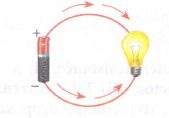
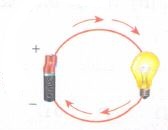
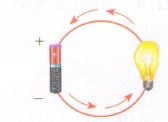
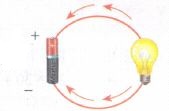
18.
As the positive charge increases, the size of the cation _________
decreases
increases
remains constant
First increases and then decreases
19.
_______from anterior pituitary stimulates milk secretion
Oxytocin
Prolactin
Progestrone
Oestrogen
20.
_______is not a feature of osmosis
Semi permeable membrane
Movement of solvent
Both a and b
Involves energy
21.
The_______ on both sides join to form the genital atrium in leech.
ejaculatory ducts
epididymis
sperm Vesicle
vas efferens
22.
The total number of electrons present in 16 g of methane gas is
96.352 x 10²³
48.176 x 10²³
6.023 x 10²³
30.11 x 10²³
23.
Newton's law of gravitation applies to
small bodies only
plants only
all bodies irrespective of their size
for solar system
24.
List the functions of chloroplast.
25.
Name two organisations involved in conservation of wild life.
26.
What is AIDS?
27.
Write a note on Triticale.
28.
Write a short note on script editor.
29.
What is saponification?
30.
List the functions of adrenal medulla hormones.
31.
Explain Biogenesis.
32.
How are neurons classified based on function.
33.
Write the chemical equations for the following and identify the type of chemical reactions
i) Burning of magnesium in air
ii) Electric current is passed aqueous solution of sodium chloride
iii) Ammonium hydroxide reacts with nitric acid
34.
Why nuclei fusion is called thermonuclear reaction?
35.
State Charles's law (or) Write the law of volume.
36.
Calculate the percent by mass of glucose in a solution made by dissolving 500 g of glucose in 50 g of water.
37.
Write the uses of simple microscope.
38.
Define frequency of a sound wave.
39.
State the Law of Independent Assortment
40.
Name a metal that can be cut with a knife.
41.
What is egg apparatus?
42.
What is MCB?
43.
Define Vapour density.
44.
Explain respiratory system of a rabbit.
45.
Write a note on vascular tissue system.
46.
Reena lives in a apartment. She would like to contribute to afforestation. What can she do?
47.
Explain the hazards and effects of Tobacco.
48.
Write a essay on polyploidy breeding.
49.
In a biology period, the teacher drew the heart of rabbit on the board and explained its structure and functions. After the class, your friend told you that he finds it difficult to understand the concept and felt he wanted a detailed explanation.
(i) In what way the teaching can be made easily understandable?
(ii) Do you think using technologies like Visual Communication help students to understand the difficult concepts in a simple way?
(iii) By what means the Visual Communication improve the learning ability?
50.
How will you classify organic compounds based on the pattern of carbon chain?
51.
In botanical gardens and tea gardens the gardeners trim the plants regularly so that they remain bushy. Write the scientific explanation of this practice.
52.
Two kittens (Leo and Joe) from the same mother were separated and sent to different habitual conditions. Leo was sent to a high mountain wild region and Joe was domesticated and lived in a city. After a good 5 years) it was found that Leo was aggressive and built strong with hunting skills. Leo looked tall with strong legs and muscled structure) whereas Joe was a well mannered cat looked puffy with soft legs.
(i) Do you think habitual condition impact animal characters?
(ii) What acquired characters does Leo inherit?
(iii) Is it true but Leo's offspring would be a hunter?
53.
'A' contains a cerebrospinal fluid filled cavity known as 'B'. How many nerves are produced from A.
(i) What is A?
(ii) What is 'B'?
54.
Explain the classification based on the direction of the reaction.
55.
Distinguish between Nuclear fission and nuclear fusion.
56.
With an illustration, explain the method of Calculation for areal expansion of an object.
57.
Write some solubility substances in water at 25°C.
58.
Write the sign convention for lenses.
59.
Explain the working and use of SONAR?
60.
Man is a mammal and has incisors and canine. Rabbits are mammals but lack canines. Explain.
61.
What are the methods of preventing corrosion?
62.
Write a note on mutation.
63.
Kalaivani was watching at a metal pipe, one end of which is connected to a tank at the top of her building and the other end to the tap, which is near the ground level. She was admiring how the water flows from top to the bottom through the pipe. She went and asked her mother, who was an engineer.
(i) Also Kalaivani asked her mother that can she able to compare this with any other scientific concepts?
(ii) How would her mother have compared the resistance in a water pipe as well as in a conductor.
(iii) Give the expression for resistors connected in series and parallel.
64.
Describe the structure of human sperm.
65.
Give the application of torque.
66.
List the difference between RBC and WBC.
67.
How will you determine the atomicity of gases using Avogadro's hypothesis?
68.
Solve this equation for ∝ - decay.
88Ra226 ➝Rn+________
69.
If boiling point of water is 95°F, What will be the reading in kelvin scale?
70.
Speed of light in glass is 2 x 10⁸ ms-1. Find the refractive index of glass.
71.
Find the speed of sound in air at 9.23° C.
72.
Determine the following quantities of the given equivalent.
(i) The equivalent resistance
(ii) Total current through the circuit
(iii) The current through each resistor
(iv) Voltage drop across resistor
(v) Power dissipated in each resistor
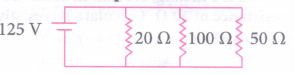
R1 = 20Ω; R2 = 100Ω; R350Ω; V = 125V
73.
Two bodies have masses in the ratio 2 : 3 when a force is applied on first body, it moves with an acceleration of 6 ms-2, How much acceleration will be the same force produce in the other body?
74.
Calculate the number of molecules in 11g of CO2
75.
Why does the recoil of a heavy gun on firing not so strong as of a light gun using the same cartridges?
76.
Though human are heterogeneous in external dimension and colour. The colour of blood is identical. Give reason.
1.
(a)
Biogas
2.
(a)
colourless
3.
(a)
Green flag
4.
(a)
Insulin administration
5.
(a)
99%
6.
(b)
Ethylene
7.
(d)
all the above
8.
(d)
9.
(c)
reflex actions
10.
(d)
'A' is Fe, 'B' is Fe2O3
11.
(a)
K
12.
(b)
only non - living things
13.
(d)
14.
(b)
Greater
15.
(d)
It carries more energy
16.
(c)
Leucine
17.
(b)
18.
(a)
decreases
19.
(b)
Prolactin
20.
(d)
Involves energy
21.
(a)
ejaculatory ducts
22.
(c)
6.023 x 10²³
23.
(c)
all bodies irrespective of their size
24.
(i) Photosynthesis.
(ii) Storage of starch.
(iii) Synthesis of fatty acids.
(iv) Storage of lipids.
(v) Formation of chloroplasts.
25.
(i) World Wild life Fund (WWF) for nature
(ii) World Conservation Union (WCN)
26.
i) AIDS is a viral disease called Acquired Immuno Deficiency Syndrome.
ii) It is caused by Human Immunodeficiency Virus (HIV).
27.
(i) Triticale is the first man - made cereal hybrid.
(ii) It is obtained by crossing wheat (Triticum durum, 2n = 28) and rye (Secale cereal, 2n = 14). The F hybrid is sterile (2n = 21).
(iii) Then the chromosome number is doubled using colchicine and it becomes a hexaploid Triticale (2n = 42).
(iv) The cycle of crop raising and selection continues till the plants with the desired characters are finally obtained. The development of new varieties is a long drawn process.
(v) Two main aspects of hybridization are to combine the characters of two plants in one plant and to utilize hybrid vigour.
(vi) Triticale has high dietary fiber and protein.
28.
Script editor is where you edit your programs or your sprite's pictures.
The script editor has three main parts:
(i) Script area: Where you build scripts.
(ii) Block menu: Where you choose the category of blocks (programming statements) to use.
(iii) Block palette: Where you choose the block to use.
29.
The alkaline hydrolysis of oils and fats forming soaps is commonly known as saponification.
30.
Adrenal Medulla:
The adrenal medulla is composed of chromaffin cells. They are richly supplied with sympathetic and parasympathetic nerves.
Hormones of adrenal medulla: It secretes two hormones namely
a. Epinephrine (Adrenaline)
b. Norepinephrine (Noradrenaline)
They are together called as "Emergency hormones". It is produced during conditions of stress and emotion. Hence it is also referred as "flight, fright and fight hormone".
Functions of adrenal medullary hormones:
(i) It promotes the conversion of glycogen to glucose in liver and muscles.
(ii) It increases heart beat and blood pressure.
(iii) It increases the rate of respiration by dilation of bronchi and trachea.
(iv) It causes dilation of the pupil in eye.
(v) It decreases blood flow through the skin.
31.
It was speculated by Louis Pasteur (1862) that life originates from pre-existing life. He showed that pre-sterilised flasks kept closed airtight, with killed yeast, did not give rise to any life form, while in another flask kept open to air, living organisms arose from killed yeast.
32.
(i) Sensory or afferent neurons
(ii) Motor or efferent neurons
(iii) Association neurons
33.
(i) 2 Mg + O2 ⟶ 2 MgO ⟶ Combination reaction
(ii) 
(iii) Ammonium hydroxide reacts with nitric acid.
HNO3(aq) +NH4OH(aq) ⟶ NH4NO3(aq)+H2O(l) - Neutralization reaction
34.
Nuclear fusion can take place only under certain conditions. Nuclear fusion is possible only at extreme high temperature of the order of 107 to 109 K and a high pressure to push the hydrogen nuclei closer to fuse with each other. Hence, It is named as "Thermonuclear reaction".
35.
(i) When the pressure of gas is kept constant, E the volume of a gas is directly proportional to the temperature of the gas".
(ii) Charles's law: V α T (or) \(\frac{V}{T}\)=constant
36.
Mass percentage = \(\frac{Mass \ of \ the \ solute}{Mass \ of \ the \ solute \ + \ Mass \ of \ the\ solvent}\) x 100
= \(\frac{500}{500+50}\) x 100
= \(\frac{500}{550}\) x 100
= 90.90%
37.
Simple microscopes are used.
(i) by watch repairers and jewellers.
(ii) to read small letters clearly.
(iii) to observe parts of flower, insects etc.
(iv) to observe finger prints in the field of forensic science.
38.
The number of vibrations (waves) produced per second is called the frequency of sound waves. The SI unit of frequency is hertz.
39.
Law of independent assortment states: "In case of inheritance of two or more pairs of characters simultaneously, the factors or genes of one pair assort out independently of the other pair
40.
Sodium
41.
The three cells in the micropylar end of a ovule in which middle one is the egg with two synergids on either side is called egg apparatus.
42.
An MCB is a switching device, which can be activated automatically as well as manually. It has a spring attached to the switch, which is attracted by an electromagnet when an excess current passes through the circuit. Hence, the circuit is broken and the protection of the appliance is ensured.
43.
Vapour density is the ratio of the mass of a certain volume of a gas or vapour, to the mass of an equal volume of hydrogen, at the same temperature and pressure.
V.D = \(\frac{mass \ of \ 1 \ volume \ of \ gas \ or \ vapour \ at \ STP}{mass \ of \ 1 volume \ of \ hydrogen} \)
44.
(i) Respiration takes place by a pair of lungs, which are light spongy tissues enclosed in the thoracic cavity.
(ii) Each lung is enclosed by a double membranous pleura.
(iii) Atmospheric air passes through the external nostril and nasal passages into the pharynx. From the pharynx it passes through the glottis into the wind pipe.
(iv) The anterior part of the wind pipe is enlarged to form the larynx or voice box with its wall supported by four cartilaginous plates. Inside the larynx lies the vocal cord and its vibrations result in the production of sound.
(v) The larynx leads into trachea or wind pipe. Tracheal walls are supported by rings of cartilage which help in the free passage of air.
(vi) The epiglottis prevents the entry of food into the trachea through the glottis.
(vii) The trachea divides into two branches called the bronchi one entering into each lung and dividing into further branches called bronchioles which end in alveoli.
45.
(i) It consists of xylem and phloem tissues.
(ii) They are present in the form of bundles called vascular bundles.
(iii) Xylem conducts water and minerals to different parts of the plant.
(iv) Phloem conducts food materials to different parts of the plant.
There are three different types of vascular bundles namely:
(i) Radial
(ii) Conjoint
(iii) Concentric
(i) Radial Bundles:
(i) Xylem and phloem are present in different radii alternating with each other. Eg: roots.
(ii) Conjoint bundles: Xylem and phloem lie on the same radius. There are two types of conjoint bundles
a) Collateral:
(i) Xylem lies towards the centre and phloem lies towards the periphery.
(ii) When cambium is present in collateral bundles, it is called open. Eg: dicot stem and collateral bundle without cambium is called closed. Eg: monocot stem.
b) Bicollateral:
In this type of bundle, the phloem is present on both outer and inner side of xylem. Eg: cucurbita.
(iii) Concentric bundles: Vascular bundle in which xylem completely surrounds the phloem or vice versa is called concentric vascular bundle. It is of two types:
Types:
a) Amphivasal:
Xylem surrounds phloem. Eg: Dracaena
b) Amphicribral:
Phloem surrounds xylem. Eg: Ferns Endarch: Protoxylem lies towards the centre and metaxylem lies towards the periphery. Eg: stem. Exarch: Protoxylem lies towards the periphery and metaxylem lies towards the centre. Eg: roots.
46.
Reena can grow plants in her house in pots. She can talk to the other residents and have terrace garden. The Government has brought in lot of seeds / manures in subsidized rates to promote terrace gardening.
47.
When smoke is inhaled the chemicals get absorbed by the tissues and cause the following harmful effects.
(i) Benzopyrene and polycyclic hydrocarbons present in tobacco smoke is carcinogenic causing lung cancer.
(ii) Causes inflammation of throat and bronchi leading to conditions like bronchitis and pulmonary tuberculosis.
(iii) Inflammation of lung alveoli decrease surface area for gas exchange and cause emphysema.
(iv) Carbon monoxide of tobacco smoke binds to hemoglobin of RBC and decreases its oxygen carrying capacity causing hypoxia in body tissues.
(v) Increased blood pressure caused by smoking leads to increased risk of heart disease.
(vi) Causes increased gastric secretion which leads to gastric and duodenal ulcers.
(vii) Tobacco chewing causes oral cancer (mouth cancer).
48.
(i) Sexually reproducing organisms have two complete set of chromosomes in their somatic cells. This is called diploid (2n).
(ii) The gametic cells have only one set of chromosome. This is called haploid (n).
(iii) An organism having more than two sets of chromosomes is called polyploid. Such condition is called Polyploidy.
(iv) It can be induced by physical agents such as heat or cold treatments, X-rays, Chemical agents like colchicine.
Achievements of polyploidy breeding:
(i) Seedless watermelons (3n) and bananas (3n).
(ii) TV-29 (triploid variety of tea) with larger shoots and drought tolerance
(iii) Triticale (6n) is a hybrid of wheat and rye. To make this plant fertile polyploidy is induced. It has higher dietary fibre and protein.
(iv) Raphano brassica is a allotetraploid by colchicine treatment.
49.
(i) Pictures and Audio-Visuals give us more understanding than teaching and writing on black board. So, any visual representation of the concepts would help us to understand better and make teaching simple
(ii) Yes. Visual Communication helps us to easily conceptualize complicated theorems and concepts. When the teacher shows pictures / videos that represent the concept, we would easily relate to its application and firmly understand the concept without any mis-perception
(iii) Pictures, Audio-Visuals, animations provide additional information and helps us to easily correlate the concepts. We could easily remember the visuals than black board writing, and visualize it, so that we do not forget and we could easily recollect at the time of examination.
50.
Organic compounds are classified into two types as follows:
(i) Acyclic or Open chain compounds:
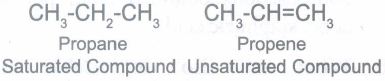
These are the compounds in which the carbon atoms are linked in a linear pattern to form the chain. If all the carbon atoms in the chain are connected by single bonds, then the compound is called as saturated. If one or more double bonds or triple bonds exist between the carbon atoms, then the compound is said to unsaturated.
(ii) Cyclic Compounds:
Organic compounds in which the chain of carbon atoms is closed or cyclic are called Cyclic compounds. If the chain contains only carbon atoms, such compounds are called carbocyclic compounds. If the chain contains carbon and other atoms like oxygen, nitrogen, sulphur, etc., these compounds are called heterocyclic compounds. Carbocyclic compounds are further subdivided into alicyclic and aromatic compounds. In alicyclic compounds, the carbon cycle contains only single bonds whereas aromatic compounds contain one or more benzene rings (ring containing alternate double bonds between carbon atoms).
E.g:
.JPG)
51.
When the plants are trimmed, their apical are cut off and the apical bud is removed. Thus in the absence of apical dominance, the lateral buds show active growth and produce more branches making the plant bushy.
52.
Yes. When there is a change in the environment, the animals respond to the change. They develop adaptive structures. The characters developed by the animals during their life time, in response to the environmental changes are called acquired characters.
(i) Leo lived in the mountain region and it was wild. It developed hunting skills for survival and this made his legs and body strong. So the muscled physical body, strong legs and hunting skills were the acquired characters inherited by Leo.
(ii) According to Lamarck, the. acquired characters are transmitted to the offspring by the process of inheritance.
53.
(i) Spinal cord.
(ii) Central canal.
31 pairs of nerves are produced from spinal cord.
54.
Reversible Reactions: A reversible reaction is a reaction that can be reversed, i.e., the products can be converted back to the reactants. A reversible reaction is represented by a double arrow with their heads in the direction opposite to each other. Thus, a reversible reaction can be kept

Explanation: The compound 'AB' undergoes decomposition to form the products 'A' and 'B'. It is the forward reaction. As soon as the products are formed, they combine together to form 'AB': It is the backward reaction
PCl5(g) ⇌ PCl3(g) + CI2(g)
Irreversible Reactions: The reaction that cannot be reversed is called irreversible reaction. Consider the combustion of coal into carbon dioxide and water.
C(s) + O2(g) ⟶ CO2(g)+ Heat
Coal oxygen Carbon dioxide
In this reaction, solid coal burns with oxygen and gets converted into carbon dioxide gas and water. As the product is a gas, as soon as it is formed it escapes out of the reaction container. It is hard to decompose a gas into a solid. Thus, the backward reaction is not possible in this case. So, it is an irreversible reaction
55.
| S. No |
Nuclear fission |
Nuclear fusion |
|---|---|---|
| i | The process of breaking (splitting) up of a heavy nucleus into two smaller nuclei is called "nuclear fission". | Nuclear fusion is the combination of two lighter nuclei to form a heavier nucleus. |
| ii | Can be performed at room temperature. | Extreme high temperature and pressure is needed. |
| iii | Alpha, beta and gamma radiations are emitted. | Alpha ray, Positron, and neutrinos are emitted. |
| iv | Fission leads to the emission of gamma radiation. This triggers mutation in the human genes and causes genetic transform diseases. | Only light and heat energy is emitted. No harmful radiation and will not cause any genetic transform diseases. |
| v | Deflected by both the fields; but the direction of deflection is opposite to alpha rays. (in accordance with Fleming's left hand rule). | They are not deflected by both fields. |
56.
(i) If there is an increase in the area of a solid object due to heating, then the expansion is called superficial or areal expansion.
(ii) Superficial expansion is determined in terms of coefficient of superficial expansion. The ratio of increase in area of the body, per degree rise in temperature to its unit area is called coefficient of superficial expansion. Coefficient of superficial expansion is different for different materials. Its SI unit is also per Kelvin.
(iii) The equation relating to the change in area to the change in temperature is given below:
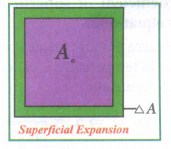
\(\frac { \triangle A }{ { A }_{ 0 } } \) =αA ΔT
ΔA - Change in area
A0 - Original area
ΔT - Change in area
αA - Coefficient of superficial expansion
57.
| Name of the solute | Formula of the solute | Solubility g/100 g water |
|---|---|---|
| Calcium carbonate | CaCO3(s) | 0.0013 |
| Sodium chloride | NaCI (s) | 36 |
| Ammonia | NH3(g) | 48 |
| Sodium hydroxide | NaOH(s) | 80 |
| Glucose | C6H12O6(s) | 91 |
| Sodium bromide | NaBr(s) | 95 |
| Sodium iodide | NaI(s) | 184 |
58.
| S.No. | Convex Lens | Concave Lens |
| i | Focal length | + for convex lens - for concave lens |
| ii | Distance of object | - if the object is to the left object of the lens + if the object is to the right of the lens |
| iii | Distance of image | + if the image is formed on the right of the lens (real image) - if the image is formed one the left of the lens (virtual image) |
| iv | Magnification | + for erect images - for inverted images |
59.
(i) SONAR stands for Sound Navigation And Ranging.
(ii) SONAR is a navigation system that sends ultra sound waves to locate objects under the water.
(iii) Use light waves of high frequency to transmit information from one place to another place, because its velocity is high and it can travel large distances in a short period of time.
(iv) However, light waves cannot not travel deep into the ocean. But Sound waves can travel more distance in sea water than light waves.
(v) Hence, sound waves are used to detect the objects in the ocean.
\(=\frac { 2d }{ t } \)= velocity of sound
(vi) The average speed of a sound wave in sea water is 1,500 ms", As the value of "t" is observed, the distance of the object can be determined.
(vii) In this way, they are able to determine the direction of the objects, as well as the distance.
(viii) Some animals in the ocean have their own natural sonar system. Dolphins and whales use the principle of SONAR to identify underwater objects.
60.
Man is omnivorous in his food habit. He eats plant and animal food. Therefore he has well CI developed incisors and canines. Rabbits are herbivorous in mode of nutrition. They need sharp incisors only. Canines or tearing teeth are hence absent in rabbits.
61.
Methods of preventing corrosion:
(i) Alloying: The metals can be alloyed to prevent from the process of corrosion. e.g: Stainless Steel
(ii) Surface Coating: It involves application of a protective coating over the metal. It is of the following types:
(a) Galvanization: It is the process of coating zinc on iron sheets by using electric current.
(b) Electroplating: It is a method of coating one metal over another metal by passing electric current.
(c) Anodizing: It is an electrochemical process that converts the metal surface into a decorative, durable and corrosion resistant. Aluminium is widely used for anodizing process.
(d) Cathodic Protection: It is the method of controlling corrosion of a metal surface protected is coated with the metal which is easily corrodible. The easily corrodible metal is called Sacrificial metal to act as anode ensuring cathodic protection.
62.
(i) The term mutation was introduced by Hugo De Vries in 1901 when he observed phenotypic changes in the evening Primrose plant, Oenothera lamarckiana.
(ii) Mutation is an inheritable sudden change in the genetic material (DNA) of an organism.
(iii) Mutations are classified into two main types, namely chromosomal mutation and gene mutation. Chromosomal mutation: The sudden change in the structure or number of chromosomes is called chromosomal mutation. This may result in
Changes in the structure of chromosomes:
Structural changes in the chromosomes usually occurs due to errors in cell division. Changes in the number and arrangement of genes takes place as a result of deletion, duplication, inversion and translocation in chromosomes. Changes in the number of chromosomes: They involve addition or deletion in the number of chromosomes present in a cell. This is called ploidy. There are 2 types of ploidy:
Euploidy in plants and animals:
(a) Euploidy: It is the condition in which the individual bears more than the usual number of diploid (2n) chromosomes. If an individual has three haploid sets of chromosomes, the condition is called triploidy (3n). If it has four haploid sets of chromosomes. It is called Tetraploidy. Tetraploid plants are advantageous as they often result in increased fruit and flower size.
(b) Aneuploidy: It is the loss or gain of one or more chromosomes in a set. It is of 3 types:
(i) Monosomy (2n-1),
(ii) Trisomy (2n+1)
(iii) Nullisomy (2n-2). In man, Down's syndrome is one of the commonly known aneuploid condition.
Gene or point mutation:
(i) Gene mutation is the changes occurring in nucleotide sequence of a gene.
(ii) It involves substitution, deletion, insertion or inversion of a single or more than one nitrogenous base.
(iii) Gene alteration results in abnormal protein formation in an organism.
63.
(i) Kalaivani's mother took a small PVC pipe which has water in it and held in a horizontal position. Water came out drop by drop. When she raised one of the ends of the pipe, the water through the other end came out with a greater speed. She said initially when I was holding the pipe in a horizontal position, pressure at the both the ends are same. So water did not come out. The difference in pressure (Pressure difference) between the two ends is zero. But when I raised one of the ends, the top end has high pressure, and the bottom end has low pressure. Due to this pressure difference, water came out with a faster rate. So compare a conductor or a wire to this PVC pipe The wire is connected to a battery, whose one end has higher potential and the other end has lower potential. Due to this difference in potential, electrons from negative terminal (lower potential end) flow towards the positive terminal (higher potential end). Here electron flow is compared with the water flow and the electric potential is compared with the pressure. Kalaivani felt very happy, after hearing her mother's genius explanation.
(ii) When Kalaivani asked how to understand about the concept of resistance from her mother's scientific explanations, her mother continued. If the water pipe is smooth inside, then there is no charge in the speed of flow of water. i.e., zero resistance. But when the pipe has some blocks inside at different points, the water changes its speed of flow at different points, likewise, whenever electrons flow inside the conductor, they may collide with each other, due to which their speed will be resisted (blocked), which forms as electrical resistance. Her explanation made Kalaivani satisfied.
(iii) When two resistors of resistances, R1 & R2 are connected in series to a battery source.
\({ R }_{ s }={ R }_{ 1 }+{ R }_{ 2 }\)
When R1 & R2 are connected in parallel,
\(\frac { 1 }{ { R }_{ p } } +\frac { 1 }{ { R }_{ 1 } } +\frac { 1 }{ { R }_{ 2 } } \Rightarrow \frac { 1 }{ { R }_{ p } } =\frac { { R }_{ 2 }+{ R }_{ 1 } }{ { R }_{ 1 }{ R }_{ 2 } } \)
\({ R }_{ p }=\frac { { R }_{ 1 }{ R }_{ 2 } }{ { R }_{ 1 }+{ R }_{ 2 } } \)
64.
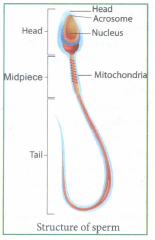
(i) The spermatozoan consists of head, a middle piece and tail.
(ii) The sperm head is elongated and formed by the condensation of nucleus.
(iii) The anterior portion has a cap like structure called acrosome.
(iv) It contains hyaluronidase, an enzyme that helps the sperm to enter the ovum during fertilization.
(v) A short neck connects the head and middle piece which comprises the centrioles.
(vi) The middle piece contains the mitochondria which provides energy for the movement of tail.
(vii) It brings about sperm motility which is essential for fertilization.
65.
(i) Gears: A gear is a circular wheel with teeth around its rim. It helps to change the speed of rotation of a wheel by changing the torque and helps to transmit power.
(ii) Seesaw: When the heavier person comes closer to the pivot point (fulcrum) the distance of the line of action of the force decreases. It causes less amount of torque to act on it. This enables the lighter person to lift the heavier person.
(iii) Steering Wheel: A small steering wheel enables you to manoeuore a car easily by transferring a torque to the wheels with less effort.
66.
| S.No |
RBC |
WBC |
|---|---|---|
| i | They are red in colour due to the presence of respiratory pigment hemoglobin. | They are colourless. |
| ii | They are biconcave/disc-shaped. | They are amoeboid in shape. |
| iii | The RBC is not classified into types, all red blood cells are the same. | They are classified into granulocytes and agranulocytes. |
| iv | The mature RBC's lack a nucleus. | They are nucleated. |
| v | They cannot change their shape. | They can change their shape and are capable of amoeboid movement. |
| vi | They are smaller than leucocytes. | They are larger than erythrocytes. |
| vii | They are responsible for the transport of respiratory gases (CO2 and O2). | They help to defend the body against pathogens. |
67.
The atomicity of an element can be derived using Avogadro's hypothesis. Let us consider the following equation
| H2(g) | + | CI2(g) | ➝ | 2HCI(g) |
| 1 volume | + | 1 volume | ➝ | 2 volumes (By Gay-Lussac's Law) |
According to Avogadro's law, 1 volume of any gas occupy 'n' number of molecules.
| n molecules |
+ n molecules |
➝ 2n molecules |
if n = 1 then
| 1 molecule | + | 1 molecule | ⟶ | 2 molecules. |
| \(\frac{1}{2}\) molecule | + | \(\frac{1}{2}\) molecule | ➝ | 1 molecule |
(i) 1 molecule of hydrogen chloride gas is made up of \(\frac{1}{2}\) molecule of hydrogen and \(\frac{1}{2}\) molecule of chlorine
(ii) But 1 molecule of hydrogen chloride contains one atom of hydrogen and I atom of chlorine
(iii) Hence \(\frac{1}{2}\) molecule of hydrogen = 1 atom of hydrogen
(iv) Or 1 molecule of hydrogen = 2 atoms of hydrogen
(v) So the atomicity of hydrogen is 2, and molecular formula is H2
Similarly,
\(\frac{1}{2}\) molecule of chlorine = 1 atom of chlorine 1molecule of chlorine = 2 atoms of chlorine So the atomicity of chlorine is 2, and its molecular formula is Cl2
68.
88Ra226 ➝86Rn222+2He4
69.
F to (kelvin) K =(F--32) x \(\frac{5}{9}\) + 273
=(95 - 32) x \(\frac{5}{9}\) + 273
=\(\frac { 315 }{ 9 } \) + 273
=35+273 =308 K
70.
Velocity of light in air, c = 3 x 10⁸ ms-1
Velocity of light in glass, v = 2 x 10⁸ ms-1
To find: Refractive index of glass,
μ =\(\frac { c }{ v } \)=?
μ =\(\frac { 3\times { 10 }^{ 8 } }{ 2\times { 10 }^{ 8 } } \)=1.5
μ =1.5 (No unit)
71.
Given
Air temperature = 23°C
Velocity of sound in air, Vs = (331.4 + 0.61T) ms-1
= 331.4 + 0.61 x 23
= 331.4 +13.8
Vs = 345.2 ms-1
72.
Given
For resistance in parallel, the effective resistance R = ?
\(\frac { I }{ { R }_{ p } } =\frac { 1 }{ { R }_{ 1 } } +\frac { 1 }{ { R }_{ 2 } } +\frac { 1 }{ { R }_{ 3 } } \)
\(=\frac { 1 }{ 20 } +\frac { 1 }{ 100 } +\frac { 1 }{ 50 } \)
\(\frac { 1 }{ { R }_{ p } } =\frac { 5+1+2 }{ 100 } =\frac { 8 }{ 100 } \)
\({ R }_{ p }=\frac { 100 }{ 8 } =12.5\Omega \)
\({ R }_{ p }=12.5\Omega \)
i) Total current flowing
through the circuit \({ I }_{ p }=\frac { { V }_{ p } }{ { R }_{ p } } \)
\({ I }_{ p }=\frac { 125 }{ 12.5 } \)
\({ I }_{ p }=10A\)
(ii) In a parallel circuit, the potential drop across each resistor is same.
∵ V1 = V2 = V3 = 125 V
(iii) The current through each resistor according to ohm's law V = IR
\({ I }_{ 1 }=\frac { { V }_{ 1 } }{ { R }_{ 1 } } =\frac { 125 }{ 20 } =6.25A\)
\({ I }_{ 2 }=\frac { { V }_{ 2 } }{ { R }_{ 2 } } =\frac { 125 }{ 100 } =1.25A\)
\({ I }_{ 3 }=\frac { { V }_{ 3 } }{ { R }_{ 3 } } =\frac { 125 }{ 50 } =2.50A\)
(iv) Total current flowing the circuit
Ip= I1+ I2+I3
I=6.25 + 1.25 + 2.50 = 10A
(v) The electric power of each resistor
P1=V1I1= 125 x 6.25 = 781.25 W
P2 = V2I2 = 125 x 1.25 = 156.25 W
P3 = V3I3 = 125 x 50 = 312.50 W
73.
Given:
Ratio of two masses, 2 : 3
i.e = m1 : m2 = 2: 3
Mass of first body, m1 = 2 kg
Mass of second body, m2 = 3 kg
Acceleration of the first body, a1 = 6 ms-2
To find: Acceleration of the second body, a2 =?
F1 = F2
\(\frac { { m }_{ 1 } }{ { m }_{ 2 } } =\frac { { a }_{ 2 } }{ { a }_{ 1 } } \)
\(\frac { 2 }{ 3 } =\frac { { a }_{ 2 } }{ 6 } \)
a2 =\(\frac { 6\times 2 }{ 3 } \) = 4 ms-2
Acceleration of the second body,
a2 = 4 ms-1
74.
Gram molecular of CO2 = 44g
Number of molecules present in 44g of CO2
= 6.023 X 10²³
∴ Number of molecules present in 11g of CO2
= \(\frac{6.023\times{10}^{23}}{44}\)x 11
= 1.53 x 10²³ molecules.
75.
Recoil velocity of a gun α\(\frac { 1 }{ m } \). So light rifle recoils with large velocity than the heavy rifle.
76.
All human beings have blood which is of uniform composition. Blood is red in colour due to presence of red blood cells containing the respiratory pigment hemoglobin. Therefore colour of blood will be identical in all human beings irrespective of external appearance.

10th Standard Syllabus & Materials
10th Standard
TN 10th English Prose - 2 - The Night the Ghost Got in Important Questions And Answers Study Material - QB365 Set A
NEW10th Standard
TN 10th English Supplementary - 1 - The Tempest Important Questions And Answers Study Material - QB365 Set A
NEW10th Standard
TN 10th English Poem - 1 - Life Important Questions And Answers Study Material - QB365 Set A
NEW10th Standard
TN 10th English Prose - 1 - His First Flight Important Questions And Answers Study Material - QB365 Set A



Tamilnadu Stateboard 10th Standard Subjects
Tamilnadu Stateboard Standards





