
 100% FREE ACCESS
10th Standard Syllabus & Materials
10th Standard
TN 10th English Prose - 4 - The Attic Important Questions And Answers Study Material - QB365 Set A
NEW10th Standard
TN 10th English Supplementary - 3 - The Story of Mulan Important Questions And Answers Study Material - QB365 Set A
NEW10th Standard
TN 10th English Poem - 3 - I am Every Woman Important Questions And Answers Study Material - QB365 Set A
NEW10th Standard
TN 10th English Prose - 3 - Empowered Women Navigating The World Important Questions And Answers Study Material - QB365 Set A
NEW10th Standard
TN 10th English Supplementary - 2 - Zigzag Important Questions And Answers Study Material - QB365 Set A
NEW10th Standard
TN 10th English Poem - 2 - The Grumble Family Important Questions And Answers Study Material - QB365 Set A

Published on: 07/02/2020
Creative Questions Part-II10th Standard Science All Chapter Important Creative Questions-II-2020
Download Tamil Nadu 10th Standard Science question papers, model tests, one-mark questions, important questions, and public exam papers in PDF format. Free study materials and answer keys for TN State Board students.
Questions + Answers key
Take MCQ Science Test1.
Choose the word not applicable to fossil fuels
Hydrocarbons
Decomposition
Natural process
Inexhaustible
2.
The device which helps in explaining the concepts easily through pictures is________
Visible Communication Device
Visible Cinema Device
Visual Cinema Device
Visual Communication Device
3.
______________ is not related to NIDDM.
Insulin administration
Controlled by medicine
Obese
Insulin action impaired
4.
Dr. Norman received the Nobel peace prize in_________
1960
1980
1956
1970
5.
_____ promotes the ripening of fruits.
Auxin
Abscisic Acid
Ethylene
Cytokinin
6.
General molecular formula of alkynes is ___________.
CnH2n+2
CnH2n
CnH2-n-2
CnH2n+1
7.
Biogenetic law or Recapitulation theory was given by__________
Leonardo da vinci
Ernst Haeckel
Oparin
Haldane
8.
The cytoplasm has granular body called _______
nissl's granules
nerve fibres
glial cells
nerve cells
9.
The product formed when calcium oxide reacts with water is
Slaked lime
Carbon dioxide
Calcium oxide
Oxygen gas
10.
11.
Energy generation in stars is due to
chemical reaction
fission
fusion of light nuclei
Fusion of heavy nuclei
12.
Example for solid in solid ___________
Soda water
Camphor in air
Charcoal
alloy
13.
Ultrasound waves compared to audible sound waves have.
Lower frequency and Shorter wavelength
Lower frequency and longer wavelength
higher frequency and longer wavelength
higher frequency and shorter wavelength
14.
15.
L shaped chromosomes are described as_______
acrocentric
metacentric
submetacentric
telocentric
16.
17.
The pollen is produced in________
Filament
Anther
Ovule
Stigma
18.
Absorption of water by modern frames of windows in rainy reason is an example of_________
diffusion
osmosis
imbibition
ranspiration
19.
The molecule formula P2O5 means that:
A molecule contains 2 atoms of P and 5 atoms of O
The ratio of the mass of P to the mass of O in the molecule is 2:5
There are twice as many P atoms in the molecule as there are O atoms
The ratio of the mass of P to the ass of O in the molecule is 5:2
20.
In leeches sperms are stored in
epididymis
vas deferens
testis
ejaculatory duct
21.
Why battery is used in the circuit?
Measure Current
Maintain a potential difference
Oppose the current
Measure potential
22.
A force is applied by direct physical contact between two bodies is
Contact force
Non - contact force
Balanced force
Unbalanced force
23.
Why is a dicot leaf described as dorsiventral?
24.
What are the solutions suggested for disposal of e-wastes for companies / Organizations?
25.
Write a note on Obesity.
26.
A farmer has lot of banana trees in his form. He wishes to go in for selection to improve the crop. Which method can he adopt in banana?
27.
In a biology period, the teacher drew the heart of rabbit on the board and explained its structure and functions. After the class, your friend told you that he finds it difficult to understand the concept and felt he wanted a detailed explanation.
(i) In what way the teaching can be made easily understandable?
(ii) Do you think using technologies like Visual Communication help students to understand the difficult concepts in a simple way?
(iii) By what means the Visual Communication improve the learning ability?
28.
How will you classify organic compounds based on the pattern of carbon chain?
29.
Describe the role of pancreas in maintenance of blood sugar level.
30.
Explain Use and Disuse theory.
31.
Tabulate the different parts of the brain and their functions.
32.
Explain the classification based on the direction of the reaction.
33.
Distinguish between Nuclear fission and nuclear fusion.
34.
With an illustration, explain the method of Calculation for areal expansion of an object.
35.
Explain Solid solution, Liquid solution and Gaseous solution.
36.
Write the sign convention for lenses.
37.
(i) How to analyse the planets are irregular shaped?
(ii) What is the method used to find it?
(iii) Planets are sensitive to different frequencies Justify.
38.
Explain Bessemerisation
39.
Mala had a huge scar on her cheek after she met with fire accident during her college days. She is worried if her baby would inherit the scar she had acquired. She clarified with her doctor, she need not worry about it, as her scar is an acquired trait.
(i) What are acquired traits?
(ii) How is it different from inherited traits?
40.
Kalaivani was watching at a metal pipe, one end of which is connected to a tank at the top of her building and the other end to the tap, which is near the ground level. She was admiring how the water flows from top to the bottom through the pipe. She went and asked her mother, who was an engineer.
(i) Also Kalaivani asked her mother that can she able to compare this with any other scientific concepts?
(ii) How would her mother have compared the resistance in a water pipe as well as in a conductor.
(iii) Give the expression for resistors connected in series and parallel.
41.
Arun and Ram were good friends. But Ram slowly started loosing interest in studies as they grew up. The teacher found out that Ram had three siblings and their parents could not give him good food or personal care. What value does this episode give us.
42.
Give examples for Newton's third law.
43.
List the difference between RBC and WBC.
44.
Give the applications of Avogadro's hypothesis.
45.
Describe the heart of rabbit.
46.
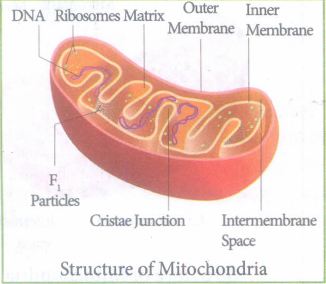
Draw the ultrastructure of mitochondria and label the parts.
47.
What is the aim of wild life conservation?
48.
Write a note an symptoms of diabetes mellitus.
49.
Define Green Revolution?
50.
Write a note on 'Visual Communication Device'.
51.
Mention the physiological effects of Ethylene.
52.
What is absolute alcohol?
53.
What is Astrobiology? Explain the criteria.
54.
What is LPG?
55.
Write a note on radiation hazards.
56.
How do we see distant and closer objects?
57.
Mention the symptoms seen in the case of Down's syndrome.
58.
What does the term "ion" mean?
59.
Write the types of granulocytes
60.
What is resultant force?
61.
Plutonium - 239 specimen emits radiation of 4.3 x 10³ GBq per second convert this disintegrations in terms of curie.
(1 Bq = 2.703 x 10⁻¹¹curie)
62.
A metal rod 6.522 m long at 285 k expands by 0.576 m at 363 k. Find the coefficient of linear expansion of the metal.
63.
The refractive index of kerosene is 1.44. Find the velocity of light through kerosene.
64.
A boy hears two different sounds when a race car is moving toward and moving away. If the speed of sound in air is 340 ms-1. The frequency emitted by the car is 800 Hz and the car velocity is 120 ms-1. Find the frequency heard by the boy? (when the car moving forward).
65.
Force of 50 N acts perpendicular on a body, which is fixed at a point O. The distance of point of action of force from O is 5 cm. Find the moment of force.
66.
An electric heater works for 30 min at 120 V and takes energy of 1 - 2 kwh. What is the current drawn by the heater?
67.
Calculate the gram molecular mass of carbon dioxide (CO2)
68.
When we touch a cactus unknowingly, we get pricked by the thorns. We withdraw our hands immediately. Which type of neuron gets activated first.
69.
Air pressure in car tyre increases during driving explain.
70.
Butter is an example of one type of colloidal solution. Name it. Give a reason for your choice.
71.
Frequency is the most fundamental property of waves. Why?
72.
Two metallic wires A and B of same material are connected in parallel. Wire A has length 1 and radius r and wire B has length 2l and radius 2r. Compute the ratio of the total resistance of parallel combination and the resistance of wire A.
73.
What happens in the female body (uterus) if the ovum (egg) is not fertilised by a sperm?
74.
In magnesium sulphide, the ratio by mass of Mg and S is 3 : 4. What is the ratio of the number of Mg and S atoms?
1.
(d)
Inexhaustible
2.
(d)
Visual Communication Device
3.
(a)
Insulin administration
4.
(d)
1970
5.
(c)
Ethylene
6.
(c)
CnH2-n-2
7.
(b)
Ernst Haeckel
8.
(a)
nissl's granules
9.
(a)
Slaked lime
10.
(a)
11.
(c)
fusion of light nuclei
12.
(d)
alloy
13.
(d)
higher frequency and shorter wavelength
14.
(c)
15.
(c)
submetacentric
16.
(d)
17.
(b)
Anther
18.
(c)
imbibition
19.
(a)
A molecule contains 2 atoms of P and 5 atoms of O
20.
(a)
epididymis
21.
(b)
Maintain a potential difference
22.
(a)
Contact force
23.
(i) The dorsal and ventral surfaces of a dicot leaf can be clearly distinguished
(ii) The dorsal surface is darker is appearance and the ventral surface is lighter.
(iii) This is due to distribution of palisade parenchyma below the upper epidermis which as rich in chloroplasts.
(iv) Hence the dicot left is described as dorsiventral.
24.
There are companies who are doing e-waste management an a commercial scale. Therefore organizations which generate a lot of e-waste must not throw the same in garbage bins but channelise the e-waste through the organizations meant for the same.
25.
(i) Obesity is the state in which there is an accumulation of excess body fat with an abnormal increase in body weight.
(ii) Obesity occurs if intake of calories is more than the expenditure of energy.
(iii) Overweight and obesity are conditions where the body weight is greater than the mean standard weight for age and height of an individual.
(iv) Body Mass Index (BMI) is an estimate of body fat and health risk. BMI = Weight (kg) / Height (m)2
Causes and risk factors :
(i) Obesity is due to genetic factors, physical inactivity, eating habits (overeating) and endocrine factors.
(ii) Obesity is a positive risk factor in development of hypertension, diabetes, gall bladder disease, coronary heart disease, and arthritis.
Prevention and Control of Obesity :
(i) Diet Management: Low calorie, normal protein, vitamins and mineral, restricted carbohydrate and fat, high fiber diet can prevent overweight.
(ii) Physical exercise: A low calorie diet accompanied by moderate exercise will be effective in causing weight loss. Meditation, yoga and physical activity can also reduce stress related to overeating.
26.
He can adopt clonal selection since banana reproduces asexually from the underground stem.
27.
(i) Pictures and Audio-Visuals give us more understanding than teaching and writing on black board. So, any visual representation of the concepts would help us to understand better and make teaching simple
(ii) Yes. Visual Communication helps us to easily conceptualize complicated theorems and concepts. When the teacher shows pictures / videos that represent the concept, we would easily relate to its application and firmly understand the concept without any mis-perception
(iii) Pictures, Audio-Visuals, animations provide additional information and helps us to easily correlate the concepts. We could easily remember the visuals than black board writing, and visualize it, so that we do not forget and we could easily recollect at the time of examination.
28.
Organic compounds are classified into two types as follows:
(i) Acyclic or Open chain compounds:
These are the compounds in which the carbon atoms are linked in a linear pattern to form the chain. If all the carbon atoms in the chain are connected by single bonds, then the compound is called as saturated. If one or more double bonds or triple bonds exist between the carbon atoms, then the compound is said to unsaturated.
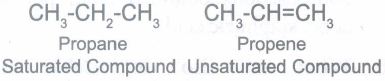
(ii) Cyclic Compounds:
Organic compounds in which the chain of carbon atoms is closed or cyclic are called Cyclic compounds. If the chain contains only carbon atoms, such compounds are called carbocyclic compounds. If the chain contains carbon and other atoms like oxygen, nitrogen, sulphur, etc., these compounds are called heterocyclic compounds. Carbocyclic compounds are further subdivided into alicyclic and aromatic compounds. In alicyclic compounds, the carbon cycle contains only single bonds whereas aromatic compounds contain one or more benzene rings (ring containing alternate double bonds between carbon atoms).
E.g:
.JPG)
29.
The endocrine portion of pancreas is made up of Islets of Langerhans.
Structure of Pancreas:
The Islets of Langerhans consists of two types of cells namely alpha cells and beta cells. The alpha cells secrete glucagon and beta cells secrete insulin.
Functions of Pancreatic hormones:
A balance between insulin and glucagon production is necessary to maintain blood glucose concentration.
Insulin :
(i) Insulin helps in the conversion of glucose into glycogen which is stored in liver and skeletal muscles.
(ii) It promotes the transport of glucose into the cells.
(iii) It decreases the concentration of glucose in blood.
Glucagon:
(i) Glucagon helps in the breakdown of glycogen to glucose in the liver.
(ii) It increases blood glucose levels.
Diabetes mellitus :
The deficiency of insulin causes Diabetes mellitus. It is characterised by
(i) Increase in blood sugar level (Hyperglycemia)
(ii) Excretion of excess glucose in the urine (Glycosuria).
(iii) Frequent urination (Polyuria).
(iv) Increased thirst (Polydipsia).
(v) Increase in appetite (Polyphagia).
30.
Use and disuse theory
(i) Lamarck's Use and Disuse theory states that if an organ is used constantly, the organ develops well and gets strengthened.
(ii) When an organ is not used for a long time, it gradually degenerates.
(iii) The ancestors of Giraffe were provided with short neck and short forelimbs.
(iv) Due to shortage of grass, they were forced to feed on leaves from trees. The continuous stretching of their neck and forelimbs resulted in the development of long neck and long forelimbs which is an example for constant use of an organ.
(v) The degenerated wing of Kiwi is an example for organ of disuse.
31.
| Structure | Functions |
| Cerebral cortex | Sensory perception, control of voluntary functions, language, thinking, memory, decision making, creativity. |
| Thalamus | Acts as relay station. |
| Hypothalamus | Temperature control, thirst, hunger, urination, important link between nervous system and endocrine glands. |
| Cerebellum | Maintenance of posture and balance, coordinate voluntary muscle activity. |
| Pons and medulla | Role in sleep-awake cycle, cardiovascular, respiratory and digestive control centers. |
32.
Reversible Reactions: A reversible reaction is a reaction that can be reversed, i.e., the products can be converted back to the reactants. A reversible reaction is represented by a double arrow with their heads in the direction opposite to each other. Thus, a reversible reaction can be kept

Explanation: The compound 'AB' undergoes decomposition to form the products 'A' and 'B'. It is the forward reaction. As soon as the products are formed, they combine together to form 'AB': It is the backward reaction
PCl5(g) ⇌ PCl3(g) + CI2(g)
Irreversible Reactions: The reaction that cannot be reversed is called irreversible reaction. Consider the combustion of coal into carbon dioxide and water.
C(s) + O2(g) ⟶ CO2(g)+ Heat
Coal oxygen Carbon dioxide
In this reaction, solid coal burns with oxygen and gets converted into carbon dioxide gas and water. As the product is a gas, as soon as it is formed it escapes out of the reaction container. It is hard to decompose a gas into a solid. Thus, the backward reaction is not possible in this case. So, it is an irreversible reaction
33.
| S. No |
Nuclear fission |
Nuclear fusion |
|---|---|---|
| i | The process of breaking (splitting) up of a heavy nucleus into two smaller nuclei is called "nuclear fission". | Nuclear fusion is the combination of two lighter nuclei to form a heavier nucleus. |
| ii | Can be performed at room temperature. | Extreme high temperature and pressure is needed. |
| iii | Alpha, beta and gamma radiations are emitted. | Alpha ray, Positron, and neutrinos are emitted. |
| iv | Fission leads to the emission of gamma radiation. This triggers mutation in the human genes and causes genetic transform diseases. | Only light and heat energy is emitted. No harmful radiation and will not cause any genetic transform diseases. |
| v | Deflected by both the fields; but the direction of deflection is opposite to alpha rays. (in accordance with Fleming's left hand rule). | They are not deflected by both fields. |
34.
(i) If there is an increase in the area of a solid object due to heating, then the expansion is called superficial or areal expansion.
(ii) Superficial expansion is determined in terms of coefficient of superficial expansion. The ratio of increase in area of the body, per degree rise in temperature to its unit area is called coefficient of superficial expansion. Coefficient of superficial expansion is different for different materials. Its SI unit is also per Kelvin.
(iii) The equation relating to the change in area to the change in temperature is given below:
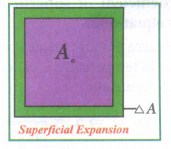
\(\frac { \triangle A }{ { A }_{ 0 } } \) =αA ΔT
ΔA - Change in area
A0 - Original area
ΔT - Change in area
αA - Coefficient of superficial expansion
35.
| Solute | Solvent | Example |
|---|---|---|
| Solid solution | ||
| Solid | Solid | Copper dissolved in gold (Alloys) |
| Liquid | Solid | Mercury with sodium (amalgam) |
| Liquid solution | ||
| Solid | Liquid | Sodium chloride dissolved in water |
| Liquid | Liquid | Ethyl alcohol dissolved in water |
| Gas | Liquid | carbon-di-oxide dissolved in water (Soda water) |
| Gaseous solution | ||
| Liquid | Gas | Water vapour in air (cloud) |
| Gas | Gas | Mixture of Helium-Oxygen gases, |
36.
| S.No. | Convex Lens | Concave Lens |
| i | Focal length | + for convex lens - for concave lens |
| ii | Distance of object | - if the object is to the left object of the lens + if the object is to the right of the lens |
| iii | Distance of image | + if the image is formed on the right of the lens (real image) - if the image is formed one the left of the lens (virtual image) |
| iv | Magnification | + for erect images - for inverted images |
37.
(i) To analyse that the planets are irregular shaped objects, Doppler effect is applied.
(ii) Using Doppler effect, an electromagnetic wave or a high frequency sound wave can be made to incident on different points of planet's surface. By finding the frequency shifts of the reflected waves from different points on planets surface, one can analyse that the planet is made of hills and valleys. From this analysis, we can come to a conclusion the planets are irregularly shaped objects.
(iii) Jagadish Chandra Bose, a famous Indian scientist and Biologist, discovered that plants can feel sadness, happiness, pain etc., for that, he invented device named crescograph. The feelings of sadness, happiness, pain etc.. have different frequencies. When we touch a plant with a lovable thought, the frequency of that thought can be sensed by plants and trees.
38.
Bessemerisation The molten matte is transferred to Bessemer converter in order to obtain blister copper. Ferrous sulphide from matte is oxidized to ferrous oxide, which is removed as slag using silica.
2FeS+3O2 ⟶ 2FeO+2SO2 ↑
.JPG)
2 Cu2S + 3O2 ⟶ 2 Cu2O + 2 SO2
.JPG)
39.
(i) Acquired traits are the characters that cannot be passed from one generation to the next generation.
(ii) Characters which are inherited by the offspring from the parents and carried from one generation to another generation are called Inherited traits.
40.
(i) Kalaivani's mother took a small PVC pipe which has water in it and held in a horizontal position. Water came out drop by drop. When she raised one of the ends of the pipe, the water through the other end came out with a greater speed. She said initially when I was holding the pipe in a horizontal position, pressure at the both the ends are same. So water did not come out. The difference in pressure (Pressure difference) between the two ends is zero. But when I raised one of the ends, the top end has high pressure, and the bottom end has low pressure. Due to this pressure difference, water came out with a faster rate. So compare a conductor or a wire to this PVC pipe The wire is connected to a battery, whose one end has higher potential and the other end has lower potential. Due to this difference in potential, electrons from negative terminal (lower potential end) flow towards the positive terminal (higher potential end). Here electron flow is compared with the water flow and the electric potential is compared with the pressure. Kalaivani felt very happy, after hearing her mother's genius explanation.
(ii) When Kalaivani asked how to understand about the concept of resistance from her mother's scientific explanations, her mother continued. If the water pipe is smooth inside, then there is no charge in the speed of flow of water. i.e., zero resistance. But when the pipe has some blocks inside at different points, the water changes its speed of flow at different points, likewise, whenever electrons flow inside the conductor, they may collide with each other, due to which their speed will be resisted (blocked), which forms as electrical resistance. Her explanation made Kalaivani satisfied.
(iii) When two resistors of resistances, R1 & R2 are connected in series to a battery source.
\({ R }_{ s }={ R }_{ 1 }+{ R }_{ 2 }\)
When R1 & R2 are connected in parallel,
\(\frac { 1 }{ { R }_{ p } } +\frac { 1 }{ { R }_{ 1 } } +\frac { 1 }{ { R }_{ 2 } } \Rightarrow \frac { 1 }{ { R }_{ p } } =\frac { { R }_{ 2 }+{ R }_{ 1 } }{ { R }_{ 1 }{ R }_{ 2 } } \)
\({ R }_{ p }=\frac { { R }_{ 1 }{ R }_{ 2 } }{ { R }_{ 1 }+{ R }_{ 2 } } \)
41.
A small family is a happy family. If there are one or two children in a family, the parents can afford to give them good education, food, personal care and other facilities required for them to grow into healthy and happy individuals. Thus it is important for parents to plan a small family which will also build a healthy nation.
42.
(i) When birds fly they push the air downwards by their wings (Action).
(ii) The air pushes the bird upwards (Reaction).
(iii) When a person swims he pushes the water using hands backwards (Action), the water pushes the swimmer in forward direction (Reaction).
(iv) Rockets expel gas at high velocity (Action). The downward moving gas pushes the rocket in upward direction (Reaction).
(v) When we fire a bullet, the gun recoils back, Bullet is moving forward (action). The gun equalise this forward action by moving backward (reaction).
43.
| S.No |
RBC |
WBC |
|---|---|---|
| i | They are red in colour due to the presence of respiratory pigment hemoglobin. | They are colourless. |
| ii | They are biconcave/disc-shaped. | They are amoeboid in shape. |
| iii | The RBC is not classified into types, all red blood cells are the same. | They are classified into granulocytes and agranulocytes. |
| iv | The mature RBC's lack a nucleus. | They are nucleated. |
| v | They cannot change their shape. | They can change their shape and are capable of amoeboid movement. |
| vi | They are smaller than leucocytes. | They are larger than erythrocytes. |
| vii | They are responsible for the transport of respiratory gases (CO2 and O2). | They help to defend the body against pathogens. |
44.
Applications of Avogadro's hypothesis
(i) It explains Gay-Lussac's law.
(ii) It helps in the determination of atomicity of gases.
(iii) Molecular formula of gases can be derived using Avogadro's law.
(iv) It determines the relation between molecular mass and vapour density.
(v) It helps to determine Gram molar volume of all gases (i.e. 22.4 lit at S.T.P)
45.
(i) The heart is pear shaped and lies in the thoracic cavity in between the lungs. It is enclosed by pericardium, a double layered membrane.
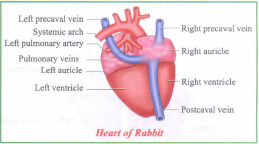
(ii) The heart is four chambered with two auricles and two ventricles. The right and left auricles are separated by interauricular septum, similarly right and left ventricles are separated by interventricular septum.
(iii) The right auricle opens into the right ventricle by right auriculoventricular aperture, guarded by a tricuspid valve.
(iv) The left auricle opens into the left ventricle by left auriculoventricular aperture guarded by a bicuspid valve or mitral valve.
(v) The opening of the pulmonary artery and aorta are guarded by three semilunar valves.
(vi) The right auricle receives deoxygenated blood through two precaval (superior vena cava) and one postcaval (inferior vena cava) veins from all parts of the body.
(vii) The left auricle receives oxygenated blood from the pulmonary veins from the lungs.
(viii) From the right ventricle arises pulmonary trunk which carries the deoxygenated blood to the lungs and from the left ventricle arises the systemic arch (aorta) which supplies oxygenated blood to all parts of the body.
46.
47.
(i) The main aim of wild life conservation is to preserve the plants and animals from extinction, prevent deforestation, maintain ecobalance, preserve the endangered species and also study the ecological relations of the plants and animals in natural habitat.
(ii) Plantation, cultivation, grazing, felling trees, hunting and poaching are prohibited here
48.
Symptoms: Diabetes mellitus is associated with several metabolic alterations. The most important symptoms are.
(i) Increased blood glucose level (Hyperglycemia)
(ii) Increased urine output (Polyuria) leading to dehydration.
(iii) Loss of water leads to thirst (Polydipsia) resulting in increased fluid intake.
(iv) Excessive glucose excreted in urine (Glycosuria).
(v) Excess hunger (Polyphagia) due to loss of glucose in urine.
(vi) Fatigue and loss of weight.
49.
Green Revolution is the process of increasing food production through high yielding crop varieties and modern agricultural techniques in underdeveloped and developing nations.
50.
The device which helps in explaining the concepts easily through pictures is known as 'Visual Communication Device: For example photos, audio-visuals, drawings, animations all these can be created easily with the help of computer. Cinema is a good example for 'Visual Communication Device'.
51.
(i) Ethylene promotes the ripening of fruits.
Eg : Tomato, Apple, Mango,Banana, etc.
(ii) Ethylene inhibits the elongation of stem and root in dicots.
(ii) Ethylene hastens the senescence of leaves and flowers.
(iv) Ethylene stimulates formation of abscission zone in leaves, flowers and fruits. This leads to premature shedding.
(v) Ethylene breaks the dormancy of buds, seeds and storage organs.
52.
100% pure alcohol is called absolute alcohol.
53.
(i) Astrobiology / Exobiology is the science which looks for the presence of extra terrestrial life in the Universe.
(ii) It deals with the origin, evolution and distribution of life in the Universe and to investigate the possibility of life in other world.
(iii) The major concept is the habitable zone. The theory explains that any planets can support the existence of life, if it fulfills two important criteria, that is :
(a) It must have a right mass to retain an atmosphere.
(b) It must have an orbit at just the right distance from its Star (Sun) that it allows liquid water to exist. Thus, the distance need to be neither too hot or not too cold and is often referred as Goldilock Zone for life.
(iv) In our solar system 'Earth' is the only planet in the Goldilock zone. Since, this zone varies at times as the star evolves, we know that Mars have also been habitable. The life on Mars are likely to be the creatures, we find in extreme environments on earth.
54.
Liquefied Petroleum Gas is a mixture of hydrocarbon gases like propane, butane, propylene etc..
55.
(i) The exposure is 100 R, it may cause fatal diseases like leukemia (death of red blood corpuscle in the blood) or cancer.
(ii) When the body is exposed to about 600 R, it leads to death.
(iii) The safe limit of receiving the radiations is about 100 mR per week.
56.
(i) To see distant objects, the ciliary muscle relaxes and makes the eye lens thinner. This increases the focal length of eye lens.
(ii) Hence, the distant object can be clearly seen. When we look at a closer object, the focal length of the eye lens is decreased by the contraction of ciliary muscle.
(iii) Thus, the image of the closer object is clearly formed on the retina.
57.
(i) It is a genetic condition in which there is an extra copy of chromosome 21 (Trisomy 21).
(ii) Mental retardation, delayed development, behavioural problems, weak muscle tone, vision and hearing disability are some of the conditions seen in these children.
58.
Ions are formed when an atom loses or gains electrons.
59.
(i) Neutrophils
(ii) Eosinophils
(iii) Basophils
60.
(i) When several forces act simultaneously on the same object, then the combined effect of multiple forces can be represented by a single force, which is termed as resultant.
(ii) It is equal to vector sum up (adding the magnitude of forces with direction) of all the forces.
61.
1 Bq = 2.703 x 10⁻¹¹ curie
∴ 4.3 x 10³ GBq = 4.3 x 103 x 109 x 2.703 x10-11
= 11.62 x 101
= 116.2 curie
62.
Initial temperature, t1 = 285 k
Final temperature, t2 = 363 k
Initial length, I1 = 6.522 m
Change in length, Δl = 0.576 m
To find: Coefficient of linear expansion αL=?
αL =\(\frac { \triangle l }{ l\triangle T } =\frac { ({ l }_{ 2 }-{ l }_{ 1 }) }{ { l }_{ 1 }(t_{ 2 }-{ t }_{ 1 }) } \)
=\(\frac { 6.576-6.522 }{ 6.5222(63-285) } \)
=\(\frac { 0.054 }{ 6.522(78) } =\frac { 0.054 }{ 508.7 } \)
αL =1.06 x 10⁻⁴ K-1.
63.
Velocity of light through air, ca = 3 x 10⁸ ms-1
To find : Speed of light through kerosene,
ck =?
Refractive index of kerosene, μk= 1.44
μk=\(\frac { { c }_{ a } }{ { c }_{ k } } \) ⇒ 1.44
μk= \(\frac { 3\times 10^{ 8 } }{ { c }_{ k } } \)
=2.083 x 10⁸ ms-1
Speed of light through kerosene,
ck = 2 083 x 108 ms-1
64.
Given
Frequency g car's distance, n = 800 Hz
Velocity of source, Vs = 120ms-1
Velocity of sound, v = 340 ms-1
To find: Frequency emitted by the car, n' = ?
Solution
Apparent frequency, n' =\(\left( \frac { v }{ v-{ v }_{ s } } \right) \times n\)
\(=\frac { 340 }{ 340-120 } \times 800\)
\(=\frac { 340 }{ 220 } \times 80\)
Apparent frequency, n' = 1236 Hz
65.
Force, F = 50 N
Distance, d = 5 cm
To find: Momentum of force= F x d
Momentum of force, 50 x 5 x 10-2
= 250 x 10-2
= 2.5 Nm
66.
Electrical energy,
E = 1.2 kwh = 1.2 x 10³ wh
Time, t =30 min\(\frac{1}{2}\) hour
To find: Current drawn by the heater, I = ?
Solution
Energy, E = Vlt \(\therefore I=\frac { E }{ Vt } \)
\(I=\frac { 1.2\times { 10 }^{ 3 }\times 2 }{ 120 } =20A\)
Current, I = 20A
67.
Atomic masses of C= 12, O= 16
Gram molecular mass of CO2 = 1(C) + 2(O) = 1(12) + 2(16) = 12 + 32 = 44
Gram molecular mass of CO2 = 44g.
68.
When we are pricked by a cactus, the sensory neurons are activated immediately. They take the message to the brain or spinal cord. The message given by the brain or spinal cord is brought back by the Motor neuron. The motor neuron carries the message to the hand muscles. We immediately pull our hand away from the cactus.
69.
During driving temperature of the gas increases while its volume remains constant. So according to Charles's law at constant V, P α T. ∴ Pressure of gas increases.
70.
The colloidal solution is an example in which solid acts are the dispersion medium while liquid as the dispersed phase. It is also called gel. Reason for the choice. On pressing butter, liquid drops come out of it leaving behind a solid. This clearly shows the butter is a gel.
71.
When sound travels from one medium to other its wavelength and velocity may change, but frequency does not change. So frequency is fundamental property of waves.
72.
Resistance of wire A, \({ R }_{ 1 }=\frac { \rho l }{ A } =\frac { \rho l }{ { \pi r }^{ 2 } } \)
Resistance of wire B, \({ R }_{ 2 }=\frac { \rho l' }{ A' } \)
\(=\frac { \rho \times 2l }{ \pi { (2r) }^{ 2 } } =\frac { \rho l }{ 2\pi { r }^{ 2 } } \)
Total resistance of the series combination, \(\frac { 1 }{ R } =\frac { 1 }{ { R }_{ 1 } } +\frac { 1 }{ { R }_{ 2 } } \)
or \(\frac { 1 }{ R } =\frac { \pi { r }^{ 2 } }{ \rho l } +\frac { 2\pi { r }^{ 2 } }{ \rho l } \)
\(=\frac { 3\pi { r }^{ 2 } }{ \rho l } \)
\(R=\frac { \rho l }{ 3\pi { r }^{ 2 } } \)
\(\therefore \frac { R }{ { R }_{ 1 } } =\frac { \rho l }{ 3\pi { r }^{ 2 } } \times \frac { \pi { r }^{ 2 } }{ \rho l } \)
\(=\frac { 1 }{ 3 } \)
73.
The ovum (egg) lives for about 24 hours. It is not fertilized, it will start disintegrations to take. The uterine lining is also shed as menstrual flow.
74.
Formula of magnesium sulphide = MgS
Ratio by mass of Mg and S = 3:4
Number of atoms in 3 g of Mg = \(\frac { { N }_{ A } }{ 24 } \times 3=\frac { { N }_{ 4 } }{ 8 } \)
Number of atoms in 4 g of S = \(\frac { { N }_{ A } }{ 32 } \times 4=\frac { { N }_{ 4 } }{ 8 } \)
ஃ Ratio of the number of Mg and S is \(\frac { { N }_{ A } }{ 8 } :\frac { { N }_{ 4 } }{ 8 } \) or 1:1

10th Standard Syllabus & Materials
10th Standard
TN 10th English Prose - 2 - The Night the Ghost Got in Important Questions And Answers Study Material - QB365 Set A
NEW10th Standard
TN 10th English Supplementary - 1 - The Tempest Important Questions And Answers Study Material - QB365 Set A
NEW10th Standard
TN 10th English Poem - 1 - Life Important Questions And Answers Study Material - QB365 Set A
NEW10th Standard
TN 10th English Prose - 1 - His First Flight Important Questions And Answers Study Material - QB365 Set A



Tamilnadu Stateboard 10th Standard Subjects
Tamilnadu Stateboard Standards





