
 100% FREE ACCESS
10th Standard Syllabus & Materials
10th Standard
TN 10th English Prose - 4 - The Attic Important Questions And Answers Study Material - QB365 Set A
NEW10th Standard
TN 10th English Supplementary - 3 - The Story of Mulan Important Questions And Answers Study Material - QB365 Set A
NEW10th Standard
TN 10th English Poem - 3 - I am Every Woman Important Questions And Answers Study Material - QB365 Set A
NEW10th Standard
TN 10th English Prose - 3 - Empowered Women Navigating The World Important Questions And Answers Study Material - QB365 Set A
NEW10th Standard
TN 10th English Supplementary - 2 - Zigzag Important Questions And Answers Study Material - QB365 Set A
NEW10th Standard
TN 10th English Poem - 2 - The Grumble Family Important Questions And Answers Study Material - QB365 Set A

Published on: 12/05/2020
10th Standard Science English Medium Creative Important 2 Marks Questions
Download Tamil Nadu 10th Standard Science question papers, model tests, one-mark questions, important questions, and public exam papers in PDF format. Free study materials and answer keys for TN State Board students.
Questions + Answers key
Take MCQ Science Test1.
List the functions of chloroplast.
2.
Name the internal factors affecting photosynthesis.
3.
What is starch sheath?
4.
Draw diagrams to represent the types of concentric vascular bundles.
5.
What is the role of hydropower plants?
6.
List out the advantages of tidal energy.
7.
What are the sources of e-wastes
8.
List the environmental concerns of shale gas
9.
List uses of biogas.
10.
Sita's Mother wanted her to carry lunch to her office. Sita does not want to eat lunch since she is obese. Do you agree with Sita.
11.
What is the role of Child Helpline?
12.
Write a note an symptoms of diabetes mellitus.
13.
Write the harmful effects of alcohol on health.
14.
Mention some behavioural changes seen in drug users.
15.
Write a note on Triticale.
16.
Differentiate Embryonic and Adult stem cells.
17.
Name the methods of selection.
18.
Define mutation.
19.
How was IR-8 variety produced?
20.
Write the uses of 'Note Pad' and 'Paint' app.
21.
Give any two applications of ketones in our daily life.
22.
Give any two uses of aldehydes
23.
Which hormone is known as Stress hormone in plants? Why?
24.
List the functions of adrenal medulla hormones.
25.
Mention the physiological effects of Ethylene.
26.
What is molasses?
27.
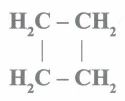 Name the above compound and classify it
28.
How are variations classified?
29.
What is Geologic time scale.
30.
What is Astrobiology / Exobiology?
31.
Give some examples of vestigial organs in man.
32.
What is theory of Spontaneous generation or Abiogenesis?
33.
What is EEG?
34.
Name the cerebral lobes.
35.
What is a neurotransmitter?
36.
Name the parts of a neuron.
37.
Define irreversible reaction.
38.
Define ionic product of water
39.
Define a catalyst.
40.
What is LPG?
41.
What is Nuclear Fusion?
42.
What is meant by leakage of neutrons?
43.
Define Curie.
44.
Name the expansion of volume of a liquid taking into consideration of the expansion of container also.
45.
State Charles's law (or) Write the law of volume.
46.
What is meant by thermal expansion?
47.
Define one joule.
48.
A concave lens of refractive in μ1 is kept in a medium of refractive index (μ2). A parallel beam of light is incident on the lens. Draw the path of the rays of light emerging from a lens.
49.
Hygroscopic substances are used as drying agents. Give some examples
50.
Define trinary solution
51.
Give an example of
(i) gas in liquid
(ii) solid in liquid.
52.
What is the function of Cornea?
53.
When does Mie scattering take place? Write the causes.
54.
How is a rainbow formed?
55.
If the amplitude of a wave is doubled, what will be the loudness?
56.
How does the elastic modulus of the medium affect the velocity of sound?
57.
What is Galvanization?
58.
Give any three uses of aluminium.
59.
Mention the symptoms seen in the case of Down's syndrome.
60.
List any three traits of pea plant selected by Mendel for his experiments and mention their dominant & recessive form
61.
Explain the role of Okazaki fragments
62.
State the law of purity of gametes or the law of segregation.
63.
What is nucleolar organizer?
64.
Give the principle behind hydraulic washing
65.
Ionisation energy decreases down the group in periodic table. Give reason.
66.
Define metallic radius.
67.
List the post fertilization changes in a flower.
68.
Draw a diagram to show spore formation in Rhizopus.
69.
Define cross-pollination.
70.
Define menstrual cycle?
71.
What is gastrulation?
72.
Identify the following
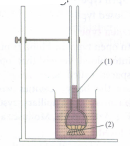
(a) Setup.
(b) Label the parts
73.
Write a few lines about stethoscope.
74.
Differentiate open type and dosed type of circulation.
75.
What is plasmolysis?
76.
Differentiate between blood and lymph.
77.
What is meant by Apparent weight?
78.
Derive the equation of Joule's law of heating.
79.
Should the resistance of an ammeter be low or high? Give reason.
80.
Define 1 dyne.
81.
Write the convention rule of couple.
82.
Distinguish between balanced and unbalanced force.
83.
What is meant by natural motion?
84.
What are Isotopes?
85.
What is a poly atomic molecule?
86.
What is a hetero atomic molecule? Give two examples
87.
Define atomic mass unit?
88.
Write a note on the teeth of rabbit.
89.
Explain respiratory system of a rabbit.
90.
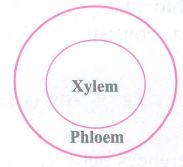
(a) What do you infer from this diagram? Identify it.
(b) Classify the type.
(c) Give an example
91.
An organic compound A' of molecular formula C2H6O on oxidation with dilute alkaline KMnO4 solution gives an acid 'B' with the same number of carbon atoms. Compound A' is often used for sterilization of skin by doctors. Name the compound. Write the chemical equation involved in the formation of 'B' from A.
92.
Which is important - Hardware or Software?
93.
If you are an artist, which computer applications will be relevant for you?
94.
What would happen if the parathyroid gland was removed?
95.
Some situations in our day to day life require quick response from our body. Illustrate the sentence with the help of common example.
96.
Why does a metal bar appear hotter than a wooden bar at the same temperature? Equivalently it also appears cooler than wooden bar if they are both colder than room temperature.
97.
Can an electron be obtained (or come out) from the nucleus?
98.
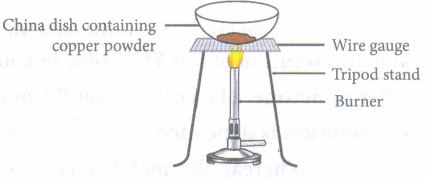
Study the given diagram and answer the following questions:
(a) Write the chemical reaction involved in the process.
(b) Mention the colour of:
i) Copper powder and
ii) the substance formed after heating it.
c) How can we reverse the above reaction? Write the equation for the reverse reaction and state the substance that undergoes oxidation and the substance the undergoes reduction.
99.
Air pressure in car tyre increases during driving explain.
100.
A convex lens of refractive in μ1 is kept in a medium of refractive index (μ2). A parallel beam of light is incident on the lens. Draw the path of the rays of light emerging from a lens. If
(a) μ1 > μ2
(b) μ1 = μ2
(c) μ1 < μ2
101.
A house wife churned full cream with a milk churner
i) What will she observe after churning the milk?
ii) What could be the possible reason for the observation?
102.
i) The solubility of sodium chloride in water increases with rise in temperature while that of lithium carbonate decreases. Assign reason.
ii) Water containing 88-8% oxygen and 11-2% hydrogen is often used as a fire extinguisher. Can a mixture containing the two gases in the same ratio by mass be used for extinguishing fire?
iii) The melting point of a solid when determined experimentally comes out to be 160°C. But its actual melting point as given in standard books is 150°C. Predict the nature of the solid.
103.
Explain why sound travels faster in warm air than cool air?
104.
What is the difference between wave velocity and particle velocity?
105.
What does cause the rolling sound of thunder?
106.
Why does a leech die if you put some salt on it?
107.
V-I graphs for the two wires A and B are shown in the figure. If we connect both the wires one by one to the same battery, which of the two will produce more heat per unit time? Give justification for your answer.
108.
Two metallic wires A and B of same material are connected in parallel. Wire A has length 1 and radius r and wire B has length 2l and radius 2r. Compute the ratio of the total resistance of parallel combination and the resistance of wire A.
109.
Two metallic wires A and B are connected in series. Wire A has length l and radius r, while wire B has length 2l and radius 2r. Find the ratio of the total resistance of series combination and the resistance of wire A, if both the wires are of same material.
110.
(a) An element shows variable valencies 4 and 6. Write the formulae of its two oxides.
(b) An element forms an oxide A2O5.
(i) What is the valency of the element A?
(ii) What will be the formula of the chloride of the element?
1.
(i) Photosynthesis.
(ii) Storage of starch.
(iii) Synthesis of fatty acids.
(iv) Storage of lipids.
(v) Formation of chloroplasts.
2.
(i) Pigments.
(ii) Leaf age.
(iii) Accumulation of carbohydrates.
(iv) Hormones.
3.
In a dicot stem endodermis is the inner most layer of cortex. It consists of a single layer of barrel shaped cells, which contain starch grains and is called starch sheath.
4.
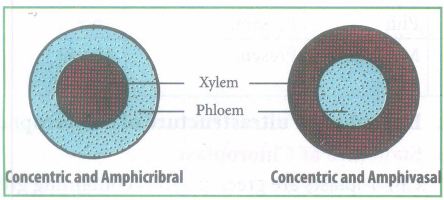
5.
(i) Hydropower plants converts the kinetic energy of flowing water into electricity.
(ii) Electricity produced by hydropower plants is called hydroelectricity.
6.
(i) Tidal energy does not produce any pollution.
(ii) It does not use any fuel and does not produce any waste.
(iii) Tides are predictable, so tidal energy can be produced at any time.
(iv) water is denser than air and therefore can generate electricity at lower speeds than wind turbines.
7.
(i) Electronic devices: Computers, laptops, mobile phones, printers, monitors, televisions, DVD players, calculators, toys, sport equipments.
(ii) Household electrical appliances: Refrigerators, Washing machine, Microwave oven, mixer grinder, water heater.
(iii) Accessories: Printing cartridges, batteries and chargers
8.
(i) Shale drilling could affect groundwater reserves, which can contaminate the drinking water resources and also affect the fertility of the soil.
(ii) Million gallons of water is needed to break and release the shale gas, which in turn can affect the water table.
(iii) It would provide greater initiative to local people who could assess their needs and resources and plan usage
9.
(i) It is used as fuel for cooking
(ii) It is used to run motors and pump sets
(iii) It is used to generate electricity
10.
No. It is important for all of us to eat our timely meals but we should eat low calorie diet rich in proteins If we are obese. Including a lot of salads, fresh fruits and vegetables will help to reduce weight. Sita can also go for physical exercise to reduce her weight.
11.
The Child Helpline provides a social worker who can assist the child by providing food, shelter and protection.
12.
Symptoms: Diabetes mellitus is associated with several metabolic alterations. The most important symptoms are.
(i) Increased blood glucose level (Hyperglycemia)
(ii) Increased urine output (Polyuria) leading to dehydration.
(iii) Loss of water leads to thirst (Polydipsia) resulting in increased fluid intake.
(iv) Excessive glucose excreted in urine (Glycosuria).
(v) Excess hunger (Polyphagia) due to loss of glucose in urine.
(vi) Fatigue and loss of weight.
13.
Prolonged use of alcohol depresses the nervous system, by acting as a sedative and analgesic substance. Some of the harmful effects are:
(i) Nerve cell damage resulting in various mental and physical disturbances.
(ii) Lack of co-ordination of body organs.
(iii) Blurred or reduced vision, results in road accidents.
(iv) Dilation of blood vessels which may affect functioning of the heart.
(v) Liver damage resulting in fatty liver which leads to Cirrhosis and formation of fibrous tissues.
(vi) Body loses its control and consciousness eventually leading to health complications and ultimately to death.
14.
Behavioural Changes:
Adverse effects among adolescents are:
(i) Drop in academic performance, absence from school or college.
(ii) Lack of interest in personal hygiene, isolation, depression, fatigue and aggressive behaviour.
(iii) Deteriorating relationship with family and friends.
(iv) Change in food and sleeping habits.
(v) Fluctuation in body weight and appetite.
15.
(i) Triticale is the first man - made cereal hybrid.
(ii) It is obtained by crossing wheat (Triticum durum, 2n = 28) and rye (Secale cereal, 2n = 14). The F hybrid is sterile (2n = 21).
(iii) Then the chromosome number is doubled using colchicine and it becomes a hexaploid Triticale (2n = 42).
(iv) The cycle of crop raising and selection continues till the plants with the desired characters are finally obtained. The development of new varieties is a long drawn process.
(v) Two main aspects of hybridization are to combine the characters of two plants in one plant and to utilize hybrid vigour.
(vi) Triticale has high dietary fiber and protein.
16.
|
S.No |
Embryonic stem cells |
Adult stem cell/ Somatic stem cells |
|---|---|---|
| (i) | They can be extracted and cultured from early embryos and are derived from inner cell mass of the blastocyst. | They are found in the newborn and adults. |
| (ii) | They can be developed into any cell in the body. | They have the ability to divide and give rise the specific cell types. |
17.
Methods of selection:
There are three methods of selection. They are
(i) Mass selection
(ii) Pureline selection
(iii) Clonal selection.
18.
Mutation is defined as the sudden heritable change in the nucleotide sequence of DNA in an organism. It is a process by which genetic variations are created which in turn brings about changes in the organism.
19.
(i) IR-8 (Miracle rice) is a high-yielding semi-dwarf rice variety developed by International Rice Research Institute (IRRI), Philippines.
(ii) It was a hybrid of a high yielding rice variety Peta from Indonesia, and a dwarf variety from China, named Dee-geo-woogen (DGWG).
20.
Note Pad: It can be used to type notes, edit it and save it as a file.
Paint App: Paint app can be used to used to draw and edit pictures.
21.
Ketones
(i) It is used as solvent
(ii) Stain remover
22.
Aldehydes
(i) Formaldehyde is used as a disinfectant
(ii) Raw materials for synthetic materials
23.
Abscisic acid (ABA)is a growth inhibitor which regulates abscission and dormancy. It increases tolerance of plants to various kinds of stress. So, it is also called as stress hormone. It is found in the chloroplast of plants.
24.
Adrenal Medulla:
The adrenal medulla is composed of chromaffin cells. They are richly supplied with sympathetic and parasympathetic nerves.
Hormones of adrenal medulla: It secretes two hormones namely
a. Epinephrine (Adrenaline)
b. Norepinephrine (Noradrenaline)
They are together called as "Emergency hormones". It is produced during conditions of stress and emotion. Hence it is also referred as "flight, fright and fight hormone".
Functions of adrenal medullary hormones:
(i) It promotes the conversion of glycogen to glucose in liver and muscles.
(ii) It increases heart beat and blood pressure.
(iii) It increases the rate of respiration by dilation of bronchi and trachea.
(iv) It causes dilation of the pupil in eye.
(v) It decreases blood flow through the skin.
25.
(i) Ethylene promotes the ripening of fruits.
Eg : Tomato, Apple, Mango,Banana, etc.
(ii) Ethylene inhibits the elongation of stem and root in dicots.
(ii) Ethylene hastens the senescence of leaves and flowers.
(iv) Ethylene stimulates formation of abscission zone in leaves, flowers and fruits. This leads to premature shedding.
(v) Ethylene breaks the dormancy of buds, seeds and storage organs.
26.
Molasses is a dark coloured syrupy liquid left after the crystallization of sugar from the concentrated sugarcane juice
27.
Cyclobutane - Alicyclic compound.
28.
Types of variations:
(i) Somatic variation: These are the variations which affect the body (somatic) cells of the organisms. They are not heritable. They occur due to environmental factors.
(ii) Germinal variation: These variations are produced in germ cells of an organism. They are inherited. They may be present in ancestors or may occur suddenly.
They are classified into two types:
i) Continuous variation
ii) Discontinuous variation
Continuous variation :
(i) These are small variations which occur among individuals of a population. They are also called as Fluctuating variations.
(ii) They occur by gradual accumulation in a population. E.g: skin colour, height and weight of an individual, colour of eye, etc.
Discontinuous variation:
(i) These are sudden changes which occur in an organism due to mutations. They do not have any intermediate forms.
(ii) These large variations are not useful for evolution. E.g: short legged Ancon Sheep, six or more digits (fingers) in human, etc.
(iii) Discontinuous variation form the basis for Mutation theory proposed by De Vries.
29.
The Geological time scale is a system of chronological dating that relates geological rock strata to time, and is used by geologists, paleontologists, and other Earth scientists to describe the timing and relationships of events that have occurred during Earth's history.
30.
(i) Astrobiology / Exobiology is the science which looks for the presence of extra terrestrial life in the universe.
(ii) Astrobiology deals with the on, evolution and distribution of life in the universe and to investigate the possibility of life in other world.
31.
Vermiform appendix, Nictitating membrane, Caudal Vertebra and Coccyx.
32.
(i) According to this theory life originated spontaneously from lifeless matter.
(ii) It was believed that fishes originated from mud, frogs from moist soil and insects from decaying matter.
33.
Electroencephalogram (EEG) is an instrument which records the electrical impulses of brain. An EEG can detect abnormalities in the brain waves and help in diagnoses of seizures, epilepsy, brain tumors, head injuries, etc.
34.
Frontal lobe, parietal lobe, temporal lobe and occipital lobe.
35.
Neurotransmitters are the chemicals which allow the transmission of nerve impulse from the axon terminal of one neuron to the dendron of another neuron or to an effector organ. eg. Acetylholine.
36.
A neuron typically consists of three basic parts: cyton, dendrites and axon.
37.
The reaction that cannot be reversed is called irreversible reaction.
38.
The product of the concentration of hydronium ion and hydroxyl ion is called 'Ionic product of water'. It is denoted as 'Kw' It is mathematically expressed as follows:
Kw = [Hp+] [OH-]
39.
A catalyst is a substance which increase reaction rate without being consumed in the reaction.
40.
Liquefied Petroleum Gas is a mixture of hydrocarbon gases like propane, butane, propylene etc..
41.
The process in which two lighter nuclei combine to form a heavier nucleus is termed as "nuclear fusion".
Eg: 1H2 + 1H2- 2He4 + Q (Energy)
Here, 1H2 represents an isotope of hydrogen known as "deuterium". The average energy released in each fusion reaction is about 3.84 x 10⁻¹²J.
42.
Escape of neutrons during nuclear fission process from the system is called leakage of neutrons.
43.
Curie is the traditional unit of radio activity. It is defined as the quantity of a radioactive substance which undergoes 3.7 x 10¹⁰ disintegrations in one second. This is actually close to the activity of 1 g of Radium226".
1 curie = 3.7 x 10¹⁰disintegrations per second.
44.
It is called real volume expansion.
45.
(i) When the pressure of gas is kept constant, E the volume of a gas is directly proportional to the temperature of the gas".
(ii) Charles's law: V α T (or) \(\frac{V}{T}\)=constant
46.
When heat energy is supplied to an object, there can be an increase in the dimension of the system. This change in the dimension due to rise in temperature is called thermal expansion of the object.
47.
One joule is defined as the work done when a force of 1N is applied on an object to produce a displacement of one metre.
48.
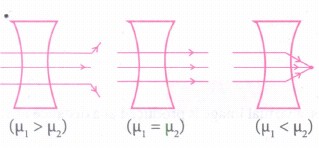
49.
(i) Conc. Sulphuric acid (H2SO4),
(ii) Phosphorus Pentoxide (P2O5).
(iii) Quick lime (CaO).
(iv) Silica gel (SiO2)
(v) Anhydrous calcium chloride (CaCI2)
50.
Two solutes are dissolved in one solvent. Such kind of solutions which contain three components are called trinary solutions.
51.
| Solute | Solvent | Example | |
|---|---|---|---|
| (i) | Gas | Liquid | Soda water (carbon-dioxide dissolved in water) |
| (ii) | Liquid | Liquid | Ethyl alcohol dissolved in water |
52.
(i) This is the thin and transparent layer on the front surface of the eyeball. It is the main refracting surface.
(ii) When light enters through the cornea, it refracts or bends the light on to the lens.
53.
(i) Mie scattering takes place when the diameter of the scatterer is similar to or larger than the wavelength of the incident light. It is also an elastic scattering. The amount of scattering is independent of wave length.
(ii) Mie scattering is caused by pollen, dust, smoke, water droplets, and other particles in the lower portion of the atmosphere.
54.
(i) Tiny water droplets are formed in the atmosphere due to rainfall. The rainbow is formed when sun light falling on these tiny water droplets undergoes dispersion.
(ii) When the sun light is incident on them, it is first refracted and dispersed at the front surface. When the refracted light falls on the back surface of the water droplet, it undergoes total internal reflection.
(iii) This reflected beam of coloured lights are refracted at the front surface of the water droplet. Thus, the rainbows can always be seen opposite to the sun.
55.
Loudness of sound depends upon the intensity (I) of sound. The intensity of sound, in turn depends on the amplitude of the sound wave.
56.
(i) The speed of sound is directly proportional to the square root of the elastic modulus and inversely proportional to the square root of the density.
(ii) Thus, velocity of sound in solids decreases as the density increases whereas the velocity of sound increases when the elasticity of the material increases.
57.
Galvanization is the process of coating zinc on iron sheets by using electric current
58.
(i) Household utensils
(ii) Electrical cable industry
(iii) Aeroplanes and other industrial parts
59.
(i) It is a genetic condition in which there is an extra copy of chromosome 21 (Trisomy 21).
(ii) Mental retardation, delayed development, behavioural problems, weak muscle tone, vision and hearing disability are some of the conditions seen in these children.
60.
| Characteristic studied | Dominant character | Recessive character |
|---|---|---|
| Seed shape | Round | Wrinkled |
| Seed colour | Yellow | Green |
| Seed-coat colour | Coloured | White |
61.
During Replication of DNA:
(i) In one strand, the daughter strand is synthesized as a continuous strand which is called leading strand.
(ii) In the other strand, short segments of DNA are synthesized. This strand is called lagging strand. The short segment of DNA are called Okazaki fragments.
62.
The law of segregation states that "When a pair of contrasting factors or genes or allelomorphs are brought together in a heterozygote or hybrid, the two members of the allelic pair remain together without mixing and when gametes are formed, the two separate out, so that only one enters each gamete".
63.
(i) Some chromosomes possess secondary constriction at any point of the chromosome.
(ii) They are known as the nuclear zone or nucleolar organizer (formation of nucleolus in the nucleus).
64.
The difference in the densities or specific gravities of the ore and gangue is the main principle behind this method.
65.
Down the group, atomic size increases and hence the valence electrons are loosely bound. They require relatively less energy for the removal. Thus ionisation energy decreases down the group in periodic table
66.
It is defined as half the distance between nuclei of adjacent metal atoms.
67.
Post fertilization changes:
(i) The ovule develops into a seed.
(ii) The integuments of the ovule develop into the seed coat.
(iii) The ovary enlarges and develops into a fruit.
The seed contains the future plant or embryo which develops into a seedling under appropriate conditions.
68.
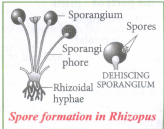
69.
Cross-pollination is the transfer of pollen from the anther of a flower to the stigma of a flower on another plant of the same species. e.g. apples, grapes, plum, etc.
70.
The cyclic events that take place in a rhythmic fashion during the reproductive period of a woman's life is called menstrual cycle.
71.
The transformation of blastula into gastrula and the formation of primary germ layers (ectoderm, mesoderm and endoderm) by rearrangement of the cells is called gastrulation. This takes place after the process of implantation.
72.
(a) One setup demonstrates osmosis
i) Parchment paper
(semipermeable membrane)
ii) Sugar solution.
73.
(i) A stethoscope is used to detect the sound produced by the internal organs of human body.
(ii) The heart sound is heard by placing the stethoscope on the chest.
(iii) It is useful diagnostic tool to identify and localize health problems and diagnose disease.
(iv) The modern electronic stethoscopes are high precisioned instruments.
74.
Animals posses two types of circulatory system. They are.
i. Open type
ii. Closed type
(i) Open type : In open type the blood is pumped by heart into blood vessels that open into blood spaces called as sinuses. These sinuses are the body cavities which are called haemoceol. Capillary system is absent. E.g: Arthropods, Molluscs and Ascidians.
(ii) Closed type In closed type the blood flows in a complete circuit around the body through specific blood vessels. The blood flows from arteries to veins through small blood vessels called capillaries. E.g: Vertebrates
75.
It occurs when water moves out of the cell and resulting in the shrinkage of cell membrane awayfrom the cell wall
76.
|
Blood |
Lymph |
|
|---|---|---|
| (a) | Blood is red in colour | Lymph is colorless |
| (b) | Blood contains plasma, RBC, WBC and Platelets | Lymph contains plasma and WBC with lesser nutrients and oxygen than blood. |
| (c) | Blood flows through veins, capillaries, arteries | Lymph is found in the space between cells and blood capillaries and lows, through lymphatic capillaries. |
77.
Apparent weight is the weight of the object acquired due to action of gravity and other external forces on the mass.
78.
(i) T be the current flowing through a resistor of resistance 'R' and 'V' be the potential difference across the resistor. The charge flowing through the circuit for a time interval 't' is 'Q':
(ii) The work done in moving the charge Q across the ends of the resistor with a potential difference of V is VQ. This energy spent by the source gets dissipated in the resistor as heat. Thus, the heat produced in the resistor is:
H = W = VQ
(iii) You know that the relation between the charge and current is Q = I t. Using this, you get
H = V I t ------------------------ (A)
From Ohm's Law, V = I R. Hence, you have
H = I2 R t ------------------------ (B)
This is known as Joule's law of heating.
79.
Resistance of an ammeter should be low because almost all the current in the circuit is allowed to pass through ammeter.
80.
(i) If a force acting on a body of mass. 1 gram produces an acceleration of 1 cm s-2, then the force is said to be 1 dyne.
(ii) 1 dyne = 1g cm s-2, 1N = 105 dyne
81.
(i) By convention, direction of moment of a force or couple is taken as positive if the object is rotated in anti-clockwise direction.
(ii) It is negative if it rotates the object in clock wise direction.
82.
| S. No | Balanced Force | Unbalanced force |
| (i) | If the resultant force of all the forces acting on a body is equal to zero, then the body will be in equilibrium. Such forces are called balanced forces. | If the resultant force is not equal to zero then it causes the motion of the body due to unbalanced forces. |
| (ii) | Eg : Force applied with a crowbar | Eg : Forces on a weight balance |
83.
(i) According to Aristotle, A moving object naturally comes to rest without any external influence or force. Such motions are termed as "natural motion".
(ii) Natural motion is an unforced motion. According to Newtonian mechanics, the natural motion is a uniform rectilinear motion, following its first law of motion. In general relatively, a natural motion may be linear or curved.
84.
Isotopes are the atoms of same elements with same atomic number but different mass number
(17Cl35, 17Cl37)
85.
If a molecule contains mote than two atoms, then it is called polyatomic molecule.
86.
The molecules that consists of atoms of different elements are called heteroatomic molecule.
Examples: HCl, H2O
87.
Atomic mass unit is one - twelfth of mass of carbon - 12 atom, an isotope of carbon which contains 6 protons and 6 neutrons.
88.
(i) Teeth are hard bone-like structures used to cut, tear and grind the food materials. The rabbit has two sets of teeth in its life time. The existence of two sets of teeth in the life of an animal is called diphyodont dentition
(ii) In rabbit the teeth are of different types. Hence, the dentition is called heterodont. There are four kinds of teeth in mammals viz. the incisors (I), Canines (C), Premolars (PM) and Molars (M). This is expressed in the form of a dental formula.
(iii) Dental formula is the simple method of representing the teeth of a mammal. The number of each kind of tooth in the upper and the lower jaws on one side is counted
(iv) In rabbit, the dental formula is \(\left( 1\cfrac { 2 }{ 1 } ,C\cfrac { 0 }{ 0 } ,PM\cfrac { 3 }{ 2 } ,M\cfrac { 3 }{ 3 } \right) \) which is written as \(\cfrac { 2033 }{ 1023 } \) Canines are absent.
(v) The gap between the incisors and premolar is called diastema. It helps in mastication and chewing of food - in herbivorous animals.
89.
(i) Respiration takes place by a pair of lungs, which are light spongy tissues enclosed in the thoracic cavity.
(ii) Each lung is enclosed by a double membranous pleura.
(iii) Atmospheric air passes through the external nostril and nasal passages into the pharynx. From the pharynx it passes through the glottis into the wind pipe.
(iv) The anterior part of the wind pipe is enlarged to form the larynx or voice box with its wall supported by four cartilaginous plates. Inside the larynx lies the vocal cord and its vibrations result in the production of sound.
(v) The larynx leads into trachea or wind pipe. Tracheal walls are supported by rings of cartilage which help in the free passage of air.
(vi) The epiglottis prevents the entry of food into the trachea through the glottis.
(vii) The trachea divides into two branches called the bronchi one entering into each lung and dividing into further branches called bronchioles which end in alveoli.
90.
a) It is a vascular bundle.
b) It is a concentric bundle in which phloem completely surrounds the xylem such a type is described as amphicribral.
c) This is seen in ferns.
91.
The compound 'B' should contain a - COOH group as it is an acid. Since it has only two carbon atoms, the other carbon atom must represent CH3 group. Thus, compound 'B' is ethanoic acid (CH3COOH). The compound A used for the sterilization of skin by doctors is ethanol C2H5OH (C2H6O). The chemical reaction involved in the oxidation by dilute alkaline KMnO4 solution also called Baeyer's reagent is :

92.
Both are integral part of the computer and dependent to each other
93.
If I were an artist, I would be using Paint application to draw images.
94.
Removal of parathyroid glands during thyroidectomy (removal of thyroid) causes decreased secretion of parathormone, The conditions are
(i) Muscle spasm known as Tetany.
(ii) Painful cramps of the limb muscles.
95.
Sudden quick action in response to something occurring in environment is known as reflex action.
(i) Reflex action is a rapid, automatic response to a stimulus, which is not under the voluntary control of the brain, i.e. it is an involuntary action.
(ii) It is a simple form of behaviour in which the same stimulus produces the same response every time, e.g.
(i) if we unknowingly touch a hot plate, we immediately move our hand away from it.
(ii) moving our foot away on stepping something sharp.
96.
Due to difference in conductivity, metals having height conductivity compared to wood. On touch with a finger, heat from the surrounding flows faster to the finger from metals and so one feels the heat. Similarly, when one touches a cold metal the heat from the finger flows away to the surroundings faster.
97.
Yes, electron having energy higher than the ordinary atomic electron may come out of the nucleus due to beta decay process. A negative beta is identical to an electron in all respect except with difference in kinetic energy.
98.
(a) Copper powder upon heating reacts with oxygen (present in air) to form cupric oxide or copper (II) oxide.
.JPG)
(b)i) Copper powder is brownish in colour.
ii) The substance formed after heating is cupric oxide. It has black colour.
(c) The reaction can be reversed by heating cupric oxide in a current of hydrogen.
CuO(s) + H2(g) ➝ Cu (s) + H2O(g).
In this reaction, H2 undergoes oxidation to H2O and CuO is reduced to Cu.
99.
During driving temperature of the gas increases while its volume remains constant. So according to Charles's law at constant V, P α T. ∴ Pressure of gas increases.
100.
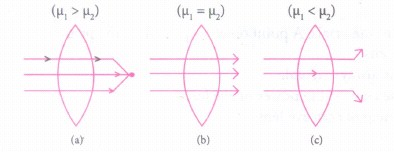
101.
i) Churning of milk is a centrifugation process. As a result, lighter particles of cream or butter will move upwards and collect at the top. Heavier residual particles will remain at the bottom. This is a very common process used to separate cream from milk or butter from yogurt.
ii) The separation is based on the principle that lighter particles move upwards while denser particle downwards upon centrifugation.
102.
i) When sodium chloride is dissolved in water, the process is endothermic in nature. This means that heat energy is absorbed in the process. Therefore, solubility increase with rise in the temperature. Incase of lithium carbonate, the process of dissolution is exothermic. This means that heat is evolved in the process. Therefore, its solubility in water decreases with rise in temperature.
ii) No, it cannot be used. Actually, in water the two elements are chemically combined with each other. They therefore, lose their identity. But in the mixture, no chemical combination between hydrogen and oxygen has taken place. Even water cannot be formed on mixing the gases. Therefore, the mixture does not extinguish any fire.
iii) Since the experimentally determined melting point of the solid is more than the standard value of the melting point, this means that the solid is not in pure state. It has some impurities present. Please note that the purity of a solid can be determined by finding its melting point and comparing it with the standard value.
103.
Velocity of sound is directly proportional to the square root of temperature of the air.
\(v\alpha \sqrt { T } \)
As the temperature of the warm air is more than that of cool air so, sound travels faster in warm air.
104.
|
Wave Velocity |
Particle Velocity |
|---|---|
| The wave velocity is constant for a given medium. | The particle velocity changes with time. i.e. It is maximum at the mean position and zeroes at the extreme position. |
105.
The sudden increase in pressure and temperature from lightning produces rapid expansion of the air surrounding and within a bolt of lightning. In turn, this expansion of air creates a sonic shock wave, similar to a sonic boom, which produces the sound of thunder.
106.
The skin of leeches is permeable. If salt is added, it creates an osmotic pressure. Water is pulled out from the body of leeches. It can lead to dehydration. Thus leeches immediately fall off when salt is applied.
107.
Heat produced per unit time = V^2/R
Now slope of V-I graph = R (resistance of wire).
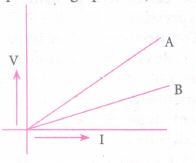
Since slope of V-I graph for wire A is greater than the slope of V-I graph for wire B, therefore, resistance of wire A is greater than the resistance of wire B, Hence, more heat will be produced per unit time in wire B than in wire A.
108.
Resistance of wire A, \({ R }_{ 1 }=\frac { \rho l }{ A } =\frac { \rho l }{ { \pi r }^{ 2 } } \)
Resistance of wire B, \({ R }_{ 2 }=\frac { \rho l' }{ A' } \)
\(=\frac { \rho \times 2l }{ \pi { (2r) }^{ 2 } } =\frac { \rho l }{ 2\pi { r }^{ 2 } } \)
Total resistance of the series combination, \(\frac { 1 }{ R } =\frac { 1 }{ { R }_{ 1 } } +\frac { 1 }{ { R }_{ 2 } } \)
or \(\frac { 1 }{ R } =\frac { \pi { r }^{ 2 } }{ \rho l } +\frac { 2\pi { r }^{ 2 } }{ \rho l } \)
\(=\frac { 3\pi { r }^{ 2 } }{ \rho l } \)
\(R=\frac { \rho l }{ 3\pi { r }^{ 2 } } \)
\(\therefore \frac { R }{ { R }_{ 1 } } =\frac { \rho l }{ 3\pi { r }^{ 2 } } \times \frac { \pi { r }^{ 2 } }{ \rho l } \)
\(=\frac { 1 }{ 3 } \)
109.
Resistance of wire A, \({ R }_{ 1 }=\frac { \rho l }{ A } =\frac { \rho l }{ { \pi r }^{ 2 } } \)
Resistance of wire B, \({ R }_{ 2 }=\frac { \rho l' }{ A' } \)
\(=\frac { \rho \times 2l }{ \pi { (2r) }^{ 2 } } =\frac { \rho l }{ 2\pi { r }^{ 2 } } \)
Total resistance of the series combination, R = R1 + R2
or \(R=\frac { \rho l }{ { \pi r }^{ 2 } } +\frac { \rho l }{ { 2\pi r }^{ 2 } } \)
\(\\ =\frac { 3\rho l }{ { 2\pi r }^{ 2 } } \)
\(\therefore \frac { R }{ { R }_{ 1 } } =\frac { 3\rho l }{ { 2\pi r }^{ 2 } } \times \frac { { \pi r }^{ 2 } }{ \rho l } \)
\(=\frac { 3 }{ 2 } \)
110.
a) Let the element be represented by the symbol E.
Formula of oxide in which valency of E is 4 = E2O4 or EO2
Formula of oxide in which valency of E is 6 = E2O6 or EO3
(b) Formula of oxide of the element = A2O5
(i) The valency of the element A in the oxide = 5+.
(ii) The formula of the chloride of the element A = ACI5

10th Standard Syllabus & Materials
10th Standard
TN 10th English Prose - 2 - The Night the Ghost Got in Important Questions And Answers Study Material - QB365 Set A
NEW10th Standard
TN 10th English Supplementary - 1 - The Tempest Important Questions And Answers Study Material - QB365 Set A
NEW10th Standard
TN 10th English Poem - 1 - Life Important Questions And Answers Study Material - QB365 Set A
NEW10th Standard
TN 10th English Prose - 1 - His First Flight Important Questions And Answers Study Material - QB365 Set A



Tamilnadu Stateboard 10th Standard Subjects
Tamilnadu Stateboard Standards





