
 100% FREE ACCESS
10th Standard Syllabus & Materials
10th Standard
TN 10th English Prose - 4 - The Attic Important Questions And Answers Study Material - QB365 Set A
NEW10th Standard
TN 10th English Supplementary - 3 - The Story of Mulan Important Questions And Answers Study Material - QB365 Set A
NEW10th Standard
TN 10th English Poem - 3 - I am Every Woman Important Questions And Answers Study Material - QB365 Set A
NEW10th Standard
TN 10th English Prose - 3 - Empowered Women Navigating The World Important Questions And Answers Study Material - QB365 Set A
NEW10th Standard
TN 10th English Supplementary - 2 - Zigzag Important Questions And Answers Study Material - QB365 Set A
NEW10th Standard
TN 10th English Poem - 2 - The Grumble Family Important Questions And Answers Study Material - QB365 Set A

Published on: 12/05/2020
10th Standard Science English Medium Model Question Paper
Download Tamil Nadu 10th Standard Science question papers, model tests, one-mark questions, important questions, and public exam papers in PDF format. Free study materials and answer keys for TN State Board students.
Questions + Answers key
Take MCQ Science Test1.
List the difference between Dicot and Monocot stem.
2.
Write electrical use of the components in electrical circuit.
3.
What is Scratch?
4.
Mention the diseases caused by tobacco smoke.
5.
Give an example each
i) gas in liquid
ii) solid in liquid
iii) solid in solid
iv) gas in gas
6.
How does leech suck blood from the host?
7.
What will be the frequency sound having 0.20 m as its wavelength, when it travels with a speed of 331 m s–1?
8.
Give any two examples for heterodiatomic molecules.
9.
If a 5 N and a 15 N forces are acting opposite to one another. Find the resultant force and the direction of action of the resultant force.
10.
Sanjay is sitting in the exam hall. Before the start of the exam, he sweats a lot, with increased rate of heart beat. Why does this condition occur?
11.
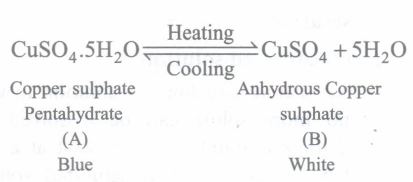
'A' is a blue coloured crystalline salt. On heating it loses blue colour and to give 'B'. When water is added, 'B' gives back to 'A'. Identify A and B, write the equation.
12.
Can a nickel spatula be used to stir copper sulphate solution? Justify your answer.
13.
Name the acid that renders aluminium passive. Why?
14.
Two blocks of masses 8 kg and 2 kg respectively lie on a smooth horizontal surface in contact with one other. They are pushed by a horizontally applied force of 15 N. Calculate the force exerted on the 2 kg mass.
15.
Exarch and tetrarch xylem are a feature of ___________.
dicot stem
dicot leaf
monocot root
dicot root
16.
Each neuron can transmit ______ nerve impulses per second.
10
1000
10,000
1,00,000
17.
Thermal expansion at particular temperature is less in
solid
liquid
gas
all above
18.
The first nuclear reactor was built at _________.
New York
San Francisco
New Jersey
Chicago
19.
Modern periodic table contains ______ groups.
9
32
18
64
20.
According to the Newton's III law of motion, action & reaction
always act on the same body
have same magnitude & direction
always act in opposite directions
act on either body at normal to each other
21.
22.
Biogenetic law states that ___________
Ontogeny and phylogeny go together
Ontogeny recapitulates phylogeny
Phylogeny recapitulates ontogeny
There is no relationship between phylogeny and ontogeny
23.
24.
Deliquescence is due to __________
Strong affinity to water
Less affinity to water
Strong hatred to water
Inertness to water
25.
The volume occupied by 1 mole of a diatomic gas at S.T.P is
11.2 liters
5.6 liters
22.4 liters
44.8 liters
26.
If VB, VG, VR be the velocity of blue, green and red light respectively in a glass prism, then which of the following statement gives the correct relation?
VB = VG = VR
VB > VG >VR
VB < VG < VR
VB < VG > VR
27.
What is diabetes? Explain the types.
28.
Distinguish between Nuclear fission and nuclear fusion.
29.
Explain the Sign Conventions of lenses.
30.
How are chromosomes classified based on the position of centromere?
31.
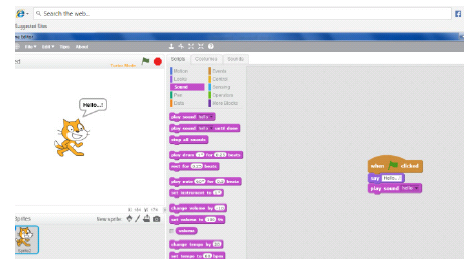
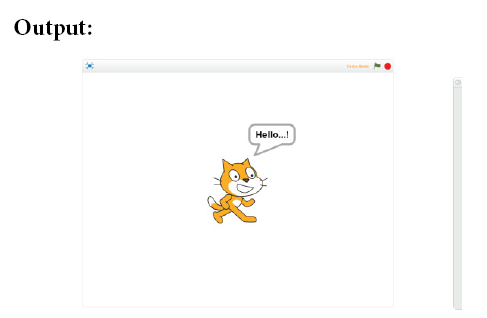
Program for print the word “Hello” with sound
32.
Differentiate between outbreeding and inbreeding.
33.
What is the importance of valves in the heart?
34.
Why is Archaeopteryx considered to be a connecting link?
35.
Calculate the coefficient of cubical expansion of a zinc bar. Whose volume is increased 0.25 m3 from 0.3 m3 due to the change in its temperature of 50 K.
36.
Is hair preserved in fossils?
37.
Biofortification may help in removing hidden hunger. How?
38.
Arrive at, systematically, the IUPAC name of the compound: CH3–CH2–CH2–OH
1.
|
S.No: |
Tissues |
Dicot Stem |
Monocot Stem |
|---|---|---|---|
| i | Hypo dermis | Collenchymatous | Scleren chymatous |
| ii | Ground tissue | Differentiated into cortex, endodermis, pericycle and pith | Un differentiated |
| iii | Vascular bundles | i. Less in number ii. Uniform in size iii. Arranged in a ring iv. Open v. Bundle sheath absent |
i) Numerous ii) Smaller near periphery, bigger in the centre iii) Scattered iv) Closed v) Bundle sheath present |
iv |
Secondary growth | Present | Mostly absent |
| v | Pith | Present | Absent |
| vi | Medullary rays | Present | Absent |
2.
(i) Resistor is used to fix the magnitude of the current through the circuit
(ii) Rheostat is used to fix the magnitude of the current through the circuit
(iii) Ammeter is used to measure the current.
(iv) Voltmeter is used to measure the potential difference.
3.
Scratch is a software used to create animations, cartoons and games easily. Scratch, on the other hand, is a visual programming language. It is developed in the Massachusetts Institute of Technology (MIT). Media Lab to make programming easier and more fun to learn.
4.
Lung cancer, bronchitis and pulmonary tuberculosis, emphysema, Hypoxia, increased blood pressure, gastric and duodenal ulcers.
5.
i) Gas in liquid - CO2 dissolved in water (Soda water)
ii) Solid in liquid - NaCl dissolved in water
iii) Solid in solid - Copper dissolved in gold (Alloys)
iv) Gas in gas - Mixture of Helium-oxygen gases
6.
The Ieech makes a triradiate or 'Y' shaped incision in the skin of the host by the jaws protruded through the mouth and sucks the blood by muscular pharynx.
7.
Given: V = 331 ms-1, λ = 0.20 m, n =?
V = n x λ
331 = n(0.20)
n = \(\frac{331}{0.20}\) = 1655 Hz
8.
Hydrogen chloride (HCl), Hydrogen iodide (HI) are two examples for heterodiatomic molecules.
9.
Let, F1 = 5 N
F2 = 15 N
Fnet = F2 - F1 [∵ F2 > F1]
= 15 - 5 = 10 N
Fnet i.e, the resultant force acts along the direction of the greater force 15 N.
10.
Adrenaline is known to cause physical symptoms that accompany test anxiety such as increased heart rate, sweating, and rapid breathing.
11.
(i) 'A' is copper sulphate pentahydrate (CuSO4.5H2O).
(ii) 'B' is Anhydrous copper sulphate (CuSO4)
12.
(i) No, because Nickel is more reactive than Copper.
(ii) So Nickel easily reacts and displaces copper from copper sulphate solution.
(iii) \(\mathrm{Ni}_{(\mathrm{s})}+\mathrm{CuSO_4}_{(\mathrm{aq})} \rightarrow \mathrm{NiSO_4}_{(\mathrm{aq})}+\mathrm{Cu}_{(\mathrm{S})}\)
13.
(i) Dilute or concentrated nitric acid renders aluminum passive.
(ii) It does not attack aluminium but it forms oxide film on its surface.
14.
Given: Let m1 = 8 kg, m2 =2 kg. F = 15 N
Consider both the masses as a unit system as they will move with common acceleration,
\({\mathrm{F}}_{1}=\mathrm{M_1}a\)
\(F_2=m_2a\)
\(F=F_1+F_2\)
\(=\left(\mathrm{m}_{1} +\mathrm{~m}_{2}\right){a}\)
\(15=(8+2) {a} \)
\(15=10 a \)
\(a=15 / 10=1.5 \mathrm{~ms}^{-2}\)
a = 1.5 ms-2
Let \(\mathrm{F}_{2}\) be the force exerted on 2 kg mass, then
\({\mathrm{F}_{2}}=\mathrm{m_2} {a} \)
\({\mathrm{F}_{2}}=2 \times 1.5=3 \mathrm{~N}\)
So, the force exerted on 2 kg mass is 3 N.
15.
(d)
dicot root
16.
(b)
1000
17.
(a)
solid
18.
(d)
Chicago
19.
(c)
18
20.
(c)
always act in opposite directions
21.
(a)
22.
(b)
Ontogeny recapitulates phylogeny
23.
(d)
24.
(a)
Strong affinity to water
25.
(c)
22.4 liters
26.
(c)
VB < VG < VR
27.
Diabetes Mellitus is a chronic metabolic disorder. It is characterized by increased blood glucose level due to insufficient, deficient or failure of insulin secretion. This is the most common pancreatic endocrine disorder.
Type I Insulin dependent diabetes mellitus (IDDM):
(i) IDDM accounts for 10 to 20% of the known diabetics.
(ii) The condition also occurs in children (Juvenile onset diabetes) and young adults, the onset is usually sudden and can be life threatening.
(iii) This is caused by the destruction of cells of the pancreas.
(iv) It is characterized by abnormally elevated blood glucose levels (hyperglycemia) resulting from inadequate insulin secretion.
Causes: Genetic inheritance and environmental factors (infections due to virus, acute stress) are the cause for this condition.
Type II Non-Insulin Dependent Diabetes Mellitus (NIDDM):
(i) This is also called as adult onset diabetes and accounting for 80 to 90% of the diabetic population.
(ii) It develops slowly, usually milder and more stable.
(iii) Insulin production by the pancreas is normal but its action is impaired. (iv) The target cells do not respond to insulin.
(v) It does not allow the movement of glucose into cells.
Causes: The causes are multifactorial which include increasing age obesity, sedentary lifestyle, overeating and physically inactive.
28.
| S. No |
Nuclear fission |
Nuclear fusion |
|---|---|---|
| i | The process of breaking (splitting) up of a heavy nucleus into two smaller nuclei is called "nuclear fission". | Nuclear fusion is the combination of two lighter nuclei to form a heavier nucleus. |
| ii | Can be performed at room temperature. | Extreme high temperature and pressure is needed. |
| iii | Alpha, beta and gamma radiations are emitted. | Alpha ray, Positron, and neutrinos are emitted. |
| iv | Fission leads to the emission of gamma radiation. This triggers mutation in the human genes and causes genetic transform diseases. | Only light and heat energy is emitted. No harmful radiation and will not cause any genetic transform diseases. |
| v | Deflected by both the fields; but the direction of deflection is opposite to alpha rays. (in accordance with Fleming's left hand rule). | They are not deflected by both fields. |
29.
(i) The object is always placed on the left side of the lens.
(ii) All the distances are measured from the optical centre of the lens.
(iii) The distances measured in the same direction as that of incident light are taken as positive.
(iv) The distances measured against the direction of incident light are taken as negative. (v) The distances measured upward and perpendicular to the principal axis is taken as positive.
(v) The distances measured downward and perpendicular to the principal axis is taken· as negative.
30.
Based on the position of centromere, the chromosomes are classified as Telocentric, Acrocentric, Submetacentric andMetacentric.
(i) Telocentric - The centromere is found on the proximal end. They are rod shaped chromosomes.
(ii) Acrocentric - The centromere is found at the one end with a short arm and long arm. They are also rod - shaped chromosomes.
(iii) Submetacentric - The centromere is found near the centre of the chromosome. Thus forming two unequal arms. They are J
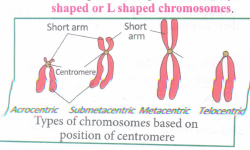
(iv) Metacentric - The centromere occurs in the centre of the chromosome and form two equal arms. They are V shaped chromosomes.
31.
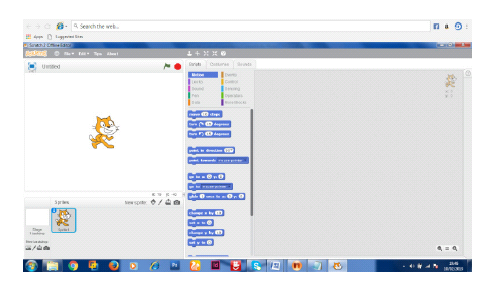
1. Click events in script option
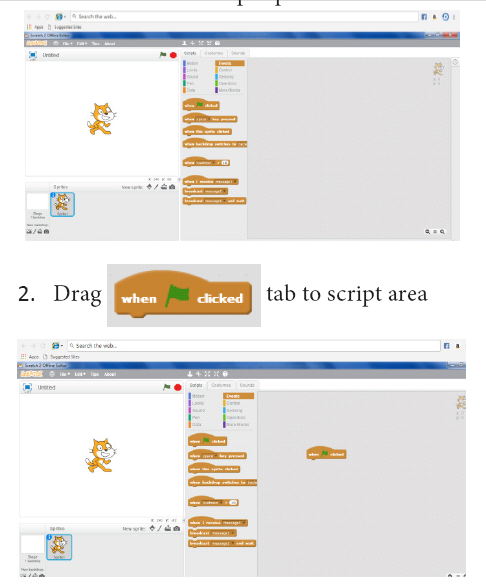
3. Click Looks in script option. Drag “say” to script area.
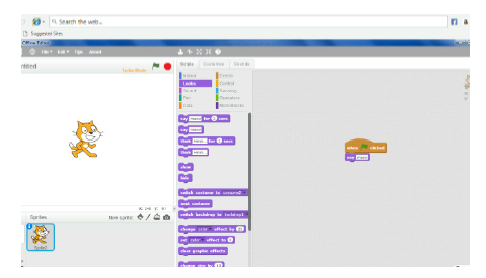
4. Type “Hello “ word in say tab.
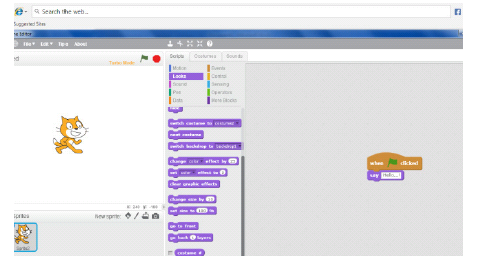
5.Click sounds in script option. Drag play sound to script area. Choose the hello sound from the audio file.
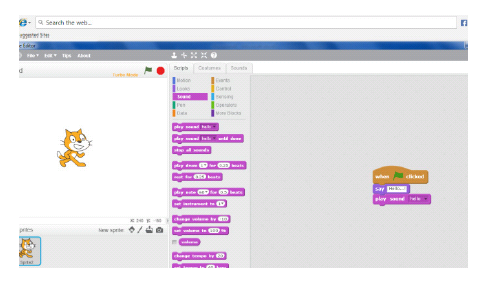
6. From File menu choose the Save option.
7. Click the green flag at the top right corner of the stage window to run the program
32.
| S.No. |
Outbreeding |
Inbreeding |
|---|---|---|
| i. | Cross between two different species (unrelated) with desirable features of economic value are mated. | Mating of closely related animals within the same breed for about 4 - 6 generations. |
| ii. | It is the breeding of unrelated animals. The offsprings formed are called hybrids. | Superior males and superior females of the same breed are identified and mated in pairs. |
| iii. | The hybrids are stronger and vigorous than their parents. E.g: Mule | It helps in the accumulation of superior genes and elimination of genes which are undesirable. E.g: Hisardale. |
33.
Valves are the muscular flaps that regulate the flow of blood in a single direction and prevent back flow of blood.
34.
(i) Archaeopteryx is considered to be a connecting link between reptiles and birds.
(ii) It had wings with feathers like a bird. It has long tail, clawed digits and conical teeth like a reptile.
35.
Change in volume \((\Delta V)=0.3-0.25 =0.05\mathrm{~m}^{3}\)
Original volume \(\left(V_{0}\right)=0.3 \mathrm{~m}^{3}\)
Change in Temperature \(\Delta \mathrm{T}=50 \mathrm{~K}\)
\(a_{\mathrm{V}} =? \)
\(\frac{\Delta V}{V_{0}} =a_{\mathrm{V}} \Delta \mathrm{T}\)
\(a_{\mathrm{V}} =\frac{0.05}{0.3 \times 50}=\frac{0.05}{15}=0.0033 \mathrm{~K}^{-1}\)
Co-efficient of cubical expansion of Zinc bar 0.0033
36.
(i) When people hear the word fossil, they probably think of gigantic leg bones and sharp teeth.
(ii) But, in appropriate conditions, after an animal dies even delicate body coverings like skin, hair and feathers can be preserved.
(iii) When it comes to preserving body parts, fossilized hair is rare.
37.
(i) Biofortification is the scientific process of developing crop plants enriched with high levels of desirable nutrients like vitamins, proteins and minerals.
(ii) Production of Bio fortification crops help in removing hidden hunger.
Examples:
(i) Protina, Shakti and Rathna are lysine rich maize hybrids (developed in India).
(ii) Atlas 66, a protein rich wheat variety.
(iii) Iron rich fortified rice variety.
(iv) Vitamin A enriched carrots, pumpkin and spinach.
(v) So in this way, Biofortification may help in removing hidden hunger.
38.
Step 1: The parent chain consists of 3 carbon atoms. The root word is 'Prop'.
Step 2: There are single bonds between the carbon atoms of the chain. So, the primary suffix is 'ane'
Step 3: Since, the compound contains - OH group, it is an alcohol. The carbon chain is numbered from the end which is closest to -OH group. (Rule 3)
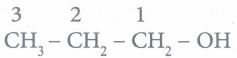
Step 4: The locant number of –OH group is 1 and thus the secondary suffix is ‘1-ol’.
The name of the compound is Prop + ane + (1-ol) = Propan-1-ol
Note: Terminal ‘e’ of ‘ane’ is removed as per Rule 5

10th Standard Syllabus & Materials
10th Standard
TN 10th English Prose - 2 - The Night the Ghost Got in Important Questions And Answers Study Material - QB365 Set A
NEW10th Standard
TN 10th English Supplementary - 1 - The Tempest Important Questions And Answers Study Material - QB365 Set A
NEW10th Standard
TN 10th English Poem - 1 - Life Important Questions And Answers Study Material - QB365 Set A
NEW10th Standard
TN 10th English Prose - 1 - His First Flight Important Questions And Answers Study Material - QB365 Set A



Tamilnadu Stateboard 10th Standard Subjects
Tamilnadu Stateboard Standards





