
 100% FREE ACCESS
10th Standard Syllabus & Materials
10th Standard
TN 10th English Prose - 4 - The Attic Important Questions And Answers Study Material - QB365 Set A
NEW10th Standard
TN 10th English Supplementary - 3 - The Story of Mulan Important Questions And Answers Study Material - QB365 Set A
NEW10th Standard
TN 10th English Poem - 3 - I am Every Woman Important Questions And Answers Study Material - QB365 Set A
NEW10th Standard
TN 10th English Prose - 3 - Empowered Women Navigating The World Important Questions And Answers Study Material - QB365 Set A
NEW10th Standard
TN 10th English Supplementary - 2 - Zigzag Important Questions And Answers Study Material - QB365 Set A
NEW10th Standard
TN 10th English Poem - 2 - The Grumble Family Important Questions And Answers Study Material - QB365 Set A

Published on: 29/10/2019
Download Tamil Nadu 10th Standard Science question papers, model tests, one-mark questions, important questions, and public exam papers in PDF format. Free study materials and answer keys for TN State Board students.
Questions + Answers key
Take MCQ Science Test1.
Mammals are ______________ animals.
Cold blooded
Warm blooded
Poikilothermic
All the above
2.
Which of the following represents a precipitation reaction?
A(s) + B(s) → C(s) + D(s)
A(s) + B(aq) → C(aq) + D(l)
A(aq) + B(aq) → C(s) + D(aq)
A(aq) + B(s) → C(aq) + D(l)
3.
When pressure is increased at constant temperature the solubility of gases in liquid _________
No change
increases
decreases
no reaction
4.
_____ is a relative periodic property.
atomic radii
ionic radii
electron affinity
electronegativity
5.
The basis of modern periodic law is__________.
atomic number
atomic mass
isotopic mass
number of neutrons
6.
Kreb’s cycle takes place in
chloroplast
mitochondrial matrix
stomata
inner mitochondrial membrane
7.
Unit of radioactivity is _____________
roentgen
curie
becquerel
all the above
8.
TFM in soaps represents ___________ content in soap
mineral
vitamin
fatty acid
carbohydrate
9.
Which of the following is a triatomic molecule?
Glucose
Helium
Carbon dioxide
Hydrogen
10.
SI unit of resistance is
mho
joule
ohm
ohm meter
11.
If a substance is heated or cooled, the change in mass of that substance is
positive
negative
zero
none of the above
12.
Inertia of a body depends on
weight of the object
acceleration due to gravity of the planet
mass of the object
Both a & b
13.
What is Stage?
14.
State the importance of biofertiliser.
15.
Define Hydrated salt.
16.
Name any two devices, which are working on the heating effect of the electric current.
17.
Name three animals, which can hear ultrasonic vibrations.
18.
Distinguish between ideal gas and real gas.
19.
State Newton’s second law.
20.
What is the importance of rainwater harvesting?
21.
Draw and label the structure of oxysomes.
22.
Give any two uses of radio isotopes in the field of agriculture?
23.
State Ohm’s law.
24.
The ratio of masses of two planets is 2:3 and the ratio of their radii is 4:7. Find the ratio of their accelerations due to gravity.
25.
Enumerate the functions of blood.
26.
What are called thermolysis reactions?
27.
Compare the properties of alpha, beta and gamma radiations.
28.
N2 + 3 H2 → 2 NH3
(The atomic mass of nitrogen is 14, and that of hydrogen is 1)
1 mole of nitrogen (_______g) +
3 moles of hydrogen ( _________ g) →
2 moles of ammonia ( _________ g)
29.
Give the applications of universe law gravitation.
1.
(b)
Warm blooded
2.
(c)
A(aq) + B(aq) → C(s) + D(aq)
3.
(b)
increases
4.
(d)
electronegativity
5.
(a)
atomic number
6.
(b)
mitochondrial matrix
7.
(d)
all the above
8.
(c)
fatty acid
9.
(c)
Carbon dioxide
10.
(c)
ohm
11.
(c)
zero
12.
(c)
mass of the object
13.
Stage is the background appearing when we open the scratch window. The background will most often be white. You can change the background colour as you like.
14.
i) They are eco-friendly.
ii) They do not cause pollution like artificial fertilizers.
iii) Help to safeguard natural resourses.
15.
(i) Ionic substances crystallize out from their saturated aqueous solution with a definite number of molecules of water.
(ii) The number of water molecules found in the crystalline substance is called water of crystallization.
(iii) Such salts are called hydrated salts.
(iv) E.g. Blue vitriol - CuSO4.5H2O
16.
(i) Electric heater.
(ii) Electric iron work on the heating effect of current.
17.
Dolphins, dogs, bats can hear the ultrasonic vibrations.
18.
| S. No |
Ideal gas |
Real gas |
|---|---|---|
| (i) | If the atoms or molecules of a gas do not interact with each other, then the gas is said to be an ideal gas or a perfect gas. | If the molecules or atoms of a gas interact with each other with a definite amount of intermolecular or interatomic force of attraction, then the gases are said to be a real gases. |
19.
(i) "According to Newton's second law, the force acting on a body is directly proportional to the rate of change of linear momentum of the body and the change in momentum takes place in the direction of the force".
(ii) Force = mass x acceleration
(iii) F = m x a
20.
(i) Overcome the rapid depletion of ground water levels.
(ii) To meet the increase demand of water.
(iii) Reduce flood and soil erosion.
(iv) Used for drinking purpose.
21.
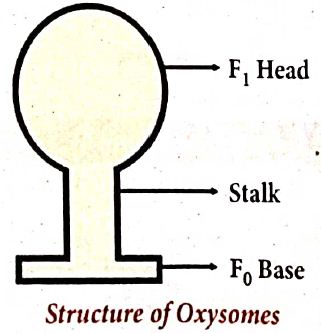
22.
(i) To increase the productivity of crops
(ii) Remains fresh beyond their normal life time
23.
According to Ohm's law, at a constant temperature, the steady current 'I' flowing through a conductor is directly proportional to the potential difference 'V' between the two ends of the conductor.
\(I\alpha V \Rightarrow\) V = IR
24.
Given: The ratio of masses of two planets \(M_{1}: M_{2} \) is 2: 3 The ratio of their radii \(R_{1}: R_{2}\) is 4: 7
\(g_{1}: g_{2}= ? \)
\(\mathrm{g}=\frac{\mathrm{G \times M}}{\mathrm{R}^{2}} ; \quad \mathrm{g}_{1}=\frac{\mathrm{G\times M}_{1}}{\mathrm{R}_{1}^{2}} ; \quad \mathrm{g}_{2}=\frac{\mathrm{G \times M}_{2}}{\mathrm{R}_{2}^{2}} \)
\(\frac{g_{1}}{g_{2}}=\frac{\frac{G \times M_{1}}{R_{1}^{2}}}{\frac{G \times M_{2}}{R_{2}^{2}}} ; \quad \frac{g_{1}}{g_{2}}=\frac{M_{1}}{R_{1}^{2}} \times \frac{R_{2}^{2}}{M_{2}}=\frac{2 \times 7 \times 7}{4 \times 4 \times 3}=\frac{49}{24}\)
∴ \(g_{1}: g_{2}\) = 49: 24
25.
(i) Transport of respiratory gases (Oxygen and CO2).
(ii) Transport of digested food materials to the different body cells.
(iii) Transport of hormones.
(iv) Transport of nitrogenous excretory products like ammonia, urea, and uric acid.
(v) It is involved in protection of the body and defense against diseases.
(vi) It acts as buffer and also helps in regulation of pH and body temperature.
(vii) It maintains proper water balance in the body.
26.
(i) In a decomposition reaction, a single compound splits into two or more simpler substances by the help of heat. It is called 'Thermolysis'.
(ii) In this type of reaction, the reactant is decomposed by applying heat.
(iii) For example, It is a class of compound to element/element decomposition. i.e. a compound (HgO) is decomposed into two elements (Hg and Oxygen).

(iv) When calcium carbonate is heated, it breaks down in to calcium oxide and carbon dioxide.
(v) It is a type of compound to compound/compound decomposition.
(vi) In thermal decomposition reaction, heat is supplied to break the bonds.
(vii) Such reactions, in which heat is absorbed, are called 'Endothermic reactions'.
\(\mathrm{CaCO}_{3(\mathrm{~s})} \stackrel{\text { heat }}{\longrightarrow} \mathrm{CaO}_{(\mathrm{s})}+\mathrm{CO}_{2}(\mathrm{~g})\)
27.
|
Properties |
\(\alpha \) - rays |
\(\beta \) - rays |
\(\gamma \) - rays |
|---|---|---|---|
| What are they? | Helium nucleus (2He4) consisting of two protons and two neutrons | They are electrons. (-1e0), basic elementary particles of all atoms. |
They are electromagnetic waves consisting of photons. |
| Charge | Positively charged particles. Charge of each alpha particle = +2e | Negatively charged particles. Charge of each beta particle=-e | Neutral particles Charge of each gamma particle = zero |
| Ionizing power | 100 times greater than \(\beta \) rays and 10,000 times greater than \(\gamma \)rays | Comparatively low | Very less ionization power |
| Penetrating power | Low penetrating power (even stopped by a thick paper) |
Penetrating power is greater than that of α rays. They can penetrate through the thin metal foil. | They have a very high penetrating power greater than that of \(\beta \) rays. They can penetrate through thick metal blocks. |
| Effect of electric and magnetic field | Deflected by both the fields. (in accordance with Fleming's left-hand rule) | Deflected by both the fields but the direction of deflection is opposite to alpha rays. (in accordance with Fleming's left-hand rule) | They are not deflected by both the fields |
| Speed | Their speed ranges from 1/10 to 1/20 times the speed of light. | Their speed can go up to 9/10 times the speed of light. | They travel at the speed of light. |
28.
Mass of 1 mole of nitrogen \(\left(N_{2}\right)=2 \times N=2 \times 14=28 \mathrm{~g}\)
Mass of 3 moles of hydrogen \(\left(\mathrm{H}_{2}\right)=3[2 \times \mathrm{H}]\)
=3[2 x 1]=3[2]
=6 g
Mass of 2 moles of ammonia \(\left(\mathrm{NH}_{3}\right)=2\left[\mathrm{NH}_{3}\right]\)
=2[1 x N + 3 x H]
=2[1 x14 + 3 x 1]
=2[14 + 3]
=2[17] = 34 g
\(\left.\begin{array}{c}1 \text { mole of nitrogen }(28 \mathrm{~g}) \\ + \\ 3 \text { mole of hydrogen }(6 \mathrm{~g})\end{array}\right\}=\text {2 moles of ammonia} (34 \mathrm{~g})\)
29.
Application of Newton's law of gravitation
(i) Dimensions of the heavenly objects can be measured using gravitation law. Mass of the earth, radius of the earth, acceleration due to gravity etc. can be calculated with a higher accuracy.
(ii) Helps in discovering new stars and planets. Mass of the double stars can be calculated.
(iii) One of the irregularities in the motion of stars is called "Wobble" which leads to the disturbance in the motion of planet nearby. In this condition mass of the star can be calculated using law of gravitation.
(iv) Helps to explain germination of roots due to the property of geotropism, which is the property of root responding to the gravity.
(v) Helps to predict the path of the astronomical bodies.

10th Standard Syllabus & Materials
10th Standard
TN 10th English Prose - 2 - The Night the Ghost Got in Important Questions And Answers Study Material - QB365 Set A
NEW10th Standard
TN 10th English Supplementary - 1 - The Tempest Important Questions And Answers Study Material - QB365 Set A
NEW10th Standard
TN 10th English Poem - 1 - Life Important Questions And Answers Study Material - QB365 Set A
NEW10th Standard
TN 10th English Prose - 1 - His First Flight Important Questions And Answers Study Material - QB365 Set A



Tamilnadu Stateboard 10th Standard Subjects
Tamilnadu Stateboard Standards





