
 100% FREE ACCESS
10th Standard Syllabus & Materials
10th Standard
TN 10th English Prose - 4 - The Attic Important Questions And Answers Study Material - QB365 Set A
NEW10th Standard
TN 10th English Supplementary - 3 - The Story of Mulan Important Questions And Answers Study Material - QB365 Set A
NEW10th Standard
TN 10th English Poem - 3 - I am Every Woman Important Questions And Answers Study Material - QB365 Set A
NEW10th Standard
TN 10th English Prose - 3 - Empowered Women Navigating The World Important Questions And Answers Study Material - QB365 Set A
NEW10th Standard
TN 10th English Supplementary - 2 - Zigzag Important Questions And Answers Study Material - QB365 Set A
NEW10th Standard
TN 10th English Poem - 2 - The Grumble Family Important Questions And Answers Study Material - QB365 Set A

Published on: 06/02/2020
10th Standard Social Science Book Back and Creative All Chapter Questions-II- 2020
Download Tamil Nadu 10th Standard Social Science question papers, model tests, one-mark questions, important questions, and public exam papers in PDF format. Free study materials and answer keys for TN State Board students.
Questions + Answers key
Take MCQ Social Science Test
1.
For operations and management Indian Railways is organized into __________ zones.
16
14
12
10
2.
There are ___________ cities in India with metro rail connectivity.
7
6
8
9
3.
The first hydro electric power station in India was established at_______in 1897.
Darjeeling
Shillong
Mettur
Periyar
4.
The first nuclear power station was setup at _________ near Mumbai in 1969
Kalpakkam
Kaiga
Rawatbhata
Tarapur
5.
The Portuguese under the leadership of _________ landed at Calicut on 17th May 1498
Vasco da Gama
Van der Hagen
Sultan of Golconda
Queen Elizabeth
6.
French East India Company established _________factory at Machilipatnam
First
Second
Third
Fourth
7.
NDP =_________
GDP + Depreciation
GNP - Depreciation
GDP - Depreciation
GDP x Depreciation
8.
DPI=__________
GNP - Depreciation
GDP - Depreciation
PI - Direct taxes
National Income / Population
9.
__________Sector is largest sector.
Agriculture
Service
Industry
None.
10.
The number of judges for each High Court is determined by the_________
Governor
Prime Minister
Chief Minister
President
11.
The lower house, _______ represents the people of the state in the state legislature
Legislative Council
Lok Sabha
Legislative Assembly
Rajya Sabha
12.
__________was the Chief Minister of Tamil Nadu from 1947 - 1949.
Thiru. C.N. Annadurai
Thiru. O.P. Ramaswamy
Thiru. K. Kamaraj
Thiru. C. Rajagopalachari
13.
The Lok Sabha enjoys a term of________years from the date of its first session
3
6
5
4
14.
The President shall hold office for a term of__________
Three years
Four years
Five years
Six years
15.
At present, _______ languages are recognised by the language committee
16
19
20
22
16.
A _______tells us the fundamental nature of a society.
Law
Government
Constitution
Assembly
17.
The states benefitted from Bhakra Nangal project are
Punjab, Haryana and Gujarat
Punjab, Haryana, Rajasthan
Punjab, Haryana, Himachal Pradesh
Punjab, Haryana, Uttaranchal
18.
Dihang is a gorge in __________
Assam
Meghalaya
Nagaland
Arunachal Pradesh
19.
The ______________ range is the oldest mountain system in India.
Aravalli
Ladakh
Karakoram
Vindhyas
20.
The total length of the coastline in India including the islands is ____________ km.
7516.6 km
7625.6 km
7526.6 km
7626.6 km
21.
The main objective of the Singh Sabha was to restore the purity of ____________
Hinduism
Sikhism
Christianity
Islam
22.
The ___________ Samaj started a number of Dayanand Anglo-Vedic schools and colleges.
Brahmo
Prarthana
Arya
Adi Brahmo
23.
____________ was greatly influenced by Christianity believing in its spirit but not in the person of its founder.
Rajaram Mohan Roy
Vivekananda
Keshab Chandra Sen
M.G. Ranade
24.
In 1985, _____________ took over as head of the USSR.
Helmut Kohl
Mikhail Gorbachev
Brezhnev
Nikita Khrushchev
25.
Japanese interest in taking control over __________ led to aggression against China.
Korea
Turkey
Greece
Rome
26.
In its long history, ___________ civilization was more advanced than that of Europe.
Indian
Chinese
Japanese
Korean
27.
The _____________ party promised to undertake steps to look after the people "from the cradle to the grave" in Britain.
Labour
Democratic
Communist
Congress
28.
_____________ mainly functions with private enterprises in developing countries.
IDA
IBRD
IFC
ILO
29.
In September 1940, _______________ was bombed mercilessly.
London
New York
Tokyo
Washington
30.
The monarch of Brazil fell in________
1885
1888
1889
1890
31.
Ho Chi Minh was inspired by
Mao-Tse-Tung
Lenin
Mortague
Hitler
32.
The first nation of Western Europe to turn against the ruling regime was ____________
France
Italy
Germany
Spain
33.
In 1931 Japan attacked ______________
China
Manchuria
France
Russia
34.
On 23 February 1917, the socialists celebrated____________
Mother's day
International working women's day
Oceans day
Environment day
35.
In the eastern front, Russian troops repeatedly defeated the _____________
French
Indians
Austrians
Germans
36.
GATT’s first round held in
Tokyo
Uruguay
Torquay
Geneva
37.
National Income is a measure of
Total value of money
Total value of producer goods
Total value of consumption goods
Total value of goods and services
38.
The High Courts in India were first started at
Calcutta, Bombay, Madras
Delhi and Calcutta
Delhi, Calcutta, Madras
Calcutta, Madras, Delhi
39.
What is minimum age laid down for a candidate to seek election to the Lok Sabha?
18 years
21 years
25 years
30 years
40.
Which of the following committees/commissions made recommendations about the Centre-State Relations?
1. Sarkaria Commission
2. Rajamannar Committee
3. M.N.Venkatachaliah Commission
Select the correct answer from the codes given below
1, 2 & 3
1 & 2
1 & 3
2 & 3
41.
How many times has the Preamble to the Constitution of India amended?
Once
Twice
Thrice
Never
42.
The major import item of India is
Cement
Jewells
Tea
Petroleum
43.
The famous Sindri Fertilizer Plant is located in
Jharkhand
Bihar
Rajasthan
Assam
44.
The leading producer of rice in India is ________.
Punjab
Maharashtra
Uttar Pradesh
West Bengal
45.
The monsoon forests are otherwise called as _______________.
Tropical evergreen forest
Deciduous forest
Mangrove forest
Mountain forest
46.
The extent of Himalayas in the east-west is about
2,500 km
2,400 km
800 km
2,200 km
47.
Who was Swami Shradhananda?
a disciple of Swami Vivekananda
one who caused a split in the Brahmo Samaj of India
one who caused a split in the Arya Samaj
founder of Samathuva Samajam.
48.
Where did the US drop its first atomic bomb?
Kawasaki
Tokyo
Hiroshima
Nagasaki
49.
Who was the brain behind the apartheid policy in South Africa?
Verwoerd
Smut
Herzog
Botha
50.
Which country after the World War I took to a policy of isolation?
Britain
France
Germany
USA
51.
Mark the following countries on the world map.
1. Great Britain
2. Germany
3. France
4. Italy
5. Morocco
6. Turkey
7. Serbia
8. Bosnia
9. Greece
10. Austria-Hungary
11. Bulgaria
12. Rumania
52.
Name the human development indicators
53.
What is urbanisation?
54.
Write a note on saline and Alkaline soils.
55.
Write a note on bauxite
56.
Write about European traders in South India
57.
What is Economic Growth?
58.
Write any three important economic policies
59.
How does the state cabinet work?
60.
Explain the privileges of the Governor.
61.
What does Sarkaria Commission suggest on the appointment of the Governor?
62.
Write a short note on the Supreme Court of India.
63.
How is the Vice-President of India elected?
64.
Name the three types of emergencies envisaged in the constitution.
65.
Name the five subjects transferred from State list to concurrent list as per the 42nd Amendment Act of 1976.
66.
Write a short note on the 86th Amendment Act of 2002
67.
List the factors affecting climate of India.
68.
Write any two points of importance of Himalayas.
69.
Who founded the Nirankari Movement and what were his teachings?
70.
Write a short note on the contribution of Dr. Annie Besant.
71.
What led to the demolition of the Berlin Wall?
72.
What is Diaspora?
73.
What is referred to as cold war history?
74.
Name the Associated Organisations of the UN.
75.
Why are the 'World Wars' called so?
76.
Write briefly about Mussolini's pact with Pope.
77.
Why do historians call breakdown of the International system of exchange at the Great Depression?
78.
Give an account of the supremacy of Allies in seas
79.
Name the nine states that opposed the Central powers.
80.
Write any two positive impact of Globalization.
81.
Define the value added approach with example.
82.
What are the qualifications for the appointment of Governor?
83.
How does the state of Jammu and Kashmir differ from the other states of India?
84.
What are the different categories of Ministers at the Union level?
85.
List out the fundamental rights guaranteed by Indian Constitution.
86.
What is a Constitution?
87.
What is migration? State its types.
88.
Name the different types of coal with their carbon content.
89.
State the types of agriculture practices in India.
90.
91.
Give the importance of IST.
92.
Assess the role of Ayyankali in fighting for the cause of “untouchables.”
93.
Describe the Pearl Harbour incident.
94.
What was the result of Mussolini’s march on Rome?
95.
Name the countries in the Triple Entente.
96.
Major issues faced by farmers in India.
97.
Explain the importance of mass communications systems in India.
98.
Write the goals of World Trade Organisation
99.
Draw the pie chart for sector wise Contribution of GDP Growth in India for the year 2018 - 2019
100.
Explain in detail about the Vietnam War.
101.
What were the causes for the failure of the League of Nations?
102.
Give an account of Boer Wars.
103.
What were the issues and incidents of violations of the League of Nations.
104.
Explain any three Jurisdiction of the Supreme Court of India.
105.
Solar energy and Wind energy
106.
Mark the following incidents 1920 - 1940
1.
(a)
16
2.
(c)
8
3.
(a)
Darjeeling
4.
(d)
Tarapur
5.
(a)
Vasco da Gama
6.
(b)
Second
7.
(c)
GDP - Depreciation
8.
(c)
PI - Direct taxes
9.
(b)
Service
10.
(d)
President
11.
(c)
Legislative Assembly
12.
(b)
Thiru. O.P. Ramaswamy
13.
(c)
5
14.
(c)
Five years
15.
(d)
22
16.
(c)
Constitution
17.
(b)
Punjab, Haryana, Rajasthan
18.
(d)
Arunachal Pradesh
19.
(a)
Aravalli
20.
(a)
7516.6 km
21.
(b)
Sikhism
22.
(c)
Arya
23.
(c)
Keshab Chandra Sen
24.
(b)
Mikhail Gorbachev
25.
(a)
Korea
26.
(b)
Chinese
27.
(a)
Labour
28.
(c)
IFC
29.
(a)
London
30.
(a)
1885
31.
(a)
Mao-Tse-Tung
32.
(b)
Italy
33.
(b)
Manchuria
34.
(b)
International working women's day
35.
(d)
Germans
36.
(d)
Geneva
37.
(d)
Total value of goods and services
38.
(a)
Calcutta, Bombay, Madras
39.
(c)
25 years
40.
(b)
1 & 2
41.
(a)
Once
42.
(d)
Petroleum
43.
(a)
Jharkhand
44.
(d)
West Bengal
45.
(b)
Deciduous forest
46.
(a)
2,500 km
47.
(c)
one who caused a split in the Arya Samaj
48.
(c)
Hiroshima
49.
(a)
Verwoerd
50.
(d)
USA
51.
52.
Population trends, health outcomes, education achievements, national income and composition of resources, work and employment, human security, human and capital mobility supplementary indicators: perceptions of well being and status of fundamental rights treaties are the human development indicators.
53.
The process of society's transformation rural to urban is known as urbanization
54.
Saline and Alkaline Soils
(i) These are formed due to ill drainage which causes water logging. Area covered by these soils is 68,000 sq.km and constitute 2.8 % of soil in India.
(ii) These soils contain many salts like sodium, magnesium, and calcium, which make them infertile and unfit for agriculture.
(iii) These types of soil are found in Andhra Pradesh, Karnataka, and in the drier parts of Bihar, Uttar Pradesh, Haryana, Punjab, Rajasthan, and Maharashtra.
55.
(i) Bauxite is an important ore from which aluminium is extracted.
(ii) It is found in the rock consisting mainly of hydrated aluminium oxides
(iii) Bauxite is widely distributed as surface deposits in the areas of laterite soil.
(iv) Being light in weight and tough, aluminium is used in the manufacture of aircrafts and automobile engines. Bauxite is also used in the manufacture of cement and chemicals.
56.
(i) European companies which came to trade with India.
(ii) The discovery of a new all-sea route from Europe to India via cape of Good Hope by Vasco da Gama.
(Iii) Vasco da Gama had far-reaching repercussions on the civilized world.
57.
(i) Economic growth is the quantitative measure which considers the rise in the output produced in an economy or nation in a particular period in its monetary value.
(ii) GDP and GNP which helps in measuring the actual size of an economy.
58.
(i) Agricultural Policy
(ii) Industrial Policy
(iii) New Economic Policy
59.
The cabinet works through various committees called cabinet committees. They are of two types standing and ad hoc. The former are of a permanent nature while the latter are of a temporary nature
60.
(i) The Governor of a State, is not be answerable to any court for the exercise and performance of the powers and duties of his office or for any act done or purporting to be done by him in the exercise and performance of those powers and duties.
(ii) No criminal proceedings whatsoever shall be instituted or continued against the Governor of a State, in any court during his term of office.
(iii) No process for the arrest or imprisonment of the Governor of a State, shall issue from any court during his term of office.
(Iv) No civil proceedings in which relief is claimed against the Governor of a State
61.
Sarkaria Commission on Centre, State relations suggested that the appointment of the Governor should be made
(i) From a panel to be prepared by the State Legislature or
(ii) From a panel to be prepared by the State Government (in effect the Chief Minister) or invariably with the concurrence of the State Chief Minister; or
(iii Invariably in consultation with the State Chief Minister.
62.
(i) The "Supreme Court is the Guardian of the Constitution': Our constitution provides for the establishment of an independent and integrated judiciary with 'supreme court' as the uppermost court in the country.
(ii) The Supreme Court of India, New Delhi was inaugurated on January 28, 1950. It succeeded the Federal Court of India, established under the Government of India Act of 1935.
63.
The Vice- President is elected by the members of an electoral college consisting of the member of both Houses of Parliament
64.
National Emergency, State Emergency, Financial Emergency
65.
The 42nd Amendment Act of 1976 transferred five subjects to Concurrent List from State List, that is, education, forests, weights and measures, protection of wild animals and birds, and administration of justice; constitution and organisation of all courts excepts the Supreme Court and the high courts
66.
(i) The 86th Amendment Act of 2002 changed the subject -matter of Article 45 and made elementary education a fundamental right under Article 21 A.
(ii) The amended directive requires the State to provide early childhood care and education for all children until they complete the age of six years.
67.
Factors like latitude, distance from the sea, monsoon wind, relied on features and jet stream affect the climate of India.
68.
(i) It is the source for many perennial rivers like Indus, Ganges, Brahmaputra, etc.
(ii) The Northern Mountains are described as the paradise of tourists due to its natural beauty.
69.
(i) Baba Dayal Das was the founder of the Nirankari Movement.
(ii) Stressed the worship of God as Nirankar (formless). Rejection of idols, rejection of rituals associated with idolatry, reverence for the authority of Guru Nanak and of the Adi Granth formed the essence of his teachings. He reiterated the prohibition on meat-eating, and liquor consumption.
70.
Contribution of Annie Besant
(i) In India the Theosophical movement became further popular with the election of Annie Besant (1847-1933) as its president after the death of Olcott.
(ii) She played a role in Indian nationalist politics and formed the Home Rule League demanding home rule to India on the lines of Ireland.
(iii) Annie Besant spread Theosophical ideas through her newspapers called New India and Commonweal.
71.
(i) The East European communist states, under the Soviet umbrella, were also in a deep economic and social crisis.
(ii) Gorbachev's decision to loosen the Soviet control on the countries of Eastern Europe created an independent, democratic momentum.
(iii) A series of workers' strikes undermined the communist regimes first in Poland and then in Hungary.
(iv) A wave of demonstrations that swept East Germany led to demolition of the Berlin Wall in 1989.
72.
In Palestine, the ancient home of Jews, only a few thousand Jews were living in 1900. Some 15 million were scattered around Europe and North America. This is referred to as the Diaspora.
73.
The rivalry that developed after World War II between the US and the USSR and their respective allies created tension which is referred to as Cold War.
74.
(i) These are Food and Agriculture Organisation (FAO), World Health Organisation (WHO), UNESCO (UN Educational, Scientific and Cultural Organisation).
(ii) There are also special organizations funded voluntarily by member countries.
(iii) The two best known among them are UNICEF (United Nations Children's Fund) which promotes child health and welfare across the world, and the UNDP (United Nations Development Programme), which focuses on development.
75.
While the world at large had experienced many wars, these two wars are referred to as "World wars" because of the extended areas of the conflict and the very high death toll of civilians as well as armed combatants. Both wars were fought on several fronts across Europe, Asia, and Africa.
76.
(i) In order to give respectability to the Fascist party, Mussolini won over the Roman Catholic Church by recognizing the Vatican City as an independent state.
(ii) In return the church recognized the kingdom of Italy.
(iii) The Roman Catholic faith was made the religion of Italy and compulsory religious teaching in schools was ordered.
(iv) The Lateran Treaty incorporating the said provisions was signed in 1929.
77.
The defensive measures adopted by various nations to safeguard its economic interests led to an unprecedented decline in world economic activity. As its effect was deep and prolonged economists and historians call it the Great Depression.
78.
(i) The epicenter of the struggle was on the western front and on the seas.
(ii) As the Allies controlled the sea-routes, they cut off the supply of food and other material reaching the Central Powers.
(iii) In Germany and Austria women and children suffered from hunger and privation. Germany attacked England by air.
(iv) Bombs were thrown on London and places where there were major factories.
(v) The Germans introduced poison gas and soon both sides resorted to its use.
79.
Russia, France, Britain, Italy, the United States, Belgium, Serbia, Romania and Greece are the nine states that opposed the central powers.
80.
i) A better economy introduces rapid development of the capital market.
ii) Standard of living has increased.
iii) Globalization rapidly increases better trade so that more people are employed.
iv) Introduced new technologies and new scientific research patterns
v) Globalization increases the GDP of a country.
81.
a) In the value added approach the value added by each intermediate goods is summed to estimate the value of the final goods.
b) The sum of the value added by all the intermediate goods used in production gives us the total value of the final goods produced in the economy.
Example:
To measure the market value of a cup of tea is, to add the value of each intermediate goods used to produce it such as tea powder, milk and sugar.
82.
a) He should be a citizen of India.
b) He must have completed 35 years of age.
c) He should not be a Member of Parliament or of any State Legislature. If he is a member of any of the Legislatures, he automatically vacates his seat on assuming the office.
d) He should not hold any other profitable occupation.
83.
(i) The Constitution of India grants special status to Jammu and Kashmir among Indian states, and it is the only state in India to have a separate constitution.
(ii) The Constitution of Jammu and Kashmir was adopted on the 17 November, 1957 and came into force on 26 January, 1957.
(iii) The Directive Principles of the State Policy and fundamental duties of the constitution are not applicable to the state of Jammu and Kashmir.
(iv) Right to Property, is still guaranteed as a fundamental right in Jammu and Kashmir.
84.
The Ministers are classified under three ranks.
i) Cabinet Ministers
ii) Ministers of state
iii) Deputy Ministers
85.
i) Right to Equality
ii) Right to Freedom
iii) Right against Exploitation
iv) Right to Religion
v) Cultural & Educational Rights
vi) Right to Constitutional Remedies
86.
i) The Constitution is the fundamental law of a country which reflects the fundamental principles on which the government of that country is based
ii) It is the vehicle of a Nation's progress.
iii) The concept of Constitution first originated in USA
87.
Migration is the movement of people across regions and territories.
The types of migration are:
(1) Internal migration (within a country)
(2) International migration (between the countries).
88.
Based on carbon content, it is classified into the following types.
(i) Anthracite: contains 80 to 90% carbon
(ii) Bituminous: contains 60 to 80% carbon
(iii) Lignite: contains 40 to 60% carbon
(iv) Peat: contains less than 40% carbon
89.
Subsistence Farming, Shifting Agriculture, Intensive Farming, Dry Farming, Mixed Farming Agriculture and Terrace Cultivation.
90.
91.
The longitudinal difference between Gujarat in the west and Arunachal Pradesh in the east is about 30°. Since Arunachal Pradesh is towards east. it will have sunrise about two hours earlier than the sunrise at Gujarat which is in the west. In order to avoid these differences, Indian Standard Time is calculated. The IST is 5.30 hrs ahead of Greenwich Mean Time (GMT).
92.
a) Ayyankali challenged many caste conventions such as clothing style. He wore clothes associated with upper castes that were prohibited for lower castes.
b) He rode on an ox - cart challenging the ban on untouchables from accessing public roads used by caste Hindus.
c) Ayyankali founded the Sadhu Jana Paripalana Sangam and raised funds to educate the lower caste Pulaya people.
d) Ayyankali fought for basic rights including access to public places and entry to schools.
93.
i) On December 1941, Japan attacked American naval installations in Pearl Harbour, Hawaii without any warning
ii) The idea was to cripple America's Pacific fleet so that Japan would not face any opposition
iii) Many battleships and numerous fighter planes were destroyed.
iv) The United States declared war on Japan, with Britain and China also joining in.
v) This brought together both the Asia Pacific and the European war into one common cause.
vi) Most importantly, it brought the United States with its enormous resources into the war as a part of the Allies.
94.
a) In October 1922 in the context of a long ministerial crisis, Mussolini organised the Fascist March on Rome.
b) Impressed by the show of force, the King invited Mussolini to form a government.
95.
Britain, France and Russia are the three countries in the Triple Entente.
96.
Indian agriculture and Indian farmers are plagued by several problems; some of them are natural and some others are manmade.
(i) Small and fragmented land-holdings: The problem of small and fragmented holdings is more serious in densely populated and intensively cultivated states in India.
(ii) High Costs of Inputs: Seed is a critical and basic input for attaining higher crop yields and sustained growth in agricultural production.
(iii) Infertile Soil: Indian soils have been used for growing crops over thousands of years without caring much for replenishing. This has led to depletion and exhaustion of soils resulting low productivity.
(iv) Lack of Irrigation: Only one- third of the cropped area falls under irrigated area. To make agriculture reliable, irrigation facility has to be developed.
(v) Soil erosion: Large tracts of fertile land suffer from soil erosion by wind and water. Such kind of areas must be properly treated and restored to its original fertility.
(vi) Agricultural marketing: In rural India, agricultural marketing continues in bad shape. Due to the absence of sound marketing facility, the farmers have to depend on local traders and middlemen for the disposal of their farm products which is sold at a low price.
(vii) Inadequate storage facilities: Storage facilities in the rural areas are either totally absent or grossly inadequate. Under such conditions, the farmers are compelled to sell their products immediately after the harvest irrespective of the condition of market.
97.
Electronic Media:
(i) Mass Communication enables millions of people to get the information at the same time.
(ii) It is a great way to provide education as well as entertainment.
(iii) It helps in creating awareness among the people regarding various national policies and programmes.
(iv) The Mass Communication Systems can provide the information to people in two methods.
Electronic Media:
(i) Radio broadcasting in India was started in 1923 by the Radio club of Bombay.
(ii) It was named as All India Radio (AIR) in 1936 and again it was renamed as Akashwani in 1957.
(iii) It broadcasts a variety of programs related to information, education and entertainment.
Print Media:
(i) Newspapers are the most common but powerful means of communication come under print media.
(ii) India has many newspapers which carry information on local, national and international events to the people
98.
Goals of WTO:
(i) Raising and stabilizing the incomes of small scale farmers, farm workers and artisans.
(ii) More equitably distributing the economic gains, opportunities and risks associated with the production and sale of these goods.
(iii) Increasing the organisational and commercial capacities of producer groups.
(iv) Promoting labour rights and the right workers to organize.
(v) Promoting safe and sustainable farming methods and working conditions
99.
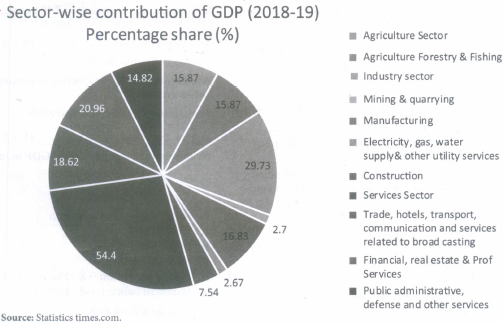
100.
(i) By the end of Second World War Viet Minh controlled the northern half of Vietnam. Viet Minh formed a government led by Ho Chi Minh in Hanoi.
(ii) This Viet Minh government quickly occupied the southern half of Vietnam. However, the Allied Powers decided at Potsdam that the British in the south and the Chinese in the north should defend Indo-China from the Japanese.
(iii) In March the two governments (French and Viet Minh) reached an agreement by which North Vietnam was to be a free state, within an Indo-Chinese Federation. But the new French constitution included all overseas colonies in a French Union.
(iv) In 1949 the French attempted to secure the support of the population by declaring Vietnam, Laos, and Cambodia independent within the French Union, retaining only foreign affairs and defense under French control. However, the problem of Indo- China soon became involved in the Cold War.
(v) While the French were receiving considerable financial aid from America, the Viet Minh were helped by the new Chinese communist government. The French troops were eventually defeated.
(vi) South Vietnam, approximately of the same size and population, was ruled by Ngo Dinh Diem.
(vii) Diem refused to hold the elections to decide on a united Vietnam.
(viii) However, by 1962, it was clear that Diem was incapable of controlling the situation. This led to the posting of more US armed forces in the area.
(ix) The US bombed both North and South in the hope that it could force the liberation forces to abandon the struggle.
(x) The fighters of North Vietnam, trained in guerilla warfare, had grown out of spontaneous struggles against a repressive regime.
(xi) The American troops also used bacteriological weapons.
(xii) Incendiary bombs such as napalm and Agent Orange (to defoliate the forest cover) were used.
(xiii) Escalation of the total military outlay caused the US big business to protest. The youths rebelled against the conscription and the horrors of war.
(xiv) Anti-Vietnam War protests rocked universities and colleges across the US and in Europe and became part of the 1960s counterculture.
(xv) No other single issue united millions of people all over the world as the war of Vietnam.
101.
(i) The Treaty also set up the League of Nations, on the initiative of President Woodrow Wilson of the United States.
(ii) The League was expected to mediate between countries and take action against countries which indulged in military aggression.
(iii) However, the United States was not interested in playing a global role or any role in European politics.
(iv) The popular mood favoured the traditional isolationist approach, and therefore the United States did not become a member of the League.
(v) The other Allied nations were also determined to maintain a noninterventionist attitude and, in consequence, the League remained an ineffectual international body.
102.
(i) The relations between the two British colonies of Natal and Cape Colony and the two independent Boer states of Transvaal and the Orange Free State had long been unfriendly.
(ii) The discovery of gold in Transvaal, in 1886, led to large numbers of British miners settling in and around Johannesburg.
(iii) The Boers hated these people whom they referred to as Uitlanders (foreigners). The Boers taxed them heavily and denied political rights to them.
(iv) So the question was whether the British or the Boers were to be supreme in South Africa.
(v) Fearing attacks from the British, the Boers armed themselves and decided to attack.
(vi) The Boer War lasted for three years, from 1899 to 1902. Initially, the Boers were successful.
(vii) But by the first half of 1900, the Boer army was defeated. Pretoria was occupied.
(viii) In retaliation, the British destroyed farms and crops. They set up internment camps for Boer women and children.
(ix) Shortage of food, medical and sanitary facilities caused the death of 26,000 people.
(x) The British annexed the two Boer states. Boers were however promised self-government in due course.
(xi) In 1907 full responsible government was given to the Transvaal and the Orange Free State.
(xii) The four states formed into a union and the South Africa Act passed by the British parliament in 1909 provided for a Union Parliament at Cape Town.
(xiii) In May 1910 the Union of South Africa came into being.
103.
(i) One of the major problems confronting the European powers was how to achieve disarmament.
(ii) In 1925 the Council of the League set up a commission to hold a Disarmament Conference to sort out the problem.
(iii) But the proposed conference materialised only in February 1932. In this Conference, Germany's demand of equality of arms with France was rejected. In October Hitler withdrew Germany from the Conference and the League.
(iv) Japan attacked Manchuria in September 1931 and the League condemned Japan.
(v) So Japan also followed the example of Germany and resigned from the League.
(vi) In the context of Italy's attack on Ethiopia, the League applied sanctions.
(vii) As the sanctions came into effect, Italy resigned from the League in 1937.
(viii) There after the League was a passive witness to events, taking no part in the crises over the Rhineland, Austria, Czechoslovakia and Poland.
(ix) The last decisive action it took was in December 1939 when Russia was expelled for her attack on Finland.
(x) The Assembly did not meet again and the League of Nations was finally dissolved in 1946.
104.
Original Jurisdiction:
The cases which are brought directly in-the first instance to the Supreme Court come original under jurisdiction.
These may be
(i) dispute between the Government of India and one or more states
(ii) Dispute between two or more states
(iii) The writs are issued by the Supreme Court for the enforcement of the fundamental rights.
Appellate jurisdiction:
i) The Supreme Court is the final appellate court in the country.
ii) The Supreme Court hears appeals against the decision of High Courts.
iii) Such a case can be brought before the Supreme Court only if the High Court certifies that the case invites a substantial of law as to the interpretation of the Constitution.
Advisory Jurisdiction:
The Constitution confers on the President the power to refer to the Supreme Court any question of law or fact which in his opinion is of public importance.
Miscellaneous jurisdiction:
i) The law declared by Supreme Court is binding on all courts within the territory of India.
ii) The Supreme Court is authorized to make rules for regulating, generally the practice and procedure of the court with the approval of the President.
Judicial Review:
a) The power of the Judiciary to declare a law as unconstitutional is known as Judicial Review'.
b) The Supreme Court of India has Individual Review Power with regard to:
i) Dispute between the Centre and State.
ii) Protecting the Fundamental Rights.
105.
| S.No |
Solar energy |
Wind energy |
|---|---|---|
| (1) | Solar power is the conversion of sunlight into electricity | Wind energy is extracted from air flow using wind turbines. |
| (2) | It is a non-conventional source of energy Resources are available continuously. | It is a cheap and pollution-free source of energy. |
106.
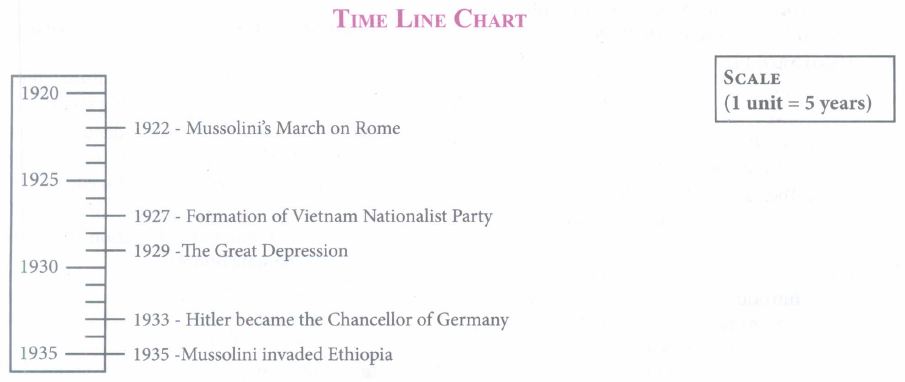

10th Standard Syllabus & Materials
10th Standard
TN 10th English Prose - 2 - The Night the Ghost Got in Important Questions And Answers Study Material - QB365 Set A
NEW10th Standard
TN 10th English Supplementary - 1 - The Tempest Important Questions And Answers Study Material - QB365 Set A
NEW10th Standard
TN 10th English Poem - 1 - Life Important Questions And Answers Study Material - QB365 Set A
NEW10th Standard
TN 10th English Prose - 1 - His First Flight Important Questions And Answers Study Material - QB365 Set A



Tamilnadu Stateboard 10th Standard Subjects
Tamilnadu Stateboard Standards




