
 100% FREE ACCESS
10th Standard Syllabus & Materials
10th Standard
TN 10th English Prose - 4 - The Attic Important Questions And Answers Study Material - QB365 Set A
NEW10th Standard
TN 10th English Supplementary - 3 - The Story of Mulan Important Questions And Answers Study Material - QB365 Set A
NEW10th Standard
TN 10th English Poem - 3 - I am Every Woman Important Questions And Answers Study Material - QB365 Set A
NEW10th Standard
TN 10th English Prose - 3 - Empowered Women Navigating The World Important Questions And Answers Study Material - QB365 Set A
NEW10th Standard
TN 10th English Supplementary - 2 - Zigzag Important Questions And Answers Study Material - QB365 Set A
NEW10th Standard
TN 10th English Poem - 2 - The Grumble Family Important Questions And Answers Study Material - QB365 Set A

Published on: 13/03/2020
10th Standard Social Science English Medium All Chapter Book Back and Creative Five Marks Questions 2020
Download Tamil Nadu 10th Standard Social Science question papers, model tests, one-mark questions, important questions, and public exam papers in PDF format. Free study materials and answer keys for TN State Board students.
Questions + Answers key
Take MCQ Social Science Test
1.
Write in detail about the types of policies adopted by the Tamil Nadu government to industrialise.
2.
Briefly explain the nutritional and health status of Tamil Nadu
3.
Highlight India and International organisation with special reference to any three India’s global groupings.
4.
Make any two basic concepts followed by India to maintain friendly relations with its neighbours.
5.
Write about the plantation farming of Tamil Nadu.
6.
Write an account on river Kaveri
7.
Attempt an essay on the foundation and development of Tamil Renaissance in the 19th Century.
8.
Discuss the response to Swadeshi Movement in Tamil Nadu.
9.
Examine the factors that led to the transformation of Gandhi into a mass leader.
10.
Attempt an essay of the heroic fight Veerapandya Kattabomman conducted against the East India Company.
11.
Tank irrigation is popular in Peninsular India.
12.
Explain the importance of mass communications systems in India.
13.
Write the negative impact of Globalization
14.
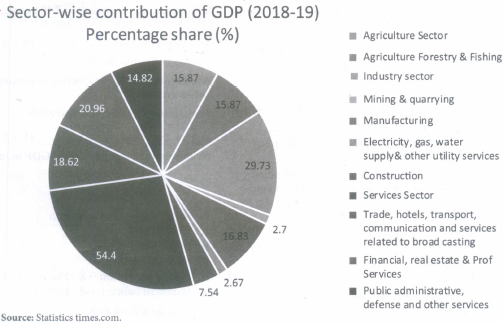
Draw the pie chart for sector wise Contribution of GDP Growth in India for the year 2018 - 2019
15.
Give a detailed account of the classification of the Council of Ministers based on ranks.
16.
Explain in detail about the Acquisition of Citizenship in our country.
17.
Explain about Retreating or North East Monsoon.
18.
Write the importance of Himalayas.
19.
Give an account of Narayana Guru's life and teachings.
20.
Explain in detail about the Vietnam War.
21.
What were the causes for the failure of the League of Nations?
22.
Write a note on the condition of Fascists under Mussolini?
23.
What were the issues and incidents of violations of the League of Nations.
24.
Explain the trade and traders in south India.
25.
Explain the following the economic policies
a) Agricultural Policy
b) Industrial policy
c) New economic policy
26.
Describe the various powers and functions of the Governor.
27.
28.
29.
Explain the process of measuring Human Development.
30.
Explain the factors responsible for the concentration of jute industries in the hoogly region.
31.
Examine the geographical conditions favorable for the cultivation of rice and wheat.
32.
Write about South West Monsoon.
33.
Explain the divisions of Northern Mountains and its importance to India.
34.
Compare and contrast the contributions of Revivalist Movements with that of Reform Movements.
35.
Narrate the history of transformation of Council of Europe into an European Union.
36.
Assess the structure and the activities of the UN.
37.
Trace the circumstances that led to the rise of Hitler in Germany.
38.
Estimate the work done by the League of Nations?
39.
Iron & Steel and Software industries.
1.
Education:
i) Industries require skilled human resources.
ii) The state gives much importance to primary education to promote literacy and basic arithmetic skills, the state supplies vast technical human resources
iii) There are a number of engineering colleges, polytechnics and Industrial Training Centres
Infrastructure:
i) The widespread electrification has contributed to the spread of industries in smaller towns and villages
ii) Tamil Nadu is known for its excellent transport infrastructure It has a network of minor roads which connect rural parts of the state to nearby towns and cities
iii) Rural to urban connectivity is facilitated by public and private transport system,
Industrial promotion:
i) Active policy efforts have been made to promote specific sectors and also industrialisation in specific regions.
ii) Policies have been formulated to promote specific sectors like automobile, auto-components, bio-technology and information and communication.
iii) Several industrial promotion agencies have been put in place to provide supporting infrastructure to both large and small enterprises.
2.
(i) Nutrition plays a crucial role in human health and well being.
(ii) A large number of children are stunted.
(iii) A substantial number of children and women are underweight, anemic and suffer from micro nutrient deficiencies.
(iv) The government at the centre and states governments have been channelising substantial resources into various health and nutrition schemes and programmes
(v) TamilNadu has played a pioneering role in bringing about significant changes in the health and nutritional status of children under six years of age, pregnant women, lactating mothers and adolescent girls.
(vi) The performance of the ICDS scheme and the Puratchi Thalaivar MGR Nutritious MeaI programme (PTMGRNMP) in TamilNadu are considered one of the best in the country.
Malnutrition free Tamilnadu:
(i) The Government of TamilNadu's policy for "A Malnutrition free Tam Nadu", guides the states long term multi-sectoral strategy for eliminating Malnutrition.
(ii) The goal is "reducing human Malnutrition of all types to the levels of best performing countries".
(iii) The government of Tamil Nadu is working towards the policy of 'A malnutrition-free TamilNadu'.
(iv) Its goal is reducing human malnutrition of all types to the levels of best forming countries.
(v) The ICDS has been expanded to unreached areas also.
(vi) ICDS is now considered to be one of the world's largest programmes of its kind.
The PTMGRNMP:
(i) The PTMGRNMP is considered to be the largest moon meal programme in the country.
(ii) It is combating malnutrition among children, increasing primary school enrolment and reducing dropout rates.
(iii) Other states in the country have modelled their noon meal programmes along the lines of Tamil Nadu's pioneering efforts.
3.
| Group | countries | Objectives |
|---|---|---|
| IBSA | India, Brazil South Africa | To focus on agriculture, energy, trade, culture and defence. |
| BCIM | Bangladesh,China, India,Myanmar | To respond to threats such as natural disasters and protect business interests. |
| MGC (Mekong Ganga Cooperation) | India, Cambodia,Laos, PDR Myanmar, Thailand,Vietnam | To create necessary infrastructural facilities in the Ganga-Mekong basin |
| BBIN | Bangladesh, Bhutan, India, Nepal | For energy development. |
| EAS (East Asia Summit) | 10 ASEAN nations + 8 strategic partners including US, China, India, Japan |
To promote peace and stability |
4.
i) Preservation of national interest.
ii) Achievement of world peace.
iii) Disarmament.
iv) Fostering cordial relationship with other countries.
v) Solving conflicts by peaceful means.
vi) Independence of thought and action as per the principle of NAM.
vii) Equality in conducting international relations
viii) Anti-colonialism, anti-imperialism anti-racism.
Policy of Disarmament:
i) Since independence, global non-proliferation has been a dominant theme of India's nuclear policy
ii) So India supported UN disarmament programme.
iii) Indian nuclear programme in 1974 and 1998 is only done for strategic purposes.
iv) The two themes of India's nuclear doctrine are
v) No first use
vi) Credible minimum deterrence
vii) It has decided not to use nuclear power for offensive purposes and would never use against any non-nuclear state.
viii) Indo-US civilian nuclear deal marks a significant progress in India's foreign policy.
5.
i) Tea, coffee, cashew, rubber and cinchona are the major plantation crops of the state.
ii) Tamil Nadu ranks second in area and production of tea in India next to Assam. Tea plantations are found in the hills of the Nilgiris and Coimbatore.
iii) Coffee plants are grown in the hills of Western Ghats as well as Eastern Ghats.
iv) The Nilgiris and Yercaud in Salem are the notable regions for tea plantations.
v) It is also found in the hilly slopes of Dindigul, Madurai, Theni and Dharmapuri districts. Tamil Nadu stands second in area and production of coffee next to Karnataka.
vi) Rubber plantations are significant in Kanyakumari.
vii) Pepper is confined to the warm and wet slopes of Eastern and Western Ghats of Tamil Nadu.
viii) Cashew is extensively cultivated in Cuddalore district.
6.
1. The river Cauvery originates at Talakaveri in the Kodagu district of Karnataka in the Western ghats.
2. It forms Hogenakkal waterfalls in Dharmapuri District.
3. Mettur dam is located across the river in Salem district.
4. A tributary called Bhavani joins Cauvery on the right bank.
5.Two more tributaries Noyyal and Amaravathi confluence Cauvery at Thirumukkudal and this
region is called "Agandra Cauvery".
6. In Tiruchirapalli district, the river branches into two parts. The northern branch is called Coleroon or Kollidam and the southern branch remains the Cauvery. These two again join to form Srirangam Island.
7. Kallanai has been constructed across the Cauvery.
8. The delta of Cauvery in the coast is called as the 'Garden of South India'.
9. It merges into Bay of Bengal to the south of Cuddalore.
7.
Tamil Renaissance:
i) The cultural hegemony of colonialism and the rise of humanism brought several changes in the socio-cultural life of the Indian subcontinent.
ii) Modern Tamil Nadu too experienced such a historical transition.
iii) Tamil language and culture played a significant role in their identity construction.
iv) The introduction of printing press, linguistic research on Dravidian languages, etc.... underpinned the process of Tamil renaissance.
v) Although religious literature was taken up predominantly for publication in the early years after the advent of printing technology, things began to change gradually,
vi) Works that can be described as secular were taken up for publishing.
Advent of the Printing Technology:
i) In the nineteenth century, Tamil scholar's like C.W. Damotharanar (1832-1901), and U. V. Swaminathar (1855-1942) spent their lifetime in the rediscovery of the Tamil classics.
C.W. Damotharanar:
i) C.W. Damotharanar collected and edited different palm-leaf manuscripts of the Tamil grammar and literature.
ii) His editions included such texts as Tolkappiyam, Viracholiyam, Iraiayanar Akapporul, Ilakkana Vilakkam, Kaliththokai and Chulamani.
U.V. Swaminathar:
i) U.V. Swaminathar, took efforts to publish the classical texts such as Civakachinthamani,
ii) Pathitrupattu, Purapporul Venpa Malai, Manimekalai, Ainkurunuru and Pathitrupathu.
iii) This provided the Tamil people with a revelation about their heritage.
iv) Therefore, the rediscovery of ancient classics and their publication is considered the foundation of Tamil renaissance.
Works of scholars:
i) The publication of these ancient literary texts created an awareness among the Tamil people about their historical tradition, language, literature and religion.
ii) Modern Tamils founded their social and cultural identity on the ancient Tamil classics, collectively called the Sangam literature.
iii) Tamil intellectuals of this period identified the fundamental differences between Tamil/Dravidian/Egalitarian and Sanskrit/ Aryan/ Brahmanism.
iv) They argued that Tamil was a language of Dravidian people, who are non-Brahmin and their social life was casteless, gender-sensitised and egalitarian.
v) Tamil renaissance contributed to the origin and growth of Dravidian consciousness in the Tamil country.
vi) These ideas are exemplified in the Tamil invocation song written by Manonmaniam P.Sundaranar.
Other scholars:
i) C.W. Damotharanar, U.V Swaminathar, Thiru. Vi. Kalyanasundaram, Parithimar Kalaignar, Maraimalai Adigal, Subramanian Bharati, S. Vaiyapuri and the poet Bharatidasan, in their own ways and through their writings contributed to the revival of Tamil literature.
ii) Maraimalai Adigal's pure Tamil Movement, the language reforms of Periyar and Tamil Isai movement helped to galvanise the Tamil language.
8.
a) Swadeshi Movement:
i) The partition of Bengal (1905) led to the Swadeshi Movement.
ii) The Swadeshi movement made a deep impact in Tamil Nadu.
iii) The Calcutta Congress which called upon the nation to promote Swadeshi enterprise, boycott foreign goods and promote, national education.
b) Response in Tamil Nadu:
i) V.O. Chidambaranar, V. Chakkaraiyar, Subramania Bharati and Surendranath Arya were some of the prominent leaders in Tamil Nadu.
ii) Public meetings were organised in various parts of Tamil Nadu.
iii) Tamil was used on the public platform for the first time to mobilise the people.
iv) Subaramania Bharati's patriotic songs stirred patriotic emotions.
v) Many journals were started to propagate Swadeshi ideals. Swadesamitran and India were prominent journals.
c) Swadeshi Steam Navigation Company
i) One of the most enterprising acts was the launching of the Swadeshi Steam Navigation Company at Thoothukudi by V.O. Chidambaranar.
ii) He purchased two ships Gallia and Lavo and plied them between Thoothukudi and
Colombo.
d) Tirunelveli Uprising:
i) V.O.C and Subramania Siva organised the mill workers in Thoothukudi and Tirunelveli.
ii) In 1908, he led a strike in the Coral Mills.
iii) V.O.C and Subramania Siva organized a public meeting to celebrate the release of Bipin, So they were arrested.
iv) The news of the arrest sparked riots in Tirunelveli, leading down to burning of police station , court building and municipal office .
v) It led to the death of four people in police firing.
vi) V.O.C was treated harshly in prison and was made to pull the heavy oil press.
vii) To avoid imprisonment Subramania Bharati moved to Pondicherry which was under French rule.
9.
Satyagraha in South Africa:
i) Indians in the Transvaal had to pay a poll tax £.3, could not own land except in areas marked for them, and could not move outdoors after 9 pm without a permit.
ii) Gandhi launched a struggle against such unjust laws.
iii) He experimented with it for fighting the issues of immigration and racial discrimination.
iv) Meetings were held and registration offices of immigrants were picketed.
v) Even when the police let loose violence no resistance was offered by the satyagrahis.
vi) Finally by the Smuts-Gandhi Agreement the poll tax on indentured labourers was abolished.
Gandhi's Early Satyagraha in India:
i) Gandhi regarded Gopal Krishna Gokhale, whom he had met on previous visits to India, as his political guru.
ii) On his advice Gandhi travelled the length and breadth of the country before plunging into politics.
iii) It is on one of these journeys through Tamil Nadu that Gandhi decided to discard his following robes and wear a simple dhoti.
Champaran Satyagraha:
i) In Champaran in Bihar the tinkathia system was practiced. Und this exploitative system the peasants were forced by the European planters to cultivate indigo.
ii) Gandhi went to Champaran. He tried to free the peasants from the exploitation of the European planters.
iii) He led the Champaran Satyagraha.
iv) The tinkathia system was abolished. This ended the oppression of the peasants by the Indigo planters.
v) Ahmedabad mill strike (1918) and the Kheda Satyagraha (1918) helped Gandhi establish himself as a leader of mass struggle.
Rowlatt Satyagraha
i) The Rowlatt Act was enacted which provided for excessive police powers, arrest without warrant and detention without trial.
ii) Gandhi called it a 'Black Act' and in protest called for a nation-wide satyagraha on 6 April 1919.
iii) It was to be a non-violent struggle with fasting and prayer, and it was the earliest anti-colonial struggle spread across the country
Khilafat Movement
i) Khilafat Movement led by the Ali brothers, Maulana Mohamed Ali and Maulana Shaukat Ali. Gandhi supported and saw in it an opportunity to unite Hindus and Muslims.
ii) Gandhi supported Shaukat Ali's proposal of three national slogans, Allaho Akbar, Bande Mataram and Hindu-Musslamanki Jai.
iii) The Khilafat Committee meeting in Allahabad on 9 June 1920 adopted Gandhi's non-violent non-cooperation programme.
10.
Veerapandya Kattabomman :
i) He became the Palayakkarar of Panchalamkurichi at the age of thirty, on the death of his father, Jagavira Pandya Kattabomman.
ii) The company had gained the right to collect taxes from Panchalamkurichi.
iii) The company appointed its Collectors to collect taxes from all the Palayams.
iv) The Collectors humiliated the Palayakkarars and adopted force to collect the taxes.
v) This was the bone of contention between the English and Kattabomman.
Confrontation with Jackson :
i) The land revenue arrears from Kattabomman was 3310 Pagodas in 1798.
ii) So Collector Jackson ordered Kattabomman to meet him in Ramanathapuram.
iii) Kattabomman met Jackson in Ramanathapuram on 19 September, 1798.
iv) It is said that Kattabomman had to stand for three hours before the haughty Collector Jackson.
v) Sensing danger, Kattabomman tried to escape along with his minister Sivasubraminanar.
vi) Oomaithurai suddenly entered the fort with his men and helped the escape of Kattabomman.
vii) Sivasubramanianar was taken prisoner.
viii) Kattabomman appeared before the committee that sat on 15 December 1798 and reported on what transpired in Ramanathapuram.
ix) The committee found Kattabomman was not guilty.
x) Jackson was dismissed from service.
xi) Kattabomman cleared almost all the revenue arrears leaving only a balance of 1080 Pagodas.
Kattabomman and the Confederacy of Palayakkarars:
i) Kattabomman was interested in this confederacy.
ii) Marudhu Brothers and Kattabomman jointly decided on a confrontation with the English.
iii) Kattabomman tried to influence Sivagiri Palayakkarar who was a tributary to the Company.
iv) So the Company ordered the army to march on to Tirunelveli.
The siege of Panchalamkarichi :
i) A British force advanced towards Tirunelveli under the leadership of major Bannerman.
ii) On 1st September 1799 an ultimatum was served on Kattabomman to surrender.
iii) Kattabomman's "evasive reply" prompted Bannerman to attack his fort.
iv) Bannerman moved his entire army to Panchalamkurichi on 5 September.
v) They cut off all the communications to the fort.
vi) Bannerman deputed Ramalinganar to convey a message asking Kattabomman to surrender.
Execution of Kattabomman :
i) Kattabomman escaped to Pudukottai. The British put a prize on his head.
ii) Betrayed by the rajas of Ettayapuram and Pudukottai, Kattabomman was finally captured.
iii) A trial was conducted in front of the palayakkarars.
iv) During the trial Kattabomman bravely admitted all the charges levelled against him.
v) Kattabomman was hanged from a tamarind tree in the old fort of Kayathar, close to Tirunelveli.
11.
A tank is a natural or man-made hollow on the surface developed by constructing a small bund around it across a stream. It is used to collect and store water for irrigation and other purposes. Irrigation by tanks is a very old system in India. It also includes irrigation from lakes and ponds. The tank irrigation is popular in the peninsular India due to the following reasons:
(i) The undulating relief and hard rocks make difficult to dig canals and wells.
(ii) Natural depressions serve as reservoirs.
(iii) Absence of perennial rivers.
(iv) Impermeable rock structure which do not permit percolation.
(v) The scattered nature of population and agricultural fields
12.
Electronic Media:
(i) Mass Communication enables millions of people to get the information at the same time.
(ii) It is a great way to provide education as well as entertainment.
(iii) It helps in creating awareness among the people regarding various national policies and programmes.
(iv) The Mass Communication Systems can provide the information to people in two methods.
Electronic Media:
(i) Radio broadcasting in India was started in 1923 by the Radio club of Bombay.
(ii) It was named as All India Radio (AIR) in 1936 and again it was renamed as Akashwani in 1957.
(iii) It broadcasts a variety of programs related to information, education and entertainment.
Print Media:
(i) Newspapers are the most common but powerful means of communication come under print media.
(ii) India has many newspapers which carry information on local, national and international events to the people
13.
(i) Too much flow of capital amongst countries, Introduces unfair and immoral distributors of Income
(ii) Another fear is losing national integrity Because of too much exchange of trade, independent domestic policies are lost.
(iii) Rapid growth of the economy has required a major infrastructure and resource extraction. This increase negative ecological and Social costs.
(iv) Rapid increases in exploitation of natural resources to earn foreign exchange.
(v) Environmental standards and regulations have been relaxed.
14.
15.
Categories of the Ministers The ministers are classified under three ranks
(I) Cabinet Minister
(II) Ministers of State
(III) Deputy Ministers.
Cabinet Ministers
(i) The Cabinet is an informal body of senior ministers who form the nucleus of administration.
(ii) Important decisions of the government are taken by the Cabinet, such as defence, finance, external affairs and home.
(iii) The Cabinet recommends to the President to promulgate an ordinance.
(iv) It is instrumental in moving Amendments to the Constitution.
Ministers of State
(i) These ministers belong to the second category of ministers in the council.
(ii) They are also in charge of ministries or departments but they do not participate in the meetings of the cabinet unless invited to do so.
Deputy Ministers
They are the lowest ranked ministers in the cabinet. They assist either the Ministers of Cabinet or state in the performance of the duties entrusted to them
16.
The Citizenship Act of 1955 prescribes five ways of acquiring citizenship, viz, birth, descent, registration, naturalisation and incorporation of territory:
According to the Citizenship Act, 1955, the citizenship could be acquired through any of the following methods.
(i) By Birth : All persons born in India on or after January 26, 1950 are treated as citizens by birth.
(ii) By Descent: A person born outside India on or after January 26, 1950 shall be a citizen of India by descent, if his father is a citizen of India at the time of his birth.
(iii) By Registration : A person can acquire citizenship of India by registration with appropriate authority.
(iv) By Naturalisation : A foreigners can' acquire Indian citizenship, on application for naturalization to the Government of India.
(v) By Incorporation of Territory : In the event of a certain territory being added to the territory of India, the Government of India shall specify the persons of that territory who shall be citizen of India.
17.
(i) The southwest monsoon begins to retreat from north India by the end of September due to the southward shifting pressure belts.
(ii) The southwest monsoon wind returns from Indian landmass and blows towards Bay of Bengal.
(iii) The Coriolis force deflects this wind and makes it to blow from northeast. Hence, it is known as Northeast monsoon or Postmonsoon season.
(iv) The season is associated with the establishment of the north -easterly wind system over the Indian subcontinent.
(v) Many parts of Tamil Nadu and some parts of Andhra Pradesh and Karnataka receive rainfall during this season due to the storms forming in the Bay of Bengal.
(vi) Large scale losses to life and property occur due to heavy rainfall, strong winds and storm surge in the coastal regions.
(vii) The day time temperatures start falling sharply all over the country.
(viii) The mean temperature over north-western parts of the country shows a decline from about 38°C in October to 28°C in November.
18.
(i) Himalayas blocks southwest monsoon winds and causes heavy rainfall to north India.
(ii) It forms a natural barrier to the subcontinent.
(iii) It is the source for many perennial rivers like Indus, Ganges, Brahmaputra, etc.
(iv) The Northern Mountains are described as the paradise of tourists due to its natural beauty.
(v) Many hill stations and pilgrim centers like Amarnath, Kedarnath, Badrinath, and Vaishnavi Devi temples are situated here.
(vi) It provides raw material for many forest based industries.
(vii) It prevents the cold winds blowing from the central Asia and protects India from severe cold.
(viii) Himalayas are renowned for the rich biodiversity.
19.
(i) Born to poor parents in Kerala, Narayana Guru (1854-1928) evolved into a poet and scholar in Malayalam, Tamil, and Sanskrit.
(ii) In his days the people of depressed classes had no access to temples, streets, public tanks and wells, and educational institutions.
(iii) Men and women belonging to lower castes were not allowed to wear the upper garments.
(iv) Disturbed by the terrible caste tyranny, that the lower caste people suffered, he dedicated his whole life for the betterment of the oppressed.
(v) He set up the Sri Narayana Dharma Paripalana Yogam, an organization to work for the uplift of the "depressed classes'.
(vi) He established a grand temple at Aruvipuram and dedicated it to all.
(vii) His movement inspired a radical transformation of Kerala society, especially among the Ezhavas.
(viii) Thinkers and writers such as Kumaran Asan and Dr. Palpu were influenced by his ideas and carried forward the movement.
20.
(i) By the end of Second World War Viet Minh controlled the northern half of Vietnam. Viet Minh formed a government led by Ho Chi Minh in Hanoi.
(ii) This Viet Minh government quickly occupied the southern half of Vietnam. However, the Allied Powers decided at Potsdam that the British in the south and the Chinese in the north should defend Indo-China from the Japanese.
(iii) In March the two governments (French and Viet Minh) reached an agreement by which North Vietnam was to be a free state, within an Indo-Chinese Federation. But the new French constitution included all overseas colonies in a French Union.
(iv) In 1949 the French attempted to secure the support of the population by declaring Vietnam, Laos, and Cambodia independent within the French Union, retaining only foreign affairs and defense under French control. However, the problem of Indo- China soon became involved in the Cold War.
(v) While the French were receiving considerable financial aid from America, the Viet Minh were helped by the new Chinese communist government. The French troops were eventually defeated.
(vi) South Vietnam, approximately of the same size and population, was ruled by Ngo Dinh Diem.
(vii) Diem refused to hold the elections to decide on a united Vietnam.
(viii) However, by 1962, it was clear that Diem was incapable of controlling the situation. This led to the posting of more US armed forces in the area.
(ix) The US bombed both North and South in the hope that it could force the liberation forces to abandon the struggle.
(x) The fighters of North Vietnam, trained in guerilla warfare, had grown out of spontaneous struggles against a repressive regime.
(xi) The American troops also used bacteriological weapons.
(xii) Incendiary bombs such as napalm and Agent Orange (to defoliate the forest cover) were used.
(xiii) Escalation of the total military outlay caused the US big business to protest. The youths rebelled against the conscription and the horrors of war.
(xiv) Anti-Vietnam War protests rocked universities and colleges across the US and in Europe and became part of the 1960s counterculture.
(xv) No other single issue united millions of people all over the world as the war of Vietnam.
21.
(i) The Treaty also set up the League of Nations, on the initiative of President Woodrow Wilson of the United States.
(ii) The League was expected to mediate between countries and take action against countries which indulged in military aggression.
(iii) However, the United States was not interested in playing a global role or any role in European politics.
(iv) The popular mood favoured the traditional isolationist approach, and therefore the United States did not become a member of the League.
(v) The other Allied nations were also determined to maintain a noninterventionist attitude and, in consequence, the League remained an ineffectual international body.
22.
(i) In the 1924 elections, after intimidation of the electors, 65 percent of the votes were cast for the Fascists.
(ii) Matteotti, a socialist leader, who questioned fairness of the elections, was murdered.
(iii) The opposition parties boycotted the Parliament in protest.
(iv) Mussolini reacted by banning opposition parties and censoring the Press. Opposition leaders were killed or imprisoned.
(v) Assuming the title of II Duce (the leader), in 1926 he became a dictator with power to legislate.
(vi) He passed a law forbidding strikes and lockouts. Unions and employers were organized into corporations which would settle wages and working conditions.
(vii) In 1938 Parliament was abolished and was replaced by a body representing the Fascist Party and the corporations.
(viii) This new arrangement bolstered Mussolini's dictatorial control of the economy, as well as enabling him to wield enormous power as head of the administration and the armed forces.
23.
(i) One of the major problems confronting the European powers was how to achieve disarmament.
(ii) In 1925 the Council of the League set up a commission to hold a Disarmament Conference to sort out the problem.
(iii) But the proposed conference materialised only in February 1932. In this Conference, Germany's demand of equality of arms with France was rejected. In October Hitler withdrew Germany from the Conference and the League.
(iv) Japan attacked Manchuria in September 1931 and the League condemned Japan.
(v) So Japan also followed the example of Germany and resigned from the League.
(vi) In the context of Italy's attack on Ethiopia, the League applied sanctions.
(vii) As the sanctions came into effect, Italy resigned from the League in 1937.
(viii) There after the League was a passive witness to events, taking no part in the crises over the Rhineland, Austria, Czechoslovakia and Poland.
(ix) The last decisive action it took was in December 1939 when Russia was expelled for her attack on Finland.
(x) The Assembly did not meet again and the League of Nations was finally dissolved in 1946.
24.
Southern Indian trade guilds were formed by merchants in order to organize and expand their trading activities. Trade guilds become channels through which Indian culture was exported to other lands.
Early traders:
i) Kalinga traders traded with Southeast Asia at an early date.
ii) They traded in red coloured stones and cotton textiles.
European Traders in South India:
The trading activities of the various European companies which came to India during this period.
The Discovery of a new all-sea route from Europe to India Via cape of Good Hope by Vasco do Gama
had for reaching repercussions on the civilized world
The Portuguese:
i) Vasco da Gama landed at Calicut on the May 1498.
ii) The second visit of, Vasco da Gama led to the establishment of trading stations at Calicut, Cochin and Cannanore.
iii) Cochin was the early capital of the Portuguese in India.
The Dutch :
(i) The Dutch East India Company was formed in 1602.
ii) They established trading centres at Masulipatnam, Pettapoli, Devanampatinam and Pulicat.
iii) Pulicat was their headquarters.
The British :
(i) The English East India Company was established in 1600.
ii) They established trading centres at Masulipatnam and Pulicat.
iii) By the grant of "Golden Fireman" they were allowed to trade freely in their ports.
iv) In 1639 they built Fort St. George in Madras. It became their headquarters.
The Danes:
(i) The Danish East India Company arrived at India in 1616.
ii) Tranquebar was their headquarters.
iii) They failed to strengthen themselves and in 1845 they left India.
The French:
(i) The first French factory was established in 1668.
ii) The Dutch captured Pondicherry but was handed back to the French.
iii) In 1701, Pondicherry was the headquarters of the French
25.
The government of India has framed many economic policies for increasing the rate of economic growth. The important economic policies are:
a) Agricultural policy:
i) Agricultural policy is the set of government decisions and actions relating to domestic agriculture and imports of foreign agricultural products.
Some agricultural policies:
i) Price policy
ii) Land reform policy
iii) Green Revolution
iv) Irrigation policy
v) Food policy
vi) Agricultural labour policy
vii) Co-operative policy
b) Industrial policy:
i) It is an important aspect of any economy.
ii) It creates employment.
iii) It promotes research and development
iv) It leads to modernization and ultimate makes the economy self-sufficient.
v) It is closely related to development of trade.
Some industrial policies:
i) Textile industry policy
ii) Sugar industry policy
iii) Price policy of industrial growth
iv) Small scale industrial policy
v) Industrial Labour policy
c) New Economic policy:-
The economy of India had undergone policy in the beginning of the 1990s.
Some economic reforms:
i) New model economic reforms is commonly known as the LPG known as Liberalization, Privatization and Globalization
ii) These economic reforms had influenced the overall economic growth of the country in a significant manner.
26.
The Governor is the head of the state executive and he has enormous powers . They are
Executive Powers:
(i) He appoints the leader of the majority party in the State Legislative Assembly as the Chief Minister of the State.
(ii) He appoints other members of the Council of Ministers on the recommendation of the Chief Minister.
(iii) He appoints the Chairman and Members of the State Public Service Commission.
(iv) He acts as the chancellor of universities in the state. He also appoints the Vice Chancellors of universities in the state.
Legislative Powers
The Governor is an integral part of the State Legislature.
i) He summons, prorogues the state legislature and dissolves the State Assembly.
ii) He nominates one member to the State Legislature.
iii) He nominates1/6 of the members to the State Legislative Council.
iv) A bill becomes a law only after his assent.
Financial Powers
i) The Constitution confers on the Governor, the duty to get prepared and introduced to the State Legislature, the annual budget and also the supplementary budgets, if necessary.
ii) Money Bills can be introduced in the Legislative Assembly only with his prior
recommendation.
iii) He can make advances out of the state Contingency Fund to meet any unforeseen expenditure.
iv) He constitutes a Finance Commission after every five years to review the financial position of the panchayats and the municipalities
Judicial Powers
(i) He appoints the Attorney-General of the State.
(ii) He makes appointment, postings and promotions of the District Judges in consultation with the State High Court.
(iii) The Chief Justice of the High Court in the State is appointed by the President in consultation with him.
(iv) He can pardon, commute or reprieve punishment on receipt of appeals for mercy except death sentence.
Emergency Powers
(i) If the Governor is satisfied that the government of the state is not carried on in accordance with the provisions of the Constitution, he may, under Article 356, recommend to the President to impose President Rule in that State.
(ii) As soon as the President Rule is imposed, the administration of the State is carried on by the Governor as the representative of the President.
27.
28.
29.
Human Development:
Dr. Mahabub-ul-haq defined as "it is a process of enlarging the range of people's choice, increasing their opportunities for education, health care, income, and empowerment. It covers the full range of human choices from a sound physical environment to economic, social and political freedom".
Human Development Indicators:
Population trends, health outcomes, education achievements, national income and composition of resources, work and employment, human security, human and capital mobility, supplementary indicators: perceptions of well being and status of fundamental rights treaties are the human development indicators.
Measuring of Human Development:
Human Development Index (HDI) is a composite index focusing on three basic dimensions of human development:
(i) Health - Life expectancy at birth.
(ii) Education - Expected years of schooling for school age children and average years of schooling for the adult population.
(iii) Income - Measured by gross national income and per capita income.
Human Development Classification:
(i) HDI classifications are based on HDI fixed cut off points, which are derived from the quartiles of distributions of the component indicators.
(ii) The HDI of less than 0.550 is used for low human development, 0.550 - 0.699 stands for medium human development, 0.700 - 0.799 for high human development and 0.8 or greater for very high human development.
30.
Concentration of jute industry in hoogly:
(i) Raw material: Hoogly is very near to the areas of jute cultivation.
(ii) Transport: The waters of Hoogly provide inexpensive transport facilities and there is a good network of railways and roadways.
(iii) Water: There is the abundant water supply for processing of jute.
(iv) Labour: Cheap labour is easily available from West Bengal, Odisha, and Bihar.
(v) Kolkata: The developed urban city provides banking, insurance, and port facilities for export.
31.
Rice:
i) Rice is an indigenous crop.
ii) India is the second largest producer of rice in the world after China.
iii) It is mainly a tropical crop, growing mainly with mean temperatures of 24°C and annual rainfall of 150 cm.
iv) Deep fertile clayey or loamy soils are suited well for rice cultivation.
v) It also needs abundant supply of cheap labour.
vi) The first 10 leading rice producing sites are West Bengal (First in India), Uttar Pradesh,Punjab, Tamil Nadu, Andhra Pradesh, Bihar, Chhattisgarh, Odisha, Assam and Haryana.
Wheat:
i) Wheat is the second most important food crop of the country, after rice.
ii) It accounts for 22% of the total area and 34% of the total production of food grains in the country.
iii) It requires 10-15°C at the time of sowing and 20-25°C at the time of ripening of grains.
iv) Over 85% of the India's wheat production comes from 5 states namely Uttar Pradesh, Punjab, Haryana, Rajasthan and Madhya Pradesh. Apart from these regions, the black soil tract of the Deccan covering parts of Maharashtra and Gujarat also contribute a major wheat production.
32.
i) The Southwest Monsoon is the most significant feature of the Indian Climate.
ii) The onset of the Southwest Monsoon takes place normally over the southern tip of the country by the first week of June, advances along the Konkan coast in early June and covers the whole country by 15th July.
iii) The sudden approach of monsoon wind over south India with lightning and thunder is termed as the 'break' or 'burst of monsoon'.
iv) The monsoon wind strikes against the southern tip of Indian landmass and gets divided into two branches.
a) Arabian Sea branch
b) Bay of Bengal branch
The Arabian Sea branch:
i) It gives heavy rainfall to west coast of India as it is located in the windward side of the Western Ghats.
ii) The other part which advances towards north is obstructed by Himalayan Mountains and results in heavy rainfall in north.
iii) As Aravalli Mountain is located parallel to the wind direction, Rajasthan and Western part do not get much rainfall from this branch.
Bay of Bengal branch:
i) The wind from Bay of Bengal branch moves towards northeast India and Myanmar.
ii) This wind is trapped by a chain of mountains namely Garo, Khasi and Jaintia which are mainly responsible for the heaviest rainfall caused at Mawsynram located in Meghalaya.
iii)Later on this wind it travels towards west which results in decrease in rainfall from east to west.
iv) Over all about 75% of Indian rainfall is received from this monsoon.
33.
Divisions of Northern Mountains are:
1) The Trans Himalayas
2) The Himalayas
3) Eastern Himalayas or Purvanchal Hills.
The Trans Himalayas
i) The Trans Himalayas lies to the north of great Himalayan range. It lies in Jammu and Kashmir and Tibetan plateau. The trans Himalayas are about 40 km in its eastern and western extremities and about 225 km wide in its central part.
ii) They contain the Tethys sediments. The rocks of this region contains fossils bearing marine sediments which are underlain by Tertiary granites. It has partly metamorphosed sediments and constitutes the core of the Himalayan axis.
The Himalayas
i) It constitutes the core part of northern mountains. It is an young fold mountain. It was formed by the movement of Eurasia land mass in the north and Gondwana land mass in the south.
ii) It consists of many ranges.
The main divisions of the Himalayas are the
i) The Greater Himalayas (The Himadri)
ii) The Lesser Himalayas (The Himachal)
ii) The Outer Himalayas (The Siwalik's)
The eastern or Purvanchal Hills
i) These are the eastern off shoot of Himalayas. It extended in the north eastern states of India.
ii) Most of these hills are located along the border of India and Myanmar while others are inside India.
Importance of Himalayas:
i) Himalayas blocks southwest monsoon winds and causes heavy rainfall to north India.
ii) It forms a natural barrier to the sub-continent.
iii) It is the source for many perennial rivers like Indus, Ganges, Brahmaputra, etc.
iv) The Northern Mountains are described as the paradise of tourists due to its natural beauty.
v) Many hill stations and pilgrim centers like Amarnath, Kedarnath, Badrinath and Vaishnavi devi temples are situated here.
vi) It provides raw materials for many forest based industries.
vii) It prevents cold winds blowing from the central Asia and protects India from severe cold.
viii) Himalayas are renowned for the rich bio-diversity.
34.
The reform movements of nineteenth century in the realm of religion fall under two broad categories.
Reformist Movement
i) Brahmo Samaj
ii) Prarthana Samaj
iii) Aligarh movement.
Revivalist movements
i) Arya Samaj
ii) The Ramakrishna Mission
iii) Deoband movement
| S.No | Reformist movements | Revivalist movements |
| 1. | Brahmo Samaj: (i) Rammohan Roy was one of the earlier reformers, who founded the Brahmo Samaj in 1828. (ii) The Samaj forbade idol worship and condemned meaningless religious rites and ceremonies. |
Arya Samaj: (i) Swami Dayanand Saraswati founded the Arya Samaj in 1875. (ii) He rejected the superstitious beliefs in Hinduism. (iii) His cry was "go back to Vedas". (iv) He was against child marriage and supported widow remarriage. (v) He condemned idolatry and Brahmin domination. |
| 2. |
Prarthana samaj: |
Ramakrishna Mission: (i) Ramakrishna's primary achievement was the ability to attract educated youth who formed religious community. (ii) The Chief Spirit behind this was Vivekananda. (iii) Vivekananda established the Ramakrishna Mission which actively involved in social causes such as education, health care and relief in times of calamities. |
| 3. | Aligarh Movement: (i) It was formed by Sayyid Ahmed Khan. (ii) He exhorted the Muslims to accept western science and to take to English education. (iii) He wished that Muslim shave good bond with the British government. |
Deoband Movement: (i) Deoband was a revivalist movement organized by the orthodox Muslim Ulema. (ii) The Two main objectives are propagating the pure teachings of the Quran and Hadith. (iii) The school curricula founded by Muhammad and Rashid shut out English education and Western Culture. |
35.
One of the momentous decisions taken in the post-War II era was to integrate the states of Western Europe. In doing so the Europeans wanted,
(i) To prevent further European Wars by ending the rivalry between France and Germany.
(ii) To create a united Europe to resist any threat from Soviet Russia.
(iii) To form a third force in the world to counter-balance the strength of the US and USSR.
(iv) To make full use of the economic and military resources of Europe by organizing them on a continental scale.
Council of Europe:
a) In May 1949 ten countries met in London and signed to form a Council of Europe.
b) The Council of Europe was established with its headquarters at Strasbourg.
European Coal and Steel Community (ECSC):
The European Defence Community (EDC) and the European Coal and Steel Community (ECSC) were established. The countries belonging to ECSC are France, West Germany, Italy, Belgium, Holland and Luxemburg.
European Economic Community (EEC):
The EEC eliminated barriers to the movement of goods, services, capital and labour.
The Single European Act:
a) The Single European Act came into force on July 1, 1987. It significantly expanded the EEC's scope giving the meetings of the EPC a legal basis. It also called for more intensive coordination of foreign policy among member countries.
b) According to the SEA, each member was given multiple votes, depending on the country's population. Approval of legislation required roughly two-thirds of the votes of all members.
European Union:
a) The Maastricht Treaty was signed on February 7, 1992. It created the European Union.
b) Today the European Union has 28 member states, and functions from its headquarters at Brussels, Belgium.
36.
Administrative Structure:
i) The executive wing of the United Nations is the UN Secretariat.
ii) It is headed by Secretary General. He is elected by the General Assembly on the recommendation of the Security Council.
iii) The Secretary General along with his cabinet and other officials runs the United Nations.
iv) The International Court of Justice, headquartered at the Hague in Holland. It is the judicial wing of the United Nations.
v) The Economic and Social Council (ECOSOC), is responsible for coordinating all economic and social work of the United Nations
Other Important Organs of the UN:
i) Food and Agriculture Organisation (FAO).
ii) World Health Organisation (WHO),
iii) UN Educational, Scientific and Cultural Organisation (UNESCO)
iv) UNICEF (United Nations Children's Fund)
v) UNDP (United Nations Development Programme)
Activities of the UN:
i) The United Nations has expanded its activities in response to the changing problems facing the world.
ii) Thus, in the 1960s, decolonization was an important issue.
iii) Human rights, the problem of refugees, climate changes, gender equality are all now within the ambit of the activities of the United Nations.
iv) The UN peace keeping force has acted many areas of conflict all over the world. The Indian army has an important part in the peace keeping force. It has served in many parts of the world
v) Poor countries and developing countries are given financial assistance by the UNO.
37.
Origin of German Fascism:
a) The origin of German fascism goes back to 1919 when a group of seven men met in Munich and founded the National Socialist German Workers' Party. Nazi party one of them was Adolf Hitler.
b) During World War I, he served in the Bavarian army.
Hitler's attempt to capture power:
a) In 1923 Hitler attempted to capture power in Bavaria.
b) He was arrested and sent to jail. During his time in prison he wrote "Mein Kampf" (My Struggle), an autobiographical book containing his political ideas.
Presidential election:
a) In the Presidential election of 1932, the Communist Party polled about 6,000,000 votes. Alarmed capitalists and property owners tilted towards supporting fascism. Hitler exploited this opportunity to usurp powers.
b) Republican government fell, as the Communists refused to collaborate with the Social Democrats. Industrialists, bankers and Junkers prevailed upon President Von Hindenburg to designate Hitler as Chancellor in 1933.
Hitler's Third Reich:
a) The Nazi state of Hitler, known as Third Reich brought an end to the parliamentary democracy. Germany was converted into a highly centralised state.
b) All political parties except the Nazi party were declared illegal.
c) The army of brown-shirted and jack-booted storm-troopers was expanded.
d) The Hitler Youth was created, and the Labour Front set up.
e) Trade unions were abolished, their leaders were arrested. Strikes were made illegal, wages were fixed by the government.
Hitler became the President:
In August 1934 Hindenburg died and Hitler became both President and Commander in Chief of the armed forces.
38.
a) The League was called in to settle a number of disputes between 1920 and 1925.
b) The League was successful in three issues.
i) In 1920 a dispute arose between Sweden and Finland over the sovereignty of the Aaland Islands situated between Finland's west coast and Sweden's cast coast. The League ruled that the islands should go to Finland.
ii) In the following year the League was asked to settle the frontier between Poland and Germany in Upper Silesia. It was successfully resolved by the League.
iii) The Third dispute was between Greece and Bulgaria in 1925. Greece invaded Bulgaria, and the League ordered a ceasefire. After investigation it blamed Greece and decided that Greece was to pay reparations.
iv) Thus the League had been successful until signing of the Locarno Treaty in 1925.
v) By this treaty, Germany, France, Belgium, Great Britain, and Italy mutually guaranteed peace in Western Europe.
vi) Thereafter Germany joined the League and was given a permanent seat on the Council.
Causes of failure:
i) The league appeared to be an organisation of those who were victorious in the First World War.
ii) Since it lacked the military power of its own, it could not enforce its decisions.
iii) The founders of this peace organization underestimated the potential of nationalism.
iv) The principle of "collective security' could not be applied in actual practice.
v) Italy, Japan and Germany, headed by dictators, refused to be bound by the orders of the League.
39.
| S.No |
Iron and Steel |
Software |
|---|---|---|
| (1) | Mineral-based | Human-based |
| (2) | Iron and steel industries of India are concentrated in the Chota Nagpur plateau region | TCS, Infosys Accenture, Wipro are important software companies. |
| (3) | Ex: Durgapur Bokaro, Rourkela, Jamshedpur. | The IT parks are located in Chennai, Mumbai Pune, Bengaluru, Hyderabad, Mysore, Thiruvananthapuram, etc. |

10th Standard Syllabus & Materials
10th Standard
TN 10th English Prose - 2 - The Night the Ghost Got in Important Questions And Answers Study Material - QB365 Set A
NEW10th Standard
TN 10th English Supplementary - 1 - The Tempest Important Questions And Answers Study Material - QB365 Set A
NEW10th Standard
TN 10th English Poem - 1 - Life Important Questions And Answers Study Material - QB365 Set A
NEW10th Standard
TN 10th English Prose - 1 - His First Flight Important Questions And Answers Study Material - QB365 Set A



Tamilnadu Stateboard 10th Standard Subjects
Tamilnadu Stateboard Standards




