
 100% FREE ACCESS
10th Standard Syllabus & Materials
10th Standard
TN 10th English Prose - 4 - The Attic Important Questions And Answers Study Material - QB365 Set A
NEW10th Standard
TN 10th English Supplementary - 3 - The Story of Mulan Important Questions And Answers Study Material - QB365 Set A
NEW10th Standard
TN 10th English Poem - 3 - I am Every Woman Important Questions And Answers Study Material - QB365 Set A
NEW10th Standard
TN 10th English Prose - 3 - Empowered Women Navigating The World Important Questions And Answers Study Material - QB365 Set A
NEW10th Standard
TN 10th English Supplementary - 2 - Zigzag Important Questions And Answers Study Material - QB365 Set A
NEW10th Standard
TN 10th English Poem - 2 - The Grumble Family Important Questions And Answers Study Material - QB365 Set A

Published on: 14/05/2020
10th Standard Social Science English Medium Creative Important 4 Marks Questions
Download Tamil Nadu 10th Standard Social Science question papers, model tests, one-mark questions, important questions, and public exam papers in PDF format. Free study materials and answer keys for TN State Board students.
Questions + Answers key
Take MCQ Social Science Test
1.
Open wells and Tube wells
2.
Distinguish between Tank irrigation and Well irrigation
3.
Bhangar and Khadar
4.
Sheet erosion and Rill erosion
5.
Tea and Coffee
6.
Food crops and Cash crops
7.
Tropical dry forest and Desert and semi desert vegetation.
8.
Coastal forests and Tidal forests.
9.
Loo and Norwesters.
10.
Tributary and Distributary.
11.
Distinguish between : GMT and IST
12.
Western Himalayas and Eastern Himalayas.
13.
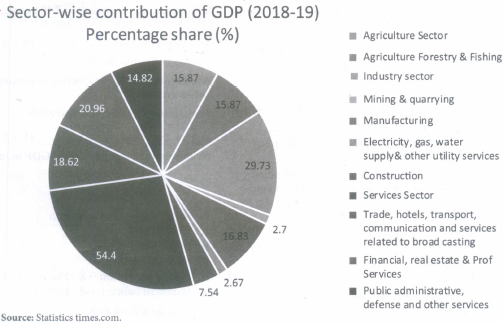
Draw the pie chart for sector wise Contribution of GDP Growth in India for the year 2018 - 2019
14.
Explain the limitations of GDP
15.
Write the classification of different sectors contribution in GDP.
16.
Assertion (A): The Himalayas act as climatic barrier
Reason (R): The Himalayas prevents cold winds from central Asia and the keep the Indian subcontinent warm.
Codes:
(a) Both A and R are true R explains A
(b) Both A and R are true R does not explain A
(c) A is true and R is false
(d) A is false and R is true
17.
Assertion (A): The Satellite states were dependent on US aid.
Reason (R): These states were governed by ruling groups made up of military personnel, landed gentry and of local capitalists.
Codes
(a) Both (A) and (R) are wrong.
(b) (A) is wrong and (R) is correct.
(c) Both (A) and (R) are correct and (R) is the correct explanation of (A).
(d) Both (A) and (R) are corrected (R) is not the correct explanation of (A).
18.
Assertion (A): In 1941, the German army invaded Russia.
Reason (R): Germany wanted have an alliance with Russia which was refused by the latter.
Codes
(a) Both A and R are correct
(b) A is right but R is not the correct reason
(c) Both A and R are wrong
(d) R is right but it has no relevance to A.
19.
Assertion (A): In 1939, Britain and France declared war on Germany.
Reason (R): Hitler broke the Munich Pact attacked Czechoslovakia followed by Poland.
Codes
(a) Both A and R are correct
(b) A is right but R is not the correct reason
(c) Both A and R are wrong
(d) R is right but it has no relevance to A.
20.
Assertion: In the sixteenth century, when the Aztecs were at the height of their power, the Mexican empire collapsed.
Reason: A handful of adventures led by a Spaniard named Hernan Cortes made an attack on Mexico.
Codes
(a) Both A and R are correct
(b) A is right but R is not the right reason
(c) Both A and R are wrong
(d) R is right but it has no relevance to A
21.
Assertion: In the Boer war camps, shortage of food, medical and sanitary facilities caused the death of 26,000 people.
Reason: There were dashes among the people in the camp.
Codes
(a) Both A and R are correct
(b) A is right but R has no relevance to A
(c) A is right but R is not the correct explanation
(d) R is right but it has no relevance to A
22.
Assertion: Mussolini won over the Roman Catholic Church by recognizing the Vatican City as an independent state.
Reason: He wanted to give respectability to the Fascist party.
Codes
(a) Both A and R are correct
(b) A is right but R is not the correct reason
(c) Both A and R are wrong
(d) R is right but it has no relevance to A
23.
Assertion: During the first three years of the I World War, the United States gave only moral support and valuable material aid to Britain and France.
Reason: They had a very Poor leadership
Codes
(a) Both A and R are correct
(b) A is right but R is not the correct reason
(c) Both A and R are wrong
(d) R is right but it has no relevance to A.
24.
Assertion: 1914 is a turning point in world history.
Reason: The political and social processes that began in 1789 culminated in the world war I that year (1914) and shaped the course of the twentieth century.
Codes
(a) Both A and R are correct
(b) A is right but R is not the correct reason
(c) Both A and R are wrong
(d) R is right but it has no relevance to A.
1.
| S.No | Open wells | Tube wells |
|---|---|---|
| 1. | This type of irrigation is widely practiced in the areas where groundwater is sufficiently available. | Tube wells are developed in the areas of low water table, sufficient power supplies, and soft subsurface geological units. |
| 2. | The areas are in Ganga plains, the deltaic region of Mahanadi, Godavari, Krishna, Cauvery, and parts of Narmada and Tapti valleys. | Tube wells are predominant in the states of Gujarat, Maharashtra, Punjab, Madhya Pradesh and Tamil Nadu. |
2.
| S.No | Tank irrigation | Well irrigation |
|---|---|---|
| 1. | Tank irrigation is used to collect and store water for irrigation and other purposes | Well irrigation is the most important source of irrigation. |
| 2. | It is popular in the peninsular India. | It is a cheap, dependable and popular source of irrigation. |
3.
| S.No | Bhangar | Khadar |
|---|---|---|
| 1. | Bhangar and Khadar alluvium normally found in large areas of the higher alluvial plains. | It is composed of newer alluvium. |
| 2. | It forms terraces. | It forms the flood plains along the river banks. |
| 3. | It is out of reach of floods. | It is renewed every year by flood. |
| 4. | It is dark coloured and relatively due grained soil. | It is coarse-grained, light coloured soil. |
| 5. | It is relatively less fertile. | It is more fertile. |
4.
| S.No | Sheet erosion | Rill erosion |
|---|---|---|
| 1. | Removal of the top layer of the soil is known as sheet erosion. | Rill is the second stage of erosion which form small holes on the earth's surface. |
| 2. | It is common on relatively steeper slopes of heavy rainfall regions in the Himalayas. Foothills, over the northeastern parts of the Peninsula, Assam. | Rill erosion is active over wide areas in Bihar, Uttar Pradesh, Madhya Pradesh, and in semi area parts of the Peninsula in Maharastra, Karnataka, Andra Pradesh, and TamilNadu. |
5.
| S.No | Tea | Coffee |
|---|---|---|
| 1. | Tea is a beverage crop | Coffee is a beverage crop |
| 2. | Tea is an evergreen plant that mainly grows in tropical and subtropical climates. | Coffee is grown in shade and it grows effectively in the altitudes between 1,000 and 1,500m above mean sea level. |
| 3. | India is the second largest producer of tea | India is the 7th largest producer of coffee globally. |
| 4. | Assam is the larger producer of tea in India. | Karnataka is the leading producer of coffee in India. |
6.
| S.No | Food crops | Cash crops |
|---|---|---|
| 1. | Crops which are cultivated for food | The crops which are cultivated for commercial purpose are called cash crops. |
| 2. | Wheat is the second most important food crop of our country after rice. | Cotton is the most important cash crop of India after sugarcane. |
| 3. | It is cultivated for local markets. | Crop is cultivated for the local and international markets. |
| 4. | Rice, wheat, jowar and bajra are important food crops of India. | Sugarcane, tobacco, cotton, jute, mesta and oilseeds are important cash crops of India. |
7.
| S.No |
Tropical dry forest |
Desert and semi-desert vegetation |
|---|---|---|
| 1. | Found in areas with 50 - 100 cms of rainfall | Found in areas having annual rainfall of less than 50 cm |
| 2. | They represent a transitional type of forests | They are also called as Tropical thorn forests |
| 3. | The important species are Mahua, Banyan, Amaltas, Palas, Haldu, Kikar, Babool etc.. | Babul, Kikar and wild palms are common trees found here |
| 4. | These are found in East Rajasthan, Punjab, Haryana, Western Uttar Pradesh, Madhya Pradesh, Eastern Maharashtra, Telangana, West Karnataka, and East Tamil Nadu | They are found in the very dry parts of the Deccan plateau in Karnataka, Maharashtra and Andhra Pradesh. |
8.
| S.No |
Coastal forests |
Tidal forests |
|---|---|---|
| 1. | The coastal areas have this kind of forests | Tidal forests occur in and around deltas, estuaries, and creeks prone to tidal influences. |
| 2. | These are littoral forests | They are also known as mangrove forests |
| 3. | Both eastern and western coasts have these type of forests | The Ganga, Brahmaputra delta has the largest tidal forest |
| 4. | Ex: Kerala and Goa | The deltas of Mahanadi, Godavari and Krishna rivers are also known for Tidal forests. |
9.
| S.No |
Loo |
Norwesters |
|---|---|---|
| 1. | Strong hot winds blow over the North - western part of India during summer. | Local thunder storms blow over the North-Eastern part of India during summer. |
| 2. | They blow in dust and sand | They cause heavy rainfall. |
10.
| S.No |
Tributary |
Distributary |
|---|---|---|
| 1. | A river or stream which contributes its water to main river is called a tributary. | A branch or outlet which leaves a main river and does not rejoin it, carrying its water to the sea or a lake is called a distributary. |
| 2. | For example river Bhavani is a tributary of river Cauveri. | River Hooghly is a distributary of river Ganga. |
11.
| S.No | GMT | IST |
|---|---|---|
| 1. | GMT - denotes Greenwich Mean Time. | IST - stands for Indian Standard Time. |
| 2. | It is based on 0° longitude. | It is based on 82° 30'E longitude. |
| 3. | This meridian passes through Greenwich in London. | Meridian of IST passes through Mirzapur. |
| 4. | It is 5 1/2 hours behind of Indian standard time. | It is 5 1/2 hours ahead of Greenwich Mean Time. |
| 5. | It is the world standard time. | It is the time for whole India. |
12.
| S.No |
Western Himalayas |
Eastern Himalayas |
|---|---|---|
| 1. | These ranges in the Southwest of Kashmir form India's frontier with Afghanistan and China. | Brahmaputra river marks the Eastern most geographical limit of the Himalayas. |
| 2. | They are also known as Trans Himalayas. | They are also known as Purvanchal hills. |
| 3. | They consist of Karakoram, Ladakh and Zaskar ranges. | They comprise Patkai hills and Naga hills in the north and Mizo Hills in the south. |
13.
14.
a) Several important goods are services left out of the GDP:
i) The GDP includes only the goods and services sold in the market.
ii) The services provided by the parents to their children is very important but it is not included in the GDP because it is not sold in the market.
iii) Likewise clean air, which is vital for a healthy life, has no market value and is left out of the GDP.
b) GDP measures only quantity but not quality :
i) In the 1970s schools and banks did not permit the use of ballpoint pens.
ii) This is because, the ones available in India were of very poor quality.
iii) Since then, not only has there been a substantial increase in the quantity of ballpoint pens produced in India but their quality has also improved a lot.
iv) The improvement in quality of goods is very important but it is not captured by the GDP.
c) GDP does not tell us about the way income is described in the country:
The GDP of a country may be growing rapidly but income may be distributed so unequally that only a small percentage of people may be benefitting from it.
d) The GDP does not tell us about the kind of life people are living:
A high level of per capita real GDP can go hand - in - hand with very low health condition of people, an undemocratic political system, high pollution and high suicide rate.
15.
Contribution of different sectors GD P in India:
i) Gross Value Added (GVA) at current prices for services sector is estimated at 92.6 lakh crore in 2018 - 19.
ii) Services sector accounts for 54.40% of total India's (GVA) of 169.61 lakh crore Indian Rupees.
iii) With GVA of Rs. 50.43 lakh crore, Industry sector contributes 29.73%.
iv) Agriculture and allied sector shares 15.87%.
v) At 2011-12 prices, composition of Agriculture &allied, Industry and services sectors are 14.39%, 31.46% and 54.15% respectively.
vi) The share of primary like agriculture, forestry, fishing and mining and quarrying.
vii) Secondary (Industry) like, manufacturing, electricity, gas, water supply, utility services and construction, tertiary (services) like, trade, hotels, transport, communication etc. have been estimated as 18.57%, 27.03%, 54.40%.
viii) According to sector wise India GDP composition in 2017 are Agriculture (15.4%), Industry (23%) and services (61.5%).
ix) India is 2nd largest producer of agriculture product.
x) India accounts for 7.39% of total global agricultural output.
xi) In Industry sector, India world rank is 6.
xii) In service sector, India world rank is 8.
xiii) Contribution of Agriculture sector in Indian economy is much higher than world's average 6.4%.
xiv) Contribution of Industry and services sector is lower than world's average 30% for Industry sector and 63% for services sector.
xv) At previous methodology, composition of Agriculture & allied, Industry and services sector was 51.81%, 14.16% and 33.25% respectively at current prices in 1950-51.
(xvi) Share of Agriculture & allied sector has declined at 18.20% in 2013 - 14.
xvii) Share of services sector has improved to 57.03%.
xviii) Share of Industry sector has also increased to 24.77%.
16.
(a) Both A and R are true R explains A
17.
(c) Both (A) and (R) are correct and (R) is the correct explanation of (A).
18.
(b) A is right but R is not the correct reason
19.
(a) Both A and R are correct
20.
(a) Both A and R are correct
21.
(c) A is right but R is not the correct explanation
22.
(a) Both A and R are correct
23.
(b) A is right but R is not the correct reason
24.
(a) Both A and R are correct

10th Standard Syllabus & Materials
10th Standard
TN 10th English Prose - 2 - The Night the Ghost Got in Important Questions And Answers Study Material - QB365 Set A
NEW10th Standard
TN 10th English Supplementary - 1 - The Tempest Important Questions And Answers Study Material - QB365 Set A
NEW10th Standard
TN 10th English Poem - 1 - Life Important Questions And Answers Study Material - QB365 Set A
NEW10th Standard
TN 10th English Prose - 1 - His First Flight Important Questions And Answers Study Material - QB365 Set A



Tamilnadu Stateboard 10th Standard Subjects
Tamilnadu Stateboard Standards




