
 100% FREE ACCESS
10th Standard Syllabus & Materials
10th Standard
TN 10th English Prose - 4 - The Attic Important Questions And Answers Study Material - QB365 Set A
NEW10th Standard
TN 10th English Supplementary - 3 - The Story of Mulan Important Questions And Answers Study Material - QB365 Set A
NEW10th Standard
TN 10th English Poem - 3 - I am Every Woman Important Questions And Answers Study Material - QB365 Set A
NEW10th Standard
TN 10th English Prose - 3 - Empowered Women Navigating The World Important Questions And Answers Study Material - QB365 Set A
NEW10th Standard
TN 10th English Supplementary - 2 - Zigzag Important Questions And Answers Study Material - QB365 Set A
NEW10th Standard
TN 10th English Poem - 2 - The Grumble Family Important Questions And Answers Study Material - QB365 Set A

Published on: 14/05/2020
10th Standard Social Science English Medium Creative Important 5 Marks Questions
Download Tamil Nadu 10th Standard Social Science question papers, model tests, one-mark questions, important questions, and public exam papers in PDF format. Free study materials and answer keys for TN State Board students.
Questions + Answers key
Take MCQ Social Science Test
1.
Major issues faced by farmers in India.
2.
Tank irrigation is popular in Peninsular India.
3.
Explain the importance of mass communications systems in India.
4.
Describe the major challenges of Indian industries.
5.
Write the negative impact of Globalization
6.
Write the goals of World Trade Organisation
7.
List out 10 largest multinational companies in India - 2018.
8.
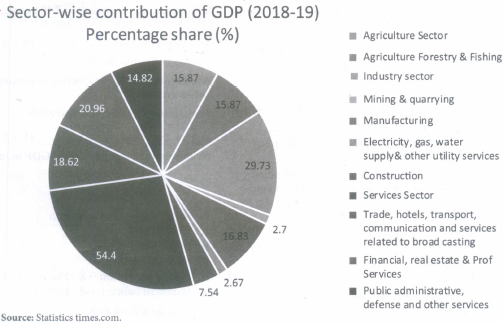
Draw the pie chart for sector wise Contribution of GDP Growth in India for the year 2018 - 2019
9.
Explain the limitations of GDP
10.
Write the classification of different sectors contribution in GDP.
11.
Give a detailed account of the classification of the Council of Ministers based on ranks.
12.
Explain the List of fundamental duties.
13.
Explain in detail about the Acquisition of Citizenship in our country.
14.
Explain about Retreating or North East Monsoon.
15.
Explain about any two factors affecting the climate of India.
16.
Describe peninsular plateau.
17.
Write the importance of Himalayas.
18.
Give an account of Narayana Guru's life and teachings.
19.
Explain in detail about the Vietnam War.
20.
Given an account of the communist Victory over China.
21.
What were the causes for the failure of the League of Nations?
22.
Give an account of Boer Wars.
23.
Write a note on the condition of Fascists under Mussolini?
24.
What was the outcome of the Russian Revolution?
25.
Write a note on the fall out of the First World War.
26.
List out a few criticisms of the peace settlement.
27.
Automobile and Electronic Industry
28.
Solar energy and Wind energy
1.
Indian agriculture and Indian farmers are plagued by several problems; some of them are natural and some others are manmade.
(i) Small and fragmented land-holdings: The problem of small and fragmented holdings is more serious in densely populated and intensively cultivated states in India.
(ii) High Costs of Inputs: Seed is a critical and basic input for attaining higher crop yields and sustained growth in agricultural production.
(iii) Infertile Soil: Indian soils have been used for growing crops over thousands of years without caring much for replenishing. This has led to depletion and exhaustion of soils resulting low productivity.
(iv) Lack of Irrigation: Only one- third of the cropped area falls under irrigated area. To make agriculture reliable, irrigation facility has to be developed.
(v) Soil erosion: Large tracts of fertile land suffer from soil erosion by wind and water. Such kind of areas must be properly treated and restored to its original fertility.
(vi) Agricultural marketing: In rural India, agricultural marketing continues in bad shape. Due to the absence of sound marketing facility, the farmers have to depend on local traders and middlemen for the disposal of their farm products which is sold at a low price.
(vii) Inadequate storage facilities: Storage facilities in the rural areas are either totally absent or grossly inadequate. Under such conditions, the farmers are compelled to sell their products immediately after the harvest irrespective of the condition of market.
2.
A tank is a natural or man-made hollow on the surface developed by constructing a small bund around it across a stream. It is used to collect and store water for irrigation and other purposes. Irrigation by tanks is a very old system in India. It also includes irrigation from lakes and ponds. The tank irrigation is popular in the peninsular India due to the following reasons:
(i) The undulating relief and hard rocks make difficult to dig canals and wells.
(ii) Natural depressions serve as reservoirs.
(iii) Absence of perennial rivers.
(iv) Impermeable rock structure which do not permit percolation.
(v) The scattered nature of population and agricultural fields
3.
Electronic Media:
(i) Mass Communication enables millions of people to get the information at the same time.
(ii) It is a great way to provide education as well as entertainment.
(iii) It helps in creating awareness among the people regarding various national policies and programmes.
(iv) The Mass Communication Systems can provide the information to people in two methods.
Electronic Media:
(i) Radio broadcasting in India was started in 1923 by the Radio club of Bombay.
(ii) It was named as All India Radio (AIR) in 1936 and again it was renamed as Akashwani in 1957.
(iii) It broadcasts a variety of programs related to information, education and entertainment.
Print Media:
(i) Newspapers are the most common but powerful means of communication come under print media.
(ii) India has many newspapers which carry information on local, national and international events to the people
4.
Major challenges of Indian Industries:
i) Industries in India face many problems. Some major problems are listed below.
ii) Shortage and fluctuation in Power Supply.
ii) Non- availability of large blocks of land.
iv) Poor access to credit.
v) High rate of interest for borrowed loan.
vi) Non - availability of cheap labourers.
vii) Lack of technical and vocational training for employees.
viii) Inappropriate living conditions nearby industrial estates.
5.
(i) Too much flow of capital amongst countries, Introduces unfair and immoral distributors of Income
(ii) Another fear is losing national integrity Because of too much exchange of trade, independent domestic policies are lost.
(iii) Rapid growth of the economy has required a major infrastructure and resource extraction. This increase negative ecological and Social costs.
(iv) Rapid increases in exploitation of natural resources to earn foreign exchange.
(v) Environmental standards and regulations have been relaxed.
6.
Goals of WTO:
(i) Raising and stabilizing the incomes of small scale farmers, farm workers and artisans.
(ii) More equitably distributing the economic gains, opportunities and risks associated with the production and sale of these goods.
(iii) Increasing the organisational and commercial capacities of producer groups.
(iv) Promoting labour rights and the right workers to organize.
(v) Promoting safe and sustainable farming methods and working conditions
7.
(i) Sony Corporation
(ii) Hew left Packard (HP)
(iii) Tata Group
(iv) Microsoft corporation
(v) IBM
(vi) Nettle
(vii) Procter and Gamble
(viii) Pepsi company
(ix) The Coca-Cola company
(x) City group
8.
9.
a) Several important goods are services left out of the GDP:
i) The GDP includes only the goods and services sold in the market.
ii) The services provided by the parents to their children is very important but it is not included in the GDP because it is not sold in the market.
iii) Likewise clean air, which is vital for a healthy life, has no market value and is left out of the GDP.
b) GDP measures only quantity but not quality :
i) In the 1970s schools and banks did not permit the use of ballpoint pens.
ii) This is because, the ones available in India were of very poor quality.
iii) Since then, not only has there been a substantial increase in the quantity of ballpoint pens produced in India but their quality has also improved a lot.
iv) The improvement in quality of goods is very important but it is not captured by the GDP.
c) GDP does not tell us about the way income is described in the country:
The GDP of a country may be growing rapidly but income may be distributed so unequally that only a small percentage of people may be benefitting from it.
d) The GDP does not tell us about the kind of life people are living:
A high level of per capita real GDP can go hand - in - hand with very low health condition of people, an undemocratic political system, high pollution and high suicide rate.
10.
Contribution of different sectors GD P in India:
i) Gross Value Added (GVA) at current prices for services sector is estimated at 92.6 lakh crore in 2018 - 19.
ii) Services sector accounts for 54.40% of total India's (GVA) of 169.61 lakh crore Indian Rupees.
iii) With GVA of Rs. 50.43 lakh crore, Industry sector contributes 29.73%.
iv) Agriculture and allied sector shares 15.87%.
v) At 2011-12 prices, composition of Agriculture &allied, Industry and services sectors are 14.39%, 31.46% and 54.15% respectively.
vi) The share of primary like agriculture, forestry, fishing and mining and quarrying.
vii) Secondary (Industry) like, manufacturing, electricity, gas, water supply, utility services and construction, tertiary (services) like, trade, hotels, transport, communication etc. have been estimated as 18.57%, 27.03%, 54.40%.
viii) According to sector wise India GDP composition in 2017 are Agriculture (15.4%), Industry (23%) and services (61.5%).
ix) India is 2nd largest producer of agriculture product.
x) India accounts for 7.39% of total global agricultural output.
xi) In Industry sector, India world rank is 6.
xii) In service sector, India world rank is 8.
xiii) Contribution of Agriculture sector in Indian economy is much higher than world's average 6.4%.
xiv) Contribution of Industry and services sector is lower than world's average 30% for Industry sector and 63% for services sector.
xv) At previous methodology, composition of Agriculture & allied, Industry and services sector was 51.81%, 14.16% and 33.25% respectively at current prices in 1950-51.
(xvi) Share of Agriculture & allied sector has declined at 18.20% in 2013 - 14.
xvii) Share of services sector has improved to 57.03%.
xviii) Share of Industry sector has also increased to 24.77%.
11.
Categories of the Ministers The ministers are classified under three ranks
(I) Cabinet Minister
(II) Ministers of State
(III) Deputy Ministers.
Cabinet Ministers
(i) The Cabinet is an informal body of senior ministers who form the nucleus of administration.
(ii) Important decisions of the government are taken by the Cabinet, such as defence, finance, external affairs and home.
(iii) The Cabinet recommends to the President to promulgate an ordinance.
(iv) It is instrumental in moving Amendments to the Constitution.
Ministers of State
(i) These ministers belong to the second category of ministers in the council.
(ii) They are also in charge of ministries or departments but they do not participate in the meetings of the cabinet unless invited to do so.
Deputy Ministers
They are the lowest ranked ministers in the cabinet. They assist either the Ministers of Cabinet or state in the performance of the duties entrusted to them
12.
List of Fundamental Duties:
Article 51A declares it to be the duty of every citizen of India.
(i) To abide by the constitution and respect its ideals and institutions, the National Flag and the National Anthem.
(ii) To cherish and follow the noble ideals which inspired the national struggle for freedom.
(iii) To uphold and protect the sovereignty, unity and integrity of India.
(iv) To defend the country and render national service when called upon to do so.
(v) To value and preserve the rich heritage of our composite culture.
(vii) To protect and improve the natural environment including forests, lakes, rivers and wildlife, and to have compassion for living creatures.
(viii) To develop scientific temper, humanism and the spirit of inquiry and reform.
(ix) To safeguard public property and to abjure violence
13.
The Citizenship Act of 1955 prescribes five ways of acquiring citizenship, viz, birth, descent, registration, naturalisation and incorporation of territory:
According to the Citizenship Act, 1955, the citizenship could be acquired through any of the following methods.
(i) By Birth : All persons born in India on or after January 26, 1950 are treated as citizens by birth.
(ii) By Descent: A person born outside India on or after January 26, 1950 shall be a citizen of India by descent, if his father is a citizen of India at the time of his birth.
(iii) By Registration : A person can acquire citizenship of India by registration with appropriate authority.
(iv) By Naturalisation : A foreigners can' acquire Indian citizenship, on application for naturalization to the Government of India.
(v) By Incorporation of Territory : In the event of a certain territory being added to the territory of India, the Government of India shall specify the persons of that territory who shall be citizen of India.
14.
(i) The southwest monsoon begins to retreat from north India by the end of September due to the southward shifting pressure belts.
(ii) The southwest monsoon wind returns from Indian landmass and blows towards Bay of Bengal.
(iii) The Coriolis force deflects this wind and makes it to blow from northeast. Hence, it is known as Northeast monsoon or Postmonsoon season.
(iv) The season is associated with the establishment of the north -easterly wind system over the Indian subcontinent.
(v) Many parts of Tamil Nadu and some parts of Andhra Pradesh and Karnataka receive rainfall during this season due to the storms forming in the Bay of Bengal.
(vi) Large scale losses to life and property occur due to heavy rainfall, strong winds and storm surge in the coastal regions.
(vii) The day time temperatures start falling sharply all over the country.
(viii) The mean temperature over north-western parts of the country shows a decline from about 38°C in October to 28°C in November.
15.
Climate of India is affected by the factors of latitude, distance from the seas, monsoon wind, relief features, and jet stream.
(i) Latitude:
(a) Latitudinally, India lies between 8°4'N and 37°6'N latitudes.
(b) The Tropic of Cancer divides the country into two equal halves.
(c) The area located to the south of Tropic of cancer experiences high temperature and no severe cold season throughout the year whereas, the areas to the north of this parallel enjoys sub-tropical climate.
(d) Here, summer temperature may rise above 40°C and it is close to freezing point during winter.
(ii) Altitude:
(a) When the altitude increases, The temperatures decreases.
(b) Temperature decreases at the rate of 6SC for every 1000 meters of ascent. It is called normal lapse rate.
(c) Hence, places in the mountains are cooler than the places on the plains.
(d) That is why the places located at higher altitudes even in south India have a cool climate.
(e) Ooty and several other hill stations of south India and of the Himalayan ranges like Mussoorie, Shimla, etc., are much cooler than the places located on the Great Plains.
16.
(i) The plateau region lies to the south of the Great Northern Plains. This is the largest physiographic division of our country.
(ii) It covers an area of about 16 lakh sq.km (about half of the total area of the country). It is an old rocky plateau region.
(iii) Aravalli hills mark the north-western boundary of the plateau region.
(iv) Its northern and north-eastern boundaries are marked by the Bundelkhand upland, Kaimur and Rajmahal hills.
(v) The Western Ghats and the Eastern Ghats mark the western and eastern boundaries respectively.
(vi) The peak of Anaimudi is the highest point in the plateau. Its height is 2,695 m and is located in Anaimalai.
(vii) River Narmada divides the plateau region of India broadly into 2 parts.
(viii) The region lying to the north of the Narmada is called the Central Highlands and the region lying to the south of Narmada is called the Deccan Plateau.
(ix) All the major rivers (Mahanadi, Godavari, Krishna, Kaveri, etc.) lying to the south of the Vindhyas flow eastwards and fall into the Bay of Bengal.
(x) Narmada and Tapti are the two rivers situated to the south of the Vindhyas flow westward.
(xi) Their movement towards west is due to the presence of a rift valley in the region.
17.
(i) Himalayas blocks southwest monsoon winds and causes heavy rainfall to north India.
(ii) It forms a natural barrier to the subcontinent.
(iii) It is the source for many perennial rivers like Indus, Ganges, Brahmaputra, etc.
(iv) The Northern Mountains are described as the paradise of tourists due to its natural beauty.
(v) Many hill stations and pilgrim centers like Amarnath, Kedarnath, Badrinath, and Vaishnavi Devi temples are situated here.
(vi) It provides raw material for many forest based industries.
(vii) It prevents the cold winds blowing from the central Asia and protects India from severe cold.
(viii) Himalayas are renowned for the rich biodiversity.
18.
(i) Born to poor parents in Kerala, Narayana Guru (1854-1928) evolved into a poet and scholar in Malayalam, Tamil, and Sanskrit.
(ii) In his days the people of depressed classes had no access to temples, streets, public tanks and wells, and educational institutions.
(iii) Men and women belonging to lower castes were not allowed to wear the upper garments.
(iv) Disturbed by the terrible caste tyranny, that the lower caste people suffered, he dedicated his whole life for the betterment of the oppressed.
(v) He set up the Sri Narayana Dharma Paripalana Yogam, an organization to work for the uplift of the "depressed classes'.
(vi) He established a grand temple at Aruvipuram and dedicated it to all.
(vii) His movement inspired a radical transformation of Kerala society, especially among the Ezhavas.
(viii) Thinkers and writers such as Kumaran Asan and Dr. Palpu were influenced by his ideas and carried forward the movement.
19.
(i) By the end of Second World War Viet Minh controlled the northern half of Vietnam. Viet Minh formed a government led by Ho Chi Minh in Hanoi.
(ii) This Viet Minh government quickly occupied the southern half of Vietnam. However, the Allied Powers decided at Potsdam that the British in the south and the Chinese in the north should defend Indo-China from the Japanese.
(iii) In March the two governments (French and Viet Minh) reached an agreement by which North Vietnam was to be a free state, within an Indo-Chinese Federation. But the new French constitution included all overseas colonies in a French Union.
(iv) In 1949 the French attempted to secure the support of the population by declaring Vietnam, Laos, and Cambodia independent within the French Union, retaining only foreign affairs and defense under French control. However, the problem of Indo- China soon became involved in the Cold War.
(v) While the French were receiving considerable financial aid from America, the Viet Minh were helped by the new Chinese communist government. The French troops were eventually defeated.
(vi) South Vietnam, approximately of the same size and population, was ruled by Ngo Dinh Diem.
(vii) Diem refused to hold the elections to decide on a united Vietnam.
(viii) However, by 1962, it was clear that Diem was incapable of controlling the situation. This led to the posting of more US armed forces in the area.
(ix) The US bombed both North and South in the hope that it could force the liberation forces to abandon the struggle.
(x) The fighters of North Vietnam, trained in guerilla warfare, had grown out of spontaneous struggles against a repressive regime.
(xi) The American troops also used bacteriological weapons.
(xii) Incendiary bombs such as napalm and Agent Orange (to defoliate the forest cover) were used.
(xiii) Escalation of the total military outlay caused the US big business to protest. The youths rebelled against the conscription and the horrors of war.
(xiv) Anti-Vietnam War protests rocked universities and colleges across the US and in Europe and became part of the 1960s counterculture.
(xv) No other single issue united millions of people all over the world as the war of Vietnam.
20.
Communist Victory:
(i) With the surrender of the Japanese (1945), both the Kuomintang and the communists sought to occupy the Japanese areas.
(ii) In this race the Kuomintang was successful. The cities and railways soon fell into their hands.
(iii) Even the area around Peking was soon controlled by Chiang Kai-shek's forces, largely because of the military aid given by the USA.
(iv) With the massive support provided by the USA, Kuomintang government controlled the administration, ports and communication system.
(v) But the soldiers, mainly drawn from the peasants, were disillusioned and discontented.
(vi) Mao was keen on obtaining the support of the middle class.
(vii) Mao continued the use of guerrilla tactics but also ordered large-scale military movements.
(viii) Cities fell one by one and Chiang Kai-shek's army began to disintegrate quickly.
(ix) In the summer of 1948, Communist control had been established over most parts of China.
21.
(i) The Treaty also set up the League of Nations, on the initiative of President Woodrow Wilson of the United States.
(ii) The League was expected to mediate between countries and take action against countries which indulged in military aggression.
(iii) However, the United States was not interested in playing a global role or any role in European politics.
(iv) The popular mood favoured the traditional isolationist approach, and therefore the United States did not become a member of the League.
(v) The other Allied nations were also determined to maintain a noninterventionist attitude and, in consequence, the League remained an ineffectual international body.
22.
(i) The relations between the two British colonies of Natal and Cape Colony and the two independent Boer states of Transvaal and the Orange Free State had long been unfriendly.
(ii) The discovery of gold in Transvaal, in 1886, led to large numbers of British miners settling in and around Johannesburg.
(iii) The Boers hated these people whom they referred to as Uitlanders (foreigners). The Boers taxed them heavily and denied political rights to them.
(iv) So the question was whether the British or the Boers were to be supreme in South Africa.
(v) Fearing attacks from the British, the Boers armed themselves and decided to attack.
(vi) The Boer War lasted for three years, from 1899 to 1902. Initially, the Boers were successful.
(vii) But by the first half of 1900, the Boer army was defeated. Pretoria was occupied.
(viii) In retaliation, the British destroyed farms and crops. They set up internment camps for Boer women and children.
(ix) Shortage of food, medical and sanitary facilities caused the death of 26,000 people.
(x) The British annexed the two Boer states. Boers were however promised self-government in due course.
(xi) In 1907 full responsible government was given to the Transvaal and the Orange Free State.
(xii) The four states formed into a union and the South Africa Act passed by the British parliament in 1909 provided for a Union Parliament at Cape Town.
(xiii) In May 1910 the Union of South Africa came into being.
23.
(i) In the 1924 elections, after intimidation of the electors, 65 percent of the votes were cast for the Fascists.
(ii) Matteotti, a socialist leader, who questioned fairness of the elections, was murdered.
(iii) The opposition parties boycotted the Parliament in protest.
(iv) Mussolini reacted by banning opposition parties and censoring the Press. Opposition leaders were killed or imprisoned.
(v) Assuming the title of II Duce (the leader), in 1926 he became a dictator with power to legislate.
(vi) He passed a law forbidding strikes and lockouts. Unions and employers were organized into corporations which would settle wages and working conditions.
(vii) In 1938 Parliament was abolished and was replaced by a body representing the Fascist Party and the corporations.
(viii) This new arrangement bolstered Mussolini's dictatorial control of the economy, as well as enabling him to wield enormous power as head of the administration and the armed forces.
24.
(i) The Russian Communist Party could eliminate illiteracy and poverty in Russia within a record time.
(ii) Russian industry and agriculture had developed remarkably.
(iii) Women were given equal rights, including rights to vote.
(iv) Industries and banks were nationalized. Land was announced as social property.
(v) Land was distributed to poor peasants.
(vi) Lenin thought the most important factor for the fall of Provisional government was its failure to withdraw from World War.
(vii) So Lenin immediately appealed for peace.
(viii) Unmindful of the harsh terms dictated by the Central Powers, Lenin opted for withdrawing from the War to concentrate on the formation of new government.
(ix) In March 1918 the Treaty of Brest-Litovsk was signed.
25.
(i) The First World War left a deep impact on European society and polity.
(ii) The outcome, in all countries, was imbalance between the sexes-a shortage of men.
(iii) Soldiers came to be placed above civilians.
(iv) Aggressive war propaganda and national honour occupied centre stage in the public sphere.
(v) Popular support grew in favour of dictatorship in state governance.
(vi) The most striking of all has been the rise and consolidation of the Soviet Union.
(vii) The most notable advances made there was in the fields of education and industry.
(viii) Another outstanding event of this period was the full awakening of the colonies and their aggressive attempts to gain freedom.
(ix) All the struggles for freedom in Asia and Africa illustrated how the new spirit abroad was affecting the minds of men and women in distant countries of the East simultaneously.
26.
(i) The defeated powers were absent from negotiations. The peace settlement, a dictated one, was based on the principle, to the victor belongs the spoils and the allies are the victors.
(ii) Self-determination was the principle, which was one of the fourteen points of Woodrow Wilson for restoring peace, applied to all the peoples except the German.
(iii) Austria was not allowed to unite with Germany, because the combination would be too powerful. Germany was thus left with a sense of injustice.
(iv) The reparation of 6,600 million pounds was well beyond Germany's capacity to pay.
(v) Germany was weakened, politically and economically. But instead of having the large Russian and Austro- Hungarian empires on her eastern frontier, she was now bordered by small weak and new states.
27.
| S.No | Automobile industry | Electronic industry |
|---|---|---|
| (1) | It is one of the most dynamic industrial groups in India | Electronic industry was started in India with radio manufacturing in 1850. |
| (2) | India is a major producer of two-wheelers commercial vehicles, motorcycles, jeeps, mopeds, three-wheelers, passenger cars, etc | The setting up of the Indian telephone industry in 1950 at Bangalore gave a boost to the industry |
| (3) | The growth of the automobile industry in India is only after independence. The first automobile industry was started at Kurla in Mumbai in 1947 and in Uttarpara (Kolkata) in 1948. | The industry now meets the needs of posts and telegraph, defense, railways electricity boards etc. |
| (4) | Chennai is known as Detroit of Asia | Bengaluru is known as the Electronic Capital of India. |
28.
| S.No |
Solar energy |
Wind energy |
|---|---|---|
| (1) | Solar power is the conversion of sunlight into electricity | Wind energy is extracted from air flow using wind turbines. |
| (2) | It is a non-conventional source of energy Resources are available continuously. | It is a cheap and pollution-free source of energy. |

10th Standard Syllabus & Materials
10th Standard
TN 10th English Prose - 2 - The Night the Ghost Got in Important Questions And Answers Study Material - QB365 Set A
NEW10th Standard
TN 10th English Supplementary - 1 - The Tempest Important Questions And Answers Study Material - QB365 Set A
NEW10th Standard
TN 10th English Poem - 1 - Life Important Questions And Answers Study Material - QB365 Set A
NEW10th Standard
TN 10th English Prose - 1 - His First Flight Important Questions And Answers Study Material - QB365 Set A



Tamilnadu Stateboard 10th Standard Subjects
Tamilnadu Stateboard Standards




