
 100% FREE ACCESS
10th Standard Syllabus & Materials
10th Standard
TN 10th English Prose - 4 - The Attic Important Questions And Answers Study Material - QB365 Set A
NEW10th Standard
TN 10th English Supplementary - 3 - The Story of Mulan Important Questions And Answers Study Material - QB365 Set A
NEW10th Standard
TN 10th English Poem - 3 - I am Every Woman Important Questions And Answers Study Material - QB365 Set A
NEW10th Standard
TN 10th English Prose - 3 - Empowered Women Navigating The World Important Questions And Answers Study Material - QB365 Set A
NEW10th Standard
TN 10th English Supplementary - 2 - Zigzag Important Questions And Answers Study Material - QB365 Set A
NEW10th Standard
TN 10th English Poem - 2 - The Grumble Family Important Questions And Answers Study Material - QB365 Set A

Published on: 06/02/2020
10th Standard Social Science Important Question-II- 2019-2020
Download Tamil Nadu 10th Standard Social Science question papers, model tests, one-mark questions, important questions, and public exam papers in PDF format. Free study materials and answer keys for TN State Board students.
Questions + Answers key
Take MCQ Social Science Test
1.
The world's highest road has been constructed by Border Roads Organisation joining________and Leh in Ladakh.
Chandigarh
Dehradun
Manali
Nainital
2.
North south corridor is a _________ km long road.
4075
4076
4074
4073
3.
The first hydro electric power station in India was established at_______in 1897.
Darjeeling
Shillong
Mettur
Periyar
4.
________is the largest producer of copper with 62% of India's production.
Rajasthan
Jharkhand
Odisha
Karnataka
5.
The________ French factory in India was established in 1668
Fifth
First
Second
Third
6.
FIP Stands for
Foreign Investment Policy
Foreign Institute Product
Former Institute Programme
None
7.
Industrial sector is_______ sector.
Primary sector
Secondary sector
Tertiary sector
None
8.
Commonly___________ Income is called as Gross National Product.
National Income
Personal Income
Disposable Income
All the above
9.
_______is the sixth largest economy of the world.
U.S.A
Japan
India
Pakistan
10.
Article ___________ deals with the creation or abolition of Legislative council in a state.
169
171
164
177
11.
__________was the Chief Minister of Tamil Nadu from 1947 - 1949.
Thiru. C.N. Annadurai
Thiru. O.P. Ramaswamy
Thiru. K. Kamaraj
Thiru. C. Rajagopalachari
12.
Article ________vests the executive power of the State in the Governor
154
157
158
36
13.
If the posts of President and Vice-President lie vacant, ________of India works as President
Chief Justice
Attorney General
Prime Minister
Election Commissioner
14.
The President shall hold office for a term of__________
Three years
Four years
Five years
Six years
15.
When the President suspends fundamental rights through specific orders, it must be approved by the_______
High Court
Assembly
Supreme Court
Parliament
16.
A _______tells us the fundamental nature of a society.
Law
Government
Constitution
Assembly
17.
The removal of soil along drainage lines by surface water run off forming large gullies is called ___________
Gully erosion
Rill erosion
Sheet erosion
Ravine erosion
18.
The fresh water lake found in the deltaic region of Godavari is _________________
Kolleru
Chelak
Pulicat
Vembanad
19.
The ______________ range is the oldest mountain system in India.
Aravalli
Ladakh
Karakoram
Vindhyas
20.
India has been politically divided into ___________ states and _____________ Union territories.
29, 6
28, 9
29, 7
30, 7
21.
____________ organised in campaign for legislation against the practice of child marriage in Mumbai.
Behramji Malabari
Furdunji Naoroji
Pherozeshah Mehta
Dinshaw Wacha
22.
______________ was a revivalist movement organised by the orthodox Muslim Ulama.
Aligarh movement
Satyashodhak Samaj
Arya Samaj
Deoband movement
23.
____________ was greatly influenced by Christianity believing in its spirit but not in the person of its founder.
Rajaram Mohan Roy
Vivekananda
Keshab Chandra Sen
M.G. Ranade
24.
The emergence of ___________ as a united and independent nation was a historic event.
Japan
Italy
China
Vietnam
25.
At the __________ conference in 1955, Asia and Africa gave a call to abstain from allying with army of the two superpowers.
New York
Tokyo
London
Bandung
26.
____________ was immediately elected provisional president of the new Chinese Republic after his arrival in Shanghai.
Sun Yat-sen
Mao Tse Tung
Yuan
Chiang Kai-shek
27.
The Declaration of the United Nations was accepted by all the ______________ countries which fought against the Axis power.
20
22
26
25
28.
In September 1940, _________ also joined the Axis powers.
China
Japan
Russia
Spain
29.
In 1937, Japan invaded _____________ and seized Beijing.
Turkey
Russia
Germany
China
30.
At the dawn of the 20th Century__________ had occupied Cuba and Puerto Rico
The United Kingdom
The United States
Germany
Italy
31.
The first nation of Western Europe to turn against the ruling regime was ____________
France
Italy
Germany
Spain
32.
The___________ powers were gravely weakened by the war, financially and politically.
British
European
African
Australian
33.
___________was the official newspaper of the communist party of the Soviet Union from 1918 - 1991.
Pravda
Moscow times
Trud
Vedomosti
34.
At the battle of___________ in 1914, the French succeeded in pushing back the Germans.
Tannenberg
Marne
Danzig
Balkan
35.
In 1902, Japan entered into an alliance with England and demanded that Russia should withdraw its troops from _______________
France
Spain
Manchuria
India
36.
Colonial advent in India
Portuguese, Dutch, English, Danish, French
Dutch, English, Danish , French
Portuguese, Danish, Dutch, French, English
Danish, Portuguese, French, English, Dutch
37.
National Income is a measure of
Total value of money
Total value of producer goods
Total value of consumption goods
Total value of goods and services
38.
The Legislative Council
Has a term of five years
Has a term of six years
Is a permanent house
Has a term of four years
39.
Under which Article the President is vested with the power to proclaim Financial Emergency
Article 352
Article 360
Article 356
Article 365
40.
Which one of the following rights was described by Dr. B.R. Ambedkar as the heart and soul of the Constitution?
Right to freedom of religion
Right to equality
Right to Constitutional remedies
Right to property
41.
If the fundamental rights of Indian citizen are violated, they possess the right to have an access to
The Parliament
The Attorney General
The President of India
The Supreme court of India
42.
______________ transport provides door to door services.
Railways
Roadways
Airways
Waterways
43.
One of the shore-based steel plants of India is located at ___________.
Kolkata
Tuticorin
Goa
Visakhapatnam
44.
45.
Western disturbances cause rainfall in _____.
Tamilnadu
Kerala
Punjab
Madhya Pradesh
46.
_______ Plains are formed by the older alluviums.
Bhabar
Tarai
Bhangar
Khadar
47.
Who was the founder of Widow Remarriage Association?
Mahadev Govind Ranade
Devendranath Tagore
Jyotiba Phule
Ayyankali
48.
Where was the Japanese Navy defeated by the US Navy?
Battle of Guadalcanal
Battle of Midway
Battle of Leningrad
Battle of El Alamein
49.
Name the President who made amendment to Munro Doctrine to justify American intervention in the affairs of Latin America.
Theodore Roosevelt
Truman
Eisenhower
Woodrow Wilson
50.
51.
Write about population in India
52.
Define population
53.
Write any two improved methods of agricultural practices.
54.
What are the uses of Mica?
55.
Why southern Indian trade guilds were formed?
56.
Give an example for Industrial sectors
57.
What are the four major components of GDP?
58.
Name the writs that can be issued by the High Court.
59.
Name the seven north eastern states which have a common high court at Guwahati
60.
How are the members to the legislative council elected?
61.
Write a note on the Retreat building.
62.
Write a short note on the term of the Lok Sabha.
63.
Why is the Supreme Court called the 'Guardian of the Constitution'?
64.
Write a note on 'Magna Carta'.
65.
Who is a Citizen?
66.
Write a note on Riverine forest.
67.
Write a note on purvanchal hills.
68.
Brief Ramalinga Adigal's views on hunger and poverty.
69.
What was the attitude of Muslims towards Western Education after the revolt of 1857 and state its impact.
70.
Write a short note on Boris Yeltsin.
71.
Write a note on Glasnost.
72.
What is WARSAW pact?
73.
What was the movie 'Fiddler on the Roof' about?
74.
Why did Germany develop of fleet of submarines?
75.
Write a note on Nazi policy towards Jews.
76.
Why do historians call breakdown of the International system of exchange at the Great Depression?
77.
Name the nine states that opposed the Central powers.
78.
Why did Japan annexed Korea in 1910?
79.
Write short note on Multinational corporation.
80.
Define the value added approach with example.
81.
82.
What is the importance of the Governor of a state?
83.
What are the different categories of Ministers at the Union level?
84.
List out the three heads of the relations between the centre and the states.
85.
List out the fundamental rights guaranteed by Indian Constitution.
86.
State the major Inland waterways of India.
87.
Mention the major areas of jute production in India.
88.
Name the seasons of agriculture in India.
89.
State the places of mangrove forests in India.
90.
91.
What are the differences between Reformist Movements and Revival Movements?
92.
What do you know of Beveridge Report?
93.
Explain the reason for the Smuts–Herzog alliance
94.
What were the three militant forms of nationalism in Europe?
95.
Major issues faced by farmers in India.
96.
Explain the importance of mass communications systems in India.
97.
Briefly explain in Indian paper industry.
98.
List out 10 largest multinational companies in India - 2018.
99.
Draw the pie chart for sector wise Contribution of GDP Growth in India for the year 2018 - 2019
100.
Given an account of the communist Victory over China.
101.
What were the causes for the failure of the League of Nations?
102.
Write a note on the condition of Fascists under Mussolini?
103.
Give an account of popular uprisings in Russia.
104.
Explain any three Jurisdiction of the Supreme Court of India.
105.
Mark the following countries on the world map.
1. Italy
2. Morocco
3. Turkey
4. Serbia
5. Bosnia
6. Greece
7. Austria-Hungary
8. Bulgaria
9. Rumania
106.
Mark the following incidents 1920 - 1940
1.
(a)
Chandigarh
2.
(b)
4076
3.
(a)
Darjeeling
4.
(b)
Jharkhand
5.
(b)
First
6.
(a)
Foreign Investment Policy
7.
(b)
Secondary sector
8.
(a)
National Income
9.
(c)
India
10.
(a)
169
11.
(b)
Thiru. O.P. Ramaswamy
12.
(a)
154
13.
(a)
Chief Justice
14.
(c)
Five years
15.
(d)
Parliament
16.
(c)
Constitution
17.
(a)
Gully erosion
18.
(a)
Kolleru
19.
(a)
Aravalli
20.
(c)
29, 7
21.
(a)
Behramji Malabari
22.
(d)
Deoband movement
23.
(c)
Keshab Chandra Sen
24.
(d)
Vietnam
25.
(d)
Bandung
26.
(a)
Sun Yat-sen
27.
(c)
26
28.
(b)
Japan
29.
(d)
China
30.
(b)
The United States
31.
(b)
Italy
32.
(a)
British
33.
(a)
Pravda
34.
(b)
Marne
35.
(c)
Manchuria
36.
(a)
Portuguese, Dutch, English, Danish, French
37.
(d)
Total value of goods and services
38.
(c)
Is a permanent house
39.
(b)
Article 360
40.
(c)
Right to Constitutional remedies
41.
(d)
The Supreme court of India
42.
(b)
Roadways
43.
(d)
Visakhapatnam
44.
(a)
45.
(c)
Punjab
46.
(c)
Bhangar
47.
(a)
Mahadev Govind Ranade
48.
(b)
Battle of Midway
49.
(a)
Theodore Roosevelt
50.
(b)
51.
India is the second most populous country in the world next only to china. India covers only 2.4 percent of the land area of the world, but is the home of about 17.5 percent of the world's population.
52.
The total number of people residing in a country at a specified period of time is called the 'Population' of that country
53.
Methods of Conservation and Management of Soil
(i) Contour method
(ii) Rotation of crops
(iii) Contour bunding
(iv) Strip cropping
54.
i) Mica is used in making insulating properties.
ii) It is used in electrical goods.
iii) lt is used in making of lubricants, medicines, paints and varnishes.
55.
(i) Southern Indian trade guilds were formed by merchants in order to organize and expand their trading activities.
(ii) Trade guilds become channels through which Indian culture was exported to other lands.
56.
(i) Industry sector is secondary sectors.
(ii) For example : Manufacturing, Electricity, Gas, Water supply, Automobile, Iron and Steel other utility services and construction etc..
57.
The four major components of GDP are,
(i) C - Consumption expenditure
(ii) I - Investment expenditure
(iii) G - Government expenditure
(iv) X-M - Exports - Imports
(v) GDP = C + I + G + X-M
58.
Habeas Corpus, Mandamus, Prohibition, Quo Warranto, Certiorari
59.
Assam, Nagaland, Manipur, Meghalaya Mizoram, Tripura and Arunachal Pradesh
60.
(i) 1/3 of the members are elected by local bodies.
(ii) 1/112 of the members are elected by Graduates of the universities in the State.
(iii) 1/12 of the members are elected by Graduate teachers
(iv) 1/3 of the members are elected by the members of the Legislative Assembly
(v) 1/6 is nominated by the Governor who is eminent in the field of literary excellence art, social services or Co-operation.
61.
The President of India resides at Rashtrapati Bhavan in New Delhi. The residence and the office of the President are located in the same building. However he has two other office cum residences where he conducts office at least once a year. They are 'The Retreat Building' at Shimla and the 'Rashtrapati Nilayam' at Hyderabad.
62.
(i) Generally the Lok Sabha enjoys a term of five years from the date of its first session It can be dissolved by the President before the expiry of its term on the advice of the Prime Minister.
(ii) The President can prorogue or dissolve the Lok Sabha either on the advice of the Prime Minister or on being convinced that no party or no alliance of parties enjoys necessary majority support in the House.
63.
Both the Supreme Court and the High Courts are empowered to issue five kinds of writs of habeas corpus, mandamus, prohibition, quo warranto and certiorari. That is why the Supreme Court is called the "Guardian of the Constitution".
64.
'Magna Carta' is the Charter of Rights issued by King John of England in 1215 under pressure from the barons. This is the first written document relating to the Fundamental Rights of citizens.
65.
The word 'Citizen' is derived from the Latin term 'Civis' It means resident of a City State.
66.
(i) These forests are found along the rivers on Khadar areas.
(ii) These are known for Tamarisk and Tamarind trees.
(iii) The rivers of Great Plains are more prominent for this type of natural vegetation.
67.
(i) These are the eastern off-shoot of Himalayas. It extended in the north-eastern states of India. Most of these hills are located along the border of India and Myanmar while others are inside India.
(ii) Dafla Hills, Abor Hills, Mishmi Hills, Patkai Bum Hills, Naga Hills, Manipur Hills, Mizo Hills, Tripura Hills, Mikir Hills, Garo Hills, and Khasi Hills are the hills which are collectively known as purvanchal hills.
68.
(i) Ramalinga bore witness to hunger and poverty in the country: "I saw poor people, emaciated with hunger and terribly weary, going to every house, yet their hunger was not removed, and my heart suffered intensely.
(ii) Those who suffer with relentless disease, I saw them in front of me and my heart trembled.
(iii) I saw those people, poor and of unmatched honor, their hearts weary, and I grew weak:'
69.
(i) After the suppression of great revolt of 1857 Indian Muslims looked to Western culture with suspicion.
(ii) The community feared that Western education, Western culture, and Western ideas would endanger their religion.
(iii) Therefore only a small section of Muslims accepted the new avenues for modern education.
(iv) Consequently, Indian Muslims as a community lagged behind in comparison to the Hindu elite of various parts of India.
70.
(i) Yeltsin was first an ally of Gorbachev as Mayor of Moscow, Yeltsin won great popularity as a champion of political and economic freedom. (ii) Yeltsin was returned to power with overwhelming support of a Moscow constituency in 1989.
(iii) President Yeltsin advocated greater autonomy of the Russian Republic, with executive presidential system that would allow him to govern independently of parliament.
71.
(i) Glasnost ('openness') was a policy of ideologically openness introduced by Mikhail Gorbachev along with Perestroika in the 1980s.
(ii) Under Leonid Brezhnev, the ideological and cultural climate was stifling with dissent being crushed ruthlessly.
(iii) Under Glasnost there was more openness, writers who had been censored earlier were rehabilitated, and there was space for criticism of politics and government.
72.
(i) In December 1954, a conference of eight European nations namely, Albania, Bulgaria, Hungary, Czechoslovakia, East Germany, Poland, Romania, and Russia took place in Moscow.
(ii) They concluded the treaty on May 14, 1955. This is known as the Warsaw Pact.
73.
The movie, Fiddler on the Roof, is about the anti- Jewish pogrom in nineteenth century Russia when an entire village of Jews is forced to move out by an order of the Tsar.
74.
(i) Britain depended on large scale imports of food, raw materials and industrial goods by sea from its Empire and the US.
(ii) To attack this, Germany developed a fleet of submarines which caused havoc, especially in the Atlantic Ocean area, by sinking a large number of civilian ships carrying supplies to Britain.
75.
(i) Along with the repressive measures, Hitler's government followed a policy of repressing Jewish people.
(ii) The Jews were removed from government positions, excluded from the universities and deprived of citizenship.
(iii) Jewish businesses were closed down, and their establishments were attacked.
(iv) Later they were turned into extermination camps where industrial means of murder such as gas chambers were used to kill Jews.
76.
The defensive measures adopted by various nations to safeguard its economic interests led to an unprecedented decline in world economic activity. As its effect was deep and prolonged economists and historians call it the Great Depression.
77.
Russia, France, Britain, Italy, the United States, Belgium, Serbia, Romania and Greece are the nine states that opposed the central powers.
78.
After 1905 Japan took control of Korean domestic and foreign policy. The assassination of a prominent Japanese diplomat provided the excuse in 1910 for Japan's annexation of Korea.
79.
Multi National Corporation (MNC) is a corporate organization which owns or controls production of goods and services in at least one country other than its home country.
80.
a) In the value added approach the value added by each intermediate goods is summed to estimate the value of the final goods.
b) The sum of the value added by all the intermediate goods used in production gives us the total value of the final goods produced in the economy.
Example:
To measure the market value of a cup of tea is, to add the value of each intermediate goods used to produce it such as tea powder, milk and sugar.
81.
82.
a) The Governor is the Constitutional head of the State Executive.
b) The executive powers of the state are vested in the Governor.
c) Every Bill passed by the State Legislature will become law only after his signature.
d) He can dismiss the Council of Ministers when it is unable to prove the confidence of the Legislative Assembly.
e) He may recommend to the president to impose the President's rule in the state.
83.
The Ministers are classified under three ranks.
i) Cabinet Ministers
ii) Ministers of state
iii) Deputy Ministers
84.
i) The centre-state relations can be studied under three heads
ii) They are,
a) Legislative relations
b) Administrative relations
c) Financial relations.
85.
i) Right to Equality
ii) Right to Freedom
iii) Right against Exploitation
iv) Right to Religion
v) Cultural & Educational Rights
vi) Right to Constitutional Remedies
86.
National Waterway 1: Ganga - Bhagirathi - Hooghly river system
National Waterway 2: Brahmaputra river between Dhubri - Sadiya
National Waterway 3: Kollam - Kottapuram in the state of Kerala.
87.
a) The major jute producing areas are in West Bengal and is concentrated along the Hooghly river.
b) Andhra Pradesh, Bihar, Uttar Pradesh, Assam, Chhattisgarh and Odisha are the other Jute goods producing areas.
88.
1. Kharif season - June to September
2. Rabi season - October to March
3. Zaid season - April to June
89.
The delta of the Ganga - Brahmaputra
The deltas of Mahanadi, Godavari and Krishna rivers.
90.
91.
| S.No | Reformist movement | Revival movement |
|---|---|---|
| (1) | A reform movement is a kind of social movement that aims to make gradual change or change in certain aspects of society, rather or fundamental changes. | Revival movements refer to spiritual movements which originate from a large folk revival. |
| (2) | A reform movement is distinguished from more radical social movements such as revolutionary movements. | Emphasising a personal relationship with God is typical of the movements. |
| (3) | Some of the famous Reformist movements are Brahmo Samji. The Prarthana Samaj and the Aligarh movement. | A few famous Revivalist movements are the Arya Samaj, the Ramakrishna Mission, and the Deoband movement. |
92.
i) In, 1942 the Report Commonly known as the Beveridge Report was published in the U.K.
ii) It proposed a series of measures which the Government should adopt to provide the Citizens.
iii) The major impediments are adequate income, health care, education, housing and employment to overcome poverty and discase.
93.
(i) Smuts believed that a coalition government was required to solve the country's economic problems.
(ii) Therefore the South Africa party and the National party united in 1934 to form the United South Africa's National Party or United Party for short.
(iii) In spite of misunderstandings and disagreements, the smuts - Herzog alliance lasted until 1939.
94.
The three militant forms of nationalism in Europe:
i) England's jingoism
ii) France's chauvinism
iii) Germany's Kultur.
95.
Indian agriculture and Indian farmers are plagued by several problems; some of them are natural and some others are manmade.
(i) Small and fragmented land-holdings: The problem of small and fragmented holdings is more serious in densely populated and intensively cultivated states in India.
(ii) High Costs of Inputs: Seed is a critical and basic input for attaining higher crop yields and sustained growth in agricultural production.
(iii) Infertile Soil: Indian soils have been used for growing crops over thousands of years without caring much for replenishing. This has led to depletion and exhaustion of soils resulting low productivity.
(iv) Lack of Irrigation: Only one- third of the cropped area falls under irrigated area. To make agriculture reliable, irrigation facility has to be developed.
(v) Soil erosion: Large tracts of fertile land suffer from soil erosion by wind and water. Such kind of areas must be properly treated and restored to its original fertility.
(vi) Agricultural marketing: In rural India, agricultural marketing continues in bad shape. Due to the absence of sound marketing facility, the farmers have to depend on local traders and middlemen for the disposal of their farm products which is sold at a low price.
(vii) Inadequate storage facilities: Storage facilities in the rural areas are either totally absent or grossly inadequate. Under such conditions, the farmers are compelled to sell their products immediately after the harvest irrespective of the condition of market.
96.
Electronic Media:
(i) Mass Communication enables millions of people to get the information at the same time.
(ii) It is a great way to provide education as well as entertainment.
(iii) It helps in creating awareness among the people regarding various national policies and programmes.
(iv) The Mass Communication Systems can provide the information to people in two methods.
Electronic Media:
(i) Radio broadcasting in India was started in 1923 by the Radio club of Bombay.
(ii) It was named as All India Radio (AIR) in 1936 and again it was renamed as Akashwani in 1957.
(iii) It broadcasts a variety of programs related to information, education and entertainment.
Print Media:
(i) Newspapers are the most common but powerful means of communication come under print media.
(ii) India has many newspapers which carry information on local, national and international events to the people
97.
(i) Paper Industry has emerged as a diversified and specialized industry in India that produces numerous types of papers that comes in various use such as sheet paper, paper boxes, tissues, paper bags, stationery, envelopes and printed paper products such as books, periodicals, and newspapers.
(Ii) In India the Soft wood is the principal raw ; material used for making paper especially newsprint and high class printing papers.
(iii) Paper is the pre-requisite for education and literacy and its use is an index of advancement in these two fields as well as the overall well being of the society.
(iv) The first successful effort was made in 1867 with the setting up of the Royal Bengal paper mills at Ballygunge near Kolkata.
(v) The raw materials for paper industry includes wood pulp, bamboo, salai and sabai grasses, waste paper and bagasse.
(vi) West Bengal is the largest producer of paper in the country followed by Madhya Pradesh, Odisha and Tamil nadu states.
98.
(i) Sony Corporation
(ii) Hew left Packard (HP)
(iii) Tata Group
(iv) Microsoft corporation
(v) IBM
(vi) Nettle
(vii) Procter and Gamble
(viii) Pepsi company
(ix) The Coca-Cola company
(x) City group
99.
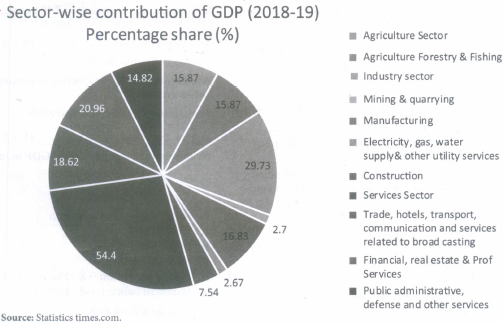
100.
Communist Victory:
(i) With the surrender of the Japanese (1945), both the Kuomintang and the communists sought to occupy the Japanese areas.
(ii) In this race the Kuomintang was successful. The cities and railways soon fell into their hands.
(iii) Even the area around Peking was soon controlled by Chiang Kai-shek's forces, largely because of the military aid given by the USA.
(iv) With the massive support provided by the USA, Kuomintang government controlled the administration, ports and communication system.
(v) But the soldiers, mainly drawn from the peasants, were disillusioned and discontented.
(vi) Mao was keen on obtaining the support of the middle class.
(vii) Mao continued the use of guerrilla tactics but also ordered large-scale military movements.
(viii) Cities fell one by one and Chiang Kai-shek's army began to disintegrate quickly.
(ix) In the summer of 1948, Communist control had been established over most parts of China.
101.
(i) The Treaty also set up the League of Nations, on the initiative of President Woodrow Wilson of the United States.
(ii) The League was expected to mediate between countries and take action against countries which indulged in military aggression.
(iii) However, the United States was not interested in playing a global role or any role in European politics.
(iv) The popular mood favoured the traditional isolationist approach, and therefore the United States did not become a member of the League.
(v) The other Allied nations were also determined to maintain a noninterventionist attitude and, in consequence, the League remained an ineffectual international body.
102.
(i) In the 1924 elections, after intimidation of the electors, 65 percent of the votes were cast for the Fascists.
(ii) Matteotti, a socialist leader, who questioned fairness of the elections, was murdered.
(iii) The opposition parties boycotted the Parliament in protest.
(iv) Mussolini reacted by banning opposition parties and censoring the Press. Opposition leaders were killed or imprisoned.
(v) Assuming the title of II Duce (the leader), in 1926 he became a dictator with power to legislate.
(vi) He passed a law forbidding strikes and lockouts. Unions and employers were organized into corporations which would settle wages and working conditions.
(vii) In 1938 Parliament was abolished and was replaced by a body representing the Fascist Party and the corporations.
(viii) This new arrangement bolstered Mussolini's dictatorial control of the economy, as well as enabling him to wield enormous power as head of the administration and the armed forces.
103.
(i) Even on 23 February 1917, when the socialists celebrated International Working Women's Day on that day, the Tsar seemed unchallengeable. But he had to abdicate on the morning of 2 March.
(ii) Though none called for strikes fearing that the time was not ripe for militant action, the bread shortages among women textile workers, many with husbands in the army, forced them to go on strike anyway and march through the factory areas of Petrograd, the capital of the Russian Empire.
(iii) Masses of women workers in a militant frame of mind demanding "Bread for workers" waved their arms towards factory workers and shouted, "Come out!" "Stop work!"
(iv) The city's 400,000 workers joined the movement the next day (24 February).
104.
Original Jurisdiction:
The cases which are brought directly in-the first instance to the Supreme Court come original under jurisdiction.
These may be
(i) dispute between the Government of India and one or more states
(ii) Dispute between two or more states
(iii) The writs are issued by the Supreme Court for the enforcement of the fundamental rights.
Appellate jurisdiction:
i) The Supreme Court is the final appellate court in the country.
ii) The Supreme Court hears appeals against the decision of High Courts.
iii) Such a case can be brought before the Supreme Court only if the High Court certifies that the case invites a substantial of law as to the interpretation of the Constitution.
Advisory Jurisdiction:
The Constitution confers on the President the power to refer to the Supreme Court any question of law or fact which in his opinion is of public importance.
Miscellaneous jurisdiction:
i) The law declared by Supreme Court is binding on all courts within the territory of India.
ii) The Supreme Court is authorized to make rules for regulating, generally the practice and procedure of the court with the approval of the President.
Judicial Review:
a) The power of the Judiciary to declare a law as unconstitutional is known as Judicial Review'.
b) The Supreme Court of India has Individual Review Power with regard to:
i) Dispute between the Centre and State.
ii) Protecting the Fundamental Rights.
105.
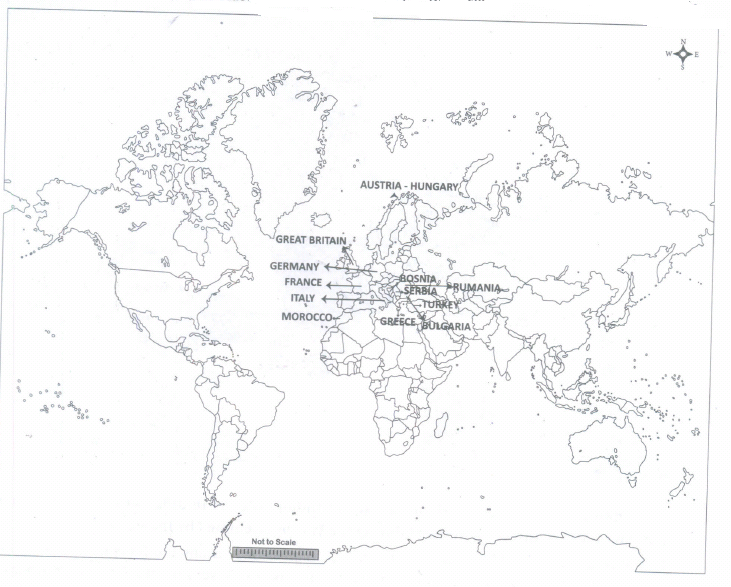
106.
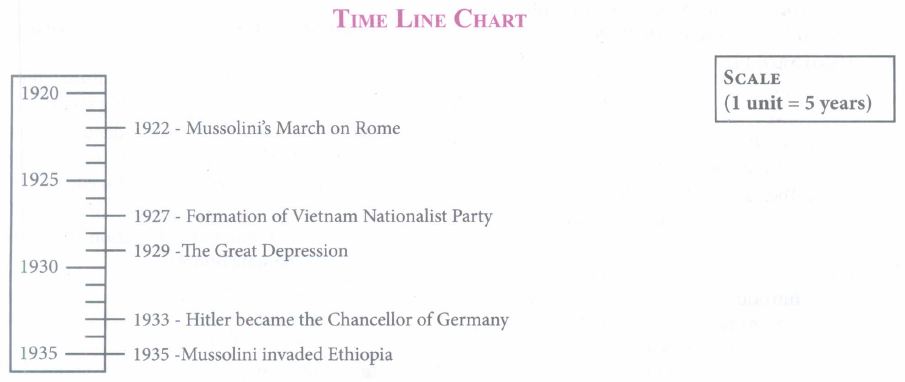

10th Standard Syllabus & Materials
10th Standard
TN 10th English Prose - 2 - The Night the Ghost Got in Important Questions And Answers Study Material - QB365 Set A
NEW10th Standard
TN 10th English Supplementary - 1 - The Tempest Important Questions And Answers Study Material - QB365 Set A
NEW10th Standard
TN 10th English Poem - 1 - Life Important Questions And Answers Study Material - QB365 Set A
NEW10th Standard
TN 10th English Prose - 1 - His First Flight Important Questions And Answers Study Material - QB365 Set A



Tamilnadu Stateboard 10th Standard Subjects
Tamilnadu Stateboard Standards




