
 100% FREE ACCESS
10th Standard Syllabus & Materials
10th Standard
TN 10th English Prose - 4 - The Attic Important Questions And Answers Study Material - QB365 Set A
NEW10th Standard
TN 10th English Supplementary - 3 - The Story of Mulan Important Questions And Answers Study Material - QB365 Set A
NEW10th Standard
TN 10th English Poem - 3 - I am Every Woman Important Questions And Answers Study Material - QB365 Set A
NEW10th Standard
TN 10th English Prose - 3 - Empowered Women Navigating The World Important Questions And Answers Study Material - QB365 Set A
NEW10th Standard
TN 10th English Supplementary - 2 - Zigzag Important Questions And Answers Study Material - QB365 Set A
NEW10th Standard
TN 10th English Poem - 2 - The Grumble Family Important Questions And Answers Study Material - QB365 Set A

Published on: 06/02/2020
10th Standard Social Science Important Question-II- 2019-2020
Download Tamil Nadu 10th Standard Social Science question papers, model tests, one-mark questions, important questions, and public exam papers in PDF format. Free study materials and answer keys for TN State Board students.
Questions + Answers key
Take MCQ Social Science Test
1.
For operations and management Indian Railways is organized into __________ zones.
16
14
12
10
2.
National Highways Authority of India was established in________
1993
1994
1996
1995
3.
The first hydro electric power station in India was established at_______in 1897.
Darjeeling
Shillong
Mettur
Periyar
4.
__________stands first in the reserves of bauxite in India.
Bihar
Gujarat
Odisha
Rajasthan
5.
The________ French factory in India was established in 1668
Fifth
First
Second
Third
6.
The Portuguese under the leadership of _________ landed at Calicut on 17th May 1498
Vasco da Gama
Van der Hagen
Sultan of Golconda
Queen Elizabeth
7.
DPI=__________
GNP - Depreciation
GDP - Depreciation
PI - Direct taxes
National Income / Population
8.
_______is the sixth largest economy of the world.
U.S.A
Japan
India
Pakistan
9.
__________Sector is largest sector.
Agriculture
Service
Industry
None.
10.
At present there are________High Courts for 28 States and 8 Union Territories.
25
22
26
29
11.
The lower house, _______ represents the people of the state in the state legislature
Legislative Council
Lok Sabha
Legislative Assembly
Rajya Sabha
12.
The Governor of a state shall be appointed by the_________
Prime Minister
cheif Minister
High Court Judge
President
13.
The Supreme Court has its permanent seat in___________
Chennai
Mumbai
Kolkata
New Delhi
14.
_________is designated as the first citizen of India.
Prime Minister
President
Vice-President
Supreme Court Justice
15.
The National Commission to review the working of the constitution was headed by_______
Sarkaria
M.N. Venkatachaliah
Rajamannar
B.R.Ambedkar
16.
_______Safeguards people from illegal assets
Habeas Corpus
Mandamus
Certiorari
Quo Warranto
17.
The Indian Council of Agriculture Research was set up in India in __________________
1950
1952
1953
1951
18.
Dihang is a gorge in __________
Assam
Meghalaya
Nagaland
Arunachal Pradesh
19.
India has been politically divided into ___________ states and _____________ Union territories.
29, 6
28, 9
29, 7
30, 7
20.
The total length of the coastline in India including the islands is ____________ km.
7516.6 km
7625.6 km
7526.6 km
7626.6 km
21.
The main objective of the Singh Sabha was to restore the purity of ____________
Hinduism
Sikhism
Christianity
Islam
22.
______________ was a revivalist movement organised by the orthodox Muslim Ulama.
Aligarh movement
Satyashodhak Samaj
Arya Samaj
Deoband movement
23.
_______________ was a priest of Dakshineswar near Kolkata.
Ramakrishna
Vivekananda
Dayanand Saraswati
Shraddhananda
24.
World Zionist organisation was founded in the year __________
1893
1895
1897
1898
25.
_______________ had no joint commands with standing forces.
NATO
SEATO
WARSAW Pact
CENTO
26.
In early 1927, Chiang Kai-shek successfully laid seize on ___________ and Nanking.
Rhine land
Canton
Shanghai and Nanking
Beijing
27.
Shakespeare's play ___________ clearly depicts the dislike and distrust of Jews among the people.
The Tempest
King hear
The Merchant of Venice
Hamlet
28.
German forces under General ___________were remarkably successful in occupying North Africa rapidly.
Montgomery
Rommel
Omar Bradley
Dwight
29.
In _____________, the Germany army invaded Russia.
July 1941
June 1940
July 1942
June 1941
30.
_________ became the first Caribbean country to throw off slavery and French colonial control
Cuba
Jamaica
Guyana
Haiti
31.
Ho Chi Minh was inspired by
Mao-Tse-Tung
Lenin
Mortague
Hitler
32.
After the I World war, the situation was made worse by the political complication caused by the ________
Treaty of Brest-Litovsk
Treaty of Bucharest
Treaty of Versailles
Treaty of London
33.
___________was the official newspaper of the communist party of the Soviet Union from 1918 - 1991.
Pravda
Moscow times
Trud
Vedomosti
34.
Lenin was influenced by the ideas of __________
Confucius
Plato
Mao-Tse-Tung
Karl Marx
35.
In the eastern front, Russian troops repeatedly defeated the _____________
French
Indians
Austrians
Germans
36.
Who is the head of the World Trade Organisation (WTO)
Ministerial conference
Director General
Deputy Director General
None of these
37.
Which one is a trade policy?
irrigation policy
import and export policy
land-reform policy
wage policy
38.
Which among the following is not one of the powers of the Governor?
Legislative
Executive
Judicial
Diplomatic
39.
The Chief Justice and other Judges of the Supreme court are appointed by:
The President
The Attorney General
The Governor
The Prime Minister
40.
A foreigner can acquire Indian citizenship through
Descent
Registration
Naturalisation
All of the above
41.
The Indian Constitution gives to its citizens
Double Citizenship
Single Citizenship
Single Citizenship in some States and double in others
None of the above
42.
43.
The famous Sindri Fertilizer Plant is located in
Jharkhand
Bihar
Rajasthan
Assam
44.
Which of the following organization has divided the Indian soils into 8 major groups?
Indian Council of Agricultural Research
Indian Meteorological Department
Soil Survey of India
Indian Institute of Soil Science
45.
46.
The extent of Himalayas in the east-west is about
2,500 km
2,400 km
800 km
2,200 km
47.
Who was Swami Shradhananda?
a disciple of Swami Vivekananda
one who caused a split in the Brahmo Samaj of India
one who caused a split in the Arya Samaj
founder of Samathuva Samajam.
48.
When was the Charter of the UN signed?
June 26, 1942
June 26, 1945
January 1, 1942
January 1, 1945
49.
Which President of the USA pursued “Good Neighbour” policy towards Latin America?
Franklin D. Roosevelt
Truman
Woodrow Wilson
Eisenhower
50.
Who said “imperialism is the highest stage of capitalism”?
Lenin
Marx
Sun Yat-sen
Mao Tsetung
51.
What is population dynamics?
52.
Write about population in India
53.
Name 5 centres of IT parts in India.
54.
What are the uses of jute?
55.
Write about European traders in South India
56.
Write a short note on Personal Income (PI).
57.
Write a short note on the High Court of Madras.
58.
Name the seven north eastern states which have a common high court at Guwahati
59.
What does Sarkaria Commission suggest on the appointment of the Governor?
60.
What is the maximum number of Ministers that can be appointed as per our Constitution?
61.
Definition of the privileges of the President.
62.
Write a short note on the 86th Amendment Act of 2002
63.
Why is the Supreme Court called the 'Guardian of the Constitution'?
64.
Write a note on 'Magna Carta'.
65.
How can Indian Natural vegetation be classified?
66.
Write the longitudinal and latitudinal extent of India.
67.
Give an account of the role of Theosophical movement in India society.
68.
Name the famous reformist movements of India in the 19th century.
69.
What galvanized the process of the breaking up of the communist world?
70.
How did Vietnam emerge as a united and independent nation?
71.
How did North Vietnam resist to the US attack in 1965?
72.
What are soft loans?
73.
Write a note on Nuclear Proliferation.
74.
Write a note on Nazi policy towards Jews.
75.
What is Gold standard?
76.
Why did America enter the first World war?
77.
Write a note on
(a) Battle of Tannenberg
(b) Battle of Marne
78.
Short note: The Dutch in South India.
79.
What are the factors supporting to develop the Indian economy?
80.
What do you understand by the “Appellate Jurisdiction” of the High Court?
81.
82.
Write a short note on Speaker of the Lok Sabha?
83.
What are the classical languages in India?
84.
List out the three heads of the relations between the centre and the states.
85.
What is communication? What are its types?
86.
What is natural gas?
87.
What is ‘burst of monsoon’?
88.
Give the importance of IST.
89.
Assess the role of Ayyankali in fighting for the cause of “untouchables.”
90.
How did Hitler get the support from the people of Germany?
91.
What do you know of the White Terror in Indo-China?
92.
What were the three militant forms of nationalism in Europe?
93.
Can you give solutions for the prevailing water disputes in South India?
94.
Tank irrigation is popular in Peninsular India.
95.
Explain the importance of mass communications systems in India.
96.
Describe the major challenges of Indian industries.
97.
Write the goals of World Trade Organisation
98.
Write the classification of different sectors contribution in GDP.
99.
Explain in detail about the Vietnam War.
100.
What were the causes for the failure of the League of Nations?
101.
Write a note on the condition of Fascists under Mussolini?
102.
Write a note on the fall out of the First World War.
103.
104.
Distinguish between NDP and NNP.
105.
Mark the following countries on the world map.
1. Italy
2. Morocco
3. Turkey
4. Serbia
5. Bosnia
6. Greece
7. Austria-Hungary
8. Bulgaria
9. Rumania
106.
Mark the following incidents 1920 - 1940
1.
(a)
16
2.
(d)
1995
3.
(a)
Darjeeling
4.
(c)
Odisha
5.
(b)
First
6.
(a)
Vasco da Gama
7.
(c)
PI - Direct taxes
8.
(c)
India
9.
(b)
Service
10.
(a)
25
11.
(c)
Legislative Assembly
12.
(d)
President
13.
(d)
New Delhi
14.
(b)
President
15.
(b)
M.N. Venkatachaliah
16.
(a)
Habeas Corpus
17.
(c)
1953
18.
(d)
Arunachal Pradesh
19.
(c)
29, 7
20.
(a)
7516.6 km
21.
(b)
Sikhism
22.
(d)
Deoband movement
23.
(a)
Ramakrishna
24.
(c)
1897
25.
(b)
SEATO
26.
(c)
Shanghai and Nanking
27.
(c)
The Merchant of Venice
28.
(b)
Rommel
29.
(d)
June 1941
30.
(d)
Haiti
31.
(a)
Mao-Tse-Tung
32.
(c)
Treaty of Versailles
33.
(a)
Pravda
34.
(d)
Karl Marx
35.
(d)
Germans
36.
(b)
Director General
37.
(b)
import and export policy
38.
(d)
Diplomatic
39.
(a)
The President
40.
(c)
Naturalisation
41.
(b)
Single Citizenship
42.
(b)
43.
(a)
Jharkhand
44.
(a)
Indian Council of Agricultural Research
45.
(c)
46.
(a)
2,500 km
47.
(c)
one who caused a split in the Arya Samaj
48.
(b)
June 26, 1945
49.
(a)
Franklin D. Roosevelt
50.
(a)
Lenin
51.
(i) Human population dynamics is a field that tracks factors related to changes in the size of population and its characteristics
(ii) Predicting population changes is an important aspect of population studies
(iii) The demographic trend affects the economic, social, and environmental systems..
(iv) The size of Population and characteristics undergoes changes constantly
52.
India is the second most populous country in the world next only to china. India covers only 2.4 percent of the land area of the world, but is the home of about 17.5 percent of the world's population.
53.
The main centres of IT parks are located in Chennai, Coimbatore, Thiruvananthapuram, Bengaluru, Mysuru, Hyderabad, Visakhapatnam, Mumbai, Pune, Indore, Gandhi Nagar, Jaipur, Noida, Mohali and Srinagar
54.
It is used for manufacturing of gunny bags, carpets, hessian, ropes and strings rugs, clothes, tarpaulins, upholstery, etc.
55.
(i) European companies which came to trade with India.
(ii) The discovery of a new all-sea route from Europe to India via cape of Good Hope by Vasco da Gama.
(Iii) Vasco da Gama had far-reaching repercussions on the civilized world.
56.
(i) Personal Income is the total money income received by individuals and households of a country from all possible sources before direct taxes.
(ii) Personal Income can be expressed as
PI = NI Corporate Income Taxes - Undistributed corporate profits - Social security contribution + Transfer payment.
57.
The High Court of Madras is the one of the three High Courts in India established in the three Presidency Towns of Bombay, Calcutta and Madras by letters patent granted by Queen Victoria, bearing date 26 June 1862. The High Court building is the second largest judicial complex in the world after London.
58.
Assam, Nagaland, Manipur, Meghalaya Mizoram, Tripura and Arunachal Pradesh
59.
Sarkaria Commission on Centre, State relations suggested that the appointment of the Governor should be made
(i) From a panel to be prepared by the State Legislature or
(ii) From a panel to be prepared by the State Government (in effect the Chief Minister) or invariably with the concurrence of the State Chief Minister; or
(iii Invariably in consultation with the State Chief Minister.
60.
The Constitution of India restricts the number the Council of Ministers including the Prime Minister to fifteen per cent of the total members of the Lok Sabha.
61.
According to Article 361(1), the President, or the Governor of a state, shall not be answerable to any court for the exercise and performance of the powers and duties of his office or for any act done or purporting to be done by him in the exercise and performance of those powers and duties.
62.
(i) The 86th Amendment Act of 2002 changed the subject -matter of Article 45 and made elementary education a fundamental right under Article 21 A.
(ii) The amended directive requires the State to provide early childhood care and education for all children until they complete the age of six years.
63.
Both the Supreme Court and the High Courts are empowered to issue five kinds of writs of habeas corpus, mandamus, prohibition, quo warranto and certiorari. That is why the Supreme Court is called the "Guardian of the Constitution".
64.
'Magna Carta' is the Charter of Rights issued by King John of England in 1215 under pressure from the barons. This is the first written document relating to the Fundamental Rights of citizens.
65.
Natural vegetation can be classified as tropical evergreen forests, tropical deciduous forests, tropical dry forests, desert and semi desert vegetation, mountain forests, Alpine forests, Tidal forests, coastal forests, and Riverine forest.
66.
India extends from 8° 04' N to 37° 06' N latitudes and between 68° 07' E to 97° 25' E longitudes.
67.
(i) Theosophical Society stimulated a study of the Hindu classics, especially the Upanishads and the Bhagavad Gita.
(ii) The Theosophical Society also played an important role in the revival of Buddhism in India.
(iii) Western interest in Hindu scriptures gave educated Hindus great pride in their tradition and culture.
68.
The Brahmo Samaj, the Prarthana Samaj, and the Aligarh Movement.
69.
The televised images of the shooting and the fall of the Berlin Wall galvanized the process of the breaking up of the communist world. In six months the political map of half of Europe had been redrawn.
70.
(i) The emergence of Vietnam as a united and independent nation was an historic event.
(ii) The help given to Vietnam by the socialist countries, the political support extended by a large number of Asian and African countries, and the solidarity expressed by the peoples in all parts of the world, helped in achieving this.
71.
(i) The US bombed both North and South in the hope that it could force the liberation forces to abandon the struggle.
(ii) The fighters of North Vietnam trained in guerilla warfare had grown out of spontaneous struggles against a repressive regime. They sustained their resistance without bowing to the US.
72.
(i) The International Development Agency (IDA) also lends money to governments for developmental activities.
(ii) These loans are "soft" loans and are given at very low rates of interest for a period of 50 years.
73.
(i) The United States and the Soviet Union entered into a race to have more nuclear-powered weapons.
(ii) They built a large stockpile of such weapons.
(iii) Britain and France also developed their own nuclear weapons.
(iv) Countries began to devote a large amount of resources in developing more and more powerful weapons of great destructive power, and defense spending sky-rocketed in many countries.
74.
(i) Along with the repressive measures, Hitler's government followed a policy of repressing Jewish people.
(ii) The Jews were removed from government positions, excluded from the universities and deprived of citizenship.
(iii) Jewish businesses were closed down, and their establishments were attacked.
(iv) Later they were turned into extermination camps where industrial means of murder such as gas chambers were used to kill Jews.
75.
Gold Standard is a monetary system where a country's currency or paper money carried a value directly linked to gold.
76.
i) In January 1917 the Germans proclaimed that they would sink even neutral ships in certain waters.
ii) Lusitania, an American ship was torpedoed by a German submarine.
iii) There was lot of resentment in the USA and President Wilson declared war against Germany.
77.
(a) Battle of Tannenberg
(i) In 1914 Russian forces invaded East Prussia. Germany defeated them decisively. In the battle of Tannenberg Russia suffered heavy losses.
(ii) This caused distraction and helped to relieve the pressure on the western front. The French army made all efforts to drive away the invading Germans.
(b) Battle of Marne
(i) At the Battle of the Marne (early September 1914), the French succeeded in pushing back the Germans.
(ii) Paris was thus saved.
(iii) The battle of Marne is a memorable one for trench warfare.
78.
i) Dutch undertook several voyages from 1596. They formed the Dutch East India Company in 1602.
ii) In 1605, Dutch factories were set up in Masulipatnam, Pettapoli and Devanampattinam
iii) In 1610, they founded another factory at Pulicat.
iv) Commodities exported by the Dutch were indigo, saltpeter and Bengal raw silk
v) Pulicat was the headquarters of the Dutch in India.
79.
(i) A fast-growing population of working age.
(ii) A strong legal system
(iii) Communication and information technology
80.
a) As Courts of appeal, all High Courts entertain appeals in civil and criminal cases from their subordinate Courts as well as on their own.
b) They have, however no jurisdiction over tribunals established under the laws relating to the Armed Forces of the Country.
81.
82.
(i) The Lok Sabha is presided over by the 'speaker'. He is elected by its members.
(ii) The office of the Speaker occupies an essential position in our Parliamentary democracy.
(iii) The Speaker continues to be in the office even in the houses dissolved, till a new Speaker is elected by the new Lok Sabha.
(iv) The Speaker presides over a joint sitting of the two Houses of Parliament.
(v) He has the power to decide whether a Bill is Money Bill or an ordinary one.
83.
i) Six languages are granted the classical language status.
ii) They are Tamil, Sanskrit, Telugu, Kannada, Malayalam and Odia.
84.
i) The centre-state relations can be studied under three heads
ii) They are,
a) Legislative relations
b) Administrative relations
c) Financial relations.
85.
Communication is a process that involves exchange of information, thoughts and ideas.
Communication is categorized into
(1) Personal communication and
(2) Mass communication
86.
i) Natural gas is naturally occurring hydro carbon gas mixture consisting primarily of methane, but commonly includes varying amounts of other higher alkanes. Sometimes it includes at small percentage of carbon dioxide, nitrogen and hydrogen sulphides.
ii) It is formed when layers of decomposed plants and animals are exposed to intense heat and pressure over thousands of years.
87.
The sudden approach of monsoon wind over south India with lighting and thunder is termed as the 'break' or 'burst of monsoon'.
88.
The longitudinal difference between Gujarat in the west and Arunachal Pradesh in the east is about 30°. Since Arunachal Pradesh is towards east. it will have sunrise about two hours earlier than the sunrise at Gujarat which is in the west. In order to avoid these differences, Indian Standard Time is calculated. The IST is 5.30 hrs ahead of Greenwich Mean Time (GMT).
89.
a) Ayyankali challenged many caste conventions such as clothing style. He wore clothes associated with upper castes that were prohibited for lower castes.
b) He rode on an ox - cart challenging the ban on untouchables from accessing public roads used by caste Hindus.
c) Ayyankali founded the Sadhu Jana Paripalana Sangam and raised funds to educate the lower caste Pulaya people.
d) Ayyankali fought for basic rights including access to public places and entry to schools.
90.
a) Gifted with great oratorical skills, Hitler was able to sway the people by his impassioned speeches, promising return of glorious military past of Germany.
b) The fundamental principle on which Hitler built his support was the notion of the racial superiority of the Germans as a pure, 'Aryan' race and a deep-seated hatred of the Jews.
91.
a) In 1929 the Vietnamese soldiers mutinied, and there was a failed attempt to assassinate the French Governor-General.
b) This was followed by a large scale peasant revolt led by the Communists.
c) The revolt was crushed and thousands of rebels were killed. This incident is known as the 'White Terror'.
92.
The three militant forms of nationalism in Europe:
i) England's jingoism
ii) France's chauvinism
iii) Germany's Kultur.
93.
a) Construction of dams
b) Raising of dams/ cleaning of tanks
1. Considering the ineffectiveness of tribunals, there is a need to look for community based approaches to resolve such disputes effectively, amicably and sustainably.
2. Conflicts over water are preventable provided the communities involved become responsible water managers.
3. As the issue is protracted over centuries, the solution available is that new dams can be constructed to store the rainwater that wastefully mingles in oceans.
4. The state government must propel the action to allocate and identify the places where the dams can be constructed to store the water during heavy rainfall.
5. These wise actions will reduce the water dispute to a greater extent, when there are ways to save the running rain water, we need not fight with neighbouring states to spare water for irrigation.
6. The expert committees must have a thorough survey of the land forms to build dams.
7. This is absolutely an implementable solution.
94.
A tank is a natural or man-made hollow on the surface developed by constructing a small bund around it across a stream. It is used to collect and store water for irrigation and other purposes. Irrigation by tanks is a very old system in India. It also includes irrigation from lakes and ponds. The tank irrigation is popular in the peninsular India due to the following reasons:
(i) The undulating relief and hard rocks make difficult to dig canals and wells.
(ii) Natural depressions serve as reservoirs.
(iii) Absence of perennial rivers.
(iv) Impermeable rock structure which do not permit percolation.
(v) The scattered nature of population and agricultural fields
95.
Electronic Media:
(i) Mass Communication enables millions of people to get the information at the same time.
(ii) It is a great way to provide education as well as entertainment.
(iii) It helps in creating awareness among the people regarding various national policies and programmes.
(iv) The Mass Communication Systems can provide the information to people in two methods.
Electronic Media:
(i) Radio broadcasting in India was started in 1923 by the Radio club of Bombay.
(ii) It was named as All India Radio (AIR) in 1936 and again it was renamed as Akashwani in 1957.
(iii) It broadcasts a variety of programs related to information, education and entertainment.
Print Media:
(i) Newspapers are the most common but powerful means of communication come under print media.
(ii) India has many newspapers which carry information on local, national and international events to the people
96.
Major challenges of Indian Industries:
i) Industries in India face many problems. Some major problems are listed below.
ii) Shortage and fluctuation in Power Supply.
ii) Non- availability of large blocks of land.
iv) Poor access to credit.
v) High rate of interest for borrowed loan.
vi) Non - availability of cheap labourers.
vii) Lack of technical and vocational training for employees.
viii) Inappropriate living conditions nearby industrial estates.
97.
Goals of WTO:
(i) Raising and stabilizing the incomes of small scale farmers, farm workers and artisans.
(ii) More equitably distributing the economic gains, opportunities and risks associated with the production and sale of these goods.
(iii) Increasing the organisational and commercial capacities of producer groups.
(iv) Promoting labour rights and the right workers to organize.
(v) Promoting safe and sustainable farming methods and working conditions
98.
Contribution of different sectors GD P in India:
i) Gross Value Added (GVA) at current prices for services sector is estimated at 92.6 lakh crore in 2018 - 19.
ii) Services sector accounts for 54.40% of total India's (GVA) of 169.61 lakh crore Indian Rupees.
iii) With GVA of Rs. 50.43 lakh crore, Industry sector contributes 29.73%.
iv) Agriculture and allied sector shares 15.87%.
v) At 2011-12 prices, composition of Agriculture &allied, Industry and services sectors are 14.39%, 31.46% and 54.15% respectively.
vi) The share of primary like agriculture, forestry, fishing and mining and quarrying.
vii) Secondary (Industry) like, manufacturing, electricity, gas, water supply, utility services and construction, tertiary (services) like, trade, hotels, transport, communication etc. have been estimated as 18.57%, 27.03%, 54.40%.
viii) According to sector wise India GDP composition in 2017 are Agriculture (15.4%), Industry (23%) and services (61.5%).
ix) India is 2nd largest producer of agriculture product.
x) India accounts for 7.39% of total global agricultural output.
xi) In Industry sector, India world rank is 6.
xii) In service sector, India world rank is 8.
xiii) Contribution of Agriculture sector in Indian economy is much higher than world's average 6.4%.
xiv) Contribution of Industry and services sector is lower than world's average 30% for Industry sector and 63% for services sector.
xv) At previous methodology, composition of Agriculture & allied, Industry and services sector was 51.81%, 14.16% and 33.25% respectively at current prices in 1950-51.
(xvi) Share of Agriculture & allied sector has declined at 18.20% in 2013 - 14.
xvii) Share of services sector has improved to 57.03%.
xviii) Share of Industry sector has also increased to 24.77%.
99.
(i) By the end of Second World War Viet Minh controlled the northern half of Vietnam. Viet Minh formed a government led by Ho Chi Minh in Hanoi.
(ii) This Viet Minh government quickly occupied the southern half of Vietnam. However, the Allied Powers decided at Potsdam that the British in the south and the Chinese in the north should defend Indo-China from the Japanese.
(iii) In March the two governments (French and Viet Minh) reached an agreement by which North Vietnam was to be a free state, within an Indo-Chinese Federation. But the new French constitution included all overseas colonies in a French Union.
(iv) In 1949 the French attempted to secure the support of the population by declaring Vietnam, Laos, and Cambodia independent within the French Union, retaining only foreign affairs and defense under French control. However, the problem of Indo- China soon became involved in the Cold War.
(v) While the French were receiving considerable financial aid from America, the Viet Minh were helped by the new Chinese communist government. The French troops were eventually defeated.
(vi) South Vietnam, approximately of the same size and population, was ruled by Ngo Dinh Diem.
(vii) Diem refused to hold the elections to decide on a united Vietnam.
(viii) However, by 1962, it was clear that Diem was incapable of controlling the situation. This led to the posting of more US armed forces in the area.
(ix) The US bombed both North and South in the hope that it could force the liberation forces to abandon the struggle.
(x) The fighters of North Vietnam, trained in guerilla warfare, had grown out of spontaneous struggles against a repressive regime.
(xi) The American troops also used bacteriological weapons.
(xii) Incendiary bombs such as napalm and Agent Orange (to defoliate the forest cover) were used.
(xiii) Escalation of the total military outlay caused the US big business to protest. The youths rebelled against the conscription and the horrors of war.
(xiv) Anti-Vietnam War protests rocked universities and colleges across the US and in Europe and became part of the 1960s counterculture.
(xv) No other single issue united millions of people all over the world as the war of Vietnam.
100.
(i) The Treaty also set up the League of Nations, on the initiative of President Woodrow Wilson of the United States.
(ii) The League was expected to mediate between countries and take action against countries which indulged in military aggression.
(iii) However, the United States was not interested in playing a global role or any role in European politics.
(iv) The popular mood favoured the traditional isolationist approach, and therefore the United States did not become a member of the League.
(v) The other Allied nations were also determined to maintain a noninterventionist attitude and, in consequence, the League remained an ineffectual international body.
101.
(i) In the 1924 elections, after intimidation of the electors, 65 percent of the votes were cast for the Fascists.
(ii) Matteotti, a socialist leader, who questioned fairness of the elections, was murdered.
(iii) The opposition parties boycotted the Parliament in protest.
(iv) Mussolini reacted by banning opposition parties and censoring the Press. Opposition leaders were killed or imprisoned.
(v) Assuming the title of II Duce (the leader), in 1926 he became a dictator with power to legislate.
(vi) He passed a law forbidding strikes and lockouts. Unions and employers were organized into corporations which would settle wages and working conditions.
(vii) In 1938 Parliament was abolished and was replaced by a body representing the Fascist Party and the corporations.
(viii) This new arrangement bolstered Mussolini's dictatorial control of the economy, as well as enabling him to wield enormous power as head of the administration and the armed forces.
102.
(i) The First World War left a deep impact on European society and polity.
(ii) The outcome, in all countries, was imbalance between the sexes-a shortage of men.
(iii) Soldiers came to be placed above civilians.
(iv) Aggressive war propaganda and national honour occupied centre stage in the public sphere.
(v) Popular support grew in favour of dictatorship in state governance.
(vi) The most striking of all has been the rise and consolidation of the Soviet Union.
(vii) The most notable advances made there was in the fields of education and industry.
(viii) Another outstanding event of this period was the full awakening of the colonies and their aggressive attempts to gain freedom.
(ix) All the struggles for freedom in Asia and Africa illustrated how the new spirit abroad was affecting the minds of men and women in distant countries of the East simultaneously.
103.
104.
| S. No | Net Domestic Product (NDP) | Net National Product (NNP) |
|---|---|---|
| i) | NDP is a part of Gross Domestic Product | Net National Product (NNP) is arrived by making some adjustment with regard to depreciation. |
| ii) | Net Domestic Product (NDP) is obtained from NDP = GDP Depreciation | NNP is obtained from NNP = GNP - Depreciation |
105.
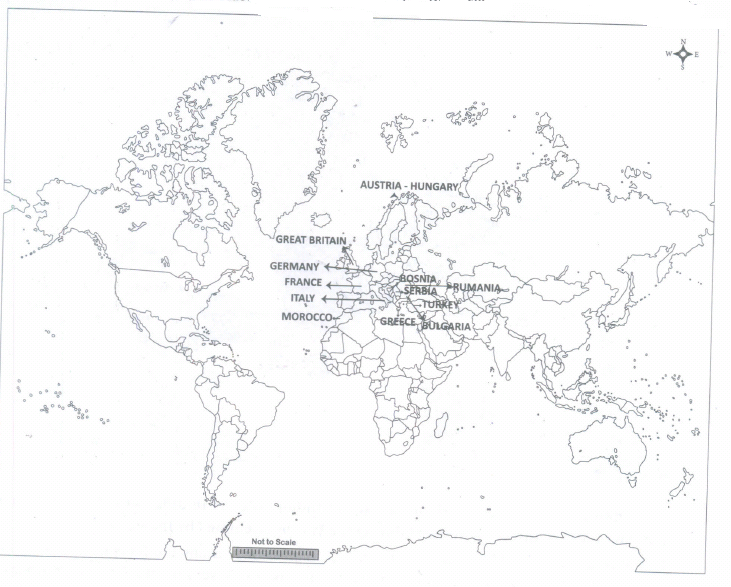
106.
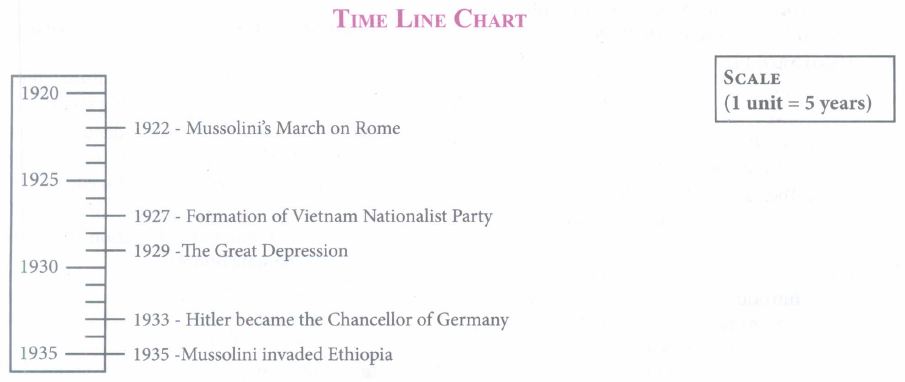

10th Standard Syllabus & Materials
10th Standard
TN 10th English Prose - 2 - The Night the Ghost Got in Important Questions And Answers Study Material - QB365 Set A
NEW10th Standard
TN 10th English Supplementary - 1 - The Tempest Important Questions And Answers Study Material - QB365 Set A
NEW10th Standard
TN 10th English Poem - 1 - Life Important Questions And Answers Study Material - QB365 Set A
NEW10th Standard
TN 10th English Prose - 1 - His First Flight Important Questions And Answers Study Material - QB365 Set A



Tamilnadu Stateboard 10th Standard Subjects
Tamilnadu Stateboard Standards




