
 100% FREE ACCESS
10th Standard Syllabus & Materials
10th Standard
TN 10th English Prose - 4 - The Attic Important Questions And Answers Study Material - QB365 Set A
NEW10th Standard
TN 10th English Supplementary - 3 - The Story of Mulan Important Questions And Answers Study Material - QB365 Set A
NEW10th Standard
TN 10th English Poem - 3 - I am Every Woman Important Questions And Answers Study Material - QB365 Set A
NEW10th Standard
TN 10th English Prose - 3 - Empowered Women Navigating The World Important Questions And Answers Study Material - QB365 Set A
NEW10th Standard
TN 10th English Supplementary - 2 - Zigzag Important Questions And Answers Study Material - QB365 Set A
NEW10th Standard
TN 10th English Poem - 2 - The Grumble Family Important Questions And Answers Study Material - QB365 Set A

Published on: 06/02/2020
10th Standard Social Science Important Question All Chapters-I- 2020
Download Tamil Nadu 10th Standard Social Science question papers, model tests, one-mark questions, important questions, and public exam papers in PDF format. Free study materials and answer keys for TN State Board students.
Questions + Answers key
Take MCQ Social Science Test
1.
The_________ express is the fastest operational train in India.
Shatabdi
Rajdhani
Gatimaan
Charminar
2.
East-west and north south corridors intersect at_________
Jhansi
Indore
Bhopal
Nagpur
3.
The first hydro electric power station in India was established at_______in 1897.
Darjeeling
Shillong
Mettur
Periyar
4.
The first cotton textile mill was established at Gloster, near_________in 1818.
Mumbai
Madras
Delhi
Kolkata
5.
__________Policy announced in July - Aug - 1991.
Foreign Investment
Industrial
Economic
All the above
6.
French East India Company established _________factory at Machilipatnam
First
Second
Third
Fourth
7.
NDP =_________
GDP + Depreciation
GNP - Depreciation
GDP - Depreciation
GDP x Depreciation
8.
Commonly___________ Income is called as Gross National Product.
National Income
Personal Income
Disposable Income
All the above
9.
_______is the sixth largest economy of the world.
U.S.A
Japan
India
Pakistan
10.
At present there are________High Courts for 28 States and 8 Union Territories.
25
22
26
29
11.
The term of the office of the Legislative Assembly is__________years.
5
6
7
3
12.
The lower house, _______ represents the people of the state in the state legislature
Legislative Council
Lok Sabha
Legislative Assembly
Rajya Sabha
13.
The ____________occupies the second highest office, in the country.
Vice-President
President
Prime Minister
Attorney General
14.
_________is designated as the first citizen of India.
Prime Minister
President
Vice-President
Supreme Court Justice
15.
_______Safeguards people from illegal assets
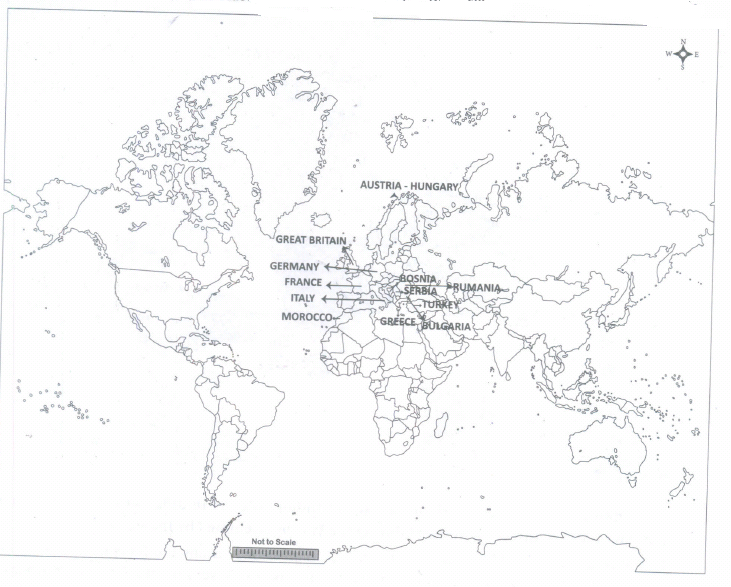
Habeas Corpus
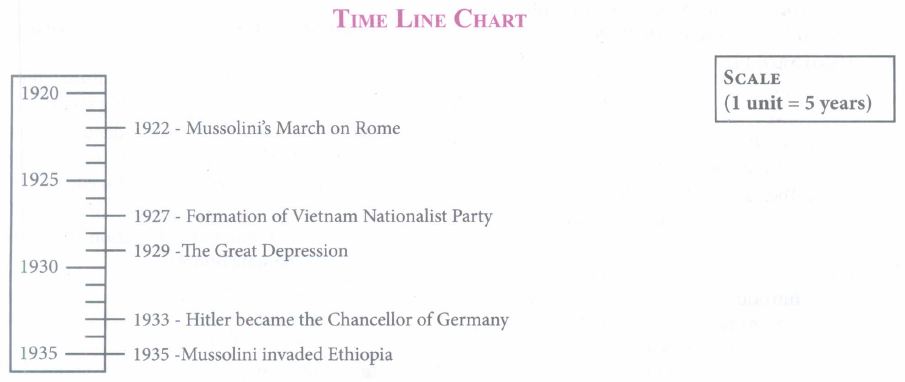
Mandamus
Certiorari
Quo Warranto
16.
The preamble to the Indian Constitution is based on the________ drafted by Jawaharlal Nehru
Rights
Duties
Objective Resolution
Articles
17.
Watering of plants through artificial means _____________.
Soil erosion
Soil conservation
Irrigation
None of these
18.
Dihang is a gorge in __________
Assam
Meghalaya
Nagaland
Arunachal Pradesh
19.
The highest point in Trans Himalayas is _______.
Mt. Godwin Austen (K2)
Kanchenjunga
Anai Mudi
Mahendra Giri
20.
Earth rotates from ___________ to ___________
South to north
East to west
West to east
North to south
21.
_____________ , socio-political activist was also a siddha medicine practitioner.
Vaikunda Swami
Iyothee Thassar
Ramalinga Adigal
John Rathinam
22.
______________ was a revivalist movement organised by the orthodox Muslim Ulama.
Aligarh movement
Satyashodhak Samaj
Arya Samaj
Deoband movement
23.
The reform movement similar to Brahmo Samaj founded in Bombay in 1876 was _____________
Arya Samaj
Prarthana Samaj
Deoband movement
Aligarh movement
24.
The emergence of ___________ as a united and independent nation was a historic event.
Japan
Italy
China
Vietnam
25.
Dr. Sun Yat Sen founded the political party named __________ in Tokyo.
Republican
Democratic
Kuomintang
Conservative
26.
Despite it's in competence and weakness, the _____ government lasted until two years before the I World War.
British
Japanese
Ottoman
Manchu
27.
_____________ mainly functions with private enterprises in developing countries.
IDA
IBRD
IFC
ILO
28.
In 1939, Hitler invaded ____________
Austria
France
India
Czechoslovakia
29.
_________ was not interested in playing global role or any role in European Politics.
Britain
The United States
France
Spain
30.
Between 1871 and 1914,________ had risen to dizzy heights of economic, political and cultural accomplishments.
India
Germany
Italy
Britain
31.
Devaluation led to a world-wide credit______________
expansion
upheaval
growth
contraction
32.
The___________ powers were gravely weakened by the war, financially and politically.
British
European
African
Australian
33.
In 1861, Tsar__________ abolished serfdom and emancipated the serfs
Fredrick
Peter
Alexander II
Nicholas
34.
In the eastern front, Russian troops repeatedly defeated the _____________
French
Indians
Austrians
Germans
35.
The biggest outcome of the I world war was the___________
Green Revolution
French Revolution
Russian Revolution
American Revolution
36.
37.
Primary sector consist of
Agriculture
Automobiles
Trade
Banking
38.
The Governor of the State is appointed by the
Prime Minister
Chief Minister
President
Chief Justice
39.
What is minimum age laid down for a candidate to seek election to the Lok Sabha?
18 years
21 years
25 years
30 years
40.
If the fundamental rights of Indian citizen are violated, they possess the right to have an access to
The Parliament
The Attorney General
The President of India
The Supreme court of India
41.
The Indian Constitution gives to its citizens
Double Citizenship
Single Citizenship
Single Citizenship in some States and double in others
None of the above
42.
The major import item of India is
Cement
Jewells
Tea
Petroleum
43.
The most abundant source of energy is ____________.
Bio mass
Sun
Coal
Oil
44.
The state which leads in the production of coffee is ______________.
West Bengal
Karnataka
Odisha
Punjab
45.
_________ is not a part of the world network biosphere reserves of UNESCO.
Nilgiri
Agasthiyamalai
Great Nicobar
Kachchh
46.
A landmass bounded by sea on three sides is referred to as _________.
Coast
Island
Peninsula
Strait
47.
Whose campaign and work led to the enactment of Widow Remarriage Reform Act of 1856?
Iswar Chandra Vidyasagar
Raja Ram Mohan Roy
Annie Besant
Jyotiba Phule
48.
When did the Japanese formally sign of their surrender?
2 September, 1945
2 October, 1945
15 August, 1945
12 October, 1945
49.
Which quickened the process of liberation in South America?
Support of US
Napoleonic Invasion
Simon Boliver’s involvement
French Revolution
50.
Which country was expelled from the League of Nations for attacking Finland?
Germany
Russia
Italy
France
51.
What is population change?
52.
What is population census?
53.
What are the main sources of irrigation in India?
54.
What are the uses of Mica?
55.
Write about European traders in South India
56.
What is Gross National Product?
57.
What is Net National Product?
58.
What is Court of Record?
59.
How are the members to the legislative council elected?
60.
What does Sarkaria Commission suggest on the appointment of the Governor?
61.
How is the Vice-President of India elected?
62.
Definition of the privileges of the President.
63.
State the ways in which the constitution can be amended
64.
Write a short note on Administrative-relations
65.
What are biosphere reserves?
66.
Write any two points of importance of Himalayas.
67.
Write a note on Namdhari Movement.
68.
Write a short note on the contribution of Dr. Annie Besant.
69.
What was Britain's stand on EEC?
70.
Write short note on Yasser Arafat.
71.
What led to the partition of the Palestine by the UN?
72.
Name the two main organs of the World Bank.
73.
What do you mean by 'Lend Lease' Explain.
74.
Write a note on Nelson Mandela.
75.
Write a note on Nazi policy towards Jews.
76.
Why did Japan annexed Korea in 1910?
77.
How was the surplus wealth produced by capitalist industry used?
78.
Write short note on Multinational corporation.
79.
What are the factors supporting to develop the Indian economy?
80.
81.
How does the state of Jammu and Kashmir differ from the other states of India?
82.
List out any two special powers of the Attorney General of India.
83.
What are the classical languages in India?
84.
What is a Constitution?
85.
State the merits of Roadways.
86.
State the uses of Manganese.
87.
State any two characteristics of black cotton soil.
88.
What is ‘Project Tiger’?
89.
State the west following rivers of India.
90.
Discuss Mahadev Govind Ranade’s contribution to social reforms.
91.
How did Hitler get the support from the people of Germany?
92.
Point out the essence of the Berlin Colonial Conference, 1884-85.
93.
What were the three militant forms of nationalism in Europe?
94.
Major issues faced by farmers in India.
95.
Explain the importance of mass communications systems in India.
96.
Describe the major challenges of Indian industries.
97.
Write the goals of World Trade Organisation
98.
Explain the limitations of GDP
99.
What is the procedure of Amendment of the constitution?
100.
Given an account of the communist Victory over China.
101.
What were the causes for the failure of the League of Nations?
102.
Write a note on the condition of Fascists under Mussolini?
103.
List out a few criticisms of the peace settlement.
104.
Explain any three Jurisdiction of the Supreme Court of India.
105.
Mark the following countries on the world map.
1. Italy
2. Morocco
3. Turkey
4. Serbia
5. Bosnia
6. Greece
7. Austria-Hungary
8. Bulgaria
9. Rumania
106.
Mark the following incidents 1920 - 1940
1.
(c)
Gatimaan
2.
(a)
Jhansi
3.
(a)
Darjeeling
4.
(d)
Kolkata
5.
(a)
Foreign Investment
6.
(b)
Second
7.
(c)
GDP - Depreciation
8.
(a)
National Income
9.
(c)
India
10.
(a)
25
11.
(a)
5
12.
(c)
Legislative Assembly
13.
(a)
Vice-President
14.
(b)
President
15.
(a)
Habeas Corpus
16.
(a)
Rights
17.
(c)
Irrigation
18.
(d)
Arunachal Pradesh
19.
(a)
Mt. Godwin Austen (K2)
20.
(c)
West to east
21.
(b)
Iyothee Thassar
22.
(d)
Deoband movement
23.
(b)
Prarthana Samaj
24.
(d)
Vietnam
25.
(c)
Kuomintang
26.
(d)
Manchu
27.
(c)
IFC
28.
(d)
Czechoslovakia
29.
(b)
The United States
30.
(b)
Germany
31.
(d)
contraction
32.
(a)
British
33.
(c)
Alexander II
34.
(d)
Germans
35.
(c)
Russian Revolution
36.
(d)
37.
(a)
Agriculture
38.
(c)
President
39.
(c)
25 years
40.
(d)
The Supreme court of India
41.
(b)
Single Citizenship
42.
(d)
Petroleum
43.
(b)
Sun
44.
(b)
Karnataka
45.
(d)
Kachchh
46.
(c)
Peninsula
47.
(a)
Iswar Chandra Vidyasagar
48.
(a)
2 September, 1945
49.
(b)
Napoleonic Invasion
50.
(b)
Russia
51.
(i) Population change refers to an increase or decrease of population of an area from one period to another period.
(ii) Population growth is influenced by the birth rate, death rate and migration.
(iii) These three make the changes in population
52.
(i) Population census is the total process of collecting, compiling, analysing or other wise disseminating demographic, economic and social data pertaining, at a specific time, of all persons in a country or a well-defined part of a country.
(ii) The data collected through the census are used for administration, planning, policy making as well as management and evaluation of various programmes by the government.
53.
The main sources of irrigation used in different parts of the country are
(i) Canal irrigation
(ii) Well irrigation and
(iii) Tank irrigation
54.
i) Mica is used in making insulating properties.
ii) It is used in electrical goods.
iii) lt is used in making of lubricants, medicines, paints and varnishes.
55.
(i) European companies which came to trade with India.
(ii) The discovery of a new all-sea route from Europe to India via cape of Good Hope by Vasco da Gama.
(Iii) Vasco da Gama had far-reaching repercussions on the civilized world.
56.
(i) Gross National Product is the total value of (goods and services) produced and income received in a year by domestic residents of a country.
(ii) It includes profit earned from capital invested abroad.
(iii) GNP = C + I + G + (X - M) + NFIA
57.
(i) Net National Product (NNP) is arrived by making some adjustment with regard to depreciation.
(ii) Net National Product (NNP) is arrived by deducting the value of depreciation from Gross National Product.
(iii) NNP = GNP - Depreciation
58.
All the decisions and decrees issued by the High Court are printed and are kept as a record for future references by the Court as well as by the lawyers, is such a need arises. Thus, it also acts as a Court of Record.
59.
(i) 1/3 of the members are elected by local bodies.
(ii) 1/112 of the members are elected by Graduates of the universities in the State.
(iii) 1/12 of the members are elected by Graduate teachers
(iv) 1/3 of the members are elected by the members of the Legislative Assembly
(v) 1/6 is nominated by the Governor who is eminent in the field of literary excellence art, social services or Co-operation.
60.
Sarkaria Commission on Centre, State relations suggested that the appointment of the Governor should be made
(i) From a panel to be prepared by the State Legislature or
(ii) From a panel to be prepared by the State Government (in effect the Chief Minister) or invariably with the concurrence of the State Chief Minister; or
(iii Invariably in consultation with the State Chief Minister.
61.
The Vice- President is elected by the members of an electoral college consisting of the member of both Houses of Parliament
62.
According to Article 361(1), the President, or the Governor of a state, shall not be answerable to any court for the exercise and performance of the powers and duties of his office or for any act done or purporting to be done by him in the exercise and performance of those powers and duties.
63.
The Constitution can be amended in three ways:
(i) Amendment by simple majority of the Parliament
(ii) Amendment by special majority of the Parliament
(iii) Amendment by special majority of the Parliament and the ratification of half of the state legislatures.
64.
The Administrative power of a State extends only to its own territory and with respect to which it has legislative competence, whereas the Union has exclusive executive power over:
(a) The matters with respect to which Parliament has exclusive power to make laws and
(b) The exercise of its powers conferred by any treaty or agreement
65.
Biosphere reserves are protected areas of a land coastal environment where in people are an integral component of the system.
66.
(i) It is the source for many perennial rivers like Indus, Ganges, Brahmaputra, etc.
(ii) The Northern Mountains are described as the paradise of tourists due to its natural beauty.
67.
(i) The Namdhari Movement, founded by Baba Ram Singh, was another socio-religious movement among the Sikhs.
(ii) The Namdharis insisted on wearing the symbols of Sikhism except the kirpan (sword).
(iii) Instead, Baba Ram Singh wanted his' followers to carry a lathi. It considered both men and women equal and accepted widow remarriage.
(iv) It prohibited the dowry system and child marriage.
68.
Contribution of Annie Besant
(i) In India the Theosophical movement became further popular with the election of Annie Besant (1847-1933) as its president after the death of Olcott.
(ii) She played a role in Indian nationalist politics and formed the Home Rule League demanding home rule to India on the lines of Ireland.
(iii) Annie Besant spread Theosophical ideas through her newspapers called New India and Commonweal.
69.
Britain did not join the EEC. Instead, it floated a European Free Trade Association with Portugal, Denmark, Austria, Norway, Sweden and Switzerland as member states.
70.
(i) In 1969, Yasser Arafat became chairman of the PLO's executive committee a position he held until his death in 2004.
(ii) Yasser Arafat was appointed commander in -chief of the all Palestinian Arab guerilla forces in September 1970.
(iii) Wearing a Harley disguised pistol and carrying an olive branch and dressed in a military uniform, his appearance raised world awareness of the Palestinian cause.
(iv) Arafat was elected by the central council of the PLO as the first president of the state of Palestine on April 2, 1989.
71.
(i) At the end of October 1945, the Jewish underground organizations like Irgun Zvai Leumi (Zionist Para-military Organization) and the Stern Gang (Zionist Terrorist Organization) began to launch terror attacks on a large scale.
(ii) Railways, bridges, airfields and government offices were blown up. The British government presented the dispute to the UN for a decision.
(iii) Succumbing to the pressure of great powers, the UN resolved to partition. Palestine into a Jewish state and an Arab state (29 November 1947).
72.
The two main organs of the World Bank are the International Bank for Reconstruction and Development (IBRD) and the International Development Agency (IDA).
73.
(i) President Roosevelt realized that the United States had to change its policy of isolation, but could not intervene directly in the War in Europe, because it was not politically feasible.
(ii) So he started a program of "Lend Lease" in March 1941. Arms, food, military equipment, and other supplies were sent to Britain, disguised as a "loan", which would be returned after use.
74.
(i) The African National Congress founded in 1912 fought the practice of racism.
(ii) Repression was let loose against the leader of the Congress.
(iii) The ANC was banned and its leader Nelson Mandela was put behind bars. Mounting pressure at the global level helped to end the racist regime in South Africa.
(iv) In 1990 the ban on ANC was lifted and Mandela was freed after 27 years.
(v) In the elections held subsequently, the Africans were allowed to vote and ANC won the election and Mandela became the first black president of South Africa.
75.
(i) Along with the repressive measures, Hitler's government followed a policy of repressing Jewish people.
(ii) The Jews were removed from government positions, excluded from the universities and deprived of citizenship.
(iii) Jewish businesses were closed down, and their establishments were attacked.
(iv) Later they were turned into extermination camps where industrial means of murder such as gas chambers were used to kill Jews.
76.
After 1905 Japan took control of Korean domestic and foreign policy. The assassination of a prominent Japanese diplomat provided the excuse in 1910 for Japan's annexation of Korea.
77.
The aim of capitalistic industry was to produce more and more. The surplus wealth thus produced was used to build more factories, railways, steamships or other such undertakings.
78.
Multi National Corporation (MNC) is a corporate organization which owns or controls production of goods and services in at least one country other than its home country.
79.
(i) A fast-growing population of working age.
(ii) A strong legal system
(iii) Communication and information technology
80.
81.
(i) The Constitution of India grants special status to Jammu and Kashmir among Indian states, and it is the only state in India to have a separate constitution.
(ii) The Constitution of Jammu and Kashmir was adopted on the 17 November, 1957 and came into force on 26 January, 1957.
(iii) The Directive Principles of the State Policy and fundamental duties of the constitution are not applicable to the state of Jammu and Kashmir.
(iv) Right to Property, is still guaranteed as a fundamental right in Jammu and Kashmir.
82.
i) To give advice to the Government of India upon such legal matters which are referred to him by the president.
ii) Attorney General of India has the right of audience in all courts in the territory of India.
iii) Further he has the right to speak and to take part in the proceedings of both Houses of the Parliament or their joint sitting.
iv) He enjoys all the privileges and immunities that are available to a member of Parliament.
83.
i) Six languages are granted the classical language status.
ii) They are Tamil, Sanskrit, Telugu, Kannada, Malayalam and Odia.
84.
i) The Constitution is the fundamental law of a country which reflects the fundamental principles on which the government of that country is based
ii) It is the vehicle of a Nation's progress.
iii) The concept of Constitution first originated in USA
85.
1. Roads play an important role in carrying goods and passengers for short, medium and long distances.
2. It is highly suitable for short distance services.
3. It is comparatively easy and cheap to construct and maintain roads.
4. Road transport system can establish easy contact between farms, fields, factories and markets and can provide door to door transport services.
5. They are the most universal mode of transport. Indian roads are cost efficient and used by all sections of people in the society.
86.
Manganese is used in the manufacturing of iron and steel, bleaching powder, insecticides, paints and batteries.
87.
It consists of calcium and magnesium carbonates, high quantities of iron, aluminium, lime and magnesia. It is rich in potash lime, aluminium, calcium and magnesium.
88.
Project Tiger was launched in April 1973 with the aim to conserve tiger population in specifically constituted "Tiger Reserves" in India.
89.
Narmada, Tapti, Mahi and Sabarmathi are the west following rivers of India.
90.
i) Mahadev Govind Ranade devoted himself to activities such as inter-caste dining, inter-caste marriage, widow remarriage and improvement of women and depressed classes.
ii) Ranade [1842 - 1901] was the founder of the Widow Marriage Association [1861], the Poona Sarvajanik Sabha [1870] and the Deccan Education Society [1884].
91.
a) Gifted with great oratorical skills, Hitler was able to sway the people by his impassioned speeches, promising return of glorious military past of Germany.
b) The fundamental principle on which Hitler built his support was the notion of the racial superiority of the Germans as a pure, 'Aryan' race and a deep-seated hatred of the Jews.
92.
a) The interior of Africa was unknown to the outside world until the last quarter of nineteenth century. European colonisation began after about 1875.
b) The Berlin Colonial Conference of 1884-85 had resolved that Africa should be divided into spheres of influence of various colonial powers.
c) However the war between the British and Boers in South Africa was in defiance of this resolution.
93.
The three militant forms of nationalism in Europe:
i) England's jingoism
ii) France's chauvinism
iii) Germany's Kultur.
94.
Indian agriculture and Indian farmers are plagued by several problems; some of them are natural and some others are manmade.
(i) Small and fragmented land-holdings: The problem of small and fragmented holdings is more serious in densely populated and intensively cultivated states in India.
(ii) High Costs of Inputs: Seed is a critical and basic input for attaining higher crop yields and sustained growth in agricultural production.
(iii) Infertile Soil: Indian soils have been used for growing crops over thousands of years without caring much for replenishing. This has led to depletion and exhaustion of soils resulting low productivity.
(iv) Lack of Irrigation: Only one- third of the cropped area falls under irrigated area. To make agriculture reliable, irrigation facility has to be developed.
(v) Soil erosion: Large tracts of fertile land suffer from soil erosion by wind and water. Such kind of areas must be properly treated and restored to its original fertility.
(vi) Agricultural marketing: In rural India, agricultural marketing continues in bad shape. Due to the absence of sound marketing facility, the farmers have to depend on local traders and middlemen for the disposal of their farm products which is sold at a low price.
(vii) Inadequate storage facilities: Storage facilities in the rural areas are either totally absent or grossly inadequate. Under such conditions, the farmers are compelled to sell their products immediately after the harvest irrespective of the condition of market.
95.
Electronic Media:
(i) Mass Communication enables millions of people to get the information at the same time.
(ii) It is a great way to provide education as well as entertainment.
(iii) It helps in creating awareness among the people regarding various national policies and programmes.
(iv) The Mass Communication Systems can provide the information to people in two methods.
Electronic Media:
(i) Radio broadcasting in India was started in 1923 by the Radio club of Bombay.
(ii) It was named as All India Radio (AIR) in 1936 and again it was renamed as Akashwani in 1957.
(iii) It broadcasts a variety of programs related to information, education and entertainment.
Print Media:
(i) Newspapers are the most common but powerful means of communication come under print media.
(ii) India has many newspapers which carry information on local, national and international events to the people
96.
Major challenges of Indian Industries:
i) Industries in India face many problems. Some major problems are listed below.
ii) Shortage and fluctuation in Power Supply.
ii) Non- availability of large blocks of land.
iv) Poor access to credit.
v) High rate of interest for borrowed loan.
vi) Non - availability of cheap labourers.
vii) Lack of technical and vocational training for employees.
viii) Inappropriate living conditions nearby industrial estates.
97.
Goals of WTO:
(i) Raising and stabilizing the incomes of small scale farmers, farm workers and artisans.
(ii) More equitably distributing the economic gains, opportunities and risks associated with the production and sale of these goods.
(iii) Increasing the organisational and commercial capacities of producer groups.
(iv) Promoting labour rights and the right workers to organize.
(v) Promoting safe and sustainable farming methods and working conditions
98.
a) Several important goods are services left out of the GDP:
i) The GDP includes only the goods and services sold in the market.
ii) The services provided by the parents to their children is very important but it is not included in the GDP because it is not sold in the market.
iii) Likewise clean air, which is vital for a healthy life, has no market value and is left out of the GDP.
b) GDP measures only quantity but not quality :
i) In the 1970s schools and banks did not permit the use of ballpoint pens.
ii) This is because, the ones available in India were of very poor quality.
iii) Since then, not only has there been a substantial increase in the quantity of ballpoint pens produced in India but their quality has also improved a lot.
iv) The improvement in quality of goods is very important but it is not captured by the GDP.
c) GDP does not tell us about the way income is described in the country:
The GDP of a country may be growing rapidly but income may be distributed so unequally that only a small percentage of people may be benefitting from it.
d) The GDP does not tell us about the kind of life people are living:
A high level of per capita real GDP can go hand - in - hand with very low health condition of people, an undemocratic political system, high pollution and high suicide rate.
99.
i) The term amendment denotes change, improvement and modification
ii) Article 368 of the Constitution in Part XX, deals with the powers of Parliament to amend the Constitution and its procedure.
Procedure of Amendment:
i) An Amendment of this Constitution may be initiated only by the introduction of a Bill for the purpose in either House of Parliament.
ii) When the Bill is passed in each House by a majority of the total membership of that House and by a majority of not less than two thirds of the members of that House present and voting, it shall be presented to the President who shall give his assent to the Bill and thereupon the Constitution shall stand amended in accordance with the terms of the Bill.
iii) The Constitution Amendment can be brought about only by the Parliament.
iv) State Legislatures cannot initiate for any amendment to the Constitution
100.
Communist Victory:
(i) With the surrender of the Japanese (1945), both the Kuomintang and the communists sought to occupy the Japanese areas.
(ii) In this race the Kuomintang was successful. The cities and railways soon fell into their hands.
(iii) Even the area around Peking was soon controlled by Chiang Kai-shek's forces, largely because of the military aid given by the USA.
(iv) With the massive support provided by the USA, Kuomintang government controlled the administration, ports and communication system.
(v) But the soldiers, mainly drawn from the peasants, were disillusioned and discontented.
(vi) Mao was keen on obtaining the support of the middle class.
(vii) Mao continued the use of guerrilla tactics but also ordered large-scale military movements.
(viii) Cities fell one by one and Chiang Kai-shek's army began to disintegrate quickly.
(ix) In the summer of 1948, Communist control had been established over most parts of China.
101.
(i) The Treaty also set up the League of Nations, on the initiative of President Woodrow Wilson of the United States.
(ii) The League was expected to mediate between countries and take action against countries which indulged in military aggression.
(iii) However, the United States was not interested in playing a global role or any role in European politics.
(iv) The popular mood favoured the traditional isolationist approach, and therefore the United States did not become a member of the League.
(v) The other Allied nations were also determined to maintain a noninterventionist attitude and, in consequence, the League remained an ineffectual international body.
102.
(i) In the 1924 elections, after intimidation of the electors, 65 percent of the votes were cast for the Fascists.
(ii) Matteotti, a socialist leader, who questioned fairness of the elections, was murdered.
(iii) The opposition parties boycotted the Parliament in protest.
(iv) Mussolini reacted by banning opposition parties and censoring the Press. Opposition leaders were killed or imprisoned.
(v) Assuming the title of II Duce (the leader), in 1926 he became a dictator with power to legislate.
(vi) He passed a law forbidding strikes and lockouts. Unions and employers were organized into corporations which would settle wages and working conditions.
(vii) In 1938 Parliament was abolished and was replaced by a body representing the Fascist Party and the corporations.
(viii) This new arrangement bolstered Mussolini's dictatorial control of the economy, as well as enabling him to wield enormous power as head of the administration and the armed forces.
103.
(i) The defeated powers were absent from negotiations. The peace settlement, a dictated one, was based on the principle, to the victor belongs the spoils and the allies are the victors.
(ii) Self-determination was the principle, which was one of the fourteen points of Woodrow Wilson for restoring peace, applied to all the peoples except the German.
(iii) Austria was not allowed to unite with Germany, because the combination would be too powerful. Germany was thus left with a sense of injustice.
(iv) The reparation of 6,600 million pounds was well beyond Germany's capacity to pay.
(v) Germany was weakened, politically and economically. But instead of having the large Russian and Austro- Hungarian empires on her eastern frontier, she was now bordered by small weak and new states.
104.
Original Jurisdiction:
The cases which are brought directly in-the first instance to the Supreme Court come original under jurisdiction.
These may be
(i) dispute between the Government of India and one or more states
(ii) Dispute between two or more states
(iii) The writs are issued by the Supreme Court for the enforcement of the fundamental rights.
Appellate jurisdiction:
i) The Supreme Court is the final appellate court in the country.
ii) The Supreme Court hears appeals against the decision of High Courts.
iii) Such a case can be brought before the Supreme Court only if the High Court certifies that the case invites a substantial of law as to the interpretation of the Constitution.
Advisory Jurisdiction:
The Constitution confers on the President the power to refer to the Supreme Court any question of law or fact which in his opinion is of public importance.
Miscellaneous jurisdiction:
i) The law declared by Supreme Court is binding on all courts within the territory of India.
ii) The Supreme Court is authorized to make rules for regulating, generally the practice and procedure of the court with the approval of the President.
Judicial Review:
a) The power of the Judiciary to declare a law as unconstitutional is known as Judicial Review'.
b) The Supreme Court of India has Individual Review Power with regard to:
i) Dispute between the Centre and State.
ii) Protecting the Fundamental Rights.
105.
106.

10th Standard Syllabus & Materials
10th Standard
TN 10th English Prose - 2 - The Night the Ghost Got in Important Questions And Answers Study Material - QB365 Set A
NEW10th Standard
TN 10th English Supplementary - 1 - The Tempest Important Questions And Answers Study Material - QB365 Set A
NEW10th Standard
TN 10th English Poem - 1 - Life Important Questions And Answers Study Material - QB365 Set A
NEW10th Standard
TN 10th English Prose - 1 - His First Flight Important Questions And Answers Study Material - QB365 Set A



Tamilnadu Stateboard 10th Standard Subjects
Tamilnadu Stateboard Standards




