
 100% FREE ACCESS
10th Standard Syllabus & Materials
10th Standard
TN 10th English Prose - 4 - The Attic Important Questions And Answers Study Material - QB365 Set A
NEW10th Standard
TN 10th English Supplementary - 3 - The Story of Mulan Important Questions And Answers Study Material - QB365 Set A
NEW10th Standard
TN 10th English Poem - 3 - I am Every Woman Important Questions And Answers Study Material - QB365 Set A
NEW10th Standard
TN 10th English Prose - 3 - Empowered Women Navigating The World Important Questions And Answers Study Material - QB365 Set A
NEW10th Standard
TN 10th English Supplementary - 2 - Zigzag Important Questions And Answers Study Material - QB365 Set A
NEW10th Standard
TN 10th English Poem - 2 - The Grumble Family Important Questions And Answers Study Material - QB365 Set A

Published on: 04/02/2020
10th standard Social science tamil medium - Important Questions
Download Tamil Nadu 10th Standard Social Science question papers, model tests, one-mark questions, important questions, and public exam papers in PDF format. Free study materials and answer keys for TN State Board students.
Questions + Answers key
Take MCQ Social Science Test
1.
East-west and north south corridors intersect at_________
Jhansi
Indore
Bhopal
Nagpur
2.
Golden Quadrilateral is a__________ km long road and the project was launched in_______
5846, 1999
5845, 1998
5844, 1997
5843, 1996
3.
The first hydro electric power station in India was established at_______in 1897.
Darjeeling
Shillong
Mettur
Periyar
4.
The first paper mill of India was started in 1812 at Sorampur in_______
West Bengal
Odisha
Madhya Pradesh
Bihar
5.
__________Policy announced in July - Aug - 1991.
Foreign Investment
Industrial
Economic
All the above
6.
French East India Company established _________factory at Machilipatnam
First
Second
Third
Fourth
7.
CPI Stands for
Consumer Price Index
Consumption Product Index
Consumer Product Index
Consumption Price Index
8.
__________is a good measures of value to know the economic status of a nation
GNP
GDP
NDP
PI
9.
_______is the sixth largest economy of the world.
U.S.A
Japan
India
Pakistan
10.
Article ___________ deals with the creation or abolition of Legislative council in a state.
169
171
164
177
11.
The________ is constituted as a permanent of the state legislature.
Legislative Assembly
Lok Sabha
Legislative Council
Judiciary
12.
The term of the office of the Legislative Assembly is__________years.
5
6
7
3
13.
The Lok Sabha enjoys a term of________years from the date of its first session
3
6
5
4
14.
The President shall hold office for a term of__________
Three years
Four years
Five years
Six years
15.
The first language committee was appointed in_________
1947
1950
1955
1952
16.
The preamble to the Indian Constitution is based on the________ drafted by Jawaharlal Nehru
Rights
Duties
Objective Resolution
Articles
17.
The removal of soil along drainage lines by surface water run off forming large gullies is called ___________
Gully erosion
Rill erosion
Sheet erosion
Ravine erosion
18.
The ___________ channel separates Lakshadweep islands from the Maldives islands.
ten degree
nine degree
eight degree
seven degree
19.
The ____________ river divides the plateau region of India broadly into two parts.
Kaveri
Narmada
Tapti
Mahanadi
20.
India has been politically divided into ___________ states and _____________ Union territories.
29, 6
28, 9
29, 7
30, 7
21.
______________ was a revivalist movement organised by the orthodox Muslim Ulama.
Aligarh movement
Satyashodhak Samaj
Arya Samaj
Deoband movement
22.
The Theosophical Society founded in the USA, shifted to India at _______________ , Chennai.
Santhome
Nungambakkam
Mylapore
Adyar
23.
The reform movement similar to Brahmo Samaj founded in Bombay in 1876 was _____________
Arya Samaj
Prarthana Samaj
Deoband movement
Aligarh movement
24.
Gorbachev was held under house arrest in ______________,
Kazan
Sochi
Volgograd
Moscow
25.
_______________ was a self-governing Palestinian territory.
Gaza Strip
Hebron
Beit Jala
Jeniu
26.
NATO had _______________ members in 2017.
29
28
27
25
27.
_____________ mainly functions with private enterprises in developing countries.
IDA
IBRD
IFC
ILO
28.
In September 1940, _______________ was bombed mercilessly.
London
New York
Tokyo
Washington
29.
In September 1940, _________ also joined the Axis powers.
China
Japan
Russia
Spain
30.
At the dawn of the 20th Century__________ had occupied Cuba and Puerto Rico
The United Kingdom
The United States
Germany
Italy
31.
_________ became the first Caribbean country to throw off slavery and French colonial control
Cuba
Jamaica
Guyana
Haiti
32.
In England, the__________ party was defeated in the general elections of 1931.
Labour
Republican
Socialist
Communist
33.
_________ was the American President when USA declared war against Germany in 1917.
Wilson
Abraham Lincoln
F.D Roosevelt
John F. Kennedy
34.
__________of Russia suggested to the powers that they meet together to bring about an era of universal peace.
Tsar Nicholas II
Michael
Peter the Great
Alexander I
35.
The biggest outcome of the I world war was the___________
Green Revolution
French Revolution
Russian Revolution
American Revolution
36.
Foreign Investment policy (FIP) announced in
June 1991
July 1991
July -Aug -1991
Aug 1991
37.
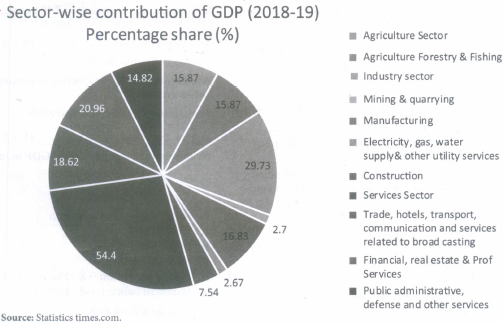
Gross value added at current prices for services sector is estimated at ______ lakh crore in 2018-19.
91.06
92.26
80.07
98.29
38.
The Chief Minister of a State is appointed by
The State Legislature
The Governor
The President
The Speaker of State Legislative Assembly
39.
The Constitutional Head of the Union is
The President
The Chief Justice
The Prime Minister
Council of Ministers
40.
The procedure for the amendment of the Indian Constitution is given in
Article 352
Article 356
Article 360
Article 368
41.
We borrowed the Fundamental Duties from the
American Constitution
Canadian Constitution
Russian Constitution
Irish Constitution
42.
The National Remote sensing Centre(NRSC) is located at___________.
Bengaluru
Chennai
Delhi
Hyderabad
43.
The city which is called as the Manchester of South India is _____________.
Chennai
Salem
Madurai
Coimbatore
44.
____________ is the highest gravity dam in India.
Hirakud dam
Bhakra Nangal dam
Mettur dam
Nagarjuna Sagar Dam
45.
______________ is a line joining the places of equal rainfall.
Isohyets
Isobar
Isotherm
Latitudes
46.
The Southern most point of India is
Andaman
Kanyakumari
Indira Point
Kavaratti
47.
Who was the author of the book Satyarth Prakash?
Dayananda Saraswathi
Iyothee Thass
Annie Besant
Narayana Guru
48.
When was the Charter of the UN signed?
June 26, 1942
June 26, 1945
January 1, 1942
January 1, 1945
49.
Which quickened the process of liberation in South America?
Support of US
Napoleonic Invasion
Simon Boliver’s involvement
French Revolution
50.
Which country was expelled from the League of Nations for attacking Finland?
Germany
Russia
Italy
France
51.
Define population composition
52.
Define population
53.
Write a note on GAIL.
54.
What are the uses of jute?
55.
Write a Short note on Proto Globalization?
56.
Give the three methods of calculating National Income.
57.
What is Court of Record?
58.
How does the state cabinet work?
59.
Name the states of India which have bicameral legislature
60.
Write a note on the Retreat building.
61.
How is the Vice-President of India elected?
62.
Name the five subjects transferred from State list to concurrent list as per the 42nd Amendment Act of 1976.
63.
How are directive principles classified on the basis of content and direction?
64.
Write a note on 'Magna Carta'.
65.
List the factors affecting climate of India.
66.
Write a note on purvanchal hills.
67.
Why did the Deoband school not prepare its students for Government jobs?
68.
Name the famous reformist movements of India in the 19th century.
69.
Name the eleven republic which announced secession from the Soviet Union in 1991.
70.
Give an account of the policies adopted by Fidel Castro took after he change of cuba.
71.
What is referred to as cold war history?
72.
Name the two main organs of the World Bank.
73.
Why are the 'World Wars' called so?
74.
What is Apartheid?
75.
Why did British miners settle in large numbers in and around Johannesburg?
76.
Write a note on
(a) Battle of Tannenberg
(b) Battle of Marne
77.
What heightened the tension between Germany and Britain?
78.
Write the types of globalization.
79.
Write a short note
(i) Gross National Happiness(GNH)
(ii) Human Development Index(HDI)
80.
81.
How does the state of Jammu and Kashmir differ from the other states of India?
82.
What is the qualifications of Judges of the Supreme Court?
83.
What are the classical languages in India?
84.
What is meant by citizenship?
85.
What is migration? State its types.
86.
Name the important oil producing regions of India.
87.
What is meant by ‘normal lapse rate’?
88.
89.
What are the differences between Reformist Movements and Revival Movements?
90.
What do you know of Beveridge Report?
91.
Explain the Monroe Doctrine.
92.
What do you know of trench warfare?
93.
Can you imagine a world without agriculture?
94.
Major issues faced by farmers in India.
95.
Explain the importance of mass communications systems in India.
96.
Describe the major challenges of Indian industries.
97.
List out 10 largest multinational companies in India - 2018.
98.
Draw the pie chart for sector wise Contribution of GDP Growth in India for the year 2018 - 2019
99.
Explain in detail about the Vietnam War.
100.
What were the causes for the failure of the League of Nations?
101.
Write a note on the condition of Fascists under Mussolini?
102.
What were the issues and incidents of violations of the League of Nations.
103.
Describe the Executive and Judicial powers of the President of India.
104.
Distinguish between NDP and NNP.
105.
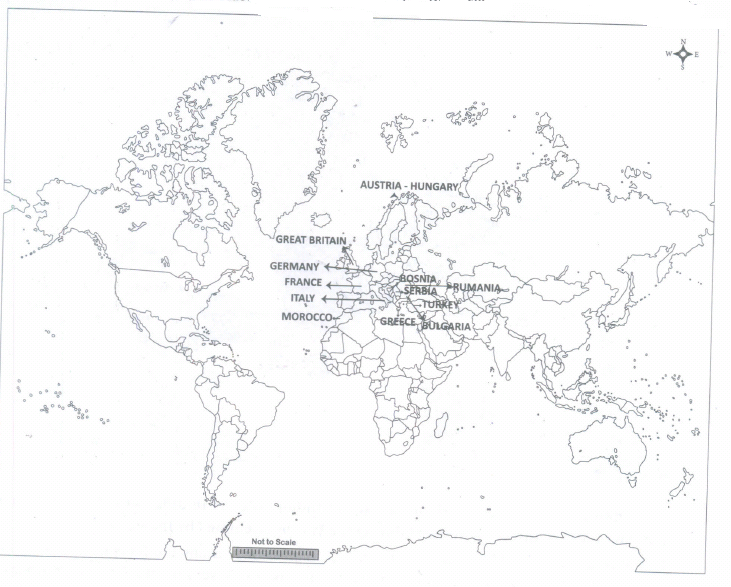
Mark the following countries on the world map.
1. Italy
2. Morocco
3. Turkey
4. Serbia
5. Bosnia
6. Greece
7. Austria-Hungary
8. Bulgaria
9. Rumania
106.
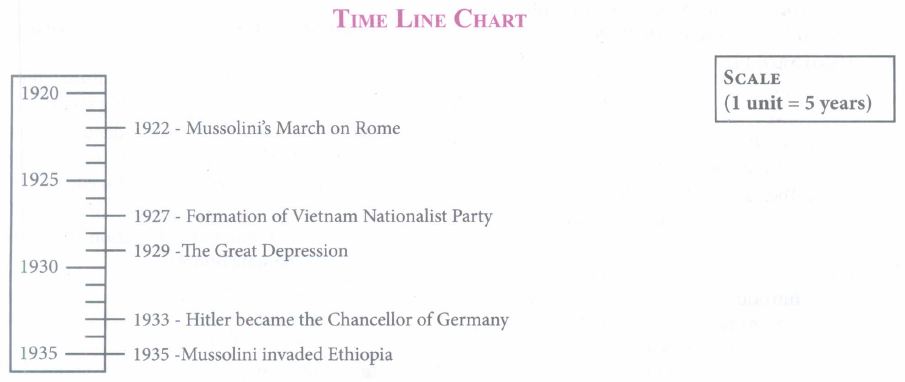
Mark the following incidents 1920 - 1940
1.
(a)
Jhansi
2.
(a)
5846, 1999
3.
(a)
Darjeeling
4.
(a)
West Bengal
5.
(a)
Foreign Investment
6.
(b)
Second
7.
(a)
Consumer Price Index
8.
(a)
GNP
9.
(c)
India
10.
(a)
169
11.
(c)
Legislative Council
12.
(a)
5
13.
(c)
5
14.
(c)
Five years
15.
(c)
1955
16.
(a)
Rights
17.
(a)
Gully erosion
18.
(c)
eight degree
19.
(b)
Narmada
20.
(c)
29, 7
21.
(d)
Deoband movement
22.
(d)
Adyar
23.
(b)
Prarthana Samaj
24.
(d)
Moscow
25.
(a)
Gaza Strip
26.
(a)
29
27.
(c)
IFC
28.
(a)
London
29.
(b)
Japan
30.
(b)
The United States
31.
(d)
Haiti
32.
(a)
Labour
33.
(a)
Wilson
34.
(a)
Tsar Nicholas II
35.
(c)
Russian Revolution
36.
(c)
July -Aug -1991
37.
(b)
92.26
38.
(b)
The Governor
39.
(a)
The President
40.
(d)
Article 368
41.
(c)
Russian Constitution
42.
(d)
Hyderabad
43.
(d)
Coimbatore
44.
(b)
Bhakra Nangal dam
45.
(a)
Isohyets
46.
(b)
Kanyakumari
47.
(a)
Dayananda Saraswathi
48.
(b)
June 26, 1945
49.
(b)
Napoleonic Invasion
50.
(b)
Russia
51.
Population composition refers to the characteristics such as age, sex, marital status, caste, religion, language, education, occupation etc
52.
The total number of people residing in a country at a specified period of time is called the 'Population' of that country
53.
(i) The Gas Authority of India Ltd [GAIL] is doing pioneer work in the field of natural gas exploration.
(ii) Discovery of gas made rapid strides in the 1985. Oil strikes at Cauvery offshore, at Nanda in Cambay basin and Tarot in Jaisalmer basin in Rajasthan were major discoveries during 1988-89.
(Iii) Recently, it has been found that Krishna- Godavari delta has reserves of Natural gas.
54.
It is used for manufacturing of gunny bags, carpets, hessian, ropes and strings rugs, clothes, tarpaulins, upholstery, etc.
55.
(i) Globalization was characterized by the rise of maritime European empires, in the 16th and 17th centuries.
(ii) In 17th century, globalization became private business phenomenon like British East India Company described as the first multinational company.
56.
(i) Product Method
(ii) Income Method
(iii) Expenditure Method
57.
All the decisions and decrees issued by the High Court are printed and are kept as a record for future references by the Court as well as by the lawyers, is such a need arises. Thus, it also acts as a Court of Record.
58.
The cabinet works through various committees called cabinet committees. They are of two types standing and ad hoc. The former are of a permanent nature while the latter are of a temporary nature
59.
Bihar, Karnataka, Maharashtra, Uttar Pradesh Andhra Pradesh,Telangana and Jammu Kashmir.
60.
The President of India resides at Rashtrapati Bhavan in New Delhi. The residence and the office of the President are located in the same building. However he has two other office cum residences where he conducts office at least once a year. They are 'The Retreat Building' at Shimla and the 'Rashtrapati Nilayam' at Hyderabad.
61.
The Vice- President is elected by the members of an electoral college consisting of the member of both Houses of Parliament
62.
The 42nd Amendment Act of 1976 transferred five subjects to Concurrent List from State List, that is, education, forests, weights and measures, protection of wild animals and birds, and administration of justice; constitution and organisation of all courts excepts the Supreme Court and the high courts
63.
On the basis of their content and direction, directive principles they can be classified into three broad categories, viz, socialistic, Gandhian and liberal-intellectual.
64.
'Magna Carta' is the Charter of Rights issued by King John of England in 1215 under pressure from the barons. This is the first written document relating to the Fundamental Rights of citizens.
65.
Factors like latitude, distance from the sea, monsoon wind, relied on features and jet stream affect the climate of India.
66.
(i) These are the eastern off-shoot of Himalayas. It extended in the north-eastern states of India. Most of these hills are located along the border of India and Myanmar while others are inside India.
(ii) Dafla Hills, Abor Hills, Mishmi Hills, Patkai Bum Hills, Naga Hills, Manipur Hills, Mizo Hills, Tripura Hills, Mikir Hills, Garo Hills, and Khasi Hills are the hills which are collectively known as purvanchal hills.
67.
(i) The school curricula shut out English education and western culture.
(ii) The instruction imparted was in original Islamic religion and the aim was moral and religious regeneration of the Muslim community.
(iii) The Deoband School did not prepare its students for government jobs but for the preaching of Islamic faith.
68.
The Brahmo Samaj, the Prarthana Samaj, and the Aligarh Movement.
69.
In November 1991, eleven republics (Ukraine, Georgia, Belarus, Armenia, Azerbaijan, Kazakhstan, Kyrgyzstan, Moldova, Turkmenistan, Tajikistan, and Uzbekistan) announced secession from the Soviet Union.
70.
(i) After Castro took power, the US-owned oil refineries on the island refused to process Russian oil. Castro nationalized them.
(ii) The US retaliated by ending the arrangement by which it bought the bulk of Cuba's sugar.
(iii) Castro nationalized the US-owned sugar companies. And ended the US monopolies in electricity and telephones.
(iv) All these gravely threatened American economic interests.
71.
The rivalry that developed after World War II between the US and the USSR and their respective allies created tension which is referred to as Cold War.
72.
The two main organs of the World Bank are the International Bank for Reconstruction and Development (IBRD) and the International Development Agency (IDA).
73.
While the world at large had experienced many wars, these two wars are referred to as "World wars" because of the extended areas of the conflict and the very high death toll of civilians as well as armed combatants. Both wars were fought on several fronts across Europe, Asia, and Africa.
74.
Apartheid, which means separateness, became the racial policy of the Nationalist Party in 1947.
75.
The discovery of gold in Transvaal, in 1886, led to large numbers of British miners settling in and around Johannesburg.
76.
(a) Battle of Tannenberg
(i) In 1914 Russian forces invaded East Prussia. Germany defeated them decisively. In the battle of Tannenberg Russia suffered heavy losses.
(ii) This caused distraction and helped to relieve the pressure on the western front. The French army made all efforts to drive away the invading Germans.
(b) Battle of Marne
(i) At the Battle of the Marne (early September 1914), the French succeeded in pushing back the Germans.
(ii) Paris was thus saved.
(iii) The battle of Marne is a memorable one for trench warfare.
77.
(i) Kaiser proclaimed that Germany would be the leader of the world. The German navy was expanded.
(ii) Germany's aggressive diplomacy and rapid building of naval bases convinced Britain that a German navy could be directed only against her. Therefore, Britain embarked on a naval race, which heightened the tension between the two powers.
78.
a) Archaic globalization
b) Proto globalization
c) Modern globalization
79.
1) Gross National Happiness (GNH):-
The term GNH was coined in 1972
The four pillars of GNH:
i) Sustainable and equitable socio-economic development
ii) Environmental conservation
iii) Preservation and promotion of culture.
iv) Good governance.
The nine domains of GNH:
i) Psychological well-being,
ii) Health,
iii) Time use,
iv) Education
v) Cultural diversity & resilience
vi) Good governance,
vii) Community vitality
viii) Ecological diversity & resilience
ix) Living standards.
2) Human Development Index (HDI):-
In 1990 Mahbub ul Haq, a Pakistani Economist at the United Nations, introduced the Human Development Index.
Composition:
It is a composite index of
i) life expectancy at birth
ii) adult literacy and
iii) Standard of living
India's HDI level:
i) India's HDI value for 2017 is 0.640
ii) Between 1990 and 2017, HDI value increased nearly 50% - an indicator of achievement in lifting millions of people out of poverty.
80.
81.
(i) The Constitution of India grants special status to Jammu and Kashmir among Indian states, and it is the only state in India to have a separate constitution.
(ii) The Constitution of Jammu and Kashmir was adopted on the 17 November, 1957 and came into force on 26 January, 1957.
(iii) The Directive Principles of the State Policy and fundamental duties of the constitution are not applicable to the state of Jammu and Kashmir.
(iv) Right to Property, is still guaranteed as a fundamental right in Jammu and Kashmir.
82.
a) He must be a citizen of India.
b) He should have worked as a judge of a High Court for atleast 5 years.
c) He should have worked as an advocate of High Court for atleast 10 years.
d) He is in the opinion of the President, a distinguished jurist.
83.
i) Six languages are granted the classical language status.
ii) They are Tamil, Sanskrit, Telugu, Kannada, Malayalam and Odia.
84.
i) The word 'citizen' is derived from the Latin terms 'civis'.
ii) It means resident of a City State.
iii) The Constitution of India provides for a single and uniform citizenship for the whole of India.
iv) Articles 5 to 11 under part II of the Constitution deals with the citizenship.
85.
Migration is the movement of people across regions and territories.
The types of migration are:
(1) Internal migration (within a country)
(2) International migration (between the countries).
86.
i) Mumbai high oil fields
ii) Gujarat coast
iii) Bassein oil field
iv) Aliabet oil field
v) Ankleshwar
vi) Cambay - Lumu region
vii) Ahmedabad - Kalol region
87.
Temperature decreases at the rate of 6.5°C for every 1000 meters of ascent. This is called 'normal lapse rate'.
88.
89.
| S.No | Reformist movement | Revival movement |
|---|---|---|
| (1) | A reform movement is a kind of social movement that aims to make gradual change or change in certain aspects of society, rather or fundamental changes. | Revival movements refer to spiritual movements which originate from a large folk revival. |
| (2) | A reform movement is distinguished from more radical social movements such as revolutionary movements. | Emphasising a personal relationship with God is typical of the movements. |
| (3) | Some of the famous Reformist movements are Brahmo Samji. The Prarthana Samaj and the Aligarh movement. | A few famous Revivalist movements are the Arya Samaj, the Ramakrishna Mission, and the Deoband movement. |
90.
i) In, 1942 the Report Commonly known as the Beveridge Report was published in the U.K.
ii) It proposed a series of measures which the Government should adopt to provide the Citizens.
iii) The major impediments are adequate income, health care, education, housing and employment to overcome poverty and discase.
91.
i) The Monroe Doctrine was developed in 1815, by the President of the USA, Monroe.
ii) It declared that if Europeans interfered anywhere in America, north or south, it would amount to waging a war against the United States.
iii) Due to this threat, by 1830 the whole of South America was free from European domination.
92.
Trench Warfare:
(i) Trenches or ditches dug by troops enabled soldiers to safely stand and protect themselves from enemy fire.
(ii) The main lines of trenches were connected to each other and to the rear by a series of linking trenches through which food, ammunition, fresh troops, mail, and orders were delivered.
93.
a) It is impossible to imagine a world without agriculture. Just a hundred year ago, four out of five in the world would have been engaged primarily in farming.
b) Now in rich countries farmers are tiny shares of the work force. Indeed in the United States today there are more lawyers than farmers, more dry cleaning establishments than farms.
c) The structural transformation is truly a radical force, and it is propelling the global economy towards a world without agriculture.
d) There is a condition of unstable prices for staple agricultural commodities in the world market since 2007.
e) A dynamic agricultural sector raises labour productivity in the rural economy, pulls up wages and gradually eliminates the most dimensions of absolute poverty.
f) Somewhat pathetically the process also leads to a decline in the relative importance of agriculture to the over all economy as industrial service sectors grow more rapidly. Agriculture modernization and rural workers migrate to urban jobs.
g) Apart from these factors there are horrible range of farmers committing suicide when drought or flood spoils their crops. Waivering loans alone will not be a standing solution but a substantial war footing level of action by the government only can save agriculture from ruins.
94.
Indian agriculture and Indian farmers are plagued by several problems; some of them are natural and some others are manmade.
(i) Small and fragmented land-holdings: The problem of small and fragmented holdings is more serious in densely populated and intensively cultivated states in India.
(ii) High Costs of Inputs: Seed is a critical and basic input for attaining higher crop yields and sustained growth in agricultural production.
(iii) Infertile Soil: Indian soils have been used for growing crops over thousands of years without caring much for replenishing. This has led to depletion and exhaustion of soils resulting low productivity.
(iv) Lack of Irrigation: Only one- third of the cropped area falls under irrigated area. To make agriculture reliable, irrigation facility has to be developed.
(v) Soil erosion: Large tracts of fertile land suffer from soil erosion by wind and water. Such kind of areas must be properly treated and restored to its original fertility.
(vi) Agricultural marketing: In rural India, agricultural marketing continues in bad shape. Due to the absence of sound marketing facility, the farmers have to depend on local traders and middlemen for the disposal of their farm products which is sold at a low price.
(vii) Inadequate storage facilities: Storage facilities in the rural areas are either totally absent or grossly inadequate. Under such conditions, the farmers are compelled to sell their products immediately after the harvest irrespective of the condition of market.
95.
Electronic Media:
(i) Mass Communication enables millions of people to get the information at the same time.
(ii) It is a great way to provide education as well as entertainment.
(iii) It helps in creating awareness among the people regarding various national policies and programmes.
(iv) The Mass Communication Systems can provide the information to people in two methods.
Electronic Media:
(i) Radio broadcasting in India was started in 1923 by the Radio club of Bombay.
(ii) It was named as All India Radio (AIR) in 1936 and again it was renamed as Akashwani in 1957.
(iii) It broadcasts a variety of programs related to information, education and entertainment.
Print Media:
(i) Newspapers are the most common but powerful means of communication come under print media.
(ii) India has many newspapers which carry information on local, national and international events to the people
96.
Major challenges of Indian Industries:
i) Industries in India face many problems. Some major problems are listed below.
ii) Shortage and fluctuation in Power Supply.
ii) Non- availability of large blocks of land.
iv) Poor access to credit.
v) High rate of interest for borrowed loan.
vi) Non - availability of cheap labourers.
vii) Lack of technical and vocational training for employees.
viii) Inappropriate living conditions nearby industrial estates.
97.
(i) Sony Corporation
(ii) Hew left Packard (HP)
(iii) Tata Group
(iv) Microsoft corporation
(v) IBM
(vi) Nettle
(vii) Procter and Gamble
(viii) Pepsi company
(ix) The Coca-Cola company
(x) City group
98.
99.
(i) By the end of Second World War Viet Minh controlled the northern half of Vietnam. Viet Minh formed a government led by Ho Chi Minh in Hanoi.
(ii) This Viet Minh government quickly occupied the southern half of Vietnam. However, the Allied Powers decided at Potsdam that the British in the south and the Chinese in the north should defend Indo-China from the Japanese.
(iii) In March the two governments (French and Viet Minh) reached an agreement by which North Vietnam was to be a free state, within an Indo-Chinese Federation. But the new French constitution included all overseas colonies in a French Union.
(iv) In 1949 the French attempted to secure the support of the population by declaring Vietnam, Laos, and Cambodia independent within the French Union, retaining only foreign affairs and defense under French control. However, the problem of Indo- China soon became involved in the Cold War.
(v) While the French were receiving considerable financial aid from America, the Viet Minh were helped by the new Chinese communist government. The French troops were eventually defeated.
(vi) South Vietnam, approximately of the same size and population, was ruled by Ngo Dinh Diem.
(vii) Diem refused to hold the elections to decide on a united Vietnam.
(viii) However, by 1962, it was clear that Diem was incapable of controlling the situation. This led to the posting of more US armed forces in the area.
(ix) The US bombed both North and South in the hope that it could force the liberation forces to abandon the struggle.
(x) The fighters of North Vietnam, trained in guerilla warfare, had grown out of spontaneous struggles against a repressive regime.
(xi) The American troops also used bacteriological weapons.
(xii) Incendiary bombs such as napalm and Agent Orange (to defoliate the forest cover) were used.
(xiii) Escalation of the total military outlay caused the US big business to protest. The youths rebelled against the conscription and the horrors of war.
(xiv) Anti-Vietnam War protests rocked universities and colleges across the US and in Europe and became part of the 1960s counterculture.
(xv) No other single issue united millions of people all over the world as the war of Vietnam.
100.
(i) The Treaty also set up the League of Nations, on the initiative of President Woodrow Wilson of the United States.
(ii) The League was expected to mediate between countries and take action against countries which indulged in military aggression.
(iii) However, the United States was not interested in playing a global role or any role in European politics.
(iv) The popular mood favoured the traditional isolationist approach, and therefore the United States did not become a member of the League.
(v) The other Allied nations were also determined to maintain a noninterventionist attitude and, in consequence, the League remained an ineffectual international body.
101.
(i) In the 1924 elections, after intimidation of the electors, 65 percent of the votes were cast for the Fascists.
(ii) Matteotti, a socialist leader, who questioned fairness of the elections, was murdered.
(iii) The opposition parties boycotted the Parliament in protest.
(iv) Mussolini reacted by banning opposition parties and censoring the Press. Opposition leaders were killed or imprisoned.
(v) Assuming the title of II Duce (the leader), in 1926 he became a dictator with power to legislate.
(vi) He passed a law forbidding strikes and lockouts. Unions and employers were organized into corporations which would settle wages and working conditions.
(vii) In 1938 Parliament was abolished and was replaced by a body representing the Fascist Party and the corporations.
(viii) This new arrangement bolstered Mussolini's dictatorial control of the economy, as well as enabling him to wield enormous power as head of the administration and the armed forces.
102.
(i) One of the major problems confronting the European powers was how to achieve disarmament.
(ii) In 1925 the Council of the League set up a commission to hold a Disarmament Conference to sort out the problem.
(iii) But the proposed conference materialised only in February 1932. In this Conference, Germany's demand of equality of arms with France was rejected. In October Hitler withdrew Germany from the Conference and the League.
(iv) Japan attacked Manchuria in September 1931 and the League condemned Japan.
(v) So Japan also followed the example of Germany and resigned from the League.
(vi) In the context of Italy's attack on Ethiopia, the League applied sanctions.
(vii) As the sanctions came into effect, Italy resigned from the League in 1937.
(viii) There after the League was a passive witness to events, taking no part in the crises over the Rhineland, Austria, Czechoslovakia and Poland.
(ix) The last decisive action it took was in December 1939 when Russia was expelled for her attack on Finland.
(x) The Assembly did not meet again and the League of Nations was finally dissolved in 1946.
103.
Executive Powers:
i) Article 77 requires that every executive action of the Union shall be taken in the name of the President.
ii) He appoints the Prime Minister and the other members of the Council of Ministers, distributing portfolios to them on the advice of the Prime Minister.
iii) He is responsible for making a wide variety of appointments.
iv) These include the appointment of Governors of States, the Chief Justice and other Judges of the Supreme Court and high Courts, the Attorney General, the Comptroller and Auditor General, the Chief Election Commissioner and other Election Commissioners the Chairman and other Members of the Union Public Service Commission, Ambassadors and High Commissioners to other countries.
Judicial Powers:
Article 72 confers on the President power to grant pardons, reprieves, respites or remissions of punishment, or to commute the sentence of any person convicted of an offence.
104.
| S. No | Net Domestic Product (NDP) | Net National Product (NNP) |
|---|---|---|
| i) | NDP is a part of Gross Domestic Product | Net National Product (NNP) is arrived by making some adjustment with regard to depreciation. |
| ii) | Net Domestic Product (NDP) is obtained from NDP = GDP Depreciation | NNP is obtained from NNP = GNP - Depreciation |
105.
106.

10th Standard Syllabus & Materials
10th Standard
TN 10th English Prose - 2 - The Night the Ghost Got in Important Questions And Answers Study Material - QB365 Set A
NEW10th Standard
TN 10th English Supplementary - 1 - The Tempest Important Questions And Answers Study Material - QB365 Set A
NEW10th Standard
TN 10th English Poem - 1 - Life Important Questions And Answers Study Material - QB365 Set A
NEW10th Standard
TN 10th English Prose - 1 - His First Flight Important Questions And Answers Study Material - QB365 Set A



Tamilnadu Stateboard 10th Standard Subjects
Tamilnadu Stateboard Standards




