
 100% FREE ACCESS
12th Standard Syllabus & Materials
12th Standard
TN 12th Computer Applications மின்னணு தரவு பரிமாற்றம் Sample Question Papers Study Material - QB365 Set A
NEW12th Standard
TN 12th Computer Applications மின் - வணிக பாதுகாப்பு அமைப்புகள் Sample Question Papers Study Material - QB365 Set A
NEW12th Standard
TN 12th Computer Applications மின்னணு செலுத்தல் முறைகள் Sample Question Papers Study Material - QB365 Set A
NEW12th Standard
TN 12th Computer Applications மின் - வணிகம் Sample Question Papers Study Material - QB365 Set A
NEW12th Standard
TN 12th Computer Applications திறந்த மூல கருத்துருக்கள் Sample Question Papers Study Material - QB365 Set A
NEW12th Standard
TN 12th Computer Applications வலையமைப்பு வடமிடல் Sample Question Papers Study Material - QB365 Set A

Published on: 29/01/2021
12th Standard Biology English Medium Plant Tissue Culture Reduced Syllabus Important Questions With Answer Key 2021
Download Tamil Nadu 12th Standard Biology question papers, model tests, one-mark questions, important questions, and public exam papers in PDF format. Free study materials and answer keys for TN State Board students.
Questions + Answers key
Take MCQ Biology Test1.
The phenomenon of reversion of mature cells to meristematic state leading to callus formation is___________
Redifferentiation
Dedifferentiation
either (a) or (b)
none of these
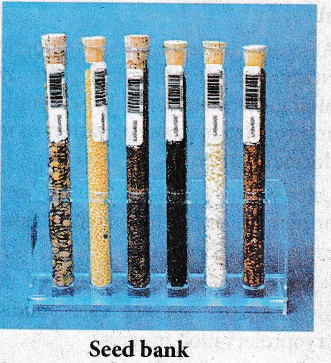
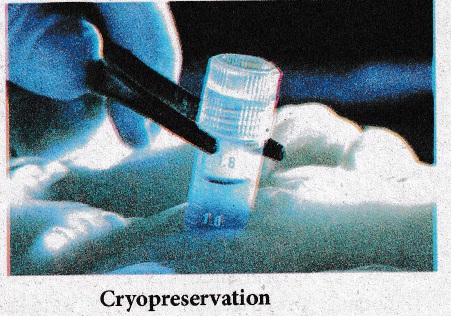
2.
The term used to define the ability of a cell to generate entire individual is
Pluripotent
Totipotent
Multipotent
Unipotent
3.
Identify the wrong statement:
Artificial seeds are stored for long time under cryopreservation
Somatic embryos are used for artificial seed production
Period of dormancy of artificial seeds is greatly reduced
Encapsulation of embryoids is done using cryoprotectant
4.
Identify the cryoprotectant
Dimethyl formamide
Fructose
Glycerol
Sodium alginate
5.
Assertion (A) : Protoplasts are cells devoid of cell wall.
Reason (R) : Secondary metabolites are synthesized by protoplasmic fusion.
Both A and R are correct but R is not a correct explanation to A
R explains A
A is correct R is incorrect
Both A and R are incorrect
6.
Identify the correct sequence regarding steps involved in PTC
Sterilization ➝ Incubation ➝ Inoculation ➝ Embryogenesis ➝ Hardening
Inoculation ➝ Induction ➝ Sterilization ➝ Hardening ➝ Embryogenesis
Induction ➝ Incubation ➝ Inoculation ➝ Hardening ➝ Sterilization
Sterilization ➝ Inoculation ➝ Incubation ➝ Embryogenesis ➝ Hardening
7.
Synseeds are developed by encapsulating embryoids with __________.
Sodium chloride
Potassium iodide
Sodium alginate
Potassium dichromate
8.
Protoplast are the cells devoid of ___________
Cell wall
Cell membrane
Plasma membrane
both A and B
9.
The production of secondary metabolites require the use of _________.
Protoplast culture
Organ culture
Cell suspension culture
Virus free germ culture
10.
Cryopreservation means it is a process to preserve plant cells, tissues or organs _____.
at very low temperature by using ether.
at very high temperature by using liquid nitrogen
at very low temperature of -196°C by using liquid nitrogen
at very low temperature by using liquid nitrogen
11.
The prevention of large scale loss of biological integrity ____.
Biopatent
Bioethics
Biosafety
Biofuel
12.
Select the incorrect statement from given statement.
A tonic used for cardiac arrest is obtained from Digitalis purpurea
Medicine used to treat Rheumatic pain is extracted from Capsicum annum
An anti malarial drug is isolated from Cinchona officinalis.
Anti-cancinogenic property is not seen in Catharanthus roseus.
13.
Which of the following statement is correct
Agar is not extracted from marine algae such as seaweeds
Callus undergoes differentiation and produces somatic embryoids.
Surface sterilization of explants is done by using mercuric bromide
PH of the culture medium is 5.0 to 6.0
14.
The time duration for sterilization process by using autoclave is ______ minutes and the temperature is ______.
10 to 30 minutes and 125° C
15 to 30 minutes and 121° C
15 to 20 minutes and 125° C
10 to 20 minutes and 121° C
15.
Name the explant through which virus free plantlets can be generated using tissue culturing technique.
16.
Given below are the list of components and accessories used in PTC technique. Sort them out according to their mode of sterilization.
(a) Glass wares
(b) Laminar air flow chamber
(c) Nutrient medium
(d) Explant
17.
Prepare a protocol for virus free meristem tip culture.
18.
What does the terms specification and claim refers with respect to patents?
19.
What is somatic embryogenesis? Give any two of its applications.
20.
How cell suspension is prepared?
21.
Mention any three macronutrients and micro nutrients used in MS medium.
22.
Point out the factors that determine success rate of tissue culturing.
23.
How the autoclaving is done for culture media?
24.
What do you know about Germplasm conservation. Describe it.
25.
26.
27.
How will you avoid the growing of microbes in nutrient medium during culture process? What are the techniques used to remove the microbes?
28.
Name the two inherent capacity responsible for cellular totipotency.
29.
Define Bioethics.
30.
Define the patent type - Grant.
31.
Given below are the secondary metabolites. Mention their plant source.
(a) Digoxin
(b) Vincristine.
32.
Classify plant tissue culture based on types of explants used.
33.
Name any four culture media used in plant tissue culture.
34.
Define sterilization.
35.
Name the four basic concepts of plant tissue culture.
36.
Give the examples for micro propagation performed plants .
37.
Enumerate the advantages of Artificial seeds.
38.
Point out the applications of plant tissue culture.
39.
Explain the steps involved in protoplast culture.
40.
41.
Based on the material used, how will you classify the culture technology? Explain it.
1.
(b)
Dedifferentiation
2.
(b)
Totipotent
3.
(d)
Encapsulation of embryoids is done using cryoprotectant
4.
(c)
Glycerol
5.
(c)
A is correct R is incorrect
6.
(d)
Sterilization ➝ Inoculation ➝ Incubation ➝ Embryogenesis ➝ Hardening
7.
(c)
Sodium alginate
8.
(a)
Cell wall
9.
(c)
Cell suspension culture
10.
(c)
at very low temperature of -196°C by using liquid nitrogen
11.
(c)
Biosafety
12.
(d)
Anti-cancinogenic property is not seen in Catharanthus roseus.
13.
(b)
Callus undergoes differentiation and produces somatic embryoids.
14.
(b)
15 to 30 minutes and 121° C
15.
Shoot - tip meristem
16.
(a) Glass wares are sterilized by auto claving.
(b) Nutrient medium is sterilized by auto claving.
(c) Laminar air flow chamber is sterilized by UV radiation.
(d) Explant is surface sterilized using chemicals.
17.
Protocol for virus free meristem tip culture
\(\downarrow\)
Apical meristem tip with 1 or 2 leaf primordia are excised in sterile condition from the explant
\(\downarrow\)
In vitro culture in 10 ml of solid MS medium supplemented with growth hormones
\(\downarrow\)
Cultures are maintained at 24±1°C in dark for 3 days followed by normal illumination of 2400Lux
\(\downarrow\)
Plantlets developed from meristem tip culture after organogenesis process, transferred to hardening process
\(\downarrow\)
Transferred to field condition
18.
The specification part is narrative in which the subject matter of invention is described as how the invention was carried out.
The claim specifically defines the scope of the invention to be protected by the patent which the others may not practice.
19.
Somatic embryogenesis is the formation of embryos from the callus tissue directly and these embryos are called Embryoids.
Applications:
1. Somatic embryogenesis provides potential plantlets which after hardening period can establish into plants.
2. Somatic ,embryoids can be used for the production of synthetic seeds.
20.
The cell suspension is prepared by transferring a portion of callus to the liquid medium and agitated using rotary shaker instrument. The cells are separated from the callus tissue and used for cell suspension culture.
21.
Macronutrients:
(a) Ammonium nitrate
(b) Potassium nitrate
(c) Calcium chloride
Micronutrients:
(a) Manganese sulphate
(b) Zinc sulphate
(c) Potassium iodide
22.
The success of tissue culture lies in the composition of the growth medium, plant growth regulators and culture conditions such as temperature, pH, light and humidity.
23.
Culture media are dispensed in glass containers, plugged with non-absorbent cotton or sealed with plastic closures and then sterilized using autoclave at 15 psi (121°C) for 15 to 30 minutes.
24.
Germplasm Conservation
1. Germplasm conservation refers to the conservation of living genetic resources like pollen, seeds or tissue of plant material maintained for the purpose of selective plant breeding, preservation in live condition and used for many research works.
2. Germplasm conservation resources is a part of collection of seeds and pollen that are stored in seed or pollen banks, so as to maintain their viability and fertility for any later use such as hybridization and crop improvement.
3. Germplasm conservation may also involve a gene bank, DNA bank of elite breeding lines of plant resources for the maintenance of biological diversity and also for food security.
25.
26.
27.
Sterilization of Nutrient Media:
1. Culture media are dispensed in glass containers, plugged with non-absorbent cotton or sealed with plastic closures and then sterilized using autoclave at 15 psi (121o(C) for 15 to 30 minutes.
2. The plant extracts, vitamins, amino acids and hormones are sterilized by passing through Millipore filter with 0.2 mm pore diameter.
3. Then added to sterilized culture medium inside Laminar Airflow Chamber under sterile condition.
Other techniques used to remove the microbes
(a) Maintenance of aseptic environment
(b) Sterilization of culture room
(c) Sterilization of explants
28.
Redifferentiation and Dedifferentiation.
29.
Bioethics refers to the study of ethical issues emerging from advances in biology and medicine. It is also a moral discernment as it relates to medical policy and practice.
30.
Grant is a signed document, actually the agreement that grants patent right to the inventor. It is filled at patent office and not published.
31.
(a) Digoxin is obtained from Digitalis purpuria.
(b) Vincristine is obtained from Catharanthus roseus.
32.
Based on the explants some other plant tissue culture types are:
1. Organ culture
2. Meristem culture
3. Protoplast culture
4. Cell culture
33.
(a) Murashige and Skoog medium
(b) Gamborg medium
(c) White medium
(d) Nitsch's medium
34.
Sterilization is the technique employed to get rid of microbes such as bacteria and fungi in the culture medium, vessels and explants.
35.
Basic concepts of plant tissue culture are totipotency, differentiation, dedifferentiation and redifferentiation.
36.
Pineapple, banana, strawberry and potato.
37.
Advantages of Artificial seeds
Artificial seeds have many advantages over the true seeds as follows:
1. Millions of artificial seeds can be produced at any time at low cost.
2. They provide an easy method to produce genetically engineered plants with desirable traits.
3. It is easy to test the genotype of plants.
4. They can potentially stored for long time under cryopreservation method.
5. Artificial seeds produce identical plants .
6. The period of dormancy of artificial seeds is greatly reduced, hence growth is faster with a shortened life cycle.
38.
Plant tissue culture techniques have several applications such as:
i. Improved hybrids production through somatic hybridization.
ii. Somatic embryoids can be encapsulated into synthetic seeds (synseeds). These encapsulated seeds or synthetic seeds help in conservation of plant biodiversity.
iii. Production of disease resistant plants through meristem and shoot tip culture.
iv. Production of stress resistant plants like herbicide tolerant, heat tolerant plants.
v. Micropropagation technique to obtain large numbers of plantlets of both crop and tree species useful in forestry within a short span of time and all through the year.
vi. Production of secondary metabolites from cell culture utilized in pharmaceutical, cosmetic and food industries.
39.
Protoplasts are cells without a cell wall, but bounded by a cell membrane or plasma membrane. Using protoplasts, it is possible to regenerate whole plants from single cells and also develop somatic hybrids. The steps involved in protoplast culture are:
i) Isolation of protoplast: Small bits of plant tissue like leaf tissue are used for isolation of protoplast. The leaf tissue is immersed in 0.5% Macrozyme and 2% Onozuka cellulase enzymes dissolved in 13% sorbitol or mannitol at pH 5.4. It is then incubated overnight at 25°C. After a gentle teasing of cells, protoplasts are obtained, and these are then transferred to 20% sucrose solution to retain their viability. They are then centrifuged to get pure protoplasts as different from debris of cell walls.
ii) Fusion of protoplast: It is done through the use of a suitable fusogen. This is normally PEG (Polyethylene Glycol). The isolated protoplast are incubated in 25 to 30% concentration of PEG with Ca++ ions and the protoplast shows agglutination (the formation of clumps of cells) and fusion.
iii) Culture of protoplast: MS liquid medium is used with some modification in droplet, plating or micro-drop array techniques, Protoplast viability is tested with fluorescein diacetate before the culture. The cultures are incubated in continuous light 1000-2000 lux at 25°C. The cell wall formation occurs within 24-48 hours and the first division of new cells occurs between 2-7 days of culture.
iv) Selection of somatic hybrid cells: The fusion product of protoplasts without nucleus of different cells is called a cybrid. Following this nuclear fusion happen. This process is called somatic hybridization.
40.
41.
Types of Plant tissue cultures
Based on the explants some other plant tissue culture types are
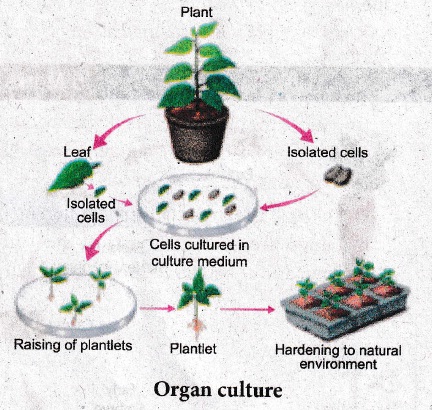
(a) Organ culture
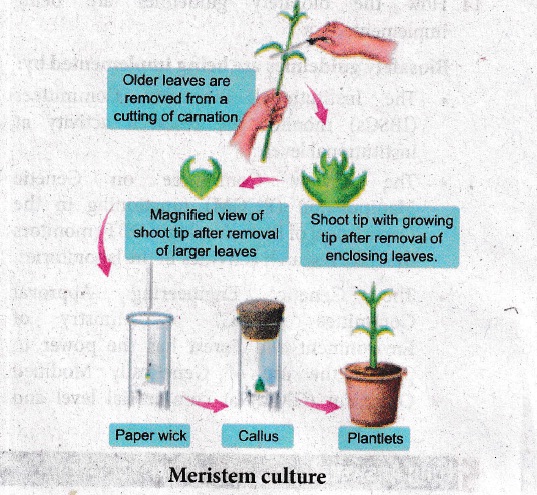
(b) Meristem culture
(c) Protoplast culture
(d) Cell culture
(a) Organ culture
The culture of embryos, anthers, ovaries roots, shoots or other organs of plants on culture media.
(b) Meristem Culture:
The culture of any plant meristematic tissue on culture media.
(c) Protoplast Culture:
1. Protoplasts are cells without a cell wall, but bounded by a cell membrane or plasma membrane.
2. Using protoplasts, it is possible to regenerate whole plants from single cells and also develop somatic hybrids.
The steps involved in protoplast culture
(i) Isolation of protoplast:
1. Small bits of plant tissue like leaf tissue are used for isolation of protoplast.
2. The leaf tissue is immersed in 0.5% Macrozyme and 2% Onozuka cellulase enzymes dissolved in 13% sorbitol or mannitol at pH 5.4.
3. It is then incubated over-night at 25oC.
4. After a gentle teasing of cells, protoplasts are obtained, and these are then transferred to 20% sucrose solution to retain their viability.
They are then centrifuged to get pure protoplasts as different from debris of cell walls.
(ii) Fusion of Protoplast
1. It is done through the use of a suitable fusogen. This is normally PEG (Polyethylene Glycol).
2. The isolated protoplast are incubated in 25 to 30% concentration of PEG with Ca++ ions and the Protoplast shows agglutination (the formation of clumps of cells) and fusion.
(iii) Culture of Protoplast:
MS liquid medium is used with some modification in droplet, plating or micro drop array techniques. Protoplast viability is tested with fluorescein diacetate before the culture. The cultures are incubated in continuous light 1000-2000 lux at 25oC. The cell wall formation occurs within 24-48 hours and the first division of new cells occurs between 2-7 days of culture.
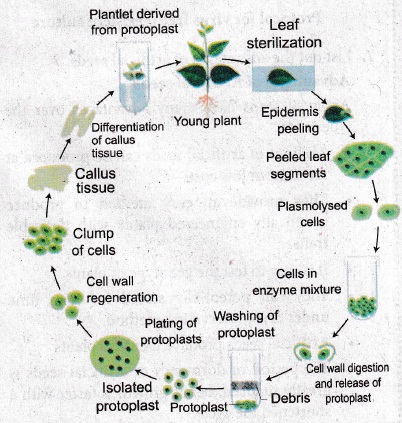
(iv) Selection of somatic hybrid cells:
The fusion product of protoplasts without nucleus of different cells is called a cybrid. Following this nuclear fusion happen. This process is called somatic hybridization.
(d) Cell Suspension Culture
The growing of cells including the culture of single cells or small aggregates of cells in vitro in liquid medium is known as cell suspension culture. The cell suspension is prepared by transferring a portion of callus to the liquid medium and agitated using rotary shaker instrument. The cells are separated from the callus tissue and used for cell suspension culture.

12th Standard Syllabus & Materials
12th Standard
TN 12th Computer Applications களப்பெயர் முறைமை (DNS) Sample Question Papers Study Material - QB365 Set A
NEW12th Standard
TN 12th Computer Applications வலையமைப்பு எடுத்துக்காட்டுகள் மற்றும் நெறிமுறைகள் Sample Question Papers Study Material - QB365 Set A
NEW12th Standard
TN 12th Computer Applications கணினி வலையமைப்பு ஓர் அறிமுகம் Sample Question Papers Study Material - QB365 Set A
NEW12th Standard
TN 12th Computer Applications PHP-உடன் MySQL-ஐ இணைத்தல் Sample Question Papers Study Material - QB365 Set A



Tamilnadu Stateboard 12th Standard Subjects

Maths

Chemistry

Physics
Biology

Computer Science

Business Maths and Statistics

Economics

Commerce

Accountancy

History

Computer Applications
Biology
Computer Technology
Computer Applications
Computer Science
Business Maths and Statistics
Commerce
Economics
Maths
Chemistry
Physics
Computer Technology
History
Accountancy

Tamil

English

French
Tamilnadu Stateboard Standards

