
 100% FREE ACCESS
12th Standard Syllabus & Materials
12th Standard
TN 12th Computer Applications மின்னணு தரவு பரிமாற்றம் Sample Question Papers Study Material - QB365 Set A
NEW12th Standard
TN 12th Computer Applications மின் - வணிக பாதுகாப்பு அமைப்புகள் Sample Question Papers Study Material - QB365 Set A
NEW12th Standard
TN 12th Computer Applications மின்னணு செலுத்தல் முறைகள் Sample Question Papers Study Material - QB365 Set A
NEW12th Standard
TN 12th Computer Applications மின் - வணிகம் Sample Question Papers Study Material - QB365 Set A
NEW12th Standard
TN 12th Computer Applications திறந்த மூல கருத்துருக்கள் Sample Question Papers Study Material - QB365 Set A
NEW12th Standard
TN 12th Computer Applications வலையமைப்பு வடமிடல் Sample Question Papers Study Material - QB365 Set A

Published on: 01/09/2020
12th Standard Economics English Medium Sample 3 Mark Creative Questions (New Syllabus) 2020
Download Tamil Nadu 12th Standard Economics question papers, model tests, one-mark questions, important questions, and public exam papers in PDF format. Free study materials and answer keys for TN State Board students.
Questions + Answers key
Take MCQ Economics Test
1.
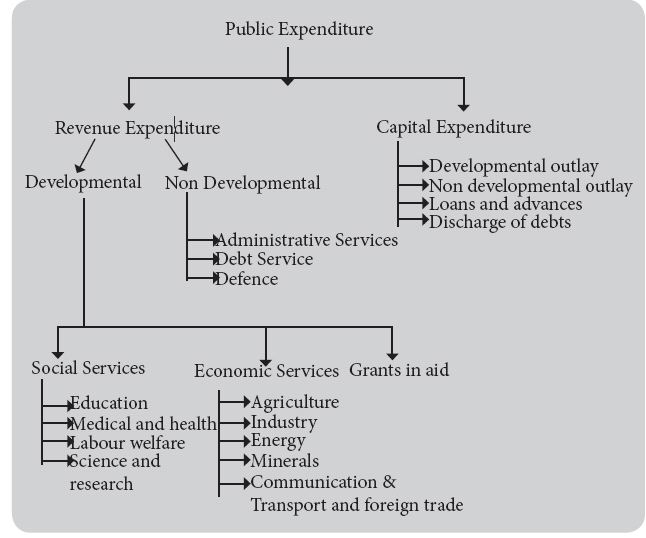
Present chart depicting public expenditure.
2.
Write a brief note on “The First Rupee”.
3.
Discuss the Primary Functions.
4.
Explain “The Keynes Equation” Keynes equation is expressed as:
5.
What are the Contingent Functions?
6.
Comment - “Ex ante and Ex post in Says’ Law".
7.
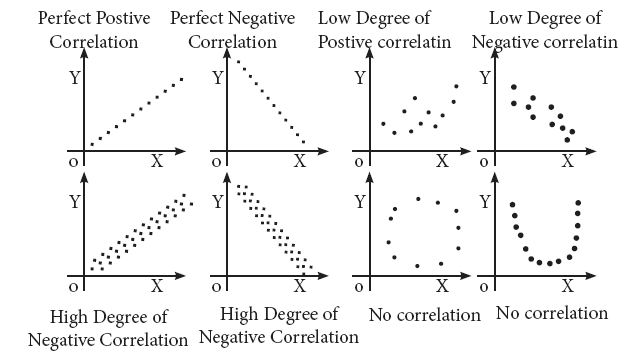
Draw the various kinds of scatter diagram.
8.
Explain the correlation based on the direction of change of variables.
9.
List the “Role of a state” according to mercantilists?
10.
List the assumption of Comparative advantage theory of international trade.
11.
How the gross value of the farm output is obtained In India?
12.
What are the five types of final goods and services that GNP includes?
13.
State Duesenberry hypothesis.
14.
Given the table, write the proposition for consumptions function (value in crores).
15.
Explain the Causes of Noise Pollution
16.
Explain the achievements of WTO.
17.
Mention any two objectives of SAARC.
18.
What are the objectives of Fiscal Policy?
19.
What are the sources of revenue of Municipalities?
20.
Write short note on second five year plan
21.
What are the main objectives of planning in India?
22.
What are the components of aggregate supply?
23.
Indicate the demerits of Mixed Economy.
24.
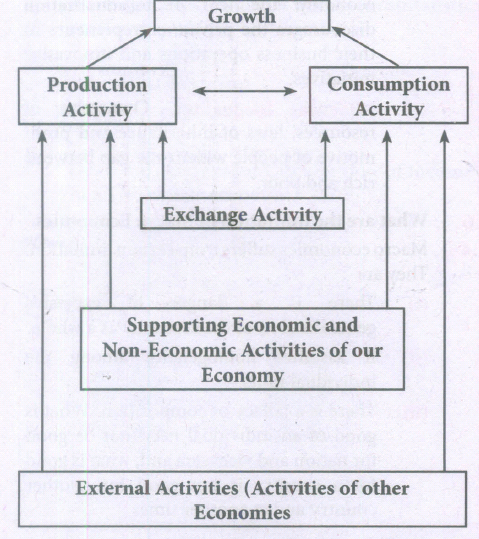
Bring out the functions of an economy with the help of flow chart.
1.
2.
(i) The first rupee was introduced by Sher Shah Suri based on a ratio of 40 copper pieces (paisa) per rupee. The name was derived from the Sanskrit word Raupya, meaning silver.
(ii) Each banknote has its amount written in 17 languages (English and Hindi on the front and 15 other on the back) illustrating the diversity of the country.
3.
Accepting Deposits
It implies that commercial banks are mainly dependent on public deposits.
There are two types of deposits, which are discussed as follows
(i) Demand Deposits
It refers to deposits that can be withdrawn by individuals without any prior notice to the bank. In other words, the owners of these deposits are allowed to withdraw money anytime by writing a withdrawal slip or a cheque at the bank counter or from ATM centres using debit card.
(ii) Time Deposits
It refers to deposits that are made for certain committed period of time. Banks pay higher interest on time deposits. These deposits can be withdrawn only after a specific time period by providing a written notice to the bank.
4.
n = pk (or) p = n / k
Where
n is the total supply of money
p is the general price level of consumption goods
k is the total quantity of consumption units the people decide to keep in the form of cash.
because it is measured in terms of consumer goods.
According to Keynes, peoples desire to hold money is unaltered by monetary authority. So, price level and value of money can be stabilized through regulating quantity of money (n) by the monetary authority.
Later, Keynes extended his equation in the following form:
n = p (k + rk') or p = n/(k + rk')
Where,
n = total money supply
p = price level of consumer goods
k = peoples' desire to hold money in hand (in terms of consumer goods) in the total income of them
r = cash reserve ratio
k' = community’s total money deposit in banks, in terms of consumers goods.
5.
(i) Basis of the Credit System: Money is the basis of the Credit System. Business transactions are either in cash or on credit.
(ii) Money facilitates distribution of National Income: The task of distribution of national income was exceedingly complex under the barter system.
(iii) Money helps to Equalize Marginal Utilities and Marginal Productivities: Consumer can obtain maximum utility only if he incurs expenditure on various commodities in such a manner as to equalize marginal utilities accruing from them.
(iv) Money Increases Productivity of Capital: Money is the most liquid form of capital. In other words, capital in the form of money can be put to any use.
6.
1. The statement that supply creates own demand or equivalently that the aggregate in investment equals the aggregate saving always holds good in the ex post sense since it is simply an accounting identity.
2. Say’s law of markets, however, states that these two are equal in ex ante sense, i.e the total quantity which people produce i.e., aggregate supply must be equal to the total quantity which they plan to buy i.e., aggregate demand.
7.
8.
Correlation is classified into two types as Positive correlation and Negative Correlation based on the direction of change of the variables.
Positive Correlation:
The correlation is said to be positive if the values of two variables move in the same direction.
Ex: If income and Expenditure of a Household may be increasing or decreasing simultaneously. If so, there is positive correlation. Ex. Y = a + bx
Negative Correlation:
The Correlation is said to be negative when the values of variables move in the opposite
directions. Ex. Y = a – bx
Ex: Price and demand for a commodity move in the opposite direction.
9.
i. Stimulate exports and export more goods than import. This approach will provide the gold inflow;
ii. Restrict the importation of goods, especially luxury goods that will provide export balance of trade;
iii. Forbid the production of the final products in its colonies;
iv. Forbid the exportation of raw materials from the parent states to the colonies and allow free importation of raw materials, which are not obtained within the country;
v. Stimulate an export of mainly cheap raw commodities from the colonies;
vi. Forbid any trade of its colonies with other countries, except the parent state, which can resell the colonial goods abroad by itself.
10.
1. There are only two nations and two commodities (2 x 2 model)
2. Labour is the only element of cost of production.
3. All labourers are of equal efficiency
4. Labour is perfectly mobile within the country but perfectly immobile between countries.
5. Production is subject to the law of constant returns
6. Foreign trade is free from all barriers.
7. No change in technology.
8. No transport cost.
9. Perfect competition.
10. Full employment.
11. No government intervention
11.
(i) Total production of 64 agriculture commodities is estimated. The output of each crop is measured by multiplying the area sown by the average yield per hectare.
(ii) The total output of each commodity is valued at market prices.
(iii) The aggregate value of total output of these 64 commodities is taken to measure the gross value of agricultural output.
(iv) The net value of the agricultural output is measured by making deductions for the cost of seed, manures and fertilisers, market charges, repairs and depreciation from the gross value
12.
(1) Value of final consumer goods and services produced in a year to satisfy the immediate wants of the people which is referred to as consumption (C);
(2) Gross private domestic investment in capital goods consisting of fixed capital formation, residential construction and inventories of finished and unfinished goods which is called as gross investment (I);
(3) Goods and services produced or purchased by the government which is denoted by (G) ; and
(4) Net exports of goods and services, i.e., the difference between value of exports and imports of goods and services, known as (X - M)
(5) GNP at market prices means the gross value of final goods and services produced annually in a country plus net factor income from abroad (C + I + G + (X - M) + (R - P)).
13.
Duesenberry has made two observations regarding the factors affecting consumption.
a) The consumption expenditure depends not only on his current income but also past income and standard of living. As the individuals are accustomed to a particular standard of living, they continue to spend the same amount on consumption even though the current income is reduced.
b) Consumption is influenced by demonstration effect. The consumption standards of low income groups are influenced by the consumption standards of high income groups. In other words, the poor people want to imitate the consumption pattern of rich. This results in spending beyond their income level.
14.
| Income | Consumption | Savings |
| 120 | 120 | 0 |
| 180 | 170 | 10 |
| 240 | 220 | 20 |
Proposition (1):
Income increases by Rs. 60 crores and the increase in consumption is by Rs. 50 crores.
Proposition (2):
The increased income of Rs. 60 crores in each case is divided in some proportion between consumption and saving respectively. (i.e., Rs. 50 crores and Rs. 10 crores).
Proposition (3):
As income increases consumption as well as saving increase. Neither consumption nor saving has fallen.
15.
i. Poor urban planning:
Improper urban planning will cause more nuisances among city travelers.
ii. Sounds from motor vehicles:
Sounds from motor vehicles can cause temporary hearing loss.
iii. Crackers:
Enormous Crackers are used during some occasions. Such activities create a very louder noise to the level of harming the public. Sometimes, they may even cause deafness to children and aged.
iv. Factory machinery:
The industrial noise caused by continuous operation of mills, machines and pneumatic drills, is an unbearable nuisance to the workers.
16.
i) Use of restrictive measures for BoP problems has declined markedly.
ii) Services trade has been brought in to the multilateral system and many countries.
17.
i) To promote the welfare of the people of South Asia and improve their quality of life.
ii) To accelerate economic growth, social progress and cultural development in the region.
18.
(i) Full employment
(ii) Price stability
(iii) Economic growth
(iv) Equitable distribution
(v) External stability
(vi) Capital formation
(vii) Regional balance
19.
(i) Taxes on property.
(ii) Taxes on Vehicles and Animals
(iii) Taxes on goods particularly octroi and terminal tax.
(iv) Personal Taxes, Taxes on Profession, Trades and Employment.
(v) Theatre (or) show tax
(vi) Grands - in - aid from State Government.
20.
(i) The Second Five Year Plan (1951- 56) aimed at rapid industrialization with particular emphasis on the development of basic and heavy industries.
(ii) It was during the second plan period, the Goverriment embraced the goal of democratic socialism
21.
The main objectives of planning in India may be grouped under four heads, they are
(i) Growth
(ii) Modernization
(iii) Self - reliance and
(iv) Social justice
22.
The components of aggregate supply are,
(i) Aggregate (desired) consumption expenditure (C).
(ii) Aggregate (desired) private savings (S).
(iii) Net tax payments (T) (Total tax payment to be received by the government minus transfer payments, subsidy and interest payments to be incurred by the government) and
(iv) Personal (desired) transfer payments to the foreigners (Rf) (eg. Donations to international relief efforts)
23.
Lack of Co-ordination:
The greatest drawback of Mixedism is lack of co-ordination between public sector and private sector.
Inefficiency:
Most of the public sector enterprises remain inefficient due to lethargic bureaucracy, red tapism and lack of motivation.
Fear of Nationalization:
In mixed economy, the fear of nationalization discourages the private entrepreneurs in their business operations.
24.
Functioning of an Economy based on Activities

12th Standard Syllabus & Materials
12th Standard
TN 12th Computer Applications களப்பெயர் முறைமை (DNS) Sample Question Papers Study Material - QB365 Set A
NEW12th Standard
TN 12th Computer Applications வலையமைப்பு எடுத்துக்காட்டுகள் மற்றும் நெறிமுறைகள் Sample Question Papers Study Material - QB365 Set A
NEW12th Standard
TN 12th Computer Applications கணினி வலையமைப்பு ஓர் அறிமுகம் Sample Question Papers Study Material - QB365 Set A
NEW12th Standard
TN 12th Computer Applications PHP-உடன் MySQL-ஐ இணைத்தல் Sample Question Papers Study Material - QB365 Set A



Tamilnadu Stateboard 12th Standard Subjects

Maths

Chemistry

Physics

Biology

Computer Science

Business Maths and Statistics
Economics

Commerce

Accountancy

History

Computer Applications
Biology
Computer Technology
Computer Applications
Computer Science
Business Maths and Statistics
Commerce
Economics
Maths
Chemistry
Physics
Computer Technology
History
Accountancy

Tamil

English

French
Tamilnadu Stateboard Standards
