
 100% FREE ACCESS
7th Standard Syllabus & Materials
7th Standard
TN 7th Tamil பருவம் -1 இயல் 1 - அமுதத்தமிழ் - ஒன்றல்ல இரண்டல்ல Important Questions And Answers Study Material - QB365 Set A
NEW7th Standard
TN 7th Tamil பருவம் -1 இயல் 1 - அமுதத்தமிழ் - எங்கள் தமிழ் Important Questions And Answers Study Material - QB365 Set A
NEW7th Standard
TN 7th English T1 - Poem - Your Space Important Questions And Answers Study Material - QB365 Set A
NEW7th Standard
TN 7th English T1 - Prose - A Prayer to the Teacher Important Questions And Answers Study Material - QB365 Set A
NEW7th Standard
TN 7th English T1 - Poem - The Listeners Important Questions And Answers Study Material - QB365 Set A
NEW7th Standard
TN 7th English T1 - Prose - The Wind on Haunted Hill Important Questions And Answers Study Material - QB365 Set A

Published on: 13/05/2022
QB365 provides detailed and simple solution for every Book back Questions in class 7 Science Subject. It
will helps to get more idea about question pattern in every book back questions with solution.
Download Tamil Nadu 7th Standard Science question papers, model tests, one-mark questions, important questions, and public exam papers in PDF format. Free study materials and answer keys for TN State Board students.
Questions + Answers key
Take MCQ Science Test1.
What are the major steps involved in this wool factory.
2.
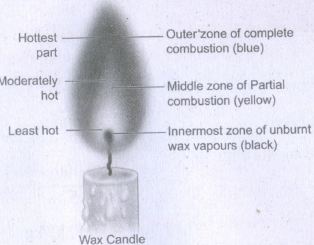
Make labeled diagram of a candle flame.
3.
List the advantages and disadvantages of synthetic fibres.
4.
Write short notes on constellations.
5.
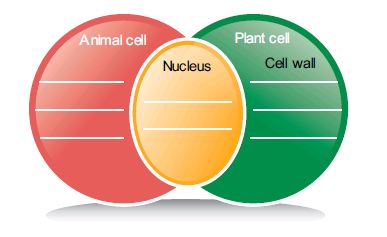
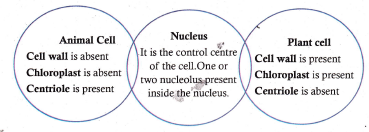
Compare the plant cell and the animal cell and complete the illustration given below.
6.
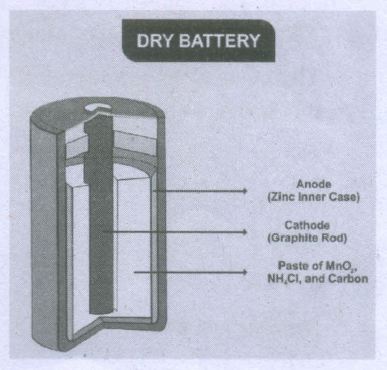
Explain the construction and working of a dry cell.
7.
Define valency? What is the valency of the element with atomic number 8? What is the compound format by this element with hydrogen?
8.
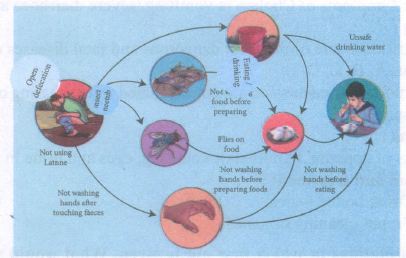
How the disease are transmitted from one person to the other person?
9.
Comparative properties of metals and non-metals. Give three examples of each.
10.
Explain the underground stems.
11.
With the help of Microsoft Photostory how will you create a video?
12.
Which kingdom has saprophytic, parasitic and symbiotic nutrition. Why?
13.
A very hot glass on putting in cold water cracks. What does this change indicate?
14.
What must be the temperature in Fahrenheit, so that it will be twice its value in Celsius?
1.
The processing of wool involves five major steps
a) Shearing
b) Grading or sorting
c) Washing or Scouting
d) Carding
e) Spinning
Shearing:
a) The fleece of the sheep is removed from its body.
b) This is called shearing
Grading or Sorting :
a) The fleece from the same sheep may be different from different parts of the body.
b) It is sorted out into separate piles of similar nature.
c) This is known as Grading or sorting,
Washing or scouting:
a) The sheared skin is washed thoroughly with soap or detergents to remove dirt, dust and grease.
Carding :
a) The dried wool is carefully removed.
b) These fibres then passed through the rollers which are covered with fine sheet of thin wire teeth.
c) This process arranges the wool into a flat sheet called a web.
Spinning :
a) The web is drawn into narrow strand and then passed through spinning machines.
b) The spinning machines twist the strands into yarn.
c) The yarn is wound to form balls of wool.
d) This yarn is weaved into fabric (or) retained for knitting
2.
3.
Advantages of Synthetic fibres:
i) Synthetic fibres do not wrinkle easily.
ii) They keep their colour and brightness for a much longer time compared to natural fibres.
iii) Synthetic fibres are stronger than silk and wool.
iv) Synthetic fibres like trampoline are elastic and have the properties to bounce.
v) They are durable and affordable.
vi) They are lustruous and easy to wash.
Disadvantages of synthetic fibres:
i) They are not heat resistant
ii) They catch fire easily.
iii) They melt on heating and stick on to the body.
iv) They absorb very little moisture
v) They do not allow air circulation making them hot and uncomfortable to wear during summer
4.
Constellation:-
(i) A constellation is a recognizable pattern of stars in the night sky when viewed from the Earth.
(ii) Different constellations become visible in the sky at different times in the year. This happens due to the revolution of the Earth around the Sun.
(iii) Unlike galaxy, constellations are mere optical appearance and not real objects.
(iv) In a constellation, one star may be near and another very very far, but because they are in the same direction appear to be near to each other in the sky.
(v) International Astronomical union has classified 88 constellations to cover the entire celestial sphere
Examples
i) Ursa Major - Seven bright stars.
ii) Ursa Minor - (the little bear) Polaris lies in this constellation
iii) Orion - 81 stars.
5.
6.
(i) Dry cells are normaly used in small devices such as remote control for T.V., torch, camera and toys.
A dry cells is a portable form of a leclanche cell. It consists of zinc vessel which acts as a negative electrode or anode the vessal contains a moist paste of saw dusts saturated with a solution of ammonium chloride and zinc chloride. The ammonium chloride acts as an electrolyte.
(ii) Electrolytes are substances that become ions in solution and acquire the capacity to conduct electricity.
(iii) The purpose of zinc chloride is to maintain the moistness of the paste being highly hygroscopic. The carbon rod covered with a brass cap is placed in the middle of vessel. It acts as positive electrode or cathode.
(iv) It is surrounded by a closely packed mixture of charcoal and manganese dioxide (MnO2) in a muslin bag. Here MnO2 acts as depolarizer. The zinc vessel is sealed at the top with pitch or shellac. A small hole is provided in it to allow the gases formed by the chemical action to escape. The chemical action inside the cell is the same as in leclanche cell
7.
(i) Valency is defined as the combining capacity of an element.
(ii) The valency of the element with atomic number 8, Oxygen (2,6) is = 2.
(iii) The compound formed by oxygen with hydrogen is water. \(\mathrm{O}_{2}+2 \mathrm{H}_{2} \rightarrow 2 \mathrm{H}_{2} \mathrm{O}\)
8.
Disease are spread through air, water and some other organisms.
(i) Air = Spitting and coughing (Tuberculosis, chicken pox )
(ii) Contaminated waer = Drinking and cleaning by using unboiled water ( Cholera, Hepatitis).
(iii) Insects = Biting of infected insects like mosquito and flies. Dengue, Typhoid)
(iv) Animals = Through biting of in affected animals like dog, rabbit, cat etc,(Rabies).
9.
(i) Hardness:
1. Metals are generally hard and shiny elements except Na.
Ex: Gold
2. Non-metals are generally soft and dull elements except diamond.
Ex: Sulphur.
(ii) Physical nature:
1. All the metals are solids at room temperature except mercury.
2. Non-metals can be gases, solids and liquids.
Ex: H2, O2, CI2 - Gases
I2, S8 P4 -Solids
Br2 - Liquid .
(iii) Malleability:
1. Metals are malleable. They can be bent or beaten into sheets and drawn into wires.
Ex: Iron, Gold
2. Non-metals are non-bendable and non-ductile.
(iv) Conductivity:
1. Metals are good conductors of heat and electricity
Ex: Copper, Nickel
2. Non-metals are poor conductors of heat and electricity except graphite.
10.
In underground modified stem, whole stem is burried under the ground and it has definite growth. Some stems that grow under the ground to store food. There are four types of underground stems they are,
i) Rhizome:
It is underground thick stem with nodes and internodes with scale leaves at the node.
(Eg) Ginger and turmeric.
ii) Corm:
This underground stem is round in shape and flat at the top and bottom. The daughter plants are arise from their buds. (Eg) Colocasia.
iii) Tuber:
It is an enlarged spherical underground stem and stores food. It has many dormant buds and it grows into a new plant. (Eg) Potato.
iv) Bulb:
It is a condensed stem which is disc like and stores food in the fleshy leaves.
The bulb has two types of leaves
1) Fleshy leaves - Inner part of stem
2) Scaly leaves - Upper part of stem
(E.g) Garlic and onion
11.
Step 1: Open the application of 'Microsoft Photostory'. In that select "Begin A New Story" and click on Next.
Step 2: Click "Import Picture" in the next screen. Select 'Saved pictures' for video. If required, We can edit the image and click on Next.
Step 3: Now we can input small text, animation, audio effect for the picture then click Next.
Step 4: To provide background music, we can select a music file through "Select Music" and click on Next.
Step 5: select a title for the story, then through SETTINGS change the format of the video.
Step 6: Now our video is ready to view. Click "VIEW YOUR STORY". You can see your video now.
12.
Kingdom fungi has saprophytic parasitic and symbiotic nutrition. It is a non green Eukaryotic. So it cannot prepare food. So it is saprophytic, parasitic and symbiotic nutrition
13.
Suddenly variation of temperature it shrinks so it will be cracks. so heat is obsorbed suddenly heat liberated it indicates a exothermic reaction.
14.
F = 2 C
\(\mathrm{F}=\frac{9}{5 \mathrm{C}\ +\ 32}\)
when we substract 9/5 C from both sides
\(2 \mathrm{C}-9 / 5 \mathrm{C}=32 \quad\left(2 \mathrm{C}=\frac{10}{5 \mathrm{C}}\right) \)
\(\frac{10}{5 \mathrm{C}}-\frac{9}{5 \mathrm{C}}=32\)
\(\frac{1}{5 C} =32 \)
\(\frac{1}{C} =32 \times 5 \)
\(C = 160^{\circ} \mathrm{C}\)
So, F = 2 C
\(\mathrm{F} =2 \times 160=320^{\circ} \mathrm{F}\)

7th Standard Syllabus & Materials
7th Standard
TN 7th English T1 - Supplementary - On Monday Morning Important Questions And Answers Study Material - QB365 Set A
NEW7th Standard
TN 7th English T1 - Prose - Eidgah Important Questions And Answers Study Material - QB365 Set A
NEW7th Standard
TN 7th Social Science T1 - ECO - Production Important Questions And Answers Study Material - QB365 Set A
NEW7th Standard
TN 7th Social Science T1 - GEO - Interior of the Earth Important Questions And Answers Study Material - QB365 Set A



Tamilnadu Stateboard 7th Standard Subjects
Tamilnadu Stateboard Standards




