
 100% FREE ACCESS
7th Standard Syllabus & Materials
7th Standard
TN 7th Tamil பருவம் -1 இயல் 1 - அமுதத்தமிழ் - ஒன்றல்ல இரண்டல்ல Important Questions And Answers Study Material - QB365 Set A
NEW7th Standard
TN 7th Tamil பருவம் -1 இயல் 1 - அமுதத்தமிழ் - எங்கள் தமிழ் Important Questions And Answers Study Material - QB365 Set A
NEW7th Standard
TN 7th English T1 - Poem - Your Space Important Questions And Answers Study Material - QB365 Set A
NEW7th Standard
TN 7th English T1 - Prose - A Prayer to the Teacher Important Questions And Answers Study Material - QB365 Set A
NEW7th Standard
TN 7th English T1 - Poem - The Listeners Important Questions And Answers Study Material - QB365 Set A
NEW7th Standard
TN 7th English T1 - Prose - The Wind on Haunted Hill Important Questions And Answers Study Material - QB365 Set A

Published on: 04/02/2020
7th Standard Social Science Important Questions
Download Tamil Nadu 7th Standard Social Science question papers, model tests, one-mark questions, important questions, and public exam papers in PDF format. Free study materials and answer keys for TN State Board students.
Questions + Answers key
Take MCQ Social Science Test
1.
Who appoints the Chief Minister and other Ministers?
President
Prime Minister
Governor
Election Commissioner
2.
The overall head of the government in the state is the_______.
President
Prime Minister
Governor
Chief Minister
3.
The word State government refers to ______.
Government departments in the states
Legislative Assembly
both a and b
none of the above
4.
Which is mass media?
Radio
Television
Both a & b
None of these
5.
Which invention has brought the world closure?
Typewriter
Television
Telex
None of these
6.
Which one of the following is the broadcast media?
Magazines
Journals
Newspaper
Radio
7.
In which district courtallam waterfalls is located?
Dharmapuri
Tirunelveli
Namakkal
Theni
8.
Which one of the following is not a beach of India?
Goa
cochin
Kovalam
Miami
9.
Which one of the following is renewable resource?
Gold
Iron
Petrol
solar energy
10.
Name the family priest of Shambhuji who influenced him in his day-to-day administration.
Shahu
Anaji Datta
Dadaji Kondadev
Kavi Kalash
11.
Who was the teacher and guardian of Shivaji?
Dadaji Kondadev
Kavi Kalash
Jijabai
Ramdas
12.
Who was the revenue minister of Akbar?
Birbal
Raja Bhagwan Das
Raja Todarmal
Raja Man Singh
13.
In which battle did Akbar defeat Rana Pratap?
Panipat
Chausa
Haldighati
Kanauj
14.
Name the Bahmani King who was a linguist and a poet.
Ala-ud-din Hasan Shah
Muhammad I
Sultan Firoz
Mujahid
15.
Who ended the Sultanate in Madurai?
Saluva Narasimha
Devaraya II
Kumara Kampana
Tirumaladeva Raya
16.
The most to the Gross Domestic product of our country is contributed by the __________ sector.
Tertiary
Primary
Secondary
All the above
17.
The head quarters of Election commission is located in ____________
Chennai
Mumbai
New Delhi
Kolkatta
18.
____________ means self respect.
Dignity
Ego
Politeness
Pride
19.
______ have really brought the world closer.
Religions
Languages
Settlements
Technologies
20.
The term 'meander' has been named on the but of Meander River of ___________
India
Russia
China
Turkey
21.
An earth quake of magnitude _____________ scale can cause damage from things falling.
3.0
4.0
5.0
2.0
22.
Iltutmish granted ___________ to members of his army.
iqtas
coins
gold
dirams
23.
Rajaraja chola's daughter was married to _________ prince Vimaladitya
Chera
Chola
Chalukya
Pallava
24.
The, _______ one of the four prominent clans of the Rajputs, ruled from Gurjaratra (in Jodhpur).
Palas
Pratiharas
Chauhans
Chalukyas
25.
__________ jitals are available for the study of the period of the Delhi sultans.
Gold
Silver
Copper
Aluminium
26.
The entrepreneur is also called _______.
exchanger
Agent
organizer
communicator
27.
Utilities are in the nature of _______.
form utility
time utility
place utility
all of these
28.
Single-party system is found in _______.
India
U.S.A
France
China
29.
Political parties are generally formed on the basic of ________.
Religious principles
Common interest
Economic principles
Caste
30.
In Switzerland, the right to vote is given to women in the year ________.
1981
1971
1991
1961
31.
In India, right to vote is given to all the citizens at the age of ________.
21
18
25
31
32.
_______ Race is Known as Asian - American Race
Caucasoid
Negroid
Mongoloid
Australoid
33.
Caucasoid race is also known as _______ race.
European
Negroid
Mangoloid
Australoid
34.
The landform created by glacial deposition is ______.
Cirque
Arete
Moraine
Tarn lake
35.
Courtallam falls is located across the______ river.
Cauvery
Pennar
Chittar
Vaigai
36.
_____ belt is known as the “Ring of Fire”.
Circum - Pacific
Mid - Atlantic
Mid - Continental
Antarctic
37.
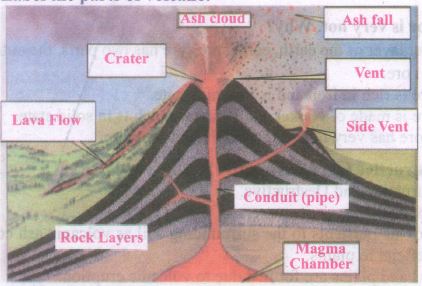
The narrow pipe through which magma flow out is called a _________.
Vent
Crater
Focus
Caldera
38.
Qutb-ud-in shifted his capital to Delhi from_______.
Lahore
Poona
Daulatabad
Agra
39.
_______laid the foundation of ‘Mamluk’ dynasty.
Mohammad Ghori
Jalal-ud-din
Qutb-ud-din Aibak
Iltutmish
40.
Which of the following was the lowest unit of Chola administration?
Mandalam
Nadu
Kurram
Ur
41.
Who among the following Pandya rulers is known for ending the Kalabhra rule?
Kadunkon
ViraPandyan
Kun Pandyan
Varaguna
42.
Who was the first prominent ruler of Pratiharas?
Bhoja I
Naga Bhatta I
Jayapala
Chandradeva
43.
Who wrote Prithivirajraso?
Kalhana
Vishakadatta
Rajasekara
Chand Bardai
44.
________ , an Arab-born Morocco scholar, travelled from Morocco to India.
Marco Polo
Al Beruni
Domingo Paes
Ibn Battuta
45.
_____ provides information about the first Sultan of Delhi.
Ain-i-Akbari
Taj-ul-Ma’asir
Tuzk-i-Jahangiri
Tarikh-i-Frishta
46.
Name any five beaches in Tamil Nadu.
47.
Name any five hill stations in India?
48.
Name the types of coal based on carbon content.
49.
Define - Resource.
50.
Write a note on Mansabdari system.
51.
What does UNICEF say about Gender Equality?
52.
Write a short note on the Sack of Chittor.
53.
What were the responsibilities of the Local Governannce committe in the chela period?
54.
Who was the Buddhist monk who reformed Tibetan Buddhism?
55.
What are monuments?
56.
Write the three characteristics of entrepreneur?
57.
What is utility?
58.
Name the countries which follow Bi – party system.
59.
Why is gender Equality needed?
60.
Define settlement.
61.
What is language?
62.
What are the classification of Races?
63.
Name the major landforms formed by glacial erosion.
64.
How are Ox – bow lakes formed?
65.
What is a plunge pool?
66.
How did Ala-ud-din Khalji consolidate the Delhi Sultanate?
67.
Write a note on chahalgani.
68.
Write about Kanikadan.
69.
Find out
| Brahmadeya | |
| Devadana | |
| Pallichchandam | |
| Vellanvagai |
70.
Mention the first two early Caliphates.
71.
Who was the founder of Pala dynasty?
72.
Mention the important foreign travellers who visited India during the medieval period.
73.
What does the word Tuzk mean?
74.
Who is an MLA?
75.
In what ways does the media play an important role in a democracy?
76.
Explain the Geographical components of Tourism?
77.
Explain the different types of renewable resources.
78.
Compare the revenue administration of the Peshwas with that of Shivaji.
79.
Shah Jahan’s time witnessed the climax of Mughal splendour. Support this statement in comparison with the times of other Mughal rulers.
80.
Estimate Akbar as a patron of learning.
81.
Discuss the causes for the decline of Vijayanagar rule. To what extent the Bahmani sultans contributed to it?
82.
Explain the types of utility.
83.
Describe the major types of party system.
84.
How can we promote equality?
85.
Write a paragraph about the form and type of house In early periods of settlement.
86.
Write a note on
(i) Sea Coast
(ii) Coast line
87.
Explain three major zones of volcanic activities in the world.
88.
Alaud-din Khalgi was an able administrator - Justify.
89.
What was the impact of attitude of Pandya kings towards different sects of religions?
90.
What is the significance of Rakhi or Raksha Bandhan festival?
91.
How are sources of history useful to us?
92.
When is a political party recognized as a National Party?
93.
Write about the importance of Equality.
94.
Write about the invasion of Timur in 1398.
95.
Highlight any five aspects of Cholas’ legacy.
96.
What was the impact of Arab conquest of Sind? (point out any five)
97.
Describe the different types of coins introduced by the rulers of Delhi Sultanate.
98.
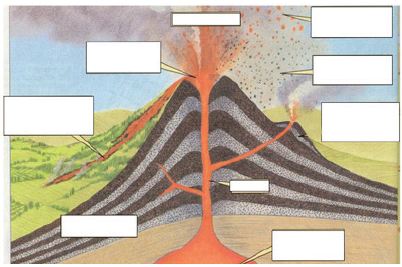
Label the parts of volcano.
99.
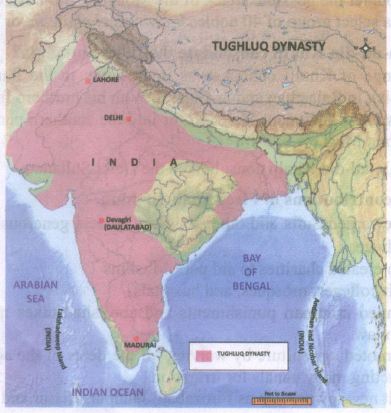
On the river map of India draw the extent of Tughluq Dynasty and mark the following places.
1. Delhi, 2. Devagiri, 3. Lahore, 4. Madurai.
100.
Who appoints the chief minister and other ministers?
101.
Who are called oppositions?
102.
What are the qualifications to become the Governor of a state?
103.
What is the importance of local media?
104.
Chauth and Sardeshmukhi.
105.
The impact of Bhakti movement on Marathas.
106.
The five independent kingdoms of Deccan Sultanate.
107.
The four dynasties of Vijayanagara kingdom with reference to prominent rulers of each dynasty.
108.
Give an example of extinct volcano.
109.
Name the outer most layer of the earth.
110.
What is a satellite town? Give example.
111.
Mention any 2 causes of earthquake
112.
What is explosive eruption?
1.
(c)
Governor
2.
(c)
Governor
3.
(c)
both a and b
4.
(c)
Both a & b
5.
(b)
Television
6.
(d)
Radio
7.
(b)
Tirunelveli
8.
(d)
Miami
9.
(d)
solar energy
10.
(d)
Kavi Kalash
11.
(a)
Dadaji Kondadev
12.
(c)
Raja Todarmal
13.
(c)
Haldighati
14.
(c)
Sultan Firoz
15.
(c)
Kumara Kampana
16.
(a)
Tertiary
17.
(c)
New Delhi
18.
(a)
Dignity
19.
(d)
Technologies
20.
(d)
Turkey
21.
(c)
5.0
22.
(a)
iqtas
23.
(c)
Chalukya
24.
(b)
Pratiharas
25.
(c)
Copper
26.
(c)
organizer
27.
(d)
all of these
28.
(d)
China
29.
(b)
Common interest
30.
(b)
1971
31.
(b)
18
32.
(c)
Mongoloid
33.
(a)
European
34.
(c)
Moraine
35.
(c)
Chittar
36.
(a)
Circum - Pacific
37.
(a)
Vent
38.
(a)
Lahore
39.
(c)
Qutb-ud-din Aibak
40.
(d)
Ur
41.
(a)
Kadunkon
42.
(b)
Naga Bhatta I
43.
(d)
Chand Bardai
44.
(d)
Ibn Battuta
45.
(b)
Taj-ul-Ma’asir
46.
1. Kovalam Beach
2. Marina Beach
3. Kanyakurnari Beach
4. Rameshwaram Beach
5. Elliot Beach
47.
Kodaikanal, Ooty - TamilNadu
Nainital, Mussoorie - Uttarakhand
Darjeeling - West Bengal
Gulmarg - Jammu & Kashmir
Shillong - Meghalaya
48.
Coal is classified into four types based on carbon content.
They are:
1. Anthracite
2. Bituminous
3. Lignite
4. Peat.
49.
Anything which can be used for satisfying the human needs is called resource. Natural resources are resources that exist without action of humankind.
50.
Akbar introduced the Mansabdari system. According to this system, the nobles, civil and military officials were combined to form one single service. Everyone in the service was given a mansab, meaning a position or rank. A Mansabdar a holder of such a rank. Mansabdar rank was dependent on zat and Sawar.
51.
UNICEF says Gender Equality "means that women and men, and girls and boys, enjoy the same rights, resources, opportunities and prolictions.
52.
Sack of Chittor: When Ala-ud-din's army overwhelmed the Rajput army in Chittor and in the context of threat of defeat, the men and women of the fortress, in accordance with their old custom, performed the rite of jauhar.
53.
The committees took care of irrigation, roads, temples, gardens, collection of revenue and conduct of religious festivals.
54.
Atisha
55.
Temples, palaces, mosques, tombs, forts, minars and minarets are called by the collective name monuments.
56.
(i) Identifying profitable investible opportunities
(ii) Deciding the location of the production unit
(iii) Making innovations
57.
Utility means want satisfying power of a product.
58.
UK, USA
59.
(i) Women are considered as weak as compared to men.
(ii) Their rights, responsibilitis and opportunities depend on males.
(iii) So women need gender equality to the equal rights of both men and women to have access to opportunities and resources.
60.
Settlement is a place where people live and interact through activities such as agriculture, trading and entertainment.
61.
Language is a great force of socialization. Language, either in the written or oral form, is the most common type of communication.
62.
The major world Human races are
(i) Caucasoid (European)
(ii) Negroid (African)
(iii) Mongoloid (Asiatic)
(iv) Australoid (Australian)
63.
Cirque, Aretes, U' Shaped Valley
64.
Due to continuous erosion and deposition along the sides of the meander, the ends of the meander loop comes closer and closer. In due course of time the meander loop cuts off from the river and forms a cutoff lake, also called an Ox-bow lake.
65.
Plunge pool is a hollow feature at the base of a waterfall which is formed by cavitation.
66.
(i) The range of Khalji conquests is impressive in the Punjab (against the Mongols), in Rajasthan and in Gujarat. With his northern frontiers secure, he sent his chief lieutenant Malik Kafur into the southern parts who took even the distant Madurai.
(ii) Thus Ala-ud-din Khalji consolidated the Delhi Sultanate.
67.
In order to counter the possible attack of the Mongols, Iltutmish organised Turkish nobility into a select group of 40 nobles known as chaha/gani or The Forty.
68.
The revenue of the Chola state came mainly from the land. The land tax was known as Kanikadan. The Chola rulers carried out an elaborate survey of land in order to fix the government's share of the land revenue. One-third of produce was collected as land tax. It was collected mostly in kind.
69.
| Brahmadeya | Land grants given to Brahmins |
| Devadana | Tax free lands given to temples by Chola rulers |
| Pallichchandam | Land granted to Jain Institutions |
| Vellanvagai | Holders were called vellalars who retained major share in harvest |
70.
Two early Caliphates were 'Umayyads' and the 'Abbasids'
71.
Gopala was the founder of Pala dynasty.
72.
Marco Polo, a Venetian traveller, Al-Beruni, Ibn Battuta Nicolo Conti, Abdur-Razzaq, Domingo Paes.
73.
Auto biography
74.
(i) The term MLA stands for a Member of Legislative Assembly.
(ii) He / She is elected through a general election and represents a particular constituency.
(iii) It is not necessary for one to be a member of a political party to become a MLA.
(iv) He / She can contest the election as an independent candidate also.
75.
(i) Media is the backbone of democracy.
(ii) In our democratic society mass media is the driving force of public opinion.
(iii) Media strengthens the democratic value. It enlightens and empowers the people.
(iv) It can educate the voters and ensures that government is transparent and accountable.
(v) Media cany every report of action of administration of the government.
(vi) Based on the information the citizen can learn about the functioning of the government and day to day happenings taking place around them.
76.
(i) Landforms:
Mountains, Plateaus, Canyons, Valleys, Caves, Cirques, Sand dunes, Coral reefs, Cliffs, etc.,
(ii) Water:
Rivers, Lakes, Waterfalls, Hot springs and Geysers, Snow and Glacier, Water Currents, Tides and Waves.
(iii) Vegetation:
Forest, Grasslands, Moors, Deserts etc.,
(iv) Climate:
Sunshine, Clouds, Admirable Temperature, Rain and Snow.
(v) Animal life:
(a) Wildlife: Birds, Game Reserves, Zoos.
(b) Hunting and Fishing
(vi) Setflement features:
(a) Towns, Cities, Villages
(b) Historical remains and Monuments
(vii) Culture:
Ways of life, traditions, folklore, arts and crafts.
77.
Solar energy:
(i) The sun produces energy in the form of heat and light. Solar energy is not harmful to the environment.
(ii) Photovoltaic devices or solar cells, directly convert solar energy into electricity.
(iii) India, China, Japan, Italy and States of America are major utilizers of solar energy in the world.
Hydropower:
(i) Hydroelectricity power is the cheapest and most versatile source of energy out of all the known energy. Hydroelectric power is a renewable resource.
(ii) China, Canada, Brazil, United States of America, Russia, India, Norway and Japan are some countries producing hydroelectricity. China is the largest producer of hydroelectricity.
Wind energy:
(i) Wind power is clean energy since wind turbines does not produce any emission.
(ii) In recent years, wind energy has become one of the most economical and renewable energy technologies.
(iii) Major wind energy producing countries are United States, China, Germany, Spain, India, United Kingdom, Canada and Brazil.
78.
Revenue administration of Shivaji :
(i) Shivaji abolished the zamindari system.
(ii) Loans were provided to the farmers in the times of famine.
(iii) The state also collected custom duties and professional taxes.
(iv) The two important taxes collected during his time were Chauth and Sardeshmuki.
Revenue administration of Peshwas:
(i) The revenue administration of peshwas was headed by a key official called the kamavisdar.
(ii) He was expowered to maintain a small body of soldiers to police the administrative area, from where tribute or tax had to be collected.
(iii) A prospective tax or revenue collector who won the contract was expected to have a reputation for wealth and probity.
(iv) He was required to pay a portion of the whole of the anticipated revenue - one third to one half-either out of his own wealth or from the money borrowed from bankers.
79.
(i) The famous peacock throne, covered with expensive jewels, was made during Shah Jahan's time for the emperor to sit on. The world famous Taj Mahal, the Moti Masjid, the pearl mosque at Agra, the Jama Masjid of Delhi, the Diwan-iKhas and Diwan - i Am in his palace exhibit his taste for Art and Architecture.
(ii) Babur built many structures at Agra, Biana, Dholpur, Gwalior and Kiul in Persian style of Architecture.
(iii) Sher shah built a mausoleum at Sasaram. Diwan-i-khas, Diwan-i-Am, panch Mahal Rang Mahal, Salim Chishti's tomb and Buland Darwazawere built during Akbar's time.
(iv) Jahangir completed Akbar's, tomb at Sikandara and the beautiful building containing the tomb of Itmad-ud-daula, at Agra.
(v) During Aurangzeb's reign, architecture did not receive much patronage.
80.
(i) Akbar was a great patron of learning.
(ii) His personal library had more than four thousand manuscripts.
(iii) He patronised scholars of all beliefs and all shades of opinions.
(iv) He extended his benevolence to authors such as Abul Fazl, Abul Faizi and Abdur Rahim Khan-i-Khanan, the great storyteller Birbal, competent officials like Raja Todar Mal, Raja Bhagwan Das and Raja Man Singh.
(v) The great composer and musician Tansen and artist Daswant adorned Akbar's court as well.
81.
The main causes of the decline of the Vijayanagar empire were
(i) After Krishna Devaraya, the rulers were inefficient in the Vijayanagar empire. Making use of the situation the commanders declared independence.
(ii) There were frequent wars between Vijayanagar and Bahmani kingdom which made the country economically weak.
(ii) Finally, the sultans of Deccan kingdoms formed a league against Vijayanagar. The combined forces of the enemies defeated Vijayanagar in the Battle of Talikota in 1565 A.D.
(iv) These Sultans destroyed the buildings, palaces, temples and the capital city of Hampi.
82.
Types of Utility
(i) Form utility:
If the physical form of a commodity is changed, its utility may increase. Eg. Cotton increases, if it is converted into clothes.
(ii) Place utility:
If a commodity is transported from one place to another, its utility may increase. Eg. If rice transported to Tamilnadu to Kerala, its utility will be more.
(iii) Time utility:
If the commodity is stored for future usage, its utility may increase. Eg. Agricultural commodities like Paddy, Wheat, etc. are stored for the regular uses of consumers throughout the year.
83.
There are three major types of party system.
(i) Single Party System: a system in which a single political party has the right to form the government. Single party existed in China, North Korea and Cuba.
(ii) Bi - Party System: In Bi -Party system the power is usually shared between two parties. Of the two parties one becomes the ruling party and the other becomes opposition. eg Bi-Party system can be seen in U.K, U.S.A
(iii) Multi - Party System: When the competition for power is among three or more parties, the system is known as multi party system. This type of party system is in existence in India, France, Sweden and Norway etc.
84.
(i) Treating all fairly
(ii) Creating an inclusive culture
(iii) Ensuring equal access to opportunities
(iv) Enabling to develop full potential
(v) Making laws and policies
(vi) Education.
85.
Old House Types
(i) In the early periods of human settlement, houses were built using local materials.
(ii) In the agricultural regions, houses were built with mud walls and the roofwas made of stalks of paddy (or) other crops of grass (or) thatch.
(iii) Local wood was used to provide frame for the roof.
(iv) Such old houses had wide verandahs and an open air circulation.
(v) The size of the house depended on the economic status of its inhabitants.
86.
(i) Sea Coast: A part of the land adjoining or near the sea is called the Sea coast.
(ii) Coast line: The boundary of a coast, where land meets water is called the Coast line. The coastal areas are subject to change due to wave erosion and wave deposition
87.
There are three major zones of volcanic activities in the world. They are:
1. The Circum - Pacific belt
2. The Mid continental belt
3. The Mid Atlantic belt
1. Circum Belt: This is the volcanic zone of the convergent oceanic plate boundary. It includes the volcanoes of the eastern and western coastal areas of Pacific Ocean.
2. Mid continental belt:
(i) This is the volcanic zone of convergent continental plate boundaries that includes the volcanoes of Alpine mountain chains, the Mediterranean Sea and the fault zone of eastern Africa.
(ii) The important volcanoes are Vesuvius, Stromboli, Etna, Kilimanjaro and Kenya.
3. Mid Atlantic Belt:
(i) This belt represents the divergent boundary of plates located along the mid- Atlantic ridges. Volcanoes of this area are mainly of fissure eruption type.
(ii) St. Helena and Azores Island are other examples.
88.
(i) Ala-ud-din's political and administrative reforms were as impressive.
(ii) Ala-ud-din undertook a survey of the agrarian resources around his capital and fixed a standard revenue demand.
(iii) He entrusted the task of collecting the revenue to the military officers.
(iv) Ala-ud-din established a system of forced procurement of food grains for Delhi and other garrison centres.
(v) The procurement prices were fixed and grain collected as tax was stored in state granaries.
(vi) To ensure the enforcement of his new regulations.
(v) He employed spies who were responsible to report to him directly.
89.
(i) The Pandya rulers were impartial towards Saivism and Vaishnavism. Temples of both sects were patronised through grants, tax-exemption and renovation.
(ii) The great Saiva and Vaishnava saints (Nayanmars and Alwars) contributed to the growth of Tamil literature.
90.
This festival celebrates brotherhood whereby a woman ties a rakhi around the wrists of men whom they treat as brothers with a belief that they would protect them. Rabindranath Tagore started the mass Raksha Bandhan festival to encourage brotherhood and harmony between Hindus and Muslims during partition of Bengal.
91.
(i) Source are the supporting materials, documents or records in the form of evidence that help to reconstruct the past.
(ii) They are available in different forms such as Inscriptions, monuments, coins, chronicles, travelogues, biographies etc.,
(iii) Through these sources we get to know a lot of information about social, economic and political condition of a country under different rulers.
92.
Criteria for A political party to be recognised as a National Party
(i) The party that secures should atleast 6% of the valid votes in Lok sabha election or assembly elections in four states.
(ii) They must win 4 seats in Lok sabha from any State/States
(iii) It has to win 2% of seats in Lok sabha from atleast 3 different states in the latest general election.
93.
(i) Equality is a powerful moral and political ideal that has inspired and guided human society for many centuries.
(ii) The concept of equality invokes the idea that all human beings have equal worth regardless of their caste, colour, gender, race or nationality.
(iii) The democratic ideals such as liberty, equality etc are meaningful and effective only when they are implemented with justice.
94.
(i) The sacking and massacre by Tamerlane or Timur of Delhi came a decade after Firuz Shah Tughluq died.
(ii) Timur had occupied some parts in the north-west of India.
(iii) Taking advantage of India's weakness, he entered India in December 1398 and plundered Delhi.
(iv) Punjab, besides the Delhi city, was the province that suffered most by Timur's raid.
(v) Apart from carrying huge wealth in the form of gold, silver, jewels, also took along Indian artisans like carpenters and masons to work on monuments in Samarkand.
95.
(i) The chola rulers established a well organized system of administration in which the empire was divided into mandalans, naadu, Kurrams and gramam.
(ii) A very efficient local administration was another important feature of the Chola rule.
(iii) Chola gave importance to irrigation - vati-vaykkal, ur-vaykkal and naduvaykkal ensured proper distribution of water.
(iv) The Chola rulers built the famous temples in Thanjavur, Gangaikonda Cholapuram and Darasuram.
(v) Chola Kings were great patrons of learning.
(vi) Trade flourished during their period.
96.
(i) The people of Sind were given the status of 'protected subjects'.
(ii) There was no interference in the lives and religions of the people.
(iii) The Arab scholars visited Sind and studied many Indian literary works.
(iv) They translated many Sanskrit books on astronomy, philosophy, mathematics and medicine into Arabic.
(v) They learnt the numerals 0 to 9 from India. Until then, the people in the West did not know the use of zero.
(vi) Through the Arabs, Europe gained more knowledge in mathematics. The importance of zero was learnt by them from India.
(vii) It is believed that the people in the West and the Arabs learnt the game of chess only from the Indians.
97.
(i) The picture and the legend on the coins convey the names of kings with their titles and portraits, events, places, dates, dynasties and logos.
(ii) The composition of metals in the coins gives us information on the economic condition of the empire.
(iii) Mention of king's achievements like military conquests, territorial expansion, trade links and religious faith can also be found in the coins.
(iv) Muhammad Ghori had stamped the figure of Goddess Lakshmi on his gold coins and had his name inscribed on it.
(v) This coin tells us that this early Turkish invader was in all likelihood liberal in religious outlook.
(vi) Copper Jitals are available for the study of the period of the Delhi Sultans.
(vii) Silver Tanka introduced by Iltutmish, Ala-ud-din Khalji's gold coins, Muhammad-bin- Tughluq's copper token currency are indicative of coinage as well as the economic prosperity or otherwise of the country of the time.
(viii) Ajital contained 3.6 grains of silver. Forty eight jitals were equal to 1 silver tanka.
98.
99.
100.
The Governor appoints the Chief Minister and other Ministers.
101.
All the MLAs of other political parties who do not belong to the ruling party are called opposition party.
102.
A person to be eligible to the post of Governor should be :
(i) A citizen of India.
(ii) Should have completed 35 years of age.
(iii) Should have sound mind and
(iv) Should not hold any public office of profit.
103.
Local media is important because it can generate quick and on the spot information about the facts which are going on and make the people aware of it. It is a very good medium for getting news instantly.
104.
Shivaji claimed suzerainty, but he did not administer them himself. He protected the people from loot and plunder for which they were required to pay Chauth (one-fourth of the revenue as protection money) and Sardeshmuki (an extra one-tenth, as the chieftain's due).
105.
The spread of the Bhakti movement in Maharashtra helped the Maratha people develop consciousness of their identity and oneness. It promoted a feeling of unity, especially in terms of social equality, among the Marathas.
106.
The five independent Deccan kingdoms were Bidar, Bijapur, Ahmednagar, Berar and Golconda.
107.
1) Sangama dynasty (1336-1485) - Devaraya II
2) Saluva dynasty (1485-1505) - Saluva Narsimha
3) Thuluva dynasty (1505-1570) - Krishnadeva Raya
4) Aravidu dynasty (1570-1646) - Tirumaladeva Raya
108.
Mt. Popa of Myanmar and Mt.Kenya of Africa.
109.
Crust
110.
A satellite town is a town designed to house the over population of a major city, but is located well beyond the limits of that city. E.g, Patna, Barauni, Varanasi and Hajipur
111.
(i) The chief cause of earthquake is the sudden slipping of the-portion of the earth's crust along fractures or faults.
(ii) Another cause of earthquake is volcanic activity.
112.
If the magma rises quickly to the surface, lava is thrown high into the atmosphere. Besides lava, ash, steam, gases and pieces of rocks are also thrown out. This type of eruption is known as explosive eruption.

7th Standard Syllabus & Materials
7th Standard
TN 7th English T1 - Supplementary - On Monday Morning Important Questions And Answers Study Material - QB365 Set A
NEW7th Standard
TN 7th English T1 - Prose - Eidgah Important Questions And Answers Study Material - QB365 Set A
NEW7th Standard
TN 7th Social Science T1 - ECO - Production Important Questions And Answers Study Material - QB365 Set A
NEW7th Standard
TN 7th Social Science T1 - GEO - Interior of the Earth Important Questions And Answers Study Material - QB365 Set A



Tamilnadu Stateboard 7th Standard Subjects
Tamilnadu Stateboard Standards



