
 100% FREE ACCESS
8th Standard Syllabus & Materials
8th Standard
TN 8th Tamil இயல் 3 - கல்வி கரையில - வினைமுற்று Important Questions And Answers Study Material - QB365 Set A
NEW8th Standard
TN 8th Tamil இயல் 2 - ஈடில்லா இயற்கை - மயங்கொலிகள் Important Questions And Answers Study Material - QB365 Set A
NEW8th Standard
TN 8th Tamil இயல் 2 - ஈடில்லா இயற்கை -பட்டமரம் Important Questions And Answers Study Material - QB365 Set A
NEW8th Standard
TN 8th Tamil இயல் 2 - ஈடில்லா இயற்கை - இயற்கையை போற்றுவோம் Important Questions And Answers Study Material - QB365 Set A
NEW8th Standard
TN 8th Tamil இயல் 1 - தமிழ் இன்பம் - ஆழிக்கு இணை Important Questions And Answers Study Material - QB365 Set A
NEW8th Standard
TN 8th Tamil இயல் 2-ஈடில்லா இயற்கை - திருக்குறள் Important Questions And Answers Study Material - QB365 Set A

Published on: 04/11/2019
Term 2 Geometry
Download Tamil Nadu 8th Standard Maths question papers, model tests, one-mark questions, important questions, and public exam papers in PDF format. Free study materials and answer keys for TN State Board students.
Questions + Answers key
Take MCQ Maths Test1.
Construct a parallelogram BEAR with BE = 7 cm, BA = 7.5 cm and ㄥBEA = 800. Also find its area.
2.
Construct a parallelogram DUCK with DC = 8 cm, UK = 6 cm and ㄥDOU = 1100. Also find its area.
3.
Construct a parallelogram CALF with CA = 7 cm, CF = 6 cm and AF = 10 cm. Also find its area.
4.
Construct a parallelogram BIRD with BI = 6.5 cm, IR = 5 cm and ㄥBIR = 700. Also find its area.
5.
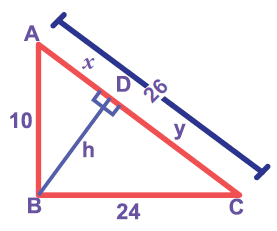
From the figure, find x and y and verify Δ ABC is a right angled triangle.
6.
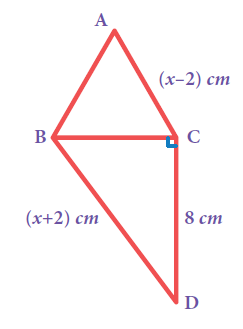
Δ ABC is equilateral and CD of the right triangle BCD is 8 cm. Find the side of the equilateral Δ ABC and also BD.
7.
Find the area of a rectangular plot of land shown in the figure.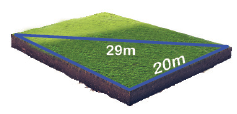
8.
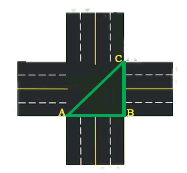
A junction where two roads intersect at right angles is as shown in the figure. Find AC if AB = 8 m and BC = 15 m.
9.
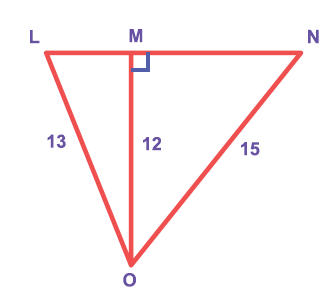
Find LM, MN, LN and also the area of Δ LON.
10.
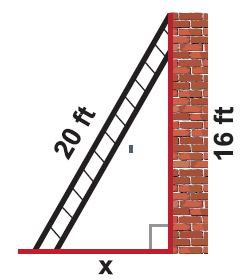
A 20- feet ladder leans against a wall at height of 16 feet from the ground. How far is the base of the ladder from the wall?
11.
Can a right triangle have sides that measure 5cm, 12cm and 13cm?
12.
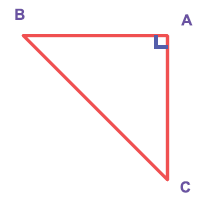
In the figure, AB ⊥ AC
a) What type of Δ is ABC?
b) What are AB and AC of the Δ ABC?
c) What is CB called as?
d) If AC = AB then, what is the measure of ㄥB and ㄥC?
1.
Given:
BE = 7 cm, BA = 7.5 cm and ㄥBEA = 800
.png)
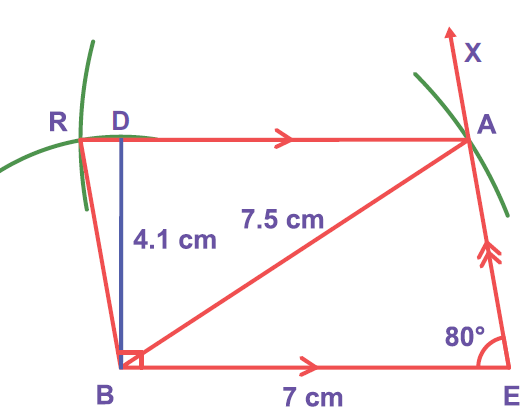
Steps:
1. Draw a line segment BE = 7 cm.
2. Make an angle ㄥBEX =80° at E on \(\overset { \_ \_ }{ BE } \).
3. With B as centre, draw an arc of radius 7.5 cm cutting \(\overset { \_ \_ }{ EX } \) at A and Join BA.
4. With B as centre, draw an arc of radius equal to the length of \(\overset { \_ \_ }{ AE } \).
5. With A as centre, draw an arc of radius 7 cm. Let both arcs cut at R.
6. Join BR and AR.
7. BEAR is the required parallelogram.
Calculation of area:
Area of the parallelogram BEAR = bh sq. units
= 7 x 4.1 = 28.7 sq. cm
2.
Given:
DC = 8 cm, UK = 6 cm and ㄥDOU = 1100
.png)
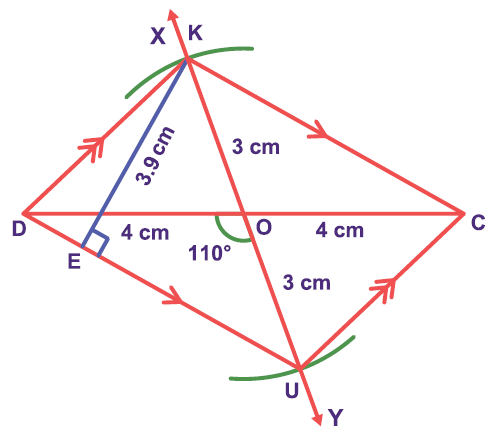
Steps:
1. Draw a line segment DC = 8 cm.
2. Mark O the midpoint of \(\overset { \_ \_ }{ DC } \).
3. Draw a line \(\overset { \_ \_ }{ XY } \) through O which makes ㄥDOY = 1100.
4. With O as centre and 3 cm as radius draw two arcs on \(\overset { \_ \_ }{XY } \)on either sides of \(\overset { \_ \_ }{DC } \). Let the arcs cut \(\overset { \_ \_ }{ OX } \)at K and \(\overset { \_ \_ }{OY } \) at U
5. Join \(\overset { \_ \_ }{DU } \) , \(\overset { \_ \_ }{UC } \), \(\overset { \_ \_ }{CK } \) and \(\overset { \_ \_ }{KD } \).
6. DUCK is the required parallelogram.
Calculation of Area:
Area of the parallelogram DUCK = bh sq.units
= 5.8 x 3.9 = 22.62sq.cm
3.
Given:
CA = 7 cm, CF = 6 cm and AF = 10 cm
.png)
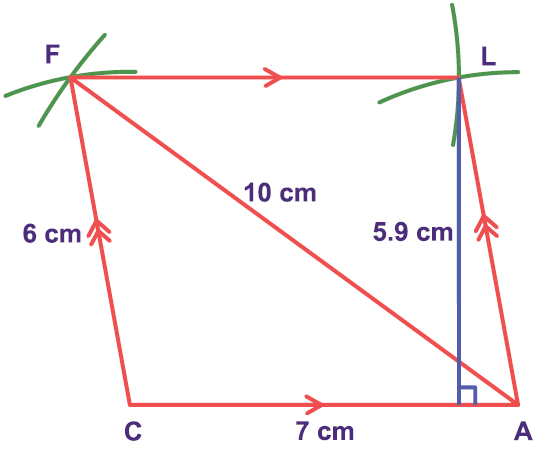
Steps:
1. Draw a line segment CA = 7 cm.
2. With C and A as centres, draw arcs of radii 7 cm and 6 cm respectively. Let them cut at F.
3. Join CF and AF.
4. With A and F as centres, draw arcs of radii 6 cm and 7 cm respectively. Let them cut at L.
5. Join AL and FL.
6. CALF is the required parallelogram.
Calculation of area:
Area of the parallelogram CALF = bh sq. units
= 7 x 5.9 = 41.3 sq. cm
4.
Given:
BI = 6.5 cm, IR = 5 cm and ㄥBIR = 700
.png)
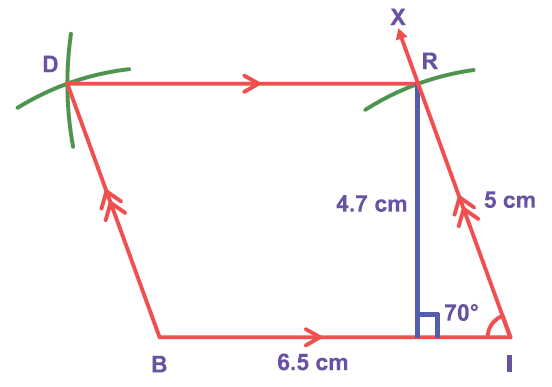
Steps:
1. Draw a line segment BI = 6.5 cm.
2. Make an angle ㄥBIX = 700 at I on \(\overset { \_ \_ }{ BI } \).
3. With I as centre, draw an arc of radius 5 cm cutting IX at R.
4. With B and R as centres, draw arcs of radii 5 cm and 6.5 cm respectively. Let them cut at D.
5. Join BD and RD.
6. BIRD is the required parallelogram.
Calculation of area:
Area of the parallelogram BIRD = bh sq. units
= 6.5 × 4.7 = 30.55 sq. cm
5.
Now, by altitude-on-hypotenuse theorem,
AB2 = AD x AC gives,
102 = x × 26
\(\Rightarrow x=\frac { 100 }{ 26 } =\frac { 50 }{ 13 } units\quad and\)
BC2 = CD × AC gives,
242 = y × 26
\(\Rightarrow y=\frac { 576 }{ 26 } =\frac { 288 }{ 13 } units\quad and\)
In Δ ABC, AB2 + BC2 = 102 + 242 = 676 = 262 = AC2 Therefore, Δ ABC is a right angled triangle.
6.
As Δ ABC is equilateral from the figure, AB = BC = AC = (x − 2) cm.
∴ From Δ BCD, by Pythagoras theorem
BD2 = BC2 + CD2
⇒ (x + 2)2 = (x − 2)2 + 82
x2 + 4x + 4 = x2 − 4x + 4 + 82
⇒ 8x = 82
⇒ x = 8 cm
∴ The side of the equilateral Δ ABC = 6 cm and BD = 10 cm.
7.
Here, the hypotenuse is 29 m. One side of the right triangle is 20 m. let the other side be ‘l’ m Therefore, by Pythagoras theorem,
l2 = 292 − 202 = 841 − 400 = 441 = 212
∴ l = 21m
Therefore, the area rectangular plot of land = l × b square units. = 20 × 21 = 210 m2.
8.
Now Δ ABC is right angled.
Therefore, by Pythagoras theorem,
AC2 = AB2 + BC2
⇒ AC2 = 82 +152 = 64 + 225 = 289
AC2 = 172
⇒ AC = 17m.
Therefore, the length of the diagonal of the two intersecting roads is 17 m.
9.
From Δ LMO, by Pythagoras theorem,
LM2 = OL2 − OM2
⇒ LM2 = 132 −122 = 169 −144 = 25 = 52
∴ LM = 5 units
From Δ NMO, by Pythagoras theorem,
MN2 = ON2 − OM2
= 152 −122 = 225 −144 = 81 = 92
∴ MN = 9 units
Hence, LN = LM + MN = 5 + 9 = 14 units
Area of Δ LON = \(\frac { 1 }{ 2 } \) × base × height
= \(\frac { 1 }{ 2 } \) × LN × OM
= \(\frac { 1 }{ 2 } \) × 14 × 12
= 84 square units.
10.
The ladder, wall and the ground form a right triangle with the ladder as the hypotenuse. From the figure, by Pythagoras theorem,
202 = 162 + x2
⇒ 400 = 256 + x2
⇒ x2 = 400 − 256 = 144 = 122
⇒ x = 12 feet
Therefore, the base (foot) of the ladder is 12 feet away from the wall.
11.
Take a = 5, b = 12 and c = 13
Now, a2 + b2 = 52 +122 = 25 +144 = 169 = 132 = c2
By the converse of Pythagoras theorem, the triangle with given measures is a right angled triangle.
12.
a) Δ ABC is right angled as AB ⊥ AC at A.
b) AB and AC are legs of Δ ABC.
c) CB is called as the hypotenuse.
d) ㄥB + ㄥC = 900 and equal angles are opposite to equal sides. Hence, ㄥB = ㄥC = \(\frac { { 90 }^{ 0 } }{ 2 } \) = 450

8th Standard Syllabus & Materials
8th Standard
TN 8th Tamil இயல் 3 - கல்வி கரையில - பாடறிந்து ஒழுகுதல் Important Questions And Answers Study Material - QB365 Set A
NEW8th Standard
TN 8th Tamil இயல் 3-கல்வி கரையில - பல்துறைக் கல்வி Important Questions And Answers Study Material - QB365 Set A
NEW8th Standard
TN 8th Tamil இயல் 3-கல்வி கரையில - புத்தியைத் தீட்டு Important Questions And Answers Study Material - QB365 Set A
NEW8th Standard
TN 8th Tamil இயல் 2 - ஈடில்லா இயற்கை - தமிழர் மருத்துவம் ( நேர்காணல்) Important Questions And Answers Study Material - QB365 Set A



Tamilnadu Stateboard 8th Standard Subjects
Tamilnadu Stateboard Standards




