
 100% FREE ACCESS
8th Standard Syllabus & Materials
8th Standard
TN 8th Tamil இயல் 3 - கல்வி கரையில - வினைமுற்று Important Questions And Answers Study Material - QB365 Set A
NEW8th Standard
TN 8th Tamil இயல் 2 - ஈடில்லா இயற்கை - மயங்கொலிகள் Important Questions And Answers Study Material - QB365 Set A
NEW8th Standard
TN 8th Tamil இயல் 2 - ஈடில்லா இயற்கை -பட்டமரம் Important Questions And Answers Study Material - QB365 Set A
NEW8th Standard
TN 8th Tamil இயல் 2 - ஈடில்லா இயற்கை - இயற்கையை போற்றுவோம் Important Questions And Answers Study Material - QB365 Set A
NEW8th Standard
TN 8th Tamil இயல் 1 - தமிழ் இன்பம் - ஆழிக்கு இணை Important Questions And Answers Study Material - QB365 Set A
NEW8th Standard
TN 8th Tamil இயல் 2-ஈடில்லா இயற்கை - திருக்குறள் Important Questions And Answers Study Material - QB365 Set A

Published on: 09/12/2019
Term 2 Life Mathematics
Download Tamil Nadu 8th Standard Maths question papers, model tests, one-mark questions, important questions, and public exam papers in PDF format. Free study materials and answer keys for TN State Board students.
Questions + Answers key
Take MCQ Maths Test1.
Find the difference in C.I and S.I for
(i) P = Rs.5000, r = 4% p.a, n = 2 years.
(ii) P = Rs.8000, r = 5% p.a, n = 3 years.
2.
The population of a town is increasing at the rate of 6% p.a. It was 238765 in the year 2018. Find the population in the year 2016 and 2020.
3.
If the population in a town has increased from 20000 to 25000 in a year, fi nd the percentage increase in population.
4.
The income of a person is increased by 10% and then decreased by 10%. Find the change in his income.
5.
900 boys and 600 girls appeared in an examination of which 70% of the boys and 85%of the girls passed out in the examination. Find the total percentage of students who did not pass.
6.
If the profit earned on selling an article for Rs.810 is the same as loss on selling it for Rs.530, then find the cost price of the article.
7.
If the numerator of a fraction is increased by 50% and the denominator is decreased by 20%, then it becomes \(\frac { 3 }{ 5 } \). Find the original fraction.
8.
A number is increased by 25% and then decreased by 20%. Find the percentage change in that number.
9.
A bank pays Rs. 240 as interest for 2 years for a sum of Rs. 3000 deposited as savings. Find the rate of interest given by the bank.
10.
48 is 32% of what number?.
11.
A water heater is sold by a trader for Rs. 10502 including GST at 18% . Find the marked price of the water heater and GST.
12.
The price of a rain coat was slashed from Rs. 1060 to Rs. 901 by a shopkeeper in the winter season to boost the sales. Find the rate of discount given by him.

13.
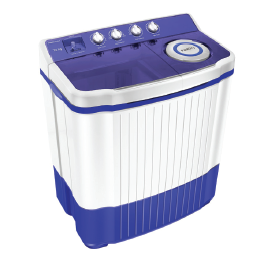
Ranjith bought a washing machine for Rs. 16150 and paid Rs. 1350 for its transportation. Then, he sold it for Rs. 19250. Find his gain or loss percentage.
14.
By selling a bicycle for Rs. 4275, a shopkeeper loses 5%. For how much should he sell it to have a profit of 5%?

15.
The difference between compound and simple interest on a certain sum of money for 2 years at 2% p.a is Rs 1. The sum of money is___________.
Rs.2000
Rs.1500
Rs.3000
Rs.2500
16.
The cost of a machine is Rs.18000 and it depreciates at \(16 \frac{2}{3} \%\) annually. Its value after 2 years will be___________.
Rs.12000
Rs.12500
Rs.15000
Rs.16500
17.
The time taken for Rs.4400 to become Rs.4851 at 10%, compounded half yearly is _______.
6 months
1 year
1\(\frac { 1 }{ 2 } \)years
2 years
18.
By selling a flower pot for Rs. 528, a woman gains 20%. At what price should she sell it to gain 25%?
Rs. 500
Rs. 550
Rs. 553
Rs. 573
19.
A fruit vendor sells fruits for Rs. 200 gaining Rs. 40. His gain percentage is
20%
22%
25%
16\(\frac { 2 }{ 3 } \)%
1.
C.I –S.I = P\({ \left( \frac { r }{ 100 } \right) }^{ 2 }\)= 5000 x \(\frac { 4 }{ 100 } \times \frac { 4 }{ 100 } \) = Rs 8
(ii) C.I –S.I = P\({ \left( \frac { r }{ 100 } \right) }^{ 2 }\left( 2+\frac { r }{ 100 } \right) \)
= 8000 x \(\frac { 5 }{ 100 } \times \frac { 5 }{ 100 } \) x \(\left( 3+\frac { 5 }{ 100 } \right) \)
= 20 x \(\frac { 61 }{ 20 } \) = Rs.61
2.
Let the population in 2016 be ‘P’.
Then, A = P\({ \left( 1+\frac { r }{ 100 } \right) }^{ n }\)
⇒ 238765 = p\({ \left( 1+\frac { 6 }{ 100 } \right) }^{ 2 }=P{ \left( \frac { 53 }{ 50 } \right) }^{ 2 }\)
⇒ P = 238765 x \(\frac { 50 }{ 53 } \times \frac { 50 }{ 53 } \)
∴ P = 212500
Let the population in 2020 be ‘A’
Then, A= P\({ \left( 1+\frac { r }{ 100 } \right) }^{ n }\)
∴ A = 238765\({ \left( 1+\frac { 6 }{ 100 } \right) }^{ 2 }\)
= 238765 x \(\frac { 53 }{ 50 } \times \frac { 53 }{ 50 } \)
= 95.506 x 53 x 53
A = 268276
∴ The population in the year 2016 is 212500 and that in the year 2020 is 268276.
3.
Increase in population = 25000 − 20000
= 5000
∴ Percentage increase in population =\(\frac { 5000 }{ 20000 } \)x 100
= 25%
4.
Let his income be rs x.
Income after 10% increase is
\(100+100 \times \frac{10}{100}=Rs. 110\)
Now, income after 10% decrease is
\(110-110 \times \frac{10}{100}=110-11=Rs. 99\)
Net change in his income = 100 – 99 = 1
Percentage change \(=\frac{1}{100} \times 100 \%=1 \%\)
That is, income of the person is reduced by 1%.
Aliter
Let his income be Rs. 100
Income after 10% increase is
100 + 100 × \(\frac{10}{100}\) = Rs.110
Now, income after 10% decrease is,
110 – 110 × \(\frac{10}{100}\) = 110 – 11 = Rs. 99
∴ Net change in his income = 100 – 99 = 1
Percentage change = × = \(\frac{1 }{100}\) × 100% = 1%
That is, income of the person is reduced by 1%.
5.
Number of students who did not pass = 30% of boys + 15% of girls
=\(\frac { 30 }{ 100 } \) x 900 + \(\frac { 15 }{ 100 } \) x 600
= 270 + 90 = 360
∴ Percentage of students who did not pass =\(\frac { 360 }{ 1500 } \) x 100 = 24%
6.
Let x be the cost price of the article.
810 - x = x - 530
2x = 810 + 530
2x = 1340
x = 670
The cost price of the article is Rs. 670.
7.
Let the numerator be x and the denominator be y.
The original fraction = x/y
Given the numerator of a fraction is increased by 50%
\(
\therefore \mathrm{Nr} =x+50 \% \text { of } x
\)
\(=x+\frac{50}{100} x=x+\frac{1}{2} x \\
\mathrm{Nr} =\frac{3}{2} x
\)
Also given the denominator is decreased by 20 %
\(
\text { Dr } =y-20 \% \text { of } y
\)
\(=y-\frac{20}{100} y=y-\frac{1}{5} y=\frac{4}{5} y
\)
By given data
\(
\frac{\frac{3}{2} x}{\frac{4}{5} y}=\frac{3}{5} \Rightarrow \frac{3}{2} x \times \frac{5}{4 y}=\frac{3}{5}
\)
\(\frac{x}{y}=\frac{8}{25}
\)
The original fraction is 8/25
8.
Let x and y be the increased and decreased percentage
The change in that number \(=\left(x+y+\frac{x y}{100}\right) \%\)
\(
=\left(25+(-20)+\frac{25(-20)}{100}\right) \% \)
\(=\left(25-20-\frac{500}{100}\right) \)
\(=(25-20-5) \%
\)
= 0%
There is no percentage changes in that number.
9.
\(\frac{Pnr}{100}\)
\(240 = \frac{3000\times2 \times r}{100}\\ = \frac{240}{60}\)
R = 4%
10.
Let the number be x.
\( \frac{32}{100} \times x =48 \)
\(x =\frac{48 \times 100}{32}=150\)
The number is 150
11.
Let the marked price be Rs x.
Now, x + \(\frac { 18x }{ 100 } \) = 10502
\(\frac { 118x }{ 100 } \) = 10502
∴ Marked price, x = Rs. 8900.
GST at 18% = 8900 x \(\frac { 18 }{ 100 } \)
= Rs. 10502 – Rs. 8900
= Rs.1602
12.
Given,
Discount = Marked Price –Selling Price
= 1060 – 901
= Rs. 159
∴ Discount = \(\frac { 159 }{ 1060 } \)× 100%
= 15%
13.
Total C.P of the washing machine
= C.P + Overhead Expenses
= 16150 + 1350 = Rs. 17500
S.P = Rs. 19250
Therefore, we find S.P > C.P.
Gain % = \(\left( \frac { Gain }{ C.P } \times 100 \right) %\)% = \(\left( \frac { 19250-17500 }{ 17500 } \times 100 \right) %\)
=\(\frac { 1750 }{ 17500 } \times 100\) = 10%
14.
S.P of the bicycle = Rs. 4275
Loss = 5%
∴ C.P =\(\frac { 100 }{ 100-loss% } \times S.P\)
= \(\frac { 100 }{ 95 } \times 4275\)
= Rs. 4500
Now,
C.P = Rs. 4500 and the desired profi t = 5%
∴ Desired S.P = \(\frac { 100+gain% }{ 100 } \times C.P\)
=\(\frac { 100+5 }{ 100 } \times 4500\)
= 105 x 45
= Rs. 4725
Hence, the desired selling price is Rs. 4725.
15.
(a)
Rs.2000
16.
(b)
Rs.12500
17.
(b)
1 year
18.
(b)
Rs. 550
19.
(c)
25%

8th Standard Syllabus & Materials
8th Standard
TN 8th Tamil இயல் 3 - கல்வி கரையில - பாடறிந்து ஒழுகுதல் Important Questions And Answers Study Material - QB365 Set A
NEW8th Standard
TN 8th Tamil இயல் 3-கல்வி கரையில - பல்துறைக் கல்வி Important Questions And Answers Study Material - QB365 Set A
NEW8th Standard
TN 8th Tamil இயல் 3-கல்வி கரையில - புத்தியைத் தீட்டு Important Questions And Answers Study Material - QB365 Set A
NEW8th Standard
TN 8th Tamil இயல் 2 - ஈடில்லா இயற்கை - தமிழர் மருத்துவம் ( நேர்காணல்) Important Questions And Answers Study Material - QB365 Set A



Tamilnadu Stateboard 8th Standard Subjects
Tamilnadu Stateboard Standards




