
 100% FREE ACCESS
8th Standard Syllabus & Materials
8th Standard
TN 8th Tamil இயல் 3 - கல்வி கரையில - வினைமுற்று Important Questions And Answers Study Material - QB365 Set A
NEW8th Standard
TN 8th Tamil இயல் 2 - ஈடில்லா இயற்கை - மயங்கொலிகள் Important Questions And Answers Study Material - QB365 Set A
NEW8th Standard
TN 8th Tamil இயல் 2 - ஈடில்லா இயற்கை -பட்டமரம் Important Questions And Answers Study Material - QB365 Set A
NEW8th Standard
TN 8th Tamil இயல் 2 - ஈடில்லா இயற்கை - இயற்கையை போற்றுவோம் Important Questions And Answers Study Material - QB365 Set A
NEW8th Standard
TN 8th Tamil இயல் 1 - தமிழ் இன்பம் - ஆழிக்கு இணை Important Questions And Answers Study Material - QB365 Set A
NEW8th Standard
TN 8th Tamil இயல் 2-ஈடில்லா இயற்கை - திருக்குறள் Important Questions And Answers Study Material - QB365 Set A

Published on: 04/11/2019
Term 2 Life Mathematics
Download Tamil Nadu 8th Standard Maths question papers, model tests, one-mark questions, important questions, and public exam papers in PDF format. Free study materials and answer keys for TN State Board students.
Questions + Answers key
Take MCQ Maths Test1.
Find the difference in C.I and S.I for
(i) P = Rs.5000, r = 4% p.a, n = 2 years.
(ii) P = Rs.8000, r = 5% p.a, n = 3 years.
2.
The bacteria in a culture grows by 5% in the first hour, decreases by 8% in the second hour and again increases by 10% in the third hour. Find the count of the bacteria at the end of 3 hours, if its initial count was 10000.
3.
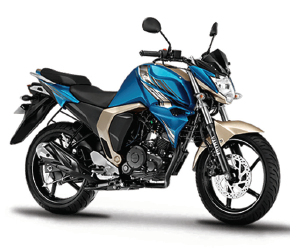
The value of a motor cycle 2 years ago was Rs.70000. It depreciates at the rate of 4% p.a. Find its present value.
4.
The population of a town is increasing at the rate of 6% p.a. It was 238765 in the year 2018. Find the population in the year 2016 and 2020.
5.
Find the C.I for the data given below:
(i) Principal = Rs. 4000, r = 5% p.a, n = 2 years, interest compounded annually.
(ii) Principal = Rs. 5000, r = 4% p.a, n = 1 \(\frac { 1 }{ 2 } \) years, interest compounded half-yearly.
(ii) Principal = Rs. 30000, r = 7% for I year, r = 8% for II year, compounded annually.
(iv) Principal = Rs. 10000, r = 8% p.a, n = 2 \(\frac { 3 }{ 4 } \) years, interest compounded yearly.
6.
Akila scored 80% in an examination. If her score was 576 marksAkila scored 80% of marks in an examination. If her score was 576 marks, then find the maximum marks of the examination.
7.
If the population in a town has increased from 20000 to 25000 in a year, fi nd the percentage increase in population.
8.
The income of a person is increased by 10% and then decreased by 10%. Find the change in his income.
9.
In a leadership election between two persons A and B, A wins by a margin of 192 votes. If A gets 58% of the total votes, find the total votes polled.
10.
If the price of Orid dhall after 20% increase is Rs. 96 per kg, find the original price of Orid dhall per kg.
11.
When a number is decreased by 25% it becomes 120. Find the number.
12.
If x % of 600 is 450 then, find the value of x.
13.
900 boys and 600 girls appeared in an examination of which 70% of the boys and 85%of the girls passed out in the examination. Find the total percentage of students who did not pass.
1.
C.I –S.I = P\({ \left( \frac { r }{ 100 } \right) }^{ 2 }\)= 5000 x \(\frac { 4 }{ 100 } \times \frac { 4 }{ 100 } \) = Rs 8
(ii) C.I –S.I = P\({ \left( \frac { r }{ 100 } \right) }^{ 2 }\left( 2+\frac { r }{ 100 } \right) \)
= 8000 x \(\frac { 5 }{ 100 } \times \frac { 5 }{ 100 } \) x \(\left( 3+\frac { 5 }{ 100 } \right) \)
= 20 x \(\frac { 61 }{ 20 } \) = Rs.61
2.
Bacteria at the end of 3 hours
a = p\(\left( 1+\frac { a }{ 100 } \right) \left( 1-\frac { b }{ 100 } \right) \left( 1+\frac { c }{ 100 } \right) \)('-' because ‘decrease’)
= 10000\(\left( 1+\frac { 5 }{ 100 } \right) \left( 1-\frac { 8 }{ 100 } \right) \left( 1+\frac { 10 }{ 100 } \right) \)
= 10000 x \(\frac { 105 }{ 100 } \times \frac { 92 }{ 100 } \times \frac { 110 }{ 100 } \)
A = Rs.10626
3.
Depreciated value = P\({ \left( 1-\frac { r }{ 100 } \right) }^{ n }\)
= 70000\({ \left( 1-\frac { 4 }{ 100 } \right) }^{ 2 }\)
= 70000 x \(\frac { 96 }{ 100 } \times \frac { 96 }{ 100 } \)
= Rs.64512
4.
Let the population in 2016 be ‘P’.
Then, A = P\({ \left( 1+\frac { r }{ 100 } \right) }^{ n }\)
⇒ 238765 = p\({ \left( 1+\frac { 6 }{ 100 } \right) }^{ 2 }=P{ \left( \frac { 53 }{ 50 } \right) }^{ 2 }\)
⇒ P = 238765 x \(\frac { 50 }{ 53 } \times \frac { 50 }{ 53 } \)
∴ P = 212500
Let the population in 2020 be ‘A’
Then, A= P\({ \left( 1+\frac { r }{ 100 } \right) }^{ n }\)
∴ A = 238765\({ \left( 1+\frac { 6 }{ 100 } \right) }^{ 2 }\)
= 238765 x \(\frac { 53 }{ 50 } \times \frac { 53 }{ 50 } \)
= 95.506 x 53 x 53
A = 268276
∴ The population in the year 2016 is 212500 and that in the year 2020 is 268276.
5.
(i) Amount, A = P\({ \left( 1+\frac { r }{ 100 } \right) }^{ n }\)
= 4000\({ \left( 1+\frac { 5 }{ 100 } \right) }^{ 2 }\)
= 4000 x \(\frac { 21 }{ 20 } \)x\(\frac { 21 }{ 20 } \)
A = Rs. 4410
∴C.I = A − P = 4410 – 4000 = Rs. 410
(ii) Amount, A = P\({ \left( 1+\frac { r }{ 100 } \right) }^{ 2n }\)= 5000\({ \left( 1+\frac { 4 }{ 200 } \right) }^{ 2\times \frac { 3 }{ 2 } }\) = 5000 x \(\frac { 51 }{ 50 } \times \frac { 51 }{ 50 } \times \frac { 51 }{ 50 } \)
= 51 × 10.2 × 10.2
= Rs. 5306.04
∴ C.I = A − P = Rs.5306.04 – Rs.5000
= Rs.306.04
(iii) A = P\(\left( 1+\frac { a }{ 100 } \right) \left( 1+\frac { b }{ 100 } \right) \)
= 3000\(\left( 1+\frac { 7 }{ 100 } \right) \left( 1+\frac { 8 }{ 100 } \right) \)
= 30000 x \(\frac { 107 }{ 100 } \times \frac { 108 }{ 100 } \)
= Rs.34668
∴ C.I = A − I = 34668 - 30000 = 4668.
(iv) A = P\({ \left( 1+\frac { r }{ 100 } \right) }^{ a }\left( 1+\frac { \frac { b }{ c } \times r }{ 100 } \right) =10000{ \left( 1+\frac { 8 }{ 100 } \right) }^{ 2 }\left( 1+\frac { \frac { 3 }{ 4 } \times 8 }{ 100 } \right) \)
= 10000\({ \left( \frac { 27 }{ 25 } \right) }^{ 2 }\left( \frac { 53 }{ 50 } \right) \)
= 10000 x \(\frac { 27 }{ 25 } \times \frac { 27 }{ 25 } \times \left( \frac { 53 }{ 50 } \right) \)
A = 12363.84
∴C.I = 12363.84 − 10,000
= Rs.2363.84
6.
Let the maximum marks be x.
Now, 80% of x = 576
\(\frac { 80 }{ 100 } \)\(\times\) x = 576
⇒ x = 576 x \(\frac { 100 }{ 10 } \)
x = 720 marks
Therefore, the total marks in the examination = 720.
7.
Increase in population = 25000 − 20000
= 5000
∴ Percentage increase in population =\(\frac { 5000 }{ 20000 } \)x 100
= 25%
8.
Let his income be rs x.
Income after 10% increase is
\(100+100 \times \frac{10}{100}=Rs. 110\)
Now, income after 10% decrease is
\(110-110 \times \frac{10}{100}=110-11=Rs. 99\)
Net change in his income = 100 – 99 = 1
Percentage change \(=\frac{1}{100} \times 100 \%=1 \%\)
That is, income of the person is reduced by 1%.
Aliter
Let his income be Rs. 100
Income after 10% increase is
100 + 100 × \(\frac{10}{100}\) = Rs.110
Now, income after 10% decrease is,
110 – 110 × \(\frac{10}{100}\) = 110 – 11 = Rs. 99
∴ Net change in his income = 100 – 99 = 1
Percentage change = × = \(\frac{1 }{100}\) × 100% = 1%
That is, income of the person is reduced by 1%.
9.
Let the total votes polled be x.
Votes polled in favour in A = 58% of x =\(\frac { 58x }{ 100 } \)
Votes polled in favour of B = (100 − 58)% of x = 42% of x = \(\frac { 42x }{ 100 } \)
Given, Winning margin A− B = 192
That is, \(\frac { 58x }{ 100 } \)- \(\frac { 42x }{ 100 } \) = 192
⇒\(\frac { 16x }{ 100 } \)=192
x = 192 x \(\frac { 100 }{ 16 } \)
x = 1200 votes
10.
Let the original price of Orid dhall be Rs x.
New price aft er price of 20% increase = x +\(\frac { 20 }{ 100 } x=\frac { 120x }{ 100 } \)
Given that, 96 = \(\frac { 120x }{ 100 } \)
∴ x = \(\frac { 96\times 100 }{ 200 } \)
∴ Original price of Orid dhall per kg, x = Rs. 80
11.
Let the number be x.
x-\(\frac { 25 }{ 100 } x\) = 120
\(\frac { 100x-25x }{ 100 } \) = 120
\(\frac { 75x }{ 100 } \) = 120
x = \(\frac { 120\times 100 }{ 75 } \)
x = 160
12.
x% of 600 = 450
\(\frac { x }{ 100 } \)× 600 = 450
\(x=\frac { 450 }{ 6 } \)
x = 75
13.
Number of students who did not pass = 30% of boys + 15% of girls
=\(\frac { 30 }{ 100 } \) x 900 + \(\frac { 15 }{ 100 } \) x 600
= 270 + 90 = 360
∴ Percentage of students who did not pass =\(\frac { 360 }{ 1500 } \) x 100 = 24%

8th Standard Syllabus & Materials
8th Standard
TN 8th Tamil இயல் 3 - கல்வி கரையில - பாடறிந்து ஒழுகுதல் Important Questions And Answers Study Material - QB365 Set A
NEW8th Standard
TN 8th Tamil இயல் 3-கல்வி கரையில - பல்துறைக் கல்வி Important Questions And Answers Study Material - QB365 Set A
NEW8th Standard
TN 8th Tamil இயல் 3-கல்வி கரையில - புத்தியைத் தீட்டு Important Questions And Answers Study Material - QB365 Set A
NEW8th Standard
TN 8th Tamil இயல் 2 - ஈடில்லா இயற்கை - தமிழர் மருத்துவம் ( நேர்காணல்) Important Questions And Answers Study Material - QB365 Set A



Tamilnadu Stateboard 8th Standard Subjects
Tamilnadu Stateboard Standards




