
 100% FREE ACCESS
8th Standard Syllabus & Materials
8th Standard
TN 8th Tamil இயல் 3 - கல்வி கரையில - வினைமுற்று Important Questions And Answers Study Material - QB365 Set A
NEW8th Standard
TN 8th Tamil இயல் 2 - ஈடில்லா இயற்கை - மயங்கொலிகள் Important Questions And Answers Study Material - QB365 Set A
NEW8th Standard
TN 8th Tamil இயல் 2 - ஈடில்லா இயற்கை -பட்டமரம் Important Questions And Answers Study Material - QB365 Set A
NEW8th Standard
TN 8th Tamil இயல் 2 - ஈடில்லா இயற்கை - இயற்கையை போற்றுவோம் Important Questions And Answers Study Material - QB365 Set A
NEW8th Standard
TN 8th Tamil இயல் 1 - தமிழ் இன்பம் - ஆழிக்கு இணை Important Questions And Answers Study Material - QB365 Set A
NEW8th Standard
TN 8th Tamil இயல் 2-ஈடில்லா இயற்கை - திருக்குறள் Important Questions And Answers Study Material - QB365 Set A

Published on: 15/06/2021
QB365 provides detailed and simple solution for every book back questions in class 8 Maths subject.It will helps to get more idea about question pattern in every book back questions with solution.
Download Tamil Nadu 8th Standard Maths question papers, model tests, one-mark questions, important questions, and public exam papers in PDF format. Free study materials and answer keys for TN State Board students.
Questions + Answers key
Take MCQ Maths Test1.
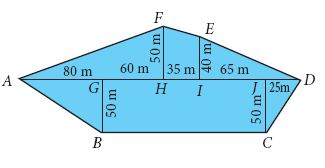
Find the area of the irregular polygon shaped fields given below.
2.
For the sectors with given measures, find the length of the arc, area and perimeter . (π = 3.14)
(i) central angle 45º, r = 16 cm
(ii) central angle 120º, d = 12.6 cm
3.
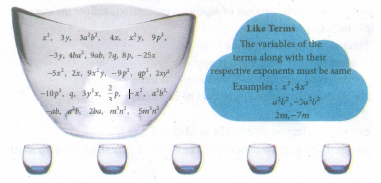
Pick out the like terms from the following.
4.
The pairs are equivalent rational numbers?
\(\frac { -6 }{ 4 } ,\frac { 33 }{ -22 } \)
5.
The simplest form of \(\frac{125}{200}\) is__________.
6.
If A walks \(\frac { 7 }{ 4 } \) km and then jogs \(\frac { 3 }{ 5 } \) find the total distance covered by A. How much did A walk rather than jog?
7.
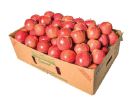
If \(\frac { 3 }{ 4 } \) of a box of apples weighs 3 kg and 225 gm, how much does a full box of apples weight?
8.
Draw the number line and represent the following rational numbers on it.
\(\frac { 15 }{ -4 } \)
9.
List five rational numbers between
–2 and 0
10.
A mason uses the expression x2 + 6x + 8 to represent the area of the floor of a room. If he decides that the length of the room will be represented by(x + 4), what will the width of the room be in terms of x ?
11.
Expand (52)3
12.
Using graph sheet, draw the net for the cuboid whose length is 5 cm, breadth is 4 cm and height is 3 cm and also find its area.
13.
With his usual speed, if a person covers a circular track of radius 150 m in 9 minutes, find the distance that he covers in 3 minutes (π = 3.14)
14.
Can a polyhedron have 12 faces, 22 edges and 17 vertices?
15.
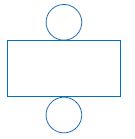
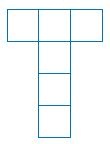
Which 3-D shapes do the following nets represent? Draw them.
16.
Which 3-D shapes do the following nets represent? Draw them.
17.
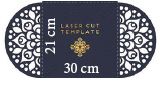
Find the area of an invitation card which has two semicircles attached to a rectangle as in the figure given. \(\left( \pi =\frac { 22 }{ 7 } \right) \)
18.
Find the missing term 6xy x _________= −12x3y
19.
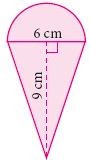
Find the area of the combined figure given, formed by joining a semicircle of diameter 6 cm with a triangle of base 6 cm and height 9 cm. ( π = 3.14 )
20.
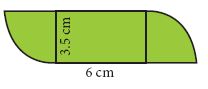
Find the perimeter and area of the combined figures given below. \(\left( \pi =\frac { 22 }{ 7 } \right) \)
21.
Expand −2p(5p2−3p +7)
22.
Multiply a monomial by a monomial
6x,4
23.
In how many ways, can the teacher choose 3 students in all, one each from 10 students in VI std, 15 students in VII std and 20 students in VIII std to go to an excursion?
24.
A circle of radius 70 cm is divided into 5 equal sectors. Find the area of each of the sectors.
25.
Verify the closure property for addition and multiplication of the rational numbers \(\frac { -5 }{ 7 } \) and \(\frac { 8 }{ 9 } \)
1.
Area of the irregular field = Area of ΔAHF + Area of trapezium FHIE + Area of + triangle EID + Area of ΔJDC + Area of rectangle BGJC + Area of ΔAGB
Area of the triangle = (\(\frac12\)x base x height) sq. units
Area of ΔAHF = \(\frac12\) (80 + 60) x 50 m2 = 25 x 140 m2
= 3500 m2 ....(1)
Area of trapezium FHIE = \(\frac12\) h (a + b) sq. units =( \(\frac12\) x 35 x (50 + 40)) m2
= \(\frac12\)(35 x 90) = 1575 m2 .....(2)
Area of ΔEID = \(\frac12\) x (65 + 25) x 40 m2 = 90 x 20 m2 = 1800 m2 ....(3)
Area of ΔJDC = \(\frac12\) x 25 x 50 m2 = 625 m2 ....(4)
Area of rectangle BGJC = (60 + 35 + 65) x 50
= 160 x 50 = 8000 m2 ....(5)
Area of the triangle AGB = \(\frac12\) 80 x 50 = 2000 m2
∴ Area of the field = (1) + (2) + (3) + (4) + (5) + (6)
= 3500 + 1575 + 1800 + 625 + 8000 + 2000 m2
= 17,500 m2
∴ Area of the field = 17,500 m2
2.
(i) Central angle 450, r = 16 cm
Length of the are l = \(\frac{θ^o}{360^o}\) x 2πr units
l = \(\frac{45^o}{360^o}\) x 2 x 3.14 x 16 cm
l = \(\frac18\) x 2 x 3.14 x 16 cm
l = 12.56 cm
Area of the sector = \(\frac{θ^o}{360^o}\) x πr2 sq.units
A = \(\frac{45^o}{360^o}\) x 3.14 x 16 x 16
A = 100.48 cm2
Perimeter of the sector P = l + 2r units
P = 12.56 + 2(16) cm
P = 44.56 cm
(ii) Central angle 1200, d = 12.6 cm
∴ r = \(\frac{12.6}{2}\) cm
r = 6.3 cm
Length of the are l = \(\frac{θ^o}{360^o}\) x 2πr units
l = \(\frac{120^o}{360^o}\) x 2 x 3.14 x 6.3 cm
l = 13.188 cm
l = 13.19 cm.
Area of the sector A = \(\frac{θ^o}{360^o}\) x 2πr units
A = \(\frac{120^o}{360^o}\) x 3.14 x 6.3 x 1.2 cm2
A = 3.14 x 6.3 x 2.1 cm2
A = 41.54 cm2
Perimeter of the sector P = l+ 2r cm
P = 13.19 + 2 (6.3) cm
= 13.19 + 12.6 cm
P = 25.79 cm
3.
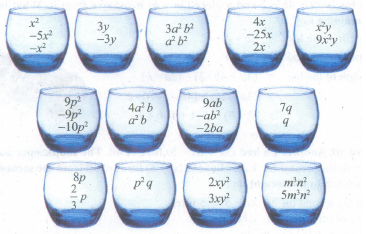
4.
\(\frac { -6 }{ 4 } =\frac { -6\div 2 }{ 4\div 2 } =\frac { -3\times 11 }{ 2\times 11 } =\frac { -33 }{ 22 } =\frac { 33 }{ -22 } \)
\(\therefore \frac { -6 }{ 4 } \) equivalent to \(\frac { 33 }{ -22 } \)
5.
\(\frac { 125 }{ 200 } ,\frac { 125\div 25 }{ 200\div 25 } =\frac { 5 }{ 8 } \)
6.
Distance walked by A = \(\frac{7}{4}km\)
Distance jogged by A = \(\frac{3}{5}km\)
Total distance covered = \(\frac{7}{4}+\frac{3}{5}km\)
\(\frac{(7\times 5)+(3\times 4)}{20}km\)
= \(\frac{35+12}{20}km\)
\(=\frac{47}{20}km\)
More distance walked than Jogged = \(\frac{7}{4}-\frac{3}{5}km\)
= \(\frac{(7\times 5)-(3\times 4)}{20}km\)
= \(\frac{35-12}{20}km=\frac{23}{20}km\)
7.
Let the total weight of a box of apple = x kg.
Weight of \(\frac{3}{4}\) of a box apples = 3 kg 225 gm.
= 3.225 kg
\(\frac{3}{4}\times\)x = 3225
x = \(\frac{3.225\times 4}{3}kg\)
= 1..075 x 4 kg
= 4.3 kg
= 4 kg 300 gm
Weight of the box of apples = 4 kg 300 gm
8.
\(\frac { 15 }{ -4 } =-3\frac { 3 }{ 4 } \)
\(\frac { 15 }{ -4 } \) lies between -3 and - 4.

9.
-2 and 0
i,e. \(\frac{-2}{1}\) and \(\frac{0}{1}\)
\(\frac { -2 }{ 1 } =\frac { -2\times 10 }{ 1\times 10 } =\frac { -20 }{ 10 } \)
\(\frac { 0 }{ 1 } =\frac { 0\times 10 }{ 1\times 10 } =\frac { 0 }{ 10 } \)
∴ Five rational numbers between \(\frac{-20}{10}\) ( = -2) and \(\frac{0}{10}\)( = 0)are
\(\frac { -20 }{ 10 } ,\frac { -19 }{ 10 } ,\frac { -18 }{ 10 } ,\frac { -7 }{ 10 } ,\frac { -6 }{ 10 } ,\frac { -5 }{ 10 } ,\frac { 0 }{ 10 } (=0)\)
10.
| Product | Sum |
| 8 | 6 |
| 4 x 2 | 4 + 2 |
x2+ 6x + 8= x2 + 2x + 4x + 8
= x(x + 2) + 4(x + 2)
x2 + 6x + 8 = (x + 2)(x + 4)
Given length of the room = x + 4
width of the room = x + 2
11.
(52)3 = (50 + 2)3
Comparing (50 + 2)3 with (a + b)3we have a = 50 and b = 2
(a + b)3 = a3 + 3a2b + 3ab2 + b3
(50 + 2)3 = 503 + 3 (50)22 + 3 (50)(2)2 + 23
523 = 125000 + 6(2,500) + 150(4) + 8
= 1,25,000 + 15,000 + 600 + 8
523 = 1,40,608
12.
Net for the cuboid is:
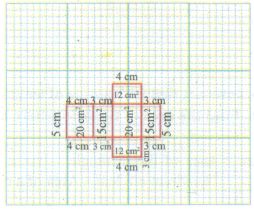
One of the possible nets for a cuboid of length = 5 cm, breadth = 4 cm, height = 3 cm is given above
Area of the cuboid = 20 cm2 + 15 cm2 + 20 cm2 + 15cm2 + 12cm2 + 12cm2
= 94cm2
Using formula,
Surface area of a cuboid = 2 (lb + bh + lh) unit2
= 2(5 x 4 + 4 x 3 + 5 x 3) cm2 = 2 (20 + 12 + 15) cm2
= 94cm2
13.
Given that r = 150 m.
In 9 minutes the person covers the circumference of the circle.
He covers of the distance of the circumference in 3 minutes.
That is, he covers the distance in 3 minutes
\(=\frac{1}{3} \times 2 \pi \mathrm{r}=\frac{1}{3} \times 2 \times 3.14 \times 150
\)
= 314 m.
14.
By Euler's formula F + V - E = 2 for a polyhedron
Here F = 12, V = 17, E = 22
F + V - E = 12 + 17 - 22
= 29 - 22
= 7≠ 2
∴ The polyhedron cannot have 12 faces 22 edges and 17 vertices.
15.
Cylinder
16.
Cube
17.
Area of the card = Area of the rectangle + area of 2 semicircles
Length of the rectangle I = 30 cm
Breadth b = 21 cm
Radius of the semicircle = \(\frac{21}{2}
\) cm
∴ Area of the card = (l x b) + \(\frac { 1 }{ 2 } \times 2\pi { r }^{ 2 }\)
= 30 x 21 + \(\frac { 22 }{ 7 } \times \frac { 21 }{ 2 } \times \frac { 21 }{ 2 } \) cm2 = 630 + 346.5
= 976.5cm2 (approximately)
∴ Area of the Invitation card = 976.5 cm2
18.
6xy x a = −12x3y
\(a=-\frac{12 x y}{6 x y}\)
a = -2x2
19.
The given figure is a combination of a semicircle and a triangle.
diameter = 6 cm
radius = 3 cm
base = 6 cm
height = 9 cm
The shaded area of the figure = Area of the semicircle + Area of the triangle
\(=\frac{1}{2} \pi \mathrm{r}^{2}+\frac{1}{2} \mathrm{bh} \)
\(=\frac{1}{2} \times 3.14 \times 3 \times 3+\frac{1}{2} \times 6 \times 9 \)
= 14.13 + 27 = 41.13 cm2
20.
From this figure
Perimeter = 2l + 2 x 6 + 2r
\(=2 \times \frac{\theta}{360} \times 2 \pi \mathrm{r}+12+2 \times 3.5 \)
\(=2 \times \frac{90}{360} \times 2 \times \frac{22}{7} \times 3.5+12+7 \)
= 11+ 12 + 7
= 30 cm
The area of shaded part
= Area of two circular quadrants + Area of the rectangle
\(=\left(2 \times \frac{\theta}{360} \times \pi r^{2}\right)+(l \times b) \)
\(=\left(2 \times \frac{90}{360} \times \frac{22}{7} \times 3.5 \times 3.5\right)+(6 \times 3.5) \)
= 19. 25 + 21
= 40.25 cm2
21.
-10p3+6p2-14p
22.
6x \(\times\) 4= (6 \(\times\) 4)(x) = 24x
23.
The teacher is going to select one student from class VI out of 10 students in 10 ways from class VII out of 15 students in 15 ways and from class VIII out of 20 students in 20 ways.
ஃ Number of ways 3 students can be selected = 10 + 15 + 20 = 45 ways
24.
Given that r = 70 cm ,n = 5
Since the circle is divided into 5 equal sectors, the area of each of the sector
\(=\frac{1}{n} \pi \mathrm{r}^{2}=\frac{1}{5} \times \pi \times 70 \times 70=980 \pi \mathrm{cm}^{2}\)
25.
Closure property for addition.
Let a = \(\frac{-5}{7}\) and b = \(\frac{8}{9}\) be the given rational numbers.
\(a+b=\frac { -5 }{ 7 } +\frac { 8 }{ 9 } \)
\(=\frac { (-5\times 9)+(8\times 7) }{ 7\times 9 } =\frac { -45+56 }{ 63 } =\frac { 11 }{ 63 } \) is in Q.
i.e a + b = \(\frac { -5 }{ 7 } +\frac { 8 }{ 9 } =\frac { 11 }{ 63 } \) is in Q.
∴ Closure property is true for addition of rational numbers.
Closure property for multiplication
Let a = \(\frac{-5}{7}\) and b=\(\frac{8}{9}\)
\(a\times b=\frac { -5 }{ 7 } \times \frac { 8 }{ 9 } =\frac { -40 }{ 63 } \) is in Q.
i.e. \(a\times b=\frac { -5 }{ 7 } \times \frac { 8 }{ 9 } =\frac { -40 }{ 63 } \) is in Q.
∴ Closure property is true for multiplication of rational numbers.

8th Standard Syllabus & Materials
8th Standard
TN 8th Tamil இயல் 3 - கல்வி கரையில - பாடறிந்து ஒழுகுதல் Important Questions And Answers Study Material - QB365 Set A
NEW8th Standard
TN 8th Tamil இயல் 3-கல்வி கரையில - பல்துறைக் கல்வி Important Questions And Answers Study Material - QB365 Set A
NEW8th Standard
TN 8th Tamil இயல் 3-கல்வி கரையில - புத்தியைத் தீட்டு Important Questions And Answers Study Material - QB365 Set A
NEW8th Standard
TN 8th Tamil இயல் 2 - ஈடில்லா இயற்கை - தமிழர் மருத்துவம் ( நேர்காணல்) Important Questions And Answers Study Material - QB365 Set A



Tamilnadu Stateboard 8th Standard Subjects
Tamilnadu Stateboard Standards




