
 100% FREE ACCESS
8th Standard Syllabus & Materials
8th Standard
TN 8th Tamil இயல் 3 - கல்வி கரையில - வினைமுற்று Important Questions And Answers Study Material - QB365 Set A
NEW8th Standard
TN 8th Tamil இயல் 2 - ஈடில்லா இயற்கை - மயங்கொலிகள் Important Questions And Answers Study Material - QB365 Set A
NEW8th Standard
TN 8th Tamil இயல் 2 - ஈடில்லா இயற்கை -பட்டமரம் Important Questions And Answers Study Material - QB365 Set A
NEW8th Standard
TN 8th Tamil இயல் 2 - ஈடில்லா இயற்கை - இயற்கையை போற்றுவோம் Important Questions And Answers Study Material - QB365 Set A
NEW8th Standard
TN 8th Tamil இயல் 1 - தமிழ் இன்பம் - ஆழிக்கு இணை Important Questions And Answers Study Material - QB365 Set A
NEW8th Standard
TN 8th Tamil இயல் 2-ஈடில்லா இயற்கை - திருக்குறள் Important Questions And Answers Study Material - QB365 Set A

Published on: 29/06/2019
8th Standard New Syllabus Chapter One Important Question
Download Tamil Nadu 8th Standard Maths question papers, model tests, one-mark questions, important questions, and public exam papers in PDF format. Free study materials and answer keys for TN State Board students.
Questions + Answers key
Take MCQ Maths Test1.
In the NEET exam, out of a total of 180 questions, a Jeyanth answered \(\frac { 19 }{ 30 } \) of the questions correctly and \(\frac { 5 }{ 18 } \) of the questions incorrectly. How many questions did Jeyanth not attend at all?
2.
Evaluate: \(\left( \frac { 4 }{ 3 } -\left( \frac { -3 }{ 2 } \right) \right) +\left( \frac { -5 }{ 3 } \div \frac { 30 }{ 12 } \right) +\left( \frac { -12 }{ 9 } \times \frac { -27 }{ 16 } \right) \)
3.
A student instead of multiplying a number by \(\frac { 8 }{ 9 } ,\) divided it by \(\frac { 8 }{ 9 } \) by mistake. If the difference between the answers got by him is 34, find the number.
4.
Find which rational number is greater?
\(\frac { -10 }{ 3 } ,\frac { 14 }{ -5 } \)
5.
Find which rational number is greater?
\(\frac { 5 }{ -4 } ,\frac { -11 }{ -7 } \)
6.
Reduce to the standard form
\(\frac { -18 }{ -42 } \)
7.
Reduce to the standard form
\(\frac { 48 }{ -84 } \)
8.
Mangalam buys a water jug of capacity \(3\frac { 4 }{ 5 } \) litres. If she buys another jug which is \(2\frac { 2 }{ 3 } \) times as large as the smaller jug, how many liters can the larger one hold?
9.
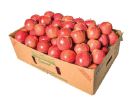
If \(\frac { 3 }{ 4 } \) of a box of apples weighs 3 kg and 225 gm, how much does a full box of apples weight?
10.
Verify that -(- x) is the same x for:
\(x=\frac { -31 }{ 45 } \)
11.
Find the rational numbers represented by each of the question marks marked on the following number lines.

12.
Find the rational numbers represented by each of the question marks marked on the following number lines.

13.
Write four rational numbers equivalent to
\(\frac { -7 }{ 6 } \)
14.
Write four rational numbers equivalent to
\(\frac { -3 }{ 5 } \)
15.
List five rational numbers between
–1.2 and -2.3
16.
List five rational numbers between
0.25 and 0.35
17.
Using average, write 3 rational numbers between \(\frac { 14 }{ 5 } \) and \(\frac { 16 }{ 3 } \)
18.
\(\left( 1-\frac { 1 }{ 2 } \right) \times \left( \frac { 1 }{ 2 } -\frac { 1 }{ 4 } \right) \div \left( \frac { 3 }{ 4 } -\frac { 1 }{ 2 } \right) \)=
\(\frac { 1 }{ 2 } \)
\(\frac { 3 }{ 4 } \)
\(\frac { 1 }{ 4 } \)
\(\frac { -1 }{ 2 } \)
19.
Closure property is not true for division of rational numbers because of the number
0
-1
0
\(\frac { 1 }{ 2 } \)
20.
Which of the following illustrates the inverse property for addition?
\(\frac { 1 }{ 8 } -\frac { 1 }{ 8 } =0\)
\(\frac { 1 }{ 8 } +\frac { 1 }{ 8 } =\frac { 1 }{ 4 } \)
\(\frac { 1 }{ 8 } +0=\frac { 1 }{ 8 } \)
\(\frac { 1 }{ 8 } -0=\frac { 1 }{ 8 } \)
21.
\(\frac { -5 }{ 4 } \) is a rational number which lies between
0 and \(\frac { -5 }{ 4 } \)
-1 and 0
–1 and –2
–4 and –5
22.
Which of the following rational numbers is the greatest?
\(\frac { -17 }{ 24 } \)
\(\frac { -13 }{ 16 } \)
\(\frac { 7 }{ -8 } \)
\(\frac { -31 }{ 32 } \)
23.
The number which is subtracted from \(\frac { -6 }{ 11 } \) to get \(\frac { 8 }{ 9 } \) is
\(\frac { 34 }{ 99 } \)
\(\frac { -142 }{ 99 } \)
\(\frac { 142 }{ 99 } \)
\(\frac { -34 }{ 99 } \)
1.
Questions answered correctly by Jeyanth = \(\frac { 19 }{ 30 } \times 180=19\times 6=114\)
Questions answered incorrectly by Jeyanth = \(\frac { 5 }{ 18 } \times 180=50\)
∴ Number of questions not attended by Jeyanth = 180 − (114 + 50)
= 180 − 164 = 16
2.
\(\left( \frac { 4 }{ 3 } -\left( \frac { -3 }{ 2 } \right) \right) +\left( \frac { -5 }{ 3 } \div \frac { 30 }{ 12 } \right) +\left( \frac { -12 }{ 9 } \times \frac { -27 }{ 16 } \right) =\left( \frac { 4 }{ 3 } +\frac { 3 }{ 2 } \right) +\left( \frac { -5 }{ 3 } \times \frac { 12 }{ 30 } \right) +\left( \frac { -12 }{ 9 } \times \frac { -27 }{ 16 } \right) \)
= \(\left( \frac { 8 }{ 9 } +\frac { 9 }{ 6 } \right) +\left( \frac { -1 }{ 1 } \times \frac { 4 }{ 6 } \right) +\left( \frac { -3 }{ 1 } \times \frac { -3 }{ 4 } \right) \)
= \(\left( \frac { 17 }{ 6 } \right) +\left( \frac { -4 }{ 6 } \right) +\left( \frac { 9 }{ 4 } \right) \)
= \(\left( \frac { 17-4 }{ 6 } \right) +\frac { 9 }{ 4 } =\frac { 13 }{ 6 } +\frac { 9 }{ 4 } \)
= \(\frac { 26+27 }{ 12 } =\frac { 53 }{ 12 } \)
3.
Let the number be x .
The student had to find \(\frac { 8x }{ 9 } \) but, he had found \(\frac { x }{ \left( \frac { 8 }{ 9 } \right) } \) that is \(\frac { 9x }{ 8 } \)
Now, \(\frac { 9x }{ 8 } -\frac { 8x }{ 9 } =34\)
\(\frac { 81x-64x }{ 72 } =34\Rightarrow \frac { 17x }{ 72 } =34\)
\(x=\frac { 34\times 72 }{ 17 } =144\)
4.
First, make the denominator of the rational number \(\frac { 14 }{ -5 } \) to be positive as \(\frac { -14 }{ 5 } \)
Then, make the denominators the same by finding the LCM of the denominators.
So, \(\frac { -10 }{ 3 } =\frac { -10 }{ 3 } \times \frac { 5 }{ 5 } =\frac { -50 }{ 15 } \) and \(\frac { -14 }{ 5 } =\frac { -14 }{ 5 } \times \frac { 3 }{ 3 } =\frac { -42 }{ 50 } \)
As 50 > 42, we have −50 < -42
Hence, \(\frac { -50 }{ 15 } <\frac { -42 }{ 50 } \) and so \(\frac { -42 }{ 50 } >\frac { -50 }{ 15 } \). Thus, \(\frac { -14 }{ 5 } >\frac { -10 }{ 3 } \)
5.
Now, \(\frac { 5 }{ -4 } =\frac { 5\times (-1) }{ -4\times (-1) } =\frac { -5 }{ 4 } \)
Also, \(\frac { -11 }{ -7 } =\frac { -11\times (-1) }{ -7\times (-1) } =\frac { 11 }{ 7 } \)
Here, \(\frac { 11 }{ 7 } \) is positive and \(\frac { -5 }{ 4 } \) is a negative rational number.
∴ \(\frac { 11 }{ 7 } >\frac { -5 }{ 4 } \), that is \(\frac { -11 }{ -7 } >\frac { 5 }{ -4 } \)
6.
Method 1:
\(\frac { -18 }{ -42 } =\frac { -18\div (-2) }{ -42\div (-2) } =\frac { 9\div 3 }{ 21\div 3 } =\frac { 3 }{ 7 } \) (dividing by –2 and 3 successively)
Method 2:
The HCF of 18 and 42 is 6 (Find it). Thus, we can get its standard form by dividing it by 6.
\(\frac { -18 }{ -42 } =\frac { -18\times (-1) }{ -42\times (-1) } =\frac { 18 }{ 42 } =\frac { 18\div 6 }{ 42\div 6 } =\frac { 3 }{ 7 } \)
7.
Method 1:
\(\frac { 48 }{ -84 } =\frac { 48\div (-2) }{ -84\div (-2) } =\frac { -24\div 2 }{ 42\div 2 } =\frac { -12\div 3 }{ 21\div 3 } =\frac { -4 }{ 7 } \) (dividing by –2, 2 and 3 successively)
Method 2:
The HCF of 48 and 84 is 12 (Find it). Thus, we can get its standard form by dividing it by -12.
\(=\frac { 48\div (-12) }{ -84\div (-12) } =\frac { -4 }{ 7 } \)
8.
Capacity of the small water jug = 3\(\frac{4}{5}\)litres.
Capacity of the big jug = 2\(\frac{2}{3}\) times the small one.
\(2\frac { 2 }{ 3 } \times 3\frac { 4 }{ 5 } =\frac { 8 }{ 3 } \times \frac { 19 }{ 5 } =\frac { 152 }{ 15 } \)
= \(10\frac { 2 }{ 5 } \) litres
Capacity of the large jug = \(10\frac { 2 }{ 5 } \) litres
9.
Let the total weight of a box of apple = x kg.
Weight of \(\frac{3}{4}\) of a box apples = 3 kg 225 gm.
= 3.225 kg
\(\frac{3}{4}\times\)x = 3225
x = \(\frac{3.225\times 4}{3}kg\)
= 1..075 x 4 kg
= 4.3 kg
= 4 kg 300 gm
Weight of the box of apples = 4 kg 300 gm
10.
\(x=\frac { -31 }{ 45 } \)
\(-x=-\left( \frac { -31 }{ 45 } \right) \)
\(-x=\frac { 31 }{ 45 } \)
\(-(-x)=\frac { 31 }{ 45 } =x\)
\(\therefore -(-x)=x\)
11.
The rational number for the point marked on the number line is 1\(\frac{3}{4}=\frac{7}{4}\)
12.
The rational number for the point marked on the number line is -3\(\frac{2}{3}\) = \(\frac{-11}{3}\)
13.
\(\frac { 7 }{ -6 } =\frac { 7\times 2 }{ -6\times 2 } =\frac { 14 }{ -12 } \)
\(\frac { 7 }{ -6 } =\frac { 7\times 3 }{ -6\times 3 } =\frac { 21 }{ -18 } \)
\(\frac { 7 }{ -6 } =\frac { 7\times 4 }{ -6\times 4 } =\frac { 28 }{ -24 } \)
\(\frac { 7 }{ -6 } =\frac { 7\times 5 }{ -6\times 5 } =\frac { 35 }{ -30 } \)
Four equivalent rational numbers of \(\frac { -7 }{ 6 } \) are \(\frac { 14 }{ -12 } ,\frac { 21 }{ -18 } ,\frac { 28 }{ -24 } ,\frac { 35 }{ -30 } \)
14.
\(\frac { -3 }{ 5 } =\frac { -3\times 2 }{ 5\times 2 } =\frac { -6 }{ 10 } \)
\(\frac { -3 }{ 5 } =\frac { -3\times 3 }{ 5\times 3 } =\frac { -9 }{ 15 } \)
\(\frac { -3 }{ 5 } =\frac { -3\times 4 }{ 5\times 4 } =\frac { -12 }{ 20 } \)
\(\frac { -3 }{ 5 } =\frac { -3\times 5 }{ 5\times 5 } =\frac { -15 }{ 25 } \)
Four equivalent rational numbers of \(\frac { -3 }{ 5 } \)are \(\frac { -6 }{ 10 } ,\frac { -9 }{ 15 } ,\frac { -12 }{ 20 } ,\frac { -15 }{ 25 } \)
15.
–1.2 and -2.3
\(-1.2=\frac { -1.2\times 10 }{ 1\times 10 } =\frac { -12 }{ 10 } \)
\(-2.3=\frac { -2.3\times 10 }{ 1\times 10 } =\frac { -23 }{ 10 } \)
∴ Five rational numbers between -1.2\(\\ \\ (=\frac { -12 }{ 10 } )\) and -2.3 \((=\frac { -23 }{ 10 } )\) are \(\frac { -21 }{ 10 } ,\frac { -20 }{ 10 } ,\frac { -15 }{ 10 } ,\frac { -14 }{ 10 } ,\frac { -13 }{ 10 } \)
16.
0.25 and 0.35
\(0.25=\frac { 0.25\times 100 }{ 1\times 100 } =\frac { 25 }{ 100 } \)
\(0.35=\frac { 0.35\times 100 }{ 1\times 100 } =\frac { 35 }{ 100 } \)
∴ Five rational numbers between 0.25\((=\frac { 25 }{ 100 } )\) and 0.35 \((=\frac { 35 }{ 100 } )\) are \(\frac { 26 }{ 100 } ,\frac { 27 }{ 100 } ,\frac { 30 }{ 100 } ,\frac { 32 }{ 100 } ,\frac { 33 }{ 100 } \)
17.
The average of a and b is \(\frac{1}{2}(a+b)\)
The average of \(\frac{14}{5}\) and \(\frac{16}{3}\) is C1=\(\frac { 1 }{ 2 } \left( \frac { 14 }{ 5 } +\frac { 16 }{ 3 } \right) \)
\({ C }_{ 1 }=\frac { 1 }{ 2 } \left( \frac { 42+80 }{ 15 } \right) \)
\({ C }_{ 1 }=\frac { 122 }{ 30 } \)
\({ C }_{ 1 }=\frac { 61 }{ 15 } \)
\(\\ \frac { 14 }{ 5 } <\frac { 61 }{ 15 } <\frac { 16 }{ 3 } \) ..(1)
The average of \(\frac { 14 }{ 5 }\) and \(\frac{61}{15}\)is C2=\(\frac { 1 }{ 2 } \left( \frac { 14 }{ 5 } +\frac { 61 }{ 15 } \right) \)
\(\frac { 1 }{ 2 } \left( \frac { 14 }{ 5 } +\frac { 61 }{ 15 } \right) \)
\({ C }_{ 2 }=\frac { 1 }{ 2 } \times \left( \frac { 42+61 }{ 15 } \right) \)
\({ C }_{ 2 }=\frac { 1 }{ 2 } \times \frac { 103 }{ 15 } \)
\(\frac { 103 }{ 15 } \)
\(\therefore \frac { 14 }{ 5 } <\frac { 103 }{ 30 } <\frac { 61 }{ 15 } \) ..(2)
The average of \(\frac{103}{30}\) and \(\frac{61}{15}\) is C3=\(\frac { 1 }{ 2 } \left( \frac { 103 }{ 30 } +\frac { 61 }{ 15 } \right) \)
\({ C }_{ 3 }=\frac { 1 }{ 2 } \times \left( \frac { 103+122 }{ 30 } \right) \)
\({ C }_{ 3 }=\frac { 1 }{ 2 } \times \frac { 225 }{ 30 } \)
\({ C }_{ 3 }=\frac { 1 }{ 2 } \times \frac { 15 }{ 2 } \)
\(\\ { C }_{ 3 }=\frac { 15 }{ 4 } \)
\(\therefore \frac { 103 }{ 30 } <\frac { 15 }{ 4 } <\frac { 61 }{ 15 } \)...(3)
From (1), (2) and (3) we get,
\(\frac { 14 }{ 5 } <\frac { 103 }{ 30 } <\frac { 15 }{ 4 } <\frac { 61 }{ 15 } <\frac { 16 }{ 3 } \)
18.
(b)
\(\frac { 3 }{ 4 } \)
19.
(c)
0
20.
(a)
\(\frac { 1 }{ 8 } -\frac { 1 }{ 8 } =0\)
21.
(c)
–1 and –2
22.
(a)
\(\frac { -17 }{ 24 } \)
23.
(b)
\(\frac { -142 }{ 99 } \)

8th Standard Syllabus & Materials
8th Standard
TN 8th Tamil இயல் 3 - கல்வி கரையில - பாடறிந்து ஒழுகுதல் Important Questions And Answers Study Material - QB365 Set A
NEW8th Standard
TN 8th Tamil இயல் 3-கல்வி கரையில - பல்துறைக் கல்வி Important Questions And Answers Study Material - QB365 Set A
NEW8th Standard
TN 8th Tamil இயல் 3-கல்வி கரையில - புத்தியைத் தீட்டு Important Questions And Answers Study Material - QB365 Set A
NEW8th Standard
TN 8th Tamil இயல் 2 - ஈடில்லா இயற்கை - தமிழர் மருத்துவம் ( நேர்காணல்) Important Questions And Answers Study Material - QB365 Set A



Tamilnadu Stateboard 8th Standard Subjects
Tamilnadu Stateboard Standards




