
 100% FREE ACCESS
6th Standard CBSE Syllabus & Materials
6th Standard CBSE
CBSE 6th Social Science The Value of Work - New Sample Question Papers Study Material - QB365 Set A
NEW6th Standard CBSE
CBSE 6th Social Science Family and Community - New Sample Question Papers Study Material - QB365 Set A
NEW6th Standard CBSE
CBSE 6th Social Science India's Cultural Roots - New Sample Question Papers Study Material - QB365 Set A
NEW6th Standard CBSE
CBSE 6th Social Science India,That is Bharat - New Sample Question Papers Study Material - QB365 Set A
NEW6th Standard CBSE
CBSE 6th Social Science Timeline and sources of history - New Sample Question Papers Study Material - QB365 Set A
NEW6th Standard CBSE
CBSE 6th Social Science Oceans and Continents - New Sample Question Papers Study Material - QB365 Set A

Published on: 31/07/2018
Based on the current academic syllabus, some of the important questions are prepared from the chapter New Questions and Ideas.
Download CBSE Class 6th Standard CBSE Social Science question papers, sample papers, important questions, and previous year solved papers in PDF format. Get free study materials, NCERT solutions, and exam preparation resources for Class 6th Standard CBSE Social Science
Questions + Answers key
Take MCQ Social Science Test
1.
Write a short note on Zoroaster.
2.
What is Upanishad? Name some important thinkers of Upanishad.
3.
Why do you think Anagha's mother wanted her to know the story of the Buddha?
4.
What was the language used to compose the Vedas?
5.
All men could join the sangha without taking permission from anybody.
6.
Both the Mahavira and the Buddha felt that only those who left their homes could gain true knowledge.
7.
The teachings of Mahavira were written down in the form in which they are presently available at a place called Valabhi, in Gujarat.
8.
The Buddha attained enlightenment at Bodh Gaya.
9.
The Buddha encouraged animal sacrifices.
10.
What did the term bhikkhus mean?
Gainer
Achiever
Beggar
Loser
11.
Where is the hollowed cave, where monks and nuns lived and meditated?
Sanchi
Sarnath
Gaya
Karle
12.
Where did the word Jaina come from?
Tina
Jina
Vika
Dika
13.
Who believed that the results of our actions (called Karma) affect us both in this life and the next?
Buddha
Mahavira
Panini
Kisagotami
14.
Who prepared a grammar for Sanskrit?
Buddha
Mahavira
Kisagotami
Panini
15.
In which language Buddha taught ordinary people?
Sanskrit
Pali
Hindi
Prakrit
16.
Gautama Buddha passed away at
Gaya
Bodh Gaya
Sarnath
Kusinara
17.
After attaining enlightenment, where did Buddha go to teach for the first time?
Sarnath
Ayodhya
Sanchi
Nepal
18.
From which Vedic group, Buddha belonged to?
Brahman
Kshatriya
Shudra
Vaishya
19.
When was Gautama Buddha born?
About 3000 years ago
About 2500 years ago
About 1500 years ago
About 1000 years ago
20.
Cave in Karle is in present-day ____________________
21.
Jainas must follow very strictly the rules of__________________
22.
_________________was the most famous thinker of the Jainas.
23.
Many of the ideas of the Upanishads were later developed by the famous thinker___________
24.
The Buddha belonged to a small gana known as the _____________and was a_____________
25.
How was Anagha going to Varanasi?
26.
Who was Satyakama Jabala?
27.
What is the literal meaning of Upanishad?
28.
Who taught that people should be kind, and respect other?
29.
Where did Buddha decide to find his own path to realisation?
30.
Answer the questions based on the picture given below:
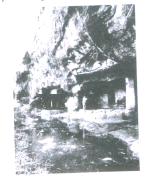

(i) The cave above in the picture are located in which state?
(ii) What was the purpose of these caves?
31.
Discuss the story of the wise beggar in your own words.
1.
Zoroaster was an Iranian prophet. His teachings are contained in a book called the Avesta. The language of the Avesta and the practices described in it are very similar to those of the Vedas. The basic teachings of Zoroaster are contained in the maxim "Good thoughts, Good Words and Good Deeds." Here is a verse from the Zend Avesta.
"Lord, grant strength and the rule of truth and good thinking, by means of which one shall create peace and tranquility." For more than a thousand years, Zoroastrianism was a major religion in Iran Later, some Zoroastrians migrated from Iran and settled down in the coastal towns of Gujarat and Maharashtra. They were the ancestors of today's Parsis.
2.
Upanishad is later Vedic text. It literally means 'approaching and sitting near' and often ideas are presented through simple conversations between teachers and students. Upanishadic thinkers are mainly men, i.e. branmins and rajas \/ery few women thinkers, like Gargi are mentioned.
Poor people, like Satyakama Jabala is a famous thinker of that period. Upanishads are later developed by the great thinker Shankaracharya.
3.
Anagha's mother wanted her to know the story of the Buddha because Anagha was going on school trip. They boarded the train from Pune to go all the way to Varanasi. Anagha's mother especially told the teacher to take them to see Sarnath and tell the children about the great religious leader, Buddha.
4.
'Vedic-Sanskrit' was the language used to compose the Vedas.
5.
(a)
6.
(a)
7.
(a)
8.
(a)
9.
(b)
10.
(c)
Beggar
11.
(d)
Karle
12.
(b)
Jina
13.
(a)
Buddha
14.
(d)
Panini
15.
(d)
Prakrit
16.
(d)
Kusinara
17.
(a)
Sarnath
18.
(b)
Kshatriya
19.
(b)
About 2500 years ago
20.
()
Maharashtra
21.
()
ahimsa
22.
()
Vardhamana Mahavira
23.
()
Shankaracharya
24.
()
Sakya gana, kshatriya
25.
()
Anagha was going to Varanasi by train.
26.
()
Satyakama Jabala was Upanishadic thinker, who was named after his mother, the slave woman Jabali.
27.
()
Upanishad literally means 'approaching and sitting near'.
28.
()
Gautama Buddha taught that people should be kind and respect other.
29.
()
At Bodh Gaya in Bihar, Buddha decided to find his own path to realisation.
30.
(i)Karle, present-day Maharashtra
(ii)Monks and nuns lived and meditated in these caves or shelters.
31.
The story of the wise beggar is taken from the Chhandogya Upanishad. There were two sages named Shaunaka and Abhipratarin, who worshipped the universal soul.
One day when they started to eat, a beggar came and asked for some foods But they refused him to give Then the beggar told them that the universal soul fills the whole world, everybody is a part of it. God is also a universal soul. Thus, by denying food to the beggar, actually they are denying food to the universal so Hearing the beggar's view, the sages realised the truth and shared their food with him.

6th Standard CBSE Syllabus & Materials
6th Standard CBSE
CBSE 6th Social Science Locating Places on the Earth - New Sample Question Papers Study Material - QB365 Set A
NEW6th Standard CBSE
CBSE 6th Science A Journey Through States of Water - New Sample Question Papers Study Material - QB365 Set A
NEW6th Standard CBSE
CBSE 6th Science Temperature and its Measurement - New Sample Question Papers Study Material - QB365 Set A
NEW6th Standard CBSE
CBSE 6th Science Materials Around Us - New Sample Question Papers Study Material - QB365 Set A



CBSE 6th Standard CBSE Subjects
CBSE Standards




