
6th Standard Syllabus & Materials
6th Standard
Tamilnadu 6th Standard Tamil இயல் 3 - எல்லாரும் இன்புற - பெயர்ச்சொல் Important Questions And Answers Study Material - QB365 Set B
NEW6th Standard
Tamilnadu 6th Standard Tamil இயல் 3 - எல்லாரும் இன்புற - பெயர்ச்சொல் Important Questions And Answers Study Material - QB365 Set A
NEW6th Standard
Tamilnadu 6th Standard Tamil இயல் 2 - கூடித் தொழில் செய் - சுட்டு எழுத்துகள், வினா எழுத்துகள் Important Questions And Answers Study Material - QB365 Set B
NEW6th Standard
Tamilnadu 6th Standard Tamil இயல் 2 - கூடித் தொழில் செய் - சுட்டு எழுத்துகள், வினா எழுத்துகள் Important Questions And Answers Study Material - QB365 Set A
NEW6th Standard
Tamilnadu 6th Standard Tamil பருவம் 1 - இயல் 1 - மொழி -தமிழ்த்தேன் - இன்பத்தமிழ் Important Questions And Answers Study Material - QB365
NEW6th Standard
Tamilnadu 6th Standard Social Science T3 - குடிமையியல் - உள்ளாட்சி அமைப்பு - ஊரகமும் நகர்ப்புறமும் Important Questions And Answers Study Material - QB365 Set B

Published on: 27/07/2018
In this question paper, it covers the model exam question paper from the entire chapter of this syllabus. Teachers can examine their student’s knowledge. They can prepare plenty of question paper with answer key. For subscription, please Click Here.
Download Tamil Nadu 6th Standard Science question papers, model tests, one-mark questions, important questions, and public exam papers in PDF format. Free study materials and answer keys for TN State Board students.
Questions + Answers key
Take MCQ Science Test1.
Who is the computer’s first programmer?
Lady Wellington
Augusta ado Lovelace
Mary Curie
Mary Comb
2.
Who is the father of computer?
Martin Luther King
Graham Bell
Charlie Chaplin
Charles Babbage
3.
Calcium is an example for
carbohydrate
fat
Protein
minerals
4.
Scurvy is caused due to the deficiency of______________.
Vitamin A
Vitamin B
Vitamin C
Vitamin D
5.
Which of the following cannot be called as a habitat?
A desert with camels
A pond with fish and snails
Cultivated land with grazing cattle
A jungle with wild animals
6.
All animals need
Food and water only
Water only
Air, food and water
Food only
7.
The important function of stomata is __________.
Conduction
Transpiration
Photosynthesis
Absorption
8.
Pond is an example of ________ecosystem.
Marine Habitat
Freshwater Habitat
Deserts
Mountain
9.
Among the following_________is not a mixture.
Coffee with milk
lemon juice
water
ice cream embedded with nuts.
10.
Lighter impurities like dust when mixed with rice or pulses can be removed by __________
filtration
sedimentation
decantation
winnowing
11.
Gita rides with her father’s bike to her uncle’s house which is 40 km away from her home. She takes 40 minutes to reach there.
Statement 1: She travels at a speed of 1 km/minute.
Statement 2: She travels at a speed of 1 km/hour.
Statement 1 alone is correct.
Statement 2 alone is correct.
Both statements are correct.
Neither statement 1 nor statement 2 is correct.
12.
The correct relation among the following is
Speed = distance × time
Speed = distance / time
Speed = time / distance
Speed = 1 / (distance × time)
13.
Which among the following is an oscillatory motion?
Rotation of the earth about its axis
Revolution of the moon about the earth
To and fro movement of a vibrating string
All of these.
14.
Unit of speed is__________
m
s
kg
m/s
15.
The height of a tree can be measured by
Metre scale
plastic ruler
Metre rod
measuring tape
16.
Fifth generation computer has ________ intelligence.
17.
Iodine deficiency leads to __________ in adults.
18.
Some living things are made of a single cell, called_______ organism.
19.
Primary organs of photosynthesis are _____________.
20.
Earth's surface is covered by ___________% of water.
21.
Chillies are removed from ‘upma’ by ___________ method.
22.
Grains can be separated from their stalks by ____________.
23.
A bike moving on a straight road is an example for_________motion.
24.
The distance between Delhi and Chennai can be measured in _______________.
25.
Differentiate hardware and software.
26.
Write a short note on Data.
27.
What is a Computer?
28.
Why should fruits and vegetables not be washed after cutting?
29.
Differentiate between rotational and curvilinear motion.
30.
What is the SI Unit of mass?
31.
Describe the various features which help Camel dwell well in the desert.
32.
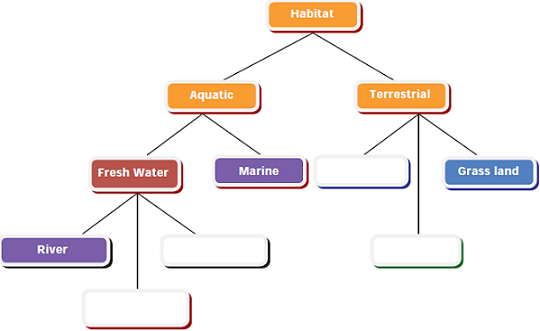
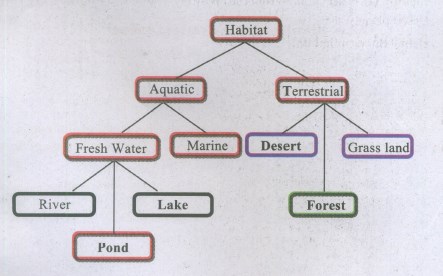
Complete the map by filling the blanks
33.
What is motion? Classify different types of motion with examples.
34.
Explain two methods that you can use to measure the length of a curved line.
35.
What are the adaptations seen in different types of vertebrates?
36.
Differentiate between Unicellular and Multicellular organisms.
37.
Why do gases not have fixed shape?
38.
List out the plants present in your school garden
1.
(b)
Augusta ado Lovelace
2.
(d)
Charles Babbage
3.
(d)
minerals
4.
(c)
Vitamin C
5.
(c)
Cultivated land with grazing cattle
6.
(c)
Air, food and water
7.
(c)
Photosynthesis
8.
(b)
Freshwater Habitat
9.
(c)
water
10.
(d)
winnowing
11.
(a)
Statement 1 alone is correct.
12.
(b)
Speed = distance / time
13.
(c)
To and fro movement of a vibrating string
14.
(d)
m/s
15.
(d)
measuring tape
16.
()
artificial
17.
()
goitre
18.
()
unicellular
19.
()
leaves
20.
()
More than 70%
21.
()
hand picking
22.
()
Threshing
23.
()
Linear
24.
()
Kilometre
25.
| S.No | Hardware | Software |
| 1 | The parts that are available in the computer that helps the software to work is a hardware. | The commands or programs that are used in computer are called software |
| 2 | The two types of hardware are i) Input devices ii) Output devices |
The two types of software are (i) Operating Software (ii) Application Software |
26.
(i) Data is the information that has to be processed.
(ii) They are in the form of numbers, alphabets and images.
27.
A computer is an electronic device that process the data and information according to our needs.
28.
We should not wash the fruits and vegetables after cutting because they lose some of their nutrients and thus their nutritional value gets reduced.
29.
| S.No | Curvilinear Motion | Rotatory motion |
| 1 | The movement of a body along a curved path is called curvilinear motion. | The movement of a body in a circular path about a fixed axis is called rotational motion. |
| 2. | Changes its position with motion. | No change in its position. |
| 3. | Example: A car moves on curved road. | Example: The potler's wheel. |
30.
Kilogram.
31.
(1) The camel has long legs which help it to keep its body away from the hot sand in the desert.
(2) It can store large amount of water in its body.
(3) it loses very little water from its body through excretion.
(4) A camel's hump has fat stored in it. It ups the stored fat when required.
(5) It has large and flat padded feet to walk easily on soft sand.
(6) It has long eye lashes and hairs to protect its eyes and ears from the blowing dust.
(7) It can keep its nostrils closed to avoid dust.
32.
33.
When there is a change of position of an object with respect to time then it is called motion.
Types of motion:
a) Based on path:
i) Linear motion - a person walking on a straight path
ii) Curvilinear motion - throwing ball
iii) Circular motion - swirling stone tied to the rope
iv) Rotatory motion - a rotating top
v) Oscillatory motion - pendulum of clock
vi) Zig zag (or) Irregular motion - the motion of a bee
b) Based on duration:
i) period motion - movement of hour hand of a clock
ii) Non-periodic - motion flapping of a flag in wind
c) Based on speed:
9) Uniform motion - motion of a train at a constant speed
ii) Non-uniform motion - a vehicle moves in different speed
34.
Method 1:
(i) Place a string along the curved line, Make sure that the stringcovers every bit of the curved line.
(ii) Mark the points where the curved line begins and ends on the string.
(iii) Now, stretch the string along the length of a meter scale and measure the distance between the two markings of the string.
(iv) This will give us the length of a curved line.
Method 2:
(i) Draw a curved line AB on a piece of paper.
(ii) Separate the legs of the divider by 0.5 cm or 1 cm using a ruler.
(iii) Place it on the curved line starting from one end. Mark the position of the other end. Move it along the line again and again cutting the line into number of segments of equal lengths. The remaining parts of the line can be measured using a scale.
(iv) Count the number of segments.
(v) Therefore, the length of the line = (number of segments x length of each segment) + length of the left over part.
35.
Adaptations seen in different types of vertebrates are
| SI.NO | NAME OFTHEANIMAL | HABITAT |
| 1. | Fish | Lake, Sea |
| 2. | Lizard | Land |
| 3. | Birds | Land |
| 4. | Camel | Desert |
| 5. | Polar Bear | Polar region |
| 6. | Penguin | Polar region |
| 7. | Mountain Goat | Mountains |
| 8. | Lion | Forest |
36.
| S.No. | Unicellular Organisms | Multicellular Organisms |
| 1 | They are made up of single cell. | They are organisms are made up of many cells. |
| 2 | The single cell of the organism can perform all the functions of life. |
Division of labour exists among cells. Different cells are specialized to peform different functions. |
| 3 | These organisms are generally very small (microscopic) in size. |
They are mostly large in size |
| 4 | They lack tissues, organs and organ systems. |
They are composed of tissues, organs and organ system |
| 5. | Growth occurs by an increase in the size of the cell. eg. Amoeba, Paramecium and Euglena. |
Growth occurs by an increase in the number of cells by cell division. eg. Earthworms, Fish, Frogs, Lizard and human beings. |
37.
(i) The atoms of a gas never stop moving.
(ii) They are not affected by gravity.
(iii) They spread out in order to occupy the available space.
38.
a) Neem tree
b) Mango tree
c) Croutons
d) Coconut tree

6th Standard Syllabus & Materials
6th Standard
Tamilnadu 6th Standard Social Science T3 - குடிமையியல் - உள்ளாட்சி அமைப்பு - ஊரகமும் நகர்ப்புறமும் Important Questions And Answers Study Material - QB365 Set A
NEW6th Standard
Tamilnadu 6th Standard Social Science T3 - குடிமையியல் - மக்களாட்சி Important Questions And Answers Study Material - QB365 Set B
NEW6th Standard
Tamilnadu 6th Standard Social Science T3 - குடிமையியல் - மக்களாட்சி Important Questions And Answers Study Material - QB365 Set A
NEW6th Standard
Tamilnadu 6th Standard Social Science T3 - புவியியல் - பேரிடரைப் புரிந்து கொள்ளுதல் Important Questions And Answers Study Material - QB365 Set B



Tamilnadu Stateboard 6th Standard Subjects
Tamilnadu Stateboard Standards




