
 100% FREE ACCESS
11th Standard Syllabus & Materials
11th Standard
TN 11th Tamil இயற்கை வேளாண்மை,சுற்றுச்சூழல் -செய்யுள் - மனோன்மணீயம் Important Questions And Answers Study Material - QB365 Set A
NEW11th Standard
TN 11th Tamil என்னுயிர் என்பேன் -துணைப்பாடம் - இசைத்தமிழர் இருவர் Important Questions And Answers Study Material - QB365 Set A
NEW11th Standard
TN 11th Tamil மொழி கலை -செய்யுள் - ஒவ்வொரு புல்லையும் Important Questions And Answers Study Material - QB365 Set A
NEW11th Standard
TN 11th Tamil பீடு பெற நில் - இலக்கணம் - பகுபத உறுப்புகள் Important Questions And Answers Study Material - QB365 Set A
NEW11th Standard
TN 11th Tamil பீடு பெற நில் - துணைப்பாடம் - வாடிவாசல் Important Questions And Answers Study Material - QB365 Set A
NEW11th Standard
TN 11th Tamil பீடு பெற நில் - செய்யுள் - குறுந்தொகை Important Questions And Answers Study Material - QB365 Set A

Published on: 13/05/2022
QB365 provides detailed and simple solution for every Book back Questions in class 11 Business Maths Subject. It will helps to get more idea about question pattern in every book back questions with solution.
latest Book back QuestionsDownload Tamil Nadu 11th Standard Business Maths and Statistics question papers, model tests, one-mark questions, important questions, and public exam papers in PDF format. Free study materials and answer keys for TN State Board students.
Questions + Answers key
Take MCQ Business Maths and Statistics Test
1.
A firm manufactures pills in two sizes A and B. Size A contains 2 mgs of aspirin, 5 mgs of bicarbonate and 1 mg of codeine. Size B contains 1 mg. of aspirin, 8 mgs. of bicarbonate and 6 mgs. of codeine. It is found by users that it requires atleast 12 mgs. of aspirin, 74 mgs.of bicarbonate and 24 mgs. of codeine for providing immediate relief. It is required to determine the least number of pills a patient should take to get immediate relief. Formulate the problem as a standard LLP.
2.
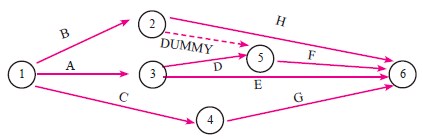
Construct a network diagram for the following situation:
A < D, E; B, D < F; C < G and B < H.
3.
A company produces two types of products say type A and B. Profits on the two types of product are Rs.30/- and Rs.40/- per kg respectively. The data on resources required and availability of resources are given below.
| Requirements | Capacity available per month | ||
| Product A | Product B | ||
| Raw material (kgs) | 60 | 120 | 12000 |
| Machining hours/piece | 8 | 5 | 600 |
| Assembling (man hours) | 3 | 4 | 500 |
Formulate this problem as a linear programming problem to maximize the profit.
4.
A soft drink company has two bottling plants C1 and C2. Each plant produces three different soft drinks S1, S2 and S3. The production of the two plants in number of bottles per day are:
| Product | Plant | |
| C1 | C2 | |
| S1 | 3000 | 1000 |
| S2 | 1000 | 1000 |
| S3 | 2000 | 6000 |
A market survey indicates that during the month of April there will be a demand for 24000 bottles of S1, 16000 bottles of S2 and 48000 bottles of S3. The operating costs, per day, of running plants C1 and C2 are respectively Rs.600 and Rs.400. How many days should the firm run each plant in April so that the production cost is minimized while still meeting the market demand? Formulate the above as a linear programming model.
5.
A company is producing three products P1, P2 and P3, with profit contribution of Rs.20, Rs.25 and Rs.15 per unit respectively. The resource requirements per unit of each of the products and total availability are given below.
| Product | P1 | P2 | P3 | Total availability |
| Man hours/unit | 6 | 3 | 12 | 200 |
| Machine hours/unit | 2 | 5 | 4 | 350 |
| Material/unit | 1kg | 2kg | 1kg | 100kg |
Formulate the above as a linear programming model.
1.
i) variables:
Let x1, x2 be the number of pills of size A and B respectively.
ii) Objective function:
The cost is to be minimized
∴ minimize Z = x1 + x2
iii) Constraints:
The data can be summarised as follows
| Product | A | B | Min Requirement |
| Chemicals | |||
| Aspirin | 2 | 1 | 12 |
| Bicarbonate | 5 | 8 | 74 |
| Codeine | 1 | 6 | 24 |
\(2 x_1+x_2 \geq 12 \ [\because\) Chemical is found by users that it requires at 12 mgs of aspirin]
\(5 x_1+8 x_2 \geq 74 \ [\because\) Chemical is found by users that it requires at 74 mgs of Bicarbonate]
\(x_1+6 x_2 \geq 24 \ [\because\) Chemical is found by users that it requires at 24 mgs of codeine]
(iii) Non-negative restrictions:
Since the number of pills of size A and B are non negative, we have x1 + x2 \(\le \) 0
Thus, we have the following linear programming model.
Minimize \(z=x_1+x_2\)
Subject to constraints
\(\\ 2x_{ 1 }+{ x }_{ 2 }\ge 12\)
\(5x_{ 1 }+8{ x }_{ 2 }\ge 74\)
\(x_{ 1 }+6{ x }_{ 2 }\ge 24\)
\({ x }_{ 1 },{ x }_{ 2\ }\le \ 0\)
2.
Using the precedence relationships and following the rules of network construction, the required network is shown in following figure.
3.
(i) variables:
Let x1 and x2 denote the types of product A and B respectively.
(ii) Objective function:
Profit on x1 of the product A = 30x1
profit on x2 of product B = 40x2
Total profit = 30x1+ 40x2
Since the total profit is to be maximized, we have to maximize z = 30x1 + 40x2
(iii) Constraints:
60x1 + 120x2 ≤ 12,000
8x1 + 5x2 ≤ 600
3x1 + 4x2 ≤ 500
(iv) Non-negative restrictions: Since the number of products A, B cannot be negative, we have x1, x2 ≥ 0
Max Z = 30x1 + 40x2
subject to the constraints
60x1 + 120x2 ≤ 12,000
8x1 + 5x2 ≤ 600
3x1 + 4x2 ≤ 500
x1, x2 ≥ 0
4.
(i) Variables: Let x1 be the number of days required to run plant C1 and x2 be the number of days required to run plant C2
Objective function: Minimize Z = 600 x1 + 400 x2
(ii) Constraints: 3000 x1 + 1000 x2 ≥ 24000 (since there is a demand of 24000 bottles of drink A, production should not be less than 24000)
1000 x1 + 1000 x2 ≥ 16000
2000 x1 + 6000 x2 ≥ 48000
(iii) Non-negative restrictions: Since be the number of days required of a firm are non-negative, we have x1, x2 ≥ 0
Thus we have the following LP model.
Minimize Z = 600 x1 + 400 x2
subject to 3000 x1 + 1000 x2 ≥ 24000
1000 x1 + 1000 x2 ≥ 16000
2000 x1 + 6000 x2 ≥ 48000 and x1, x2 ≥ 0
5.
(i) Variables: Let x1, x2 and x3 be the number of units of products P1, P2 and P3 to be produced.
(ii) Objective function: Profit on x1 units of the product P1 = 20 x1
Profit on x2 units of the product P2 = 25 x2
Profit on x3 units of the product P3 = 15 x3
Total profit = 20 x1 + 25 x2 + 15 x3
Since the total profit is to be maximized, we have to maximize Z = 20 x1 + 25 x2 + 15 x3
Constraints: 6x1 + 3x2 + 12x3 ≤ 200
2x1 + 5x2 + 4x3 ≤ 350
x1 + 2x2 + x3 ≤ 100
Non-negative restrictions: Since the number of units of the products A, B and C cannot be negative, we have x1, x2, x3 ≥ 0
Thus, we have the following linear programming model.
Maximize Z = 20 x1 + 25 x2 + 15 x3
Subject to 6 x1 + 3 x2 + 12 x3 ≤ 200
2x1 + 5x2 + 4x3 ≤ 350
x1 + 2x2 + x3 ≤ 100
x1, x2, x3 ≥ 0

11th Standard Syllabus & Materials
11th Standard
TN 11th Tamil பீடு பெற நில் - செய்யுள் - காவடிச்சிந்து Important Questions And Answers Study Material - QB365 Set A
NEW11th Standard
TN 11th Tamil பீடு பெற நில் - உரைநடை - மலை இடப்பெயர்கள் : ஓர் ஆய்வு Important Questions And Answers Study Material - QB365 Set A
NEW11th Standard
TN 11th Tamil மாமழை போற்றுதும் - துணைப்பாடம் - யானை டாக்டர் Important Questions And Answers Study Material - QB365 Set A
NEW11th Standard
TN 11th Tamil மாமழை போற்றுதும் - செய்யுள் - ஐங்குறுநூறு Important Questions And Answers Study Material - QB365 Set A



Tamilnadu Stateboard 11th Standard Subjects

Maths

Commerce

Economics

Biology
Business Maths and Statistics

Accountancy

Computer Science

Physics

Chemistry
Maths
Biology
Economics
Physics
Chemistry

History
Business Maths and Statistics

Computer Science
Accountancy

Computer Applications
History
Computer Technology
Commerce
Computer Applications
Computer Technology

Tamil

English

French
Tamilnadu Stateboard Standards


