
 100% FREE ACCESS
11th Standard Syllabus & Materials
11th Standard
TN 11th Tamil இயற்கை வேளாண்மை,சுற்றுச்சூழல் -செய்யுள் - மனோன்மணீயம் Important Questions And Answers Study Material - QB365 Set A
NEW11th Standard
TN 11th Tamil என்னுயிர் என்பேன் -துணைப்பாடம் - இசைத்தமிழர் இருவர் Important Questions And Answers Study Material - QB365 Set A
NEW11th Standard
TN 11th Tamil மொழி கலை -செய்யுள் - ஒவ்வொரு புல்லையும் Important Questions And Answers Study Material - QB365 Set A
NEW11th Standard
TN 11th Tamil பீடு பெற நில் - இலக்கணம் - பகுபத உறுப்புகள் Important Questions And Answers Study Material - QB365 Set A
NEW11th Standard
TN 11th Tamil பீடு பெற நில் - துணைப்பாடம் - வாடிவாசல் Important Questions And Answers Study Material - QB365 Set A
NEW11th Standard
TN 11th Tamil பீடு பெற நில் - செய்யுள் - குறுந்தொகை Important Questions And Answers Study Material - QB365 Set A

Published on: 19/02/2019
11th Public Model Exam 2019
Download Tamil Nadu 11th Standard Commerce question papers, model tests, one-mark questions, important questions, and public exam papers in PDF format. Free study materials and answer keys for TN State Board students.
Questions + Answers key
Take MCQ Commerce Test1.
What are the departments of Reserve Bank of India?
2.
What are the steps to issuing ADRs?
3.
List a note on surface transport.
4.
What is meant by Industry?
5.
Explain the meaning of Entrepot trade.
6.
What do you mean by international business?
7.
What is the composition of Private Capital?
8.
Give the meaning of Social power.
9.
Write any two advantages of MNC's.
10.
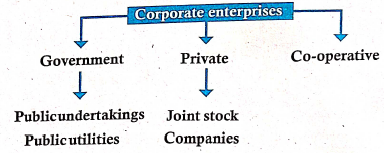
What are the Corporate enterprises?
11.
Law of contract is ................
neither the whole law of agreements nor is it the whole law of obligations
the whole law of agreements
the whole law of obligations
none of these
12.
Debenture holders of a company are its_____________.
creditors
members
credit customers
borrowers
13.
In_________ insurance, the assured should have insurable interest at the time of loss.
Fire
Life
Marine
Voyage
14.
When money is deposited for a fixed period, the depositor can borrow money against the security of____________
Saving Bank deposit Receipt
FDR
Recug-ing deposit Receipt
Overdraft
15.
______bench making is a direct competitor-to-competitor comparison of a product, service process or method.
Internal
Competitive
functional
generic
16.
How many heads of income are there to compute Gross total income?
Six
Five
Four
Three
17.
Expand RCMC ____.
Registration cum Membership Council
Registration cum Manufacturing council
Registration cum Membership Certificate
Registration commodity manufacturing council
18.
MSME supplies to large scale industries_______.
Accessories
Spare Parts
Components
All the above
19.
Centralised purchasing and Decentralised selling is the feature of_________
Departmental Stores
Multiple Shops
Mail order Business
None
20.
Commerce is mainly concerned with ______.
Connecting producer and consumer
Pricing of Goods
Buying and Selling of Goods
Manufacturing of goods
21.
Airport Authority of India is a public enterprise. Identify the form of organisation _______.
Statutory Corporations
Departmental Undertakings
Multi-National Corporations
State Owned Company
22.
A person is said to be a third person if he is not a ____________
Promisor
Promise
Agent
Legal representative
23.
The firm of Hindu Undivided Family is managed by whom?
Owner
Karta
Manager
Partner
24.
It may be wise to finance fixed assets through______
Creditors
Long term debts
Bank overdraft
Bills discounting
25.
26.
Wholesalers deal in ______ quantity of goods.
Small
Large
Medium
Limited
27.
28.
The model that identifies alternatives, criteria for decision making and analyse alternatives to arrive at the best choice is ______.
Routing Model
Scheduling Model
Inventory Model
Alternative analysis
29.
The Reserve Bank of India commenced its operations from April 1,
1936
1935
1934
1933
30.
Who wrote "Arthashastra"?
Kautilya
Kambar
Thiruvalluvar
Ilango Adigal
31.
Under what circumstances a partnership may be dissolved as per section 42 of Partnership Act?
Dissolution on the happening of certain contingencies (Sec. 42):
32.
Write a short note on Bilateral Contract:
33.
Illustrate with example the working of a MNC.
34.
35.
Explain the various types of Marine Policies.
36.
Briefly Explain the Diversified banking services of Commercial banks.
37.
A, a singer, enters into a contract, with B, the manager of the Theatre. To sing at his Theatre for two nights, every week during the next two months. B agrees to pay her Rs 1000 for each night. On the sixth night, A willfully absent herself from the Theatre Advise B.
38.
What do you mean by Total Income?
39.
What are the main function of EXIM Bank?
40.
What are the services rendered by a wholesaler to the manufacturers?
41.
What are the reasons the court does not grant specific performance?
42.
Explain Corporate Social Responsibility in India with an example:
43.
What are the disadvantages of franchising?
44.
Explain the types of Mobil traders.
45.
Explain the classification of Ocean Going Ships.
46.
Explain the credit control methods.
47.
Give an account of India's Important Export and Import items.
48.
Explain the various kinds of industries on the basis of size.
49.
Write down the functions of WTO.
50.
51.
Write any three differences between Dissolution of Partnership and Dissolution of Firm.
52.
Explain the classification of contracts on the basis of performance.
53.
What are the advantages of Cooperative Society? (any 5)
54.
1.
(a) Banking Department: The bank has seven offices of Banking Department
(i) Public Accounts Department
(ii) the Public Debit Office
(iii) Deposit Accounts Department
(iv) Securities Department.
(b) Issue Department:
(i) General Department,
(ii) Cash Department.
(c) Central Policy Department:
(i) Credit Planning Cell
(ii) Personal PolicyDepartment.
(iii) Administration Department.
2.
(i) First of all, a company hands over the shares to a Domestic Custodian Bank (DCB).
(ii) Then DCB requests the American Depository Bank (ADB) to issue the shares in the form of ADRs.
3.
The Surface or Land transport consists of :
(i) Pack Animals
(ii) Bullock Cart
(iii) Road Transport
(iv) Motor Lorries, Buses
(v) Tramways
(vi) Railway Transport
4.
Industry includes all those business activities which are connected with raising, producing or processing of consumer goods. Example-bread, butter, cheese, shoes, or capital goods like machinery.
5.
Entrepot trade means importing of goods from one country and exporting the same to foreign countries. It is also known as 'Re-export trade'.
6.
International business denotes all those business activities which take place beyond the geographical limits of the country.
7.
Private Capital consists of Foreign Investments, long-term loans, and Foreign Currency Deposits.
8.
1. Business have considerable social power.
2. Their decisions and actions affect the lives and fortunes of the society.
3. They collectively determine for the nation such important matters as level of employment, rate of economic progress and distribution of income among various groups.
9.
Improvement in Balance of Payment Position:
i. MNCs help the host countries to increase their exports.
ii. As such, they help the host country to improve upon its Balance of Payment position
Improvement in Standard of Living:
By providing super quality products and services, MNCs help to improve the standard of living of people of host countries.
10.
11.
(a)
neither the whole law of agreements nor is it the whole law of obligations
12.
(a)
creditors
13.
(c)
Marine
14.
(b)
FDR
15.
(b)
Competitive
16.
(b)
Five
17.
(c)
Registration cum Membership Certificate
18.
(d)
All the above
19.
(b)
Multiple Shops
20.
(a)
Connecting producer and consumer
21.
(b)
Departmental Undertakings
22.
(c)
Agent
23.
(b)
Karta
24.
(b)
Long term debts
25.
(c)
26.
(b)
Large
27.
(a)
28.
(b)
Scheduling Model
29.
(b)
1935
30.
(a)
Kautilya
31.
A partnership may be dissolved on the happening of the following contingencies:
(i) Death of a partner.
(ii) Expiry of the time, if it is for a fixed period.
(iii) Completion of the venture for which firm was formed.
(iv) Adjudication of a partner as an insolvent.
32.
(1) A contract in which both the parties commit to perform their respective promises is called a bilateral contract.
(2) For Example: 'R' offers to sell his fiat car to'S' for Rs 10,00,000 on acceptance of 'R's offers by 'S', there is a promise by 'R' to sell the car and there is a promise by'S' to purchase the car, there are two promises.
33.
1. Any company is referred to as a multinational company or corporation (MNC) when that company manages its operation or production or service delivery from more than a single country.
2. It has its headquarters based in one country with several other operating branches in different other countries.
3. The country where the headquarters is located is called the home country whereas; the other countries with operational branches are called the host countries.
4. Example: IBM
34.
35.
There are three different marine insurance policies.
They are:
(i) Hull or Ship Insurance:
When a ship is insured against any type of danger, it is known as hull insurance. This policy is undertaken to indemnify the insured for losses caused by damage to ship.
(ii) Cargo Insurance:
(1) When a marine insurance policy is taken by the cargo owner to be compensated for loss caused to his cargo during the journey, it is known as cargo insurance.
(2) The cargo to be transported by ship is subject to many risks, like risk of theft, loss of goods in voyage, etc.
(iii) Freight Insurance :
(1) When a marine insurance policy is taken to guard against non-recovery of freight, it is known as freight insurance.
(2) The shipping company is mainly interested in freight, which it gets either in advance or on the arrival of goods.
(3) However, it will not get the freight, if goods are lost during transit. So, to insure the freight, it takes freight insurance.
36.
Diversified banking functions:
Competition in the banking industry has reduced their profits. Therefore the commercial banks started identifying and offering new and diversified financial services. They are purely other than banking services. Providing all such banking and other financial services is also called universal banking.
37.
In the aforesaid circumstances, A shall be entitled in two-way remedy.
(i) Right of rescission,
(ii) Right to claim damages.
(1) Since, as per facts, A willfully abstained herself. B shall be within his right to rescind the contract.
(2) In such circumstances, section 75 of the Indian Contract Act, 1872, provides that a person who rightfully rescind a contract' is entitled to a compensation for any damage which he has sustained for non-fulfilment of the contract.
(3) B, shall, therefore, be entitled, not only to do away with the services of A but also to claim compensation for the damages which he has sustained through the non-fulfilment of the contract.
38.
Out of Gross Total Income, Income tax Act, 1961 allows certain deductions under section 80. After allowing these deductions the figure which we arrive at is called 'Total Income' and on this figure tax liability is computed at the prescribed rates.
39.
Main functions of EXIM Bank are as follows:
(i) It provides direct financial assistance to exporters of plant, machinery and related services.
(ii) It underwrites the shares, debentures, and bonds of the companies engaged in exports.
(iii) It provides re-discount facility in respect of export bills for a period not exceeding 90 days against short-term export bill discounted by commercial bank.
(iv) It gives overseas buyer credit to foreign exporters for the import of Indian Capital Goods which are used for manufacturing export products.
(v) It finances export-oriented industries.
(vi) It collects and provides market and credit information about foreign trade to those engaged in international business.
40.
A wholesaler provides valuable services to manufacturers, producers, retailers and customers.
1. Economies in Large Scale.
2. Assistance in Distribution.
3. Warehousing Facility.
4. Forecasting of Demand
5. Publicity of Goods
6. Financial Assistance.
7. Risk-bearer
8. Link
41.
The court does not grant specific performance in the following cases:
(i) Damages are an adequate remedy.
(ii) The contract is not certain.
(iii) The contract is inequitable to either party.
(iv) The contract is of revocable nature.
(v) The contract is made by the trustee in breach of trust.
(vi) The contract is of personal nature i.e., contract to marry.
(vii) The contract made by a company ultra-vires of its Memorandum of Association.
(viii) The court carmot supervise its carrying out.
42.
Tata Group is the best example for the corporate social responsibility in India. The Tata Group conglomerate in India carries out various CSR projects, most of which are community improvement and poverty alleviation programs. Through self-help groups, it is engaged in women empowerment activities, income generation, rural community development, and other social welfare programs. In the field of education, the Tata Group provides scholarships and endowments for numerous institutions.
43.
Franchising fees:
The initial franchising fee and the subsequent renewal fees can be very high in case of successful businesses. From the franchisee's point of view, this may be a deterrent.
Fixed royalty payment:
The franchisee has to make payment of royalty to the franchiser on a regular basis. This considerably reduces the income of the franchisee.
Danger of image tarnishing:
If the franchisee does not maintain standards of quality and service; there is a danger that the goodwill and image of the reputed franchiser will be adversely affected.
Lack of freedom:
The franchisee does not have the freedom to run his business in an independent manner. He has to abide by management and operational policies of the franchiser, This may serve as a deterrent whether suitable to him or not.
Limitation on range of products:
The franchisee cannot introduce new product lines into the business, except those permitted by franchiser. This may mean loss of business to franchisee amidst demands based on local conditions.
44.
The types of ltinerants are as follows:
a. Peddlers and Hawkers:
Peddlers are individuals who sell their goods by carrying on their head or shoulders moving from place to place on foot. Hawkers are petty retailers who sell their goods at various places such as. bus stop, railway station, Public Park and gardens, residential areas and other public places using a convenient vehicle to carry goods from place to place
b. Street Vendors:
The traders sit on the footpath of the road or at the end of the road (pavement) and sell their goods such as fruits, vegetables, books, etc. are called Street vendors.
c. Market Traders:
Small traders open their shops at different places on fixed days or dates such as every Sunday or alternative Wednesdays and so on (Varasandhai - weekly market). They deal in one particular line of merchandise and in low priced consumer items of daily use. Examples Pollachi, Manapparai, Ranipet, etc.
d. Cheap Jacks:
Those retailers who have independent shops of temporary nature in a business locality are depending upon the potentiality of the area. They deal in consumer goods and services such as shoes and chappals, plastic items, repair of watches, etc.
45.
Ocean going ships may also be divided into two, namely Liners and Tramps:
Liner:
An ocean liner is a passenger ship primarily used as a form of transportation across seas or oceans. Liners may also carry cargo or mail, and may sometimes be used for other purposes (e.g., for pleasure cruises or as hospitals ship). They sail to schedule, whether they have a full load or not. They follow defined routes with fixed places and times of call. Regularity of service, god sped and luxurious facilities to passengers v are the specialties of liners. There are two types of liners, namely, Passenger Liners and Cargo Liners.
Tramps:
Tramps are essentially cargo vessels. See the picture above. They have no set, routes. They do not follow any timetable. They sail only when they get sufficient load. They sail at any time and carry cargoes for almost any ports.
46.
a) Quantitative Methods of Credit Control
The methods which influence the total volume of credit in Indian economy are called quantitative or general methods.An increase in the first three measures will reduce the volume of money in circulation in India and vice versa.
i.Bank Rate Policy:
Bank rate refers to the rate at which the RBI re-discounts the bills given by the Scheduled banks.
ii. Cash Reserve Ratio (CRR):
It is the ratio of Cash reserves with the RBI kept by Scheduled banks in proportion to the total Time and Demand Liabilities with them.
iii.Statutory Liquidity Ratio (SLR):
It is the ratio of money and money equivalents kept within the bank in proportion to the total Time and Demand Liabilities with them.
iv.Open Market Operations:
The RBI directly buys or sells the securities and bills in the money market either to decrease or to increase the total volume of money.
b) Qualitative Credit Control Measures:
These methods influence the volume of money in selected or particular sectors of the economy.
i.Rationing of credit:
Maximum limit is fixed for lending to certain sectors or specific purposes. in order to include more people to avail banking services.It has also taken up the task of extending the banking system territorially and functionally to the unbanked areas.
ii. Moral Suasion:
The RBI puts pressure on the banks towards liberal or restricted lending during certain periods.
47.
India's important Import items.
i) Minerals, fuels including oil.,
ii) Gems, precious metals.
ii) Electrical machinery and equipments.
iv) Machinery including computers.
v) Organic chemicals.
India's important Export items
i) Petroleum products.
ii) Jewellery.
iii) Automobile.
iv) Bio-chemicals.
v) Pharmaceuticals.
48.
On the basis of size or scale of operations industries may be classified as follows:
1. Micro Industries
2. Small Industries
3. Medium Industries and
4. Large Industries
Under the Micro, Small and Medium Enterprises (MSME) Development Act, 2006, the above types of industries are defined as follows.
1. Micro Units:
A unit wherein investment in plant and machinery is up to Rs. 25 lakhs in case of manufacturing and up to Rs. 10 lakhs in case of service enterprises.
2. Small Units:
A manufacturing unit wherein investment in plant and machinery is more than Rs. 25 lakhs but does not exceed Rs. 5 crore. In case of service enterprises these limits are Rs. 10 lakhs and Rs. 2 crore respectively.
3. Medium Units:
A manufacturing unit wherein investment in plant and machinery is more than Rs. 5 crore but does not exceed Rs. 10 crore. In case of service enterprises, these limits are Rs. 2 crore and Rs. 5 crore respectively.
4. Large Industries:
A manufacturing unit wherein investment in plant and machinery exceeds Rs. 10 crore. In case of a service unit investment in equipment exceeds Rs. 5 crore.
49.
Functions/Role of WTO:
WTO performs the following functions:
(i) It is a forum for negotiation and formalisation of trade agreement among the member countries.
(ii) It settles disputes and grievances relating to trade among the member countries.
(iii) It frames commonly accepted code of conduct in order to reduce trade barriers.
(iv) It holds consultation with IMF and World Bank (IBRD) and its affiliates to bring about a greater understanding and co-operation in global economic policymaking.
(v) It supervises the operation of agreement relating to General Agreement on Tariffs and Trade (GATT) and Trade-related intellectual properties Rights (TRIPS).
(vi) It regulates trade between participating countries.
50.
51.
| Dissolution of Partnership | Dissolution of Firm |
| A partnership is dissolved by retirement or admission or insolvency (ie) the change of original partnership |
All the Partners terminate their connections with the firm. |
| It means the termination of original partnership agreement |
It means partnership comes to end. |
| The business will continue even if the partnership is dissolved. | The business cannot be continued in the dissolution of firm. |
52.
(i) Executed contract:
(1) A contract in which both the parties have fulfilled their obligations under the contract.
(2) For Example: 'X' contracts to buy a car from 'Y' by paying cash and 'Y' instantly delivers his car.
(ii) Executory contract:
(1) A contract in which both the parties are yet to fulfil their obligations, it is said to be an executory contract.
(2) For Example: A agrees to buy 'B's cycle by promising to pay cash on 15th June. 'B' agrees to deliver the cycle on 20th June.
(iii) Unilateral contract:
(1) Unilateral contract is a one-sided contract in which only one party has to perform his promise or obligation.
(2) For Example: 'X' promises to pay 'Y' a sum of Rs 10,000 for the goods to be delivered by 'Y'. 'X' paid the money and 'Y' is yet to deliver the goods.
(iv) Bilateral contract:
(1) A contract in which both the parties commit to perform their respective promises is called a bilateral contract.
(2) For Example: 'R' offers to sell his flat car to 'S' for Rs 10,00,000 on acceptance of 'R's offers by 'S', there is a promise by 'R' to sell the car and there is a promise by 'S' to purchase the car, there are two promises.
53.
Advantages :
The following are some of the important advantages of co-operative societies.
a) Voluntary organization :
1. The membership of a co-operative society is open to all. Any person With common interest can become a member.
2. The membership fee is kept low so that everyone would be able to join and benefit from cooperative societies.
3. At the same time, any member who wants to leave the society is free to do so. There are no entry or exit barriers.
b) Easy formation:
1. Cooperatives can be formed much easily when compared to a company.
2. Any 25 members who have attained majority can join together for forming a cooperative society by observing simple legal formalities.
c) Democracy:
1. A co-operative society is run on the principle of "one man one vote'.
2. It implies that all members have equal rights in managing the affairs of the enterprise.
3. Members with money power cannot dominate the management by buying majority shares.
d) Equal distribution of surplus:
1. The surplus generated by the cooperative societies is distributed in an equitable manner among members.
2. Therefore all the members of the cooperative society are benefited.
3. Further the society is also benefited because a sum not exceeding 10 per cent of the surplus can be utilized for promoting the welfare of the locality in which the cooperative is located.
e) Limited liability:
1. The liability of the members in a cooperative society is limited to the extent of their capital contribution.
2. They cannot be personally held liable for the debts of the society.
f) Separate Legal entity:
1. A cooperative society enjoys separate legal entity which is distinct from its members.
2. Therefore its continuance is in no way affected by the death, insanity or insolvency of its members. It enjoys perpetual existence.
54.

11th Standard Syllabus & Materials
11th Standard
TN 11th Tamil பீடு பெற நில் - செய்யுள் - காவடிச்சிந்து Important Questions And Answers Study Material - QB365 Set A
NEW11th Standard
TN 11th Tamil பீடு பெற நில் - உரைநடை - மலை இடப்பெயர்கள் : ஓர் ஆய்வு Important Questions And Answers Study Material - QB365 Set A
NEW11th Standard
TN 11th Tamil மாமழை போற்றுதும் - துணைப்பாடம் - யானை டாக்டர் Important Questions And Answers Study Material - QB365 Set A
NEW11th Standard
TN 11th Tamil மாமழை போற்றுதும் - செய்யுள் - ஐங்குறுநூறு Important Questions And Answers Study Material - QB365 Set A



Tamilnadu Stateboard 11th Standard Subjects

Maths
Commerce

Economics

Biology

Business Maths and Statistics

Accountancy

Computer Science

Physics

Chemistry
Maths
Biology
Economics
Physics
Chemistry

History
Business Maths and Statistics

Computer Science
Accountancy

Computer Applications
History
Computer Technology
Commerce
Computer Applications
Computer Technology

Tamil

English

French
Tamilnadu Stateboard Standards

