
 100% FREE ACCESS
12th Standard Syllabus & Materials
12th Standard
TN 12th Computer Applications மின்னணு தரவு பரிமாற்றம் Sample Question Papers Study Material - QB365 Set A
NEW12th Standard
TN 12th Computer Applications மின் - வணிக பாதுகாப்பு அமைப்புகள் Sample Question Papers Study Material - QB365 Set A
NEW12th Standard
TN 12th Computer Applications மின்னணு செலுத்தல் முறைகள் Sample Question Papers Study Material - QB365 Set A
NEW12th Standard
TN 12th Computer Applications மின் - வணிகம் Sample Question Papers Study Material - QB365 Set A
NEW12th Standard
TN 12th Computer Applications திறந்த மூல கருத்துருக்கள் Sample Question Papers Study Material - QB365 Set A
NEW12th Standard
TN 12th Computer Applications வலையமைப்பு வடமிடல் Sample Question Papers Study Material - QB365 Set A

Published on: 31/10/2019
Botany - Chromosomal Basis of Inheritance
Download Tamil Nadu 12th Standard Biology question papers, model tests, one-mark questions, important questions, and public exam papers in PDF format. Free study materials and answer keys for TN State Board students.
Questions + Answers key
Take MCQ Biology Test1.
Incomplete linkage was reported by Hutchinson in ___________
Drosophila
Maize
Neurospora
Lathyrus odoratus
2.
Which is not a feature of the chromosomal theory of inheritance?
Somatic cells of organisms are derived from zygote by repeated meiosis.
Chromosomes retain their structural uniqueness throughout the life of an organism.
Mendelian factors are located in chromosomes
Sutton and Boveri independently proposed the theory.
3.
Changing the codon AGC to AGA represents _______.
missense mutation
nonsense mutation
frameshift mutation
deletion mutation
4.
Genes G S L H are located on same chromosome. The recombination percentage is between L and G is 15%, S and L is 50%, H and S are 20%. The correct order of genes is _____.
GHSL
SHGL
SGHL
HSLG
5.
Due to incomplete linkage in maize, the ratio of parental and recombinants are ______.
50:50
7:1:1:7
96.4: 3.6
1:7:7:1
6.
7.
What is gene mapping? Write its uses
8.
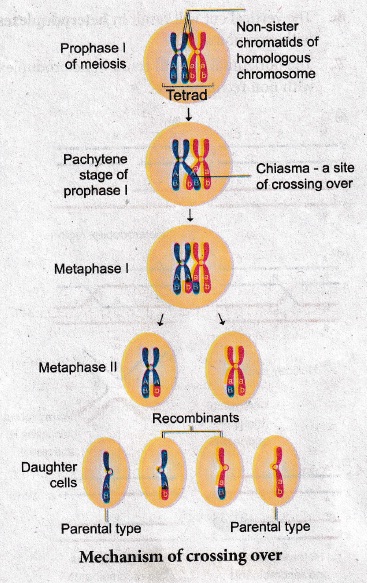
Explain the mechanism of crossing over.
9.
If you cross dominant genotype PV/PV male Drosophila with double recessive female and obtain F1 hybrid. Now you cross F1 male with double recessive female.
i) What type of linkage is seen?
ii) Draw the cross with correct genotype.
iii) What is the possible genotype in F2 generation?
10.
When two different genes came from same parent they tend to remain together.
i) What is the name of this phenomenon?
ii) Draw the cross with suitable example.
iii) Write the observed phenotypic ratio.
11.
What are deficiency loops?
12.
Point out any four physical mutagens
13.
Define terminalization.
14.
What is meant by synaptonemal complex?
15.
Mention the major stages involved in crossing over.
16.
Define linkage. Mention its types.
17.
18.
Classify cross over.
19.
What are the three types of synapsis? (or) Give the types of Synapsis.
20.
21.
Tetrasomy
22.
Nullisomy
23.
Monosomy
24.
Hugo de Vries
25.
T. H. Morgan
1.
(b)
Maize
2.
(a)
Somatic cells of organisms are derived from zygote by repeated meiosis.
3.
(a)
missense mutation
4.
(b)
SHGL
5.
(b)
7:1:1:7
6.
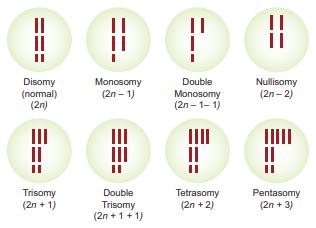
7.
The diagrammatic representation of position of genes and related distances between the adjacent genes is called gene mapping.
Uses
(i) Used to determine gene order.
(i) Identify the locus of a gene.
(i) Calculate the distance between genes.
(i) Useful in predicting results of dihybrid and trihybrid crosses.
(i) Allows the geneticists to understand the overall genetic complexity of particular organism.
8.
Crossing over is a process that includes four stages.
1. Synapsis
(i) Pairing between two homologous chromosomes is initiated during sub stage zygotene stage of prophase I of meiosis I
(ii) Homologous chromosomes are aligned side by side resulting in the formation of bivalents. It also occurs in zygotene sub-stage of prophase I of meiosis I tetrads.This pairing phenomenon is called synapsis.
2.Tetrad Formation
(i) Each homologous chromosome of a bivalent begin to form two identical sister chromatids.
(ii) They remain held together by a centromere at this stage each bivalent has four chromatids. This stage is called tetrad stage.
3. Cross Over
After tetrad formation, crossing over occurs in pachytene stage.
The non-sister chromatids of homologous pair make a contact at one or more points. These points of contact are called Chiasmata.
At chiasma, X-shaped structures are formed, where breaking and rejoining of two chromatids occur. This results in reciprocal exchange of equal and corresponding segments between them synapsis and chiasma formation are facilitated by protein filaments called synaptonemal complex.
4. Terminalisation
After crossing over, chiasma starts to move towards the terminal end of chromatids known as terminalisation. As a result, complete separation of homologous chromosomes occurs.
9.
(i) Incomplete linkage
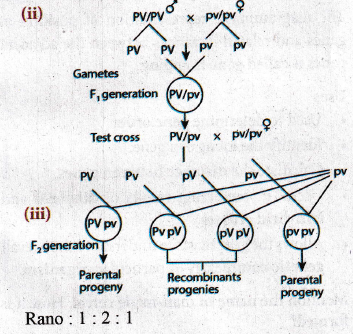
Rano : 1:2:1
10.
(i) Complete Linkage
(ii)
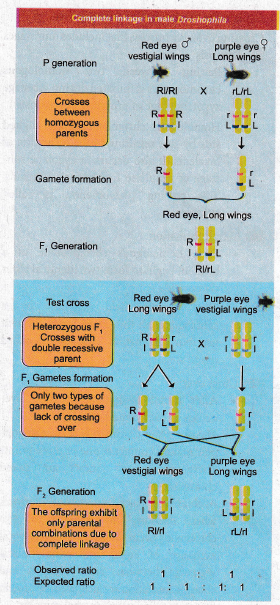
(iii) Observed ratio 1:1
11.
Deletions are observable during meiotic pachytene stage and polytene chromosome. The unpaired loop formed in the normal chromosomal part at the time of chromosomal pairing. Such loops are called as deficiency loops and it can be seen in meiotic prophase.
12.
Temperature, X-rays, Gamma rays and UV rays.
13.
After crossing over, chiasma starts to move towards the terminal end of chromatids. This is known as terminalization. As a result, complete separation of homologous chromosomes occurs.
14.
Synaptonemal complex is a highly organised structure or filaments that facilitates the synapsis and chiasma formation during crossing over mechanism.
15.
Crossing over is a precise process that includes stages like synapsis, tetrad formation, cross over and terminalization.
16.
Tendency of genes to remain together during separation of chromosomes is called linkage. Linkage are of 2 types - complete linkage and incomplete linkage.
17.
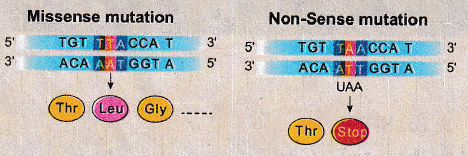
18.
1. Single cross over: Formation of single chiasma and involves only two chromatids out of four.
2. Double cross over: Formation of two chiasmata and involves two or three or all four strands.
3. Multiple cross over: Formation of more than two chiasmata and crossing over frequency is extremely low.
19.
Pairing of homologous chromosomes during zygotene stage of prophase I of meiosis I is called synapsis. Synapsis of three types:
1. Procentric synapsis: Pairing starts from middle of the chromosome.
2. Proterminal synapsis: Pairing starts from the telomeres.
3. Random synapsis: Pairing may start from anywhere.
20.
21.
2n + 2
22.
2n - 2
23.
2n - 1
24.
Mutation theory
25.
Sex linkage in Drosophila

12th Standard Syllabus & Materials
12th Standard
TN 12th Computer Applications களப்பெயர் முறைமை (DNS) Sample Question Papers Study Material - QB365 Set A
NEW12th Standard
TN 12th Computer Applications வலையமைப்பு எடுத்துக்காட்டுகள் மற்றும் நெறிமுறைகள் Sample Question Papers Study Material - QB365 Set A
NEW12th Standard
TN 12th Computer Applications கணினி வலையமைப்பு ஓர் அறிமுகம் Sample Question Papers Study Material - QB365 Set A
NEW12th Standard
TN 12th Computer Applications PHP-உடன் MySQL-ஐ இணைத்தல் Sample Question Papers Study Material - QB365 Set A



Tamilnadu Stateboard 12th Standard Subjects

Maths

Chemistry

Physics
Biology

Computer Science

Business Maths and Statistics

Economics

Commerce

Accountancy

History

Computer Applications
Biology
Computer Technology
Computer Applications
Computer Science
Business Maths and Statistics
Commerce
Economics
Maths
Chemistry
Physics
Computer Technology
History
Accountancy

Tamil

English

French
Tamilnadu Stateboard Standards

