
 100% FREE ACCESS
12th Standard Syllabus & Materials
12th Standard
TN 12th Computer Applications மின்னணு தரவு பரிமாற்றம் Sample Question Papers Study Material - QB365 Set A
NEW12th Standard
TN 12th Computer Applications மின் - வணிக பாதுகாப்பு அமைப்புகள் Sample Question Papers Study Material - QB365 Set A
NEW12th Standard
TN 12th Computer Applications மின்னணு செலுத்தல் முறைகள் Sample Question Papers Study Material - QB365 Set A
NEW12th Standard
TN 12th Computer Applications மின் - வணிகம் Sample Question Papers Study Material - QB365 Set A
NEW12th Standard
TN 12th Computer Applications திறந்த மூல கருத்துருக்கள் Sample Question Papers Study Material - QB365 Set A
NEW12th Standard
TN 12th Computer Applications வலையமைப்பு வடமிடல் Sample Question Papers Study Material - QB365 Set A

Published on: 31/08/2020
12th Biology English Medium Model 2 Mark Book Back Questions (New Syllabus) 2020
Download Tamil Nadu 12th Standard Biology question papers, model tests, one-mark questions, important questions, and public exam papers in PDF format. Free study materials and answer keys for TN State Board students.
Questions + Answers key
Take MCQ Biology Test1.
Name and explain the type of barriers which involve macrophages.
2.
Name the humors that are responsible for the health of human beings.
3.
How are microbial inoculants used to increase the soil fertility?
4.
5.
What is Phytoremediation ?
6.
Define ecological niche.
7.
Discuss the causes and effects of global warming. What measures need to be taken to control global warming?
8.
9.
Mention any two ways in which single nucleotide polymorphism (SNPs) identified in human genome can bring revolutionary change in biological and medical science.
10.
11.
12.
13.
Give the names of the scientists who rediscovered Mendelism
14.
What is layering?
15.
Discuss the gross primary productivity is more efficient than net primary productivity.
16.
17.
18.
Correct the following statements
a) Transfer of an ovum collected from donor into the fallopian tube is called ZIFT.
b) Transfering of an embryo with more than 8 blastomeres into uterus is called GIFT.
c) Multiload 375 is a hormone releasing IUD.
19.
You are working in a biotechnology lab with a bacterium namely E.coli. How will you cut the nucleotide sequence? explain it.
20.
Which type of reproduction is effective -Asexual or sexual and why?
21.
Explain how “Rosie” is different from a normal cow
22.
Explain how mutations, natural selection and genetic drift affect Hardy Weinberg equilibrium.
23.
Given below are some human organs. Identify one primary and one secondary lymphoid organ. Explain its role. Liver, thymus, stomach, thyroid, tonsils.
1.
The type of barrier that involves macrophages are the
(i) Phagocytic barriers which is a type of innate immunity.
(ii) In this mechanism, specialised cells such as monocytes, Neutrophils and tissue macro phages pha cytose and digest whole microorganisms.
2.
Vatam, Pittam and Kapam.
3.
Micro organisms are efficient in fixing nitrogen, solubilizing phosphate and decomposing cellulose. They improve soil fertility, plant growth. They are ecofriendly and cost-effective than chemical fertilizers. Example. Azospirillum.
4.
5.
Certain plants can also be used to remove cadmium from contaminated soil, this is known as phytoremediation.
Example: Eichhornia
6.
Ecological niche is a term for the position of a species within an ecosystem, describing both the range of conditions necessary for persistence of species, and is ecological role in the ecosystem.
7.
Green House Effect and Global warming:
Natural environment and climate are dynamic and keep changing over course of time. Reasons for climate change
a) Human population growth
b) Industrialization
c) Associated anthropological activities the changes.
Impact on Global Warming:
(i) Large-scale changes of global environment can lead to hazards, which may include climate change, stratospheric ozone depletion, changes in ecosystems due to loss of biodiversity, changes in hydrological systems and the supplies of freshwater, land degradation, urbanization, and stress on food-producing systems.
(ii) Greenhouse gases (GHG) water vapour, carbon dioxide, methane, nitrous oxide, ozone and some artificial chemicals such as chlorofluorocarbons (CFCs) causes greenhouse effect. The absorbed energy warms the atmosphere and the surface of the Earth
(iii) Global warming will have a significant impact on people and nature. As global average temperatures rise, precipitation patterns could be affected. Extreme wet and dry conditions can be expected (flooding and desertification). Coastal areas shall become more vulnerable to storm surges as sea level rises. Plant and animal species will migrate or disappear in response to climate change.
(iv) Global warming can directly affect the flora and fauna. This could also result in shortage of food and even lead to a food crisis and affect the health of the people and organisms.
Control Measures:
The UNO has several measures to control or reduce pollution. Through various conventions organized by UNO, the countries assured to take steps to control or reduce emissions by factories and automobiles.
8.
9.
There are 1.4 million locations where single base DNA differences (Called SNPs - Single Nucleotide Polymorphism - pronounce as snips) occurs in human's genome.
(i) By tracing human history
(ii) By finding chromosomal locations for disease associated sequences
10.
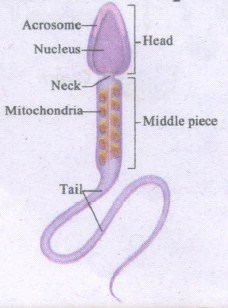
11.
12.
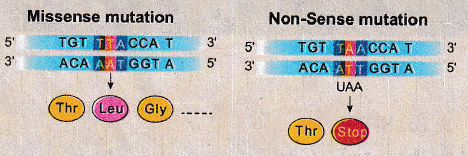
13.
(i) Hugo de Vries of Holland
(ii) Carl Correns of Germany
(iii) Erich von Tschermak of Austria
14.
The stem of a parent plant is allowed to develop roots. After formation of roots, the rooted part is cut and separated and planted to grow into a new plant (eg) Ixora and Jasminum.
15.
Gross Primary Productivity (GPP) is the total amount of food energy or biomass produced in an ecosystem by autotrophs through the process of photosynthesis whereas Net Primary Productivity (NPP) is the proportion of energy which remains after respiration loss in the plant. When we compare GPP with NPP more energy is present in former than in latter.
16.
17.
18.
(a) Transfer of an ovum collected from donor into the fallopian tube is called GIFT (Gamete Intra-fallopian transfer)
(b) Transferring of an embryo with more than 8 blastomeres into uterus is called IUT (Intra uterine transfer)
(c) Multi load 375 is a copper releasing IUD
19.
(i) ECORI is from Escherichia ( E ) coli (co), strain RY 13 (R) & first endonuclease (I) to be discovered.
(ii) It contains 2 different antibiotics resistance genes & recognition site for several restriction enzymes.
(iii) This sequence is referred to as a restriction site & is generally -palindromic which means that the sequence in both DNA strands at this site read same in 5' - 3' direction & in-the 3'-5' direction.
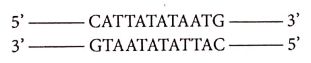
(iv) The exact kind of cleavage produced by a restriction enzyme is important in the design of a gene cloning experiment.
(v) Some cleave both strands of DNA through the centre resulting in blunt or flush end.
(vi) These are known as symmetric cuts.
(vii) Some enzymes cut in a way producing protruding & recessed ends known as sticky or cohesive end.
(viii) These are known as staggered or asymmetric cuts.
20.
1. Sexual reproduction is considered to be a better mode of reproduction because it creates a hybrid that has more vigor than the parents.
2. It also creates the variation in off springs making its survival better.
3. The fact that most of the eukaryotes reproduce sexually in evidence of its evolutionary success.
4. In many animals, it is actually the only mode of reproduction.
21.
1. In 1997, Rosie, the first transgenic cow produced human protein enriched milk, which contained the human alpha lactalbumin.
2. Alpha lactalbumin is a protein composed of 123 amino acidic and 4 disulphide bridges, with a molecular weight of 14178 Da.
3. In human milk, & lactalbumin is the most abundant protein comprising 25% of total protein found in human milk.
4. It is synthesized by the mammary glands & lactalbumin binds calcium and zinc ions and possesses bactericidal antitumor activities.
22.
1. There are five basic processes that affect the Hardy-Weinberg equilibrium and cause variations at genetic level.
2. These include (i) Mutation (ii) recombination (iii) Gene migration (iv) Genetic drift and (v) natural selection.
3. Among the above five processes, lets discuss how mutation, natural selection and genetic drift affect Hardy Weinberg equilibrium.
(a) Mutation:
1. Mutation are sudden heritable changes in the characteristics of the organisms.
2. These mutations are random (indiscriminate) with respect to the adoptive needs of organisms.
3. Most mutations are harmful or with no effects (neutral) on their bearers.
4. However under changed environmental conditions, the alleles, which were previously harmful or neutral may become advantageous.
5. The rate of mutation is very slow usually one mutation occurs in a million still these mutation rates are sufficient to create considerable genetic variation.
6. Mutations help in maintaining variations within population.
7. Mutation also introduce new genes and alleles into the gene pool (sum total of all genotypes or alleles found in a population).
8. It is the gene pool in which new genes are added or removed. This variability of genes (or) alleles in a gene pool, then serve as a raw material for evolutionary changes.
9. The accumulation of many mutations over hundreds of generation cause large scale changes.
(b) Natural selection
1. Natural selection is the most important evolutionary process that brings about changes in allele frequencies.
Definition
1. The process of differential reproduction that lead to differential contribution of genotypes to the gene pool of the next generation.
2. Natural selection results a change in allele frequencies of a population.
(c) Genetic drift
1. It refers to the elimination of certain genes in a small isolated population either due to intensive inbreeding causing permanent fixation of some genes or death of a small section of population by natural calamity.
Definition
1. The random changes in the allele frequency occurring by chance alone are called genetic drift.
2. This means that the alleles that form the gene pool of the next generation are a sample of the allele from current generation.
3. Sampling errors (chances) often lead to the elimination of certain alleles and fixation by others thus reducing the genetic variability of the population.
4. The effect of genetic drift is very small in large but can be large in a small population.
5. Thus these forces that change the allele and genotypic frequencies in a population and so called evolutionary agents.
6. As long as Hardy-Weinberg Equilibrium remains constant the evolution cannot occur since the genetic equilibrium is a sort of inertia whose tendency is rather conservative. Evolution become possible only if the inertia is overcome or the equilibrium is broken.
23.
(i) The primary lymphoid organ is thymus.
(ii) The secondary lymphoid organ is tonsils.
Role of Primary lymphoid organ: Thymus
(i) Thymus is most active during the neonatal and pre-adolescent periods.
(ii) The thymus is a flat and bilobed organ located behind the sternum, above the heart.
(iii) Each lobe of the thymus contains numerous lobules, separated from each other by connective tissue called septa (cross walls).
(iv) Each lobule is differentiate into an outer cortex and an inner medulla. Within each lobule, the developing T cells called thymocytes are arranged into an outer cortex and an inner medulla
(v) An inner medulla contains immature thymocytes and outer cortex has matured thymocyte
(vi) One of its main secretions is the hormone thymosin. It stimulates the T cells to become mature and immunocompetent. By the early teens, (upto 12-13 years) the thymus begins to atrophy and is replaced by adipose tissue (binding tissue).
Secondary lymphoid organ :
(i) The tonsils (palatine tonsils) are a pair of soft tissue masses located at the back of the throat (pharynx ).
(ii) The tonsils are part of the lymphatic system which help to fight against the infections. They stop invading germs including bacterin and viruses.

12th Standard Syllabus & Materials
12th Standard
TN 12th Computer Applications களப்பெயர் முறைமை (DNS) Sample Question Papers Study Material - QB365 Set A
NEW12th Standard
TN 12th Computer Applications வலையமைப்பு எடுத்துக்காட்டுகள் மற்றும் நெறிமுறைகள் Sample Question Papers Study Material - QB365 Set A
NEW12th Standard
TN 12th Computer Applications கணினி வலையமைப்பு ஓர் அறிமுகம் Sample Question Papers Study Material - QB365 Set A
NEW12th Standard
TN 12th Computer Applications PHP-உடன் MySQL-ஐ இணைத்தல் Sample Question Papers Study Material - QB365 Set A



Tamilnadu Stateboard 12th Standard Subjects

Maths

Chemistry

Physics
Biology

Computer Science

Business Maths and Statistics

Economics

Commerce

Accountancy

History

Computer Applications
Biology
Computer Technology
Computer Applications
Computer Science
Business Maths and Statistics
Commerce
Economics
Maths
Chemistry
Physics
Computer Technology
History
Accountancy

Tamil

English

French
Tamilnadu Stateboard Standards

