
 100% FREE ACCESS
12th Standard Syllabus & Materials
12th Standard
TN 12th Maths Applications of Matrices and Determinants Sample Question Papers Study Material - QB365 Set A
NEW12th Standard
TN 12th Computer Applications மின்னணு தரவு பரிமாற்றம் Sample Question Papers Study Material - QB365 Set A
NEW12th Standard
TN 12th Computer Applications மின் - வணிக பாதுகாப்பு அமைப்புகள் Sample Question Papers Study Material - QB365 Set A
NEW12th Standard
TN 12th Computer Applications மின்னணு செலுத்தல் முறைகள் Sample Question Papers Study Material - QB365 Set A
NEW12th Standard
TN 12th Computer Applications மின் - வணிகம் Sample Question Papers Study Material - QB365 Set A
NEW12th Standard
TN 12th Computer Applications திறந்த மூல கருத்துருக்கள் Sample Question Papers Study Material - QB365 Set A

Published on: 06/01/2020
Securities Exchange Board of India
Download Tamil Nadu 12th Standard Commerce question papers, model tests, one-mark questions, important questions, and public exam papers in PDF format. Free study materials and answer keys for TN State Board students.
Questions + Answers key
Take MCQ Commerce Test1.
Registering and controlling the functioning collective investment schemes such as
mutual funds
securities
bonds
debentures
2.
SEBI issues Guidelines and Instructions to business concerning
credit issues
capital issues
capital issues
share capital
3.
_____ enables small investors to participate in the investment on share capital of large companies.
Mutual Funds
Shares
Debentures
Fixed deposits
4.
Trading is dematerialized shares commenced on the NSE is ______
January 1996
June 1998
December 1996
December 1998
5.
6.
What are the various ID proofs?
7.
Mention the headquarters of SEBI.
8.
What is Demat account?
9.
Write any two objectives of SEBI.
10.
Write a short notes on SEBI.
11.
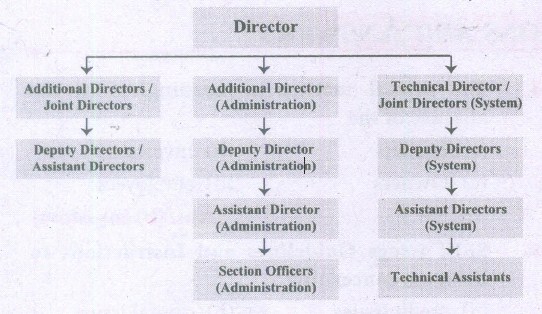
Draw the organization structure of SEBI.
12.
What is meant by Insiders trading?
13.
What is the power of SEBI under Securities Contract Act?
14.
What are the documents required for a Demat account?
15.
What is meant by Dematerialization?
16.
What are the objectives of SEBI?
17.
What are the benefits of Dematerialisation?
18.
19.
What are the functions of SEBI? (any 5)
1.
(a)
mutual funds
2.
(c)
capital issues
3.
(a)
Mutual Funds
4.
(c)
December 1996
5.
(b)
6.
PAN card,Voters ID, Passport, Drivers license, Bank attestation,IT returns, electricity bill, telephone bill,ID cards with applicants photo issued by the central or state governmnent and its departments are the various ID proofs.
7.
SEBI has its headquarters at the business district of Bandrakurla complex in Mumbai and has Northern, Eastern, Southern and Western Regional offices in New Delhi, Kolkatta, Chennai and Ahmedabad respectively.
8.
(i) A demat account holds all the shares that are purchased in electronic or dematerialized form.
(ii) Like the bank account, a demat account holds the certificates of financial instruments like,shares, bonds, government securities, mutual funds and exchange traded funds (ETFs).
9.
(i) Regulation of Stock Exchanges: The first objective of SEBI is to regulate stock exchanges so that efficient services may be provided to all the parties operating there.
(ii) Protection to the Investors: The protection of the interests of the investors means protecting them from the wrong information given by the companies in their prospectus, reducing the risk of delivery and payment, etc.
10.
(i) SEBI means Securities Exchange Board ofIndia.
(ii) It is an apex body that maintains and regulates our capital market.
(iii) It was established in 1988 by Indian government but got a statutory powers in 1992.
11.
Organization Structure of SEBI
12.
Insider trading means the buying and selling of securities by directors Promoters, etc. Who have access to some confidential information about the company and who wish to take advantage of the confidential information.
13.
(i) For effective regulation of stock exchange, the Ministry of Finance issued a Notification on 13 September, 1994 delegating several of its powers under the Securities Contract (Regulations) Act to SEBI.
(ii) SEBI is also empowered by the Finance Ministry to nominate three members on the Governing Body of every stock exchange.
14.
(i) We need to submit proof of identity and address along with a passport size photograph and the account opening form. Only photocopies ofthe documents are required for submission, and originals are also required for verification.
(ii) The Proof of identity may be, PAN card, voter's ID, passport, driver's license, bank attestation, IT returns, electricity bill, telephone bill, ID cards with applicant's photo issued by the central or state government and its departments, etc.
(iii) The Proof of address may be Ration card, passport, Voter's ID card, bank passbook or bank statement, verified copies of electricity bills, residence telephone bills, lease and license agreement or agreement for sale, etc.
15.
(i)Dematerialization is the process by which physical share certificates of an investor are taken back by the company/registrar destroyed.
(ii)Dematerialization is done at the request of the investor. Investors will first have to open an account with a DP (Depository Participant) and then request for dematerialization of certificates through the DP.
(iii)Purchases made by an investor are credited to his account and sales are debited. All the holdings of a particular security will be identical and interchangeable.
(iv)Trading in dematerialized shares commenced on the NSE in December, 1996, where Reliance Industries was the first company to trade its 100 shares in demat form.
16.
(i) Regulation of Stock Exchanges
The first objective of SEBI is to regulate stock exchanges so that efficient services may be provided to all the parties operating there.
(ii) Protection to the Investors
(a) The capital market is meaningless in the absence of the investors.
(b) The protection of the interests of the investors means protecting them from the wrong information given by the companies in their prospectus, reducing the risk of delivery and payment, etc.
(iii) Checking the Insider Trading
(a) Insider trading means the buying and selling of securities by directors Promoters, etc.
(b) Who have access to some confidential information about the company and who wish to take advantage of this confidential information.
(c) This affects the interests of the general investors and is essential to check this tendency.
(iv) Control over Brokers
(a) It is important to supervise/ check the activities of the brokers and other middlemen in order to control the capital market.
(b) To regulate their activities, it was necessary to establish the SEBI.
17.
(i) The lack of paperwork enables quicker transactions and higher efficiency in trading
(ii) The risks pertaining to physical certificates like loss, theft, forgery and damage are eliminated completely with a DEMAT account.
(iii) Trading has become more convenient as one can trade through computers at any location, without the need of visiting a broker.
(iv) Certain banks also permit holding of both equity and debt securities in a single account.
(v) Banks also provide dedicated and trained customer care officers to assist through all the procedures.
(vi) One can also choose to take a loan against securities which are held in a DEMAT account by offering it as a collateral to the lender.
18.
19.
The functions of SEBI are as follows:
(i) Safeguarding the interests of investors by means of adequate education and guidance.
(ii) Regulating and controlling the business on stock markets.
(iii) Conduct inspection and inquiries of stock exchanges, intermediaries and self-regulating organisations and to take appropriate measures wherever required.
(iv) Barring insider trading in securities.
(v) Prohibiting deceptive and unfair methods used by financial intermediaries operating in securities markets.
(vi) SEBI Issues Guidelines and instructions to businesses concerning capital issues.

12th Standard Syllabus & Materials
12th Standard
TN 12th Computer Applications வலையமைப்பு வடமிடல் Sample Question Papers Study Material - QB365 Set A
NEW12th Standard
TN 12th Computer Applications களப்பெயர் முறைமை (DNS) Sample Question Papers Study Material - QB365 Set A
NEW12th Standard
TN 12th Computer Applications வலையமைப்பு எடுத்துக்காட்டுகள் மற்றும் நெறிமுறைகள் Sample Question Papers Study Material - QB365 Set A
NEW12th Standard
TN 12th Computer Applications கணினி வலையமைப்பு ஓர் அறிமுகம் Sample Question Papers Study Material - QB365 Set A



Tamilnadu Stateboard 12th Standard Subjects

Maths

Chemistry

Physics

Biology

Computer Science

Business Maths and Statistics

Economics
Commerce

Accountancy

History

Computer Applications
Biology
Computer Technology
Computer Applications
Computer Science
Business Maths and Statistics
Commerce
Economics
Maths
Chemistry
Physics
Computer Technology
History
Accountancy

Tamil

English

French
Tamilnadu Stateboard Standards

