
 100% FREE ACCESS
12th Standard Syllabus & Materials
12th Standard
TN 12th Computer Applications மின்னணு தரவு பரிமாற்றம் Sample Question Papers Study Material - QB365 Set A
NEW12th Standard
TN 12th Computer Applications மின் - வணிக பாதுகாப்பு அமைப்புகள் Sample Question Papers Study Material - QB365 Set A
NEW12th Standard
TN 12th Computer Applications மின்னணு செலுத்தல் முறைகள் Sample Question Papers Study Material - QB365 Set A
NEW12th Standard
TN 12th Computer Applications மின் - வணிகம் Sample Question Papers Study Material - QB365 Set A
NEW12th Standard
TN 12th Computer Applications திறந்த மூல கருத்துருக்கள் Sample Question Papers Study Material - QB365 Set A
NEW12th Standard
TN 12th Computer Applications வலையமைப்பு வடமிடல் Sample Question Papers Study Material - QB365 Set A

Published on: 06/01/2020
Multimedia and Desktop Publishing
Download Tamil Nadu 12th Standard Computer Applications question papers, model tests, one-mark questions, important questions, and public exam papers in PDF format. Free study materials and answer keys for TN State Board students.
Questions + Answers key
Take MCQ Computer Applications Test
1.
Each pixel consists of ___________ colours
two
two or more
one
None of these
2.
____________ is the basic components of multimedia
Text
Animation
Audio
Video
3.
Multimedia has _________ major components
2
3
4
5
4.
The live telecasting of real time program through Internet is known as _______.
web casting
web hosting
data manipulation
none of the above
5.
Find the odd one on the following which is not an image format.
TIFF
BMP
RTF
JPEG
6.
What are the advantages of Vector Images?
7.
What are the various of Digital Media?
8.
List out Multimedia Production team members.
9.
Define Animation and their features.
10.
List out Multimedia Components
11.
How Multimedia is used in Multimedia Conferencing
12.
How is multimedia applicable in Medical services?
13.
How Multimedia is used in Education?
14.
Explain animation industry and their scope.
15.
Describe the various file formats in multimedia.
16.
How Multimedia used in Libraries, Information centers and Archives? Explain
17.
How Multimedia is used in Business systems?
18.
19.
Explain in detail Process of Multimedia.
1.
(b)
two or more
2.
(a)
Text
3.
(d)
5
4.
(a)
web casting
5.
(c)
RTF
6.
(i) Relatively small amount of data is required to represent the image and thereby only less memory is needed to store.
(ii) Compression techniques are used to reduce the file size of images that is useful for storing large number of images and speeding transmission for networked application.
7.
Information's are available in digital formats that include digital books, scanned images, graphics and digitized audio-visual clips etc stored in Digital Multimedia Library
8.
The team comprises of members playing various roles and responsibilities like Script writer, Production manager, Editor, Graphics Architect, Multimedia Architect and Web Master.
9.
Animation is the process of displaying still images with continuous movement.
Features:
(i) Screen object is a vector image.
(ii) Animation tools are very powerful and effective.
(iii) Frame rate: 16 frames/sec for smoothness impression, 25 frames/sec for natural looking.
10.
Multimedia has five major components like text, images, sound, video and animation.
11.
Multimedia conferencing or video conferencing is a system that performs face-to-face interaction samong participating users, located far from each other, as if they weresitting and discussing in a single room.
12.
(i) Medical Students practices surgery methods via simulation prior to actual surgery.
(ii) Tiny digital cameras are inserted in human body and it displays the inner scene of the body. Like wise, the medical practioners were able to see the inner part without dissecting it.
13.
(i) Multimedia plays a vital role in offering an excellent alternative method to traditional teching by allowing the students to explore and learn various concepts through animation.
(ii) Students, teachers and the parents enjoy this multimedia mode of learing and multimedia learning materials.
(iii) Many educators accept multimedia introduces new ways of thinking in the classroom.
14.
1. Animations may be in two (or) three dimensional. Two dimensional animation, bring an image alive, that occur on the flat X and Y axis of the screen and three dimensional animations occurs along X, Y and Z axis.
2. Two basic types of animations are Path animation and Frame animation.
3. Animation industry mostly used all fields like Education, Entertainment, Advertisement in Cartoon Films, Business systems and etc.
15.
Various file formats used in multimedia are
(i) Text formats
(ii) Image formats
(iii) Digital Audio file formats and
(iv) Digital Video file formats.
(i) Text formats : Rich Text Formats and Plain Text Format are used in Text formats.
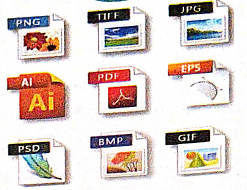
(ii) Image formats : TIFF, BMP, DIB, GIF, JPEG, TGA, PNG are image formats.
(iii) Digital Audio file formats : WAV, MP3, OGG, AIFF, WMA and RA are Digital Audio file formats.
(iv) Digital Video file formats : AVI, MPEG are digital video file formats.
16.
Multimedia technologyis adopted by the libraries in various functions like multimedia kiosks, user orientation programs etc. Following is the brief account of multimedia technology applications in libraries.
1. Multimedia Kiosk
(i) Kiosk is a free-standing furnished equipped multimedia computer that allows users to retrieve information via a touch screen. It is commonly used in airports and other public locations to provide directions and few mandatory information's.
(ii) In an library, Kiosk is usually located nearthe entrance of the library, used for displaying announcements, reading lists, comments and suggestions from library users and other information's about operations and programs of the library.
2. Webcasting and Video Conferencing
(i) The live telecast of real time programs through internet is known as Webcasting.
(ii) Video conferencing isthe process of conducting conference between more than two participants at different sites by using computer networks to transmit audio and video data.
3. User Orientation Program
(i) The role of multimedia plays anvital role in training the librarians in schools, colleges and universities due to its interactivity. Hence, it is used in depth subject training to their faculties .
4. In-house Production of Multimedia Resources and E-publishing
(i) Many libraries produce multimedia resources in-house, to serve the parent organization.Introduction of CD/DVD and their writershas solved few of the problem of libraries in storing or achieving the materials.
(ii) Multimedia tools along with CD-writers is made possible to publish information from dlfferent sources in a most easy to use and acceptable form tolibrary users.
5. Digital Multimedia Libraries
(i) Information's are available indigital formats that include digital books, scann ed images, graphics and digitized audlo-visuat clips etc
(ii) Initially digital library projects were based only on textual data, later it was on all other media elements like images, audio and video recordings were also integrated under the collection of digital library.
17.
(i) Business applications for multimedia include presentations, training, and internet protocols and soon.
(ii) The marketing and advertising agencies are using animation techniques for sales promotion.
(iii) Multimedia is used very commonly for building employee ID.
(iv) High resolution projectors are common for multimedia presentations on the road.
(v) Cell phones and personal digital assistants with Bluetooth and Wi-Fi communication technology makes multimedia communication for business more effiCiently.
18.
19.
Multimedia is the presentation of computer controlled and interactive information using the combination of video, sound, text, pictures and animations.
Steps in Multimedia Production :
i) Conceptual Analysis and Planning
ii) Project Design
iii) Pre Production
iv) Budgeting
v) Multimedia Production Team
vi) Hardware/Software Selection
vii) Defining the Content
viii) Preparing the Structure.
ix) Production
x) Testing
xi) Documentation
xii) Delivering the Multimedia Product
(i) Conceptual analysis identifies a appropriate theme, budget and content availability on that selected projects.
(ii) Project design phase contribute the series of actions performed to implement an objective.
(iii) Based on the planning and design, Budgeting, Hardware / Software selection and the content are necessary to develop the project.
(iv) Production team responsible for script writing, editing, graphics, etc.
(v) Complete the testing of the pilot product before the mass production.
(vi) User documentation is a mandatory feature for all multimedia projects.
(vii) Finally, multimedia application is delivered in more effective way by the integration of two mediams CD-ROM/DVD and Internet.

12th Standard Syllabus & Materials
12th Standard
TN 12th Computer Applications களப்பெயர் முறைமை (DNS) Sample Question Papers Study Material - QB365 Set A
NEW12th Standard
TN 12th Computer Applications வலையமைப்பு எடுத்துக்காட்டுகள் மற்றும் நெறிமுறைகள் Sample Question Papers Study Material - QB365 Set A
NEW12th Standard
TN 12th Computer Applications கணினி வலையமைப்பு ஓர் அறிமுகம் Sample Question Papers Study Material - QB365 Set A
NEW12th Standard
TN 12th Computer Applications PHP-உடன் MySQL-ஐ இணைத்தல் Sample Question Papers Study Material - QB365 Set A



Tamilnadu Stateboard 12th Standard Subjects

Maths

Chemistry

Physics

Biology

Computer Science

Business Maths and Statistics

Economics

Commerce

Accountancy

History
Computer Applications
Biology
Computer Technology
Computer Applications
Computer Science
Business Maths and Statistics
Commerce
Economics
Maths
Chemistry
Physics
Computer Technology
History
Accountancy

Tamil

English

French
Tamilnadu Stateboard Standards
