
 100% FREE ACCESS
12th Standard Syllabus & Materials
12th Standard
TN 12th Computer Applications மின்னணு தரவு பரிமாற்றம் Sample Question Papers Study Material - QB365 Set A
NEW12th Standard
TN 12th Computer Applications மின் - வணிக பாதுகாப்பு அமைப்புகள் Sample Question Papers Study Material - QB365 Set A
NEW12th Standard
TN 12th Computer Applications மின்னணு செலுத்தல் முறைகள் Sample Question Papers Study Material - QB365 Set A
NEW12th Standard
TN 12th Computer Applications மின் - வணிகம் Sample Question Papers Study Material - QB365 Set A
NEW12th Standard
TN 12th Computer Applications திறந்த மூல கருத்துருக்கள் Sample Question Papers Study Material - QB365 Set A
NEW12th Standard
TN 12th Computer Applications வலையமைப்பு வடமிடல் Sample Question Papers Study Material - QB365 Set A

Published on: 03/12/2019
Fiscal Economics
Download Tamil Nadu 12th Standard Economics question papers, model tests, one-mark questions, important questions, and public exam papers in PDF format. Free study materials and answer keys for TN State Board students.
Questions + Answers key
Take MCQ Economics Test
1.
A ________ is a penalty imposed on an individual for violation of law.
Grants
Aids
Fine
fees
2.
Budget estimates are prepared by _____________
Ministry of Finance
Public finance
Public Revenue
All the above
3.
"Revenue Receipts" of the Government do not include
Interest
Profits and dividents
Recoveries and loans
Rent from property
4.
The direct tax has the following merits except
equity
convenient
certainty
civic consciousness
5.
GST is equivalence of
Sales tax
Corporation tax
Income tax
Local tax
6.
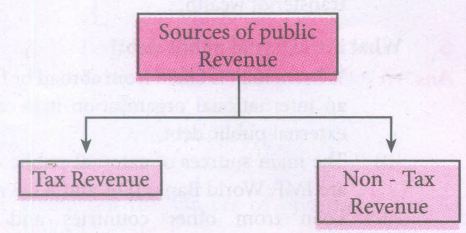
What are the classification of public revenue?
7.
What are the subject matter of public finance?
8.
Give two examples for direct tax.
9.
Write a short note on zero based budget.
10.
Define public finance.
11.
What are the types of budget?
12.
What are the main sources of internal public debt?
13.
What is primary deficit?
14.
Point out any three differences between direct tax and indirect tax.
15.
Mention any three similarities between public finance and private finance.
16.
List the Revenue of Union Sources.
17.
What are the advantages of GST?
1.
(c)
Fine
2.
(a)
Ministry of Finance
3.
(d)
Rent from property
4.
(b)
convenient
5.
(a)
Sales tax
6.
Public revenue can be classified into two types
7.
(1) Public Revenue
(2) Public Expenditure
(3) Public Debt.
(4) Financial Administration
(5) Fiscal Policy
8.
Income tax, wealth tax, corporate tax, capital gains tax.
9.
(i) It involves fresh evaluation of expenditure in the Government budget assuming it as a new item.
(ii) A review is made to justify the project based on the socio-economic objectives and priorities of the society.
(iii) Government of India presented Zero Base Budgeting in 1987-88.
10.
(i) "Public finance is one of those subjects that lie on the border linè between Economics and Politics. It is concerned with income and expenditure of public authorities and with the adjustment of one to the other". . - Huge Dalton
(ii) Public finance is an investigation into the nature and principles of the state revenue and expenditure - Adam Smith
11.
(i) Revenue and capital budget
(ii) Supplementary budget
(iii) Zero base budget
(iv) Performance budget
(v) Balance and Unbalanced budget
(vi) Unbalanced budget
(a) Deficit budget
(b) Surplus budget
12.
(i) Individuals purchase government bonds and securities.
(ii) Banks, both private and public buy bonds from the government.
(iii) Non financial institutions like UTI, LIC, GIC etc. also buy the government bonds.
(iv) Central Bank can lend the government in the form of money supply.
13.
(i) Primary deficit is equal to fiscal deficit minus interest payments. PD = Fiscal deficit (FD) - Interest Payment (IP)
(ii) It shows the real burden of the government and it does not include the interest burden on loans taken in the past.
(iii) It shows the borrowing requirement of the government exclusive of interest payments.
14.
| SI.No | Direct Tax | Indirect Tax |
|---|---|---|
| 1. | Direct tax is levied on person's income and wealth and is paid directly to the government. | It is levied on a person who consumes the goods and services and is paid indirectly to government. |
| 2. | Progressive in nature | Regressive in nature |
| 3. | Falls on the same person. | Falls on different persons. |
| 4. | Burden cannot be shifted. | can be shifted |
| 5. | Tax evasion is possible. | Included in the price of the goods. |
15.
Rationality
1. Both public finance and private finance are based on rationality.
2. Maximization of welfare and least cost factor combination underlie both.
Limit to borrowing
1. Both have to be restrained with borrowing.
2. Government cannot live beyond its means.
3. There is a limit to deficit financing by the state.
Resource utilisation
1. Both have to make optimum use of their limited resources.
Administration
1. If the administrative machinery is inefficient and corrupt it will result in wastages and losses.
16.
1. Corporation tax.
2. Currency, coinage and legal tender, foreign exchange.
3. Duties of customs including export duties.
4. Duties of excise on tobacco and certain goods manufactured or produced in India.
5. Estate duty in respect of property other than agricultural land.
6. Fees in respect of any of the matters in the Union List, but not including any fees taken in any Court.
7. Foreign Loans.
8. Lotteries organized by the Government of India or the Government of a State.
9. Post Office Savings Bank.
10. Posts and Telegraphs, telephones, wireless, Broadcasting and other forms of communication.
11. Property of the Union.
12. Public Debt of the Union.
13. Railways.
14. Rates of stamp duty in respect of Bills of Exchange, Cheques, Promissory Notes, etc.
15. Reserve Bank of India.
16. Taxes on income other than agricultural income.
17. Taxes on the capital value of the assets, exclusive of agricultural land of individuals and companies.
18. Taxes other than stamp duties on transactions in stock exchanges and future markets.
19. Taxes on the sale or purchase of newspapers and on advertisements published therein.
20. Terminal taxes on goods or passengers, carried by railways, sea or air.
17.
(i) GST will mainly remove the cascading effect on the sale of goods and services.
(ii) Removal of cascading effect will directly impact of the cost of goods.
(iii) Tax is eliminated in this regime, the cost of goods decreases.
(iv) GST is also mainly technologically driven.
(v) All activities like registration, return filing, application for refund and response to notice need to be done online on the GST portal. This will speed up the processes.

12th Standard Syllabus & Materials
12th Standard
TN 12th Computer Applications களப்பெயர் முறைமை (DNS) Sample Question Papers Study Material - QB365 Set A
NEW12th Standard
TN 12th Computer Applications வலையமைப்பு எடுத்துக்காட்டுகள் மற்றும் நெறிமுறைகள் Sample Question Papers Study Material - QB365 Set A
NEW12th Standard
TN 12th Computer Applications கணினி வலையமைப்பு ஓர் அறிமுகம் Sample Question Papers Study Material - QB365 Set A
NEW12th Standard
TN 12th Computer Applications PHP-உடன் MySQL-ஐ இணைத்தல் Sample Question Papers Study Material - QB365 Set A



Tamilnadu Stateboard 12th Standard Subjects

Maths

Chemistry

Physics

Biology

Computer Science

Business Maths and Statistics
Economics

Commerce

Accountancy

History

Computer Applications
Biology
Computer Technology
Computer Applications
Computer Science
Business Maths and Statistics
Commerce
Economics
Maths
Chemistry
Physics
Computer Technology
History
Accountancy

Tamil

English

French
Tamilnadu Stateboard Standards
