
 100% FREE ACCESS
12th Standard Syllabus & Materials
12th Standard
TN 12th Computer Applications மின்னணு தரவு பரிமாற்றம் Sample Question Papers Study Material - QB365 Set A
NEW12th Standard
TN 12th Computer Applications மின் - வணிக பாதுகாப்பு அமைப்புகள் Sample Question Papers Study Material - QB365 Set A
NEW12th Standard
TN 12th Computer Applications மின்னணு செலுத்தல் முறைகள் Sample Question Papers Study Material - QB365 Set A
NEW12th Standard
TN 12th Computer Applications மின் - வணிகம் Sample Question Papers Study Material - QB365 Set A
NEW12th Standard
TN 12th Computer Applications திறந்த மூல கருத்துருக்கள் Sample Question Papers Study Material - QB365 Set A
NEW12th Standard
TN 12th Computer Applications வலையமைப்பு வடமிடல் Sample Question Papers Study Material - QB365 Set A

Published on: 04/11/2019
Optics
Download Tamil Nadu 12th Standard Physics question papers, model tests, one-mark questions, important questions, and public exam papers in PDF format. Free study materials and answer keys for TN State Board students.
Questions + Answers key
Take MCQ Physics Test1.
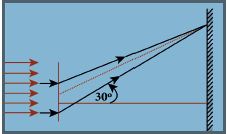
A monochromatic light of wavelength 5000 Å passes through a single slit producing diffraction pattern for the central maximum as shown in the figure. Determine the width of the slit.
2.
Two light sources with amplitudes 5 units and 3 units respectively interfere with each other. Calculate the ratio of maximum and minimum intensities.
3.
A compound microscope has a magnifying power of 100 when the image is formed at infinity. The objective has a focal length of 0.5 cm and the tube length is 6.5 cm. What is the focal length of the eyepiece.
4.
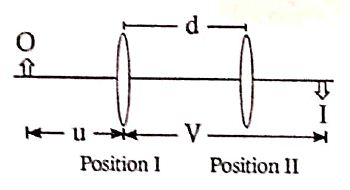
If the distance D between an object and screen is greater than 4 times the focal length f of a convex lens, then there are two positions for which the lens forms an enlarged image and a diminished image respectively. This method is called conjugate foci method. If d is the distance between the two positions of the lens, obtain the equation for focal length of the convex lens.
5.
A person has farsightedness with the far distance he could see clearly is 75 cm. Calculate the power of the lens of the spectacles needed to rectify the defect.
6.
Calculate the power of the lens of the spectacles needed to rectify the defect of nearsightedness for a person who could see clearly up to a distance of 1.8 m.
7.
Find the polarizing angles for
(i) glass of refractive index 1.5 and
(ii) water of refractive index 1.33.
8.
The optical telescope in the Vainu Bappu Observatory at Kavalur has an objective lens of diameter 2.3 m. What is its angular resolution if the wavelength of light used is 589 nm?
9.
A monochromatic light of wavelength of 500 nm strikes a grating and produces fourth order maximum at an angle of 30°. Find the number of slits per centimeter.
10.
Two light sources of equal amplitudes interfere with each other. Calculate the ratio of maximum and minimum intensities.
1.
λ = 5000 Å = 5000 x 10 -10 m; sin 30o = 0.5; n = 1; a =?
Equation for diffraction minimum is,
asin θ = nλ
The central maximum is spread up to the first minimum. Hence, n = 1
Rewriting, \(a=\cfrac { \lambda }{ sin\theta } \)
Substituting, \(a=\cfrac { 5000\times { 10 }^{ -10 } }{ 0.5 } \)
a = 1 x 10⁻⁶m = 0.001 x 10⁻³ m = 0.001 mm.
2.
Amplitudes, a1 = 5, a2 = 3
Resultant amplitude,
\(A=\sqrt { { a }_{ 1 }^{ 2 }+{ a }_{ 2 }^{ 2 }+2{ a }_{ 1 }{ a }_{ 2 }cos\varphi } \)
Resultant amplitude is maximum when,
\(\phi =0,cos0=1,{ A }_{ max }=\sqrt { { a }_{ 1 }^{ 2 }+{ a }_{ 2 }^{ 2 }+{ 2a }_{ 1 }{ a }_{ 2 } } \)
\(\\ { A }_{ max }=\sqrt { \left( { a }_{ 1 }+{ a }_{ 2 } \right) ^{ 2 } } =\sqrt { \left( 5+3 \right) ^{ 2 } } =\sqrt { \left( 8 \right) ^{ 2 } } \)
= 8 units
Resultant amplitude is minimum when
\(\phi =\pi,cos\pi=1,{ A }_{ max }=\sqrt { { a }_{ 1 }^{ 2 }+{ a }_{ 2 }^{ 2 }+{ 2a }_{ 1 }{ a }_{ 2 } } \)
\({ A }_{ max }=\sqrt { \left( { a }_{ 1 }-{ a }_{ 2 } \right) ^{ 2 } } =\sqrt { \left( 5-3 \right) ^{ 2 } } =\sqrt { \left( 2 \right) ^{ 2 } } \)
= 2units
\(I\infty { A }^{ 2 }\)
\(\cfrac { { I }_{ max } }{ { I }_{ min } } =\cfrac { \left( { A }_{ max } \right) ^{ 2 } }{ \left( { { A }_{ min } } \right) ^{ 2 } } \)
Substituting,
\(\cfrac { { I }_{ max } }{ { I }_{ min } } =\cfrac { \left( 8 \right) ^{ 2 } }{ \left( 2 \right) ^{ 2 } } =\cfrac { 64 }{ 4 } 16\) (or)
\({ I }_{ max }:{ I }_{ min }=16:1\)
3.
\(\mathrm{m}_{\alpha}=100 ; \mathrm{f}_{o}=0.5 \mathrm{~cm} ; \mathrm{f}_{\mathrm{e}}=? \)
\(\mathrm{~L}_{\alpha}=6.5 \mathrm{~cm}, \mathrm{D}=25 \mathrm{~cm} \)
When the image is formed at infinity,
\(\mathrm{m}_{\alpha}=\frac{\left(\mathrm{L}_{\alpha}-\mathrm{f}_{0}-\mathrm{f}_{\mathrm{c}}\right) \mathrm{D}}{\mathrm{f}_{0} \mathrm{f}_{\mathrm{e}}} \)
\(100 =\left(\frac{6.5-0.5-f_{e}}{0.5 \times f_{e}}\right) \times 25 \)
\(=\left(\frac{6-f_{e}}{0.5 f_{e}}\right) \times 25 \)
\(100 \times 0.5 f_{e} =150-25 f_{e} \)
\(50 f_{e} =150-25 f_{e} \)
\(75 f_{e} =150 \)
\(f_{e} =150 / 75=2 \mathrm{~cm} \)
4.
From figure,
D = u + v
d = r - u
D + d = u + v + v - u
D + d = 2v
\(v=\frac{D+d}{2}\)
D - d = u + v - v + u = 2u
\(v=\frac{D-d}{2}\)
\(\frac{1}{f}=\frac{1}{v}-\frac{1}{u} \)
\(\frac{1}{f} =\frac{1}{\frac{D+d}{2}}-\frac{1}{\frac{D-d}{2}} \)
\(=\frac{2}{D+d}-\frac{2}{D-d} \)
\(=\frac{2[D-d+D+d]}{D^{2}-d^{2}} \)
\(=\frac{2 \times 2 D}{D^{2}-d^{2}} \)
\(\frac{1}{f} =\frac{4 D}{D^{2}-d^{2}} \quad \therefore f=\frac{D^{2}-d^{2}}{4 D} \)
5.
The minimum distance the person could see clearly is, y = 75 cm.
The lens should have a focal length of,
\(f=\cfrac { y\times 25cm }{ y-25cm } \)
\(f=\cfrac { 75cm\times 25cm }{ 75cm-25cm } =37.5cm\)
It is a convex (or) converging lens.
The power of the lens is,
\(P=\cfrac { 1 }{ 0.375m } =2.67\ D\)
6.
The maximum distance the person could see is, x = 1.8 m.
The lens should have a focal length of,
f = –x m = –1.8 m.
It is a concave (or) diverging lens.
The power of the lens is,
\(\\ \\ \\ \\ P=-\cfrac { 1 }{ 1.8m } =-0.56D\)
7.
Brewster’s law, tan ip = n
For glass, tanip = 1.5 ; ip = tan-11.5 ; ip= 56.3o
For water, tanip= 1.33; ip= tan-1 = tan-1 1.33; ip = 53.1o
8.
a = 2.3 m; λ = 589 nm = 589 x 10-9 m; θ = ?
The equation for angular resolution is,
\(\theta =\cfrac { 1.22\lambda }{ a } \)
Substituting,
\(\theta =\cfrac { 1.22\times 589\times { 10 }^{ -9 } }{ 2.3 } =3.124\times { 10 }^{ -9 }\)
θ = 3.214 x 10⁻⁷ rad (or) θ = 0.0011'
Note: The angular resolution of human eye is approximately, 3 x 10⁻⁴ rad ≃ 1.03'.
9.
λ = 500 nm = 500 x 10-9 m; m = 4;
θ = 30°; number of lines per cm = ?
Equation for diffraction maximum in grating is, sin θ = Nm λ
Rewriting, \(N=\cfrac { sin\theta }{ m\lambda } \)
Substituting,
\(N=\frac{0.5}{4 \times 500 \times 10^{-9}}\)
= 2.5 x 10⁵ m-1
= 2.5 x 103 cm-1
10.
Let the amplitude be a.
The intensity is \(I\propto { 4a }^{ 2 }{ cos }^{ 2 }\left( \phi /2 \right) \)
or \(I=4{ I }_{ 0 }{ cos }^{ 2 }\left( \phi /2 \right) \)
Resultant intensity is maximum when,
\(\phi =0,cos=0=1,{ I }_{ max }\propto { 4a }^{ 2 }\)
Resultant amplitude is minimum when,
\(\phi =\pi ,cos\left( \pi /2 \right) =0,{ I }_{ min }=0\)
Imax : Imin = 4aa : 0

12th Standard Syllabus & Materials
12th Standard
TN 12th Computer Applications களப்பெயர் முறைமை (DNS) Sample Question Papers Study Material - QB365 Set A
NEW12th Standard
TN 12th Computer Applications வலையமைப்பு எடுத்துக்காட்டுகள் மற்றும் நெறிமுறைகள் Sample Question Papers Study Material - QB365 Set A
NEW12th Standard
TN 12th Computer Applications கணினி வலையமைப்பு ஓர் அறிமுகம் Sample Question Papers Study Material - QB365 Set A
NEW12th Standard
TN 12th Computer Applications PHP-உடன் MySQL-ஐ இணைத்தல் Sample Question Papers Study Material - QB365 Set A



Tamilnadu Stateboard 12th Standard Subjects

Maths

Chemistry
Physics

Biology

Computer Science

Business Maths and Statistics

Economics

Commerce

Accountancy

History

Computer Applications
Biology
Computer Technology
Computer Applications
Computer Science
Business Maths and Statistics
Commerce
Economics
Maths
Chemistry
Physics
Computer Technology
History
Accountancy

Tamil

English

French
Tamilnadu Stateboard Standards

