
 100% FREE ACCESS
12th Standard Syllabus & Materials
12th Standard
TN 12th Computer Applications மின்னணு தரவு பரிமாற்றம் Sample Question Papers Study Material - QB365 Set A
NEW12th Standard
TN 12th Computer Applications மின் - வணிக பாதுகாப்பு அமைப்புகள் Sample Question Papers Study Material - QB365 Set A
NEW12th Standard
TN 12th Computer Applications மின்னணு செலுத்தல் முறைகள் Sample Question Papers Study Material - QB365 Set A
NEW12th Standard
TN 12th Computer Applications மின் - வணிகம் Sample Question Papers Study Material - QB365 Set A
NEW12th Standard
TN 12th Computer Applications திறந்த மூல கருத்துருக்கள் Sample Question Papers Study Material - QB365 Set A
NEW12th Standard
TN 12th Computer Applications வலையமைப்பு வடமிடல் Sample Question Papers Study Material - QB365 Set A

Published on: 01/09/2020
12th Standard Accountancy English Medium Sample 3 Mark Book Back Questions (New Syllabus) 2020
Download Tamil Nadu 12th Standard Accountancy question papers, model tests, one-mark questions, important questions, and public exam papers in PDF format. Free study materials and answer keys for TN State Board students.
Questions + Answers key
Take MCQ Accountancy Test
1.
What are the adjustments required at the time of admission of a partner?
2.
Write a brief note on calls in advance.
3.
Maruthu Ltd. forfeited 150 equity shares of Rs.10 each for non payment of final call of Rs.4 per share. Of these 100 shares were reissued @ Rs.9 per share. Pass journal entries for forfeiture and reissue.
4.
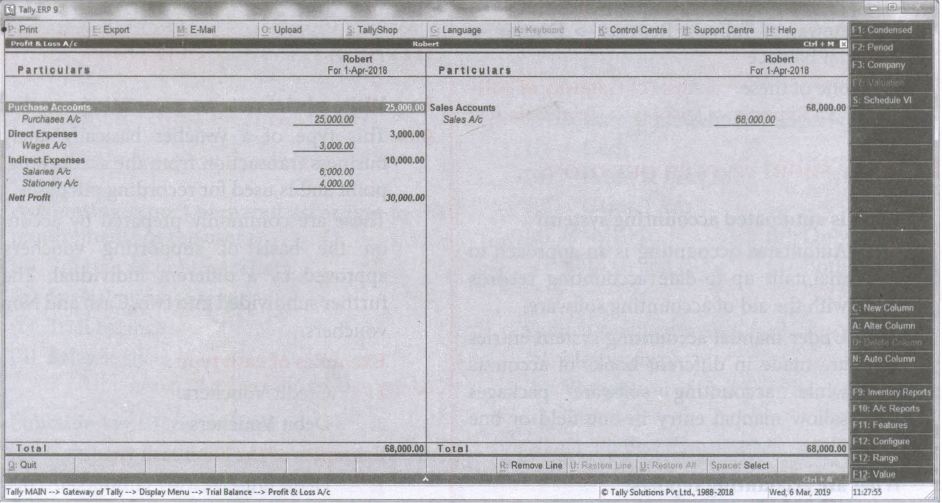
How is operating profit ascertained?
5.
6.
From the following information relating to Sridevi enterprises, calculate the value of goodwill on the basis of 4 years purchase of the average profits of 3 years.
(a) Profits for the years ending 31st December 2016, 2017 and 2018 were Rs. 1,75,000, Rs. 1,50,000 and Rs. 2,00,000 respectively.
(b) A non-recurring income of Rs. 45,000 is included in the profits of the year 2016.
(c) The closing stock of the year 2017 was overvalued by Rs. 30,000.
7.
Ahamad and Basheer contribute Rs. 60,000 and Rs. 40,000 respectively as capital. Their respective share of profit is 2:1 and the profit before interest on capital for the year is Rs. 5,000. Compute the amount of interest on capital in each of the following situations:
(i) if the partnership deed is silent as to the interest on capital
(ii) if interest on capital @ 4% is allowed as per the partnership deed
(iii) if the partnership deed allows interest on capital @ 6% per annum.
8.
From the following information relating to Arul enterprises, calculate the value of goodwill on the basis of 2 years purchase of the average profits of 3 years.
(a) Profits for the years ending 31st December 2016, 2017 and 2018 were Rs. 46,000, Rs. 44,000 and Rs. 50,000 respectively.
(b) A non-recurring income of Rs. 5,000 is included in the profits of the year 2016.
(c) The closing stock of the year 2017 was overvalued by Rs. 10,000.
9.
10.
From the following balance sheets of Brindha and Praveena who share profits and losses in the ratio of 3:4, calculate interest on capital at 6% p.a. for the year ending 31st December 2017.
| Liabilities | Rs. | Assets | Rs. |
|---|---|---|---|
| Capital accoun | Sundry assets | 80,000 | |
| Brindha | 30,000 | ||
| Praveena | 40,000 | ||
| Profit and loss appropriation A/c | 10,000 | ||
| 80,000 | 80,000 |
On 1st July 2017, Brindha introduced an additional capital of Rs. 6,000 and on 1st October 2017, Praveena introduced Rs. 10,000. Drawings of Brindha and Praveena during the year were Rs. 5,000 and Rs. 7,000 respectively. Profit earned during the year was Rs. 31,000.
11.
12.
From the following particulars, calculate total sales
| Particulars | Rs. | Particulars | Rs. |
|---|---|---|---|
| Debtors on 1st April 2018 | 2,50,000 | Bills receivable dishonoured | 15,000 |
| Bills receivable on 1st April 2018 | 60,000 | Returns inward | 50,000 |
| Cash received from debtors | 7,25,000 | Bills receivable on 31st March, 2019 | 90,000 |
| Cash received for bills receivable | 1,60,000 | Sundry debtors on 31st March, 2019 | 2,40,000 |
| Bad debts | 30,000 | Cash sales | 3,15,000 |
13.
Following are the balances in the books of Thomas as on 31st March 2019.
| Particulars | Rs. | Particulars | Rs. |
|---|---|---|---|
| Sundry creditors | 6,00,000 | Bills payable | 1,20,000 |
| Furniture | 80,000 | Cash in hand | 20,000 |
| Land and building | 3,00,000 | Bills receivable | 60,000 |
| Sundry Debtors | 3,20,000 | Stock | 2,20,000 |
Prepare a statement of affairs as on 31st March 2019 and calculate capital as at that date.
14.
From the following particulars calculate total purchases
| Particulars | Rs |
|---|---|
| Sundry creditors on 1st April, 2017 | 75,000 |
| Bills payable on 1st April, 2017 | 60,000 |
| Paid cash to creditors | 3,70,000 |
| Paid for bills payable | 1,00,000 |
| Purchases returns | 15,000 |
| Cash purchases | 3,20,000 |
| Creditors on 31st March, 2018 | 50,000 |
| Bills payable on 31st March, 2018 | 80,000 |
15.
Hari, Madhavan and Kesavan are partners, sharing profits and losses in the ratio of 5:3:2. As from 1st April 2017, Vanmathi is admitted into the partnership and the new profit sharing ratio is decided as 4:3:2:1. The following adjustments are to be made.
(a) Increase the value of premises by Rs. 60,000.
(b) Depreciate stock by Rs. 5,000, furniture by Rs. 2,000 and machinery by Rs. 2,500.
(c) Provide for an outstanding liability of Rs. 500.
Pass journal entries and prepare revaluation account.
16.
Vinoth, Karthi and Pranav are partners sharing profits and losses in the ratio of 2:2:1. Pranav retires from partnership on 1st April 2018. The following adjustments are to be made.
(i) Increase the value of land and building by Rs. 18,000
(ii) Reduce the value of machinery by Rs. 15,000
(iii) A provision would also be made for outstanding expenses for Rs. 8,000.
Give journal entries and prepare revaluation account.
17.
Ramya, Sara and Thara are partners sharing profits and losses in the ratio of 5:3:2. On 1st April 2018, Thara retires and on retirement, the following adjustments are agreed upon:
(i) Increase the value of premises by Rs. 40,000.
(ii) Depreciate stock by Rs. 3,000 and machinery by Rs. 6,500.
(iii) Provide an outstanding liability of Rs. 500
Pass journal entries and prepare revaluation account.
18.
From the following particulars of Siva Ltd, prepare common size income statement for the years ended 31st March, 2016 and 31st March, 2017.
| Particulars | 2015-16 | 2016-17 |
|---|---|---|
| Rs. | Rs. | |
| Revenue from operations | 2,00,000 | 3,00,000 |
| Other income | 25,000 | 75,000 |
| Expenses | 2,50,000 | 1,50,000 |
| Income tax % | 40 | 40 |
19.
Write a brief note on the applications of the provisions of the Indian Partnership Act, 1932 in the absence of partnership deed.
20.
Compute capital fund of Karur Social Club as on 31.03.2018
| Particulars as on 31.03.2018 | Rs. |
|---|---|
| Furniture | 50,000 |
| Buildings | 40,000 |
| Subscription outstanding for 2017-18 | 10,000 |
| Subscription received in advance for 2018-19 | 5,000 |
| Loan borrowed | 10,000 |
| Investments | 20,000 |
| Cash in hand | 4,000 |
| Cash at bank | 6,000 |
21.
From the following information of Ashika Ltd., calculate fixed assets turnover ratio:
(i) Revenue from operations during the year were Rs.60,00,000.
(ii) Fixed assets at the end of the year was Rs.6,00,000.
22.
Rathna Kumar and Arockia Das are partners in a firm sharing profits and losses in the ratio of 3:2. Their balance sheet as on 31st March, 2017 is as follows:
| Liabilities | Rs. | Rs. | Assets | Rs. |
|---|---|---|---|---|
| Capital accounts: | Buildings | 30,000 | ||
| Rathna Kumar | 30,000 | Plant | 60,000 | |
| Arockia Das | 50,000 | 80,000 | Furniture | 20,000 |
| Profit and loss appropriation A/c | 20,000 | Debtors | 10,000 | |
| General reserve | 5,000 | Stock | 15,000 | |
| Workmen compensation fund | 15,000 | Cash at bank | 15,000 | |
| Sundry creditors | 30,000 | |||
| 1,50,000 | 1,50,000 |
David was admitted into the partnership on 1.4.2017. Pass journal entry to distribute the accumulated profits and reserve on admission.
1.
The following adjustment are necessary at the time of admission of a partner
(i) Distribution of accumulated profits, reserves and losses.
(ii) Revaluation of assets and liabilities
(iii) Determination of new profit sharing ratio and sacrificing ratio
(iv) Adjustment for goodwill
(v) Adjustment of capital on the basis of new profit sharing ratio (if so agreed).
2.
(i) The excess amount paid over the called up value of a share is known as calls in advance.
(ii) It is the excess money paid on application or allotment or calls. Such excess amount can be returned or adjusted towards future payment.
(iii) If the company decides to adjust such amount towards future payment, the excess amount may also be transferred to a separate account called call in advance.
(iv) Calls in advance does not form part of the company's share capital and no dividend is payable on such amount.
(v) In the balance sheet, it should be shown under current liabilities.
3.
| Date | Particulars | L.F. | Debit Rs. |
Credit Rs. |
|
|---|---|---|---|---|---|
| Equity share capital A/c (150 × 10) | Dr. | 1,500 | |||
| To Equity share final call A/c (150 × 4) | 600 | ||||
| To Forfeited shares A/c (150 × 6) | 900 | ||||
| (50 shares forfeited) | |||||
| Bank A/c (100 × 9) | Dr. | 900 | |||
| Forfeited shares A/c (100 × 1) | 100 | ||||
| To Equity share capital A/c (100 × 10) | 1,000 | ||||
| (100 forfeited shares reissued @ Rs.9 per share) | |||||
| Forfeited shares A/c | Dr. | 500 | |||
| To Capital reserve A/c | 500 | ||||
| (Gain on reissue of forfeited shares transferred to capital reserve account) |
Working note:
Forfeited amount for 150 shares = Rs.900
Forfeited amount for 100 shares = \(\frac{900}{150}\) x 100 = Rs.600
Gain or loss = Amount forfeited – loss on reissue
= 600 - 100
Net gain = Rs.500
4.
(i) Operating profit ratio gives the proportion of operating profit to revenue from operations.
(ii) Operating profit ratio is an indicator of operational efficiency of an organisation.
(iii) It may be computed as follows: Operating profit ratio
= \(\frac { Operating\ profit }{ Revenue\ from\ operations } \times 100\)
Alternatively, it is calculated as under.
Operating profit ratio = 100% - Operating cost ratio
Operating profit = Revenue from operations - Operating cost
(iv) A higher ratio indicates better profitability. Greater the operting ratio, higher is the margin available for paying non-operating expenses.
5.
6.
| Particulars | 2016 Rs. | 2017 Rs. | 2018 Rs. |
|---|---|---|---|
| Profit | 1,75,000 | 1,50,000 | 2,00,000 |
| Less: Non - recurring-income | 45,000 | - | - |
| 1,30,000 | 1,50,000 | 2,00,000 | |
| Less: Over valuation of closing stock | - | 30,000 | - |
| 1,30,000 | 1,20,000 | 2,00,000 | |
| Add: Over valuation of Opening stock | - | - | 30,000 |
| Profit after adjustments | 1,30,000 | 1,20,000 | 2,30,000 |
Average profit \(=\frac{Total\ profit}{Number\ of\ years}\)
\(=\frac{1,30,000+1,20,000+2,30,000}{3}\)
\(=\frac{4,80,000}{3}\) = Rs. 1,60,000
Goodwill = Average profit \(\times\) Number of years of purchase
= 1,60,000 \(\times\) 4
= Rs. 6,40,000
7.
(i) No Interest on capital will not allowed as the partnership deed.
(ii) Profit before interest on capital is Rs. 5,000.
Computation of interest on capital:
Ahamed: 60,000 \(\times\) \(\frac{4}{100}\) = Rs. 2,400
Basheer : 40,000 \(\times\) \(\frac{4}{100}\) = Rs. 1,600
Since there is sufficient profit, interest on capital will be provided
(iii) Profit before interest on capital is Rs. 5,000
Computation of interest on capital :
Ahamed: 60,000 \(\times\) \(\frac{6}{100}\) = Rs. 3,600
Basheer: 40,000 \(\times\) \(\frac{6}{100}\) = Rs. 2,400
Since the profit is insufficient, interest on capital will not be provided. Profit of 5,000 will be distributed to the partners on their capital ratio of 3 : 2
8.
| Particulars | 2016 Rs. |
2017 Rs. |
2018 Rs. |
|---|---|---|---|
| Profit | 46,000 | 44,000 | 50,000 |
| Less: Non- recurring income | 5,000 | - | - |
| 41,000 | 44,000 | 50,000 | |
| Less: Over valuation of closing stock | - | 10,000 | - |
| 41,000 | 34,000 | 50,000 | |
| Add: Over valuation of opening stock | - | - | 10,000 |
| Profit after adjustments | 41,000 | 34,000 | 60,000 |
Tutorial note: Over valuation of closing stock in 2017 will result in over valuation of opening stock in 2018.
Average profit = \(\frac { Total\ profit }{ Number\ of\ year } \)
= \(\frac { 41,000+34,000+60,000 }{ 3 } \)
= \(\frac { 1,35,000 }{ 3 } \) = Rs. 42,000
Goodwill = Average profit \(\times\) Number of years of purchase
= 45,000 × 2
= Rs. 90,000
9.
10.
| Particulars | Brindha | Praveena | ||
|---|---|---|---|---|
| Rs. | Rs. | Rs. | Rs. | |
| Capital on 31st December 20 | 30,000 | 40,000 | ||
| Add: Drawings | 5,000 | 7,000 | ||
| 35,000 | 47,000 | |||
| Less: | ||||
| Additional capital | 6,000 | 10,000 | ||
| Profit already credited* | 9,000 | 15,000 | 12,000 | 22,000 |
| Capital on 1st January | 20,000 | 25,000 | ||
Profit credited = Profit earned Rs. 31,000 – Balance profit as per balance sheet Rs. 10,000 = Rs. 21,000. This amount is distributed in their profit sharing ratio of 3:4.
Calculation of interest on capital:
Brindha:
| On opening capital for 1 year | 20,000 \(\times\) \(\frac{6}{100}\) | Rs. 1,200 |
| On additional capital for 6 months | 6,000 \(\times\) \(\frac{6}{100}\) \(\times\) \(\frac{6}{12}\) | Rs. 180 |
| Total Interest on capital | Rs. 1,380 |
Praveena:
| On opening capital for 1 year | 25,000 \(\times\) \(\frac{6}{100}\) | Rs. 1,500 |
| On additional capital for 3 months | 10,000 \(\times\) \(\frac{6}{100}\) \(\times\) \(\frac{3}{12}\) | Rs. 150 |
| Total interest on capital | Rs. 1.650 |
11.
12.
| Particulars | Rs. | Particulars | Rs |
|---|---|---|---|
| To Balance b/d | 60,000 | By Cash A/c | 1,60,000 |
| To Debtors A/c | 2,05,000 | By Debtors | 15,000 |
| (Bills received during the year - balancing figure) |
(Bills receivable dishonored) |
||
| By Balance c/d | 90,000 | ||
| 2,65,000 | 2,65,000 |
| Particulars | Rs. | Particulars | Rs |
|---|---|---|---|
| To Balance b/d | 2,50,000 | By Cash | 7,25,000 |
| To Bills receivable | 15,000 | By Returns inward | 50,000 |
| (dishonored) | By Bills receivable | 2,05,000 | |
| To Credit sales | 9,85,000 | (bills received) | |
| By Bad debts | 30,000 | ||
| By Balance c/d | 2,40,000 | ||
| 10,10,000 | 10,10,000 |
Total sales = Cash sales + Credit sales
=Rs.3,15,000 + Rs.9,85,000
=Rs.13,00,000
13.
| Liabilities | Rs. | Assets | Rs. |
|---|---|---|---|
| Sundry creditors | 6,00,000 | Furniture | 80,000 |
| Bills payable | 1,20,000 | Land and building | 3,00,000 |
| capital (Balancing figure) | 2,80,000 | Sundry debtors | 3,20,000 |
| Cash in hand | 20,000 | ||
| Bills receivable | 60,000 | ||
| Stock | 2,20,000 | ||
| 10,00,000 | 10,00,000 |
14.
| Particulars | Rs | Particulars | Rs |
|---|---|---|---|
| To Cash A/c (bills paid) | 1,00,000 | By Balance b/d | 60,000 |
| To Balance c/d | 80,000 | By Sundry creditors A/c | |
| (Bills accepted - balancing figure) |
1,20,000 | ||
| 1,80,000 | 1,80,000 |
| Particulars | Rs. | Particulars | Rs. |
|---|---|---|---|
| To Cash A/c (paid) | 3,70,000 | By Balance b/d | 75,000 |
| To Purchases return A/c | 15,000 | By Purchases A/c (credit) | 4,80,000 |
| To Bills payable A/c | 1,20,000 | (balancing figure) | |
| (bills accepted) | |||
| To Balance c/d | 50,000 | ||
| 5,55,000 | 5,55,000 |
Total purchases = Cash purchases + Credit purchases
= Rs. 3,20,000 + Rs. 4,80,000 = Rs. 8,00,000
15.
| Date | Particulars | L.F | Debit Rs. |
Credit Rs. |
|---|---|---|---|---|
| April 2017, 1 | Premises A/c Dr | 60,000 | ||
| To Revaluation A/c | 60,000 | |||
| (Appreciation in value of premises recorded) | ||||
| April 2017,1 | Revaluation A/c Dr | 10,000 | ||
| To Stock A/c | 5,000 | |||
| To Furniture A/c | 2,000 | |||
| To Machinery A/c | 2,500 | |||
| (Decrease in assets recorded and outstanding liability made) | 500 | |||
| April 2017,1 | Revaluation A/c Dr | 50,000 | ||
| To Haris capital A/c | 25,000 | |||
| To Madhavans capital A/c | 15,000 | |||
| To Kesavan's Capital A/c | 10,000 | |||
| (profit on revaluation transferred) |
| Particulars | Rs. | Rs. | Particulars | Rs. |
|---|---|---|---|---|
| To Stock A/c | 5,000 | By Premises A/c | 60,000 | |
| To Furniture A/c | 2,000 | |||
| To Machinery A/c | 2,500 | |||
| To Outstanding liability A/c | 500 | |||
| To Profit on revaluation transferred to | ||||
| Hari's capital Ale (5/10) | 25,000 | |||
| Madhavan's capital Ale (3/10) | 15,000 | |||
| Kesavan's capital Ale (2/10) | 10,000 | 50,000 | ||
| 60,000 | 60,000 |
16.
| Date | Particulars | L.F | Debit Rs |
Credit Rs |
|
|---|---|---|---|---|---|
| 2018 April 1 | Land and building A/c | Dr | 18,000 | ||
| To Revaluation A/c | 18,000 | ||||
| (Increase in the value of building accounted) | |||||
| 2018 April 1 | Revaluation A/c | Dr. | 23,000 | ||
| To Machinery A/c | 15,000 | ||||
| To Outstanding expenses A/c | 8,000 | ||||
| (Reduction in the value of machinery | |||||
| and outstanding expenses accounted) | |||||
| 2018 April 1 | Vinoth's capital A/c | Dr | 2,000 | ||
| Karthi's capital A/c | Dr. | 2,000 | |||
| Pranar's capital A/c | Dr | 1,000 | |||
| To Revaluation A/c | 5,000 | ||||
| (Loss on revaluation transferred to | |||||
| capital accounts) |
| Particulars | Rs | Particulars | Rs | Rs |
|---|---|---|---|---|
| To Machinery A/c | 15,000 | By Land and building A/c | 18,000 | |
| To Outstanding expenses A/c | 8,000 | By Loss on revaluation transferred to | ||
| Vinoth's capital A/c (5,000 x 2/5) | 2,000 | |||
| Karthi's capital A/c (5,000 x 2/5) | 2,000 | |||
| Prana's capital A/c (5,000 x 1/5) | 1,000 | |||
| 5,000 | ||||
| 23,000 | 23,000 |
17.
| Date | Particulars | L.F | Debit Rs. |
Credit Rs. |
|
|---|---|---|---|---|---|
| 2018 April 1 |
Premises A/c | Dr. | 40,000 | ||
| To Revaluation A/c | 40,000 | ||||
| (Value of premises increased) | |||||
| " | Revaluation A/c | Dr. | 10,000 | ||
| To Stock A/c | 3,000 | ||||
| To Machinery A/c | 6,500 | ||||
| To Outstanding liability A/c | 500 | ||||
| (Decrease in value of assets and outstanding liability recorded) | |||||
| " | Revaluation A/c | Dr. | 30,000 | ||
| To Ramya's capital A/c | 15,000 | ||||
| To Sara's capital A/c | 9,000 | ||||
| To Thara's capital A/c | 6,000 | ||||
| (Profit on revaluation distributed) |
| Particulars | Rs. | Rs. | Particulars | Rs. |
|---|---|---|---|---|
| To Stock A/c | 3,000 | By Premises A/c | 40,000 | |
| To Machinery A/c | 6,500 | |||
| To Outstanding liability A/c | 500 | |||
| To Profit on revaluation transferred to | ||||
| Ramya's capital A/c (5/10) | 15,000 | |||
| Sara's capital A/c (3/10) | 9,000 | |||
| Thara's capital A/c (2/10) | 6,000 | 30,000 | ||
| 40,000 | 40,000 |
18.
| Particulars | Absolute amount 2015-16 |
Percentage of revenue from operations for 2015-16 |
Absolute amount 2016-17 |
Percentage of revenue from operations for 2016-17 |
|---|---|---|---|---|
| Rs. | Rs. | Rs. | ||
| Revenue from operations | 2,00,000 | 100.00 | 3,00,000 | 100 |
| Add: Other income | 25,000 | 12.50 | 75,000 | 25 |
| Total revenue | 2,25,000 | 112.50 | 3,75,000 | 125 |
| Less: Expenses | 2,50,000 | 125.00 | 1,50,000 | 50 |
| Profit / loss before tax | -25,000 | -12.50 | 2,25,000 | 75 |
| Less: Income tax (40%) | - | - | 2,25,000 | 30 |
| Profit after tax | -25,000 | -12.50 | 1,35,000 | 45 |
19.
If there is no partnership deed- or when there is no express statement in the partnership deed, then the following provisions of the act will apply
(i) Remuneration to partners:
No salary or remuneration is allowed to any partner (Section 13(a))
(ii) Profit sharing ratio:
Profits and losses are to be shared by the partners equally [section 13(b)]
(iii) Interest on capital:
No interest is allowed on the capital, where a partner is entitled to interest on capital contributed as per partnership deed, such interest on capital will be payable only out of profits. [section 13(c)]
(iv) Interest on loans advanced by partners to the firm:
Interest on loan is to be allowed at the rate of 6 per cent annum. [section 13(d)]
(v) Interest on drawings:
No interest is charged on the drawings of the partners.
20.
| Liabilities | Rs. | Assets | Rs. |
|---|---|---|---|
| Capital fund | 1,15,000 | Buildings | 40,000 |
| (Balancing figure) | Furniture | 50,000 | |
| Loan borrowed | 10,000 | Investments | 20,000 |
| Subscription received in advance | 5,000 | Subscription outstanding | 10,000 |
| Cash at bank | 6,000 | ||
| Cash in hand | 4,000 | ||
| 1,30,000 | 1,30,000 |
21.
Fixed assets turnover ratio = \(\frac{Revenue\ from\ operation}{Average\ i\ xed\ assets}\) = \(\frac{60,00,000}{6,00,000}\) = 10 times
22.
| Date | Particulars | L.F. | Debit Rs. |
Credir Rs. |
|
|---|---|---|---|---|---|
| 2017 | Profit and loss appropriation A/c | Dr. | 20,000 | ||
| April 1 | General reserve A/c | Dr. | 5,000 | ||
| Workmen compensation fund A/c | Dr. | 15,000 | |||
| To Rathna Kumar’s capital A/c (40,000 \(\times\) 3/5) | 24,000 | ||||
| To Arockia Das’s capital A/c (40,000 \(\times\) 2/5) | 16,000 | ||||
| (Accumulated profit and reserve transferred to old partners’ capital account in the old profit sharing ratio) |

12th Standard Syllabus & Materials
12th Standard
TN 12th Computer Applications களப்பெயர் முறைமை (DNS) Sample Question Papers Study Material - QB365 Set A
NEW12th Standard
TN 12th Computer Applications வலையமைப்பு எடுத்துக்காட்டுகள் மற்றும் நெறிமுறைகள் Sample Question Papers Study Material - QB365 Set A
NEW12th Standard
TN 12th Computer Applications கணினி வலையமைப்பு ஓர் அறிமுகம் Sample Question Papers Study Material - QB365 Set A
NEW12th Standard
TN 12th Computer Applications PHP-உடன் MySQL-ஐ இணைத்தல் Sample Question Papers Study Material - QB365 Set A



Tamilnadu Stateboard 12th Standard Subjects

Maths

Chemistry

Physics

Biology

Computer Science

Business Maths and Statistics

Economics

Commerce
Accountancy

History

Computer Applications
Biology
Computer Technology
Computer Applications
Computer Science
Business Maths and Statistics
Commerce
Economics
Maths
Chemistry
Physics
Computer Technology
History
Accountancy

Tamil

English

French
Tamilnadu Stateboard Standards
