
 100% FREE ACCESS
12th Standard Syllabus & Materials
12th Standard
TN 12th Computer Applications மின்னணு தரவு பரிமாற்றம் Sample Question Papers Study Material - QB365 Set A
NEW12th Standard
TN 12th Computer Applications மின் - வணிக பாதுகாப்பு அமைப்புகள் Sample Question Papers Study Material - QB365 Set A
NEW12th Standard
TN 12th Computer Applications மின்னணு செலுத்தல் முறைகள் Sample Question Papers Study Material - QB365 Set A
NEW12th Standard
TN 12th Computer Applications மின் - வணிகம் Sample Question Papers Study Material - QB365 Set A
NEW12th Standard
TN 12th Computer Applications திறந்த மூல கருத்துருக்கள் Sample Question Papers Study Material - QB365 Set A
NEW12th Standard
TN 12th Computer Applications வலையமைப்பு வடமிடல் Sample Question Papers Study Material - QB365 Set A

Published on: 29/01/2021
12th Standard Bio-Zoology English Medium Human Reproduction Reduced Syllabus Important Questions With Answer Key 2021
Download Tamil Nadu 12th Standard Biology question papers, model tests, one-mark questions, important questions, and public exam papers in PDF format. Free study materials and answer keys for TN State Board students.
Questions + Answers key
Take MCQ Biology Test1.
Why is colostrum recommended to new born baby?
It contains higher amount of carbohydrates
It contains higher amount of fats
It contains Ig A antibodies
It contains Ig E antibodies
2.
Which of the following is not belonging to the accessory glands of the male reproductive system?
Prostate gland
Corpus albicans
Cowper's gland
Bulbourethral glands
3.
Identify the hormone which is produced only during the time of pregnancy
Relaxin
Oxytocin
Progesterone
Cortisol
4.
What is the role of fimbriae?
Secretion of oestrogen and prolactin.
Helps in the collection of the ovum after ovulation
Attaches the ovary to the abdominal cavity.
Cormects oviduct with ovary
5.
Identify the given figure and select the correct option representing X,Y and Z
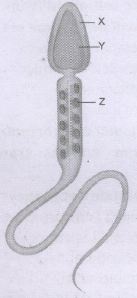
| X | Y | Z |
|---|---|---|
| Nucleus | Acrosome | Mitochondria |
| X | Y | Z |
|---|---|---|
| Acrosome | Nucleus | Mitochondria |
| X | Y | Z |
|---|---|---|
| Mitochondria | Acrosome | Nucleus |
| X | Y | Z |
|---|---|---|
| Nucleus | Acrosome | Mitochondria |
6.
Identify the mismatched pair
Castration - Orchidectomy
Spermiogenesis - Release of sperms into the cavity of seminiferous tubule
Ovulation - Release of egg from ovary
Capacitation - Process enabling the sperm to penetrate the eg
7.
Statement (1): During spermiation, the sperms are released into the cavity of seminiferous tubule.
Statement (2): During spermiogenesis, the spermatids get mature into sperms.
Statement 1 is correct; statement 2 is incorrect
Statement 1 is incorrect; statement 2 is correct
Both the statements 1 and 2 are correct.
Both the statements 1 and 2 are incorrect
8.
An adult male produces an average of __________________ sperms per day
200 million
300 million
300 million
120 million
9.
Assertion (A): Cervix is common site of ectopic pregnancies
Reason (R): Implantation of fertilized ovum outside uterus
A is wrong, R is right.
A is right, R is wrong
A and R are right. R does not explains A.
Both A and R are wrong.
10.
Assertion (A): In scrotum, the temperature is maintained 2 - 3°C lower than body temperature.
Reason (R): Reduced temperature results in efficient sperm production
R explains A.
A is right R is wrong.
A and R are right. R does not explains A
Both A and R are wrong
11.
______ cells nourish the sperms.
Leydig cells
Interstitial cells
Spermatogonic cells
Sertoli cells
12.
____ is not linked to male reproductive system.
Prostate gland
Corpus albicans
Cowper's gland
bulbourethral glands
13.
The Androgen Binding Protein (ABP) is produced by ________.
Leydig cells
Hypothalamus
Sertoli cells
Pituitary gland
14.
15.
16.
Describe the structure of the head of a human sperm.
17.
Define parturition and labour.
18.
Mention the hormones secreted by the placenta during pregnancy.
19.
What do you mean by 'Sperm lysin'? Mention its function.
20.
What is endometrium?
21.
What is the significance of epididymis?
22.
Name the Cells noticed in the epithelial layer of Seminiferous tubules.
23.
Name the hormones produced from the placenta during pregnancy.
24.
25.
26.
Suggest few hygiene tips to face healthy and happy menses.
27.
Define lactation And explain its hormonal background.
28.
Explain gastrulation.
29.
What is the significance of allantois?
30.
What is acrosome reaction?
31.
Why does menstrual flow occur?
32.
What is corpus luteum?
33.
What is the role of FSH & LH in spermatogenesis?
34.
Identify the given image and label its parts marked as a, b, c and d
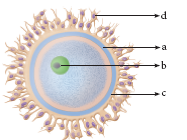
35.
Mention the importance of the position of the testes in humans.
36.
What is colostrum? Write its significance.
37.
Name the three primary germ layers of embryo. Also, mention any three organs or organ systems developing from each layer.
38.
Write a note on embryonic membranes
39.
Explain the structure and function of mammary glands.
40.
Write a note a extra embryonic membranes.
41.
Explain the process of fertilization in human beings.
42.
Differentiate Spermatogenesis and oogenesis.
1.
(c)
It contains Ig A antibodies
2.
(c)
Cowper's gland
3.
(a)
Relaxin
4.
(b)
Helps in the collection of the ovum after ovulation
5.
(b)
| X | Y | Z |
|---|---|---|
| Acrosome | Nucleus | Mitochondria |
6.
(b)
Spermiogenesis - Release of sperms into the cavity of seminiferous tubule
7.
(c)
Both the statements 1 and 2 are correct.
8.
(a)
200 million
9.
(a)
A is wrong, R is right.
10.
(a)
R explains A.
11.
(d)
Sertoli cells
12.
(b)
Corpus albicans
13.
(c)
Sertoli cells
14.
(b)
15.
(d)
16.
(i) The head comprises of two parts acrosome and nucleus.
(ii) Acrosome is a small cap like poin structure present at the tip of the nuel and is formed mainly from the golgi of the spermatid.
(iii) It contains hyaluronidase, a protein enzyme, popularly known as sperm lysin which helps to penetrate the ovum fertilization.
(iv) The nucleus is flat and oval.
17.
Parturition is the completion of pregnancy and giving birth to the baby. The series of events that expels the infant from the uterus is collectively called "labour".
18.
(i) human Chorionic Gonadotropin (hCG)
(ii) human Chorionic Somatomammotropin (hCS)
(iii) human Placental Lactogen (hPL)
(iv) Oestrogen and progesterone and relaxin.
19.
(i) Sperm lysin is a proteolytic enzyme secreted in the acrosome of sperm.
(ii) It helps to penetrate the ovum during fertilization.
(iii) It is also called as hyaluronidase.
20.
(i) The inner glandular layer of the uterus is called endometrium.
(ii) The endometrium undergoes cyclic changes during the menstrual cycle.
21.
(i) The epididymis is a single highly coiled tube that temporarily stores the spermatozoa and they undergo physiological maturation and acquire increased motility and fertilizing capacity.
(ii) It is found in the testis.
22.
(a) Sertoli cells or Nurse cells
(b) Spermatogonic cells or male germ cells.
23.
Human Chorionic Gonadotropin (hCG), Human Chorionic Somatotropin (hCS) (or) Human Placental Lactogen (hPL), oestrogens and progesterone.
24.
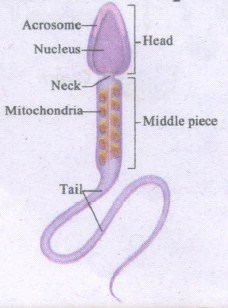
25.
26.
(i) Change the napkins periodically for 4 to 6 hours.
(ii) Wash your genitals properly using clean lukewarm water.
(iii) Avoid using soaps and vaginal hygiene products.
(iv) Discard the sanitary napkins by incinerating.
(v) Wear clean and comfortable underwear. Avoid tight clothing.
(vi) Have healthy diet rich in Iron content and vitamins.
27.
Lactation is the production of milk by mammary glands. The mammary glands show changes during every menstrual cycle, during pregnancy and lactation. Increased level of estrogens, progesterone and human Placental Lactogen (hPL) towards the end of pregnancy stimulate the hypothalamus towards prolactin - releasing factors. The anterior pituitary responds by secreting prolactin which plays a major role in lactogenesis.
28.
The inner cell mass in the blastula is differentiated into epiblast and hypoblast immediately after implantation. The hypoblast is the embryonic endoderm and the epiblast is the ectoderm. The cells remaining in between the epiblast and the endoderm form the mesoderm. Thus the transformation of the blastocyst into a gastrula with the primary germ layers by the movement of the blastomeres is called gastrulation.
29.
(i) The allantois is an extra embryonic membrane which forms a small out pocketing of embryonic tissue at the caudal end of the yolk sac.
(ii) It is the structural base for the umbilical cord that links the embryo to the placenta and ultimately it becomes part of the urinary bladder.
30.
(i) During fertilization the acrosomal membrane of the sperm releases the proteolytic enzyme called hyaluronidase to break the hyaluronic acid which .binds the follicular cells around the ovum.
(ii) This is called acrosome reaction. This helps the sperm to enter the ovum.
31.
(i) Menstrual flow occurs due to breakdown of endometrial lining of the uterus and its blood vessels due to decline in the level of progesterone and oestrogen.
(ii) This happens when the released ovum not fertilized.
32.
(i) It is a temporary endocrine gland formed from the ruptured Graafian follicle.
(ii) It secretes a large amount of progesterone which is essential for maintenance of the endometrium of the uterus. If fertilization does not occur it degenerates.
33.
(i) FSH stimulates testicular growth and enhances the production of Androgen Binding protein (ABP) by the sertoli cells and helps in the process of spermiogenesis.
(ii) LH acts on the Leydig cells and stimulates the synthesis of testosterone which in turn stimulates the process of spermatogenesis.
34.
Human Ovum
a - Vitelline membrane
b - Nucleus
c - Zona Pellucida
d - Corona radiata
35.
1. Testes are the primary male sex organs.
2. They are a pair of ovoid bodies lying in the scrotum.
3. The scrotum is a sac of skin that hangs outside the abdominal cavity.
4. Since viable sperms cannot be produced at normal body temperature, the scrotum is placed outside the abdominal cavity to provide a temperature 2-3°C lower than the normal internal body temperature.
5. Thus, the scrotum acts as a thermoregulator for spermatogenesis.
36.
Colostrum is the yellowish fluid produced from the mother's mammary glands during initial few days of location, after parturition.
Significance:
1. It has less lactose than milk and almost no fat, but it contains more proteins, vitamin A and minerals.
2. Colostrum is also rich in IgA antibodies.
3. This helps to protect the infant's digestive tract against bacterial infection.
4. Breast milk is the ideal food for infants as it contains all the constituents in suitable concentration and is easily digestable.
5. It is fully sufficient till about 6 months of age and all infants must be breast fed by the mother to ensure the growth of a healthy baby.
37.
| Germ Layers | Organ (or) Organ Systems | |
|---|---|---|
| a. | Ectoderms | Central nervous system, peripheral nervous system, and mammary gland. |
| b. | Mesoderm | Cartilage and bones, muscles, urinogenital organs |
| c | Endoderm | Epithelium of respiratory tract, liver, thyroid gland. |
38.
The extra embryonic membranes include amnion, yolk sac, allantois, and chorion. They protect the embryo from desiccation, mechanical shock, absorption of nutrients, gaseous exchange and placental formation.
| Embryonic membrane | Function | |
| a. | Amnion | Innermost two-layered membrane with amniotic fluid providing buoyancy to embryo from injury regulates temperature and acts as a medium for fetal movement. |
| b. | Chorion | Outermost layer covering and protecting the embryo. |
| c. | Allantois | Forms an outpocketing of embryonic tissue at the tail of yolk sac which forms umbilical cord that links embryo to placenta and finally becomes the part of urinary bladder |
| d. | Yolk sac | Forms a part of gut and acts a source of earliest blood cells and blood vessels |
39.
The mammary glands are modified sweat glands present in both sexes. It is rudimentary in the males and functional in the females. A pair of mammary glands is located in the thoracic region. It contains glandular tissue and variable quantities of fat with a median nipple surrounded by a pigmented area called the areola. Several sebaceous glands called the areolar glands are found on the surface and they reduce cracking of the skin of the nipple. Internally each mammary gland consists of 2-25 lobes, separated by fat and connective tissues. Each lobe is made up of lobules which contain acini or alveoli lined by epithelial cells. Cells of the alveoli secrete milk. The alveoli open into mammary tubules. The tubules of each lobe join to form a mammary duct. Several mammary ducts join to form wider mammary ampulla which is connected to the lactiferous duct in the nipple. Under the nipple, each lactiferous duct expands to form the lactiferous sinus which serves as a reservoir of milk. Each lactiferous duct opens separately by a minute pore on the surface of the nipple.
Normal development of the breast begins at puberty and progresses with changes during each menstrual cycle. In non-pregnant women, the glandular structure is largely underdeveloped and the breast size is largely due to amount of fat deposits. The size of the breast does not have an influence on the efficiency of lactation.
40.
The extra embryonic membranes namely the amnion, yolk sac allantois and chorion protect the embryo from dessication, mechanical shock and help in the absorption of nutrients and exchange of gases.
Amnion
The amnion is a double layered translucent membrane filled with the amniotic fluid. It provides a buoyant environment to protect the developing embryo from injury, regulates the temperature of the foetus and provides a medium in which the foetus can move.
Yolk sac:
The yolk sac forms a part of the gut and is the source of the earliest blood cells and blood vessels.
Allantois:
The allantois is an extra embryonic membrane which forms a small out pocketing of embryonic tissue at the caudal end of the yolk sac. It is the structural base for the umbilical cord that links the embryo to the placenta and ultimately it becomes part of the urinary bladder.
Chorion:
The chorion is the outermost membrane which encloses the embryo and all other membranes and also helps in the formation of the placenta.
Chorionic Villi:
The trophoblast cells in the blastocyst send out several finger like projections called chorionic villi carrying foetal blood and are surrounded by sinuses that contain maternal blood. The chorionic villi and the uterine tissues form the disc-shaped placenta.
Placenta:
Placenta is a temporary endocrine organ formed during pregnancy and it connects the foetus to the uterine wall through the umbilical cord. It is the organ by which the nutritive, respiratory and excretory functions are fulfilled.
41.
(i) Fertilisation occurs when a haploid sperm fuses with a haploid ovum to form a fertilized egg or diploid zygote.
(ii) The sperms deposited in the female reproductive tract undergo capacitation, which is a biochemical event that enables the sperm to penetrate and fertilise the egg.
(iii) Fertilization occurs only if the ovum and sperms are transported simultaneously to the ampullary isthmic junction of the fallopian tube.
(Iv) Before a sperm can enter the egg, it must penetrate the multiple layers of granulosa (follicular) cells which are around the ovum forming the corona radiata. The follicular cells are held together by an adhesive cementing substance called hyaluronic acid.
(v) The acrosomal membrane disintegrates releasing the proteolytic enzyme, hyaluronidase during sperm entry through the corona radiata and zona pellucida. This is called acrosomal reaction.
(vi) Once fertilisation is accomplished, cortical granules from the cytoplasm of the ovum form a barrier called the fertilisation membrane around the ovum preventing further penetration of other sperms. Thus polyspermy is prevented.
This is followed by cleavage
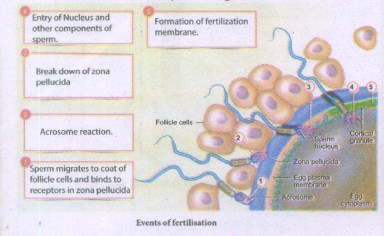
42.
| Spermatogenesis | Oogenesis |
| It takes place in the seminiferous tubules of testis |
It occurs in the follicles of the ovary |
| It begins at puberty in males | In females it initiates in the foetal stages. |
| Spermatogonia are the sperm mother cells and many of them undergo maturation phase to form sperms. |
Oogonia is the the egg mother cell and only one cell undergoes maturation phase at a time except in cases of fraternal twins. |
| I & II Mieotic divisions are equal and each spermatogonia forms 4 haploid spermatids. |
I & II meiotic divisions are unequal and finally only one haploid ovum and 3 small haploid polar bodies are formed |
| The spermatids undergo a stage called Spermiogenesis to become functional sperm. |
No such changes are observed. |
| The meiotic divisions are completed and spermaticly are formed. |
The second meiotic division is never completed it fertilization does not take lace. |

12th Standard Syllabus & Materials
12th Standard
TN 12th Computer Applications களப்பெயர் முறைமை (DNS) Sample Question Papers Study Material - QB365 Set A
NEW12th Standard
TN 12th Computer Applications வலையமைப்பு எடுத்துக்காட்டுகள் மற்றும் நெறிமுறைகள் Sample Question Papers Study Material - QB365 Set A
NEW12th Standard
TN 12th Computer Applications கணினி வலையமைப்பு ஓர் அறிமுகம் Sample Question Papers Study Material - QB365 Set A
NEW12th Standard
TN 12th Computer Applications PHP-உடன் MySQL-ஐ இணைத்தல் Sample Question Papers Study Material - QB365 Set A



Tamilnadu Stateboard 12th Standard Subjects

Maths

Chemistry

Physics
Biology

Computer Science

Business Maths and Statistics

Economics

Commerce

Accountancy

History

Computer Applications
Biology
Computer Technology
Computer Applications
Computer Science
Business Maths and Statistics
Commerce
Economics
Maths
Chemistry
Physics
Computer Technology
History
Accountancy

Tamil

English

French
Tamilnadu Stateboard Standards

