
 100% FREE ACCESS
12th Standard Syllabus & Materials
12th Standard
TN 12th Computer Applications மின்னணு தரவு பரிமாற்றம் Sample Question Papers Study Material - QB365 Set A
NEW12th Standard
TN 12th Computer Applications மின் - வணிக பாதுகாப்பு அமைப்புகள் Sample Question Papers Study Material - QB365 Set A
NEW12th Standard
TN 12th Computer Applications மின்னணு செலுத்தல் முறைகள் Sample Question Papers Study Material - QB365 Set A
NEW12th Standard
TN 12th Computer Applications மின் - வணிகம் Sample Question Papers Study Material - QB365 Set A
NEW12th Standard
TN 12th Computer Applications திறந்த மூல கருத்துருக்கள் Sample Question Papers Study Material - QB365 Set A
NEW12th Standard
TN 12th Computer Applications வலையமைப்பு வடமிடல் Sample Question Papers Study Material - QB365 Set A

Published on: 29/01/2021
12th Standard Bio-Zoology English Medium Molecular Genetics Reduced Syllabus Important Questions With Answer Key 2021
Download Tamil Nadu 12th Standard Biology question papers, model tests, one-mark questions, important questions, and public exam papers in PDF format. Free study materials and answer keys for TN State Board students.
Questions + Answers key
Take MCQ Biology Test1.
In sickle cell anaemia, the __________ codon of \(\beta \) - globin gene is modified
Eighth
Seventh
Sixth
Nineth
2.
The sequence of bases in coding strand of DNA is GAGTTAGCAGGC, then the sequence of codons in primary transcript is ___________
C U C A U A C G C C C G
C U C A A U C G U C C G
U C A G A U C U G C G C
U U C A A U C G U G C G
3.
Capping of mRNA occurs using __________
Poly A residues
Methyl guanosine triphosphate
Deoxy ribonucleotide triphosphate
Ribonucleotide triphosphate
4.
How many types of DNA polymerases does a eukaryotic cell possess?
two
three
four
five
5.
Semi-conservative model of replication was proved by _________
Hershey and Chase
Griffith
Meselson and Stahl
Macleod and McCarty
6.
In Hershey - Chase experiment, the DNA of T2 phase was made radioactive by using__________
32p
35S
35p
32S
7.
Escherichia coli fully labeled with N14 medium. The two strands of DNA molecules of the first generation bacteria have
Different density and do not resemble parent DNA
Different density but resemble parent DNA
Same density and resemble parent DNA
Same density but do not resemble parents DNA
8.
Wobble hypothesis ________.
proves that many tRNAs are needed to transport specific amino acids
proves that the bases in tRNA need not match with mRNA
helps in economic usage of tRNA
proves that one tRNA can carry many amino acids
9.
The codon _______ has dual function.
UAA
AUG
UGA
UUU
10.
Human Genome was sequenced in ________.
1979
2015
1989
2001
11.
Griffith's experiments proved that _________.
RNA is involved in protein synthesis
Bacteria undergoes asexual reproduction
DNA is the genetic material
DNA is made of two strands
12.
The term gene was coined by ________
Mendel
Lyon
Johannsen
Hershey
13.
When lactose is present in the culture medium:
Transcription of lac y, lac z, lac a genes occurs.
Repressor is unable to bind to the operator.
Repressor is able to bind to the operator.
Both (a) and (b) are correct.
14.
15.
DNA and RNA are similar with respect to _____.
Thymine as a nitrogen base
A single-stranded helix shape
Nucleotide containing sugars, nitrogen bases and phosphates
The same sequence of nucleotides for the amino acid phenyl alanine
16.
Following is a DNA sequence representing a part of gene TAC TCG CCC TAT UAA CCC AAA ACC TCT using this derive
(a) The RNA transcript
(b) The spliced mRNA (consider all the codons with two Aderine bases are introns)
(c) The total number of amino acids coded by the mRNA
17.
What is a primer?
18.
Chemically DNA is more stable than RNA- Justify.
19.
State Chargaff's rule.
20.
Define a operon.
21.
Distinguish replication and transcription.
22.
State one gene one enzyme hypothesis
23.
Distinguish between structural gene, regulatory gene and operator gene
24.
In E.coli, three enzymes β- galactosidase, permease and transacetylase are produced in the presence of lactose. Explain why the enzymes are not synthesized in the absence of lactose.
25.
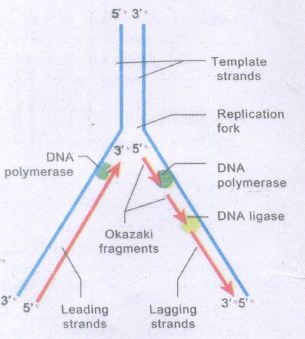
Differentiate - Leading stand and lagging strand
26.
What are SNPs? Mention its uses.
27.
Expand (a) ETS and (b) YAC.
28.
What are UTR's?
29.
Degeneracy of codon - comment.
30.
31.
Which is the widely accepted model of DNA replication? Who has proved it?
32.
DNA acts as genetic material for the majority of living organisms and not the RNA. Give reasons to support the statement.
33.
Mention any two ways in which single nucleotide polymorphism (SNPs) identified in human genome can bring revolutionary change in biological and medical science.
34.
Draw a flow chart depicting the steps of DNA fingerprinting technique.
35.
Explain the transcription process in prokaryotes with needed diagram.
36.
Explain the properties of DNA that makes it an ideal genetic material.
37.
List the salient features of genetic code.
38.
39.
List the salient features of classical concept of gene.
40.
How is the two stage process of protein synthesis advantageous?
41.
What are the three structural differences between RNA and DNA?
42.
Why the human genome project is called a mega project?
1.
(c)
Sixth
2.
(b)
C U C A A U C G U C C G
3.
(b)
Methyl guanosine triphosphate
4.
(d)
five
5.
(c)
Meselson and Stahl
6.
(a)
32p
7.
(b)
Different density but resemble parent DNA
8.
(c)
helps in economic usage of tRNA
9.
(b)
AUG
10.
(d)
2001
11.
(c)
DNA is the genetic material
12.
(c)
Johannsen
13.
(d)
Both (a) and (b) are correct.
14.
(c)
15.
(c)
Nucleotide containing sugars, nitrogen bases and phosphates
16.
(a) RNA transcript: AUG UGC GGG AUA GGG UUU UGG AGA
(b) Spliced mRNA: AUG UGC GGG GGG UUU UGG
(c) 6 aminoacids are coded by mRNA
17.
A primer is a short stretch of RNA. It initiates the formation of new strand. The primer produces 3' -OH end on the sequence of ribonucleotides, to which deoxyribonucleotides are added to form a new strand.
18.
In DNA, the two strands being complementary, if separated (denatured) by heating can come together (renaturation) when appropriate condition is provided. Further, 2' OH group present at every nucleotide in RNA is a reactive group that makes RNA liable and easily degradable. RNA is also known to be catalytic and reactive. Hence, DNA is chemically more stable and chemically less reactive when compared to RNA. Presence of thymine instead of uracil in DNA confers additional stability to DNA.
19.
According to Erwin Chargaff,
a) Adenine pairs with thymine with two hydrogen bonds.
b) Guanine pairs with cytosine with three hydrogen bonds.
20.
The clusters of gene with related functions are called operon. They usually transcribe single mRNA molecules. Eg Lac operon in E.coli
21.
| Replication | Transcription |
| 1) Replication is a process by which a DNA molecule makes as a copy of itself. | 1) The process of copying genetic information from one strand of DNA into RNA is called transcription. |
| 2) It takes place during phase of cell cycle. | 2) It takes place during protein synthesis. |
| 3) It requires DNA and enzymes like DNA polymerases and Ligases. | 3) It requires DNA and enzymes like RNA Polymerases |
22.
The experiments of George Beadle and Edward Tatum in the early 1940's on Neurospora crassa (the red bread mould) led them to propose one gene-one enzyme hypothesis, which states that one gene controls the production of one enzyme. This is called one gene one enzyme hypothesis.
23.
| Structural gene | Regulatory gene | operator gene |
| They are concerned with the transcription of mRNA for the synthesis of particular polypeptide |
It controls the functioning of operator gene |
It determines the functioning of operator gene |
| They function only when RNA polymerases join |
It produces a repressor or apo- repressor for blocking operator gene |
It works only when it is not blocked by repressor |
| They function by forming mRNA for specific polypeptide |
It functions through the formation of mRNA of repressor or apo-repressor |
It functions through the presence (or) absence of repressor |
24.
When lactose is absent "i" gene regulates and produces repressor mRNA in the absence of lactose, which blocks the transcription. The repressor protein binds to the operator region of the operon and as a result prevents RNA polymerase from binding to the operon. The operon will be switched off (stop) in this situation.
25.
During DNA replication, One acts as the leading strand and the other is the lagging strand.
| Leading Strand | Lagging Strand |
|---|---|
| lt is continuously formed as replicated strand of DNA without any gap |
It is replicated strand of DNA which is formed by the joining of short segments called okazaki segment |
| The growth of leading strand is in 5' → 3'direction | Each okazaki segment grows in 5' → 3'direction but the growth of the lagging strand is in 5' → 3'direction. |
| lt does not require DNA ligase for its growth and used in PCR | DNA ligase is required for the formation of lagging strand from okazaki segments |
26.
SNPs: Single nucleotide polymorphism. It helps to find chromosomal locations for disease associated sequences and tracing human history.
27.
ETS: Expressed Sequence Tags
YAC: Yeast Artificial Chromosomes
28.
mRNA also have some additional sequences that are not translated and are referred to as Untranslated Regions (UTR). UTRs are present at both 5' end (before start codon) and at 3' end (after stop codon).
29.
A degenerate code means that more than one triplet codon could code for a specific amino acid. For example, codons GUU, GUC, GUA and GUG code for valine.
30.
31.
Semi-conservative replication model. It was proved by Meselson and Stahl in 1958.
32.
a) RNA was reactive and hence highly unstable.
b) Some RNA molecules acts as gene regulators by binding to DNA and affect gene expression.
c) Uracil of RNA is less stable than thymine of DNA.
33.
There are 1.4 million locations where single base DNA differences (Called SNPs - Single Nucleotide Polymorphism - pronounce as snips) occurs in human's genome.
(i) By tracing human history
(ii) By finding chromosomal locations for disease associated sequences
34.
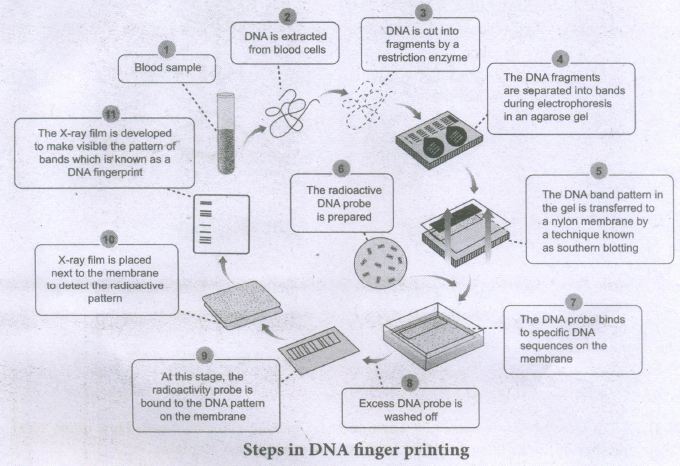
35.
In prokaryotes, there are three major types of RNAs: mRNA, tRNA, and rRNA. All three RNAs are needed to synthesize a protein in a cell. The mRNA provides the template, tRNA brings amino acids and reads the genetic code, and rRNAs play structural and catalytic role during translation. There is a single DNA-dependent RNA polymerase that' catalyses transcription of all types of RNA. It binds to the promoter and initiates transcription (Initiation).
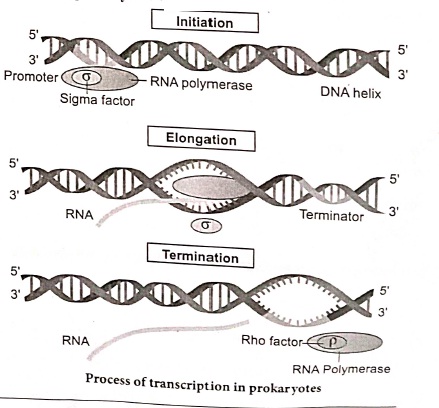
The polymerases binding sites are called promoters. It uses nucleoside triphosphate as substrate and polymerases in a template depended fashion following the rule of complementarity. After the initiation of transcription, the polymerase continues to elongate the RNA, adding one nucleotide after another to the growing RNA chain. Only a short stretch of RNA remains bound to the enzyme, when the polymerase reaches a terminator at the end of a gene, the nascent RNA falls off, so also the RNA polymerase.
The RNA polymerase is only capable of catalyzing the process of elongation. The RNA polymerase associates transiently with initiation factor sigma (\(\sigma \)) and termination factor rho (\(\rho \)) to initiate and terminate the transcription, respectively. Association of RNA with these factors instructs the RNA polymerase either to initiate or terminate the process of transcription.
In bacteria, since the mRNA does not require any processing to become active and also since transcription and translation take place simultaneously in the same compartment (since there is no separation of cytosol and nucleus in bacteria), many times the translation can begin much before the mRNA is fully transcribed. This is because the genetic material is not separated from other cell organelles by a nuclear membrane consequently; transcription and translation can be coupled in bacteria.
36.
i) Self Replication: It should be able to replicate. According to the rule of base pairing and complementarity, both nucleic acids (DNA and RNA) have the ability to direct duplications. Proteins fail to fulfill this criteria.
ii) Stability: It should be stable structurally and chemically. The genetic material should be stable enough not to change with different stages of life cycle, age or with change in physiology of the organism. Stability as one of property of genetic material was clearly evident in Griffith's transforming principle. Heat which killed the bacteria did not destroy some of the properties of genetic material. in DNA the two strands being complementary, if separated (denatured) by heating can come together (renaturation) when appropriate condition is provided. Further, 2' OH group present at every nucleotide in RNA is a reactive group that makes RNA liable and easily degradable. RNA is also known to be catalytic and reactive. Hence, DNA is chemically more stable and chemically less reactive when compared to RNA. Presence of thymine instead of uracil in DNA confers additional stability to DNA.
iii) Information storage: It should be able to express itself in the form of 'Mendelian characters'. RNA can directly code for protein synthesis and can easily express the characters. DNA, however, depends on RNA for synthesis of proteins. Both DNA and RNA can act as genetic material, but DNA being more stable stores the genetic information and RNA transfers the genetic information.
iv) Variation through mutation: It should be able to mutate. Both DNA and RNA are able to mutate. RNA being unstable mutates at a faster rate. Thus viruses having RNA genome with shorter life span can mutate and evolve faster. The above discussion indicates that both RNA and DNA can function as genetic material. DNA is more stable and is preferred for storage of genetic information.
37.
The salient features of genetic code are as follows:
(i) The genetic codon is a triplet code and 61 codons code for amino acids and 3 codons do not code for any amino acid and function as stop codon (Termination).
(ii) The genetic code is universal. It means that all known living systems use nucleic acids and the same three base codons (triplet codon) direct the synthesis of protein from amino acids. for example, the mRNA (UUU) codon codes for phenylalanine in all cells of all organisms. some exceptions are reported in prokaryotic, mitochondrial and chloroplast genomes. However similarities are more common than differences. Most part of the genetic code is universal in prokaryotes and eukaryotes.
(iii) A non-overlapping codon means that the same letter is not used for two different codons. for instance, the nucleotide sequence GUU GUC represents only two codons.
(iv) It is comma less, which means that the message would be read directly from one end to the other i.e., no punctuation are needed between two codes.
(v) A degenerate code means that more than one triplet codon could code for a specific amino acid. for example, codons GUU, GCU, GUA and GUG code for valine.
(vi) Non-ambiguous code means that one codon will code for one amino acid.
(vii) The code is always read in a fixed direction i.e. from 5'⟶3' direction called polarity.
(viii) AUG has dual functions. It acts as a initiator codon and also codes for the amino acid methionine.
(ix) UAA, UAG (tyrosine) and UGA (tryptophan) codons are designated as termination (stop) codons and also are known as "non-sense" codons.
38.
39.
According to the classical concept of gene introduced by Sutton in 1902, genes have been defined as discrete particles that follow Mendelian rules of inheritance, occupy a definite locus in the chromosome and are responsible for the expression of specific phenotypic character. They show the following properties:
(i) Number of genes in each organism is more than the number of chromosomes; hence several genes are located on the same chromosome.
(ii) The genes are arranged in a single linear order like beads on a string.
(iii) Each gene occupies a specific position called locus.
(iv) Genes may exist in several alternate forms called alleles.
(v) Genes may undergo sudden change in positions and composition called mutations.
(vi) Genes are capable of self-duplication producing their own copies.
40.
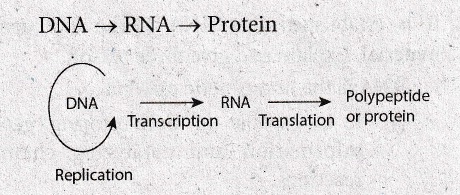
1. The process protein synthesis actually consists of two stages-transcription and translation.
2. In eukaryotic cells, transcription takes place in the nucleus. During transcription, DNA is used as a template to make a molecule of messenger RNA (mRNA). The molecule of mRNA then leaves the nucleus and reaches ribosome in the cytoplasm, where translation occurs.
3. During translation, the genetic code in mRNA is read and used to make a protein.
4. These two processes are summedup by the central dogma of molecular biology
41.
Structural difference between DNA and RNA.
| DNA | RNA |
| It is double stranded with exception of some viruses | It is generally single stranded |
| It is the genetic material in all living organism | It is genetic material in some viruses only |
| The sugar is deoxy ribose (pentose) | The sugar is ribose (pentose) |
| Nitrogenous bases present are adenine, guanine, thymine and cytosine | Nitrogenous bases present are adenine, guanine, cytosine and uracil |
| It is less reactive, chemically and structurally more stable. | It is more reactive chemically and structurally less stable |
| It usually occurs inside the nucleus and in some cell organelles like mitochondria and chloroplasts. |
Very little RNA occurs inside the nucleus. most of its found in the cytoplasm |
42.
Human genome project was considered to be a mega project because
1. It had a specific goal to sequence for everybase pair present in the human genome. (Human Genome has 3.1647 billion nucleotide base pairs).
2. It took around 13 years of completion and got accomplished in year 2006.
3. It was a large-scale project, which aimed at developing new technology and generating new information in the field of genomic studies.
4. As a result of it, several news areas and avenues have opened up in the field of genetics, biotechnology and medical sciences.
5. It provided clues regarding the understanding of human biology.

12th Standard Syllabus & Materials
12th Standard
TN 12th Computer Applications களப்பெயர் முறைமை (DNS) Sample Question Papers Study Material - QB365 Set A
NEW12th Standard
TN 12th Computer Applications வலையமைப்பு எடுத்துக்காட்டுகள் மற்றும் நெறிமுறைகள் Sample Question Papers Study Material - QB365 Set A
NEW12th Standard
TN 12th Computer Applications கணினி வலையமைப்பு ஓர் அறிமுகம் Sample Question Papers Study Material - QB365 Set A
NEW12th Standard
TN 12th Computer Applications PHP-உடன் MySQL-ஐ இணைத்தல் Sample Question Papers Study Material - QB365 Set A



Tamilnadu Stateboard 12th Standard Subjects

Maths

Chemistry

Physics
Biology

Computer Science

Business Maths and Statistics

Economics

Commerce

Accountancy

History

Computer Applications
Biology
Computer Technology
Computer Applications
Computer Science
Business Maths and Statistics
Commerce
Economics
Maths
Chemistry
Physics
Computer Technology
History
Accountancy

Tamil

English

French
Tamilnadu Stateboard Standards

