
 100% FREE ACCESS
12th Standard Syllabus & Materials
12th Standard
TN 12th Computer Applications மின்னணு தரவு பரிமாற்றம் Sample Question Papers Study Material - QB365 Set A
NEW12th Standard
TN 12th Computer Applications மின் - வணிக பாதுகாப்பு அமைப்புகள் Sample Question Papers Study Material - QB365 Set A
NEW12th Standard
TN 12th Computer Applications மின்னணு செலுத்தல் முறைகள் Sample Question Papers Study Material - QB365 Set A
NEW12th Standard
TN 12th Computer Applications மின் - வணிகம் Sample Question Papers Study Material - QB365 Set A
NEW12th Standard
TN 12th Computer Applications திறந்த மூல கருத்துருக்கள் Sample Question Papers Study Material - QB365 Set A
NEW12th Standard
TN 12th Computer Applications வலையமைப்பு வடமிடல் Sample Question Papers Study Material - QB365 Set A

Published on: 29/01/2021
12th Standard Bio-Zoology English Medium Principles Of Inheritance and Variation Reduced Syllabus Important Questions With Answer Key 2021
Download Tamil Nadu 12th Standard Biology question papers, model tests, one-mark questions, important questions, and public exam papers in PDF format. Free study materials and answer keys for TN State Board students.
Questions + Answers key
Take MCQ Biology Test1.
Assertion (A): On diagnosis, Ramu is reported to have underdeveloped testis and gynaecomastia.
Reason (R): His karyotype reveals XXY condition
A is right but R is wrong
R explains A
Both A and R are wrong
Both and R are right but R is not the correct explanation of A
2.
ABO blood groups in humans are controlled by the gene I, It has three alleles - IA, IB and i. Since there are three different alleles) six different genotypes are possible. How many phenotypes can occur?
Three
One
Four
Two
3.
Which one of the following cannot be explained on the basis of Menders Law of Dominance?
The discrete unit controlling a particular character is called a factor
Out of one pair factors one is dominant and the other recessive
Alleles do not show any blending and both the characters recover as such in F2 generation
Factors occur in pairs
4.
The allele Io is called _______
Dominant allele
multiple allele
null allele
epistatic allele
5.
_________ is an inborn error of metabolism caused due to autosomal recessive gene.
Thalassemia
Albinism
Phenylketonuria
Huntington's chorea
6.
The gene responsible for ________ is inherited as an autosomal recessive lethal gene in man
Huntington's chorea
Albinism
Colourblindness
Phenylketonuria
7.
Depending on position of centromere and relative length of two arms human chromosomes can be classified into ________ type.
2
3
4
5
8.
__________ was first reported by John Cotto.
Erythroblastosis foetalis
Haemophilia
Colour blindness
Haplodiploidy
9.
The lygaeus type (XX - XY) type of sex determination is seen in ______
Fishes
Chickens
Human beings
Gypsy moth
10.
The ABO blood group was discovered by ________.
Sturli
Decastelle
Landsteiner
Alexander wiener
11.
“Universal Donor” and “Universal Recipients” blood group are _____and_______respectively
AB, O
O, AB
A, B
B, A
12.
13.
If the childs blood group is ‘O’ and fathers blood group is ‘A’ and mother’s blood group is ‘B’ the genotype of the parents will be ______.
IA IA and IB Io
IA Io and IB Io
IA Io and IoIo
IoIo and IB IB
14.
What can be the blood group of offspring when both parents have AB blood group?
AB only
A, B and AB
A, B, AB and O
A and B only
15.
Haemophilia is more common in males because it is a ______.
Recessive character carried by Y-chromosome
Dominant character carried by Y-chromosome
Dominant trait carried by X-chromosome
Recessive trait carried by X-chromosome
16.
Write the symptoms of Patau's syndrome.
17.
Write a note on Huntington's chorea.
18.
Complete the equation.
(a) Phenylalanine \(\underrightarrow { A } \) Tyrosine
(b) DOPA \(\underrightarrow { B } \) Melanin
19.
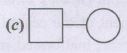
Observe the symbol used in pedigree analysis and give the proper terms they represent.



20.
Define Barr body.
21.
State Wiener Hypothesis on Rb-factor.
22.
Name the discoverers of antigen A, B, and AB.
23.
What is Rh factor or Rh antigen?
24.
25.
What is haplodiploidy?
26.
Write the causes and the differences between Haemophilia and Thalassemia
27.
The following table shows the genotypes for ABO blood grouping and this phenotypes. Complete the table by filling the gaps.
| S.No | Genotype | Phenotype |
| 1 | IAIA | A |
| 2 | ? | A |
| 3 | ? | AB |
| 4 | IOIO | ? |
28.
Role of Y- chromosome is crucial for maleness - Justify.
29.
What is the chemical reaction that is affected in people suffering from Albinism?
30.
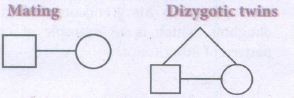
Draw the symbols for
(a) Mating (b) Dizygotic twins.
31.
What is karyotyping?
32.
What are the applications of Karyotyping?
33.
Explain the mode of sex determination in honeybees.
34.
Differentiate Intersexes from Supersexes
35.
Explain in detail about Erythroblastosis foetalis.
36.
Write a note on any 2 Mendelian disorders occurring in human beings.
37.
Write a note on thalassemia.
38.
Comment on the methods of Eugenics.
39.
Explain the inheritance of sex linked characters in human being.
40.
Give an account of genetic control of Rh factor.
41.
What is male heterogamety?
42.
1.
(b)
R explains A
2.
(c)
Four
3.
(c)
Alleles do not show any blending and both the characters recover as such in F2 generation
4.
(b)
multiple allele
5.
(b)
Albinism
6.
(b)
Albinism
7.
(c)
4
8.
(b)
Haemophilia
9.
(c)
Human beings
10.
(c)
Landsteiner
11.
(b)
O, AB
12.
(b)
13.
(b)
IA Io and IB Io
14.
(b)
A, B and AB
15.
(d)
Recessive trait carried by X-chromosome
16.
It is characterized by multiple and severe body malformations as well as profound mental deficiency. Small head with small eyes, cleft palate, malformation of the brain and internal organs are some of the symptoms of this syndrome.
17.
Huntington's chorea is inherited as an autosomal dominant lethal gene in man. It is characterized by involuntary jerking of the body and progressive degeneration of the nervous system, accompanied by gradual mental and physical deterioration. The patients with this disease usually die between the age of 35 and 40.
18.
(a) A = Phenylalanine hydroxylase
(b) B = Tyrosinase
19.
 - Male
- Carrier of sex-linked recessive
- Mating
- Affected male
20.
In 1949, Barr and Bertram first observed a condensed body in the nerve cells of female cat which was absent in the male. This condensed body was called sex chromatin by them and was later referred as Barr body.
21.
Wiener proposed the existence of eight alleles (R1, R2, R0,RZ, r, r1, r11, rY) at a single Rh locus. All genotypes carrying a dominant 'R allele' (Rl, R2 ,R0,RZ)will produce 'Rh-positive' phenotype and double recessive genotypes (rr, rr1, rr11, rry) will give rise to Rh-negative phenotype.
22.
Antigens A and Antigen B was discovered by Karl Landsteiner. Antigen AB was discovered by Von De Castelle and Sturli.
23.
(i) Rh factor is a immunogenic D antigen of the Rh blood group system found on the surface of the erythrocytes of Rhesus monkey and human beings. In the blood it is inherited as a dominant trait.
(ii) An individual having D antigen are Rh D (Rh") and those without D antigen are Rh D negative (Rh).
24.
25.
Haplodiploidy is a sex determination system in which males develop from unfertilized eggs are haploid, and female develops from fertilized egg and is diploid.
It is sometimes called arrhenotoky.
e.g., Honeybees, ants, and wasps.
26.
Haemophilia:
Cause:Haemophilia is caused by a recessive X-linked gene.
Thalassemia:
Cause:Thalassemia is caused by gene mutation resulting in excessive dumution of RBC'S due to the formation of abnormal hemoglobin molecules.
| Haemophilia | Thalassemia | |
| 1. | It is a hereditary disease | It is an autosomal recessive disorder. |
| 2. | Recessive gene for haemophilia lacks a normal dotting substance (thromboplastin) in blood. | Defects in either the alpha or beta globin chain causing the production of abnormal hemoglobin molecules resetting in anemia. |
| 3. | It is also known as bleeder's disease. | It is also known as cooley's anaemia. |
27.
2) lAIO
3) IAIB
4) O
28.
Current analysis of Y chromosomes has revealed numerous genes and regions with potential genetic function; some genes with or without homologous counterparts are seen on the X. Present at both ends of the Y chromosome are the pseudoautosomal regions (PARs) that are similar with regions on the X chromosome which synapse and recombine during meiosis. The remaining 95% of the Y chromosome is referred as the Non-combining Region of the Y (NRY). The NRY is divided equally into functional genes (euchromatic) and non-functional genes (heterochromatic). Within the euchromatin regions, is a gene called Sex-determining region Y (SRY). In humans, absence of Y chromosome inevitably leads to female development and this SRY gene is absent in X chromosome. The gene product of SRY is the testes determining factor (TDF) present in the adult male testis.
29.
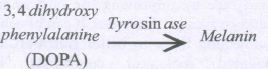
Affected individuals lack the tyrosinase enzyme which converts DOPA to melanin pigment responsible for skin colour. It is caused due to autosomal recessive genes
30.
31.
Karyotyping is a technique through which a complete set of chromosomes is separated from a cell and the chromosomes are arranged in pairs. An idiogram refers to a diagrammatic representation of chromosomes.
32.
(i) It helps in gender identification.
(ii) It is used to detect the chromosomal aberrations like deletion, duplication, translocation, invasion and nondisjunction of chromosomes.
(iii) It helps to identify the abnormalities of chromosomes like aneuploidy.
(iv) It is also used in predicting the evolutionary relationships between species.
(v) Genetic diseases in human beings can be detected by this technique.
33.
Sex determination in honeybees
sex determination is as follows
1. Haploid sex determination is seen in honeybees, it is based on the number of sets of chromosome, an individual receives.
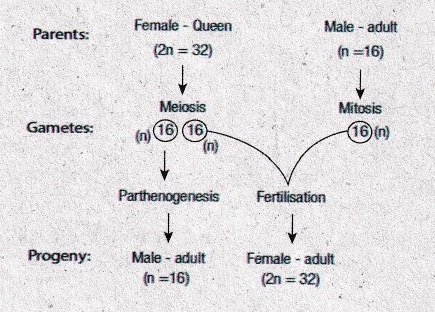
2. When the ovum is fertilized by a male gamete the zygote (2n = 32) develops into a female i.e., a queen or worker.
3. When the haploid ovum develops by parthenogenesis. i.e., without fertilization, a male individual, called drone is formed as adult male.
4. The male honeybees (drone) is haploid (with n = 16) and forms sperms by mitosis.
34.
Intersexes:
1. Intersexes refers to the individuals having the characteristics of both female and male sexes and their sexual anatomy does not seem to fit the typical definition of male or female.
Supersexes:
1. Supersexes ar formed as a result of abnormal combination of sex chromosomes.
2. Example : Super males in humans human beings have 44+XYY
35.
Rh incompatability has great significance in childbirth. If a woman is Rh negative and the man is Rh positive, the foetus may be Rh positive having inherited the factor from its father. The Rh negative mother becomes sensitized by carrying Rh-positive foetus within her body. Due to damage of blood vessels, during childbirth, the mother's immune system recognizes the Rh antigens and gets sensitized. The sensitized mother produces Rh antibodies. The antibodies are IgG type which are small and can cross placenta and enter the foetal circulation. By the time the mother gets sensitized and produce anti 'D' antibodies, the child is delivered.
Usually, no effects are associated with exposure of the mother to Rh positive antigen during· the first childbirth, subsequent Rh positive children carried by the same mother may be exposed to antibodies produced by the mother against Rh antigen, which are carried across the placenta into the foetal blood circulation. This causes haemolysis of foetal RBCs resulting in haemolytic jaundice and anaemia. This condition is known as Erythroblastosis foetalis or Haemolytic disease of the newborn (HDN).
36.
The Mendelian disorders in human beings are
(a) Thalassemia
(b) Sickle cell anaemia
(c) Huntington chorea
(d) Phenylketonuria
(e) Albinism
(a) Thalassemia
(i) Thalassemia is an autosomal recessive disorder. It is caused by gene mutation resulting in excessive destruction of RBC's due to the formation of abnormal haemoglobin molecules.
Normally haemoglobin is composed of four polypeptide chains, two alpha and two beta globin chains.
(ii) Thalassemia patients have defects in either the alpha or beta globin chain causing the production of abnormal haemoglobin molecules resulting in anaemia.
Classified based on heaemoglobin
Alpha Thalassemia:
(i) Mutation or deletion of one or more of the four alpha gene alleles.
(ii) It is controlled by two closely linked genes HBAI and HBA2 on chromosome 16.
Beta Thalassemia:
(i) Production of beta globin chain is affected
(ii) It is controlled by a single gene (HBB) on chromosome 11.
(iii) It's is also known as Cocley's anemia.
(iv) It increases the alpha chain production and damages the membranes of RBC.
Huntington's chorea:
(i) It is inherited as an autosomal dominant lethal gene in man.
(ii) It is characterized by involuntary jerking of the body and progressive degeneration of the nervous system, accompanied by gradual mental and physical deterioration.
(iii) The patients with this disease usually die between the age of 35 and 40.
37.
(i) Thalassemia is an autosomal recessive disorder. It is caused by gene mutation resulting in excessive destruction of RBC's due to the formation of abnormal haemoglobin molecules. Normally haemoglobin is composed of four polypeptide chains, two ph and two bet globin chains. Thalassemia patients have defects in either the alpha or beta globin chain causing the production of abnormal haemoglobin molecules resulting in anaemia.
(ii) Thalassemia. is classified into alpha and beta based on which chain of haemoglobin molecule is affected. It is controlled by two closely linked genes HBAI and HBA2 on chromosome 16.Mutation or deletion of one or more of the four alpha gene alleles causes Alpha Thalassemia. In Beta Thalassemia, production of beta globin chain is affected. It is controlled by a single gene (HBB) on chromosome 11. It is the most common type of Thalassemia and is also known as Cooley's anaemia. In this disorder the alpha chain production is increased and damages the membranes of RBC
38.
Application of the laws of genetics for the improvement of human race is called eugenics.
Two methods of Eugenics are:
(i) Constructive method or Positive eugenics
(ii) Restrictive method or Negative eugenics
(i) Positive eugenics: Positive eugenics attempts to increase consistently better or desirable germplasm and to preserve the best germplasm of the society. The desirable traits can be increased by adopting the following measures:
(a) Early marriage of those having desirable traits
(b) Subsiding the fit and establishing sperm and egg banks of precious germ plasm.
(c) Educating the basic principles of genetics and eugenics.
(d) Improvement of environmental conditions.
(e) Promotion of genetic research.
(ii) Negative eugenics: Negative eugenics attempts to eliminate the defective germplasm of the society by adopting the following measures:
(a) Sexual separation of the defectives
(b) Sterilization of the defectives
(c Control of immigration and
(d) Regulation of marriages
39.
(i) The inheritance of a trait that is determined by a gene located on one of the sex chromosomes is called sex linked inheritance.
(ii) Genes present on the differential region of X or Y chromosomes are called sex linked genes. The genes present in the differential region of "X" chromosome are called X linked genes. The X-linked genes have no corresponding alleles in the Y chromosome.
(iii) The genes present in the differential region of Y chromosome are called Y- linked or holandric genes. The Y linked genes have no corresponding allele in X chromosome.
(iv) The Y linked genes inherit along with Y chromosome and they phenotypically express only in the male sex.
(v) Sex linked inherited traits are more common in males than females because, males are hemizygous and therefore express the trait when they inherit one mutant allele.
(vi) The X - linked and Y - linked genes in the differential region (non-homologus region) do not undergo pairing or crossing over during meiosis. The inheritance of X or Y linked genes is called sex-linked inheritance.
X linked Inheritance - Eg. Colour blindness
Y linked Inheritance - Eg. hypertrichosis
40.
(i) Fisher and Race hypothesis:
Rh factor involves three different pairs of alleles located on three different closely linked loci on the chromosome pair. This system is more commonly in use today, and uses the 'Cde' nomenclature.
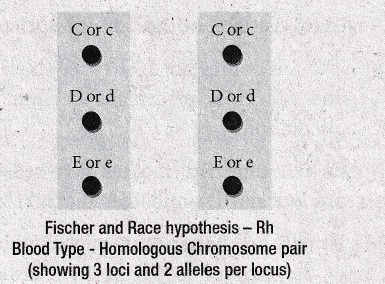
2. In the above Figure, three pairs of Rh alleles (Cc, Dd and Ee) occur at 3 different loci on homologous chromosome pair- 1.
3. The possible genotypes will be one C or c, one D or d, one E or e from each chromosome
For e.g. CDE/cde; CdE/cDe; cde/cde; CDe/CdE etc.
4. All genotypes carrying a dominant 'D' allele will produce Rh positive phenotype and double recessive genotype 'dd' will give rise to Rh negative phenotype.
(ii) Wiener Hypothesis
1. Wiener proposed the existence of eight alleles (R1, R2, RO, RZ, r, r1, r11, ry) at a single Rh locus.
2. All genotypes carrying a dominant 'R allele' (R1, R2, RO, RZ) will produce 'Rh- positive' phenotype and double recessive genotypes (rr, rr1, rr11, rry) will give rise to Rh- negative phenotype.
41.
Heterogametic Males:
In this method of sex determination the males are heterogametic producing dissimilar gametes while females are homogametic producing similar gametes.
It is of kinds XX-XO type and XX-XY type.
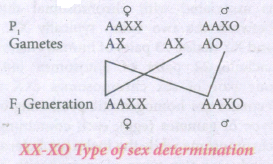
(i) XX-XO Type
(a) This method of sex determination is seen in bugs and some insects such as cockroaches and grasshoppers.
(b) The female with two X chromosomes are homogametic (XX) while the males with only one X chromosome are heterogametic (XO).
(c) The presence of an unpaired X chromosomes determines the male sex. The males with unpaired 'X' chromosome produce two types of sperms, one half with X chromosome and other half without X chromosome.
(d) The sex of the offspring depends upon the sperm that fertilizes the egg.
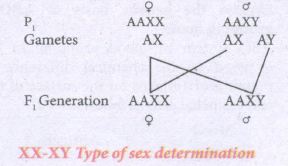
(ii) XX-XV type (Lygaeu Type):
This method of sex determination is seen in human beings and in Drosophila.
(a) The females are homogametic with XX chromosome, while the males are heterogametic with X and Y chromosome.
(b) Homogametic females produce only one kind of egg, each with one X chromosome, while the heterogametic males produce two kinds of sperms some with X chromosome and some with Y chromosome.
(c) The sex of the embryo depends on the fertilizing sperm. An egg fertilized by an 'X' bearing sperm produces a female, if fertilized by a 'Y' bearing sperm, a male is produced.
42.

12th Standard Syllabus & Materials
12th Standard
TN 12th Computer Applications களப்பெயர் முறைமை (DNS) Sample Question Papers Study Material - QB365 Set A
NEW12th Standard
TN 12th Computer Applications வலையமைப்பு எடுத்துக்காட்டுகள் மற்றும் நெறிமுறைகள் Sample Question Papers Study Material - QB365 Set A
NEW12th Standard
TN 12th Computer Applications கணினி வலையமைப்பு ஓர் அறிமுகம் Sample Question Papers Study Material - QB365 Set A
NEW12th Standard
TN 12th Computer Applications PHP-உடன் MySQL-ஐ இணைத்தல் Sample Question Papers Study Material - QB365 Set A



Tamilnadu Stateboard 12th Standard Subjects

Maths

Chemistry

Physics
Biology

Computer Science

Business Maths and Statistics

Economics

Commerce

Accountancy

History

Computer Applications
Biology
Computer Technology
Computer Applications
Computer Science
Business Maths and Statistics
Commerce
Economics
Maths
Chemistry
Physics
Computer Technology
History
Accountancy

Tamil

English

French
Tamilnadu Stateboard Standards

