
 100% FREE ACCESS
12th Standard Syllabus & Materials
12th Standard
TN 12th Computer Applications மின்னணு தரவு பரிமாற்றம் Sample Question Papers Study Material - QB365 Set A
NEW12th Standard
TN 12th Computer Applications மின் - வணிக பாதுகாப்பு அமைப்புகள் Sample Question Papers Study Material - QB365 Set A
NEW12th Standard
TN 12th Computer Applications மின்னணு செலுத்தல் முறைகள் Sample Question Papers Study Material - QB365 Set A
NEW12th Standard
TN 12th Computer Applications மின் - வணிகம் Sample Question Papers Study Material - QB365 Set A
NEW12th Standard
TN 12th Computer Applications திறந்த மூல கருத்துருக்கள் Sample Question Papers Study Material - QB365 Set A
NEW12th Standard
TN 12th Computer Applications வலையமைப்பு வடமிடல் Sample Question Papers Study Material - QB365 Set A

Published on: 09/03/2020
12th Standard Biology English Medium All Chapter Book Back and Creative Three Mark Questions 2020
Download Tamil Nadu 12th Standard Biology question papers, model tests, one-mark questions, important questions, and public exam papers in PDF format. Free study materials and answer keys for TN State Board students.
Questions + Answers key
Take MCQ Biology Test1.
Give a short notes on Green Fluorescent Protein (GFP)
2.
Explain how fermentation is done in bioreactor ?
3.
Write the origin and area of cultivation of green gram and red gram.
4.
5.
How can we control eutrophication?
6.
Based on the material used, how will you classify the culture technology? Explain it.
7.
How does Mutation theory of De Vries differ from Lamarck and Darwin’s view in the origin of new species.
8.
Darwin's finches and Australian marsupials are suitable examples of adaptive radiation – Justify the statement
9.
Describe the major STDs and their symptoms.
10.
Is there any possibilities to transfer a suitable desirable gene to host plant without vector? Justify your answer.
11.
Why the human genome project is called a mega project?
12.
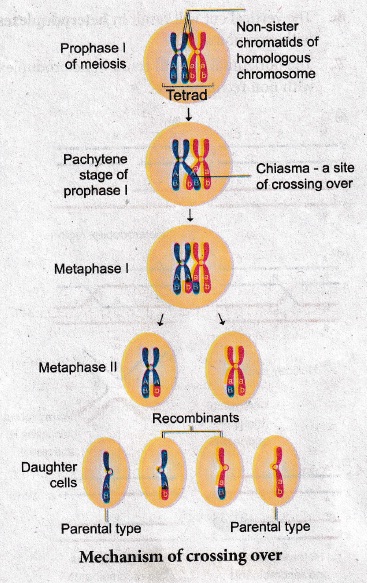
Explain the mechanism of crossing over.
13.
14.
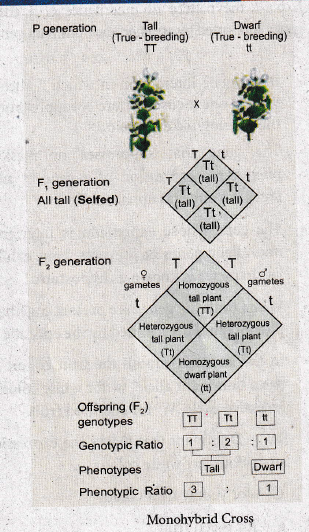
Explain the law of dominance in monohybrid cross.
15.
Discuss the importance of Modern methods in reproduction of plants.
16.
Explain the best suited type followed by plant breeders at present?
17.
Why do submerged plants receive weak illumination than exposed floating plants in a lake?
18.
Give the examples for micro propagation performed plants .
19.
Differentiate foeticide and infanticide
20.
Name the hormones produced from the placenta during pregnancy.
21.
Mention the symptoms of Down's syndrome.
22.
A person is infected by HIV. How will you diagnose for AIDS?
23.
“The endosperm of angiosperm is different from gymnosperm”. Do you agree. Justify your answer.
24.
Theory of chemical evolution states that organisms have evolved from inorganic substances. If so, what was the atmospheric condition that favoured evolution?
25.
Both strands of DNA are not copied during transcription. Give reason.
26.
Write a note on Heroin.
27.
What is innate immunity?
28.
Compare Alpha diversity with Beta diversity.
29.
Write a note on Sacred Groves.
30.
Whether PCR is applicable for RNA molecules? Explain
31.
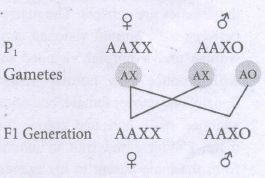
Explain XX-XO type of sex determination
32.
Write any three statements on Sertoli cells
33.
Dr. Sheela is a famous Gynaecologist at Poes garden. However illegally she performed amniocentesis for several pregnant illiterates and did MTP if identified as female foetus, on request. Under which act will she get arrested, if a complaint is filed against her.
34.
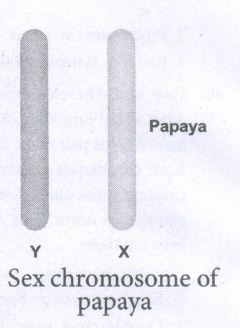
Explain the sex determination mechanism in Carica papaya.
35.
Give a short note on incomplete linkage.
36.
Meiosis is a type of cell division where the chromosomal number is reduced to half the number daughter cells. Which type of cellular division occurs in the drones to produces spermatozoa? Why?
37.
What is Incomplete parthenogenesis? Explain with example.
38.
Mala is a genetic research student. She was given a plant to identify whether it is a homozygous or heterozygous for a particular trait. How will she proceed further?
39.
Cite one common feature and one contrast feature shared between apomixis and parthenocarpy
40.
Write a short notes on Atavism.
41.
Briefly explain about the types of tapetum.
42.
What is biogeochemical cycle? Explain its types.
43.
Pyramid of energy is always upright - Justify.
44.
What is co-evolution? Explain with example.
45.
Mention any two species that exhibits protective mimicry.
46.
Study the process given below and mention the phenomena A and B
(a) Meristematic tissue \(\overset { A }{ \longrightarrow } \) Permanent tissue
(b) Callus \(\overset { B }{ \longrightarrow } \) Embryoid
47.
Who am I?
(I) Father of Green Revolution.
(il) Father of Indian Green Revolution
48.
Briefly explain the surface sterilization of explants.
49.
Given below are the examples of symbiotic association in which one partner was mentioned. Write the name of the mutual co-partners.
(a) Azolla fem + _________
(b) Root nodules of legume plants + ______
(c) phycomycetous fungi + ________
50.
Name the movement launched by the people of MandaI village to protect the trees by hugging them.
51.
Mention any three sources of carbon dioxide emission.
52.
Write about the Henna with its origin and areas of cultivation and uses.
53.
Write a short note on foxtail millet.
54.
What is Sewall Wright effect or Genetic drift?
55.
What is colony collapse syndrome?
56.
Mention some steps taken by Central and State Government in India to Control Air pollution.
57.
How is cheese produced?
58.
Differentiate temporary parasites and permanent parasites
59.
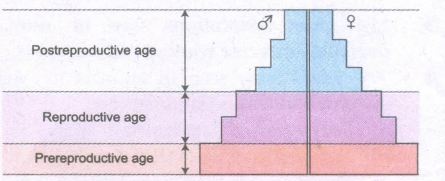
Draw a diagram to show age distribution in a increasing population.
60.
What is LH surge?
61.
Why is E.Coli not used for production of Interferons?
62.
What is initiation complex in transcription?
63.
What is karyotyping?
64.
Write a note on Foetoscope.
65.
What are the applications of antigen antibody reactions?
66.
Write a.note an spleen as a lymphoid organ.
67.
Explain the process of replication of retrovirus after it gains entry into the human body.
68.
Differentiate between:
Autoimmune disease and Immunodeficiency disease
69.
Write the uses of nuts you have studied.
70.
Which one gas is most abundant out of the four commonest greenhouse gases? Discuss the effect of this gas on the growth of plants?
71.
How do sacred groves help in the conservation of biodiversity?
72.
Generally human activities are against to the ecosystem, where as a student how will you help to protect ecosystem?
73.
Shape of pyramid in a particular ecosystem is always different in shape. Explain with example.
74.
Mention any two significant roles of predation plays in nature.
75.
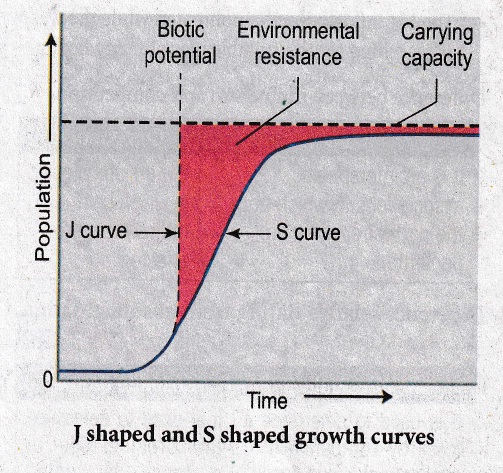
Differentiate J and S shaped curve
76.
Give the characters of a Biome ?
77.
Discuss the role of women in protection and conservation of forests.
78.
Differentiate between Somatic cell gene therapy and germline gene therapy
79.
What are transgenic animals? Give examples
80.
Why is biodiversity so important and worthy of protection?
81.
Extinction of a keystone species led to loss of biodiversity – Justify.
82.
Justify the role of microbes as a bio-fertilizer
83.
Write the key features of organic farming.
84.
How will you identify a vector ?
85.
A low level of expression of lac operon occurs at all the windows for treatment of various genetic disorders. Justify the statement
86.
What is the composition of semen?
87.
88.
What are the cells involved innate immune system.
89.
Why are the offsprings of oviparous animal at a greater risk as compared to offsprings of viviparous organisms?
90.
The unicellular organisms which reproduce by binary fission are considered immortal. Justify
91.
What is meant by cytoplasmic inheritance
1.
(i) The green fluorescent protein (GFP) is a protein containing 238 amino acid residues of 26.9 kDa that exhibits bright green fluorescence when exposed to blue to ultraviolet range (395 nm).
(ii) GFP refers to the protein first isolated from the jellyfish Aequorea victoria.
(iii) GFP is an excellent tool in biology due to its ability to form internal chromophore without requiring any accessory cofactors, gene products, enzymes or substrates other than molecular oxygen.
(iv) In cell and molecular biology, the GFP gene is frequently used as a reporter of expression. It has been used in modified forms to make biosensors.
2.
Procedure of Fermentation
a. Depending upon the type of product, bioreactor is selected.
b. A suitable substrate in liquid media is added at a specific temperature, pH and then diluted.
c. The organism (microbe, animal/plant cell, sub-cellular organelle or enzyme) is added to it.
d. Then it is incubated at a specific temperature for the specified time.
e. The incubation may either be aerobic or anaerobic.
f. Withdrawal of product using downstream processing methods.
3.
| S.No | Common Name | Botanical name | Origin and area |
| 1 | RED GRAM | Cajanus cajan | Southern India, cultivated in Maharashtra, Andhra Pradesh, Madhya Pradesh Karnataka and Gujarat |
| 2 | GREEN GRAM | Vigna radiate | State of Maharashtra. Cultivated in Madhya Pradesh, Karnata and Tamil Nadu. |
4.
5.
1. Improvement of the purifying performance of waste water treatment plants, installing tertiary treatment systems to reduce nutrient concentration.
2. Implementation of effective filter ecosystems to remove nitrogen and phosphorus present in the run-off water.
3. Reduction of phosphorus in detergents.
4. Rationalisation of agricultural techniques through proper planning of fertilization and use of slow release fertilizers.
5. Use of alternative practices in animal husbandry to limit the production of waste water.
6.
Types of Plant tissue cultures
Based on the explants some other plant tissue culture types are
(a) Organ culture
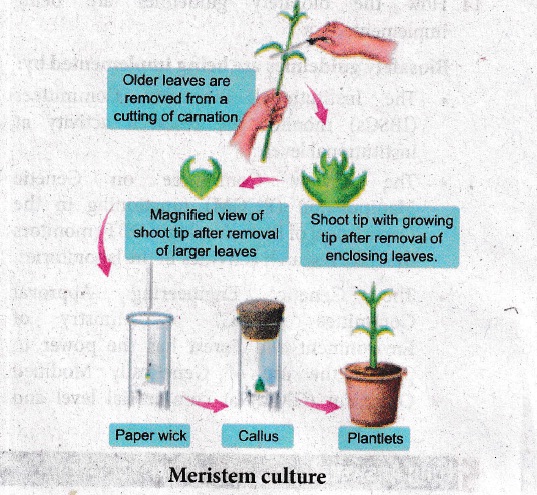
(b) Meristem culture
(c) Protoplast culture
(d) Cell culture
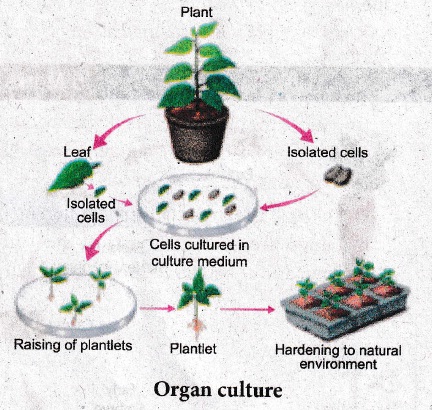
(a) Organ culture
The culture of embryos, anthers, ovaries roots, shoots or other organs of plants on culture media.
(b) Meristem Culture:
The culture of any plant meristematic tissue on culture media.
(c) Protoplast Culture:
1. Protoplasts are cells without a cell wall, but bounded by a cell membrane or plasma membrane.
2. Using protoplasts, it is possible to regenerate whole plants from single cells and also develop somatic hybrids.
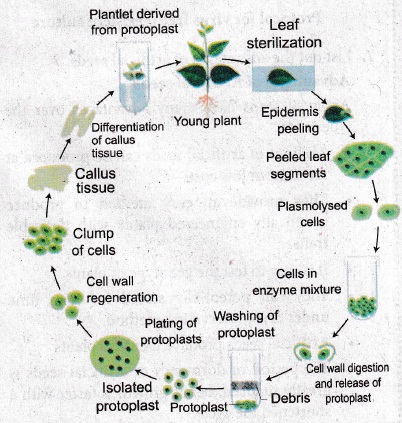
The steps involved in protoplast culture
(i) Isolation of protoplast:
1. Small bits of plant tissue like leaf tissue are used for isolation of protoplast.
2. The leaf tissue is immersed in 0.5% Macrozyme and 2% Onozuka cellulase enzymes dissolved in 13% sorbitol or mannitol at pH 5.4.
3. It is then incubated over-night at 25oC.
4. After a gentle teasing of cells, protoplasts are obtained, and these are then transferred to 20% sucrose solution to retain their viability.
They are then centrifuged to get pure protoplasts as different from debris of cell walls.
(ii) Fusion of Protoplast
1. It is done through the use of a suitable fusogen. This is normally PEG (Polyethylene Glycol).
2. The isolated protoplast are incubated in 25 to 30% concentration of PEG with Ca++ ions and the Protoplast shows agglutination (the formation of clumps of cells) and fusion.
(iii) Culture of Protoplast:
MS liquid medium is used with some modification in droplet, plating or micro drop array techniques. Protoplast viability is tested with fluorescein diacetate before the culture. The cultures are incubated in continuous light 1000-2000 lux at 25oC. The cell wall formation occurs within 24-48 hours and the first division of new cells occurs between 2-7 days of culture.
(iv) Selection of somatic hybrid cells:
The fusion product of protoplasts without nucleus of different cells is called a cybrid. Following this nuclear fusion happen. This process is called somatic hybridization.
(d) Cell Suspension Culture
The growing of cells including the culture of single cells or small aggregates of cells in vitro in liquid medium is known as cell suspension culture. The cell suspension is prepared by transferring a portion of callus to the liquid medium and agitated using rotary shaker instrument. The cells are separated from the callus tissue and used for cell suspension culture.
7.
1. Hugo de Vries by his experiment suggest that variations is caused due to mutation among the genetic sequence of an individual.
2. Hugo de vries for the first time gave the term saltation which stands for huge mutation in a single step resulting in speciation.
3. Darwin during his voyage in H.M.S. Beagle he found that living organism share similar features existed from million of years.
4. Evolution is a sequential process that leads to betterment of life forms to cope with change in environment and that is passed to successive generation called as natural selection.
5. Mutation is a random process and direction which is not specific.
8.
Adaptive radiation is the process of evolution of different species in a given geographical area starting from a point and literally radiating to other geographical area habitats.
1. Darwins finches were the small black birds which Darwin observed in Galapagos islands.
2. There were many varities of these birds in the same island.
3. Darwin reasoned that after originating from a common ancestral seed eating stock the finches must have radiated to different geographical areas and undergone adaptive changes especially in their breaks enabling some of them to become insectivorous.
4. Living isolation for long new kinds of finches must have evolved which could survive in the new habitats.
5. Australian marsupials (Kangaroos) also show adaptive radiation
6. Marsupials in Australia and placental mammals in north America are two subclasses of mammals they adapted in similar way to a particular food resources, locomotary skill or climate.
7 They were separated from the ori-on ancestor more than 100 million year ago and each lineage continued to evolve independently despite temporal and geographical separation marsupials in Australia and placenta mammals in North America have reduced varieties of species living in similar habitats with similar way of life their overall resemblance in shape, locomotary mode, feeding and foraging are superimposed upon different modes of reproduction.
9.
The major sexually transmitted diseases are
(i) Gonorrhoea
1. Causative agent: Neisseria gonorrhoeae
2. Symptoms: Affects the urethra, rectum and throat and in females the cervix also get affected
3. Pain and pus discharge in the genital tract and burning sensation during urination.
4. Incubation period: 2 to 5 days
(ii) Syphilis
Causative agent : Treponema pallidum
Symptoms:
1. Primary stage: Formation of painless ulcer on the external genitalia.
2. Secondary stage : Skin lesions, rashes, swollen joints and fever and hair loss.
3. Tertiary stage : Appearance of chronic ulcers on nose. Lower legs and palate, loss of movement mental disorder visual impairment, heart problems, gummas (soft non-cancerous growths) etc.
(iii) Hepatitis B
1. Causative agent: Hepatitis B virus (HBV) with DNA.
2. Symptoms: Fatigue, jaundice, fever, rash and stomach pain.
3. Liver cirrhosis and liver failure occur in the later stage.
4. Incubation period: 30-80 days
(iv) AIDS:
1. Causative agent: Human immuno deficiency Virus (HIV) .
2. Symptoms: Enlarged lymph nodes, prolonged fever, prolonged diarrhoea, weight reduction, night sweating.
3. Incubation periods: 2 to 6 weeks even more than 10 years
10.
Direct or Vector less Gene Transfer
In the direct gene transfer methods, the foreign gene of interest is delivered into the host plant without the help of a vector, The following are some of the common methods of direct gene transfer in plants.
(i) Chemical mediated gene transfer: Certain chemicals like polyethylene glycol (PEG) and dextran sulphate induce DNA uptake into plant protoplasts.
(ii) Microinjection: The DNA is directly injected into the nucleus using fine tipped glass needle or micro pipette to transform plant cells. The protoplasts are immobilized on a solid support (agarose on a microscopic slide) or held with a holding pipette under section.
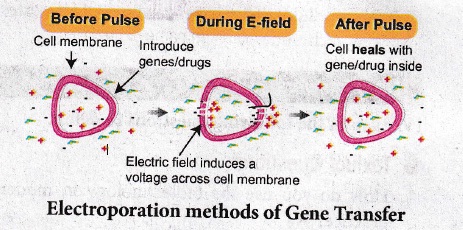
(iii) Electroporation Methods of Gene Transfer: A pulse of high voltage is applied to protoplasts, cells or tissues which makes transient pores in the plasma membrane through which uptake of foreign DNA occurs.
(iv) Liposome mediated method of Gene transfer: Liposomes the artificial phospholipid vesicles are useful in gene transfer. The gene or DNA is transferred from liposome into vacuole of plant cells. It is carried out by encapsulating DNA into the vacuole. This technique is advantageous because the liposome protects the introduced DNA from being damaged by the acidic pH and protease enzymes present in the vacuole. Liposome and tonoplast of vacuole fusion resulted in gene transfer. This process is called lipofection.
.jpg)
(v) Biolistics: The foreign DNA is coated onto the surface of minute gold or tungsten particles (1-3 \(\mu\)m) and bombarded onto the target tissue or cells using a particle gun (also called as gene gun/ micro projectile gun/shotgun) Then the bombarded cells or tissues are cultured on selected medium to regenerate plants from the transformed cells.
11.
Human genome project was considered to be a mega project because
1. It had a specific goal to sequence for everybase pair present in the human genome. (Human Genome has 3.1647 billion nucleotide base pairs).
2. It took around 13 years of completion and got accomplished in year 2006.
3. It was a large-scale project, which aimed at developing new technology and generating new information in the field of genomic studies.
4. As a result of it, several news areas and avenues have opened up in the field of genetics, biotechnology and medical sciences.
5. It provided clues regarding the understanding of human biology.
12.
Crossing over is a process that includes four stages.
1. Synapsis
(i) Pairing between two homologous chromosomes is initiated during sub stage zygotene stage of prophase I of meiosis I
(ii) Homologous chromosomes are aligned side by side resulting in the formation of bivalents. It also occurs in zygotene sub-stage of prophase I of meiosis I tetrads.This pairing phenomenon is called synapsis.
2.Tetrad Formation
(i) Each homologous chromosome of a bivalent begin to form two identical sister chromatids.
(ii) They remain held together by a centromere at this stage each bivalent has four chromatids. This stage is called tetrad stage.
3. Cross Over
After tetrad formation, crossing over occurs in pachytene stage.
The non-sister chromatids of homologous pair make a contact at one or more points. These points of contact are called Chiasmata.
At chiasma, X-shaped structures are formed, where breaking and rejoining of two chromatids occur. This results in reciprocal exchange of equal and corresponding segments between them synapsis and chiasma formation are facilitated by protein filaments called synaptonemal complex.
4. Terminalisation
After crossing over, chiasma starts to move towards the terminal end of chromatids known as terminalisation. As a result, complete separation of homologous chromosomes occurs.
13.
14.
Law of Dominance: The characters were controlled by discrete units called factors which occur in pairs. In a dissimilar pair of factors one member of the pair is dominant & the other is recessive.
(i) This law gives an explanation to the monohybrid cross.
(a) the expression of only one of the parental characters in F1 generation.
(b) the expression of both in the F2 generation
(ii) It also explains the proportion of 3:1 obtained at the F2
Monohybrid Cross
(i) Monohybrid inheritance is the inheritance of a single character i. e, plant height.
(ii) It involves the inheritance of two alleles of a single gene.
(iii) When the F1 generation was selfed Mendel noticed that 7847 of 1064 F2 plants were tall, while 277of 1064 were dwarf.
(iv) When tall pea plants were pollinated with the pollens from a true breeding dwarf plants, the result was all tall plants.
(v) Dwarf trait appears in the F2 generation.
(vi) When the parental types were reversed, the result was the same - All tall plants.
(vii) Tall (♀) \(\times\) Dwarf (♂) and Tall (♂) \(\times\) Dwarf (♀) mating's are done in both ways.
(viii) It was concluded that the trait is not sex dependent.
(xi) The gene for plant height has two alleles: Tall (T) \(\times\) Dwarf (t). (TT, Tt, Tt: tt)
15.
Advantages of modern methods
(i) Plants with desired characteristics can be multiplied rapidly in a short duration.
(ii) Plants produced are genetically identical.
(iii) Tissue culture can be carried out in any season.
(iv) Plants which do not produce viable seeds and seeds that are difficult to germinate can be propagated.
(v) Rare and endangered plants can be propagated. Disease-free plants can be produced cells can be genetically modified and transformed.
16.
(i) Vegetative propagation is the best suited measure for maintaining hybrid vigour, since the desired characters are not lost and can persist over a Period of time.
(ii) Many breeders believe that its magnitude of heterosis is directly related to the degree of genetic diversity between the two parents.
17.
Submerged plants are unable to obtain full illumination because a lot of sunlight is absorbed by overlying layers of water this is not the case for exposed floating plants that receive sunlight directly.
18.
Pineapple, banana, strawberry and potato.
19.
| Foeticide | Infanticide |
| It refers to aborting the female in the mother's womb. |
It refers to killing the female child after her birth |
20.
Human Chorionic Gonadotropin (hCG), Human Chorionic Somatotropin (hCS) (or) Human Placental Lactogen (hPL), oestrogens and progesterone.
21.
Symptoms:
1. Severe mental retardation
2. Defective development of the CNS.
3. Increased separation between the eyes.
4. Flattened nose, ears are malformed
5. Mouth is constantly open and the tongue protrudes.
22.
(i) A simple blood test is available that can determine whether the person has been infected with HIV.
(ii) The ELISA test (Enzyme Linked Immuno Sorbent Assay) detects the presence of HIV antibodies.
(iii) It is a preliminary test. Western blot test is more reliable and a confirmatory test.
(iv) It detects the viral core proteins. If both tests detect the presence of the antibodies, the person is considered to be HIV positive.
23.
The endosperm in gymnosperms is haploid because it is formed from the haploid megaspore. In angiosperm the endosperm is triploid, a product or triple fusion.
24.
The atmosphere was devoid of O2 and with high level of CO2, NH3 and UV radiations
25.
Both the strands of DNA are not copied during transcription for two reasons.
1. If both the strands act as a template, they would code for RNA with different sequences. This, in turn, would code for proteins with different amino acid sequences. This would result in one segment of DNA coding for two different proteins, hence complicate the genetic information transfer machinery.
2. If two RNA molecules were produced simultaneously, double-stranded RNA complementary to each other would be formed. This would prevent RNA from being translated into proteins.
26.
Heroin (smack) is chemically diacetylmorphine, which is white, odorless and bitter crystalline compound. It is obtained by acetylation of morphine, which is extracted from flowers of the poppy plant.
27.
Innate immunity is the natural phenomenon of resistance to infection which an individual possesses right from the birth. The innate defense mechanisms are non-specific in the sense that they are effective against a wide range of potentially infectious agents. It is otherwise known as non-specific immunity or natural immunity
28.
(i) Alpha diversity: It is measured by counting the number of taxa (usually species) within a particular area, community or ecosystem.
(ii) Beta diversity: It is species diversity between two adjacent ecosystems and is obtaining by comparing the number of species unique to each of the ecosystem.
29.
A sacred grove or sacred woods are any grove of trees that are of special religious importance to a particular culture. Sacred groves feature in various cultures throughout the world.
30.
The PCR technique can also be used for amplifications of RNA in which case it is referred to as reverse transcription PCR (RT-PCR). In this process the RNA molecules (mRNA) must be converted to complementary DNA by the enzyme reverse transcriptase. The cDNA then serves as the template for PCR.
31.
XX-XO method of sex determination is seen in bugs, some insects such as cockroaches and grasshoppers. The female with two X chromosomes are homogametic (XX) while the males with only one X chromosome are heterogametic (XO). The presence of an unpaired - X chromosomes determines the male sex. The males with unpaired 'X' chromosome produce two types of sperms, one half with X chromosome and other half without X chromosome. The sex of the offspring depends upon the sperm that fertilizes the egg.
32.
(i) Sertoli cells are elongated and pyramidal cells.
(ii) They provide nourishment to sperm till maturation.
(iii) They secrete a hormone called inhibin which is involved in negative feedback control of sperm production.
33.
Dr. Sheela will be be arrested under PCPNDT Act - preconception and prenatal diagnostic technique Act-1994.
34.
| Genotype | Dominant / recessive | Modification | Sex |
| mm | Homozygous recessive. | Restrict maleness | Female |
| Mlm | Heterozygous. | Induces maleness | Male |
| M2m | Heterozygous. | Induces both the sex | Bisexual (rare) |
| MIMI or M2M2 or MIM2 |
Homozygous / Heterozygous dominant. | Inviable plants | Sterile |
Carica papaya, 2n = 36 (Papaya) has 17 pairs of auto somes and one pair of sex chromosomes. Male papaya plants have XY and female plants have XX. Unlike human sex chromosomes, papaya sex chromosomes look like auto somes and it is evolved from autosome. The sex chromosomes are functionally distinct because the Y chromosome carries the. genes for male organ development and X bears the female organ developmental genes. In papaya sex determination is controlled by three alleles. They are m, M, and M2 of a single gene.
35.
If two linked genes are sufficiently apart, the chances of their separation are possible. As a result, parental and non-parental combinations are observed. The linked genes exhibit some crossing over. This phenomenon is called incomplete linkage. This was observed in maize. It was reported by Hutchinson.
36.
The gonadal cells of drones undergo mitosis to form sperms. Because the drones are haploid in nature since they develop from unfertilized eggs. To avoid a further reduction in chromosome no. and maintain the chromosomal constancy, (instead of undergoing meiosis), mitosis will take place leading to the formation of haploid gametes.
37.
Incomplete parthenogenesis is a type of reproduction in which both sexual reproduction and parthenogenesis occur. Example: In honey bees, the fertilized eggs develop into a queen bee and worker bees, whereas the unfertilized eggs develop into drones (male).
38.
To identify the plant genotype whether homozygous or heterozygous Mala can perform test cross, where the individual is crossed with homozygous recessive for the trait. If the plant is heterozygous then the resultant progenies would be in the ratio 50:50 (i.e., 1: 1)
39.
Common features: Fertilization (Syngamy) is absent in both apomixis and parthenocarpy.
Contrast features: Parthenocarpic fruits does not develop seeds, whereas in apomixis seeds are developed.
40.
Atavism is a modification of a biological structure whereby an ancestral trait reappears after having been lost through evolutionary changes in the previous generations. Evolutionary traits that have disappeared phenotypically do not necessarily disappear from an organism's DNA. The gene sequence often remains, but is inactive. Such an unused gene may remain in the genome for many generations. As long as the gene remains intact, a fault in the genetic control suppressing the gene can lead to the reappearance of that character again. Reemergence of sexual reproduction in the flowering plant Hieracium pilosella is the best example for Atavism in plants.
41.
There are two types of tapetum based on their behavior. They are:
Secretory tapetum (parietal/glandular/ cellular): The tapetum retains the original position and cellular integrity and nourishes the developing microspores.
Invasive tapetum (periplasmodial): The cells lose their inner tangential and radial walls and the protoplast of all tapetal cells coalesces to form a periplasmodium.
42.
Circulation of nutrients within the ecosystem or biosphere is known as biogeochemical cycles and also called as 'cycling of materials.' There are two basic types,
(I) Gaseous cycle - It includes atmospheric Oxygen, Carbon and Nitrogen cycles.
(II) Sedimentary cycle - It includes the cycles of Phosphorus, Sulphur and Calcium - Which are present as sediments of Earth.
43.
A graphical representation of energy flow at each successive trophic level in an ecosystem is called pyramids of energy. The bottom of the pyramid of energy is occupied by the producers. There is a gradual decrease in energy transfer at successive tropic levels from producers to the upper levels. Therefore, the pyramid of energy is always upright.
44.
The interaction between organisms, when continues for generations, involves reciprocal changes in genetic and morphological characters of both organisms. This type of evolution is called Co-evolution. It is a kind of co-adaptation and mutual change among interactive species.
Examples:
1. Corolla length and proboscis length of butterflies and moths (Habenaria and Moth).
2. Bird's beak shape and flower shape and size.
45.
(a) Carausium morosus (Stick insect)
(b) Phylliumfrondosum (Leaf insect).
46.
(a) A - Differentiation
(b) B - Redifferentiation
47.
(i) Dr. Norman E. Borlaug.
(ii) Dr. M.S. Swaminathan.
48.
The plant materials to be used for tissue culture should be surface sterilized by first exposing the material in running tap water and then treating it in surface sterilization agents like 0.1% mercuric chloride, 70% ethanol under aseptic condition inside the Laminar Air Flow Chamber.
49.
(a) Anabaena azolla (blue green alga)
(b) Rhizobium
(c) Angiosperm roots
50.
Chipko movement.
51.
(i) Coal based power plants, by the burning of fossil fuels for electricity generation.
(ii) Combustion of fuels in the engines of automobiles, commercial vehicles, and air planes contribute the most of global warming.
(iii) Agricultural practices like stubble burning result in emission of CO2.
52.
Henna
Botanical name: Lawsonia inermis.
Family: Lythraceae.
Origin and Area of cultivation:
It is indigenous to North Africa and South-west Asia. It is grown mostly throughout India, especially in Gujarat, Madhya Pradesh and Rajasthan.
Uses
An orange dye 'Henna' is obtained from the leaves and young shoots of Lawsonia inermis. The principal colouring matter of leaves 'lacosone" is harmless and causes no irritation to the skin.
This dye has long been used to dye skin, hair and finger nails.
It is used for colouring leather, for the tails of horses and in hair-dyes.
53.
Foxtail Millet
Botanical name: Setaria italica
This is one of the oldest millet used traditionally in India. Which is domesticated first in China about 6000 years. Rich in protein, carbohydrate, vitamin Band C, Potassium and Calcium. Uses It supports in strengthening of heart and improves eye sight. Thinai porridge is given to lactating mother.
54.
Genetic drift is a mechanism of evolution in which allele frequencies of a population change over a generation due to chance (sampling error). Genetic drift occurs in all population sizes, but its effects are strong in a small population.
55.
Colony collapse syndrome in honey bees due to pesticides/herbicides can lead to destruction of hives and lower agricultural productivity. Remember bees are Nature's best pollinators.
56.
(i) Road traffic rationing, encourage public transport, carpooling.
(ii) Increase green cover alongside roads (planting avenue trees).
(iii) Promoting Swachh Bharat Abhiyan
57.
Cheese is a dairy product formed by coagulation of the milk protein, casein. During cheese production, milk is usually acidified and the enzyme rennet is added to cause coagulation. The solids are separated and pressed to form cheese. Most cheese are made with a starter bacteria, Lactococcus, Lactobacillus or Streptococcus.
58.
| S. No: |
Temporary Parasites | Permanent Parasites |
|---|---|---|
| 1. | Temporary parasites spend only a part of their life cycle as parasites. | Permanent parasites spend their life completely as parasites and are dependent on their host organism. |
| 2. | Eg. Glochidiurn larva of Anhedonia attaches itself to the body of a fish. | Eg. Tapeworm in human intestine |
59.
60.
During the ovulatory phase of the menstrual cycle, maximum secretion of leutinising hormone occurs during the mid cycle (about 14th day) which is called LH surge and induces ovulation.
61.
The yeast Saccharomyces cerevisiae is more suitable for production of recombinant interferons than E.coli, since E.coli does not possess the machinery for glycosylation of proteins
62.
The assembly of the ribosomal subunits, mRNA and tRNA represent the initiation complex.
63.
Karyotyping is a technique through which a complete set of chromosomes is separated from a cell and the chromosomes are arranged in pairs. An idiogram refers to a diagrammatic representation of chromosomes.
64.
Foetoscope is used to monitor the foetal heart rate and other functions during late pregnancy and labour. The average foetal heart rate is between 120 and 160 beats per minute. An abnormal foetal heart rate or pattern may mean that the foetus is not getting enough oxygen and it indicates other problems. A hand-held doppler device is often used during prenatal visits to count the foetal heart rate. During labour, continuous electronic foetal monitoring is often used.
65.
a) Determine blood groups for transfusion.
b) determine the characteristics of certain Immunodeficiency diseases.
c) detect the presence or absence of protein in serum.
66.
Spleen is a secondary lymphoid organ located in the upper part of the abdominal cavity close to the diaphragm. Spleen contains Band T cells. It brings humoral and cell mediated immunity.
67.
(i) After getting into the body of the person, the virus enters into macrophages where RNA genome of the virus replicates to form viral DNA with the help of the enzyme reverse transcriptase.
(ii) This viral DNA gets incorporated into the DNA of host cells and directs the infected cells to produce viral particles.
(iii) The macrophages continue to produce virus and in this way acts like a HIV factory.
(iv) Simultaneously, HIV enters into helper T-Iymphocytes, replicates and produces progeny viruses. The progeny viruses released in the blood attack other helper T-lymphocytes. The process is repeated.
(v) During this period, the person suffers from bouts of fever, diarrhoea and weight loss. Due to decrease in the number of helper T lymphocytes, the person starts suffering from infections and becomes immune deficient and unabie to protect against any infection.
68.
| S.No | Autoimmune disease | Immunodeficiency disease |
| i. | If the immune system of the body fails to distinguish foreign molecules from self, then it reacts destructively against the host's own molecules. This is known as autoimmune disease. |
An immunodeficiency disease results from the failure of one or more components of the immune system which could be due to genetic reasons, radiation, infections etc., |
| ii. | Eg: Multiple sclerosis is a autoimmune disease | Eg: AIDS is a Immunodeficiency disease. |
69.
| S. No | Common name | Botanical name | Uses |
| 1. | Cashew Nut | Anacardium occidentale (Family: Anacardiaceae) |
Garnishing sweets Ground for sauces _ Raw Kernels as snacks. |
70.
Most abundant gas - CO2
Effect of CO2 on the growth of plants
(i) Change in flowering seasons and pollinators
(ii) Change in Species distributional ranges
(iii) Species extinction
(iv) Low agricultural productivity in tropics
(v) Frequent heat waves (Weeds, pests, fungi need warmer temperature)
(vi) Increase of vectors and epidemics
(vii) Strong storms and intense flood damage
(viii) Water crisis and decreased irrigation
71.
(i) They help for detailed floristic and faunistic studies
(ii) These groves provide a number of ecosystem services to the neighborhood like protecting watershed, fodder, medicinal plants and microclimate control
72.
(I) Buying and use only ecofriendly products and recycle them.
(II) Growing more trees.
(III) Choosing sustained farm products (vegetables, fruits and greens, etc.)
(IV) Reduce the use of natural resources.
(V) Recycle the waste and reduce the amount of waste you produce.
(VI) Reduce consumption of water and electricity.
(VII) Reduce or eliminate the use of house-hold chemicals and pesticides.
(VIII) Maintain your cars and vehicles properly. (In order to reduce carbon emission).
(IX) Create awareness and educate about ecosystem protection among your friends and family members and ask them to find out solution to minimise this problem.
73.
Pyramid of number
(i) In a forest ecosystem the pyramid of number is different in shape, it is because the base (T 1) of the pyramid occupies large sized trees (producer) which are lesser in number.
(ii) Herbivores (T2) occupying second trophic level, are more in number than the producers (T1).
(iii) In final trophic level (T4) tertiary consumers (lion) are lesser in number than the secondary consumers (T3).
(iv) Therefore, the pyramid of numbers in forest ecosystem looks spindle-shaped.
Pyramid of biomass
(i) In forest ecosystem, there is a gradual decrease in biomass of organisms at successive trophic levels from producers to top carnivores (Tertiary consumer). Therefore, the pyramid of biomass looks upright.
74.
1. Many herbivores are predators. Cattles, camels, goats etc., frequently browse on the tender shoots of herbs, shrubs and trees. Generally annuals suffer more than the perennials. Grazing and browsing may cause remarkable changes in vegetation. Nearly 25 percent of all insects are known as phytophagous (feeds on plant sap and other Parts of Plant).
2. Many defense mechanisms are evolved to avoid their predations by plants. Examples: Calotropis produces highly poisonous cardiac glycosides, tobacco produces nicotine, coffee plants produce caffeine, Cinchona plant produces quinine. Thorns of Bougainvillea, spines of Opuntia, and latex of cacti also protect them from Predators.
75.
| S. No. | J shaped curve | S shaped curve |
|---|---|---|
| 1. | When a population increases rapidly in an exponential fashion and then stops abruptly due to environmental resistance or due to sudden appearance of a limiting factor, they are said to exhibit J-shaped growth form, |
Some populations, as in a population of small mammals, increase lowly at first then more rapidly & gradually slow down as environmental resistance increases where by equilibrium is reached and maintained |
| 2. | Many insects show explosive increase in number during the rainy season followed by their disappearance at the end of season. | Their growth is represented by s shaped growth curve. |
76.
Characters of biome
(i) Location, geographical position (Latitude, Longitude)
(ii) Climate and physiochemical environment
(iii) Predominant plant and animal life
(iv) Boundaries between biomes are not always sharply defined. Transition or transient zones are seen as in case of grassland and forest biomes.
77.
(i) Amrita Devi was a brave lady from Khejarli village of Jodhpur District, Rajasthan. She sacrificed her life to maintain Bishnoi Dharma. In 1730, Maharaja Abhay Singh, ruler of Marwar, Rajasthan state wanted to log green Khejri (Prosopis cineraria) trees to burn lime for the construction of his new palace. Since there was a lot of greenery in the Bishnoi villages even in the middle of Thar Desert, the king ordered his men to get the wood from Khejri trees. When she came to know about the cutting of trees by the King's men, she and many others had hugged the Khejri trees to save from cutting. But king's men killed Amrita Devi along with more than 363 other Bishnois. It was a Tuesday, black Tuesday in Khejarli. This incident took place to save trees and is recorded in India's history.
(ii) To commemorate her bravery, the Government of Rajasthan and Madhya Pradesh have initiated the prestigious state level award named as 'Amrita Devi Bishnoi Smriti Award' for excellent contribution to the protection and conservation of wildlife.
78.
| S.No. | SOMATIC CELL GENE THERAPY | GERMLINE GENE THERAPY |
|---|---|---|
| i. | Therapeutic genes transferred into the somatic cells. | Therapeutic genes transferred into the germ cells. |
| ii. | Introduction of genes into bone marrow cells, blood cells, skin cells, etc., | Genes introduced into eggs and sperms. |
| iii. | Will not be inherited in later generations. | Heritable and passed on to later generations. |
79.
1. The foreign DNA that is introduced is called the transgene and the animals that are produced by DNA manipulations are called transgenic animals or the genetically engineered or genetically modified organisms.
2. Transgenic animals are also used for producing products useful for mankind. E.g: Transgenic cow (rosie), which produced human protein enriched milk (2.4 g/L).
3. The milk contained the human alpha lactalbumin and was nutritionally a more balanced product for human babies than natural cow's milk.
80.
Biodiversity is the variety of life on earth. That is, it is the number of different species of flora and fauna including microorganisms. These organisms can inhabit different ecosystems with, varying conditions like the Rainforests, Coral reefs, Grasslands, Deserts, Tundra, and the Polar icecaps. This variety (Biodiversity) is essential for the wellbeing of our planet and sustenance of life as a whole. The importance of biodiversity can be viewed and measured as:
a)Ecosystem services
b) Biological resources
c) Social benefits of biodiversity
The organization and functioning of ecosystems world over are affected and dependent on biodiversity and its richness. The major functional attributes are:
(i) Continuity of nutrient cycles or biogeochemical cycles (N2, C, a,o, P, S cycles)
(ii) Soil formation, conditioning or maintenance of soil health (fertility) by soil microbial diversity along with the different trophic members
(iii) Increases ecosystem productivity and provide food resources
(iv) Act as water traps, filters, water flow regulators and water purifiers (forest cover and vegetation)
(v) Climate stability (forests are essential for rainfall, temperature regulation, CO2 absorption, which in turn regulate the density and type of vegetation)
(vi) Forest resource management and sustainable development
(vii) Maintaining a balance between biotic components
(viii) Cleaning up of pollutants - microbes are the biggest degraders of molecules including many anthropogenic ones which are present in effluents, sewage, garbage and agro-chemicals
(ix) Ecological stability - the varieties and richness of species contribute to ecological stability and survival of species. Biodiverse regions are reservoirs of biological resources like food resources, gene pool, genetic resource, medicinal resources, bioprospecting
(x) To provide unique aesthetic value and hotspots for Ecotourism. Along with forest resources and wildlife, it has commercial significance
(xi) An indicator of the health of the ecosystem. Endemism is a crucial indicator of richness.
81.
(i) Keystone species are those which have an extremely high impact on a particular ecosystem relative to its population. They are critical for the overall structure and function of an ecosystem and influence other and plants and animals that make up that ecosystem. Thus in the absence of a keystone species, many ecosystems will fail to exist.
(ii) Predator-prey relationship is an important example. Small Predators that consume herbivorous species prevent such herbivores from destroying the plant species in the ecosystem and are thus considered as keystone species.
(iii) If the number of predators was to decrease, the herbivore population would increase and the plant species in the ecosystem may perish very fast. In turn, the other organisms dependent on plants may also be impacted.
(iv) Thus extinction of a keystone species will lead to loss of biodiversity. Eg. Sea otter is considered to be a keystone species in the nearshore ecosystem. The Kelp forests are critical habitat for many organisms in nearshore ecosystems. These are fed by sea urchins. The Otters feed a Sea Urchins. In the absence of Otters, the sea urchins will destroy the Kelps forest which in turn will impact several other organisms and lead to loss of biodiversity in the ecosystem.
82.
(i) Bio-fertilizers are formulation of living microorganisms that enrich the nutrient quality of the soil. They increase physico - chemical properties of soils such as soil structure, texture, water holding capacity, cation exchange capacity and pH by providing several nutrients and sufficient organic matter.
(ii) The main sources of bio-fertilizers are bacteria, fungi and cyanobacteria. Rhizobium is a example for symbiotic nitrogen fixing bacteria. This bacterium infects the root nodules of leguminous plants and fixes atmospheric nitrogen into organic forms. Azospirillum and Azotobacter are free living bacteria that fix atmospheric nitrogen and enrich the nitrogen content of soil.
(iii) A symbiotic association between a fungus and the roots of the plants is called mycorrhiza. The fungal symbiont in these associations absorbs the phosphorus from soil and transfers to the plant. Plants having such association show other benefits such as resistance to root-borne pathogens, tolerance to salinity, drought, enhances plant growth and developments. For example, genus Glomus form mycorrhiza.
(iv) Cyanobacteria (or) blue green algae (BGA) are prokaryotic free-living organisms which can fix nitrogen. Oscillatoria, Nostoc, Anabaena, Tolypothrix are well known nitrogen fixing cyanobacteria. In water logged paddy fields Cyanobacteria multiply and fix molecular nitrogen. Cyanobacteria secrete growth promoting substances like indole-3-acetic acid, indole-3-butyric acid, naphthalene acetic acid, amino acids, proteins, vitamins which promotes plant growth and production.
(v) Biofertilizers are commonly used in organic farming methods.
(vi) This process involves the use of biological materials, avoiding synthetic substances to maintain soil fertility and ecological balance thereby minimizing pollution and wastage.
83.
(i) Protecting soil quality using organic materials and encouraging biological activity.
(ii) Indirect provision of crop nutrients using soil microorganisms.
(iii) Nitrogen fixation in soils using legumes.
(iv) Weed and pest control based on methods like crop rotation, biological diversity, natural predators, organic manures and suitable chemical, thermal and biological interventions.
84.
Properties of Vectors:
1. Vectors are able to replicate autonomously to produce multiple copies of them along with their DNA insert in the host cell.
2. It should be small in size and of low molecular weight, less than 10 Kb (kilo base pair) in size so that entry/transfer into host cell is easy.
3. Vector must contain an origin of replication so that it can independently replicate within the host.
4. It should contain a suitable marker such as antibiotic resistance, to permit its detection in transformed host cell.
5. Vector should have unique target sites for integration with DNA insert and should have the ability to integrate with DNA insert it carries into the genome of the host cell. Most of the commonly used cloning vectors have more than one restriction site. These are Multiple Cloning Site (MCS) or polylinker. Presence of MCS facilitates the use of restriction enzyme of choice.
85.
In the complete absence of lac operon permease will not be synthesized which is essential for transport of lactose from the medium into the cells, then it cannot act as an inducer. Hence, cannot relieve the lac operon from its repressed state.
86.
Semen or seminal fluid is a milky white fluid which contains sperms and the seminal plasma, which is secreted from the seminal vesicles, prostate glands and bulbo urethal glands or Cowper's gland.
The semen comprises of Fructose, ascorbic acid, zinc, cholesterol, protein, calcium, chlorine, blood group antigens, citric acid, DNA, magnesium, Vitamin B12, phosphorous, sodium, potassium, uric acid,lactic acid, nitrogen, and other nutrients for the sperms.
87.
88.
(i) Certain types of leukocytes (WBCs), such as polymorphonuclear leucocytes (PMNL), neutrophils, monocytes, and natural killer cells [NK cells] (a type of lymphocytes) in the blood as well as macrophages in tissues can phagocytose and destroy microbes
(ii) Besides the phagocytes there are natural killer cells (NK cells) in the body which kills virus infected and some tumor cells.
(iii) These cells are categorized under the cellular barriers.
89.
Oviparous animals lay eggs outside their body. These eggs are exposed to various environmental conditions and may be eaten by predators also. They face lot of risks until the young ones hatche. But the offsprings of viviparous animals are more safe and protected in the maternal womb until they are born.
90.
1. In unicellular organism there is no special structure for reproduction.
2. In binary fission the entire parent body constitute the reproductive unit and disappears when its division into two daughter unicellular cell is completed.
3. These two daughter cells function as two new individuals.
4. There is no remains of parent body cell and parent cannot be said to have died.
5. In fact after binary fission parent continues living as two daughter individual.
Hence, the unicellular organisms which undergo binary fission are called immortal (no natural death).
91.
It is based on independent, self-replicating extra chromosomal unit called plasmogene located in the cytoplasmic organelles, chloroplast & Mitochondrion.

12th Standard Syllabus & Materials
12th Standard
TN 12th Computer Applications களப்பெயர் முறைமை (DNS) Sample Question Papers Study Material - QB365 Set A
NEW12th Standard
TN 12th Computer Applications வலையமைப்பு எடுத்துக்காட்டுகள் மற்றும் நெறிமுறைகள் Sample Question Papers Study Material - QB365 Set A
NEW12th Standard
TN 12th Computer Applications கணினி வலையமைப்பு ஓர் அறிமுகம் Sample Question Papers Study Material - QB365 Set A
NEW12th Standard
TN 12th Computer Applications PHP-உடன் MySQL-ஐ இணைத்தல் Sample Question Papers Study Material - QB365 Set A



Tamilnadu Stateboard 12th Standard Subjects

Maths

Chemistry

Physics
Biology

Computer Science

Business Maths and Statistics

Economics

Commerce

Accountancy

History

Computer Applications
Biology
Computer Technology
Computer Applications
Computer Science
Business Maths and Statistics
Commerce
Economics
Maths
Chemistry
Physics
Computer Technology
History
Accountancy

Tamil

English

French
Tamilnadu Stateboard Standards

