
 100% FREE ACCESS
12th Standard Syllabus & Materials
12th Standard
TN 12th Computer Applications மின்னணு தரவு பரிமாற்றம் Sample Question Papers Study Material - QB365 Set A
NEW12th Standard
TN 12th Computer Applications மின் - வணிக பாதுகாப்பு அமைப்புகள் Sample Question Papers Study Material - QB365 Set A
NEW12th Standard
TN 12th Computer Applications மின்னணு செலுத்தல் முறைகள் Sample Question Papers Study Material - QB365 Set A
NEW12th Standard
TN 12th Computer Applications மின் - வணிகம் Sample Question Papers Study Material - QB365 Set A
NEW12th Standard
TN 12th Computer Applications திறந்த மூல கருத்துருக்கள் Sample Question Papers Study Material - QB365 Set A
NEW12th Standard
TN 12th Computer Applications வலையமைப்பு வடமிடல் Sample Question Papers Study Material - QB365 Set A

Published on: 09/03/2020
12th Standard Biology English Medium All Chapter Book Back and Creative Two Mark Questions 2020
Download Tamil Nadu 12th Standard Biology question papers, model tests, one-mark questions, important questions, and public exam papers in PDF format. Free study materials and answer keys for TN State Board students.
Questions + Answers key
Take MCQ Biology Test1.
Name one fossilised connecting link between reptiles and Aves also one living connecting link between Annelida and Arthropoda
2.
Wing of a cockroach and the wing of parrot. What do you infer from this statement with reference to evolution?
3.
How natality and mortality can be calculated?
4.
What is ecosphere?
5.
Expand USEPA and MOEFCC.
6.
Differentiate nucleoside from nucleotide.
7.
Rhizobium is a bacteria but acts as bio-fertilization. How?
8.
Name any four antibiotics
9.
State the mission of IUCN.
10.
What does IUCN stand for?
11.
Name any 4 natural cannabinoids
12.
Name any four organism expressing ZW-ZZ type of sex determination.
13.
State the allelic forms of I gene and mention its chromosomal location.
14.
Define the terms (i) Bioventing (ii) Bioaugmentation
15.
What are the benefits of Genetically Modified plants?
16.
What do you mean by the term - coitus interruptus?
17.
Comment on the chromosomal condition; 2n - 2.
18.
Point out any four physical mutagens
19.
Define Vivipary.
20.
Why extranuclear inheritance is called as cytoplasmic inheritance.
21.
Give the proper terminologies for the following statement
(a) Single gene affecting multiple traits
(b) Single trait affected by many genes.
22.
State the role of filiform apparatus found in embryo sac of angiosperm.
23.
Mention any two conventional propagation techniques
24.
What is Eltonian pyramid?
25.
Heliophytes differ from Sciophytes. How?
26.
What is ecological hierarchy?
27.
What is standing crop?
28.
Point any four ways by which IPR is protected in India.
29.
Classify plant tissue culture based on types of explants used.
30.
Define the following terms:
(a) Emasculation
(b) Bagging
31.
Name any four plants used in Green leaf manuring
32.
Define the term Agroforestry. Name any two major tree species cultivated in Agroforestry.
33.
What is ozone layer? Why it is essential?
34.
Mention any two Jute species.
35.
Name any four millet varieties.
36.
What is 4 'R'?
37.
What is Saheli?
38.
What is GI?
39.
What is annealing?
40.
What is "Let - Down" reflex?
41.
Name the types of cells found in seminiferous tubule.
42.
What is haemozoin?
43.
Distinguish heterochromatin and euchromatin.
44.
Identify the parts marked as A, B, C, D, E and F for the below diagram.
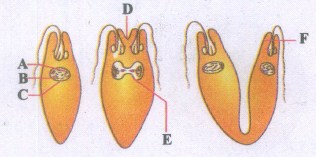
45.
What is the significance of bone marrow in immune system?
46.
Define innate immunity.
47.
What are interferons? Mention their role.
48.
How does immune system work?
49.
Name the humors that are responsible for the health of human beings.
50.
How are microbial inoculants used to increase the soil fertility?
51.
52.
Expand CCS. (or) What is CCS?
53.
54.
Pyramid of energy is always upright. Give reasons
55.
Sandy soil is not suitable for cultivation. Explain why?
56.
‘Green algae are not likely to be found in the deepest strata of the ocean’. Give at least one reason.
57.
Define ecological niche.
58.
What would Earth be like without the greenhouse effect?
59.
Discuss the causes and effects of global warming. What measures need to be taken to control global warming?
60.
Why do animals have greater diversification than plant diversity?
61.
62.
What is biological oxygen demand?
63.
What is the name of the process given below? Write its 4 types.
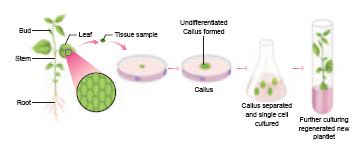
64.
What are the enzymes you can used to cut terminal end and internal phospho di ester bond of nucleotide sequence?
65.
What are the materials used to grow microorganism like Spirulina?
66.
Mention any two ways in which single nucleotide polymorphism (SNPs) identified in human genome can bring revolutionary change in biological and medical science.
67.
Placenta is an endocrine tissue. Justify
68.
69.
70.
What is Lyonisation?
71.
What are interferons? Mention their role.
72.
Name the phenomenon where the female gamete directly develops into a new organism with an avian example.
73.
Name an organism where cell division is itself a mode of reproduction.
74.
Define Genetics.
75.
Name the seven contrasting traits of Mendel.
76.
What are clones?
77.
How was Insulin obtained before the advent of rDNA technology? What were the problems encountered?
78.
Explain how “Rosie” is different from a normal cow
79.
Explain how mutations, natural selection and genetic drift affect Hardy Weinberg equilibrium.
80.
Explain the three major categories in which fossilization occur?
81.
If you cross dominant genotype PV/PV male Drosophila with double recessive female and obtain F1 hybrid. Now you cross F1 male with double recessive female.
i) What type of linkage is seen?
ii) Draw the cross with correct genotype.
iii) What is the possible genotype in F2 generation?
82.
When two different genes came from same parent they tend to remain together.
i) What is the name of this phenomenon?
ii) Draw the cross with suitable example.
iii) Write the observed phenotypic ratio.
83.
Given below are some human organs. Identify one primary and one secondary lymphoid organ. Explain its role. Liver, thymus, stomach, thyroid, tonsils.
84.
Explain the conventional methods adopted in vegetative propagation of higher plants.
85.
Discuss which wood is better for making furniture.
86.
Discuss the gross primary productivity is more efficient than net primary productivity.
87.
Explain hibernation and aestivation with examples.
88.
How is milk converted into curd? Explain the process of curd formation
89.
90.
Correct the following statements
a) Transfer of an ovum collected from donor into the fallopian tube is called ZIFT.
b) Transfering of an embryo with more than 8 blastomeres into uterus is called GIFT.
c) Multiload 375 is a hormone releasing IUD.
91.
Select the correct term from the bracket and complete the given branching tree
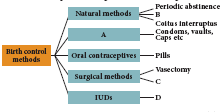
(Barriers, Lactational amenorrhoea, CuT, Tubectomy)
92.
Differentiate - Leading stand and lagging strand
1.
Archaeopteryx - connecting link between Reptiles and Aves.
Peripatus - Connecting link between Annelida and Arthropoda.
2.
Both the wings of cockroach and bird are different in structure but similar in their function. Thus, they are analogous structure that brings about convergent evolution.
3.
Birth rate (b) = \(\frac { number\ of\ births\ per\ unit\ time }{ average\ population } \)
Death rate (d) = \(\frac { number\ of\ deaths\ per\ unit\ time }{ average\ population } \)
4.
The largest and most nearly self-sufficient biological system is often designated as the Ecosphere, which includes all the living organisms of the Earth, interacting with the physical environment to regulate their distribution, abundance, production and evolution
5.
USEPA : United States Environmental Protection Agency.
MOEFCC : Ministry of Environment, Forest and Climate Change
6.
| Nucleoside | Nucleotide |
| Nucleoside subunit is composed of nitrogenous bases linked to a pentose sugar molecule. | Nucleotide subunit is composed of nitrogenous bases, a pentose sugar, and a phosphate group. |
7.
Rhizobium is a symbiotic nitrogen-fixing bacteria which infects the root nodules of leguminous plants and fixes free atmospheric nitrogen into organic forms
8.
Erythromycin, Chloromycetin, Neomycin, Kanamycin
9.
IUCN's mission is to influence, encourage and assist societies throughout the world to conserve nature and to ensure that any use of natural resources is equitable and ecologically sustainable.
10.
IUCN - International Union for Conservation of Nature and Natural resources:
11.
Marijuana, Ganja, Hashish, and Charas.
12.
Gypsy moth, fishes, reptiles and birds
13.
The I gene exists in three forms: lA, IB and 1O. The alleles are located on chromosome 9.
14.
(i) Bioventing is the process that increases the oxygen or air flow to accelerate the degradation of environmental pollutants.
(ii) Bioaugmentation is the addition of selected microbes to speed up degradation process.
15.
GM Food - Benefits:
(i) High yield without pest.
(ii) 70% reduction of pesticide usage.
(iii) Reduce soil pollution problem.
(iv) Conserve microbial population in soil.
16.
Coitus interruptus is a oldest family planning method, where the male partner withdraws his penis before ejaculation, there by preventing the deposition of semen into vagina.
17.
Loss of pair of homologous chromosome from the diploid set is called Nullisomy. Selfing of monosomic plants produces Nullisomics. They are generally lethal.
18.
Temperature, X-rays, Gamma rays and UV rays.
19.
Vivipary is a condition in which animals give rise to living young ones after being nourished in the uterus through the placenta. E.g. human
20.
Extranuclear inheritance is due to genes located on the cytoplasmic organelles such as chloroplast and mitochondrion hence it is called cytoplasmic inheritance.
21.
(a) Pleiotropism
(b) Poly genic inheritance
22.
(a) Filiform apparatus helps in absorption conduction of nutrients from nucellus to embryo sac
(b) It guides the pollen tube into the egg.
23.
(a) Cutting
(b) Grafting
24.
Eltonian pyramid or Ecological pyramid is a graphic representation of the trophic structure and function at successive trophic levels of an ecosystem.
25.
Heliophytes - Light loving plants. Example: Angiosperms.
Sciophytes - Shade loving plants. Example: Bryophytes and Pteridophytes
26.
The interaction of organisms with their environment results in the establishment of grouping of organisms which is called ecological hierarchy.
27.
The amount of living materials present in a population at any given time is known as standing crop.
28.
Patents, Copyrights, trade secrets and geographical indications.
29.
Based on the explants some other plant tissue culture types are:
1. Organ culture
2. Meristem culture
3. Protoplast culture
4. Cell culture
30.
Emasculation: It is a process of removal of anthers to prevent self-pollination before anthesis (period of opening of a flower).
Bagging: The stigma of the flower is protected against any undesirable pollen grains, by covering it with a bag.
31.
(a) Cassia fistula
(b) Sesbania grandiflora
(c) Azadirachta indica
(d) Pongamia pinnata
32.
Agroforestry is an integration of trees, crops, and livestock on the named plot of land. The commercial Agroforestry trees are casuarina and Eucalyptus.
33.
Ozone layer is a region of Earth's stratosphere that absorbs most of the Sun's ultraviolet radiation. The ozone layer is also called as the ozone shield and it acts as a protective shield, cutting the ultra-violet radiation emitted by the sun.
34.
(a) Corchorus capsularis
(b) Corchorus olitorius
35.
Finger millet, Sorghum, Foxtail millet and Kodo millet.
36.
4 'R' refers to refuse, reduce, reuse and recycle. It is the best available remedy for plastic waste pollution.
37.
Saheli, is a contraceptive pill devised by Central Drug Research Institute (CDRI) in Lucknow, India. It contains a non-steroidal preparation called centchroman.
38.
A geographical indication is a name or sign used on products which correspond to a specific geographical origin and possess qualities or a reputation that are due to that origin. Darjeeling Tea was the first GI tagged product in India.
39.
In polymerase chain reaction, annealing is a process where the denatured target DNA strands are cooled rapidly allowing the primers to bind to the sequences on each of the two strands flanking the target DNA.
40.
The hormone oxytocin brings about the "Let - down" reflex which is the actual ejection of milk from the alveoli of the mammary glands.
41.
(i) Sertoli cells or nurse cell
(ii) Spermatogonic cells
42.
It is a toxin produced by lysis of insected red blood cells in a person affected with malaria. This causes malaria symptoms such as fever, chills, shivering etc.,
43.
| Heterochromatin | Euchromatin |
| 1) The Chromatin that is tightly packed (stains darkly) is called heterochromatin. | The Chromatin that is loosely packed (lightly straned) is called euchromatin. |
| 2) It is transcriptionally inactive. | It is transcriptionally active |
44.
A - Chromosomes
B - Nucleoli
C - Nucleus
D - Longitudinal furrow
E - Nuclear constriction
F - Daughter Euglena
45.
(i) Bone marrow is a lymphoid tissue found within the spongy portion of the bone.
(ii) Bone marrow contains stem cells known as haematopoietic cells.
(iii) They have the potential to multiply through cell division and either remain as stem cells or differentiate and mature into different kinds of blood cells.
46.
Innate immunity is the natural phenomenon of resistance to infection which an individual possesses right from the birth.
47.
Interferons are a group of signalling proteins produced by virus infected cells. They interfere with viral replication and hence named interferons. A virus infected cell releases interferons which induce antiviral state in the uninfected cells. They are chemical mediators under physiological barriers offering Innate immunity.
48.
The immune responses may be primary or secondary.
(i) The primary immune response occurs when a pathogen comes in contact with the immune system for the first time.
(ii) The secondary immune response occurs when a person is exposed to the same antigen again. During this time, immunological memory has been established and the immune system can start producing antibodies immediately. Within hours after recognition of the antigen, a new army of plasma cells are generated. Within 2 to 3 days, the antibody concentration in the blood rises steeply to reach much higher level than primary response. This is also called as "booster response".
49.
Vatam, Pittam and Kapam.
50.
Micro organisms are efficient in fixing nitrogen, solubilizing phosphate and decomposing cellulose. They improve soil fertility, plant growth. They are ecofriendly and cost-effective than chemical fertilizers. Example. Azospirillum.
51.
52.
CSS - Carbon Capture and Storage.
53.
54.
There is a gradual decrease in energy transfer at successive tropic levels from producers to higher levels, hence the pyramid of energy is always upright.
55.
Sandy soil loses water at high rate, These characters along with other parameters such as pH, mineral composition is also important.
56.
The blue green light have short wavelength & penetrates into the water. Green algae is unable to use that component of light. Blue light can penetrate up to 500 ft depth therefore algae are unlikely to survive below that depth.
57.
Ecological niche is a term for the position of a species within an ecosystem, describing both the range of conditions necessary for persistence of species, and is ecological role in the ecosystem.
58.
The naturally occurring greenhouse gases in the air, mainly carbon dioxide, methane and water vapour trap radiation from the sun and act like a thermal blanket around our planet earth. Without the greenhouse gases, the earth would have an average temperature of -180 c and be covered in ice. The greenhouse effect keeps the earth warm enough to sustain life.
59.
Green House Effect and Global warming:
Natural environment and climate are dynamic and keep changing over course of time. Reasons for climate change
a) Human population growth
b) Industrialization
c) Associated anthropological activities the changes.
Impact on Global Warming:
(i) Large-scale changes of global environment can lead to hazards, which may include climate change, stratospheric ozone depletion, changes in ecosystems due to loss of biodiversity, changes in hydrological systems and the supplies of freshwater, land degradation, urbanization, and stress on food-producing systems.
(ii) Greenhouse gases (GHG) water vapour, carbon dioxide, methane, nitrous oxide, ozone and some artificial chemicals such as chlorofluorocarbons (CFCs) causes greenhouse effect. The absorbed energy warms the atmosphere and the surface of the Earth
(iii) Global warming will have a significant impact on people and nature. As global average temperatures rise, precipitation patterns could be affected. Extreme wet and dry conditions can be expected (flooding and desertification). Coastal areas shall become more vulnerable to storm surges as sea level rises. Plant and animal species will migrate or disappear in response to climate change.
(iv) Global warming can directly affect the flora and fauna. This could also result in shortage of food and even lead to a food crisis and affect the health of the people and organisms.
Control Measures:
The UNO has several measures to control or reduce pollution. Through various conventions organized by UNO, the countries assured to take steps to control or reduce emissions by factories and automobiles.
60.
More than 70% of species recorded on earth are animals and 22% are planted. This is because the animals have adapted themselves to ensure their survival in changing environments in comparison to plants. Eg. Presence of nervous system helps animals to control and coordinate their body structures. Therefore diversification in animals is more than in plants.
61.
62.
BOD stands for Biological Oxygen Demand. BOD refers to the amount of oxygen that would be consumed if all the organic matter in one liter of water were oxidized by bacteria. The greater the BOD of the waste water, the more is its polluting potential.
63.
Name of the process-Plant tissue culture Types:
(a) Organ culture
(b) Meristem culture
(c) Protoplast culture
(d) Cell culture
64.
Restriction endonuclease. e.g: Hind II, EcoR I, Pvul, Bam H I, Taq I.
65.
Spirulina can be grown easily on materials like waste water from potato processing plants (containing starch), straw, molasses, animal manure and even sewage, to produce large quantities.
66.
There are 1.4 million locations where single base DNA differences (Called SNPs - Single Nucleotide Polymorphism - pronounce as snips) occurs in human's genome.
(i) By tracing human history
(ii) By finding chromosomal locations for disease associated sequences
67.
Placenta during pregnancy secretes hormones such as human chorionic gonadotrophic (hcG) estrogen, progesterone and human placenta lactogen. So, placenta is regarded as an endocrine tissue.
68.
69.
70.
The inactivation of an X chromosome one of the two X chromosomes in every cell in some female mammal is randomly inactivated early in embryonic development and named after geneticist Mary Lyon.
The inactive X chromosome is silenced by it being packaged in such a way that it has a transcriptionally inactive structure called heterochromatin found in nucleoplasm of nucleus.
71.
Interferons: These are the proteins made and released by host cells in response to the presence of pathogens such as viruses, bacteria, parasites etc
RoIe: They inhibit viral infections and stimulate the entire immune system to fight disease. They also regulate many kinds of cell functions
72.
Parthenogenesis is the phenomenon in which female gamete directly develops into a new organism. (e,g:) Honeybee (male or drone).
73.
In monocellular organs cell division is itself a mode of reproduction. (e.g:) Bacteria, Euglena and Amoeba.
74.
"Genetics" is the branch of biological science which deals with the mechanism of transmission of characters from parents to off springs.
75.
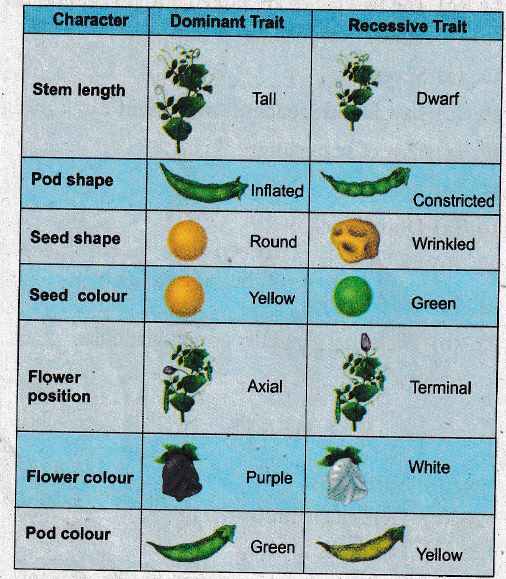
Seven characters of pisum satiyum studied by Mendel.
76.
Individuals formed by asexual reproductive methods are morphologically and genetically identical and are called clones.
77.
1. The human insulin is synthesized by the \(\beta\) cells of Islets of Langerhans in the pancreas. It is formed of 51 amino acids which are arranged in two polypeptide chains, A and B. The polypeptide chain A has 21 amino acids while the polypeptide chain B has 30 amino acids.
2. In the early years, insulin isolated and purified from the pancreas of pigs and cows was used to treat diabetic patients. Due to minor differences in the structure of the animal Insulin as compared allergic reactions in some diabetic patients.
78.
1. In 1997, Rosie, the first transgenic cow produced human protein enriched milk, which contained the human alpha lactalbumin.
2. Alpha lactalbumin is a protein composed of 123 amino acidic and 4 disulphide bridges, with a molecular weight of 14178 Da.
3. In human milk, & lactalbumin is the most abundant protein comprising 25% of total protein found in human milk.
4. It is synthesized by the mammary glands & lactalbumin binds calcium and zinc ions and possesses bactericidal antitumor activities.
79.
1. There are five basic processes that affect the Hardy-Weinberg equilibrium and cause variations at genetic level.
2. These include (i) Mutation (ii) recombination (iii) Gene migration (iv) Genetic drift and (v) natural selection.
3. Among the above five processes, lets discuss how mutation, natural selection and genetic drift affect Hardy Weinberg equilibrium.
(a) Mutation:
1. Mutation are sudden heritable changes in the characteristics of the organisms.
2. These mutations are random (indiscriminate) with respect to the adoptive needs of organisms.
3. Most mutations are harmful or with no effects (neutral) on their bearers.
4. However under changed environmental conditions, the alleles, which were previously harmful or neutral may become advantageous.
5. The rate of mutation is very slow usually one mutation occurs in a million still these mutation rates are sufficient to create considerable genetic variation.
6. Mutations help in maintaining variations within population.
7. Mutation also introduce new genes and alleles into the gene pool (sum total of all genotypes or alleles found in a population).
8. It is the gene pool in which new genes are added or removed. This variability of genes (or) alleles in a gene pool, then serve as a raw material for evolutionary changes.
9. The accumulation of many mutations over hundreds of generation cause large scale changes.
(b) Natural selection
1. Natural selection is the most important evolutionary process that brings about changes in allele frequencies.
Definition
1. The process of differential reproduction that lead to differential contribution of genotypes to the gene pool of the next generation.
2. Natural selection results a change in allele frequencies of a population.
(c) Genetic drift
1. It refers to the elimination of certain genes in a small isolated population either due to intensive inbreeding causing permanent fixation of some genes or death of a small section of population by natural calamity.
Definition
1. The random changes in the allele frequency occurring by chance alone are called genetic drift.
2. This means that the alleles that form the gene pool of the next generation are a sample of the allele from current generation.
3. Sampling errors (chances) often lead to the elimination of certain alleles and fixation by others thus reducing the genetic variability of the population.
4. The effect of genetic drift is very small in large but can be large in a small population.
5. Thus these forces that change the allele and genotypic frequencies in a population and so called evolutionary agents.
6. As long as Hardy-Weinberg Equilibrium remains constant the evolution cannot occur since the genetic equilibrium is a sort of inertia whose tendency is rather conservative. Evolution become possible only if the inertia is overcome or the equilibrium is broken.
80.
Fossilization is the process by which plant and animal remains are preserved in sedimentary rocks. They fall under three main categories.
(i) Actual remains
The original hard parts such as bones, teeth or shells are preserved as such in the earth's atmosphere, which is not the common method of fozzilization.
2. When marine animals die, their hard parts such as bones, shells etc. are covered with sediments and are protected from further deterioration.
3. Such parts get preserved in vast ocean, the salinity in them prevents decay.
4. The sediments become hardened to form definite layers (or) strata.
5. For example wooly mammoth that lived 22 thousand years ago were preserved in the frozen coast of Siberia as such, several human beings and animals living in the animals living in the ancient city of pompeii were preserved infact by volcanic ash which gushed out from Mount Vesuvivs.
(ii) Petrifaction
1. After death of animals their original portion of their body may be replaced molecule for molecule by minerals and the original substance being lost through disintegration.
2. This method of fozzilation is called pertifaction.
3. The principle minerals involved in this type fozzilation are iron, pyrites, silica, calcium, carbonate, and bicarbonates of calcium and magnesium.
(iii) Natural moulds and casts
1. Even after disintegration, the body of an animal might leave indelible impression on the soft mud which later becomes hardened into stones. Such impressions are called moulds.
2. The cavities of the moulds may get filled up by hard minerals and get fozzillized, which are called casts.
3. Hardened faecal. matter termed as coprolites occur as tiny pellets.
4. Analysis of the coprolites enable us to understand the nature of diet, the pre historic animals thrived on.
81.
(i) Incomplete linkage
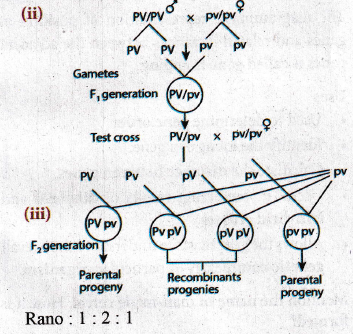
Rano : 1:2:1
82.
(i) Complete Linkage
(ii)
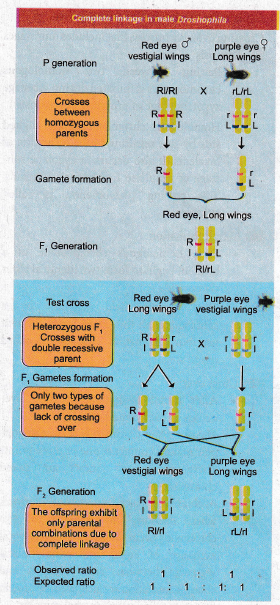
(iii) Observed ratio 1:1
83.
(i) The primary lymphoid organ is thymus.
(ii) The secondary lymphoid organ is tonsils.
Role of Primary lymphoid organ: Thymus
(i) Thymus is most active during the neonatal and pre-adolescent periods.
(ii) The thymus is a flat and bilobed organ located behind the sternum, above the heart.
(iii) Each lobe of the thymus contains numerous lobules, separated from each other by connective tissue called septa (cross walls).
(iv) Each lobule is differentiate into an outer cortex and an inner medulla. Within each lobule, the developing T cells called thymocytes are arranged into an outer cortex and an inner medulla
(v) An inner medulla contains immature thymocytes and outer cortex has matured thymocyte
(vi) One of its main secretions is the hormone thymosin. It stimulates the T cells to become mature and immunocompetent. By the early teens, (upto 12-13 years) the thymus begins to atrophy and is replaced by adipose tissue (binding tissue).
Secondary lymphoid organ :
(i) The tonsils (palatine tonsils) are a pair of soft tissue masses located at the back of the throat (pharynx ).
(ii) The tonsils are part of the lymphatic system which help to fight against the infections. They stop invading germs including bacterin and viruses.
84.
Artificial propagation of higher plants used by man for a very long time are called conventional methods
1) Cutting
The cut parts from (root, stem, leaf) parent plant are grown in suitable medium. They grow into new plants
Example:
(i) Root Cutting - Malus.
(ii) Stem Cutting - Hibiscus.
(iii) Leaf cutting - Begonia.
2) Grafting
Parts of two different plants are joined so that they continue to grow as one plant of the two plants the plant which is in contact with the soil is called stock the plant used for grafting is called scion.
Example:
(i) Citrus, Mango.
(ii) There are different types of grafting based on the method of uniting the scion and stock.
Layering
The stem of the parent plant is allowed to develop roots while still intact. After the roots formation rooted part is cut and planted to grow as a new plant.
Example:
Ixora, Jasminum
It is of two types - Mound / Air layering.
85.
1. Tectona grandis is the plant gives wood better for making furniture.
2. It is one of the best timber in the world.
3. The heart wood is yellow to golden brown turner darker.
4. Durability and immune to attack of termites and fungi is well known.
86.
Gross Primary Productivity (GPP) is the total amount of food energy or biomass produced in an ecosystem by autotrophs through the process of photosynthesis whereas Net Primary Productivity (NPP) is the proportion of energy which remains after respiration loss in the plant. When we compare GPP with NPP more energy is present in former than in latter.
87.
Hibernation:
Spending the winter in an inactive dormant state to escape in time, is called hibernation. E.g: Bears and Frogs.
Aestivation:
Spending the dry, hot period in an inactive state to escape in time is called aestivation .E.g: Snails and Fish.
88.
1. Milk is converted into curd with the help of bacteria like Lactobacillus acidophilus Lactobacillus lactis and Streptococcus lactis are commonly called Lactic Acid Bacteria (LAB).
2. The LAB bacteria grow in milk and convert it into curd, thereby digesting the milk protein casein.
3. A small amount of curd added to fresh milk as a starter or inoculum contains millions of Lactobacilli, which under suitable temperature \(\left(\leq 40^{\circ} \mathrm{C}\right)\) multiply and convert milk into curd by fermentation.
4. Curd is more nutritious than milk as it contains a number of organic acids and vitamins.
89.
90.
(a) Transfer of an ovum collected from donor into the fallopian tube is called GIFT (Gamete Intra-fallopian transfer)
(b) Transferring of an embryo with more than 8 blastomeres into uterus is called IUT (Intra uterine transfer)
(c) Multi load 375 is a copper releasing IUD
91.
A - Barrier methods
B - Lactational amenorrhoea
C - Tubectomz
D - CuT
92.
During DNA replication, One acts as the leading strand and the other is the lagging strand.
| Leading Strand | Lagging Strand |
|---|---|
| lt is continuously formed as replicated strand of DNA without any gap |
It is replicated strand of DNA which is formed by the joining of short segments called okazaki segment |
| The growth of leading strand is in 5' → 3'direction | Each okazaki segment grows in 5' → 3'direction but the growth of the lagging strand is in 5' → 3'direction. |
| lt does not require DNA ligase for its growth and used in PCR | DNA ligase is required for the formation of lagging strand from okazaki segments |

12th Standard Syllabus & Materials
12th Standard
TN 12th Computer Applications களப்பெயர் முறைமை (DNS) Sample Question Papers Study Material - QB365 Set A
NEW12th Standard
TN 12th Computer Applications வலையமைப்பு எடுத்துக்காட்டுகள் மற்றும் நெறிமுறைகள் Sample Question Papers Study Material - QB365 Set A
NEW12th Standard
TN 12th Computer Applications கணினி வலையமைப்பு ஓர் அறிமுகம் Sample Question Papers Study Material - QB365 Set A
NEW12th Standard
TN 12th Computer Applications PHP-உடன் MySQL-ஐ இணைத்தல் Sample Question Papers Study Material - QB365 Set A



Tamilnadu Stateboard 12th Standard Subjects

Maths

Chemistry

Physics
Biology

Computer Science

Business Maths and Statistics

Economics

Commerce

Accountancy

History

Computer Applications
Biology
Computer Technology
Computer Applications
Computer Science
Business Maths and Statistics
Commerce
Economics
Maths
Chemistry
Physics
Computer Technology
History
Accountancy

Tamil

English

French
Tamilnadu Stateboard Standards

