
 100% FREE ACCESS
12th Standard Syllabus & Materials
12th Standard
TN 12th Computer Applications மின்னணு தரவு பரிமாற்றம் Sample Question Papers Study Material - QB365 Set A
NEW12th Standard
TN 12th Computer Applications மின் - வணிக பாதுகாப்பு அமைப்புகள் Sample Question Papers Study Material - QB365 Set A
NEW12th Standard
TN 12th Computer Applications மின்னணு செலுத்தல் முறைகள் Sample Question Papers Study Material - QB365 Set A
NEW12th Standard
TN 12th Computer Applications மின் - வணிகம் Sample Question Papers Study Material - QB365 Set A
NEW12th Standard
TN 12th Computer Applications திறந்த மூல கருத்துருக்கள் Sample Question Papers Study Material - QB365 Set A
NEW12th Standard
TN 12th Computer Applications வலையமைப்பு வடமிடல் Sample Question Papers Study Material - QB365 Set A

Published on: 29/08/2022
QB365 provides a detailed and simple solution for every Possible Book Back Questions in Class 12 Biology Subject - Botany - Principles of Ecology, English Medium. It will help Students to get more practice questions, Students can Practice these question papers in addition to score best marks.
Download Tamil Nadu 12th Standard Biology question papers, model tests, one-mark questions, important questions, and public exam papers in PDF format. Free study materials and answer keys for TN State Board students.
Questions + Answers key
Take MCQ Biology Test1.
Describe dispersal of fruit and seeds by animals.
2.
3.
4.
Enumerate the anatomical adaptations of xerophytes.
5.
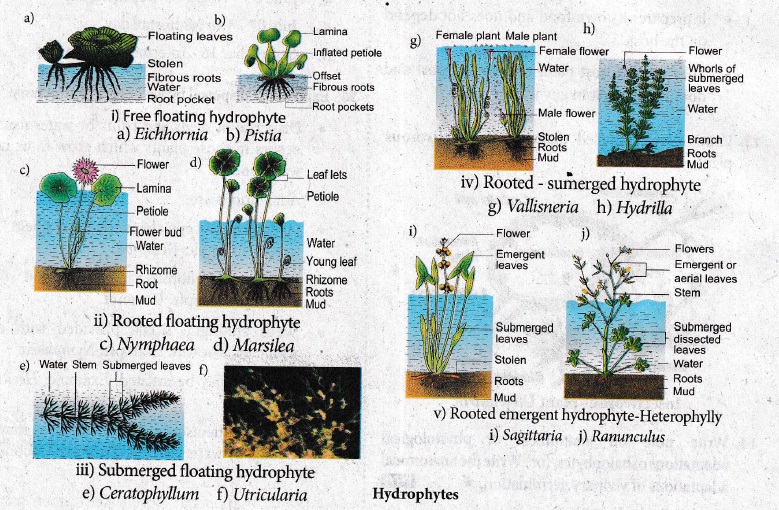
Explain different types of hydrophytes with examples.
6.
Give an account of various types of parasitism with examples.
7.
8.
Describe the mutual relationship between the fig and wasp and comment on the phenomenon that operates in this relationship.
1.
Dispersal by Animals (Zoochory)
Birds and mammals, including human beings play an efficient and important role in the dispersal of fruit and seeds. They have the following devices.
i. Hooked fruit: The surface of the fruit or seeds have hooks (Xanthium), barbs (Andropogon), spines (Aristida) by means of which they adhere to the body of animals or clothes of human beings and get dispersed.
ii. Sticky fruits and seeds:
a. Some fruits have sticky glandular hairs by which they adhere to the fur of grazing animals. Example: Boerhaavia and Cleome.
b. Some fruits have viscid layer which adhere to the beak of the bird which eat them and when they rub them on to the branch of the tree, they disperse and germinate. Example: Cordia and Alangium.
iii. Fleshy fruits: Some fleshy fruits with conspicuous colours are dispersed by human beings to distant places after consumption.
Example: Mango and Diplocyclos
2.
3.
4.
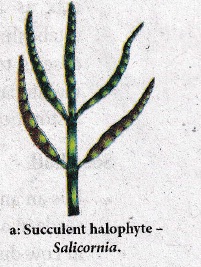
The plants which are living in dry or xeric condition are known as Xerophytes.
Xerophytic habitat can be of two different types They are:
(a) physical dryness: In these habitats, soil has a little amount of water due to the inability of the soil to hold water because of low rainfall.
(b) physiological dryness: In these habitats, water is sufficiently present but plants are unable to absorb it because of the absence of capillary spaces. Example: Plants in salty and acidic soil.
Based on adaptive characters xerophytes are classified into three categories. They are Ephemerals, Succulents and Non - succulent plants.
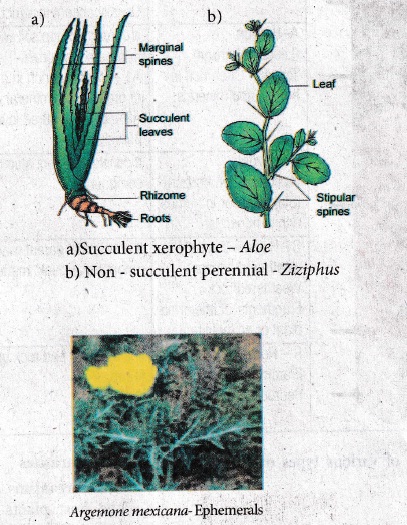
(i) Ephemerals: These are also called drought escapers or drought evaders. These plants complete their life cycle within a short period (single season). These are not true xerophytes. Examples: Argemone, Mollugo, Tribulus and Tephrosia.
(ii) Succulents: These are also called drought enduring plants. These plants store water in their plant parts during the dry period. These plants develop certain adaptive characters to resist extreme ,drought conditions. Examples: Opuntia, Aloe, Bryophyllum and Begonia.
(iii) Non succulents: These are also called drought resistant plants ( true xerophytes). They face both external and internal dryness. They have many adaptations to resist dry conditions. Examples: Casuarina, Nerium, Zizyphus and Acacia.
5.
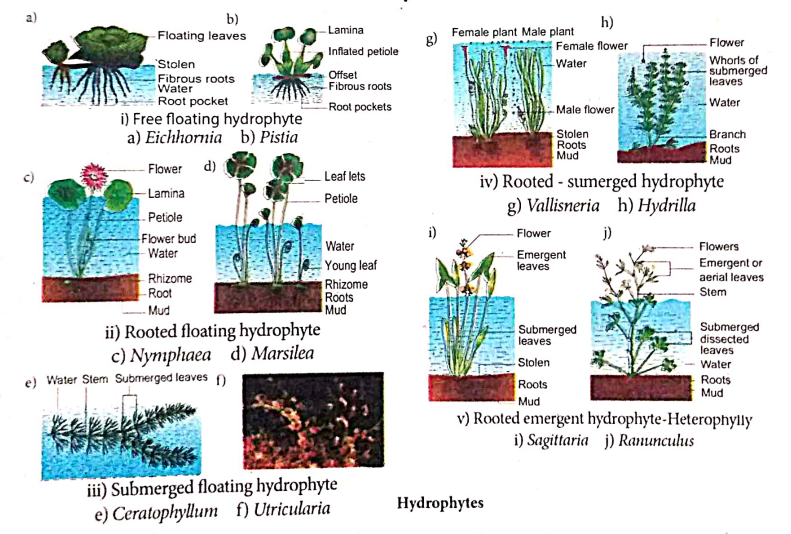
i. Free floating hydrophytes: These plants float freely on the surface of water. They remain in contact with water and air, but not with soil. Examples: Eichhornia, Pistia and Wolffia (smallest flowering plant).
ii. Rooted floating hydrophytes: In these plants, the roots are fixed in mud, but their leaves and flowers are floating on the surface of water. These plants are in contact with soil, water and air. Examples: Nelumbo, Nymphaea, Potomogeton and Marsilea. Lotus seeds showing highest longevity in plant kingdom.
iii. Submerged floating hydrophytes: These plants are completely submerged in water and not in contact with soil and air. Examples: Ceratophyllum and Utricularia.
iv. Rooted-submerged hydrophytes: These plants are completely submerged in water and rooted in soil and not in contact with air. Examples: Hydrilla, Vallisneria and Isoetes.
v. Amphibious hydrophytes (Rooted emergent hydrophytes): These plants are adapted to both aquatic and terrestrial modes of life. They grow in shallow water. Examples: Ranunculus, Typha and Sagittaria.
6.
Parasitism:
It is an interaction between two different species in which the smaller partner (parasite) obtains food from the larger partner (host or plant).
So the parasitic species is benefitted while the host species is harmed.
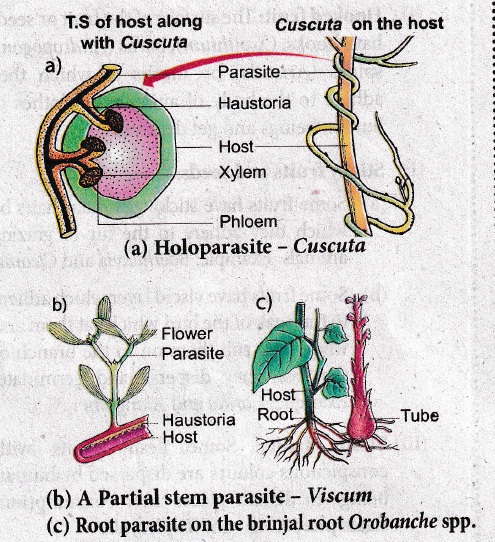
Based on the host-parasite relationship, parasitism is classified into two types they are holoparasite and hemiparasite.
Holoparasites:
The organisms which are dependent upon the host plants for their entire nutrition are called Holoparasites. They are also called total parasites.
Examples:
1. Cuscuta is a total stem parasite of the host plant Acacia, Duranta and many other plants. Cuscuta even gets flower inducing hormone from its host plant.
2. Balanophora, orobanche and Refflesia are the total root parasites found on higher plants.
7.
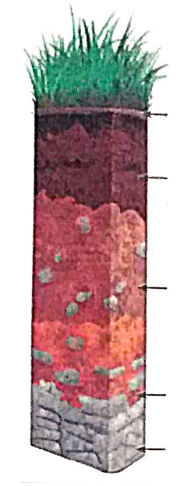 Horizon Description O-Horizon (Organic horizon) Humus It consists of fresh or partially decomposed organic matter.
8.
1. In many species of fig trees, there is a one-to one relationship with the pollinator species of wasp. It means that a given fig species can be pollinated only by its 'partner' wasp species & no other species.
2. The female wasp uses the fruit not only as an oviposition (egg, laying) site but uses the developing seeds within the fruit for nourishing its larvae.
3. The wasp pollinates the fig inflorescence while searching for suitable egg-laying sites.
4. In return for the favour of pollination the fig offers the wasp, some of its developing seeds, as food for the developing wasp larvae.
5. The relationship that operates here is co-evolution.

12th Standard Syllabus & Materials
12th Standard
TN 12th Computer Applications களப்பெயர் முறைமை (DNS) Sample Question Papers Study Material - QB365 Set A
NEW12th Standard
TN 12th Computer Applications வலையமைப்பு எடுத்துக்காட்டுகள் மற்றும் நெறிமுறைகள் Sample Question Papers Study Material - QB365 Set A
NEW12th Standard
TN 12th Computer Applications கணினி வலையமைப்பு ஓர் அறிமுகம் Sample Question Papers Study Material - QB365 Set A
NEW12th Standard
TN 12th Computer Applications PHP-உடன் MySQL-ஐ இணைத்தல் Sample Question Papers Study Material - QB365 Set A



Tamilnadu Stateboard 12th Standard Subjects

Maths

Chemistry

Physics
Biology

Computer Science

Business Maths and Statistics

Economics

Commerce

Accountancy

History

Computer Applications
Biology
Computer Technology
Computer Applications
Computer Science
Business Maths and Statistics
Commerce
Economics
Maths
Chemistry
Physics
Computer Technology
History
Accountancy

Tamil

English

French
Tamilnadu Stateboard Standards

