
 100% FREE ACCESS
12th Standard Syllabus & Materials
12th Standard
TN 12th Computer Applications மின்னணு தரவு பரிமாற்றம் Sample Question Papers Study Material - QB365 Set A
NEW12th Standard
TN 12th Computer Applications மின் - வணிக பாதுகாப்பு அமைப்புகள் Sample Question Papers Study Material - QB365 Set A
NEW12th Standard
TN 12th Computer Applications மின்னணு செலுத்தல் முறைகள் Sample Question Papers Study Material - QB365 Set A
NEW12th Standard
TN 12th Computer Applications மின் - வணிகம் Sample Question Papers Study Material - QB365 Set A
NEW12th Standard
TN 12th Computer Applications திறந்த மூல கருத்துருக்கள் Sample Question Papers Study Material - QB365 Set A
NEW12th Standard
TN 12th Computer Applications வலையமைப்பு வடமிடல் Sample Question Papers Study Material - QB365 Set A

Published on: 29/01/2021
12th Standard Bio-Botany English Medium Environmental Issues Reduced Syllabus Important Questions 2021
Download Tamil Nadu 12th Standard Biology question papers, model tests, one-mark questions, important questions, and public exam papers in PDF format. Free study materials and answer keys for TN State Board students.
Questions + Answers key
Take MCQ Biology Test1.
Assertion (A): In zoological parks, the animals are maintained in their natural habitat.
Reason (R): Ex-situ conservation refers to protecting species in their natural habitat.
A is correct R is incorrect.
A is incorrect R is correct.
R explains A.
Both A and R are incorrect.
2.
Assertion (A): Prosopis juliflora is native to Afghanistan.
Reason (R): Alien species refers to non-native species.
A is correct R is incorrect.
A is incorrect R is correct.
R explains A.
Both A and R are incorrect.
3.
Assertion (A): CO2 is a main cause for global warming
Reason (R): Greenhouse gases trap the radiant heat from sun
A is correct R is incorrect.
A is incorrect R is correct.
R explains A.
Both A and R are incorrect.
4.
Clean Development Mechanism (CDM) is defined in ________________
Copenhagen Acord
Montreal Protocol
Paris Agreement
Kyoto Protocol
5.
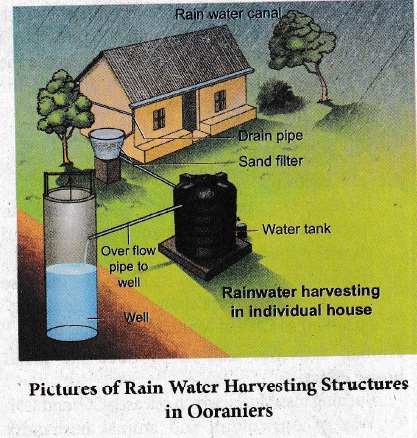
Which is not a true statement regarding rainwater harvesting?
Mitigates groundwater quality
Reduces soil erosion
Decreases soil salinity
No wastage of land for storing
6.
Pick out the odd one out _____________
Biosphere reserve
National parks
Wild life sanctuaries
Botanical gardens
7.
Total number of forestry extension centres in Tamil Nadu is ______________
16
32
18
51
8.
Which is not reduced by deforestation?
Amount of habitat
Amount of animal population
Amount of biodiversity
Amount of agricultural land
9.
Which is not a beneficial aspect of Agroforestry?
Nutrient cycling is improved
Balance in O2 - CO2 composition
Suitable for wetland where rainfall is maximum
Reduces water run-off problem
10.
Which is not a greenhouse gas?
CO2
N2O
O3
CFC
11.
12.
The unit for measuring ozone thickness _____.
Joule
Kilos
Dobson
Watt
13.
14.
With respect to Eichhornia
Statement A: It drains off oxygen from water and is seen growing in standing water.
Statement B: It is an indigenous species of our country.
Statement A is correct and Statement B is wrong
Both Statements A and B are correct
Statement A is correct and Statement B is wrong.
Both statements A and B are wrong
15.
Which of the following would most likely help to slow down the greenhouse effect.
Converting tropical forests into grazing land for cattle.
Ensuring that all excess paper packaging is buried to ashes.
Redesigning landfill dumps to allow methane to be collected.
Promoting the use of private rather than public transport.
16.
Carbon sequestration occurs naturally by plants and oceans. Name any four microalgal species involved in the process.
17.
Mention any two historical community-level conservation movements held for the protection of environment.
18.
What is invasive species?
19.
Compare Deforestation and Afforestation
20.
Explain the term social forestry.
21.
Define the term Agroforestry. Name any two major tree species cultivated in Agroforestry.
22.
Where did Montreal Protocol was held? State its objectives.
23.
List out the anthropogenic sources of Nitrous oxide.
24.
Name any four greenhouse gases.
25.
26.
Deforestation is creating various .adverse effect on environment. Enlist the consequences of deforestation.
27.
Due to plastic ban scheme in our state, people are gradually switching over to other optional for daily activities. As a biology student, suggest few eco-friendly alternatives for this issue.
28.
Write short notes on Bio-monitoring.
29.
Explain the role of lakes in an ecosystem.
30.
Give a brief account on In-situ conservation
31.
Write a short note on Chipko Movement.
32.
Prosopis juliflora, though an alien invasive species to India, it is beneficial to certain extent. Give reason.
33.
Give a detailed account on clean development mechanism.
34.
Mention any three sources of carbon dioxide emission.
35.
List out the effects of global warming.
36.
Which one gas is most abundant out of the four commonest greenhouse gases? Discuss the effect of this gas on the growth of plants?
37.
Write a comparative note on Carbon Foot Print (CFP).
38.
How Eichhornia crassipes spoils the Indian ecosystem?
39.
What are the objectives of Afforestation programme?
40.
What are the effects of deforestation and benefits of agroforestry?
41.
42.
1.
(d) Both A and R are incorrect.
2.
(b) A is incorrect R is correct.
3.
(c) R explains A.
4.
(d)
Kyoto Protocol
5.
(a)
Mitigates groundwater quality
6.
(d)
Botanical gardens
7.
(b)
32
8.
(a)
Amount of habitat
9.
(c)
Suitable for wetland where rainfall is maximum
10.
(c)
O3
11.
(c)
12.
(c)
Dobson
13.
(d)
14.
(a)
Statement A is correct and Statement B is wrong
15.
(c)
Redesigning landfill dumps to allow methane to be collected.
16.
(a) Chlorella
(b) Scenedesmus
(c) Chroococcus
(d) Chlamydomonas
17.
Chipko Movement and Appiko Movement
18.
A non-native species to the ecosystem or country under consideration that spreads naturally, interferes with the biology and existence of native species, poses a serious threat to the ecosystem and causes economic loss.
e.g., Eichhornia crassipes
19.
| Deforestation | Afforestation |
|---|---|
| The conversion of the forested area into a non-forested area is known as deforestation | Afforestation is a planting of trees where there was no previous tree coverage and the conversion of non- forested lands into forests by planting suitable trees to retrieve the vegetation. |
20.
Social forestry refers to the management of forests and afforestation on barren lands with the purpose of helping the environmental, social and rural development and benefits.
21.
Agroforestry is an integration of trees, crops, and livestock on the named plot of land. The commercial Agroforestry trees are casuarina and Eucalyptus.
22.
The International treaty called the Montreal Protocol (1987) was held in Canada on substances that deplete ozone layer and the main goal of it is gradually eliminating the production and consumption of ozone depleting substances and to limit their damage on the Earth's ozone layer.
23.
Man-made sources include nylon and nitric acid production, use of fertilizers in agriculture, manures cars with catalytic converter and burning of organic matter.
24.
CO2, CH4, N2O and CFC
25.
26.
(a) Increased global warming.
(b) Loss of livelihood for forest dwellers.
(c) Loss of bio-diversity
(d) Decrease in soil fertility.
(e) Decline in annual rainfall.
27.
(a) Cloth / Jute bags
(b) Plantain leaves, palmyra plates as plates
(c) Metal cups
(d) Earthen pots or ceramic wares
(e) Paper made flags
28.
The act of observing and assessing the current state and ongoing changes in ecosystem, biodiversity components, landscape including natural habitats, populations and species. An agricultural drone is an unmanned aerial vehicle applied to farming in order to help increased crop production and monitor crop growth. Agricultural drones let farmers see their fields from the sky. This bird’s eye-view can reveal many issues such as irrigation problems, soil variation and pest and fungal infestations. It is also used for cost effective safe method of spraying pesticides and fertilizers, which proves very easy and non-harmful.
29.
Lakes as storage of rainwater provide drinking water, improves groundwater level and preserve the fresh water bio-diversity and habitat of the area wherein occurs.
In terms of services, lakes offer sustainable solutions to key issues of water management and climatic influences and benefits like nutrient retention, influencing local rainfall, removal of pollutants, phosphorous and nitrogen and carbon sequestration.
30.
In-situ conservation means conservation and management of genetic resources in their natural habitats. Here the plant or animal species are protected within the existing habitat. Forest trees, medicinal and aromatic plants under threat are conserved by this method. This is carried out by the community or by the State conservation which includes wildlife, National park, and Biosphere reserve. The ecologically unique and biodiversity-rich regions are legally protected as wildlife sanctuaries, National parks and Biosphere reserves. Megamalai, Sathyamangalam wildlife, Guindy and Periyar National park, and Western Ghats, Nilgiris, Agasthyamalai, and Gulf of Mannar are the biosphere reserves of Tamil Nadu.
31.
Chipko Movement:
The tribal women of Himalayas protested 'against the exploitation of forests in 1972. Later on, it transformed into Chipko Movement by Sundarlal Bahuguna in Mandal village of Chamoli district in 1974. People protested by hugging trees together which were felled by a sports goods company. Main features of Chipko movement were,
(i) This movement remained nonpolitical
(ii) It was a voluntary movement based on Gandhian thought.
(iii) It was concerned with the ecological balance of nature
(iv) Main aim of Chipko movement was to give a slogan of five F's - Food, Fodder, Fuel, Fibre and Fertilizer, to make the communities self-sufficient in all their basic needs.
32.
Prosopis juliflora is used to arrest wind erosion and stabilize sand dunes on coastal and desert areas. It can absorb hazardous chemicals from soil and it is the main source of charcoal.
33.
Clean Development Mechanism (CDM) is defined in the Kyoto protocol (2007) which provides project-based mechanisms with two objectives to prevent dangerous climate change and to reduce greenhouse gas emissions. CDM projects help countries to reduce or limit emissions and stimulate sustainable development.
An example of CDM project activity is the replacement of conventional electrification projects with solar panels or other energy efficient boilers. Such projects can earn Certified Emission Reduction (CER) with credits/scores, each equivalent to one tonne of CO2, which can be counted towards meeting Kyoto targets
34.
(i) Coal based power plants, by the burning of fossil fuels for electricity generation.
(ii) Combustion of fuels in the engines of automobiles, commercial vehicles, and air planes contribute the most of global warming.
(iii) Agricultural practices like stubble burning result in emission of CO2.
35.
(i) Rise in global temperature which causes sea levels to rise as polar ice caps and glaciers begin to melt causing submergence of many coastal cities in many parts of the world.
(ii) There will be a drastic change in weather patterns bringing more floods or droughts in some areas.
(iii) Biological diversity may get modified, some species ranges get redefined. Tropics and sub-tropics may face the problem of decreased food production.
36.
Most abundant gas - CO2
Effect of CO2 on the growth of plants
(i) Change in flowering seasons and pollinators
(ii) Change in Species distributional ranges
(iii) Species extinction
(iv) Low agricultural productivity in tropics
(v) Frequent heat waves (Weeds, pests, fungi need warmer temperature)
(vi) Increase of vectors and epidemics
(vii) Strong storms and intense flood damage
(viii) Water crisis and decreased irrigation
37.
Every human activity leaves a mark just like our footprint. This Carbon footprint is the total amount of greenhouse gases produced by human activities such as agriculture, industries, deforestation, waste disposal, burning fossil fuels directly or indirectly. It can be measured for an individual, family, organization like industries, state level or national level. It is usually estimated and expressed in equivalent tons of CO2 per year. The burning of fossil fuels releases CO2 and other greenhouse gases. In turn, these emissions trap solar energy and thus increase the global temperature resulting in ice melting, submerging of low lying areas and imbalance in nature Iike cyclones, tsunamis, and extreme weather conditions. To reduce the carbon footprint we can follow some practices like
(i) Eating indigenous fruits and products
(ii) Reduce use of your electronic devices
(iii) Reduce traveling
(iv) Do not buy fast and preserved, processed, packed foods.
(v) Plant a garden
(vi) Less consumption of meat and seafood. Poultry requires little space, nutrients and less pollution comparing cattle farming.
(vii) reduce the use of Laptops (when used for 8 hours, it releases nearly 2 kg. of CO2 annually)
(viii) Line dry your clothes. (Example: If you buy imported fruit like kiwi, indirectly it increases CFP. How? The fruit has traveled a long distance in shipping or airliner thus emitting tons of CO2)
38.
Eichhornia crassipes is an invasive weed native to South America. It was introduced as aquatic ornamental plant, which grows faster throughout the year. Its widespread growth is a major cause of biodiversity loss worldwide. It affects the growth of phytoplankton and finally changing the aquatic ecosystem.
It also decreases the oxygen content of the waterbodies which leads to eutrophication. It poses a threat to human health because it creates a breeding habitat for disease-causing mosquitoes (particularly Anopheles) and snails with its free-floating dense roots and semi submerged leaves. It also blocks sunlight entering deep and the water ways hampering agriculture, fisheries, recreation, and hydropower.
39.
Afforestation Objectives:
(i) To increase forest cover, planting more trees, increases CO2 production and air quality.
(ii) Rehabilitation of degraded forests to increase carbon fixation and reducing CO2 from atmosphere.
(iii) Raising bamboo plantations.
(iv) Mixed plantations of minor forest produce and medicinal plants.
(v) Regeneration of indigenous herbs/shrubs.
(vi) Awareness creation, monitoring, and evaluation.
(vii) To increase the level and availability of water table or ground water and also to reduce nitrogen leaching in soil and nitrogen contamination of drinking water, thus making it pure not polluted with nitrogen.
(viii) Nature aided artificial regeneration.
40.
Effects of deforestation:
(i) Burning of forest wood release stored carbon, a negative impact just opposite of carbon sequestration,
(ii) Trees and plants bind the soil particles. The removal of forest cover increases soil erosion and decreases soil fertility. Deforestation in dry areas leads to the formation of deserts.
(iii) The amount of runoff water increases soil erosion and also creates flash flooding, thus reducing moisture and humidity.
(iv) The alteration of local precipitation patterns leading to drought conditions in many regions. It triggers adverse climatic conditions and alters water cycle in the ecosystem.
(v) It decreases the bio-diversity significantly as their habitats are disturbed and disruption of natural cycles.
(vi) Loss of livelihood for forest dwellers and rural people.
(vii) Increased global warming and account for one-third of total CO2 emission.
(viii) Loss of life support resources, fuel, medicinal herbs, and wild edible fruits.
Benefits of agroforestry:
(i) It is an answer to the problem of soil and water conservation and also to stabilize the soil (salinity and water table) reduce landslide and water run-off problem.
(ii) Nutrient cycling between species improves and organic matter is maintained.
(iii) Trees provide a micro climate for crops and maintain O2 - CO2 balanced, atmospheric temperature and relative humidity.
(iv) Suitable for dry land where rainfall is minimum and hence it is a good system for alternate land use pattern.
(v) Multipurpose tree varieties like Acacia are used for wood pulp, tanning, paper, and firewood industries.
(vi) Agroforestry is recommended for the following purposes. It can be used as Farm Forestry for the extension of forests, mixed forestry, shelterbelts, and linear strip plantation.
41.
42.
.jpg)

12th Standard Syllabus & Materials
12th Standard
TN 12th Computer Applications களப்பெயர் முறைமை (DNS) Sample Question Papers Study Material - QB365 Set A
NEW12th Standard
TN 12th Computer Applications வலையமைப்பு எடுத்துக்காட்டுகள் மற்றும் நெறிமுறைகள் Sample Question Papers Study Material - QB365 Set A
NEW12th Standard
TN 12th Computer Applications கணினி வலையமைப்பு ஓர் அறிமுகம் Sample Question Papers Study Material - QB365 Set A
NEW12th Standard
TN 12th Computer Applications PHP-உடன் MySQL-ஐ இணைத்தல் Sample Question Papers Study Material - QB365 Set A



Tamilnadu Stateboard 12th Standard Subjects

Maths

Chemistry

Physics
Biology

Computer Science

Business Maths and Statistics

Economics

Commerce

Accountancy

History

Computer Applications
Biology
Computer Technology
Computer Applications
Computer Science
Business Maths and Statistics
Commerce
Economics
Maths
Chemistry
Physics
Computer Technology
History
Accountancy

Tamil

English

French
Tamilnadu Stateboard Standards

