
 100% FREE ACCESS
12th Standard Syllabus & Materials
12th Standard
TN 12th Computer Applications மின்னணு தரவு பரிமாற்றம் Sample Question Papers Study Material - QB365 Set A
NEW12th Standard
TN 12th Computer Applications மின் - வணிக பாதுகாப்பு அமைப்புகள் Sample Question Papers Study Material - QB365 Set A
NEW12th Standard
TN 12th Computer Applications மின்னணு செலுத்தல் முறைகள் Sample Question Papers Study Material - QB365 Set A
NEW12th Standard
TN 12th Computer Applications மின் - வணிகம் Sample Question Papers Study Material - QB365 Set A
NEW12th Standard
TN 12th Computer Applications திறந்த மூல கருத்துருக்கள் Sample Question Papers Study Material - QB365 Set A
NEW12th Standard
TN 12th Computer Applications வலையமைப்பு வடமிடல் Sample Question Papers Study Material - QB365 Set A

Published on: 29/01/2021
12th Standard Bio-Botany English Medium Environmental Issues Reduced Syllabus Important Questions With Answer Key 2021
Download Tamil Nadu 12th Standard Biology question papers, model tests, one-mark questions, important questions, and public exam papers in PDF format. Free study materials and answer keys for TN State Board students.
Questions + Answers key
Take MCQ Biology Test1.
Assertion (A): In zoological parks, the animals are maintained in their natural habitat.
Reason (R): Ex-situ conservation refers to protecting species in their natural habitat.
A is correct R is incorrect.
A is incorrect R is correct.
R explains A.
Both A and R are incorrect.
2.
Assertion (A): Social forestry refers to management of forests and afforestation on barren lands.
Reason (R): Afforestation involves the cutting of trees.
A is correct R is incorrect.
A is incorrect R is correct.
R explains A.
Both A and R are incorrect.
3.
Identify the plant species that is not used as a live fence.
Sesbania grandiflora
Acacia species
Petunia species
Erythrina species
4.
_____________ is a plant species which acts as an indicator of Nitrate pollution.
Petunia
Lichens
Gladiolus
Pinus
5.
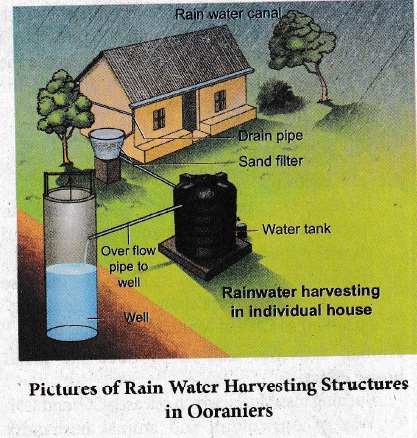
Which is not a true statement regarding rainwater harvesting?
Mitigates groundwater quality
Reduces soil erosion
Decreases soil salinity
No wastage of land for storing
6.
Biochar is ________________
(i) a kind of char coal used as a soil amendment
(ii) a potent way of sequestering carbon
(iii) made from biomass via pyrolysis
(iv) a notable solid, rich in carbon.
(i) and (ii) is correct
(ii) and (iv) is correct
(i) and (ii) is correct
all the above is correct
7.
Which is not true with respect to prosopis julifiora?
Invasive species native to Mexico
Arrest wind erosion
Absorb hazardous chemical from soil
Decreases O2 content of water bodies
8.
Who is celebrated as Forest Man of India?
Anand Mohan Chakrabarthy
Dr. M.S. Swaminathan
Jadav Molai Payeng
Choudhary Ram Dhan
9.
Which is not a beneficial aspect of Agroforestry?
Nutrient cycling is improved
Balance in O2 - CO2 composition
Suitable for wetland where rainfall is maximum
Reduces water run-off problem
10.
Which is not a greenhouse gas?
CO2
N2O
O3
CFC
11.
___________ is not a method of waste water treatment.
oxidation ponds
Anaerobic lagoons
Catalytic converter
Anaerobic bioreactor
12.
The plants which are grown in silvopasture system are ______.
Sesbania and Acacia
Solenum and Crotalaria
Clitoria and Begonia
Teak and sandal
13.
Deforestation does not lead to _____.
Quick nutrient cycling
soil erosion
alternation of local weather conditions
Destruction of natural habitat weather conditions
14.
15.
Depletion of which gas in the atmosphere can lead to an increased incidence of skin cancer?
Ammonia
Methane
Nitrous oxide
Ozone
16.
List out the benefits of EIA to society.
17.
What is carbon sequestration?
18.
Give the names of any four famous sacred groves in Tamil Nadu.
19.
Point out the adverse effect caused by invasive species.
20.
Define the term Agroforestry. Name any two major tree species cultivated in Agroforestry.
21.
Define ozone hole. Name anyone potent chemical that is responsible for the effect.
22.
What is ozone layer? Why it is essential?
23.
What is Dobson unit?
24.
List out the anthropogenic sources of Nitrous oxide.
25.
26.
Due to plastic ban scheme in our state, people are gradually switching over to other optional for daily activities. As a biology student, suggest few eco-friendly alternatives for this issue.
27.
Recently in January 2019, our Tamil Nadu Government had imposed a ban on using 14 different products of plastic origin. Mention any six plastic products that you know.
28.
Name the movement launched by the people of MandaI village to protect the trees by hugging them.
29.
Write short notes on Bio-monitoring.
30.
Explain the role of lakes in an ecosystem.
31.
Write a short note on Chipko Movement.
32.
Give a detailed account on clean development mechanism.
33.
Ozone acts as a natural sunscreen - Justify.
34.
Suggest few ways to overcome global warming.
35.
What are the adverse effects of global warming on plants?
36.
How do sacred groves help in the conservation of biodiversity?
37.
How Eichhornia crassipes spoils the Indian ecosystem?
38.
What are the objectives of Afforestation programme?
39.
List out the major effects of Ozone Depletion.
40.
What are the effects of deforestation and benefits of agroforestry?
41.
42.
1.
(d) Both A and R are incorrect.
2.
(a) A is correct R is incorrect.
3.
(c)
Petunia species
4.
(a)
Petunia
5.
(a)
Mitigates groundwater quality
6.
(d)
all the above is correct
7.
(d)
Decreases O2 content of water bodies
8.
(c)
Jadav Molai Payeng
9.
(c)
Suitable for wetland where rainfall is maximum
10.
(c)
O3
11.
(c)
Catalytic converter
12.
(a)
Sesbania and Acacia
13.
(a)
Quick nutrient cycling
14.
(d)
15.
(d)
Ozone
16.
The benefits of EIA to society
(i) A healthier environment
(ii) Maintenance of biodiversity
(iii) Decreased resource usage
(iv) Reduction in gas emission and environment damage
17.
Carbon sequestration is the process of capturing and storing CO2 which reduces the amount of CO2 in the atmosphere with a goal of reducing global climate change.
18.
(a) Banagudi Shola
(b) Thirukurungudi
(c) Udaiyankudikadu
(d) Sittannavasal
19.
Invasive species are fast growing and are more adapted. They alter the soil system by changing litter quality thereby affecting the soil community, soil fauna, and the ecosystem processes. It has a negative impact on decomposition in the soils by causing stress to the neighbouring native species.
20.
Agroforestry is an integration of trees, crops, and livestock on the named plot of land. The commercial Agroforestry trees are casuarina and Eucalyptus.
21.
The decline in the thickness of the ozone layer over restricted area is called Ozone hole. Chlorofluorocarbons (CFC) damages the ozone layer to a great extent.
22.
Ozone layer is a region of Earth's stratosphere that absorbs most of the Sun's ultraviolet radiation. The ozone layer is also called as the ozone shield and it acts as a protective shield, cutting the ultra-violet radiation emitted by the sun.
23.
Dobson Unit is the unit of measurement for total ozone. One DU is the number of molecules of ozone that would be required to create a layer of pure ozone 0.01 millimeter thick at a temperature of 0° C and a pressure of 1 atmosphere.
24.
Man-made sources include nylon and nitric acid production, use of fertilizers in agriculture, manures cars with catalytic converter and burning of organic matter.
25.
26.
(a) Cloth / Jute bags
(b) Plantain leaves, palmyra plates as plates
(c) Metal cups
(d) Earthen pots or ceramic wares
(e) Paper made flags
27.
(i) Water Packets
(ii) Plastic straws
(iii) Plastic carry bags
(iv) Thermocol cups
(v) Plastic coated paper plates
(vi) Plastic flags.
28.
Chipko movement.
29.
The act of observing and assessing the current state and ongoing changes in ecosystem, biodiversity components, landscape including natural habitats, populations and species. An agricultural drone is an unmanned aerial vehicle applied to farming in order to help increased crop production and monitor crop growth. Agricultural drones let farmers see their fields from the sky. This bird’s eye-view can reveal many issues such as irrigation problems, soil variation and pest and fungal infestations. It is also used for cost effective safe method of spraying pesticides and fertilizers, which proves very easy and non-harmful.
30.
Lakes as storage of rainwater provide drinking water, improves groundwater level and preserve the fresh water bio-diversity and habitat of the area wherein occurs.
In terms of services, lakes offer sustainable solutions to key issues of water management and climatic influences and benefits like nutrient retention, influencing local rainfall, removal of pollutants, phosphorous and nitrogen and carbon sequestration.
31.
Chipko Movement:
The tribal women of Himalayas protested 'against the exploitation of forests in 1972. Later on, it transformed into Chipko Movement by Sundarlal Bahuguna in Mandal village of Chamoli district in 1974. People protested by hugging trees together which were felled by a sports goods company. Main features of Chipko movement were,
(i) This movement remained nonpolitical
(ii) It was a voluntary movement based on Gandhian thought.
(iii) It was concerned with the ecological balance of nature
(iv) Main aim of Chipko movement was to give a slogan of five F's - Food, Fodder, Fuel, Fibre and Fertilizer, to make the communities self-sufficient in all their basic needs.
32.
Clean Development Mechanism (CDM) is defined in the Kyoto protocol (2007) which provides project-based mechanisms with two objectives to prevent dangerous climate change and to reduce greenhouse gas emissions. CDM projects help countries to reduce or limit emissions and stimulate sustainable development.
An example of CDM project activity is the replacement of conventional electrification projects with solar panels or other energy efficient boilers. Such projects can earn Certified Emission Reduction (CER) with credits/scores, each equivalent to one tonne of CO2, which can be counted towards meeting Kyoto targets
33.
Ozone depletion in the stratosphere results in more UV radiations especially UV B radiations (shortwaves). UV B radiation destroys biomolecules (skin ageing) and damages living tissues. UV - C is the most damaging type of UV radiation, but it is completely filtered by the atmosphere (ozone layer). UV-a contributes 95% of UV radiation which causes tanning burning of skin and enhancing skin cancer. Hence the uniform ozone layer is critical for the wellbeing of life on earth.
34.
(i) Increasing the vegetation cover, grow more trees
(ii) Reducing the use of fossil fuels and greenhouse gases
(iii) Developing alternate renewable sources of energy
(iv) Minimizing uses of nitrogenous fertilizers, and aerosols.
35.
(i) Low agricultural productivity in tropics
(ii) Frequent heat waves (Weeds, pests, fungi need warmer temperature)
(iii) Increase of vectors and epidemics
(iv) Strong storms and intense flood damage
(v) Water crisis and decreased irrigation
(vi) Change in flowering seasons and pollinators
(vii) Change in Species distributional ranges
(viii) Species extinction
36.
(i) They help for detailed floristic and faunistic studies
(ii) These groves provide a number of ecosystem services to the neighborhood like protecting watershed, fodder, medicinal plants and microclimate control
37.
Eichhornia crassipes is an invasive weed native to South America. It was introduced as aquatic ornamental plant, which grows faster throughout the year. Its widespread growth is a major cause of biodiversity loss worldwide. It affects the growth of phytoplankton and finally changing the aquatic ecosystem.
It also decreases the oxygen content of the waterbodies which leads to eutrophication. It poses a threat to human health because it creates a breeding habitat for disease-causing mosquitoes (particularly Anopheles) and snails with its free-floating dense roots and semi submerged leaves. It also blocks sunlight entering deep and the water ways hampering agriculture, fisheries, recreation, and hydropower.
38.
Afforestation Objectives:
(i) To increase forest cover, planting more trees, increases CO2 production and air quality.
(ii) Rehabilitation of degraded forests to increase carbon fixation and reducing CO2 from atmosphere.
(iii) Raising bamboo plantations.
(iv) Mixed plantations of minor forest produce and medicinal plants.
(v) Regeneration of indigenous herbs/shrubs.
(vi) Awareness creation, monitoring, and evaluation.
(vii) To increase the level and availability of water table or ground water and also to reduce nitrogen leaching in soil and nitrogen contamination of drinking water, thus making it pure not polluted with nitrogen.
(viii) Nature aided artificial regeneration.
39.
The main ozone depletion effects are:
(i) Increases the incidence of cataract, throat and lung irritation and aggravation of asthma or emphysema, skin cancer and diminishing the functioning of the immune system in human beings.
(ii) Juvenile mortality of animals.
(iii) Increased incidence of mutations.
(iv) In plants, photosynthetic chemicals will be affected and therefore photosynthesis will be inhibited. Decreased photosynthesis will result in increased atmospheric CO2 resulting in global warming and also a shortage of food leading to a food crisis.
(v) Increase in temperature changes the climate and rainfall pattern which may result in flood/drought, sea water rise, imbalance in ecosystems affecting flora and fauna.
40.
Effects of deforestation:
(i) Burning of forest wood release stored carbon, a negative impact just opposite of carbon sequestration,
(ii) Trees and plants bind the soil particles. The removal of forest cover increases soil erosion and decreases soil fertility. Deforestation in dry areas leads to the formation of deserts.
(iii) The amount of runoff water increases soil erosion and also creates flash flooding, thus reducing moisture and humidity.
(iv) The alteration of local precipitation patterns leading to drought conditions in many regions. It triggers adverse climatic conditions and alters water cycle in the ecosystem.
(v) It decreases the bio-diversity significantly as their habitats are disturbed and disruption of natural cycles.
(vi) Loss of livelihood for forest dwellers and rural people.
(vii) Increased global warming and account for one-third of total CO2 emission.
(viii) Loss of life support resources, fuel, medicinal herbs, and wild edible fruits.
Benefits of agroforestry:
(i) It is an answer to the problem of soil and water conservation and also to stabilize the soil (salinity and water table) reduce landslide and water run-off problem.
(ii) Nutrient cycling between species improves and organic matter is maintained.
(iii) Trees provide a micro climate for crops and maintain O2 - CO2 balanced, atmospheric temperature and relative humidity.
(iv) Suitable for dry land where rainfall is minimum and hence it is a good system for alternate land use pattern.
(v) Multipurpose tree varieties like Acacia are used for wood pulp, tanning, paper, and firewood industries.
(vi) Agroforestry is recommended for the following purposes. It can be used as Farm Forestry for the extension of forests, mixed forestry, shelterbelts, and linear strip plantation.
41.
42.
.jpg)

12th Standard Syllabus & Materials
12th Standard
TN 12th Computer Applications களப்பெயர் முறைமை (DNS) Sample Question Papers Study Material - QB365 Set A
NEW12th Standard
TN 12th Computer Applications வலையமைப்பு எடுத்துக்காட்டுகள் மற்றும் நெறிமுறைகள் Sample Question Papers Study Material - QB365 Set A
NEW12th Standard
TN 12th Computer Applications கணினி வலையமைப்பு ஓர் அறிமுகம் Sample Question Papers Study Material - QB365 Set A
NEW12th Standard
TN 12th Computer Applications PHP-உடன் MySQL-ஐ இணைத்தல் Sample Question Papers Study Material - QB365 Set A



Tamilnadu Stateboard 12th Standard Subjects

Maths

Chemistry

Physics
Biology

Computer Science

Business Maths and Statistics

Economics

Commerce

Accountancy

History

Computer Applications
Biology
Computer Technology
Computer Applications
Computer Science
Business Maths and Statistics
Commerce
Economics
Maths
Chemistry
Physics
Computer Technology
History
Accountancy

Tamil

English

French
Tamilnadu Stateboard Standards

