
 100% FREE ACCESS
12th Standard Syllabus & Materials
12th Standard
TN 12th Maths Applications of Matrices and Determinants Sample Question Papers Study Material - QB365 Set A
NEW12th Standard
TN 12th Computer Applications மின்னணு தரவு பரிமாற்றம் Sample Question Papers Study Material - QB365 Set A
NEW12th Standard
TN 12th Computer Applications மின் - வணிக பாதுகாப்பு அமைப்புகள் Sample Question Papers Study Material - QB365 Set A
NEW12th Standard
TN 12th Computer Applications மின்னணு செலுத்தல் முறைகள் Sample Question Papers Study Material - QB365 Set A
NEW12th Standard
TN 12th Computer Applications மின் - வணிகம் Sample Question Papers Study Material - QB365 Set A
NEW12th Standard
TN 12th Computer Applications திறந்த மூல கருத்துருக்கள் Sample Question Papers Study Material - QB365 Set A

Published on: 31/12/2022
QB365 provides a detailed and simple solution for every Possible Questions in Class 12 Biology Subject - Important 3 Mark English Medium. It will help Students to get more practice questions, Students can Practice these question papers in addition to score best marks.
Download Tamil Nadu 12th Standard Biology question papers, model tests, one-mark questions, important questions, and public exam papers in PDF format. Free study materials and answer keys for TN State Board students.
Questions + Answers key
Take MCQ Biology Test1.
Classify antigens based on origin.
2.
What are connecting links?
3.
What is GIFT?
4.
How does Delta-endotoxin affect insects?
5.
What are Braxter-Hick's contractions?
6.
What is S-D Sequence?
7.
Describe the different phases of life cycle in an organism.
8.
What is extra chromosomal or cytoplasmic, inheritance
9.
Differentiate between:
Humoral and CMI immunity
10.
Enumerate the uses of turmeric
11.
How do sacred groves help in the conservation of biodiversity?
12.
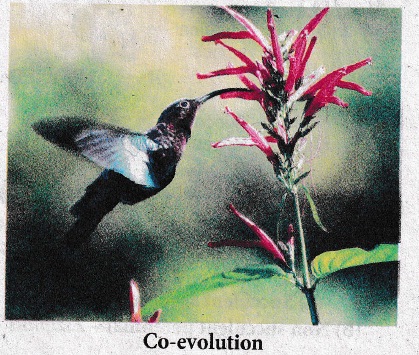
What is co evolution?
13.
Differentiate between Tundra and Taiga Biomes.
14.
Write notes on the following:
a. Eutrophication
b. Algal Bloom
15.
What are transgenic animals? Give examples
16.
What are the factors that drive habitat loss?
17.
How is milk converted into curd? Explain the process of curd formation
18.
19.
How did Darwin explain fitness of organisms?
20.
Select the correct term from the bracket and complete the given branching tree
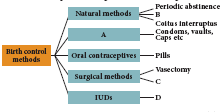
(Barriers, Lactational amenorrhoea, CuT, Tubectomy)
21.
How will you identify a vector ?
22.
Distinguish between structural gene, regulatory gene and operator gene
23.
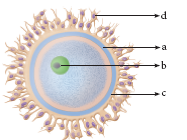
Identify the given image and label its parts marked as a, b, c and d
24.
Explain the mode of sex determination in honeybees.
25.
(i) Write the scientific name of the filarial worm that causes filariasis.
(ii) Write the symptoms of filariasis.
(iii) How is this disease transmitted?
26.
Which type of reproduction is effective -Asexual or sexual and why?
27.
Differentiate incomplete dominance and codominance.
28.
“Endothecium is associated with dehiscence of anther” Justify the statement
29.
Write the steps involved in molecular mechanism of DNA recombination with diagram.
30.
1.
On the basis of origin, antigens are classified into exogenous antigens and endogenous antigens.
The antigens which enter the host from the outside in the form of microorganisms, pollens, drugs, or pollutants are called exogenous antigens. The antigens which are formed within the individual are endogenous antigens. The best examples are blood group antigens.
2.
The organisms which possess the characters of two different groups (transitional stage) are called connecting links.
Eg: Peripatus (connecting link between Annelida and Arthropoda), Archeopteryx (connecting link between Reptiles and Aves).
3.
GIFT - Gamete Intra-Fallopian Transfer
(i) Transfer of an ovum collected from a donor into the fallopian tube. In this the eggs are collected from the ovaries and placed with the sperms in one of the fallopian tubes.
(ii) The zygote travels toward the uterus and gets implanted in the inner lining of the uterus.
4.
When the insects ingest the toxin crystals their alkaline digestive tract denatures the insoluble crystals making them soluble. The cry toxin then gets inserted into the gut cell membrane and paralyzes the digestive tract. The insect then stops eating and starves to death.
5.
(i) Throughout pregnancy the uterus undergoes periodic episodes of weak and strong contractions.
(ii) These contractions called Braxter-Hick's contractions lead to false labour.
6.
The 5' end of the mRNA of prokaryotes has a special sequence which precedes the initial AUG start codon of mRNA. This ribosome binding site is called the Shine - Dalgamo equence or S-D sequence.
7.
Organisms have three phases in its life cycle.
(i) Juvenile phase/ vegetative phase is the period of growth between the birth of the individual upto reproductive maturity.
(ii) Reproductive phase/maturity phase the organisms reproduce and their offsprings reach maturity period.
(iii) Senescent phase begins at the end of reproductive phase when degeneration sets in the structure and functioning of the body.
8.
Certain characters are controlled by non - nucleas genomes found in chloroplast, Mitochondria, infective agents and plasmids, and do not reveal Mendelian pattern of Inheritance. This is called as extra chromosomal inheritance. They exhibit maternal influence in their pattern of inheritance. Eg. Inheritance of the shell coiling pattern in fresh water snail Limnaea peregra.
9.
| S.No | Humoral Immunity | Cell mediated immunity |
| i. | When Pathogens are destroyed by the production of antibodies, it is known as antibody mediated or hurmoral immunity. |
When Pathogens are destroyed by cells without producing antibodies it is known as cell mediated immunity. |
| ii. | This is brought about by B cells with the aid of antigen presenting cells and T helper cells. |
This is brought about by T cells, macrophages and natural killer cells |
10.
Curcumin extracted from turmeric - yellow colour - good anti oxidant fight against cancer - anti inflammatory, anti diabetic, anti bacterial, antifungal and anti viral activities - stops platelets from clotting.
11.
(i) They help for detailed floristic and faunistic studies
(ii) These groves provide a number of ecosystem services to the neighborhood like protecting watershed, fodder, medicinal plants and microclimate control
12.
Co-evolution: The interaction between organisms, when continues for generations, involves reciprocal changes in genetic and morphological characters of both organisms. This type of evolution is called co-evolution. It is a kind of co-adaptation and mutual change among interactive species.
13.
| No. | Tundra Biome | Taiga Biomes |
|---|---|---|
| 1. | This is almost treeless plain in the northern parts of Asia, Europe, and North America. | Taiga is a forest of coniferous trees such as spruce, fir and pine. |
| 2. | Winters are long with little daylight, summers are short, with long daylight hours. | Summer temperature ranges from 10octo 21oPc. |
| 3. | Because of the severe winters, many of the animals are migratory. For E g: the many shore birds and water fowl such as ducks and geese, nest in the Tundra during the summer and migrate south for the winter. |
Important migratory herbivores include moose, elk, deer and reindeer. Moose and reindeer migrate to the Taiga for winter and to Tundra for summers. |
14.
(a) Eutrophication:
1. Eutrophication is defined as the process of nutrient enrichment of water and consequent loss of species diversity in water bodies.
2. Increased nutrient content of the water body causes algal bloom, excess growth of algae, especially planktonic algae.
3. It covers the water surface, secrete toxins and reduces the dissolved oxygen content of water.
4. These toxins inhibit the growth of other algae and plants and cause death of aquatic animals.
5. O2 deficiency may be a cause for death of animals (BOD).
(b) Algal Bloom:
1. A rapid growth of microscopic algae (or) cyanobacteria in water, often resulting in a coloured scum on the surface.
2. Rapid increase of accumulation in the population of algae in fresh water (or) marine water and is recognized by the discoloration in the water from their pigments.
15.
1. The foreign DNA that is introduced is called the transgene and the animals that are produced by DNA manipulations are called transgenic animals or the genetically engineered or genetically modified organisms.
2. Transgenic animals are also used for producing products useful for mankind. E.g: Transgenic cow (rosie), which produced human protein enriched milk (2.4 g/L).
3. The milk contained the human alpha lactalbumin and was nutritionally a more balanced product for human babies than natural cow's milk.
16.
(i) Development of human society is inevitable. Natural habitats are destroyed for the purpose of settlement, agriculture, mining, Industries and construction of highways
(ii) As a result species are forced to adapt to the changes in the environment or move to other places. If not, they become victim to predation, starvation, disease and eventually die or results in human animal conflict.
(iii) Over population, urbanization, Industrialization and agricultural advancements require additional land, water and raw materials every year.
(iv) This is made possible only through fragmentation or destruction of natural habitats by filling wetlands, ploughing grasslands, cutting down trees, forest, desilting rivers, constructing transport ways, caving mountains, extracting, ores, changing the course of rivers and filling of seashore.
17.
1. Milk is converted into curd with the help of bacteria like Lactobacillus acidophilus Lactobacillus lactis and Streptococcus lactis are commonly called Lactic Acid Bacteria (LAB).
2. The LAB bacteria grow in milk and convert it into curd, thereby digesting the milk protein casein.
3. A small amount of curd added to fresh milk as a starter or inoculum contains millions of Lactobacilli, which under suitable temperature \(\left(\leq 40^{\circ} \mathrm{C}\right)\) multiply and convert milk into curd by fermentation.
4. Curd is more nutritious than milk as it contains a number of organic acids and vitamins.
18.
19.
1. Fitness according to Darwin refers ultimately and only to reproductive fitness
2. Those individuals who are better fit in an environment leave more progeny than the others the populations come to posses more fit individuals as nature selects for fitness.
3. The so called fitness is based on characteristics which are inherited hence there must be. genetic basis for getting selected and to evolve.
20.
A - Barrier methods
B - Lactational amenorrhoea
C - Tubectomz
D - CuT
21.
Properties of Vectors:
1. Vectors are able to replicate autonomously to produce multiple copies of them along with their DNA insert in the host cell.
2. It should be small in size and of low molecular weight, less than 10 Kb (kilo base pair) in size so that entry/transfer into host cell is easy.
3. Vector must contain an origin of replication so that it can independently replicate within the host.
4. It should contain a suitable marker such as antibiotic resistance, to permit its detection in transformed host cell.
5. Vector should have unique target sites for integration with DNA insert and should have the ability to integrate with DNA insert it carries into the genome of the host cell. Most of the commonly used cloning vectors have more than one restriction site. These are Multiple Cloning Site (MCS) or polylinker. Presence of MCS facilitates the use of restriction enzyme of choice.
22.
| Structural gene | Regulatory gene | operator gene |
| They are concerned with the transcription of mRNA for the synthesis of particular polypeptide |
It controls the functioning of operator gene |
It determines the functioning of operator gene |
| They function only when RNA polymerases join |
It produces a repressor or apo- repressor for blocking operator gene |
It works only when it is not blocked by repressor |
| They function by forming mRNA for specific polypeptide |
It functions through the formation of mRNA of repressor or apo-repressor |
It functions through the presence (or) absence of repressor |
23.
Human Ovum
a - Vitelline membrane
b - Nucleus
c - Zona Pellucida
d - Corona radiata
24.
Sex determination in honeybees
sex determination is as follows
1. Haploid sex determination is seen in honeybees, it is based on the number of sets of chromosome, an individual receives.
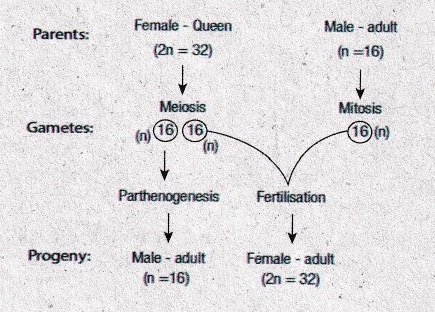
2. When the ovum is fertilized by a male gamete the zygote (2n = 32) develops into a female i.e., a queen or worker.
3. When the haploid ovum develops by parthenogenesis. i.e., without fertilization, a male individual, called drone is formed as adult male.
4. The male honeybees (drone) is haploid (with n = 16) and forms sperms by mitosis.
25.
(i) "Wuchereria bancrofti".
(ii) Chronic inflammation of the lymph nodes. Obstruction of lymph in the vessels of the lower limb.
(iii) Transmitted through an agent/vector called Female Culex mosquito.
26.
1. Sexual reproduction is considered to be a better mode of reproduction because it creates a hybrid that has more vigor than the parents.
2. It also creates the variation in off springs making its survival better.
3. The fact that most of the eukaryotes reproduce sexually in evidence of its evolutionary success.
4. In many animals, it is actually the only mode of reproduction.
27.
| Incomplete Dominance | Co-dominance |
| When one allele is not completely dominant to another allele. | lt occurs due to simultaneous expression of both alleles in the heterozygote. |
| E.g: Flowers colour of Mirabilis Jalapa | E.g: ABO blood group system in human beings. |
28.
Endothecium is a single layer of radially elongated cells, The inner tangential wall of this cell develops bands of a cellulose, The cells are hygroscopic. The stomium of anther lobe lack these thickenings. Stomium along with the hygroscopic nature of endothecium helps in the dehiscence of anther
29.
The widely accepted model of DNA recombination during crossing over is Holliday's hybrid DNA model.
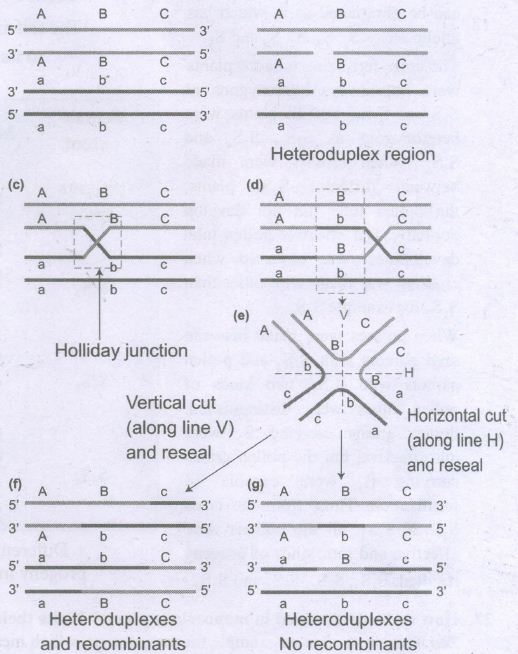
Steps involved are:
1. Homologous DNA molecules are paired side by side with their duplicated copies of DNAs
2. One strand of both DNAs cut in one place by the enzyme endonuclease.
3. The cut strands cross and join the homologous strands forming the Holliday structure or Holliday junction.
4. The Holliday junction migrates away from the original site, a process called branch migration, as a result heteroduplex region is formed.
5. DNA strands may cut along through the vertical (V) line or horizontal (H) line.
6. The vertical cut will result in heteroduplexes with recombinants.
7. The horizontal cut will result in heteroduplex with non recombinants.
30.

12th Standard Syllabus & Materials
12th Standard
TN 12th Computer Applications வலையமைப்பு வடமிடல் Sample Question Papers Study Material - QB365 Set A
NEW12th Standard
TN 12th Computer Applications களப்பெயர் முறைமை (DNS) Sample Question Papers Study Material - QB365 Set A
NEW12th Standard
TN 12th Computer Applications வலையமைப்பு எடுத்துக்காட்டுகள் மற்றும் நெறிமுறைகள் Sample Question Papers Study Material - QB365 Set A
NEW12th Standard
TN 12th Computer Applications கணினி வலையமைப்பு ஓர் அறிமுகம் Sample Question Papers Study Material - QB365 Set A



Tamilnadu Stateboard 12th Standard Subjects

Maths

Chemistry

Physics
Biology

Computer Science

Business Maths and Statistics

Economics

Commerce

Accountancy

History

Computer Applications
Biology
Computer Technology
Computer Applications
Computer Science
Business Maths and Statistics
Commerce
Economics
Maths
Chemistry
Physics
Computer Technology
History
Accountancy

Tamil

English

French
Tamilnadu Stateboard Standards

