
 100% FREE ACCESS
12th Standard Syllabus & Materials
12th Standard
TN 12th Computer Applications மின்னணு தரவு பரிமாற்றம் Sample Question Papers Study Material - QB365 Set A
NEW12th Standard
TN 12th Computer Applications மின் - வணிக பாதுகாப்பு அமைப்புகள் Sample Question Papers Study Material - QB365 Set A
NEW12th Standard
TN 12th Computer Applications மின்னணு செலுத்தல் முறைகள் Sample Question Papers Study Material - QB365 Set A
NEW12th Standard
TN 12th Computer Applications மின் - வணிகம் Sample Question Papers Study Material - QB365 Set A
NEW12th Standard
TN 12th Computer Applications திறந்த மூல கருத்துருக்கள் Sample Question Papers Study Material - QB365 Set A
NEW12th Standard
TN 12th Computer Applications வலையமைப்பு வடமிடல் Sample Question Papers Study Material - QB365 Set A

Published on: 29/09/2020
12th Standard Biology English Medium Model 3 Mark Creative Questions (New Syllabus) 2020
Download Tamil Nadu 12th Standard Biology question papers, model tests, one-mark questions, important questions, and public exam papers in PDF format. Free study materials and answer keys for TN State Board students.
Questions + Answers key
Take MCQ Biology Test1.
Name the major types of Natural Selection.
2.
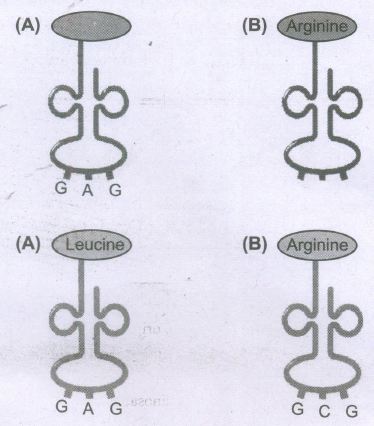
Given below are the structrures of tRNA molecules which are involved in translation process. In one tRNA, codon is mentioned but not the amino acid. In another tRNA molecule, amino acid is named and not the codon. Complete the figure by mentioning the respective amino acids and codons.
3.
Comment on the J-shaped growth form
4.
Explain in simple abouth the production process of industrial alcohol
5.
Secondary response is a booster response - Explain.
6.
Extinction of Dodo bird led to the danger of Calvaria tree - Justify
7.
How the Karyotype of lymphocytes was prepared by Tjio and Levan?
8.
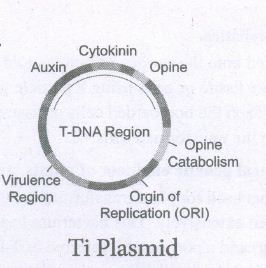
Draw and label Ti plasmid.
9.
In the fermentation process, what does upstream and downstream refers to? Explain.
10.
Write any three statements on Sertoli cells
11.
Name anyone
(a) fungal STI
(b) Bacterial STI
(c) Protozoan STI
12.
How and where chiasma is formed?
13.
Write a short note on phases of life cycle.
14.
Give the F2 phenotypic ratio of
a) Supplementary genes
b) Complementary genes
c) Dominant epistasis
15.
Cite one common feature and one contrast feature shared between apomixis and parthenocarpy
16.
How nuclear endosperm is different from cellular endosperm.
17.
18.
What is biogeochemical cycle? Explain its types.
19.
Direction of mountain determines the richness of vegetation - Justify.
20.
Name any three secondary metabolites obtained from plants and mention their medicinal aspects.
21.
Provide an example for each of the following agricultural components. (i) Bio pesticide (ii) Green manure crop (iii) Bio-FertiIizer
22.
Give a brief account on In-situ conservation
23.
Write about the Henna with its origin and areas of cultivation and uses.
24.
What is hybrid sterility?
25.
What are connecting links?
26.
Write about the structure of ozone.
27.
What is the impact of oil spills in seas?
28.
What is embryo transfer technique?
29.
What is Anthropogenic extinction?
30.
What is SCP?
31.
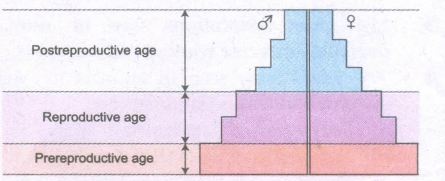
Draw a diagram to show age distribution in a increasing population.
32.
What is polymenorrhoea?
33.
Can DNA vaccine cause the disease?
34.
Define termination in protein synthesis.
35.
State one gene one enzyme hypothesis
36.
What is ovoviviparous condition?
37.
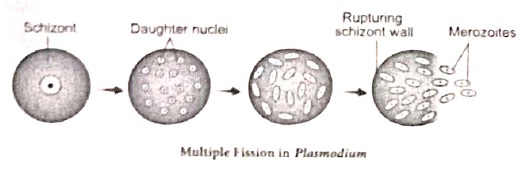
Explain multiple fission in plasmodium.
38.
What are Kappa particles.
39.
'AB' Blood group individuals are called universal recipients. Justify
40.
What is bursa of fabricius?
41.
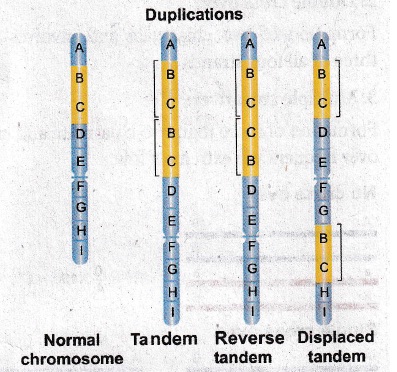
"The process of arrangement if the same order genes more than one in the same chromosome."
1. What is the process known as?
2. Explain its types.
1.
(a) Stabilising Selection
(b) Directional Selection
(c) Disruptive Selection
2.
3.
When a population increases rapidly in an exponential fashion and then stops abruptly due to environmental resistance or due to sudden appearance of a limiting factor, they are said to exhibit J-shaped growth form. Many insects show explosive increase in number during the rainy season followed by their disappearance at the end of the season.
4.
The process of ethanol production starts by milling a feedstock followed by the addition of dilute or fungal amylase (enzyme) from Aspergillus to break down the starch into fermentable sugars. Yeast is then added to convert the sugars to ethanol which is then distilled off to obtain ethanol which is up to 96 percent in concentration. Ethanol and biodiesel represent the first generation of biofuel technology. Ethanol is often used as a fuel, mainly as a biofuel additive for gasoline
5.
The secondary immune response occurs when a person is exposed to the same antigen again. During this time, immunological memory has been established and the immune system can start producing antibodies immediately. Within hours after recognition of the antigen, a new army of plasma cells are generated. Within 2 to 3 days, the antibody concentration in the blood rises steeply to reach much higher level than primary response. This is' also called as "booster response".
6.
Another example for co-extinction is the connection between Calvaria tree and the extinct bird of Mauritius Island, the Dodo. The Calvaria tree is dependent on the Dodo bird for completion of its life cycle. The mutualistic association is that the tough horny endocarp of the seeds of Calvaria tree are made permeable by the actions of the large stones in birds gizzard and digestive juices thereby facilitating easier germination. The extinction of the Dodo bird led to the imminent danger of the Calvaria tree coextinction.
7.
Preparation of Karyotype Tjio and Levan (1960) described a simple method of culturing lymphocytes from the human blood. Mitosis is induced followed by addition of colchicine to arrest cell division at metaphase stage and the suitable spread of metaphase chromosomes is photographed. The individual chromosomes are cut from the photograph and are arranged in an orderly fashion in homologous pairs. This arrangement is called a karyotype. Chromosome banding permits structural definitions and differentiation of chromosomes.
8.
9.
Upstream process:
All the process before starting of the fermenter such as sterilization of the fermenter, preparation and sterilization of culture medium and growth of the suitable inoculum are called upstream process.
Downstream process:
All the process after the fermentation process is known as the downstream process. This process includes distillation, centrifuging, filtration and solvent extraction. Mostly this process involves the purification of the desired product.
10.
(i) Sertoli cells are elongated and pyramidal cells.
(ii) They provide nourishment to sperm till maturation.
(iii) They secrete a hormone called inhibin which is involved in negative feedback control of sperm production.
11.
(a) Fungal STI - Candidiasis
(b) Bacterial STI - Gonorrhoea
(c) Protozoan STI - Trichomoniasis
12.
After tetrad formation, crossing over occurs in pachytene stage. The non-sister chromatids of homologous pair make a contact at one or more points. These points of contact between non-sister chromatids of homologous chromosomes are called Chiasmata (singular-Chiasma). At chiasma, cross-shaped or X-shaped structures are formed, where breaking and rejoining of two chromatids occur. This results in reciprocal exchange of equal and corresponding segments between them.
13.
(a) Juvenile phase - Period of growth between the birth of an individual and reproductive maturity.
(b) Reproductive phase - Period of growth when an organism attain reproductive maturity and produces new offsprings
(c) Senescent plane - Period of growth when the structure and functioning of the body starts degenerating
14.
a) supplementary genes - 9 : 3 : 4
b) Complementary genes - 9 : 7
c) Dominant epistasis - 12 : 3 :1
15.
Common features: Fertilization (Syngamy) is absent in both apomixis and parthenocarpy.
Contrast features: Parthenocarpic fruits does not develop seeds, whereas in apomixis seeds are developed.
16.
| Nuclear endosperm | Cellular endosperm |
|---|---|
| Nuclear endosperm: Primary Endosperm Nucleus undergoes several mitotic divisions without cell wall formation thus a free nuclear condition exists in the endosperm. Examples: Coccinia, Capsella, and Arachis |
Cellular endosperm: Primary endosperm nucleus divides into 2 nuclei and it is immediately followed by wall formation Subsequent divisions also follow cell wall formation. Examples: Adoxa, Helianthus and Scoparia. |
17.
18.
Circulation of nutrients within the ecosystem or biosphere is known as biogeochemical cycles and also called as 'cycling of materials.' There are two basic types,
(I) Gaseous cycle - It includes atmospheric Oxygen, Carbon and Nitrogen cycles.
(II) Sedimentary cycle - It includes the cycles of Phosphorus, Sulphur and Calcium - Which are present as sediments of Earth.
19.
North and south faces of mountain or hill possess different types of flora and fauna because they differ in their humidity, rainfall, light intensity, light duration and temperature regions. The two faces of the mountain or hill receive different amount of solar radiation, wind action and rain. Of these two faces, the windward region possesses good vegetation due to heavy rains and the leeward region possesses poor vegetation due to rain shadows (rain deficit).
20.
| Secondary Metabolites | Medicinal use |
| Capsaicin | Rheumatic pain treatment |
| Vincristine | Anti-carcinogenic |
| Quinine | Anti-malarial |
21.
(i) Bio pesticide - E.g. Trichoderma species
(ii) Green manure - E.g. Crotalaria juncea
(iv) Bio fertilizer - E.g. Azolla
22.
In-situ conservation means conservation and management of genetic resources in their natural habitats. Here the plant or animal species are protected within the existing habitat. Forest trees, medicinal and aromatic plants under threat are conserved by this method. This is carried out by the community or by the State conservation which includes wildlife, National park, and Biosphere reserve. The ecologically unique and biodiversity-rich regions are legally protected as wildlife sanctuaries, National parks and Biosphere reserves. Megamalai, Sathyamangalam wildlife, Guindy and Periyar National park, and Western Ghats, Nilgiris, Agasthyamalai, and Gulf of Mannar are the biosphere reserves of Tamil Nadu.
23.
Henna
Botanical name: Lawsonia inermis.
Family: Lythraceae.
Origin and Area of cultivation:
It is indigenous to North Africa and South-west Asia. It is grown mostly throughout India, especially in Gujarat, Madhya Pradesh and Rajasthan.
Uses
An orange dye 'Henna' is obtained from the leaves and young shoots of Lawsonia inermis. The principal colouring matter of leaves 'lacosone" is harmless and causes no irritation to the skin.
This dye has long been used to dye skin, hair and finger nails.
It is used for colouring leather, for the tails of horses and in hair-dyes.
24.
In this type, hybrids are formed due to interspecific crosses but they are sterile due to the failure of the chromosomes to segregate normally during meiosis, example Mule (interspecific cross between a horse and donkey). It is a post zygotic isolation mechanism.
25.
The organisms which possess the characters of two different groups (transitional stage) are called connecting links.
Eg: Peripatus (connecting link between Annelida and Arthropoda), Archeopteryx (connecting link between Reptiles and Aves).
26.
The ozone molecule (O3) consists of three oxygen atoms. It is formed when atmospheric oxygen (O2) on exposure to solar radiation breaks into two oxygen atoms; each atom then joins up with a single oxygen atom. The ozone molecule is unstable. It soon decays again to form molecular oxygen. This cycle is a continuous process in the upper reacted of the stratosphere.
27.
Accidental oil spills from tanker ships can cause substantial environmental damage. Oil spreads on the water surface, prevents the entry of light and oxygen into the water. This increases BOD and COD, resulting in mass death of organisms and degradation of water quality. It also clogs fish gills and the feathers of aquatic birds ..
28.
The transfer of an embryo with more than 8 blastomeres stage into uterus is called embryo transfer technique.
29.
Anthropogenic extinctions are abetted by human activities like hunting, habitat destruction, over exploitation, urbanization and industrialization. Some examples of extinctions are Dodo of Mauritius and Steller's sea cow of Russia. Amphibians seem to be at higher risk of extinction because of habitat destruction
30.
Single cell protein refers to edible unicellular microorganisms like Spirulina. Protein extracts from pure or mixed cultures of algae, yeasts, fungi or bacteria may be used as ingredient or as a substitute for protein rich foods and is suitable for human consumption or as animal feed.
31.
32.
It denotes a menstrual cycle that is shorter than 21 days which may be due to hyperactivity of anterior pituitary gland, psychological disturbances, malnutrition, sexually transmitted disease etc.
33.
The DNA vaccine cannot cause the disease as it contains only copies of a few of the genes of the pathogen
34.
Termination is the third phase of translation Termination of protein synthesis occurs when one of the three stop codons appears in the 'A' site of the ribosome. (UAA, UAG, UGA)
35.
The experiments of George Beadle and Edward Tatum in the early 1940's on Neurospora crassa (the red bread mould) led them to propose one gene-one enzyme hypothesis, which states that one gene controls the production of one enzyme. This is called one gene one enzyme hypothesis.
36.
(i) In Ovoviviparous animals, the embryo develops inside the egg and remains in the mother's body until they are ready to hatch.
(ii) This method of reproduction is similar to Viviparity but the embryos have no placental connection with the mother and receive their nourishment from the egg yolk. Ovoviviparity is seen in fishes like shark.
37.
(i) In Plasmodium, multiple fission occurs in the schizont and in the oocyte stages. When multiple fission occurs in the schizont, the process is called schizogony and the daughter individuals are called merozoites.
(ii) When multiple fission occurs in the oocyte, it is called sporogony and the daughter individuals are called sporozoites.
38.
(i) They are cytoplasmic symbionts occurring in some strains of the ciliated paramecium which have their own DNA.
(ii) It liberates a toxin paramecium and strains which possess these particles are called 'killer paramecia'. Inheritance of killer trait, is by extra chromosomal inheritance.
39.
People with AB blood group have both 'A' antigen and B antigen in their RBCs. Therefore they can receive blood from 'A' group, 'B' group or 'O' group individuals their blood will not produce antibodies against any of them. Therefore people with 'AB' blood group are called as universal recipients.
40.
Bursa of fabricius is a primary lymphoid organ of birds. It is attached to the dorsal side of the cloaca. B lymphocytes mature in the bursa and bring about humoral immunity.
41.
The process is known as duplication, a type of structural chromosomal aberration.
Due to duplication some genes are present in more than two copies. It is three types.
i. Tandem duplication
The duplicated segment is located immediately after the normal segment of the chromosome in the same order.
ii Reverse tandem duplication
The duplicated segment is located immediately after the normal segment but the gene sequence order will be reversed.
iii Displaced duplication
The duplicated segment is located in the same chromosome, but away from the normal segment.

12th Standard Syllabus & Materials
12th Standard
TN 12th Computer Applications களப்பெயர் முறைமை (DNS) Sample Question Papers Study Material - QB365 Set A
NEW12th Standard
TN 12th Computer Applications வலையமைப்பு எடுத்துக்காட்டுகள் மற்றும் நெறிமுறைகள் Sample Question Papers Study Material - QB365 Set A
NEW12th Standard
TN 12th Computer Applications கணினி வலையமைப்பு ஓர் அறிமுகம் Sample Question Papers Study Material - QB365 Set A
NEW12th Standard
TN 12th Computer Applications PHP-உடன் MySQL-ஐ இணைத்தல் Sample Question Papers Study Material - QB365 Set A



Tamilnadu Stateboard 12th Standard Subjects

Maths

Chemistry

Physics
Biology

Computer Science

Business Maths and Statistics

Economics

Commerce

Accountancy

History

Computer Applications
Biology
Computer Technology
Computer Applications
Computer Science
Business Maths and Statistics
Commerce
Economics
Maths
Chemistry
Physics
Computer Technology
History
Accountancy

Tamil

English

French
Tamilnadu Stateboard Standards

