
 100% FREE ACCESS
12th Standard Syllabus & Materials
12th Standard
TN 12th Computer Applications மின்னணு தரவு பரிமாற்றம் Sample Question Papers Study Material - QB365 Set A
NEW12th Standard
TN 12th Computer Applications மின் - வணிக பாதுகாப்பு அமைப்புகள் Sample Question Papers Study Material - QB365 Set A
NEW12th Standard
TN 12th Computer Applications மின்னணு செலுத்தல் முறைகள் Sample Question Papers Study Material - QB365 Set A
NEW12th Standard
TN 12th Computer Applications மின் - வணிகம் Sample Question Papers Study Material - QB365 Set A
NEW12th Standard
TN 12th Computer Applications திறந்த மூல கருத்துருக்கள் Sample Question Papers Study Material - QB365 Set A
NEW12th Standard
TN 12th Computer Applications வலையமைப்பு வடமிடல் Sample Question Papers Study Material - QB365 Set A

Published on: 29/09/2020
12th Standard Biology English Medium Model 5 Mark Book Back Questions (New Syllabus 2020)
Download Tamil Nadu 12th Standard Biology question papers, model tests, one-mark questions, important questions, and public exam papers in PDF format. Free study materials and answer keys for TN State Board students.
Questions + Answers key
Take MCQ Biology Test1.
Differentiate between Tundra and Taiga Biomes.
2.
How can we contribute to promote biodiversity conservation?
3.
When does antibiotic resistance develop?
4.
The procedure of GIFT involves the transfer of female gametes into the fallopain tube, can gametes be transferred to the uterus to achieve the same result? Explain.
5.
6.
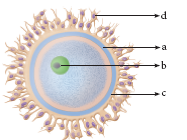
Identify the given image and label its parts marked as a, b, c and d
7.
A patient was hospitalized with fever and chills. Merozoites were observed in her blood. What is your diagnosis?
8.
Write short note on Pollen kitt.
9.
A person is infected by HIV. How will you diagnose for AIDS?
10.
11.
Generally in summer the forest are affected by natural fire. Over a period of time it recovers itself by the process of successions .Find out the types of succession and explain.
12.
13.
Describe how deforestation might contribute to global warming
14.
Mention the advantages (3) and disadvantages of cloning (3).
15.
Mention any three similarities found common in Neanderthal man and Homo sapiens.
16.
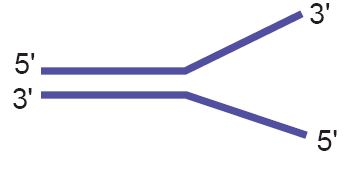
a) Identify the figure given below
b) Redraw the structure as a replicating fork and label the parts
c) Write the source of energy for this replication and name the enzyme involved in this process.
d) Mention the differences in the synthesis of protein, based on the polarity of the two template strands.
17.
What is gene mapping? Write its uses
18.
Differentiate between the following:
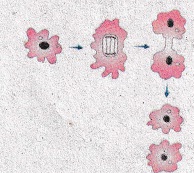
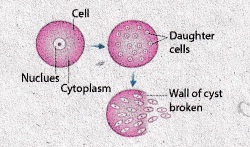
(a) Binary fission in amoeba and multiple fission in Plasmodium
(b) Budding in yeast and budding in Hydra
(c) Regeneration in lizard and Planaria
19.
20.
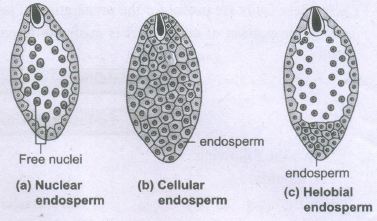
What is endosperm. Explain the types.
21.
Give an account on the role of Jasminum in perfuming
22.
How is anemochory differ from zoochory?
1.
| No. | Tundra Biome | Taiga Biomes |
|---|---|---|
| 1. | This is almost treeless plain in the northern parts of Asia, Europe, and North America. | Taiga is a forest of coniferous trees such as spruce, fir and pine. |
| 2. | Winters are long with little daylight, summers are short, with long daylight hours. | Summer temperature ranges from 10octo 21oPc. |
| 3. | Because of the severe winters, many of the animals are migratory. For E g: the many shore birds and water fowl such as ducks and geese, nest in the Tundra during the summer and migrate south for the winter. |
Important migratory herbivores include moose, elk, deer and reindeer. Moose and reindeer migrate to the Taiga for winter and to Tundra for summers. |
2.
(i) Identify and protect all threatened species.
(ii) Identify and conserve in protected areas the wild relatives of all the economically important organisms
(iii) Identify and protect critical habitats for feeding, breeding, nursing, resting of each species.
(iv) Resting, feeding and breeding places of the organisms should be identified and protected
(v) Air, water and soil should be conserved on priority basis
(vi) Wild life Protection Act should be implemented
There are two aspects of conservation strategies
In-situ Conservation:
It is the on site conservation or the conservation of genetic resources in natural populations of plant (or) animal species.
Ex-situ Conservation:
This is a conservation strategy which involves placing of threatened animals and plants in special care locations for their protection.
3.
(i) Antibiotic resistance occurs when bacteria develop the ability to defeat the drug designed to kill or inhibit their growth.
(ii) It is one of the most acute threats to public health.
(iii) Antibiotic resistance is accelerated by the misuse and overuse of antibiotics, as well as poor infection prevention control.
(iv) Antibiotics should be used only when prescribed by a certified health professional. When the bacteria become resistant, antibiotics cannot fight against them and the bacteria multiply.
(v) Narrow spectrum antibiotics are preferred over broad spectrum antibiotics. They effectively and accurately target specific pathogenic organisms and are less likely to cause resistance.
(vi) "Superbug" is a term used to describe strains of bacteria that are resistant to the majority of antibiotics commonly used today.
4.
1. Directly gametes cannot be transferred into the uterus, because the uterine environment is not suited for the survival of the gametes.
2. If the gametes directly transferred into the uterus, gametes will undergo degeneration (or) could be phagocytosed and viable zygotes will not be formed.
3. In this method, the own collected from a donor female is transferred to the fallopian tube of another woman.
4. The ovum has to be fertilized by the sperm of the woman's husband; the fallopian tube is the site for fertilization in a human female.
5. The gamete (ovum) if introduced into the uterus cannot move to the fallopian tube, the site of fertilization.
5.
6.
Human Ovum
a - Vitelline membrane
b - Nucleus
c - Zona Pellucida
d - Corona radiata
7.
Blood cells (RBC) get infected :
(i) Atoxin hemozoin and eiythrocytic debris into the blood stream resulting in malarial paroxysms-shivering chills, high fever followed by sweating.
(ii) Fever and chills are caused partly by malarial toxins that induce macrophages to release tumour necrosis factor (TNF\(\alpha\)) and interleukin.
8.
| Source | Contributed by the tapetum |
| Colour | Yellow or orange |
| Content | Carotenoids or flavonoids |
| Nature | Oily layer forming a thick viscous coating over pollen surface |
| Use | Attracts insects protects damage from UV radiation. |
9.
A simpl blood tes is available that can determine wheth r the person has been, infected with HIV. The ELISA test (Enzyme Linked ImmunoSorbent Assay) detects the presence of HIV antibodies. It is a preliminary test: Western blot test is more reliable and a confirmatory test. It detects the viral core proteins.r lf both tests detect the presence ofl:he antibodies, the person is corfsidered to be HIV positive. The vaccines are classified as first, second and third generation vaccines.
(i) First generation vaccine is further subdivided into live attenuated vaccine, killed vaccine and toxoids.
(a) Live attenuated vaccines use the weakened (attenuated), aged, less virulent form of the virus. E.g. Measles, mumps and rubella (MMR) vaccine and the Varicella (chickenpox) vaccine.
(b) Killed (inactivated) vaccines are killed or inactivated by heat and other methods. E.g. Salk's polio vaccine.
(c) Toxoid vaccines contain a toxin or chemical secreted by the bacteria or virus. They make us immune to the harmful effects of the infection, instead of to the infection itself. E.g. DPT vaccine (Diphtheria, Pertussis and Tetanus).
(ii) Second generation vaccine contains the pure surface antigen of the pathogen. E.g. Hepatitis- B vaccine.
(iii) Third generation vaccine contains the purest and the highest potency vaccines which are synthetic in generation. The latest revolution in vaccine is DNA vaccine or recombinant vaccine.
10.
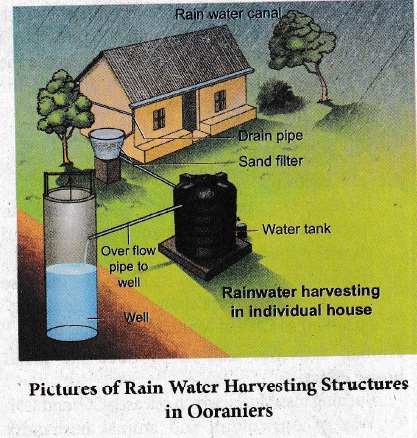
.jpg)
11.
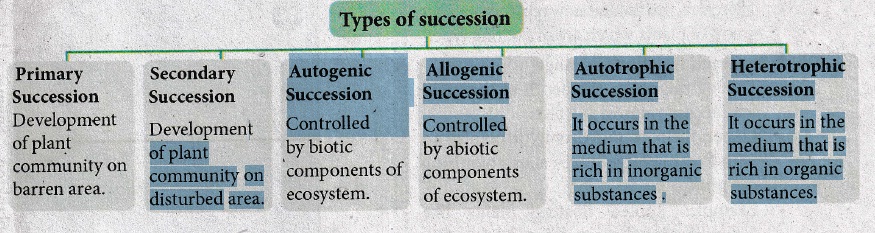
Types of succession
(a) Primary succession
The development of plant community in a barren area where no community existed before is called primary succession.
The plants which colonize first in a barren area is called pioneer species or primary community or primary colonies.
Generally, Primary succession takes a very, long time for the occurrence in any region.
Examples: Microbes, Lichen, Mosses.
The forest destroyed by fire and excessive lumbering may be re-occupied by herbs over period of times.
(b) Secondary succession
The development of a plant community in an area where an already developed community has been destroyed by some natural disturbance (Fire, flood, human activity) is known as secondary succession
Generally, this succession takes less time than the time taken for primary succession.
Example: The forest destroyed by fire and excessive lumbering may be re-occupied by herbs over Period of times.
(c) Autogenic succession
Autogenic succession occurs as a result of biotic factors
The vegetation reacts with its environment and modifies its own environment causing its own replacement by new communities. This is known as autogenic succession.
Example: In forest ecosystem, the larger trees produce broader leaves providing shade to the forest floor area. It affects the shrubs and herbs which require more light (heliophytes) but supports the shade tolerant species (sciophytes) to grow well.
(d) Allogenic succession
Allogeneic succession occurs as a result of abiotic factors.
The replacement of existing community is caused by other external factors (soil erosion, leaching, etc.,) and not by existing organisms.
Example: In a forest ecosystem soil erosion and leaching alter the nutrient value of the soil leading to the change of vegetation in that area.
(e) Autotrophic succession
If the autotrophic organisms like green plants are dominant during the early stages of succession it is called autotrophic succession, this occurs in the habitat which is rich in inorganic substances.
Since, green plants dominate in the beginning of this succession, there is a gradual increase in organic matter and subsequently the energy flow in the ecosystem.
(f) Heterotrophic succession
If heterotrophic organisms like bacteria, fungi, actinomycetes, and animals are dominant during the early stages of succession it is called heterotrophic succession.
Such a succession takes place in organic habitats.
Since heterotrophs dominate in the beginning of such succession, there will be a gradual decrease in the energy content.
12.
13.
(i) When trees are cut down and burnt or allowed to rot, their stored carbon is released into the air as carbon dioxide. This adds to the carbon dioxide content of the air. Carbon dioxide is a major greenhouse gas. The increase in concentration of carbon dioxide in the air increases the greenhouse effect and thereby causes global warming. It has been estimated that 25-30% of the greenhouse gases released into the atmosphere each year is because of deforestation.
(ii) Trees act as carbon sink since they utilize carbon dioxide for photosynthesis. When trees are cut down, the carbon footprint increases. This, in turn leads to global warming.
14.
Advantages
1. Offers benefits for clinical traits and medical research.
2. It can help in the production of help in the production of proteins and drugs in the field of medicine.
3. Aids in stem cell research
4. Animal cloning could help to save endangered species.
Disadvantages
1. In animal and human activities, it as a threat to biodiversity saying that this alters evolution which will have an impact on populations and ecosystem.
2. The process is tedious and very expensive.
3. It can cause animals to suffer
4. Reports show that animal surrogates were manifesting adverse outcomes and cloned animals were affected with disease and have high mortality rate.
5. It might compromises human health through consumption of cloned animal meat.
6. Cloned animals age faster than normal animals and are less healthy than the parent organisms as discovered in Dolly.
7. Cloning can lead to occurrence of genetic disorders in animals.
8. More than 90% of cloning attempts fail to produce a viable offspring.
15.
Similarities found in Neanderthal man and Homo sapiens.
(i) They knew to protect their bodies. Neanderthal man used animal hides to protect their bodies.
(ii) They knew the use of fire.
(iii) They buried their dead.
16.
(a) Replicating fork of DNA
(b)
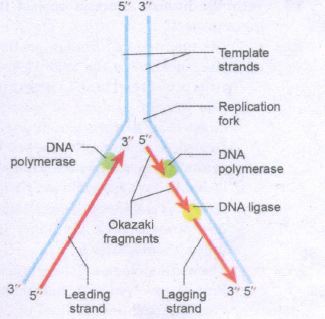
(c) Source of Energy:
NTP's are used in the synthesis of RNA primers and ATP is used as an energy source for some of the enzymes, needed to initiate and sustain DNA synthesis occurs at the replication fork.
Enzymes involved in replication :
(i) DNA Helicase
(ii) DNA polymerase
(iii) Topoisomerase/DNA Gyrase
(iv) DNA ligase
(v) Primase
(d) Both the strands of (parental) DNA act as template for the synthesis of new strands
1. On the templates strand with \(3^{\prime} \rightarrow 5^{\prime}\) polarity the new strand (leading strand) is synthesized as a continuous stretch. It is called continuous synthesis (DNA polymerase carryout polymerisation).
2. On the other strand \(5^{\prime} \rightarrow 3^{\prime}\) polarity DNA synthesized as short stretches; it is called discontinuous synthesis.
3. Later the short stretches of DNA are joined by DNA-ligases into a continuous strand called lagging strand.
17.
The diagrammatic representation of position of genes and related distances between the adjacent genes is called gene mapping.
Uses
(i) Used to determine gene order.
(i) Identify the locus of a gene.
(i) Calculate the distance between genes.
(i) Useful in predicting results of dihybrid and trihybrid crosses.
(i) Allows the geneticists to understand the overall genetic complexity of particular organism.
18.
(a)
| Binary Fission in Amoeba | Multiple fission in Plasmodium |
| lt results in the production of two individuals from a single parent. | It results in the production of several individuals |
| lt occurs under favourable conditions | It occurs both under favourable and unfavourable conditions |
| Nucleus of the parent cell divides only once to form two daughter nuclei | Nucleus of the parent cell undergoes repeated divisions to form a number of daughter nuclei |
| Cytoplasm divides after nuclear division | Cytoplasm does not divide after each nuclear division but divides during favourable condition |
| No part of parent body is left unused (e,g: Amoeba) | A part of the body (covering and residuai cytoplasm) is left unused. (e,g: Paramecium) |
 |
 |
(b) Budding in yeast and budding in hydra
| Budding in Yeast | Budding in Hydra |
| During budding the cell wall of the parent cell bulges out in the form of an out growth as bud | During budding the ectoderm cells increase and form a small elevation on the body surface as bud. |
| The parent nucleus divides into two daughter nuclei one of which migrates into bud. | Ectoderm and endoderm are pushed out to form the bud. The bud contains an interior lumen in continuation with parent's gastro vascular cavity (coelenteron) |
| As the bud enlarges and is fully formed, it is separated from the parentcell and grows into mature yeast. Sometimes a bud may produce another bud over it which is still attached to parent cell forming a false mycelium (or) pseudomycelium | The bud enlarges, develops a mouth and a circle of tentacles at its free end. When fully grown, the bud constricts at the base and finally separates from the parent body and leads an independent life |
(c) Regeneration is regrowth in the injured region
| Regeneration in Lizard | Regeneration in Planaria |
| This type of regeneration comes under epimorphosis type. | This type of regeneration comes under morphallaxis type |
| Several body parts can develop. | When the body is cut into several pieces, each piece can regenerate the lost parts and develops into a whole individual |
19.
20.
(i) The primary endosperm nucleus divides immediately after fertilization and develops into an endosperm.
(ii) It is a nutritive tissue, and regulatory structure by undergoing repeated mitosis to form triploid (3n) endosperm that nourishes the developing embryo. Depending upon the mode of development three types of endosperm are recognized.
1) Nuclear endosperm:
(i) Primary endosperm, (PEN) nucleus undergoes several mitotic divisions. There is no cell wall formation So free nuclear condition exists in the endosperm.
Example:
Coccinia, Capsella, Arachis
2) Cellular endosperm:
(i) Primary endosperm nucleus divides into two nuclei There is cell wall formation.
(ii) Subsequent division also follows cell wall formation. It is said to be cellular endosperm
Example:
Adoxa, Helianthus, Scoparia.
3) Helobial endosperm:
(i) Primary Endosperm Nucleus moves towards the base of embryo sac.
(ii) Divides into two nuclei cell wall formation occurs forming a large micropylar chamber and a small chalazal chamber.
(iii) The nucleus of micropylar chamber further undergoes several free nuclear divisions. The nucleus of the chalazal chamber may or may not divide.
Example:
Hydrilla, Vallisneria.
21.
1. Used for worship, ceremonial purposes, incense and fumigants, making perfumed hair oils, cosmetics and soaps.
2. Used for soothing, relaxing antidepressant qualities.
22.
| S. No | Anemochory | Zoochory |
| a | Dispersal of seeds or fruits by wind. | Dispersal of seeds or fruits by animals |
| b | Seeds are minute or may have wings. | Seeds or fruit surface may have hooks or sicky glandular hairs are seen. |

12th Standard Syllabus & Materials
12th Standard
TN 12th Computer Applications களப்பெயர் முறைமை (DNS) Sample Question Papers Study Material - QB365 Set A
NEW12th Standard
TN 12th Computer Applications வலையமைப்பு எடுத்துக்காட்டுகள் மற்றும் நெறிமுறைகள் Sample Question Papers Study Material - QB365 Set A
NEW12th Standard
TN 12th Computer Applications கணினி வலையமைப்பு ஓர் அறிமுகம் Sample Question Papers Study Material - QB365 Set A
NEW12th Standard
TN 12th Computer Applications PHP-உடன் MySQL-ஐ இணைத்தல் Sample Question Papers Study Material - QB365 Set A



Tamilnadu Stateboard 12th Standard Subjects

Maths

Chemistry

Physics
Biology

Computer Science

Business Maths and Statistics

Economics

Commerce

Accountancy

History

Computer Applications
Biology
Computer Technology
Computer Applications
Computer Science
Business Maths and Statistics
Commerce
Economics
Maths
Chemistry
Physics
Computer Technology
History
Accountancy

Tamil

English

French
Tamilnadu Stateboard Standards

